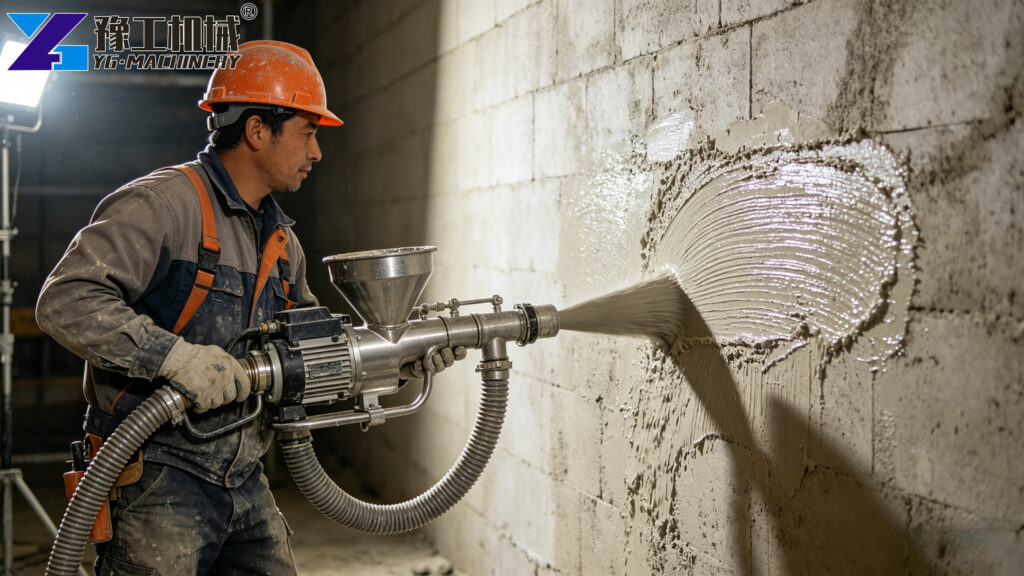
Imagine a mountain of hard rock in front of you. You need to remove it to build houses. But you cannot blast—houses sit nearby. You try a hydraulic breaker. The noise drives neighbors crazy. The machine shakes. Tool bits wear out every few hours. Weeks pass with almost no progress.
This was the exact situation a rock excavation contractor in Oman faced. They had 4,500 cubic meters of limestone bedrock to remove. Compressive strength exceeded 80MPa. No blasting allowed. Tight access roads. A 60-day deadline. Traditional methods failed.
Then they found YG Machinery’s excavator hydraulic rock splitter. This article tells their real story. You will see how they chose the machine, how it performed on site, and what limitations they worked around. Our goal is simple: help you decide if a rock splitter for an excavator fits your next project.
Project Background & Site Constraints for the Excavator Hydraulic Rock Splitter
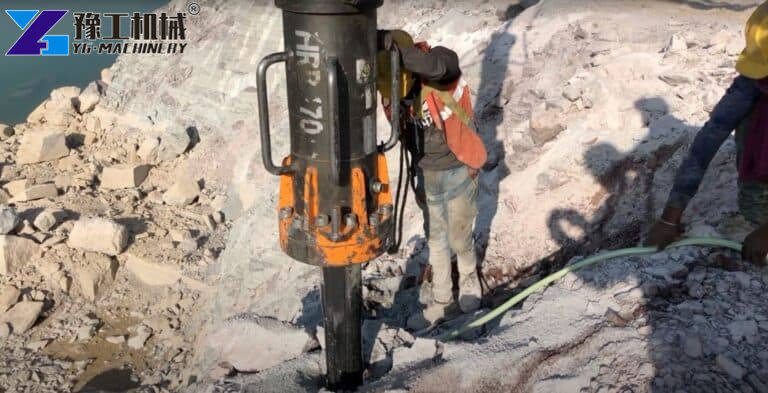
A rock excavation contractor in Oman took on a challenging residential development project. The site sat on a hillside overlooking a small town. The developer needed to remove 4,500 cubic meters of limestone bedrock to create flat building pads for 12 villas.
The rock was hard. Very hard. Compressive strength tested at over 80MPa. Some sections reached 95MPa. The contractor initially planned to use a hydraulic breaker on a 30-ton excavator. But the site had three major restrictions that ruled out traditional methods.
First restriction: no blasting allowed. The nearest house stood 80 meters from the excavation boundary. The local municipality refused to issue any blasting permit for this project. Even small-scale blasting with matting was off the table. Too much vibration risk for the existing homes.
Second restriction: limited access. The only road to the site was a narrow mountain track. A 30-ton excavator could barely fit. No room for a large rock crusher or drilling jumbo. Any equipment had to come in on low-bed trailers with police escorts. Larger machines would not make the turns.
Third restriction: tight production window. The developer needed the building pads ready in 60 days. The contractor could not afford slow progress. They needed a rock-breaking method that worked in hard limestone without causing vibrations or requiring heavy support equipment.
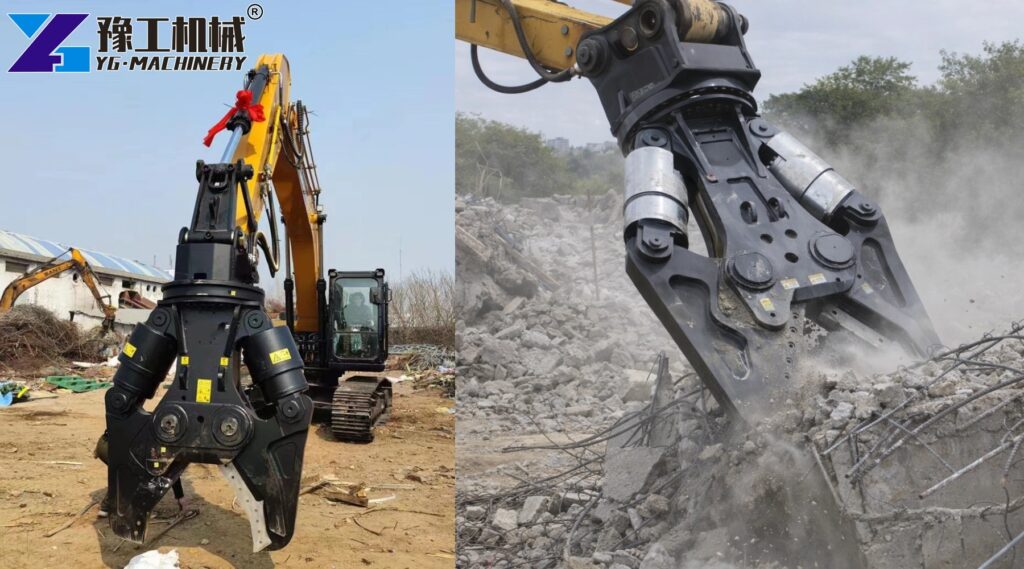
The contractor tried a hydraulic breaker first. Results were poor. The breaker took 45 minutes to break one cubic meter of rock. The operator complained that the tool bit wore down every two hours. Fuel consumption ran high. The rock fractured unevenly, leaving large boulders that required secondary breaking.
The contractor then looked for alternative solutions. They searched online for “rock splitting without blasting” and found YG Machinery’s excavator hydraulic rock splitter.
How the Customer Selected the Hydraulic Rock Attachment
The contractor evaluated four different rock-breaking methods before choosing YG.
Method 1: chemical expander. This involves drilling holes and pouring a chemical slurry that expands and cracks the rock. The contractor rejected it because the chemical takes 24 to 48 hours to work. At that rate, they would never finish the 60-day deadline. Also, the chemical cost per cubic meter was too high.
Method 2: larger hydraulic breaker. They considered a 40-ton excavator with a bigger breaker. But the access road could not handle the weight. Transporting a 40-ton machine up the mountain track was impossible. Even if they could get it there, the breaker still produced vibrations that nearby residents would feel.
Method 3: diamond wire saw. This method cuts rock cleanly but requires setup on every cut. The contractor calculated it would take 300 separate cuts to remove the rock volume. Too slow. Too much labor.
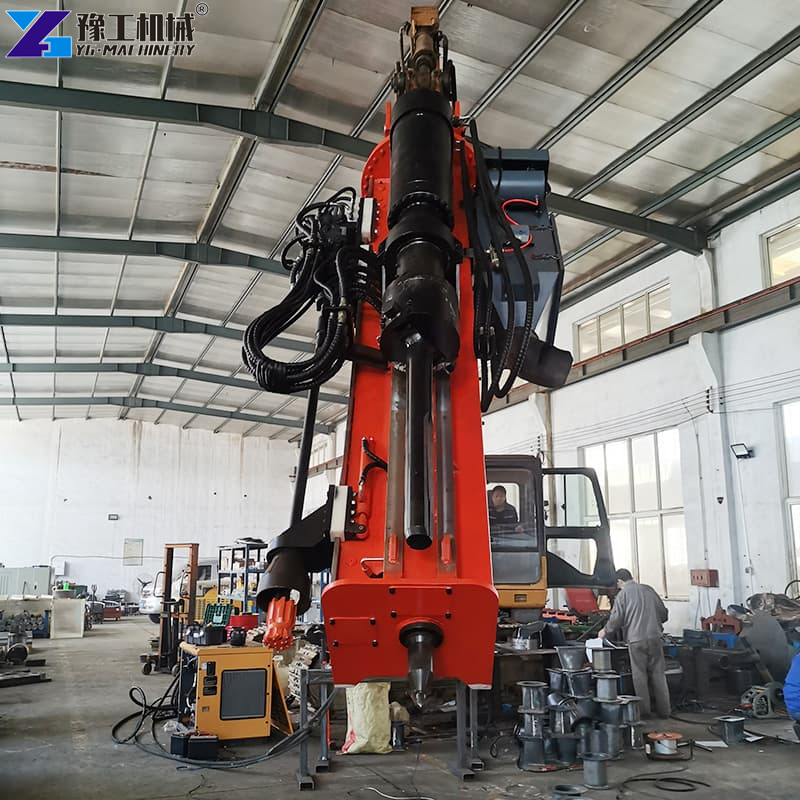
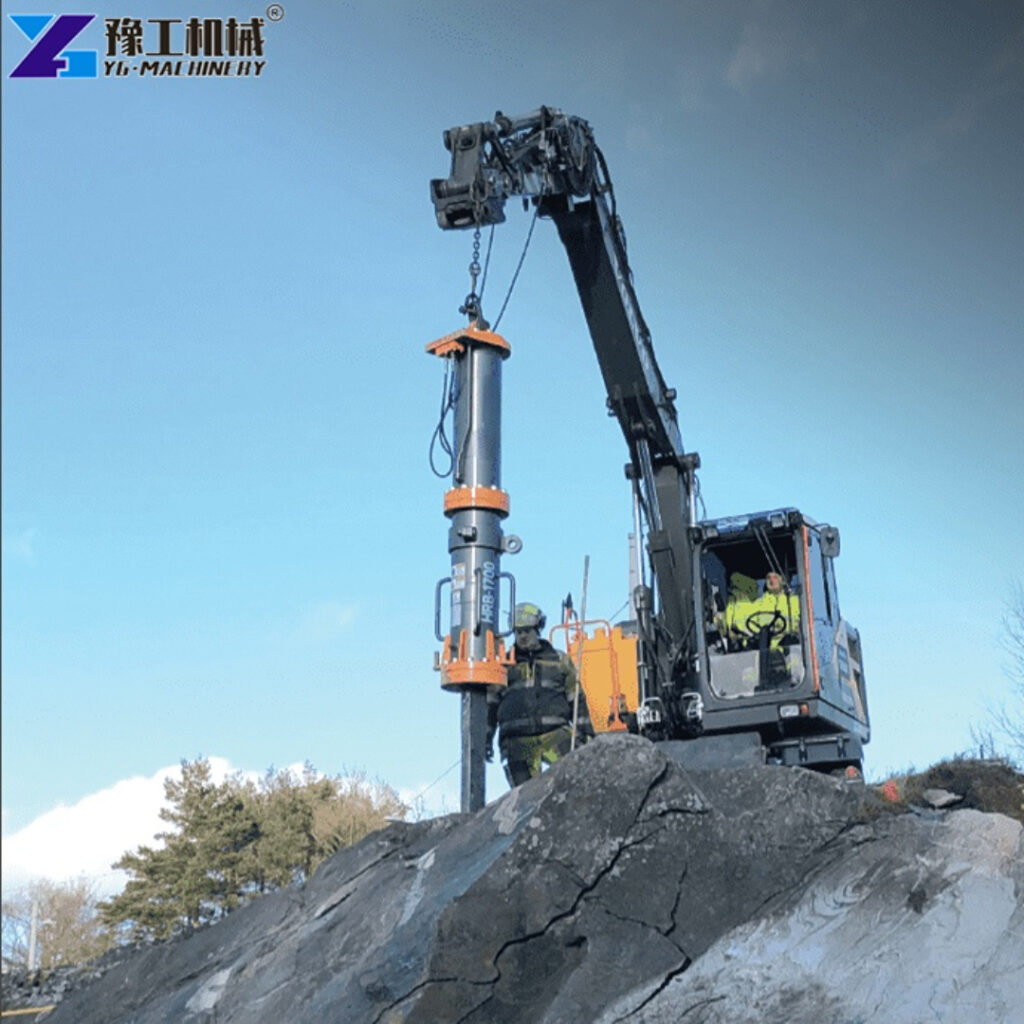
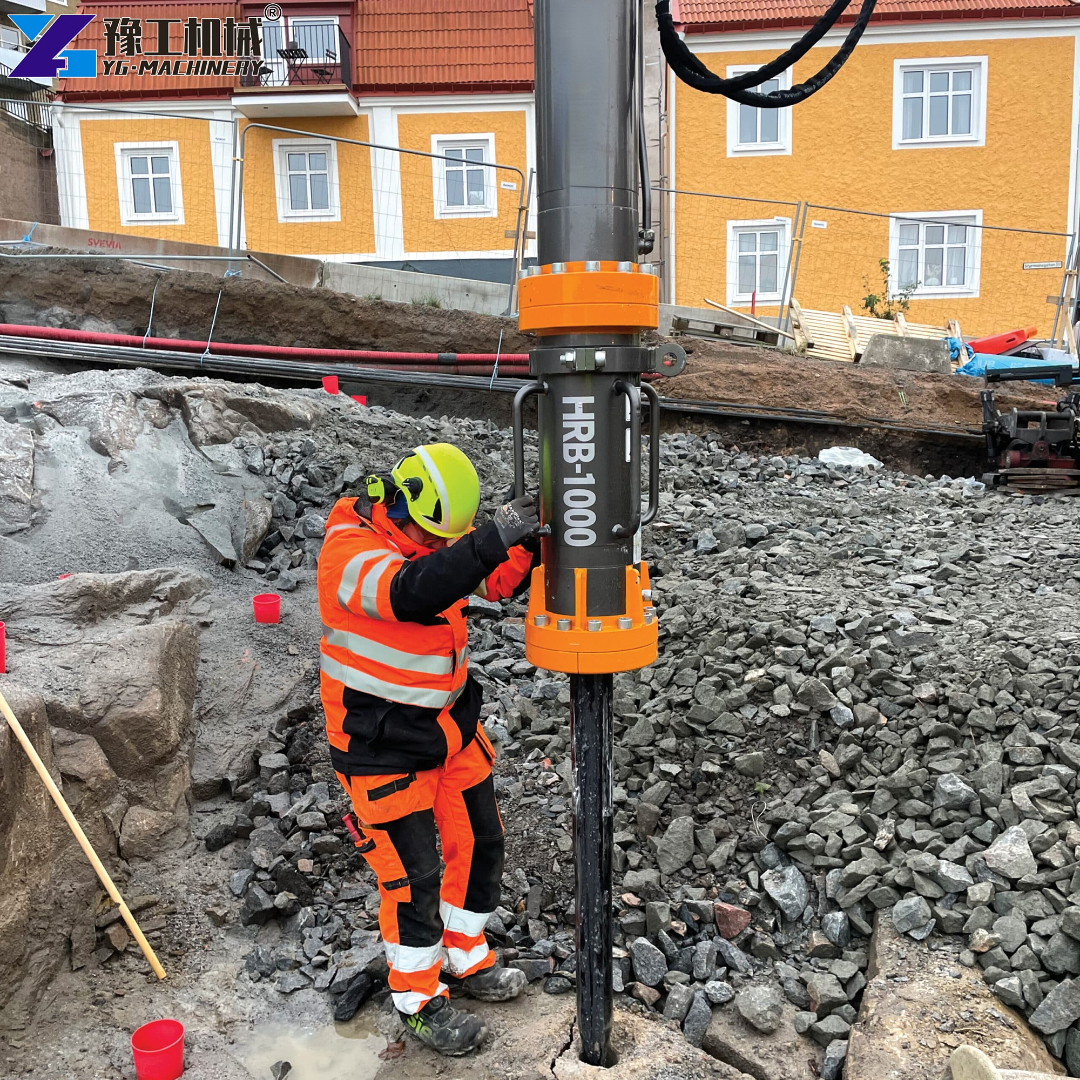
Method 4: excavator-mounted hydraulic splitter. This method uses a rock splitter for an excavator that fits into pre-drilled holes. The splitter expands with hydraulic pressure and cracks the rock from the inside out. No vibrations. No fly rock. No waiting for chemicals.
The contractor contacted YG Machinery. Our sales engineer asked about their rock type, required production rate, and carrier machine. The contractor had a 20-ton excavator on site already. We recommended the YGM-S200 excavator drill and splitting machine package.
Why the YGM-S200? The piston diameter of 200mm delivers 3,800 tons of splitting force. That was more than enough for 80MPa limestone. The required drilling diameter of 90-110mm matched standard rock drill bits available locally in Oman. The splitting speed of 40-50 seconds per cycle meant they could split multiple holes in sequence and keep production moving.
The contractor also requested a drilling and splitting machine for a sale quote that included the splitting gun, power pack, and all hoses. YG provided a complete package with a 12-month warranty.
Equipment Match & Limitations of the Drilling and Splitting Machine for Sale
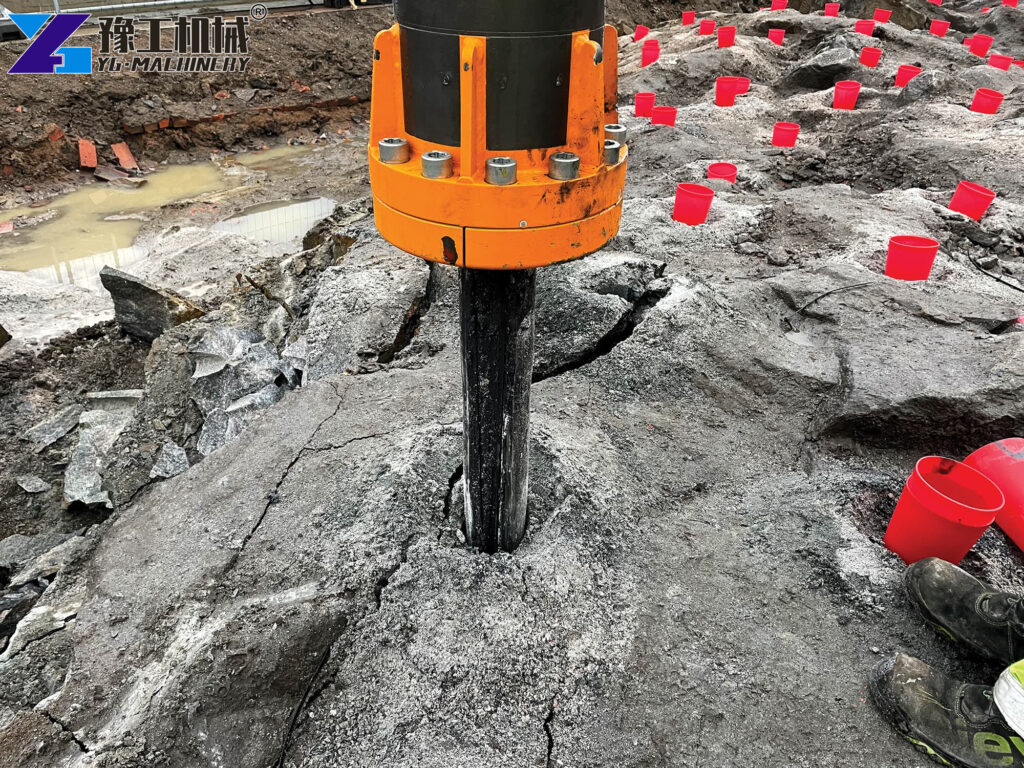
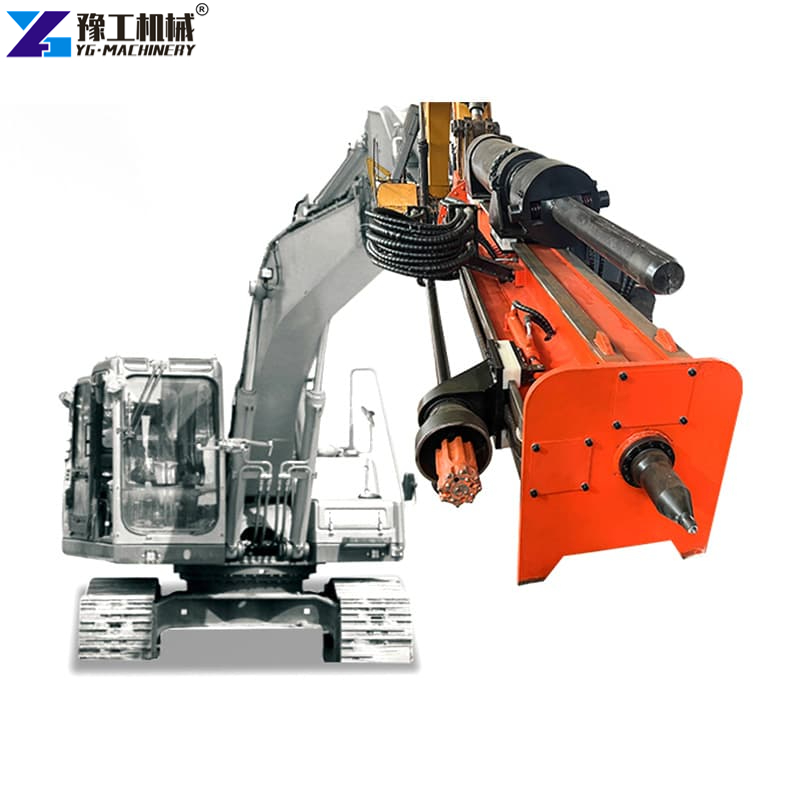
The YGM-S200 excavator hydraulic rock splitter arrived at the Oman site. The contractor mounted it on their 20-ton excavator. The machine used the excavator’s existing auxiliary hydraulic circuit. No modifications needed.
Technical Match Points
| Parameter | YGM-S200 Value | How It Matched the Site |
| Splitting Force | 3,800 tons | More than enough for 80-95MPa limestone |
| Piston Diameter | 200mm | Fit inside 90mm drilled holes |
| Required Drilling Diameter | 90-110mm | Matched local drill bit availability |
| Required Drilling Depth | 1600mm | The excavator’s hydraulic system delivered this |
| Crack Width | 32mm | Opened rock cleanly without fly rock |
| Drilling Gap Distance | 1000-1500mm | Allowed 1.5m spacing, reducing hole count |
| Splitting Speed | 40-50 seconds | Fast cycle meant continuous production |
| Required Pressure | 60-80 MPa | Well within the 20-ton excavator lift capacity |
| Splitting Gun Length | 2700mm | Reached deep into the rock face |
| Weight | 900kg | Well within 20-ton excavator lift capacity |
The technical specifications above show how the YGM-S200 perfectly utilizes the 20-ton excavator’s hydraulic pressure without requiring external power packs
To views detailed dimensions and models, check out our full range of excavator rock splitters.
Real-World Limitations They Faced
The contractor learned three limitations during the first week of operation.
Limitation 1: Drilling accuracy matters. The rock splitter for excavator needs straight, clean holes to work properly. If the drill hole angles off, the splitting gun jams. The contractor’s drill operator needed two days of practice to consistently drill straight holes to the required 1600mm depth. Once he learned the technique, jamming stopped.
Limitation 2: Rock joint spacing affects the splitting pattern. The site had natural rock joints spaced 0.5 to 1 meters apart. The splitting force follows the path of least resistance. If a rock joint runs through the splitting zone, the crack will open along that joint rather than creating new fractures. The contractor adjusted by drilling closer together in highly jointed areas. Hole spacing went from 1500mm to 1000mm in those sections.
Limitation 3: The production rate is linear. Each split covers a limited area. The contractor originally hoped to remove 100 cubic meters per day. The actual rate averaged 65 cubic meters per day with one splitting gun. This was still three times faster than the hydraulic breaker they tried earlier. It also met the project deadline comfortably.
The contractor added a second splitting gun later to increase production. Two guns running on the same excavator (using a flow divider) brought production up to 110 cubic meters per day.
Delivery & Field Feedback on the Excavator Drill and Splitting Machine
YG Machinery shipped the excavator drill and splitting machine from our factory within 10 working days of order confirmation. The machine traveled by container ship to Sohar Port in Oman. Sea freight took 16 days. Customs clearance took another 3 days. A flatbed truck delivered the machine to the mountain site on day 21.
YG sent a service technician to Oman for on-site training. The training covered:
- Daily inspection of the splitting gun and hoses
- Correct insertion depth for different rock conditions
- Sequencing multiple splits to break large boulders
- Cleaning and storing the splitter after each shift
The technician stayed for 3 days. By the end of day 2, both operators were running the excavator hydraulic rock splitter independently.
First Week Production Results
| Metric | Day 1 | Day 3 | Day 5 |
| Cubic meters split per shift | 38 | 52 | 68 |
| Splits per hour | 12 | 16 | 20 |
| Drill holes per split pattern | 8 | 7 | 6 |
| Jamming incidents | 4 | 1 | 0 |
The operator learned to read the rock face. He started placing drill holes along natural crack lines. This reduced the number of holes needed per split pattern. By day 5, they were removing 68 cubic meters per shift with zero jamming.
Customer’s Direct Feedback
“We spent three weeks trying to break this rock with a breaker. The neighbors complained about the noise and vibration. We made almost no progress. The YG rock splitter for excavator changed everything. No noise. No vibration. The rock cracks exactly where we want it. We are now ahead of schedule for the first time.”
— Project Manager, Oman Rock Excavation Contractor
“The splitter runs off our existing excavator. We did not buy a new carrier. The training took two days. Now my operator handles it like he has used one for years. The splitter gun is heavy but well-balanced. The hoses are long enough to reach across the work face. We ordered a second splitting gun to increase production. YG shipped it within one week.”
— Equipment Superintendent
What the Excavator-Mounted Splitter Case Means for Other Buyers
This Oman case offers real lessons for any contractor facing similar rock excavation challenges.
Lesson 1: When vibration matters, use a splitter. This contractor could not blast because of nearby houses. They could not use a breaker because of noise complaints. The excavator hydraulic rock splitter solved both problems. It produces no ground vibration and very low noise. If your site is near occupied buildings, this machine is your best option.
Lesson 2: Match the splitter to your carrier. This contractor used a 20-ton excavator that they already owned. The YGM-S200 weighs 900kg, which is well within the lift capacity of a 20-ton machine. They did not need to buy a larger excavator. Check your carrier weight before ordering. A 900kg splitter needs at least a 15-ton excavator for safe operation.
Lesson 3: Drilling accuracy takes practice. The first few days were slower while the drill operator learned to make straight, deep holes. This is normal. Plan for a 2-3 day learning curve. Once your crew masters the drilling pattern, production doubles or triples.
Lesson 4: Add a second splitter for higher output. One splitting gun removed 65 cubic meters per day. Two guns removed 110 cubic meters per day. If your project has high volume requirements, budget for two guns. They can run off the same excavator with a flow divider.
Lesson 5: The drilling and splitting machine for sale pays back quickly. This contractor calculated their cost per cubic meter using the hydraulic breaker at 18. With the YG splitter, the cost dropped to 7 per cubic meter. The machine paid for itself in 18 working days. After that, every cubic meter was pure profit.
Who should consider this equipment? Contractors are doing rock excavation in residential areas. Quarry owners who want clean block extraction. Road builders are cutting through rocky terrain near existing structures. Foundation contractors are removing rock for building pads. Any job where blasting is banned, or breakers are too slow.
Who should not buy a splitter? If your rock is highly fractured or has compressive strength below 30MPa, a breaker or ripper may be faster. If you have unlimited blasting permits and no nearby structures, traditional blasting has a lower upfront cost. If you remove less than 500 cubic meters of rock per year, rental might make more sense than purchase.
YG Machinery offers both single-splitter and dual-splitter configurations. Contact our sales team with your rock type, required production rate, and carrier machine specifications. We will recommend the right model and send you a complete drilling and splitting machine quote, including shipping to your port.
Click the contact button now to request a quote. Ask for our free rock splitting productivity calculator to estimate your time and cost savings.