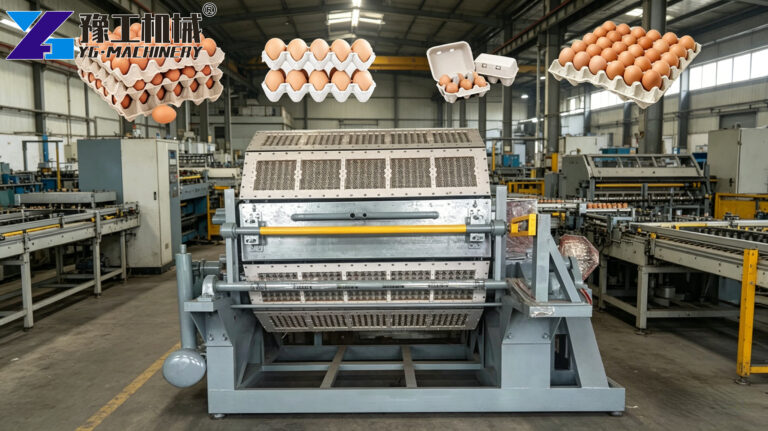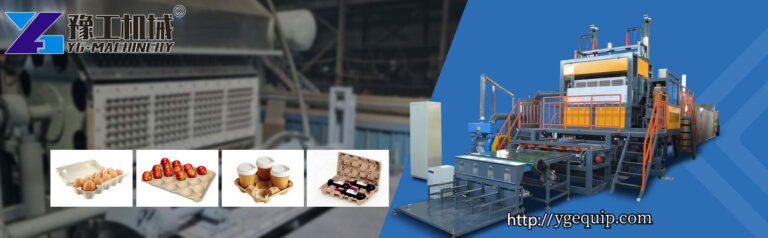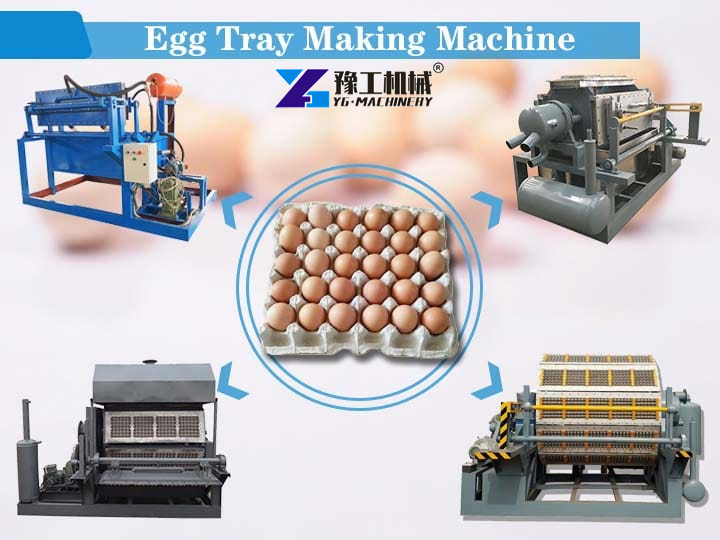
An egg carton making machine turns recycled waste paper into molded fiber egg trays in six steps: material preparation, pulping, additive mixing, vacuum molding, drying, and hot pressing. This guide explains the key settings at each step, from pulp concentration to drying temperature, so you can raise output, cut waste, and keep tray quality consistent. YG lines run from 1,000 to 7,000 trays per hour.
Egg trays and cartons are made mainly from recycled paper, which keeps raw-material cost low and the product recyclable. Comparing machines? Jump to the model table or the payback example.
Start Your Project with the Right Equipment
How an Egg Carton Making Machine Works
It’s a pulp molding system that converts waste paper into molded fiber products such as egg trays, egg cartons, and fruit trays.
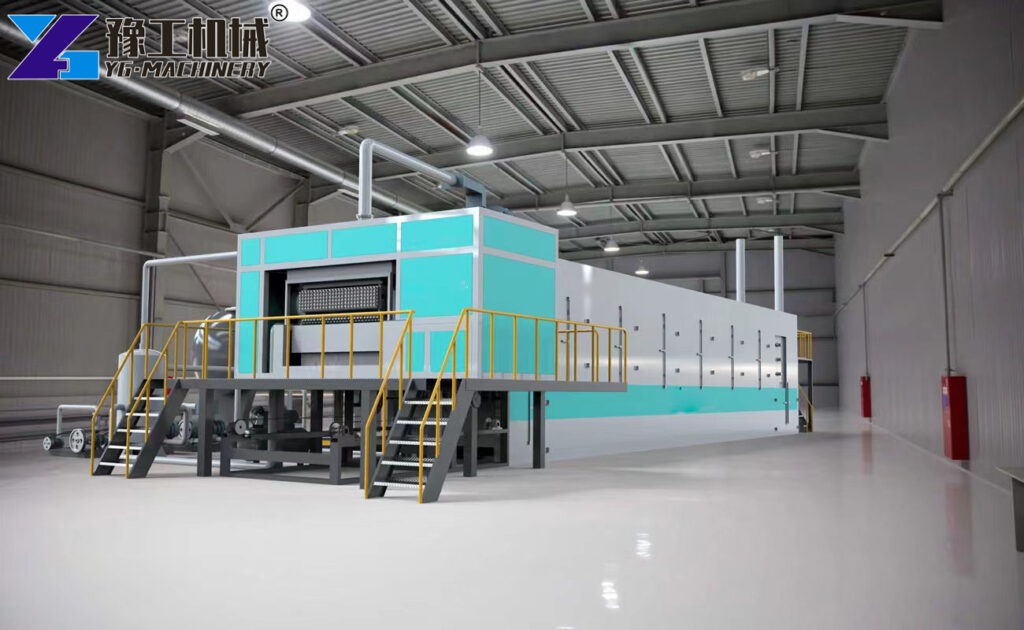
The machine works through a continuous process:
- Waste paper is converted into pulp
- The pulp is molded into shape
- Products are dried and finished
This process typically includes pulping, molding, drying, and packaging stages.
Modern machines are highly automated, reducing labor costs while increasing production efficiency.
Egg Carton Making Machine Models: 1,000 to 7,000 pcs/h
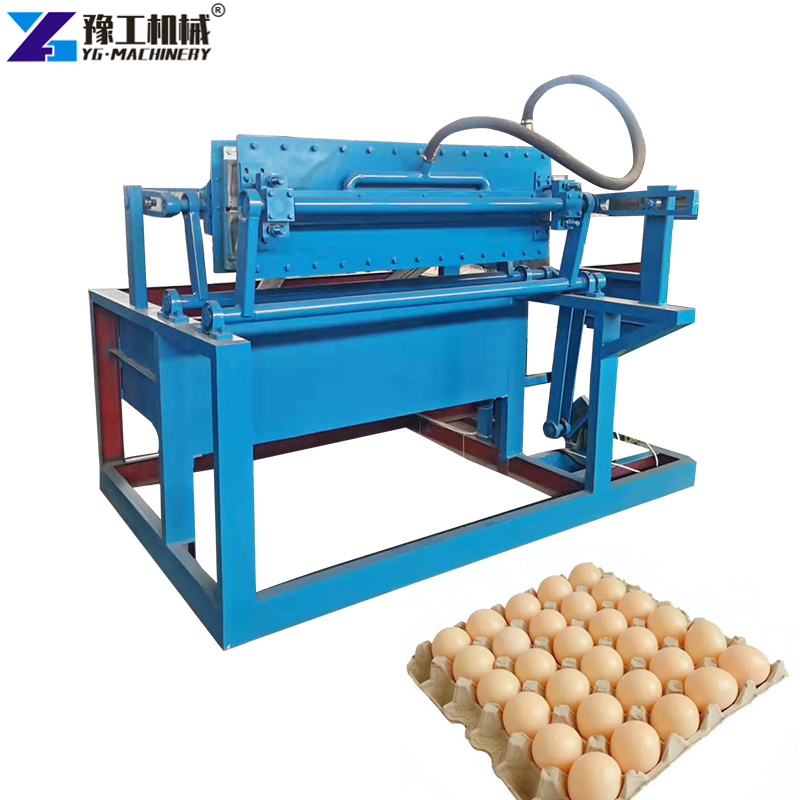
An egg carton making machine turns recycled waste paper into molded fiber egg trays, cartons, and fruit trays through pulping, vacuum molding, drying, and hot pressing. YG offers seven models, from 1,000 to 7,000 pieces per hour.
| Model | Capacity (pcs/h) | Molds | Installed power (kW) | Average consumption (kW) | Workers |
|---|---|---|---|---|---|
| YG-1×3 | 1,000 | 3 | 40 | 28 | 3–5 |
| YG-1×4 | 1,500 | 4 | 40 | 29 | 4–6 |
| YG-3×4 | 2,500 | 12 | 50 | 35 | 4–6 |
| YG-4×4 | 3,500 | 16 | 60 | 42 | 4–6 |
| YG-4×8 | 4,500 | 32 | 130 | 91 | 4–6 |
| YG-5×8 | 5,500 | 40 | 140 | 98 | 5–7 |
| YG-6×8 | 7,000 | 48 | 186 | 130 | 6–8 |
How to choose. Daily output = pieces per hour × operating hours. The YG-3×4 at 2,500 pcs/h makes 20,000 trays in an 8-hour shift. Pick the model whose output covers your daily demand with room to grow, then confirm the dryer type and floor space with us. Send your target output and we will recommend a configuration.
Compare Models and Get a Quote
Step 1 – Raw Material Selection and Pre-Treatment for Egg Carton Making Machine
The performance of an egg carton making machine starts with raw material quality. This step is not just about collecting waste paper—it directly determines product strength, appearance, and reject rate.
Material Selection Standards
- Best materials: Waste newspapers (ONP), corrugated paper
- Avoid: Coated paper, plastic-laminated paper (affects bonding)
Pre-Treatment Process
- Sorting → removing impurities (plastic, metal)
- Shredding → improves pulping efficiency
- Moisture control → prevents inconsistent pulp quality
Professional Insight:
A stable fiber composition ensures uniform molding thickness and reduces cracking during drying.
Step 2 – Pulping Process Optimization in Egg Tray Manufacturing Machine
In an egg tray manufacturing machine, pulping is not simply mixing water and paper—it is a controlled fiber processing stage.
Key Technical Parameters
- Pulp concentration: 4%–6% (optimal for molding)
- Pulping time: 20–30 minutes
- Water ratio: Typically 1:3 (paper: water)
Critical Control Points
- Uniform fiber dispersion
- Removal of heavy impurities (sand, staples)
- Stable slurry consistency
Advanced Tip:
Installing a refiner system improves fiber bonding, resulting in stronger egg trays with smoother surfaces.
Step 3 – Additives and Pulp Conditioning for Performance Enhancement
This stage is often underestimated but is essential for producing high-quality trays.
Common Additives and Functions
- Waterproof agents: Improve moisture resistance
- Dry strength agents: Increase load-bearing capacity
- Color additives: Improve product appearance
Mixing Control
- Additives must be evenly distributed
- Overuse may increase cost and reduce recyclability
Industry Insight:
Export-grade egg trays usually require waterproof and anti-fungal additives, especially for humid climates.
Boost Productivity—Get a Free Quote
Step 4 – Precision Molding Process in Egg Crate Making Machine
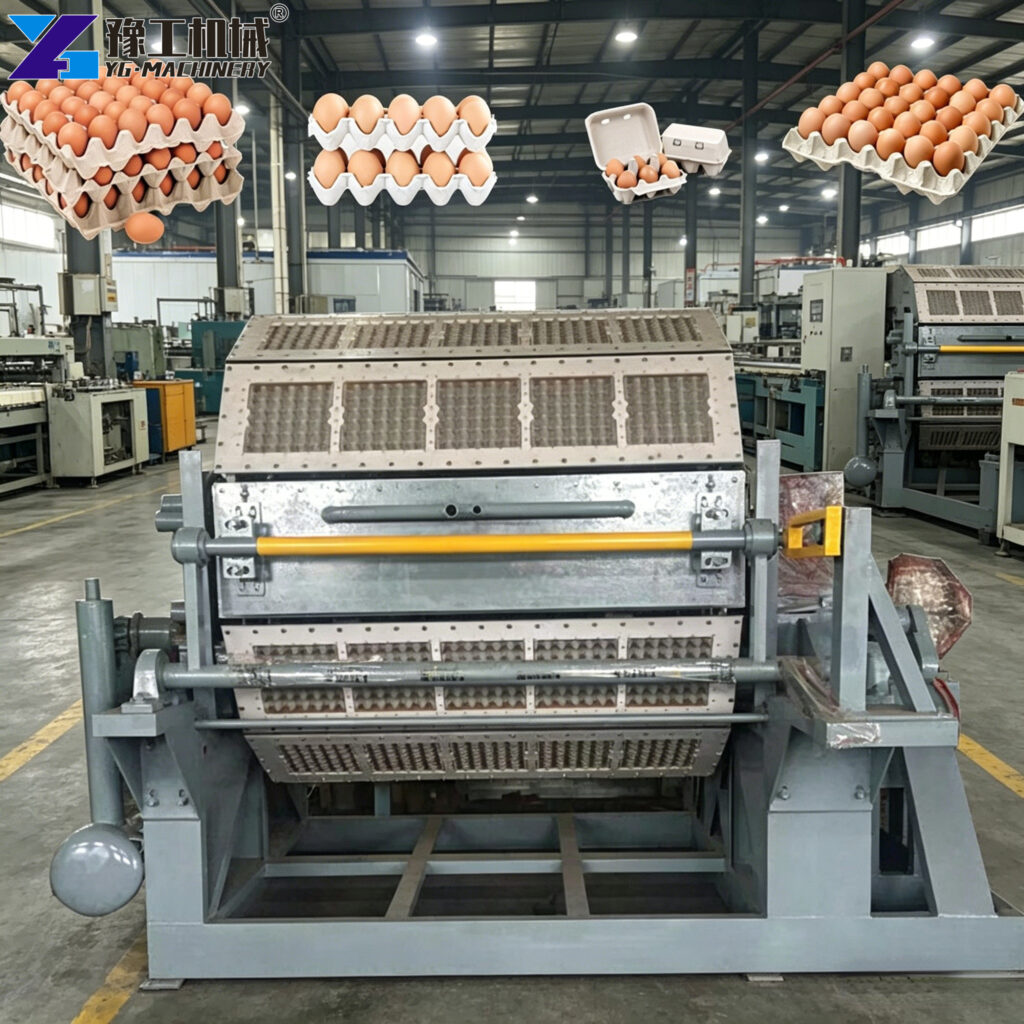
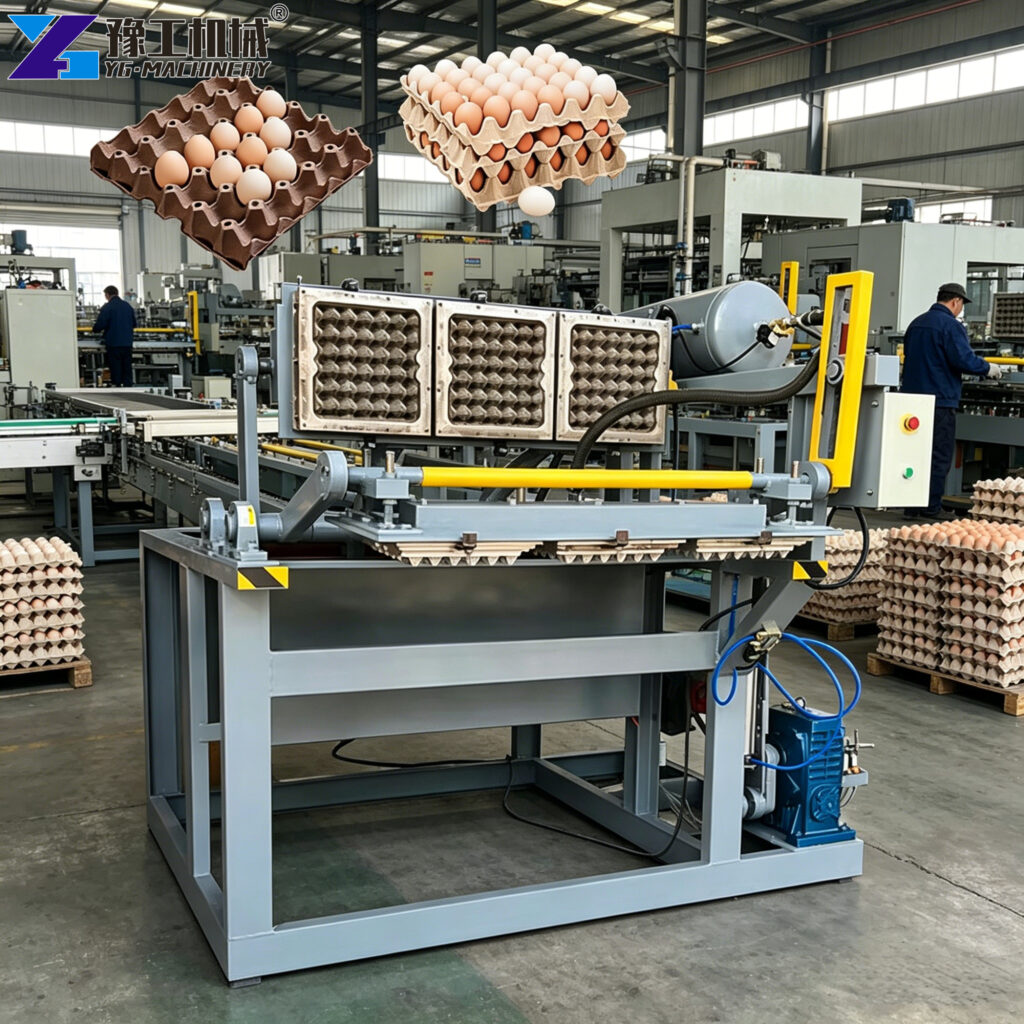
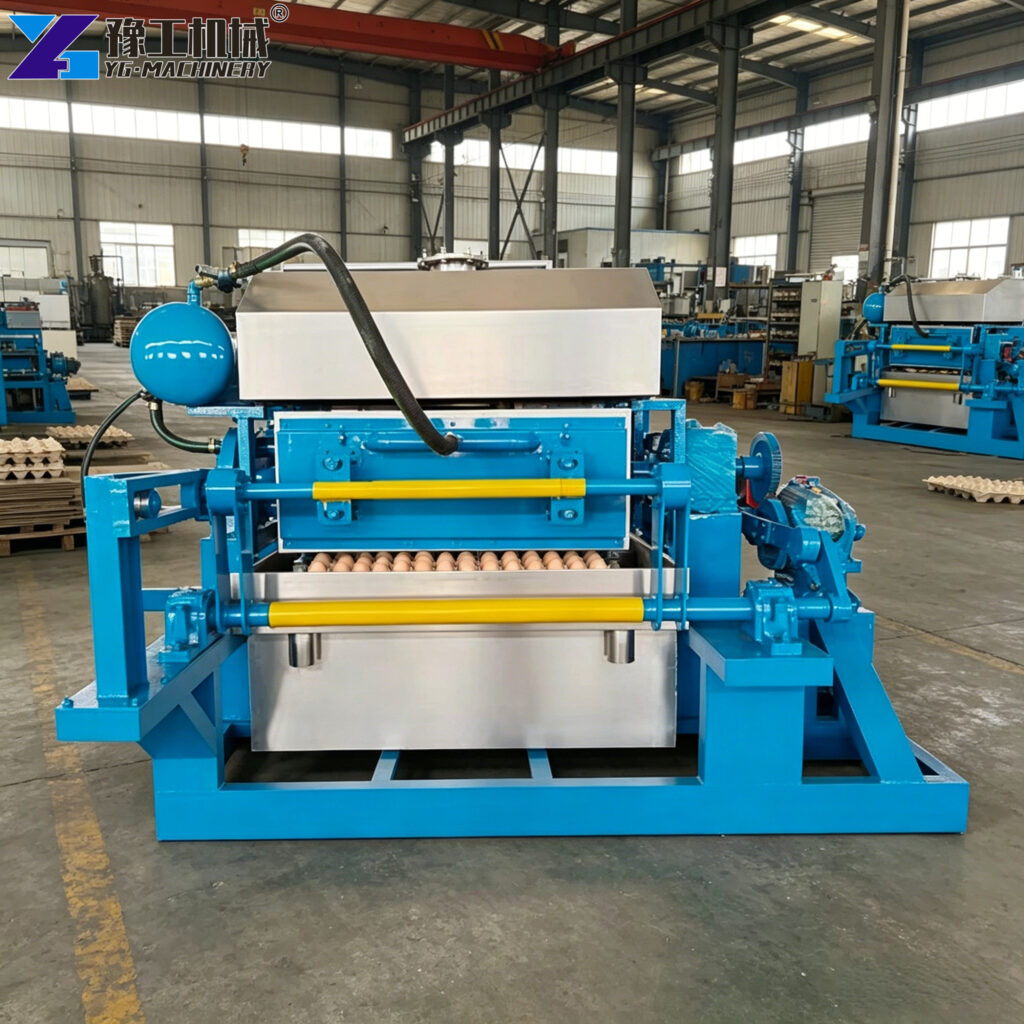
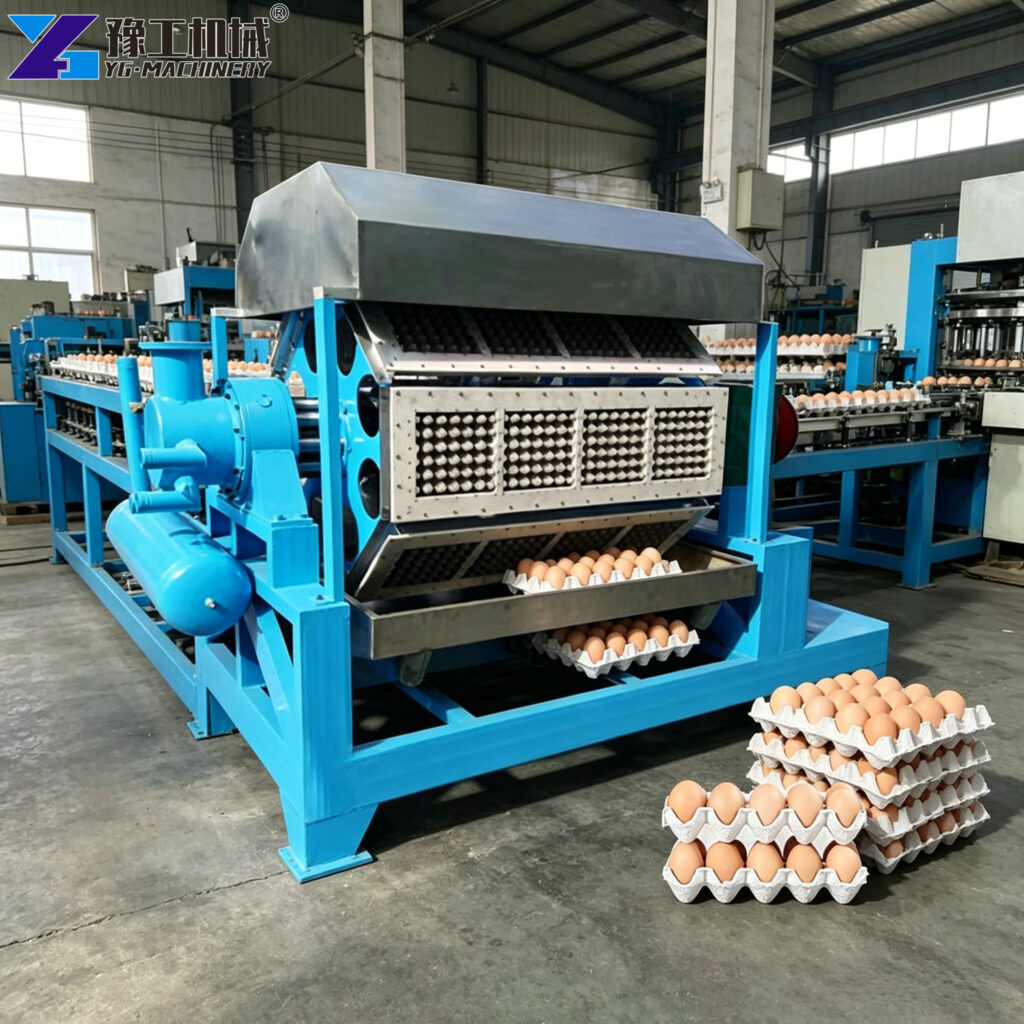
This is the core stage of the egg tray making machine, where pulp is transformed into shape.
How the Process Works
- The vacuum system draws pulp onto molds
- Fibers form a uniform layer
- Water is extracted through mesh molds
Key Technical Parameters
- Vacuum pressure: 0.04–0.06 MPa
- Forming time: 8–15 seconds
- Moisture after forming: 75%–80%
Critical Quality Factors
- Mold precision determines product shape
- Uniform suction ensures consistent thickness
Professional Tip:
High-quality aluminum molds improve durability and product consistency compared to plastic molds.
Step 5 – Drying System Control in Egg Tray Production Machine
Drying is a critical stage in the egg tray making machine that directly impacts product strength and deformation rate.
Drying Methods Comparison
| Method | Advantage | Limitation |
| Natural drying | Low cost | Weather dependent |
| Brick kiln | Medium investment | Uneven drying |
| Metal dryer | High efficiency | Higher initial cost |
Technical Parameters
- Drying temperature: 150–200°C
- Drying time: 15–25 minutes (metal dryer)
- Final moisture content: <10%
Advanced Insight:
Improper drying leads to warping, cracking, or low strength, which directly affects product quality and customer satisfaction.
Find the Right Model for Your Project
Step 6 – Hot Pressing, Shaping, and Automated Packaging in the Egg Crate Making Machine
The final stage enhances product quality and prepares it for the market.
Hot Pressing Function
- Smooth surface
- Improve structural strength
- Enhance appearance
Automation Process
- Automatic stacking system
- Counting and packaging
- Conveyor-based handling
Quality Control
- Check shape consistency
- Inspect edge integrity
- Ensure uniform thickness
Professional Tip:
Adding a hot press system is essential for high-end markets (supermarkets, export packaging).
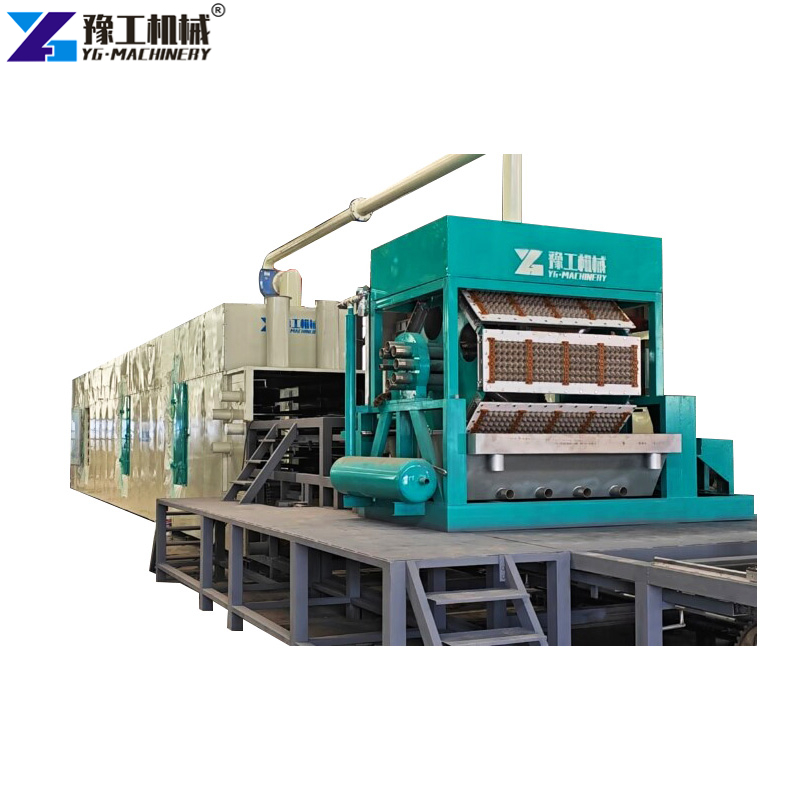
Full Production Flow Summary
Waste Paper → Pulping → Additives → Molding → Drying → Hot Press → Packaging
Key Optimization Points and Final Insight for Egg Carton Making Machine Buyers
To maximize ROI when using an egg tray making machine, focus on:
- Stable pulp consistency
- High-quality molds
- Efficient drying system
- Automation level
These factors directly impact:
- Production cost per unit
- Labor requirements
- Product quality consistency
Final Insight
A modern egg tray making machine is not just a piece of equipment—it is a complete system combining material science, mechanical engineering, and process control.
Businesses that optimize each step can achieve:
- Higher production efficiency
- Lower defect rates
- Better market competitiveness
Advantages of Using a Modern Egg Tray Production Machine
Investing in a modern egg tray making machine offers multiple advantages:
- High Efficiency: Continuous automated production
- Low Cost: Uses recycled materials
- Eco-Friendly: Reduces environmental waste
- Scalable Production: Suitable for small and large factories
These benefits make pulp molding machines a smart investment for packaging businesses.
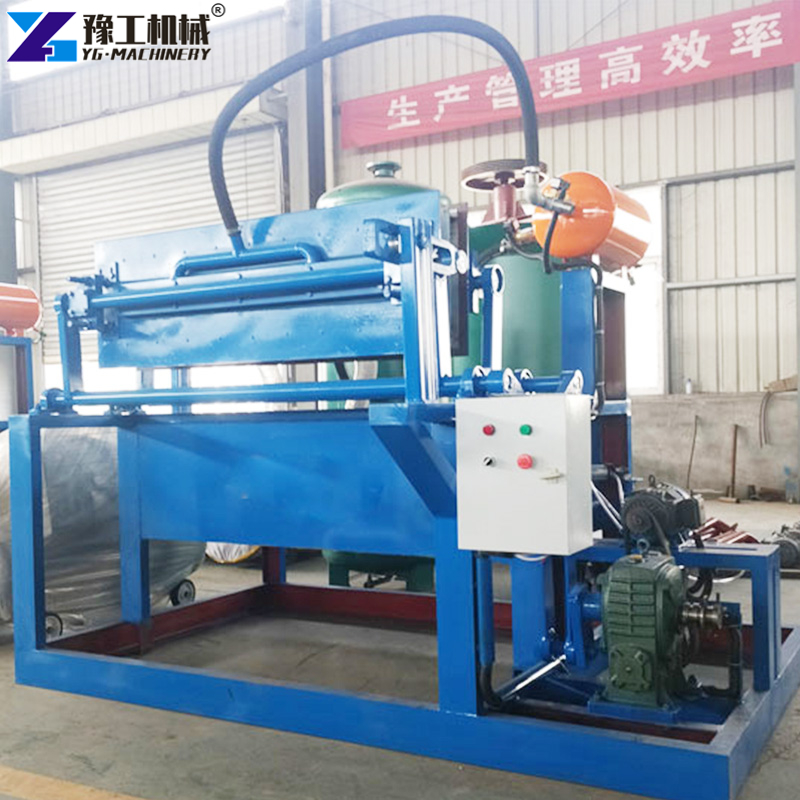
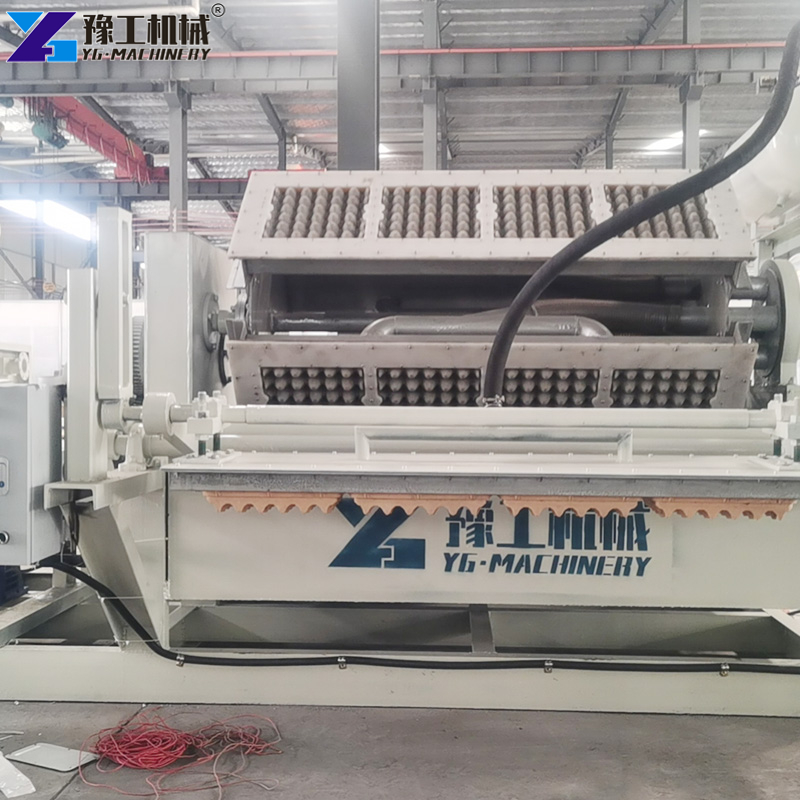
Egg Carton Making Machine Cost and Payback: A Worked Example
Machine price depends on capacity, dryer type, automation level, and customization. As a guide, small lines cost about $4,000–$10,000, medium lines $1,000–$40,000, and large lines $40,000–$100,000+.
The example below uses the YG-3×4 (2,500 pcs/h), which makes 20,000 trays in an 8-hour shift at full output. It is an illustration, not a guarantee.
Assumptions
- Machine price: $14,000 for the full line
- Average selling price: $0.04 per tray (market range $0.03–$0.06)
- Operating cost at full output: $170–$280 per day, or about $0.0085–$0.014 per tray, covering waste paper, drying energy, labor and water.
- Costs are scaled with output for simplicity. Labor and rent are partly fixed, so real margins at low utilization will be lower.
| Utilization | Trays per day | Revenue per day | Cost per day | Profit per day | Payback (operating days) |
|---|---|---|---|---|---|
| 100% | 20,000 | $800 | $170–$280 | $520–$630 | 32–38 |
| 70% | 14,000 | $560 | $119–$196 | $364–$441 | 45–55 |
| 50% | 10,000 | $400 | $85–$140 | $260–$315 | 64–77 |
Payback = machine price ÷ daily profit. It excludes factory space, working capital, and taxes.
What moves your payback most: selling price per tray, how many hours the line actually runs, local waste-paper price, drying fuel, and labor cost.
Send us your local paper price, drying fuel, and target selling price, and we will prepare a payback calculation and machine configuration for your plant.
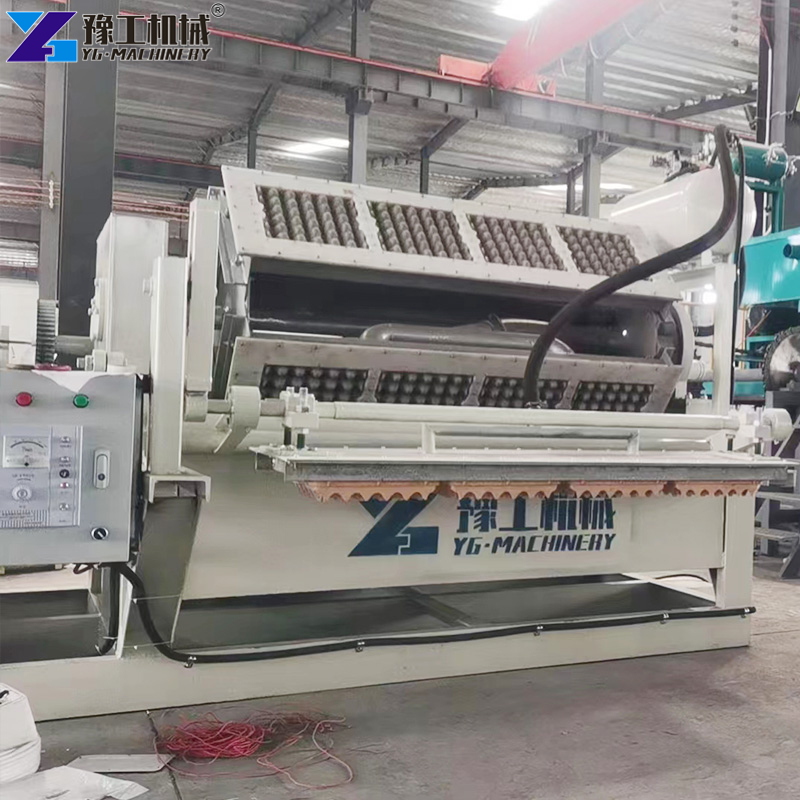
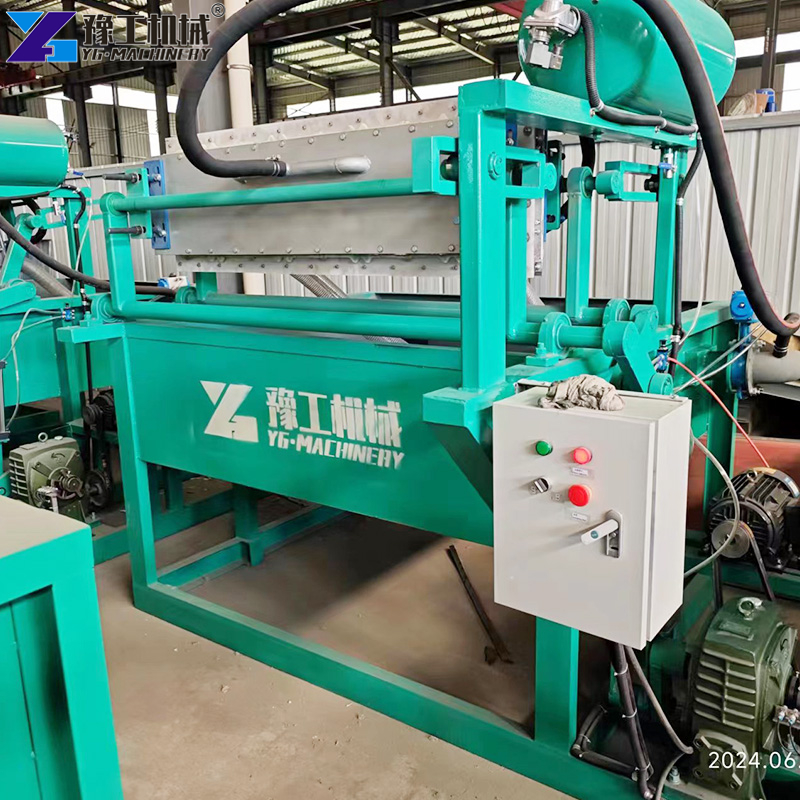
Boost Productivity—Get a Free Quote
Egg Carton Making Machine FAQ
Waste newspaper and corrugated paper. Avoid coated or plastic-laminated paper, which pulps poorly. Sort and shred the paper and control its moisture before pulping.
1,000 to 7,000 pieces per hour, depending on the model. See the model table above.
Three to eight, depending on the model: 3–5 for the YG-1×3 and 6–8 for the YG-6×8.
Installed power ranges from 40 kW (YG-1×3) to 186 kW (YG-6×8). Average consumption ranges from 28 kW to 130 kW.
Natural drying costs the least but depends on the weather. A brick kiln needs a medium investment and can dry unevenly. A metal dryer is the most efficient and costs more up front. It runs at 150–200°C for 15–25 minutes and brings moisture below 10%.
Yes. The same process makes egg trays, egg cartons, and fruit trays, with a different mold set for each product shape. Tell us the size and shape you need.
Request Your Customized Egg Carton Making Machine Quote
Tell us your target output and project needs, and our engineers will send the right model, factory price, and technical details.
WhatsApp: +86 183 3715 2861 | Email: admin@ygequip.com
We reply within 6 hours.