When choosing a road marking solution, many buyers compare thermoplastic and cold paint marking. Both methods are widely used, but they are designed for different needs, budgets, and project types.
Thermoplastic marking uses heated materials that melt and then harden quickly on the road surface. It forms thick, durable lines that last for years. Cold paint marking, on the other hand, uses liquid paint that is sprayed directly without heating. It is simpler, faster to start, and more affordable.
Understanding the difference helps you choose the right equipment and avoid unnecessary costs.
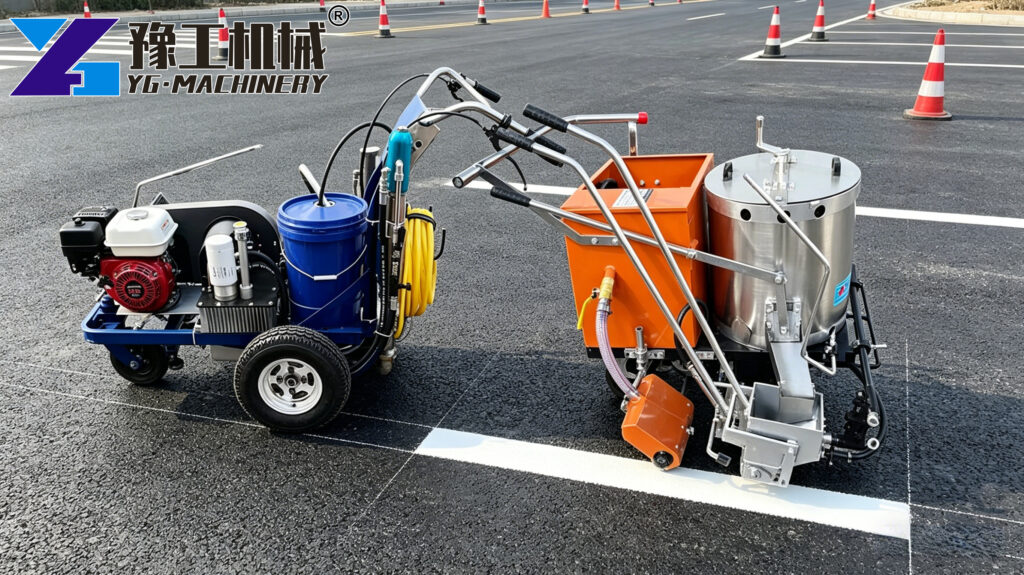
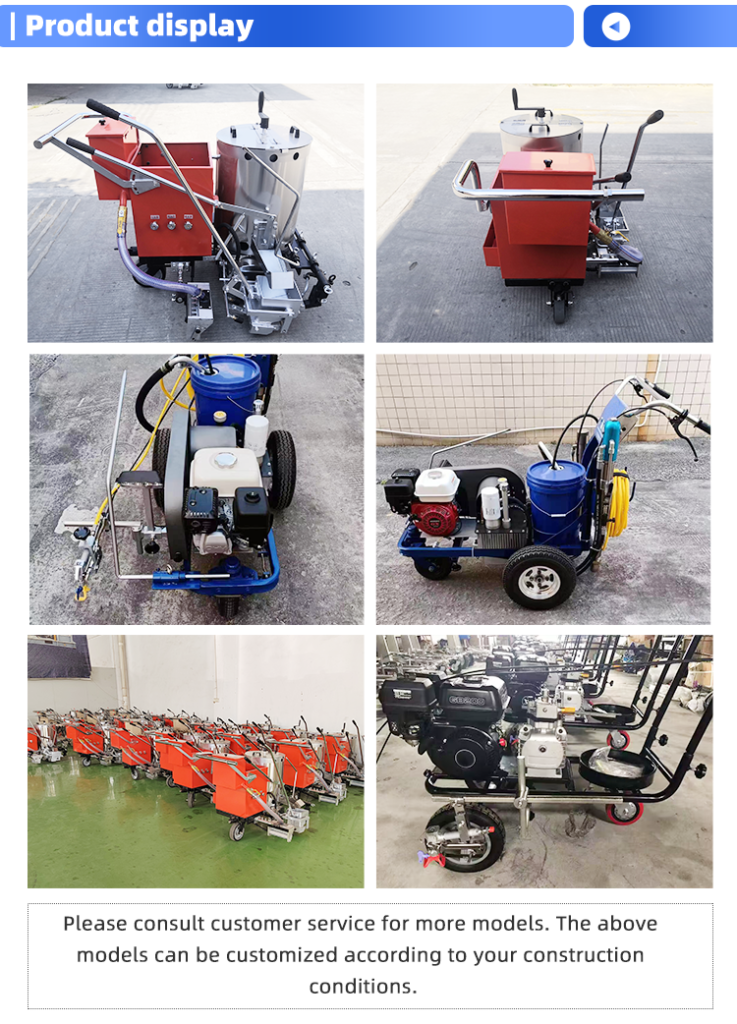
Thermoplastic Road Marking Machine Specifications:
YG-380
| Parameter | YG-380 Thermoplastic Road Marking Machine |
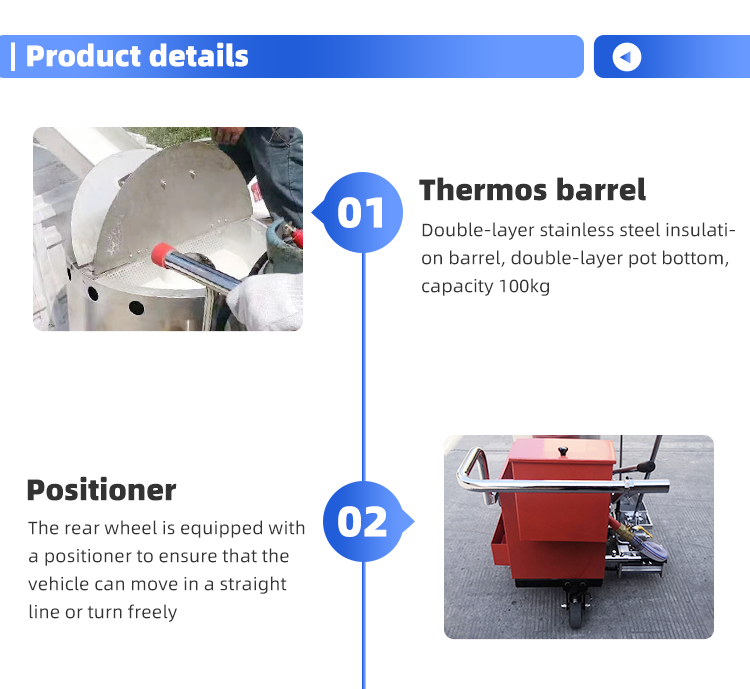
| Thermoplastic Paint Tank | Double stainless steel heating insulation barrels; Capacity 100 kg; Plug-in manual mixer device |
| Glass Beads Container | 10 kg/box |
| Adjustable Glass Beads Dispenser | Synchronized with the line; Adjustable width: 50 mm – 200 mm |
| Marking Mold | High-precision ultra-thin material; Scraping structure; uniform and even marking line; 150 mm standard equipment |
| Knife Under-frame | Carbide with adjustable eccentric sleeve |
| Scope Marking Thickness | 1-2.5 mm |
| Tire | Alloy wheel with special heat-resistant rubber; Rear wheel directional steering device ensures moving in a straight line and turning freely |
| Heating Method | Liquefied petroleum gas |
| Marking Width | 50/100/150/200/250/350/400/450 mm (optional) |
| Dimension (L×W×H) | 1200 mm × 900 mm × 950 mm |
| Weight | 100 kg |
YG-360
| Parameter | YG-360 Thermoplastic Road Marking Machine |
| Thermoplastic Paint Tank | Double stainless steel heating insulation barrels; Capacity 100 kg; Plug-in manual mixer device |
| Glass Beads Container | 10 kg/box |
| Adjustable Glass Beads Dispenser | Synchronized with the line; Adjustable width: 50 mm – 200 mm |
| Marking Mold | High-precision ultra-thin material; Scraping structure; uniform and even marking line; 150 mm standard equipment |
| Knife Under-frame | Carbide with adjustable eccentric sleeve |
| Scope Marking Thickness | 1-2.5 mm |
| Tire | Alloy wheel with special heat-resistant rubber; Rear wheel directional steering device ensures moving in a straight line and turning freely |
| Heating Method | Liquefied petroleum gas |
| Marking Width | 50/100/150/200/250/350/400/450 mm (optional) |
| Dimension (L×W×H) | 1250 mm × 900 mm × 950 mm |
| Weight | 110 kg |
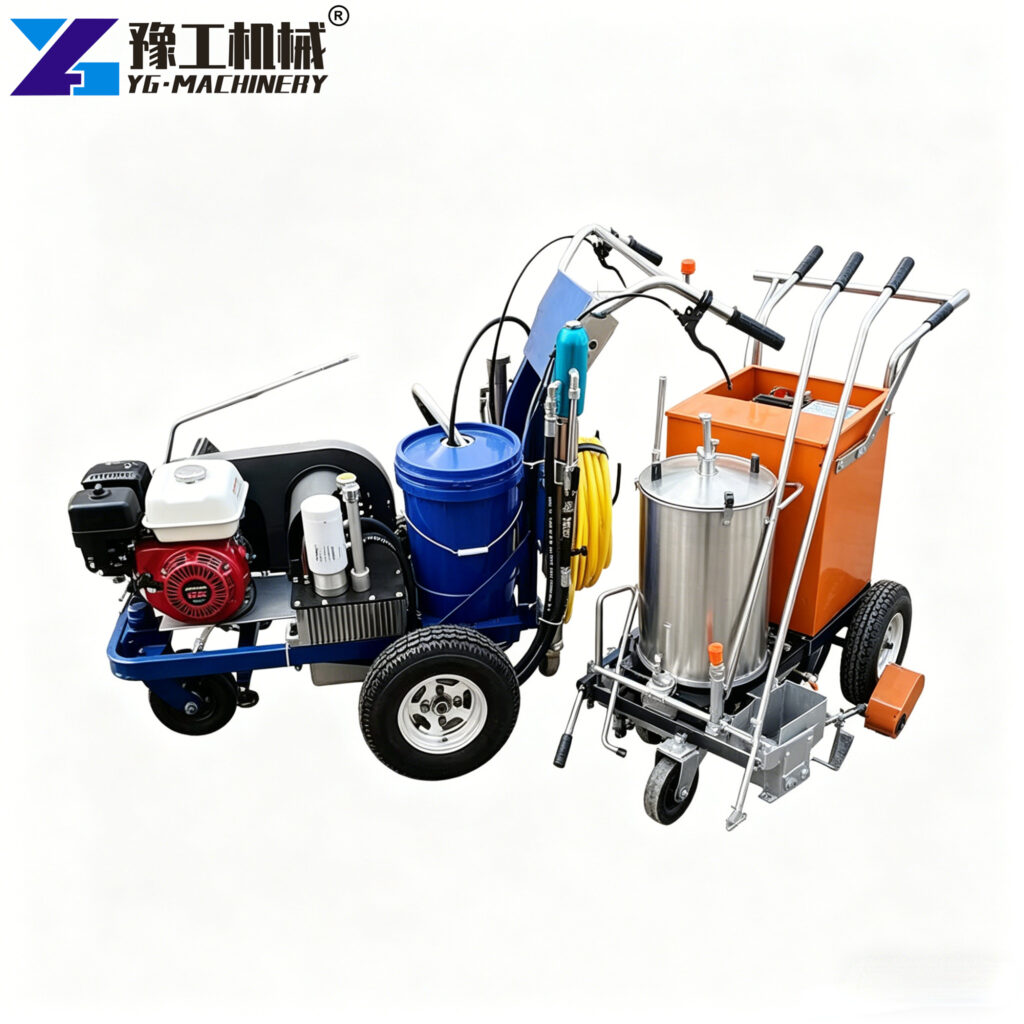
Cold Paint Line Marking Machine Specifications:
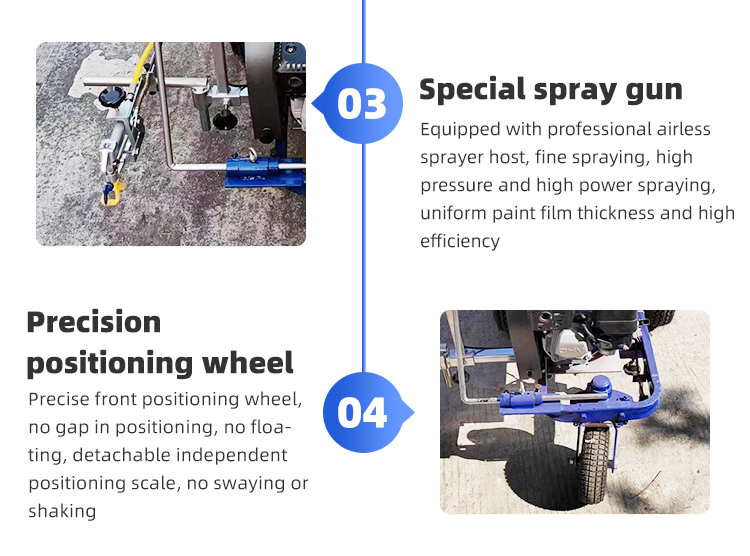
| Parameter | YG-6L (Single Gun) | YG-8L (Double Gun) ⭐ |
| Load Flow | 6 L/min | 8 L/min |
| Max Output Pressure | 25 MPa | 30 MPa |
| Nozzle Configuration | 15° / 17° | 15° / 17° |
| High-Pressure Pipe Strength | 35 MPa | 40 MPa |
| High-Pressure Pipe Length | Φ6 × 10 m | Φ6 × 2 m + Φ10 × 10 m |
| Weight | 72 kg | 128 kg |
| Max Spray Width | 20 cm | 45 cm |
| Engine Power | 4.3 HP | 7 HP |
The double gun model improves efficiency and working width,
which is ideal for large road marking projects.
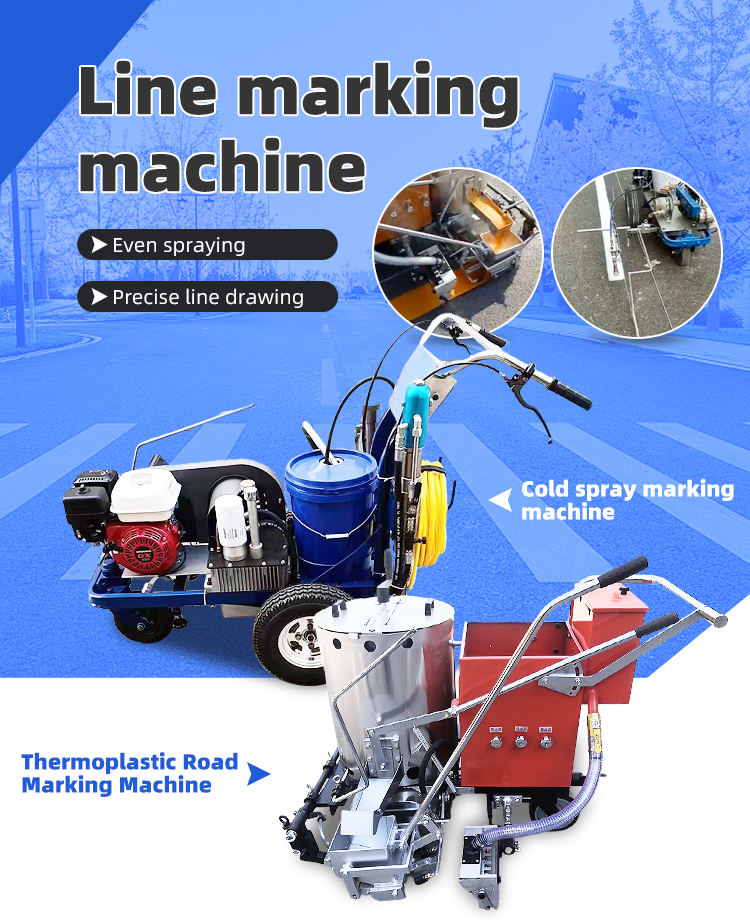
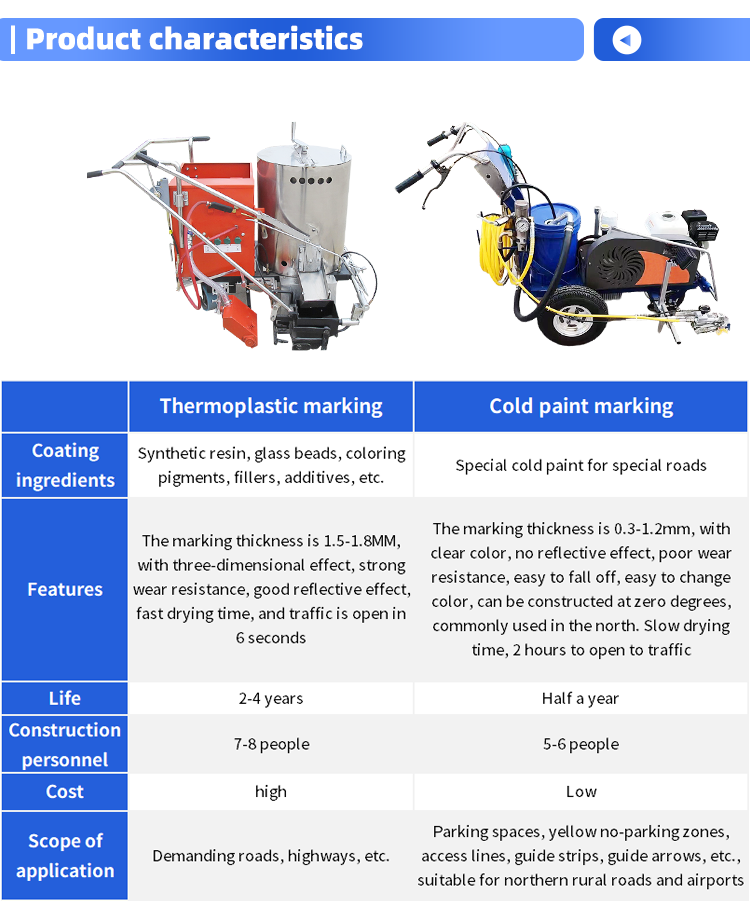
Thermoplastic vs. Cold Paint Road Line Marking Machine
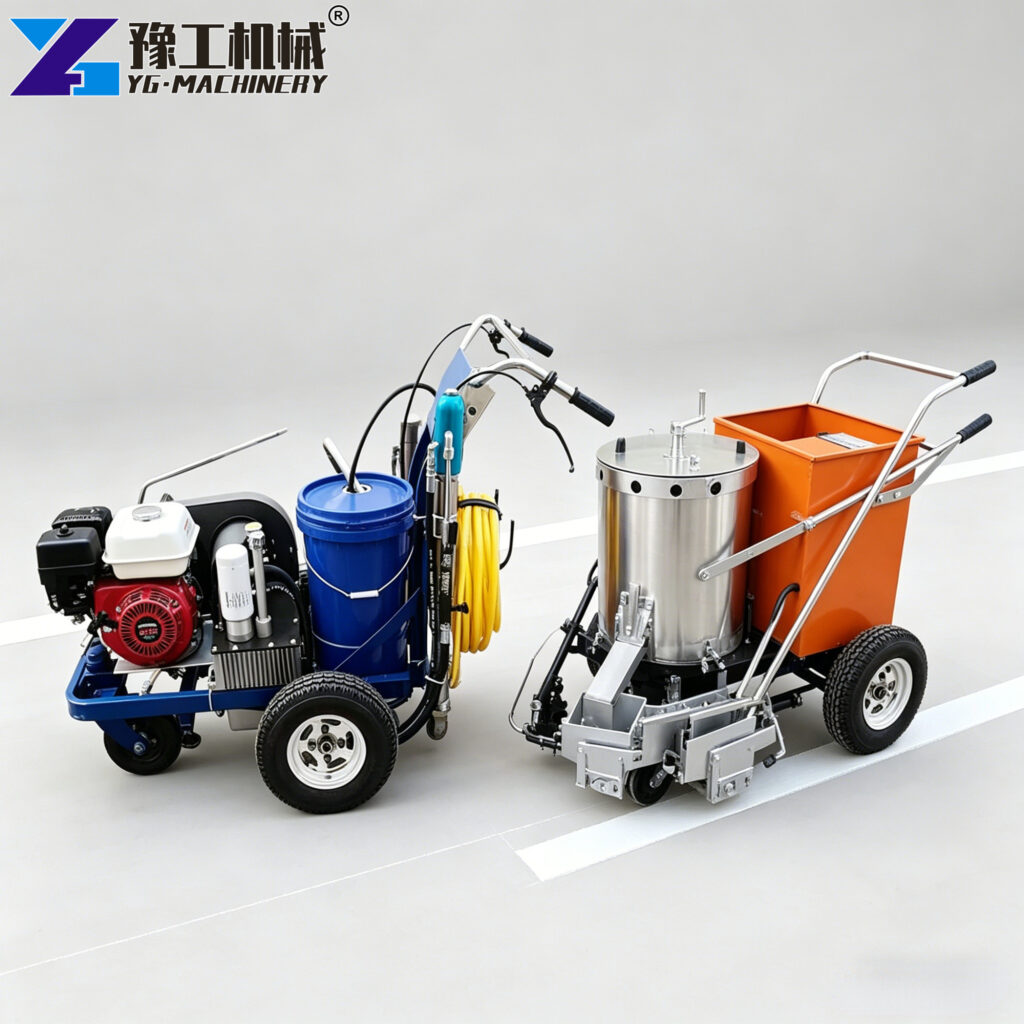
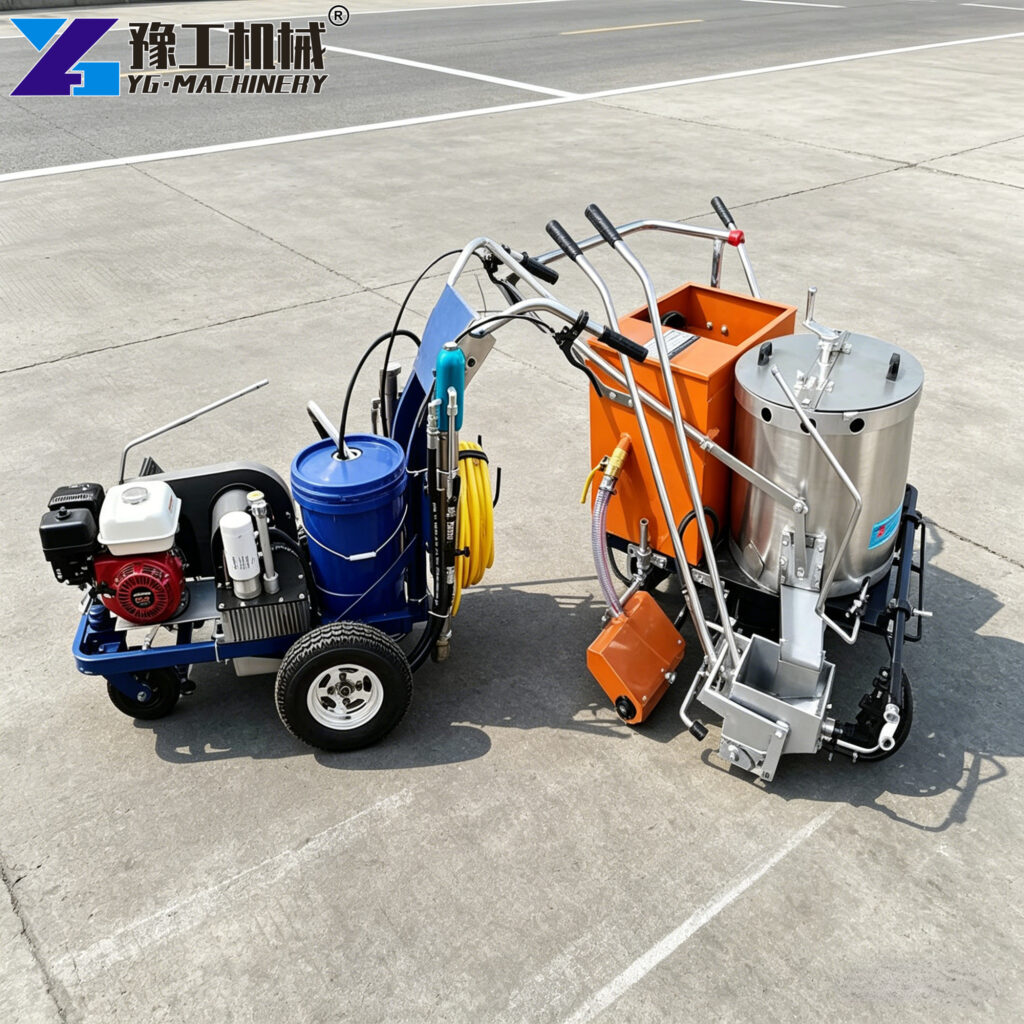
A Cold Paint Road Line Marking Machine is lightweight and easy to operate. It does not require a heating system, which reduces complexity and fuel consumption. It is ideal for small projects, temporary markings, and urban maintenance work.
A thermoplastic machine is heavier and includes a heating system. It requires more setup time but delivers stronger and longer-lasting markings. It is often used for highways, airports, and heavy-traffic areas.
In simple terms, one focuses on flexibility and low cost, while the other focuses on durability and long-term performance.
Performance Comparison: Thermoplastic vs. Cold Paint Road Line Marking Machine
| Aspect | Cold Paint Marking | Thermoplastic Marking |
| Initial Cost | Low | High |
| Durability | Medium | High |
| Drying Time | Fast | Very Fast |
| Visibility | Good | Excellent |
| Maintenance | Frequent | Less frequent |
| Equipment Complexity | Simple | Complex |
| Application Area | Small/Medium Projects | Large/Heavy Traffic Roads |
From this comparison, it is clear that thermoplastic and cold paint marking are not about which one is better overall, but which one fits your project.
Cost and ROI Analysis: Thermoplastic vs. Cold Paint Road Line Marking Machine
Cost is one of the biggest concerns for buyers when comparing different road marking solutions.
Cold Paint Marking
- Machine cost: $1500 – $6,000
- Lower initial investment
- Higher repaint frequency
- Suitable for short-term projects
- Machine cost: $3,500 – $15,000+
- Higher initial investment
- Long lifespan (3–7 years)
- Lower maintenance cost over time
ROI Insight:
- Cold paint machines are ideal if you want to start quickly with a small budget
- Thermoplastic machines are better for long-term projects with high traffic
For contractors, the best choice depends on project type. Many companies use both systems to maximize profits.
Thermoplastic vs. Cold Paint Road Line Marking Machine: Applications and Buying Guide
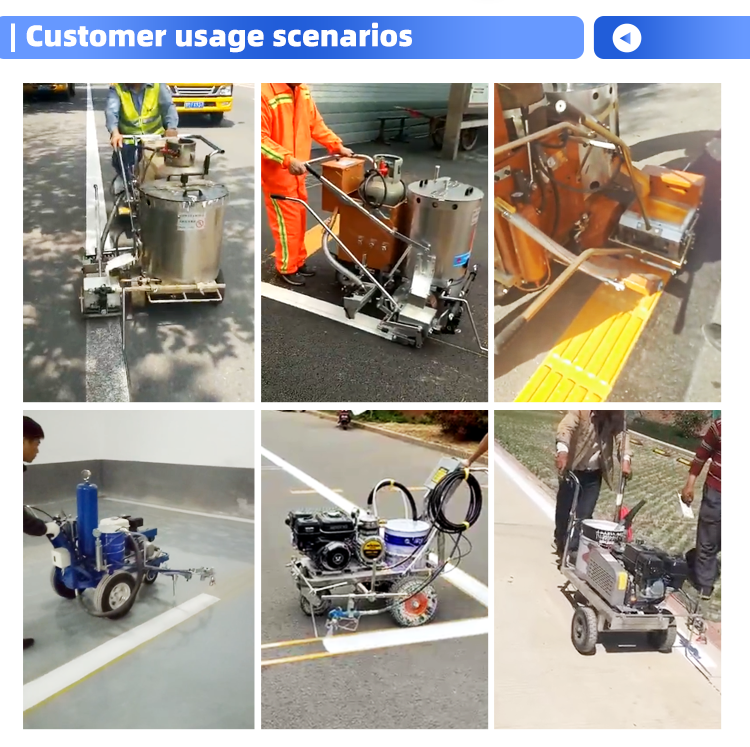
Choosing between thermoplastic and cold paint marking also depends on where the machine will be used.
Cold Paint Applications
- Parking lots
- Schools and residential areas
- Temporary road marking
- Factory floors
Thermoplastic Applications
- Highways and expressways
- Airports and runways
- City main roads
- Heavy traffic areas
Cold paint offers flexibility, while thermoplastic offers strength and durability.
Which One Should You Choose?
If you are still deciding between thermoplastic and cold paint marking, here is a simple guide:
- Choose cold paint marking if:
- You have a limited budget
- You handle small or short-term projects
- You need easy operation and fast setup
- Choose thermoplastic marking if:
- You work on large infrastructure projects
- You need long-lasting results
- You want higher long-term returns
YG Machinery recommends selecting equipment based on your real workload, not just price.
Thermoplastic vs. Cold Paint Road Line Marking Machine: Process Comparison Guide
Process of Thermoplastic Marking Work:
Thermoplastic reflective marking is a durable and high-visibility solution widely used for highways and heavy-traffic roads. It involves the use of thermoplastic paint mixed with glass beads, petroleum resin, and primer to enhance adhesion and night reflectivity.
- Heating the Material: Use a preheater to melt the thermoplastic paint at a controlled temperature of 180–220°C. After melting, stir the material for about 10 minutes to ensure a uniform consistency.
- Layout and Marking: Measure and mark the positions according to design drawings. Use marking paint to outline the required shapes and lines.
- Primer Application: Apply primer to the surface to improve adhesion, especially on concrete or old pavement. Allow it to dry completely before the next step.
- Application of Thermoplastic Paint: Apply the melted material using a marking machine to form clear and durable lines.
- Glass Beads Application: Immediately spread reflective glass beads onto the hot paint surface to improve nighttime visibility.
- Thickness Control: Ensure the marking thickness is consistent (typically around 1.5 mm) for long-lasting performance.
Operation Process of Cold Paint Pavement Marking Work:
Cold paint pavement marking is a flexible and cost-effective method, commonly used for temporary or low-traffic applications. It is applied at ambient temperature using simple tools.
- Surface Preparation: Clean and dry the surface thoroughly. Remove dust, oil, grease, and debris using a pressure washer or degreaser, then allow the surface to dry completely.
- Layout and Design: Measure and mark the lines using chalk or marking paint according to project requirements and local standards.
- Mixing the Paint: Dilute the concentrated paint with water based on the manufacturer’s instructions to achieve the proper consistency.
- Application: Apply the paint using a spray gun or roller. Use thin, even layers, allowing each layer to dry before applying the next to ensure a smooth finish.
- Drying Time: Allow sufficient drying time before opening the area to traffic. Drying typically takes a few hours, depending on environmental conditions.
- Maintenance: Perform regular cleaning, repainting, and touch-ups to maintain visibility and effectiveness over time.
Thermoplastic marking offers superior durability, reflectivity, and long-term performance, making it ideal for high-traffic and infrastructure projects. In contrast, cold paint marking is easier to apply and more cost-effective for short-term or low-traffic applications. Choosing the right method depends on your project requirements, budget, and expected lifespan.
FAQ: Thermoplastic vs. Cold Paint Road Line Marking Machine
1. Which road marking machine is more cost-effective?
Answer: Cold spray road marking machines are generally more cost-effective in terms of initial investment and material cost. However, thermoplastic road marking machines offer better long-term value due to their longer service life.
2. Which type of marking is more environmentally friendly?
Answer: Cold spray marking produces less smoke and is generally considered more environmentally friendly during application. Thermoplastic marking, while more durable, involves heating materials, which may generate fumes during operation.
3. Which road marking machine is easier to operate?
Answer: Cold spray road marking machines are typically easier to operate and require less training, making them suitable for small projects. Thermoplastic machines require more skill due to heating and temperature control.
4. How do cold spray and thermoplastic markings perform under heavy traffic?
Answer: Thermoplastic markings perform much better under heavy traffic conditions due to their strong adhesion and wear resistance. Cold spray markings are better suited to light-traffic areas and temporary markings.
5. Which marking type is better for temporary vs permanent projects?
Answer: Cold spray marking is ideal for temporary or short-term projects due to its lower cost and shorter lifespan. Thermoplastic marking is better suited for permanent projects that require long-lasting performance.
Thermoplastic vs. Cold Paint Road Line Marking Machine: Expert Guidance from YG Machinery
Choosing between thermoplastic and cold paint marking can directly impact your project cost and efficiency. YG Machinery offers professional guidance to help you select the most suitable solution based on your specific needs.
As a professional manufacturer of road equipment, YG Machinery provides both cold paint and thermoplastic systems for global customers. Its product range also includes road marking removal machines, crack sealing machines, and asphalt maintenance equipment.
Known for stable performance, competitive pricing, and reliable after-sales support, YG Machinery has become a trusted long-term partner for many contractors worldwide. Contact YG Machinery today to get expert recommendations and competitive pricing for your road marking projects.