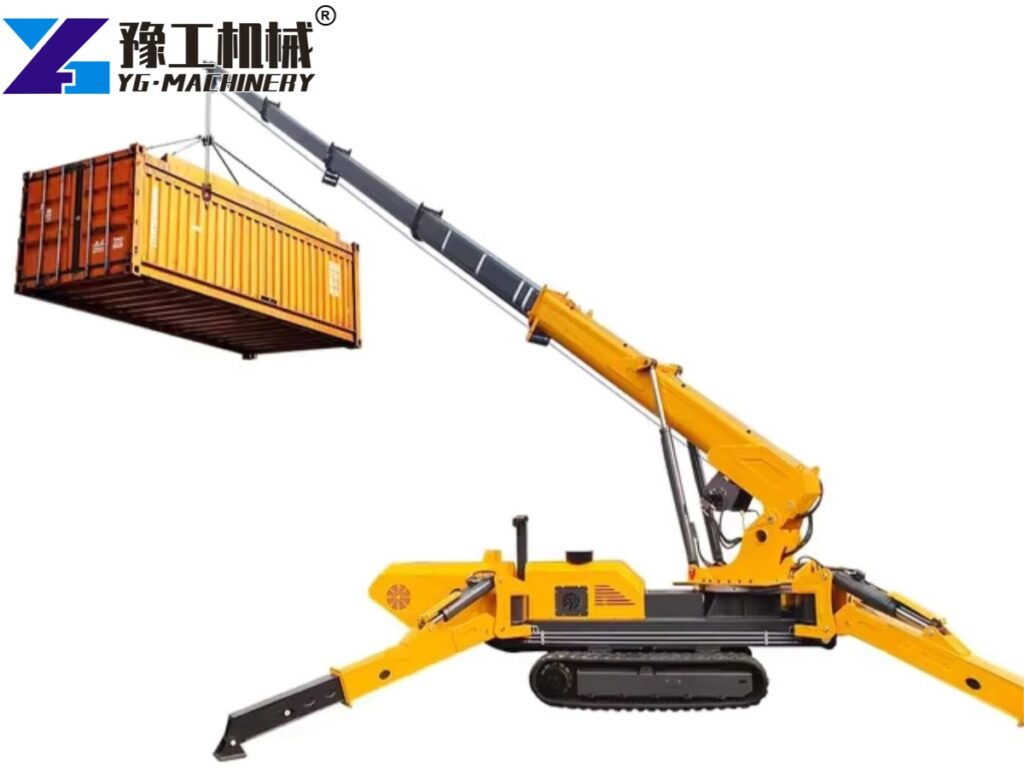
When selecting lifting equipment, many buyers hesitate between a small crane and a spider crane. The key difference lies in lifting capacity, structure, and application scenarios.
In general:
- 3T / 5T / 8T models = Small Crane
- Above 8T = Spider Crane (heavy-duty applications)
YG Machinery, a professional manufacturer of lifting equipment, provides both compact portable cranes and high-capacity spider cranes to meet different project needs. Understanding these differences helps buyers choose the most efficient and cost-effective solution, ensuring better performance, improved safety, and higher productivity across various working environments.
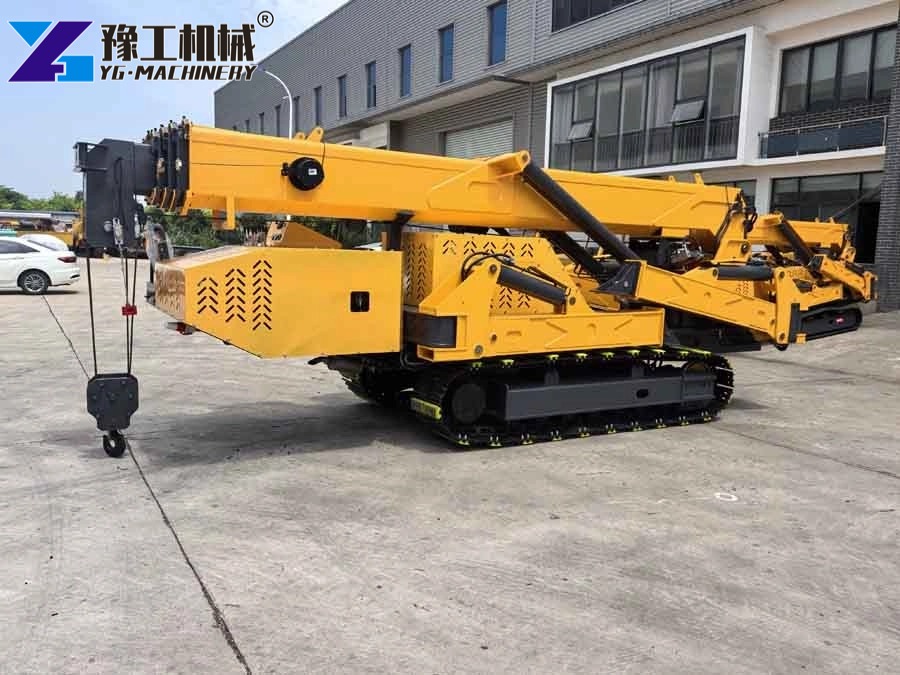
Small Portable Crane (3T–8T): Compact & Efficient
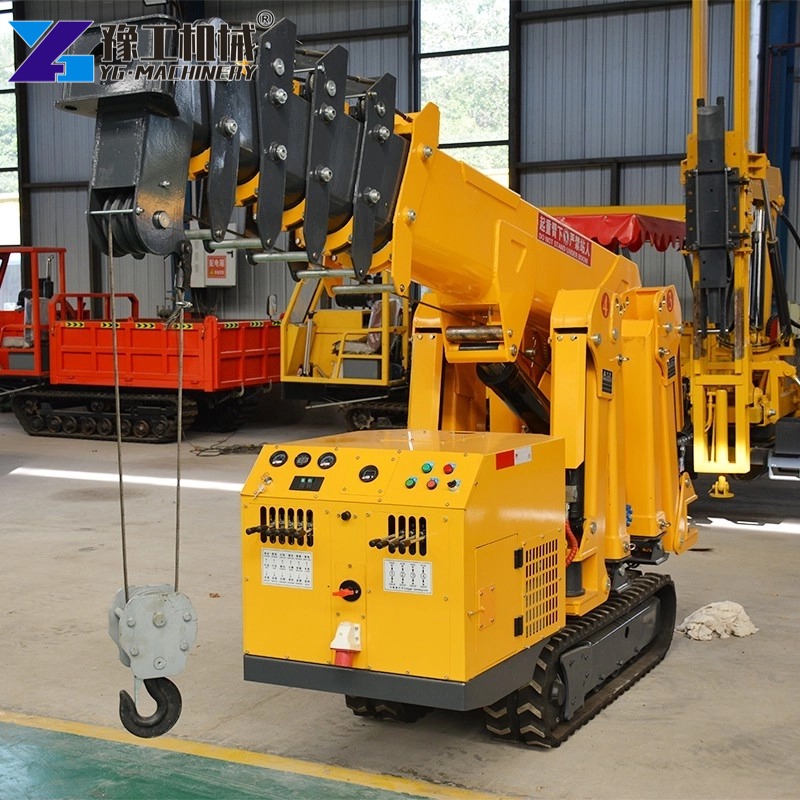
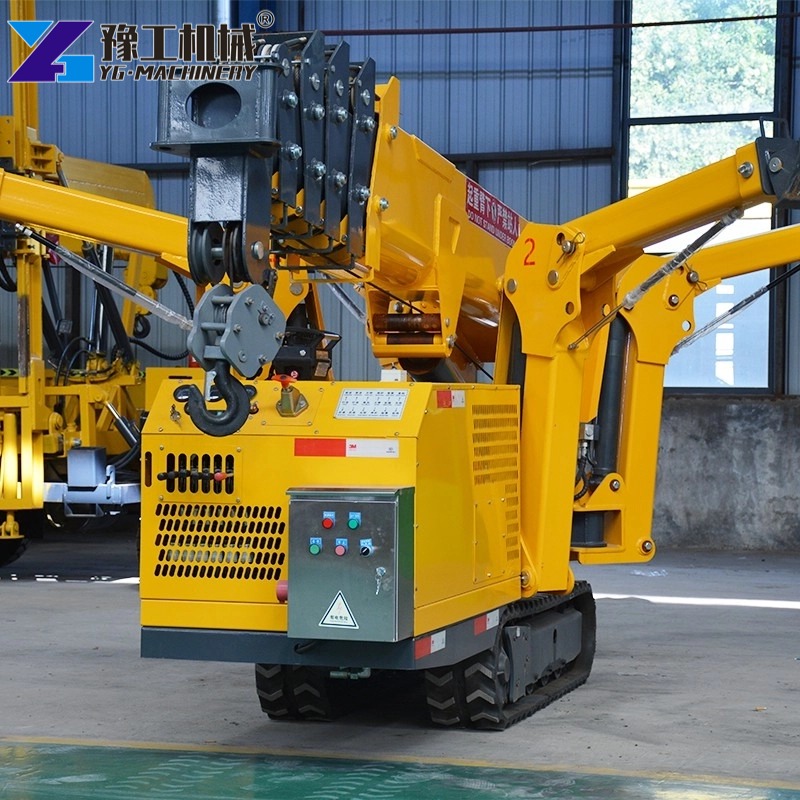
A mini spider crane is designed for flexibility, easy transport, and operation in confined spaces. Based on YG Machinery specifications:
Typical Models: YG-3 / YG-5 / YG-8
| Slewing angle/time | Parameter | YG-3 | YG-5 | YG-8 |
|---|---|---|---|---|
| Specification | Rated lifting capacity | 3 t | 5 t | 8 t |
| Working Range | Max. working radius | 8.83 m @ 0.15 t | 14 m @ 0.5 t | 16.5 m |
| Max. above-ground height | 9.9 m @ 0.7 t | 16.8 m | 18 m | |
| Winch | Hook speed | 0–8 m/min (4 falls) | 12 m/min (4 falls) | 12 m/min (4 falls) |
| Rope dia. × length | φ8 mm × 45 m | φ11 mm × 80 m | φ11 mm × 80 m | |
| Telescopic System | Boom type | 5-section, pentagonal | 5-section, pentagonal | 5-section, pentagonal |
| Boom length / extension time | 3.1 m → 9.2 m / 20 sec | 12.3 m / 54 sec | 12.3 m / 54 sec | |
| Luffing System | Boom angle / time | 0°–78° / 13 sec | 0°–78° / 13 sec | 0°–78° / 13 sec |
| Slew System | Slewing angle / time | 0–360° continuous / 60 sec | 0–360° continuous / 38 sec | 0–360° continuous / 38 sec |
| Travel System | Drive type | Hydraulic motor | Hydraulic motor | Hydraulic motor |
| Travel speed | 0–2.5 km/h | 0–2.5 km/h | 0–2.5 km/h | |
| Gradeability | 25° / 36° | 25° / 36° | 25° / 36° | |
| Control System | Operation mode | Manual + manual travel (remote control optional) | Manual + manual travel (remote control optional) | Manual + manual travel (remote control optional) |
| Control features | Manual / Remote | Manual / Remote | Manual / Remote | |
| Transport | L×W×H (mm) | 2950 × 980 × 1560 | 5000 × 1500 × 1900 | 5000 × 1600 × 2180 |
| Total weight (kg) | 2700 | 6200 | Boom angle/time |
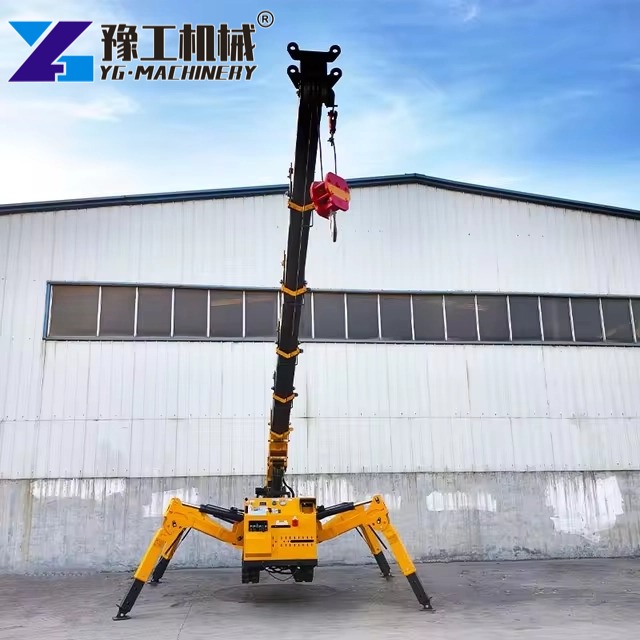
Key Technical Features:
- 5-section pentagonal telescopic boom
- 0–360° continuous rotation
- Hydraulic motor-driven system
- Remote control option
- Walking speed: 0–2.5 km/h
Advantages:
- Easy to transport and operate
- Suitable for indoor and narrow spaces
- Lower mini crane price
- Ideal for light to medium-duty lifting
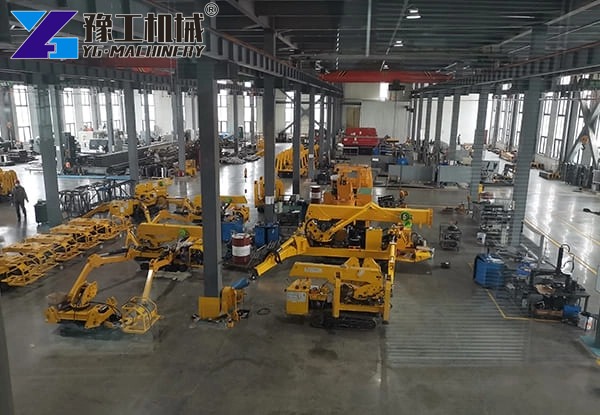
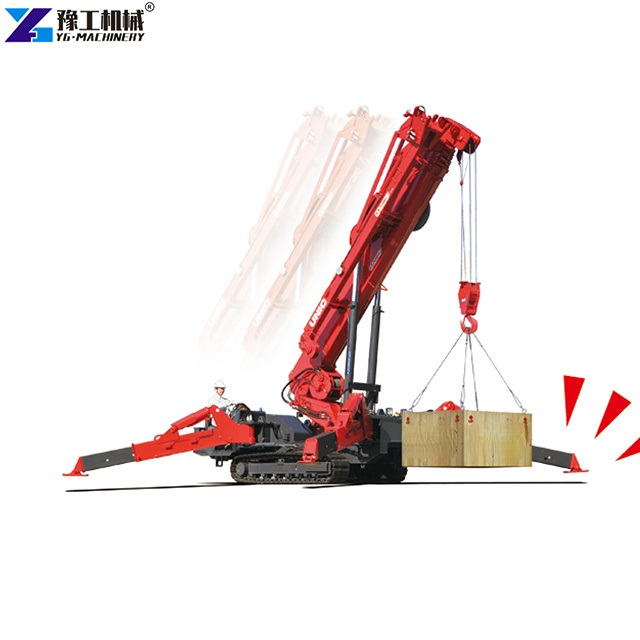
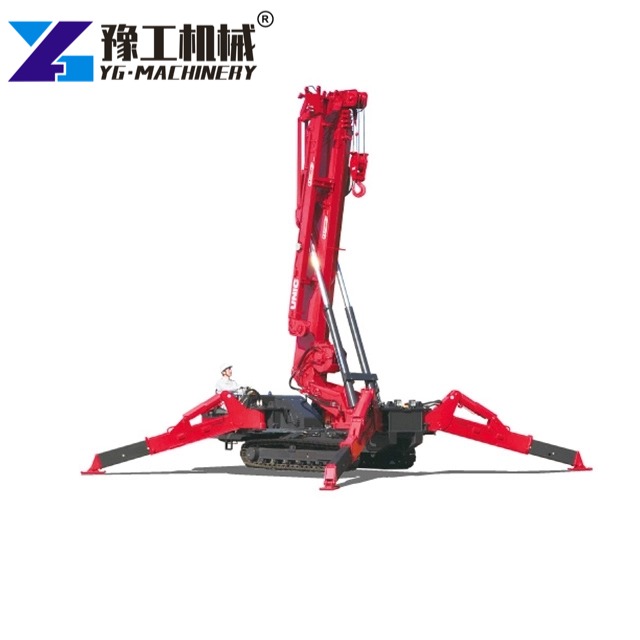
Spider Crane (>8T): Heavy-Duty Lifting Solution
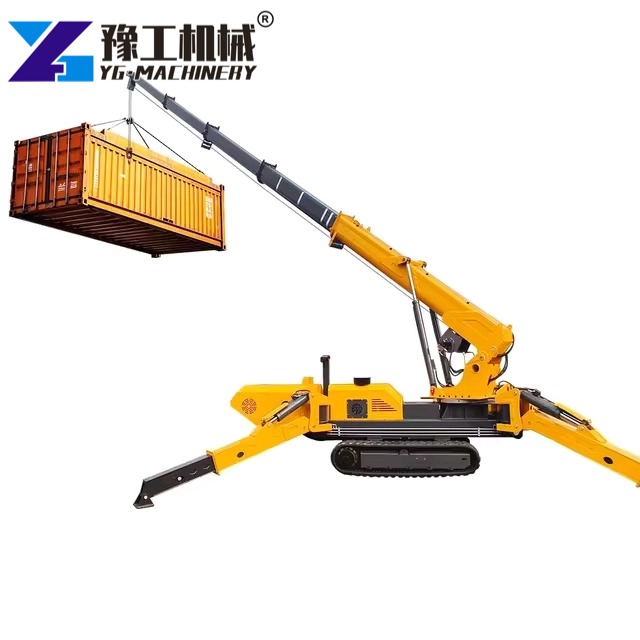
A spider crane is designed for heavy-duty operations that require higher lifting capacity and stronger structural performance.
Key Characteristics:
- Higher lifting capacity (>8 tons)
- Stronger hydraulic system
- Enhanced stability for large-scale lifting
- Suitable for complex construction environments
Compared with mini spider cranes, spider cranes are better suited for infrastructure projects and heavy industrial lifting.
NOTE
If you want to choose other specifications of cranes, please contact us. We offer customized services and can also upgrade your equipment, such as adding a fly jib or a man basket. Feel free to contact us for any requirements. We will provide the most suitable solution based on your project.
Performance Comparison: Small Portable Crane vs Spider Crane
| Feature | Small Crane (3–8T) | Spider Crane (>8T) |
| Capacity | Light–Medium | Heavy-duty |
| Mobility | High | Medium |
| Transport | Easy | More complex |
| Application | Indoor / tight space | Large construction sites |
| Cost | Lower | Higher |
A small portable crane is more practical for everyday lifting tasks, while spider cranes are designed for demanding projects.
Small Portable Crane Types: Flexibility in Design
Within the portable crane category, there are several popular types:
Small Knuckle Boom Crane
- Flexible arm design
- Ideal for precise positioning
Mini Hydraulic Crane
- Compact but powerful
- Smooth lifting performance
These variations allow buyers to choose the most suitable solution depending on their application.
Small Crane Price vs Investment Value
Cost is one of the most important decision factors:
Small Crane:
- $6,000 – $30,000 (3T–8T)
- Lower initial investment
- Lower transport cost
Spider Crane:
- Higher cost due to capacity and structure
- Better for large-scale projects
While the small crane price is more affordable, choosing the right machine depends on your workload and long-term needs.
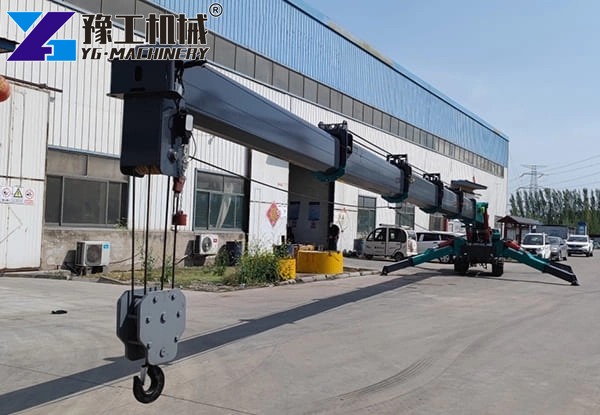
Applications of Small Portable Crane and Spider Crane: Which One Fits Your Project?
Small Crane Applications:
- Indoor lifting in confined spaces
- Glass installation projects
- Equipment maintenance and repair
- Warehouse material handling operations
Spider Crane Applications:
- Large-scale construction projects
- Steel structure lifting
- Infrastructure and civil engineering development
FAQ: Small Portable Crane vs Spider Crane
1. How do I know if I need a small crane or a spider crane?
If your lifting capacity requirement is under 8 tons and space is limited, a small crane is usually the best choice.
2. Can a small crane handle outdoor construction work?
Yes, but it is better suited for light to medium tasks. For heavy-duty outdoor projects, a spider crane is more appropriate.
3. What makes a small knuckle boom crane different?
It offers greater flexibility due to its articulated arm, making it ideal for precise positioning tasks.
4. Is a mini hydraulic crane powerful enough for industrial use?
It can handle many industrial tasks, especially where space is limited, but it has capacity limits compared to larger cranes
5. What is the maintenance difference between the two?
Mini cranes are generally easier and cheaper to maintain due to simpler structures.
6. How important is the working radius when choosing a crane?
Very important. A larger working radius allows more flexibility but may increase cost and machine size
7. Can I customize a crane based on my project?
Yes, YG Machinery offers customization options, including lifting height, control systems, and configurations.
8. Which option is better for long-term ROI?
For frequent, heavy-duty use, spider cranes provide better long-term value. For flexible, light-duty use, a mini crane offers excellent ROI.
Conclusion: Small Portable Crane vs Spider Crane – Which One Should You Choose?
Choosing between a spider crane and a mini crane depends on your project scale, budget, and working environment. For compact, flexible, and cost-effective lifting, portable cranes (3T–8T) are the best choice. For heavy-duty operations, spider cranes remain the superior solution.
Whether you need a mini crane or a heavy-duty spider crane, YG Machinery can provide the right solution. With reliable quality, competitive pricing, and customizable options, YG Machinery helps businesses improve efficiency and reduce operational costs.
Contact YG Machinery today to get expert advice and the best lifting solution for your project.