When sourcing equipment for a waste tire recycling plant, pyrolysis facility, or Tire-Derived Fuel (TDF) operation, one of the first questions buyers ask is: “Why do quotes for a tire shredder machine range anywhere from $5,000 to over $120,000?” Buying solely based on the lowest upfront sticker price often leads to premature blade chipping, gearbox overload on thick steel-belted truck tires, and costly plant downtime. Conversely, over-specifying equipment for a small municipal collection yard ties up unnecessary capital.
Understanding the top 5 factors affecting tire shredder machine price allows recycling entrepreneurs and plant managers to compare manufacturer quotes apples-to-apples, avoid hidden engineering shortcuts, and select a machine configuration that maximizes long-term return on investment (ROI). Below, YG Machinery’s recycling engineers break down the exact technical variables that drive tire shredder pricing.
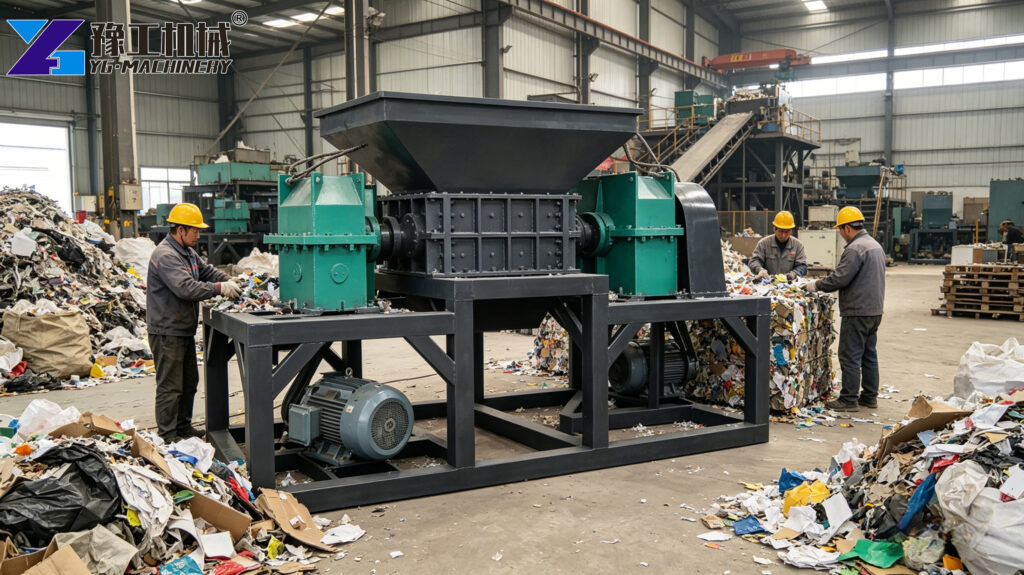
What Is an Industrial Tire Shredder and Why Do Prices Vary
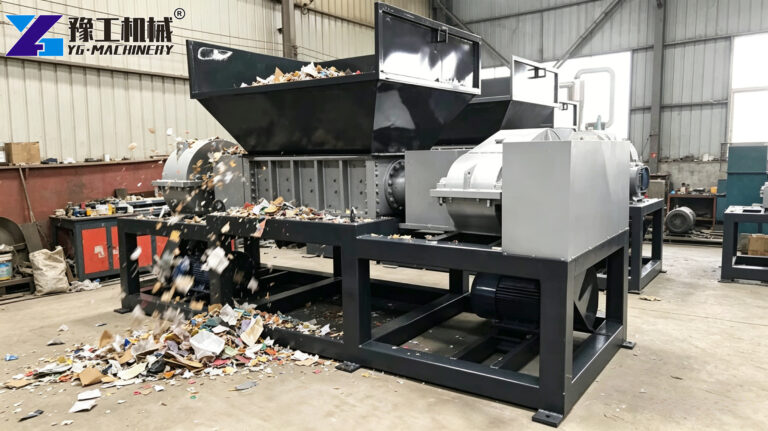
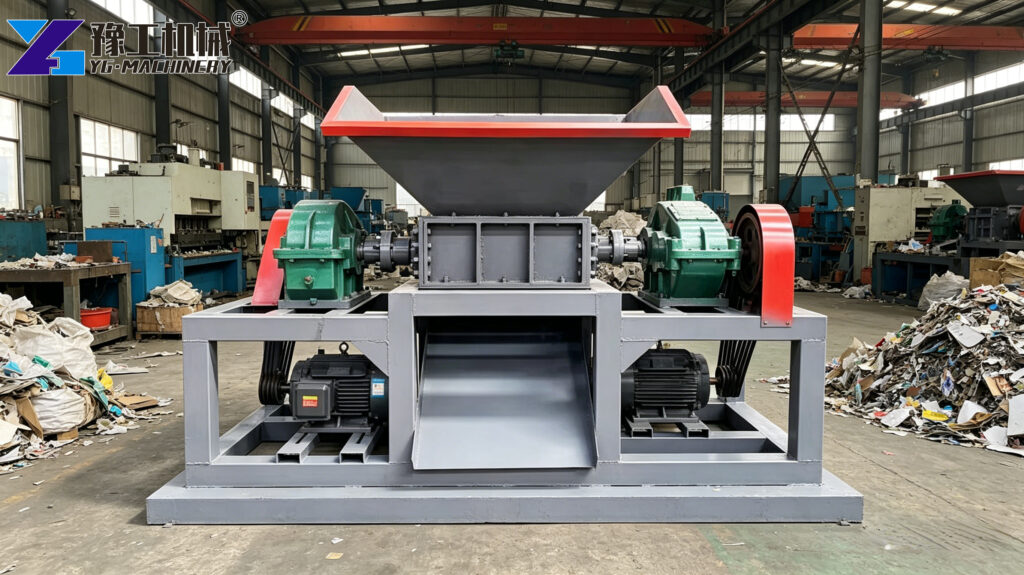
An industrial tire shredder is a heavy-duty machine that processes waste tires into smaller, reusable materials. These machines typically use a dual-shaft system that applies high torque and low speed to shred tough materials efficiently.
The working principle involves:
- Dual shafts rotating in opposite directions
- High-torque crushing and tearing materials
- Automatic feeding through compression
Prices vary because machines are designed for different capacities, materials, and automation levels. A basic machine may handle small workloads, while a high-end system can process large volumes continuously.
Top 5 Key Factors Affecting Tire Shredder Machine Price
Factor 1 – Machine Capacity and Output
One of the most important factors influencing the tire shredder machine price is the machine’s processing capacity. In industrial applications, output (tons per hour) directly determines production efficiency and return on investment.
Typical Capacity Range:
- YG-600: 2–3 tons/hour
- YG-800: 3–5 tons/hour
- YG-1000: 5–8 tons/hour
- YG-1200: 6–10 tons/hour
- YG-2600: up to 60 tons/hour
Higher-capacity machines require:
- More powerful motors
- Stronger structural frames
- Larger feeding systems
This is why the tire shredder price increases as capacity grows.
Tire Shredder Machine Parameter Table (YG Series)
| Model | Power | Spindle Speed | Capacity | Output Size | Hopper Size |
| YG-600 | 4 × 15×2 kW | 18–20 r/min | 2–3 t/h | 3–10 cm | 820×900 mm |
| YG-800 | 4 × 22×2 kW | 18–35 r/min | 3–5 t/h | 3–10 cm | 900×1000 mm |
| YG-1000 | 4 × 30×2 kW | 18–35 r/min | 5–8 t/h | 3–10 cm | 1200×1000 mm |
| YG-1200 | 4 × 37×2 kW | 18–35 r/min | 6–10 t/h | 3–10 cm | 1400×1000 mm |
| YG-1400 | 4 × 45×2 kW | 14–35 r/min | 8–12 t/h | 3–10 cm | 2000×2000 mm |
| YG-1600 | 4 × 75×2 kW | 14–25 r/min | 12–18 t/h | 3–10 cm | 2300×2000 mm |
| YG-1900 | 4 × 90×2 kW | 14–25 r/min | 16–22 t/h | 3–10 cm | 2300×2000 mm |
| YG-2200 | 4 × 132×2 kW | 16–25 r/min | 20–26 t/h | 3–10 cm | 2500×1800 mm |
| YG-2600 | 4 × 160×2 kW | 16–25 r/min | 25–60 t/h | 3–10 cm | 2425×1400 mm |
How Capacity Impacts Price (Professional Insight)
- Small Models (YG-600 to YG-800):
Lower tire shredder machine price, suitable for startups and small recycling plants - Medium Models (YG-1000 to YG-1400):
Balanced cost and performance, ideal for growing businesses - Large Industrial Models (YG-1600 to YG-2600):
Higher initial investment but lower cost per ton in large-scale operations
Expert Tip: Instead of choosing the cheapest machine, calculate the cost per ton processed. A higher-capacity machine often delivers better long-term profitability.
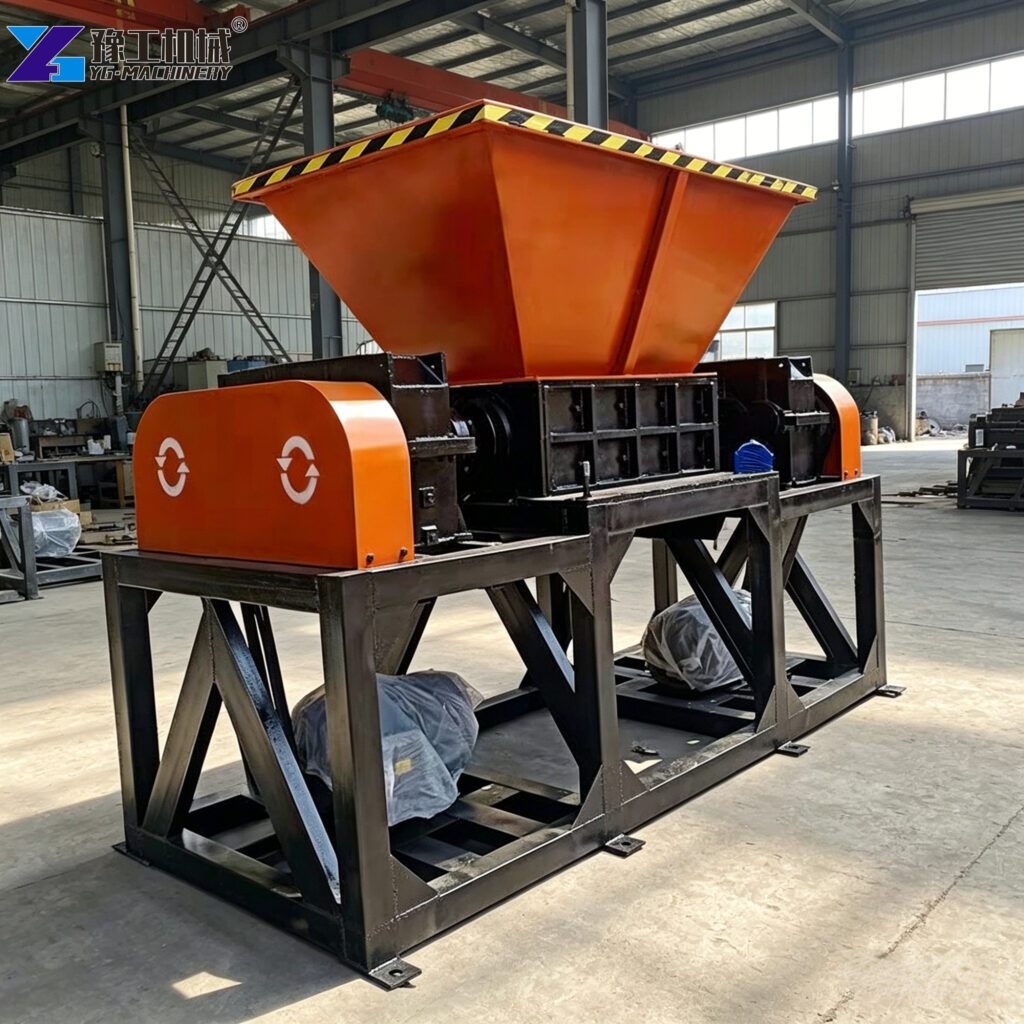
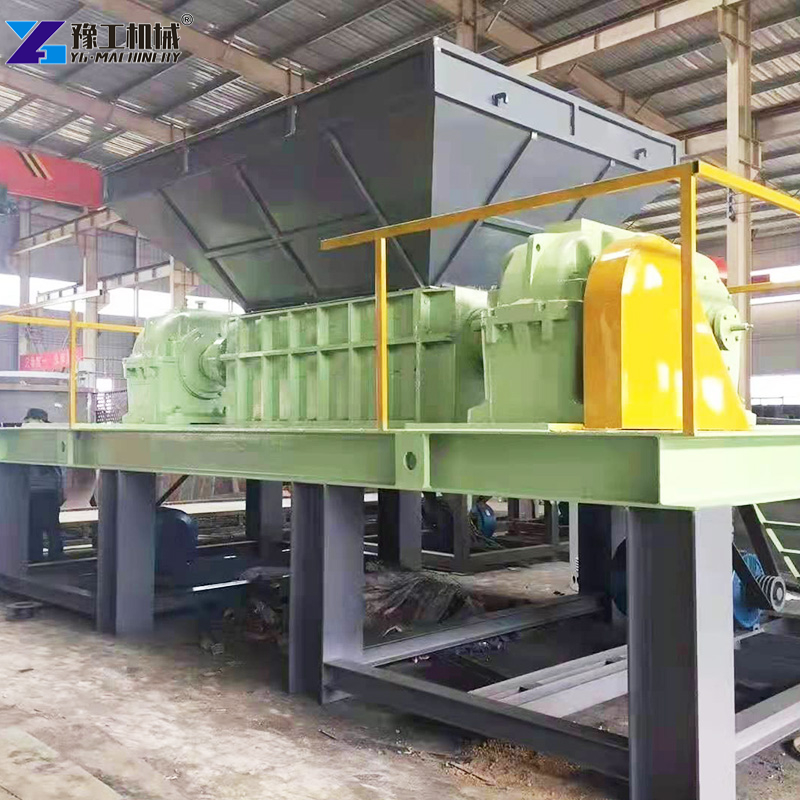
Factor 2 – Power System and Motor Configuration
Motor configuration directly affects both performance and tire shredder machine price.
- Small models: 4 × 15 kW motors
- Large models: up to 4 × 160 kW motors
Higher power means:
- Greater torque
- Ability to shred tougher materials
- Increased electricity consumption
Professional Tip: Choose a machine with balanced power—not just maximum power—to optimize cost and efficiency.
Factor 3 – Blade Material and Cutting Technology
The blade is the most critical wear component in a shredder.
Common Materials:
- 9CrSi: High hardness, suitable for softer materials
- Cr12MoV: Strong wear resistance, ideal for tough materials
- SKD-11: High durability and impact resistance
Better blade materials increase the tire shredder price, but they also:
- Extend service life
- Reduce maintenance costs
- Improve shredding efficiency
Insight: Investing in high-quality blades reduces downtime and improves ROI.
Factor 4 – Automation Level and Control System
Modern shredders use PLC control systems for automation.
Key Features:
- Automatic start/stop
- Overload protection
- Reverse the operation to prevent jamming
Higher automation increases the tire shredder price, but offers:
- Lower labor costs
- Improved safety
- Consistent performance
Factor 5 –Tire Shredder Manufacturers and Brands
Choosing reliable tire shredder manufacturers is essential.
Reputable manufacturers offer:
- High-quality components
- Better engineering design
- After-sales support
- Spare parts availability
Important: A cheaper machine from an unknown supplier may cost more in maintenance and downtime.
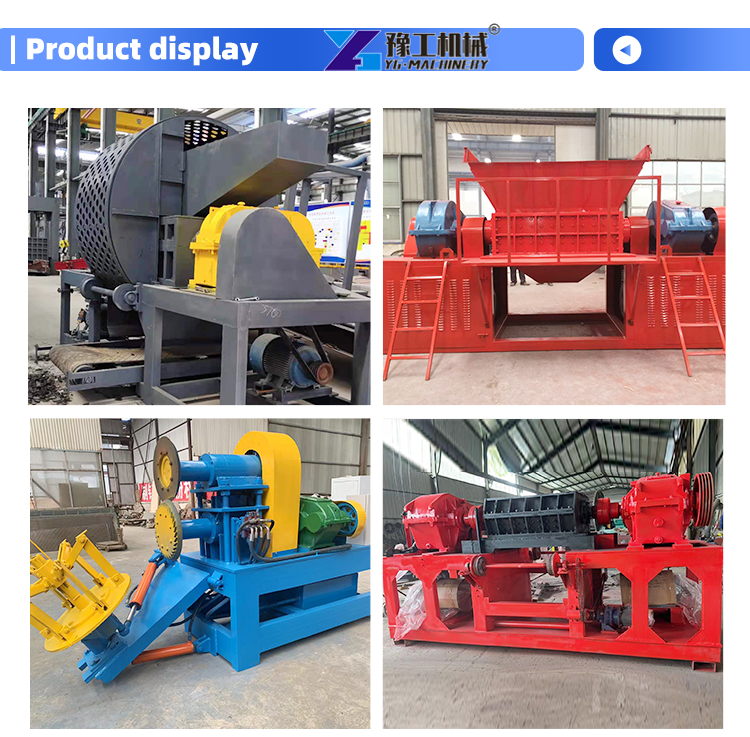
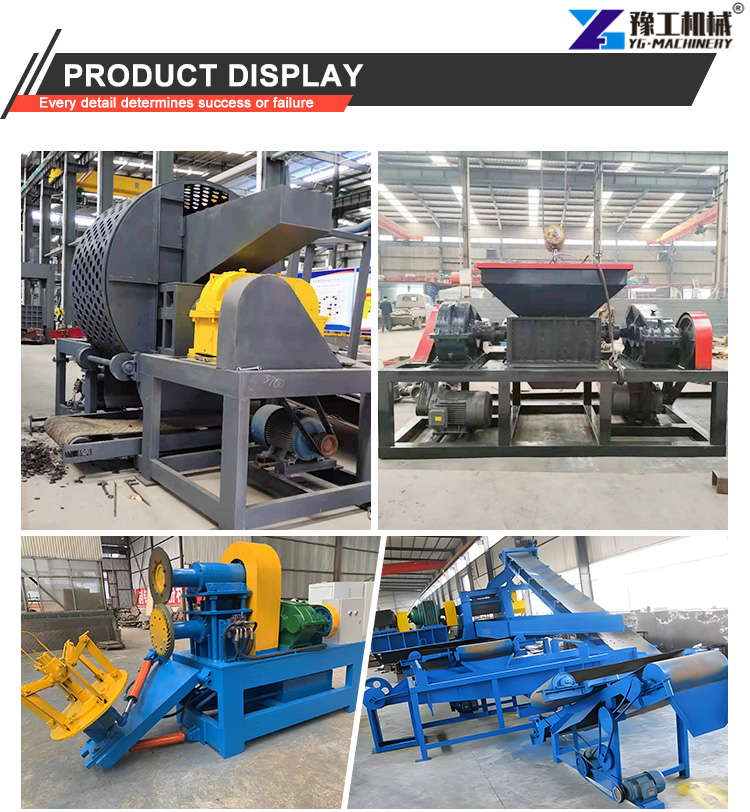
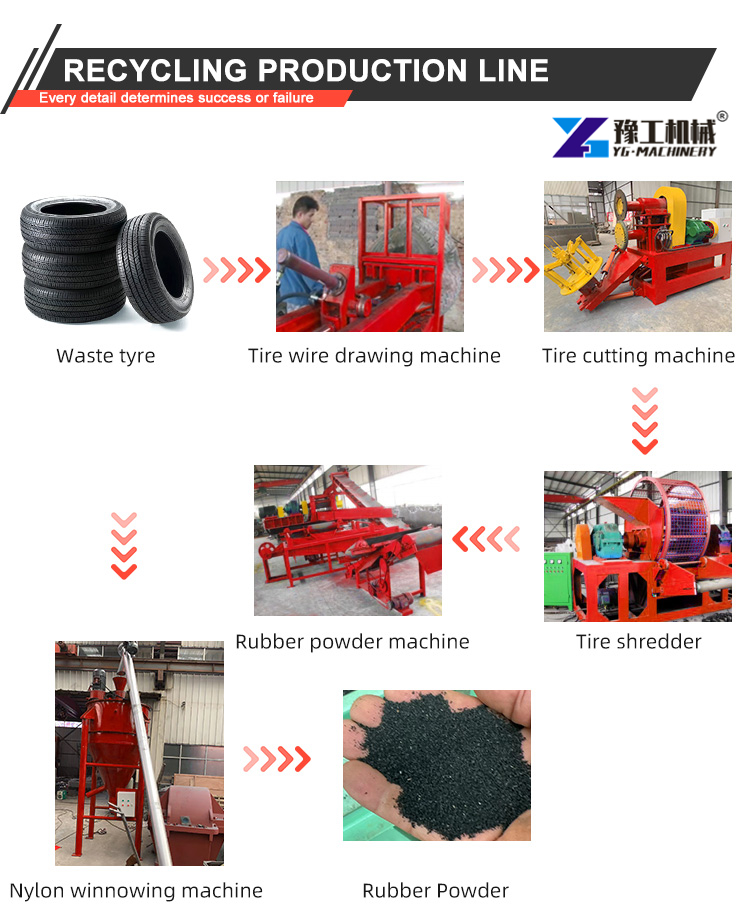
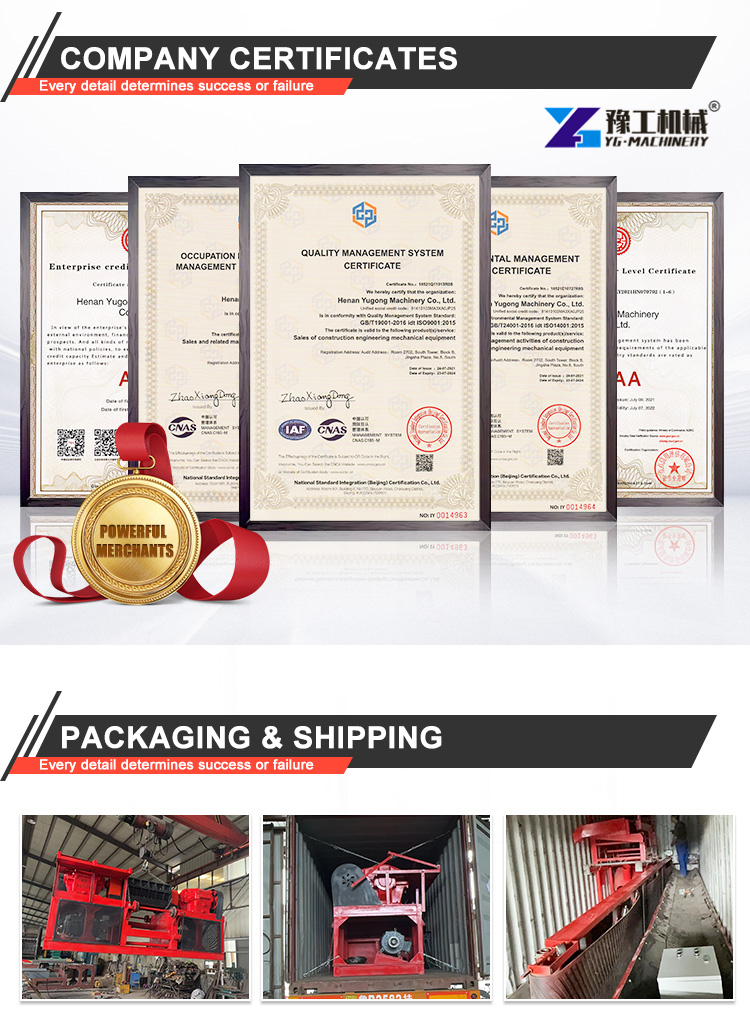
Small Tire Shredder vs Large Industrial Tire Shredder: Price Comparison
A small tire shredder is ideal for:
- Small recycling plants
- Startups
- Limited budgets
Advantages:
- Lower initial investment
- Easy operation
- Compact design
However, large machines provide:
- Higher efficiency
- Continuous operation
- Lower cost per ton
Conclusion: Choose based on your production scale, not just price.
Additional Costs That Influence Tire Shredder Machine Price
Beyond the base price, consider:
- Shipping costs (especially for large machines)
- Installation and commissioning
- Maintenance and spare parts
- Operator training
These hidden costs can significantly impact your total investment.
How to Choose the Right Rubber Tire Shredder Machine for Your Business
To select the best machine:
- Define your processing capacity
- Choose the right blade material
- Evaluate power requirements
- Select a reliable manufacturer
- Consider long-term operating costs
Conclusion & Expert Recommendation
Evaluating the top 5 factors affecting tire shredder machine price—capacity, tire input type, blade alloy, output chip size, and automation—ensures you invest in a machine built for long-term profitability rather than short-term savings. Backed by precision CNC blade machining, heavy-duty planetary gearboxes, CE compliance, and global after-sales support, YG Machinery manufactures customized tire shredding solutions tailored to your exact budget and output goals.
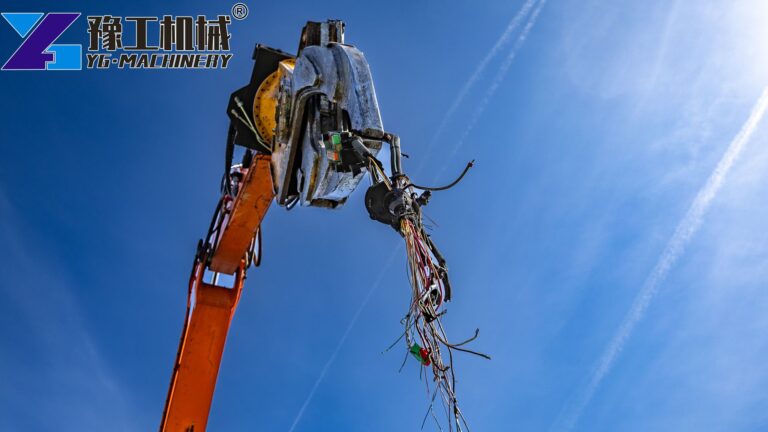
Expanding your recycling facility beyond scrap tires? As a full-line recycling equipment manufacturer, YG Machinery also supplies complementary metal and vehicle dismantling systems—including high-efficiency copper wire granulator machines for scrap cable recycling, heavy-duty excavator car dismantling shears for rapid auto wrecking, and hydraulic metal balers to help you maximize recovery value across multiple waste streams.
- Want an accurate, itemized quote for your tire or scrap recycling project? Tell us your target hourly capacity (tons/hr), input tire types (car, truck, or OTR), and desired output size—our engineers will prepare a custom equipment proposal and factory-direct price breakdown within 6 hours.
[ Contact our recycling equipment specialists today for a customized machine configuration and factory-direct quote! ]
Frequently Asked Questions (FAQ)
A: Standalone small-to-medium double-shaft tire shredders (1–3 tons/hr) generally start around $5,000 to $15,000. Heavy-duty 4–10 ton/hr closed-loop TDF lines with trommel screens range from $20,000 to $50,000, while fully automated steel-separation and crumb rubber powder plants exceed $50,000+ depending on final mesh size.
A: Motor horsepower alone does not tell the whole story. Price differences at identical kW ratings come from blade steel grade (H13/Cr12MoV vs. standard steel), planetary gearbox torque capacity, main shaft diameter, wall thickness of the cutting chamber, and included conveyors or classifiers.
A: No, it is not mandatory. YG’s heavy-duty double-shaft shredders are engineered with high-torque planetary reducers capable of shearing whole steel-belted truck tires (up to 1,200mm) directly. However, if you process 100% heavy truck tires at high daily volumes, adding a hydraulic tire debeader can extend blade life by up to 40% and allow you to sell clean bead wire separately.