From busy urban hubs like Metro Manila to remote island resorts in Palawan, construction in the Philippines faces three constant hurdles: high sea-freight logistics costs, slow build times, and severe typhoon risks. Traditional concrete builds often fail to meet fast-growing commercial timelines.
YG Expanding Container Homes offer a revolutionary alternative—combining 35% lower overall costs, 5-day rapid deployment, and high-strength steel resilience designed specifically for tropical and coastal environments.
Global Expertise, Localized Solutions: While our expandable container homes are tailored to meet the severe typhoon and tropical demands of the Philippines, YG Machinery serves commercial clients, developers, and homeowners worldwide. Our modular systems are engineered to strictly adhere to international building standards, with successful project deployments across the United States, Canada, Australia, Malaysia, and over 30 other countries.
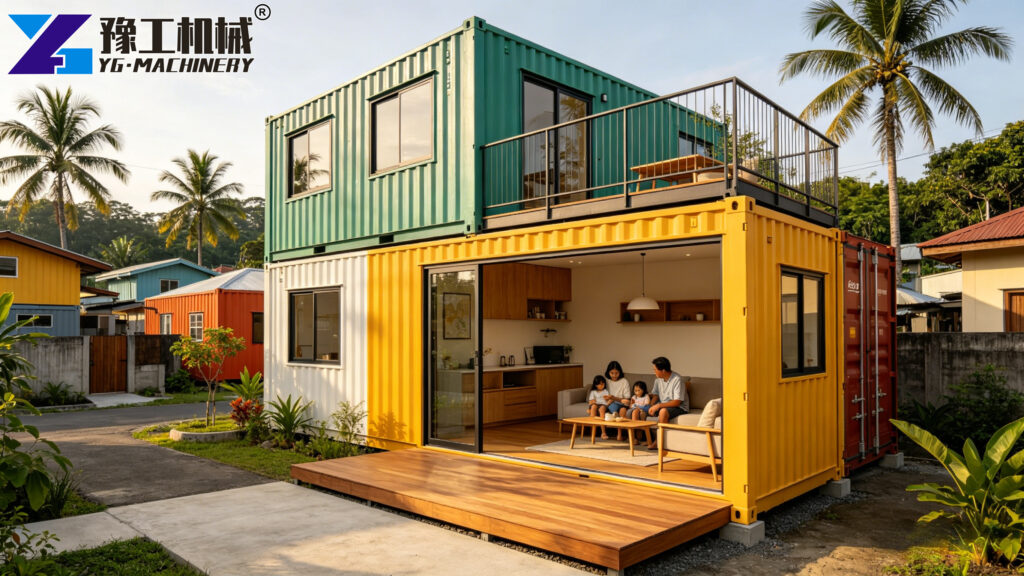
Technical Specifications: YG Series Expandable Container House Price and Performance
When considering an expandable house price, it’s important to understand what you’re getting. The YG Series offers multiple configurations to suit different space requirements and budgets. All units share the same core advantages: foldable transport, rapid deployment, and durable steel construction.
| Model | Folded Size (L×W×H) | Expanded Area & Interior Height | Total Mass | Key Feature |
| 20FT Basic | 5900 × 2200 × 2480 mm | 37.3 ㎡ (Clear Height: 2.24 m) | 2,500 kg | Standard 2-bedroom layout |
| 30FT Basic | 9000 × 2200 × 2480 mm | 57.2 ㎡ (Clear Height: 2.24 m) | 3,750 kg | Spacious family suite |
| 40FT Basic | 11800 × 2200 × 2480 mm | 73.6 ㎡ (Clear Height: 2.20 m) | 4,400 kg | Luxury resort villa option |
| Compact Size | 5900 × 700 × 2480 mm | 27.3 ㎡ (Clear Height: 2.24 m) | 1,850 kg | Ultra-portable & lowest shipping cost |
The expandable container house price varies by model, customization level, and quantity. However, the total cost—including transport, installation, and finishing—typically comes in 30–40% lower than traditional concrete construction of comparable size. Factory-direct pricing ensures no hidden markups, and volume discounts are available for resort developers, real estate projects, and commercial applications.
Why the Philippines Demands Flexible, Expandable, Modular House Solutions
Building in the Philippines comes with a unique set of challenges that make conventional construction difficult. Urban areas suffer from extreme space constraints, with land prices in Metro Manila and Cebu making traditional homes unaffordable for many. Meanwhile, remote islands face logistical nightmares—transporting construction materials to places like Palawan, Siargao, or Coron is expensive and time-consuming. Add to that the country’s vulnerability to typhoons (averaging 20 per year) and frequent earthquakes, and the need for a resilient, rapidly deployable building solution becomes clear.
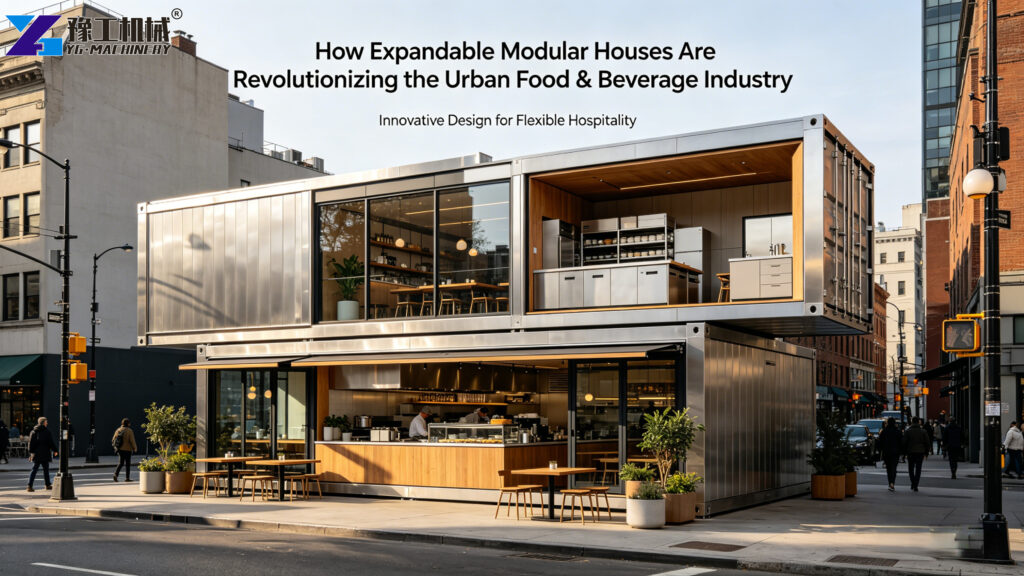
A portable container home addresses these issues. These units are factory-fabricated, ensuring consistent quality, and then folded into compact sizes for transport. Once on site, they expand to create spacious, fully functional living or commercial spaces. Because they are made from high-strength steel, they offer superior resistance to wind, rain, and seismic forces—making them ideal for the Philippine environment.
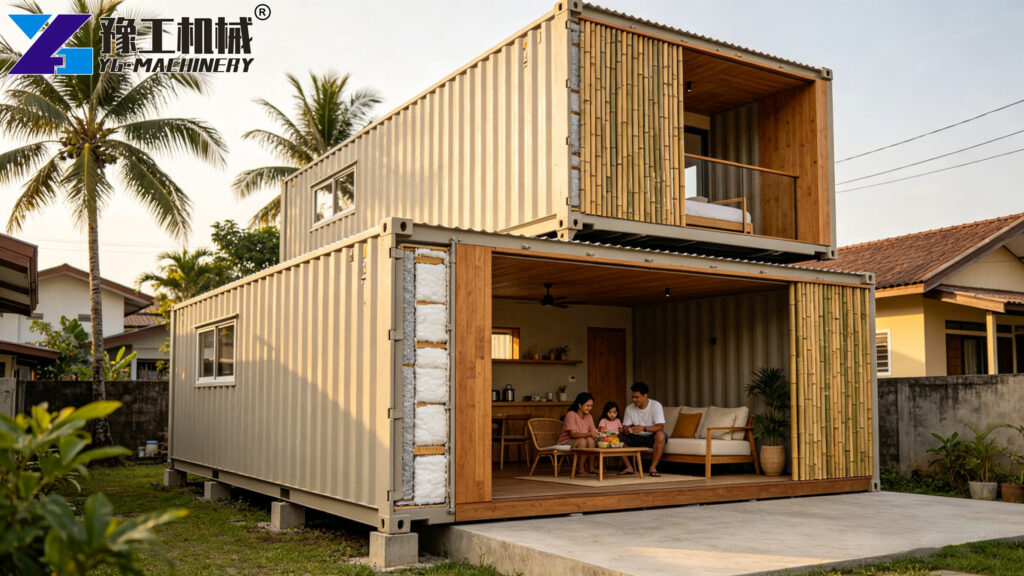
Case Study: YG 40ft and 20ft Expanding Container Homes for a Beach Resort in Palawan
📌 Key Results & Project Highlights
🚀 Project Snapshot: Palawan Beach Resort Expansion
- ⚡ 5 Days Installation: Complete site assembly and setup finished in under a week, beating the peak tourist season deadline.
- 💰 35% Cost Savings: Total project expenditure cut by over one-third compared to traditional concrete construction.
- 📈 92% Peak Occupancy: Rapid market launch with stellar guest satisfaction and high room utilization.
- 🌪️ 100% Weather Resilience: Zero structural damage during 2 major typhoons, proving extreme coastal durability.
Client Background
The Santos family owns a small but growing beach resort in El Nido, Palawan—one of the Philippines’ most popular tourist destinations. With visitor numbers increasing year after year, they needed to expand their accommodation capacity quickly to meet demand. However, building traditional concrete structures on their beachfront property presented numerous obstacles.
Problems Faced
- 1. Strict Environmental Regulations: El Nido is a protected area with stringent rules on construction. Traditional building would require extensive permits and generate significant construction waste, a process that could take months.
- 2. Logistical Challenges: Transporting construction materials to Palawan involves sea freight and rough road conditions. Conventional building materials are bulky, prone to damage, and expensive to ship.
- 3. Space Constraints: The resort’s available land is limited. They needed a solution that maximized usable space without requiring a large permanent footprint.
- 4. Typhoon Resistance: Palawan, while less affected than eastern provinces, still experiences typhoons and heavy monsoon rains. Any new structure needed to withstand high winds and heavy rainfall.
- 5. Speed to Market: The Santos family wanted to have new rooms ready for the upcoming peak tourist season—a traditional build would have taken 6–8 months, missing the window entirely.
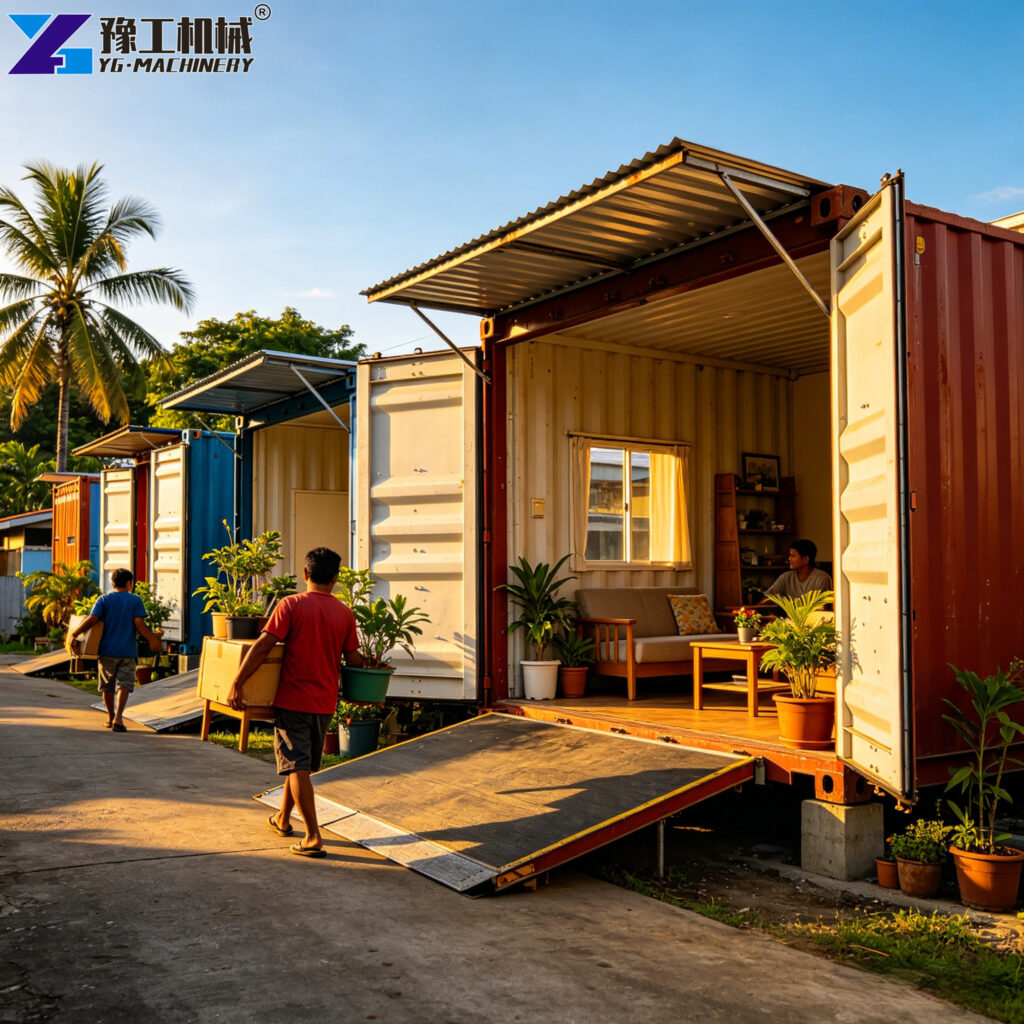
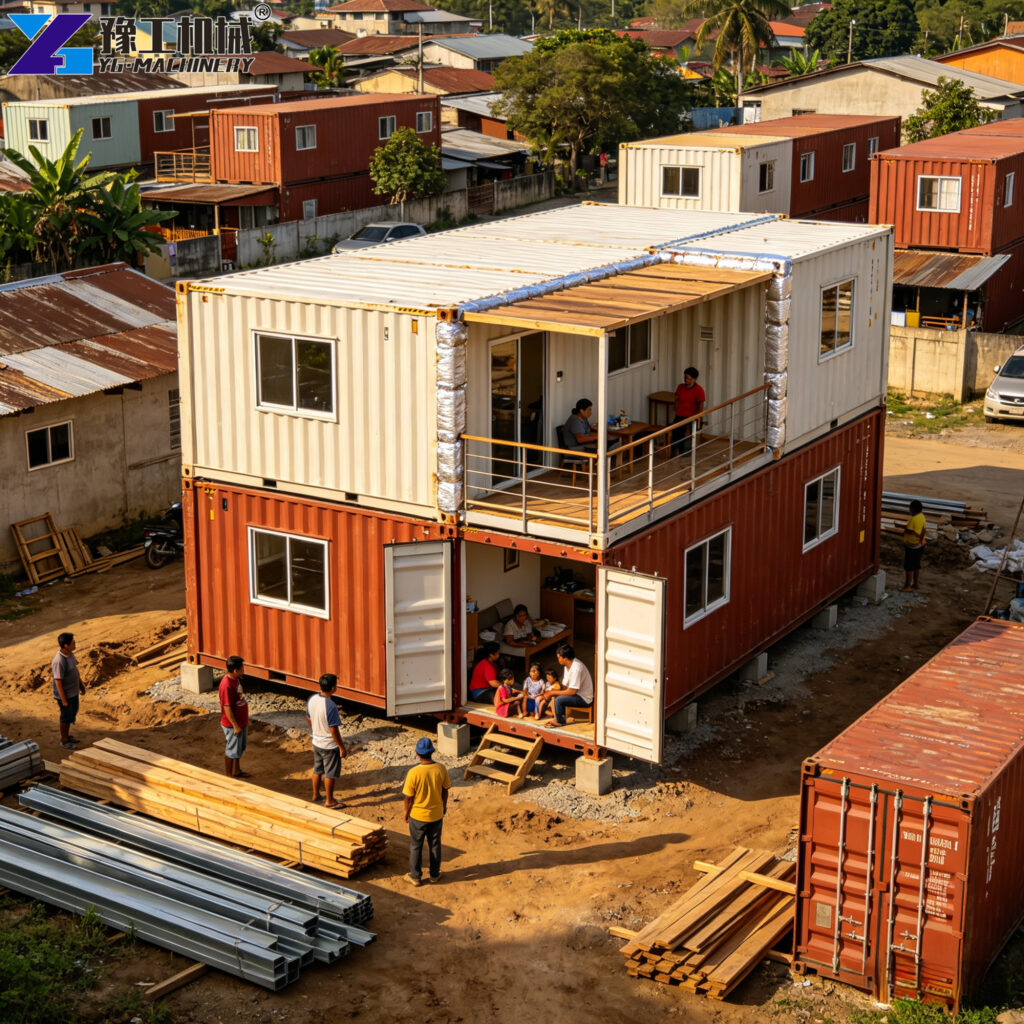
Solution: Tailor-Made YG 40ft & 20ft Expandable Prefab Houses for Coastal Resorts
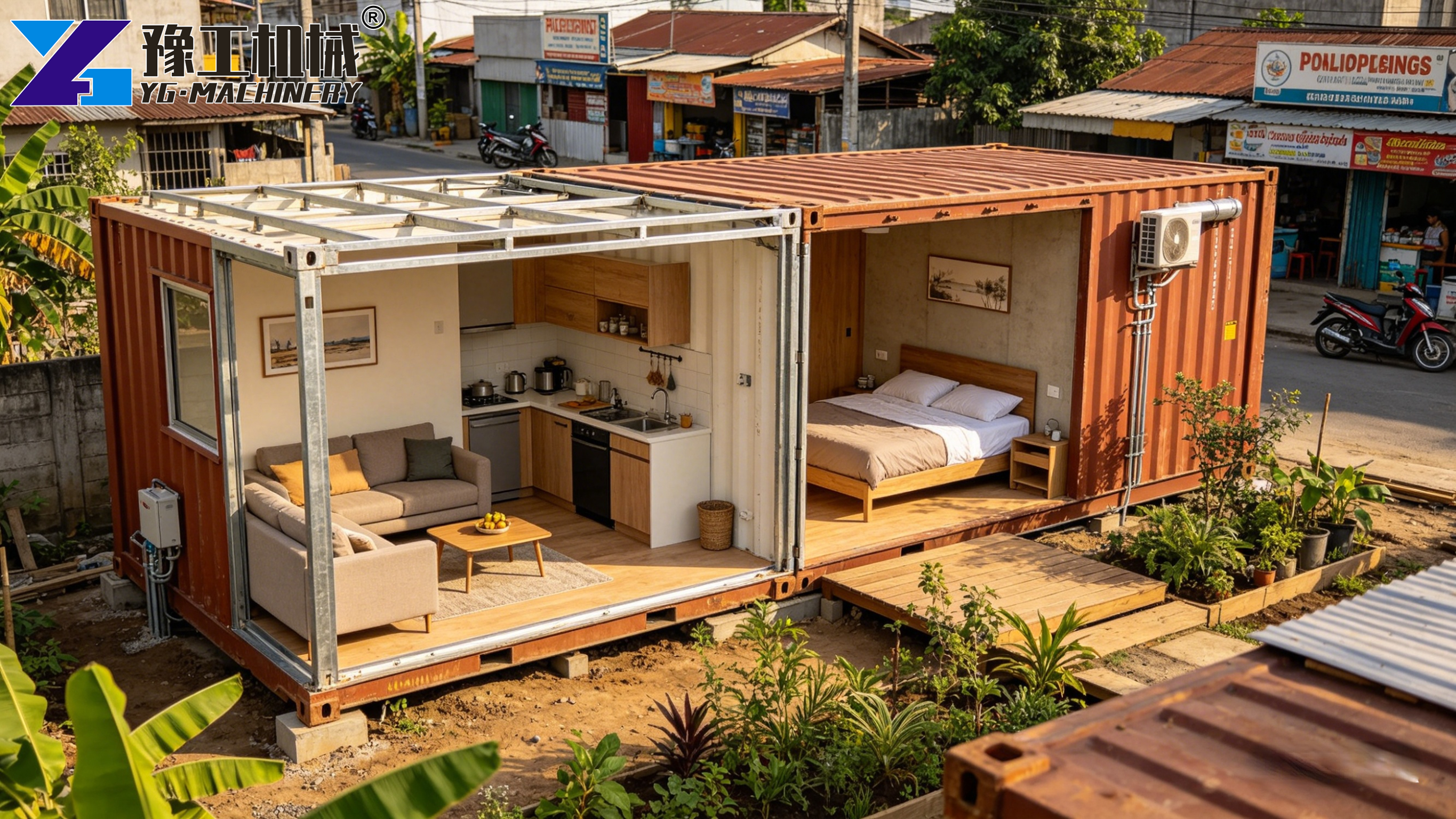
To solve the Santos family’s challenges, YG Machinery designed and delivered a fully customized modular housing solution that balanced speed, durability, and visual appeal.
Instead of relying on traditional construction, we engineered a set of expandable prefab units that could be quickly deployed, easily transported, and seamlessly integrated into the natural beachfront environment.
Project Configuration
We supplied the resort with a flexible combination of residential and functional units:
- 3 × 40ft expandable prefab houses
We configured these as spacious family suites. Each unit expands to approximately 75㎡, including:- Two bedrooms
- A living area
- A kitchenette
- A private bathroom
- Panoramic windows facing the ocean
- 2 × 20ft expandable container homes
We designed these for:- Deluxe double guest rooms
- A compact reception and office space
This modular setup allowed the resort to maximize accommodation capacity without expanding its land footprint.
Customization for the Philippine Coastal Environment
We optimized every unit specifically for Palawan’s tropical and marine conditions:
- High-strength anti-corrosion steel structure
We selected reinforced steel materials to resist humidity, salt spray, and long-term coastal exposure. - Enhanced thermal insulation system
We upgraded insulation layers to maintain indoor comfort under high temperatures and strong sunlight. - Typhoon-resistant structural reinforcement
Our engineering team strengthened key load-bearing points to handle strong winds and heavy rainfall. - Resort-style exterior finishes
We customized the appearance to blend naturally with the beachfront landscape, improving guest experience and visual appeal.
Efficient Delivery & Rapid Installation
We streamlined the entire process from factory to site:
- We prefabricated all units in our factory to ensure consistent quality and precise assembly
- We folded each unit into compact dimensions to reduce shipping volume and cost
- We transported the units to Palawan via container shipping without damage risks
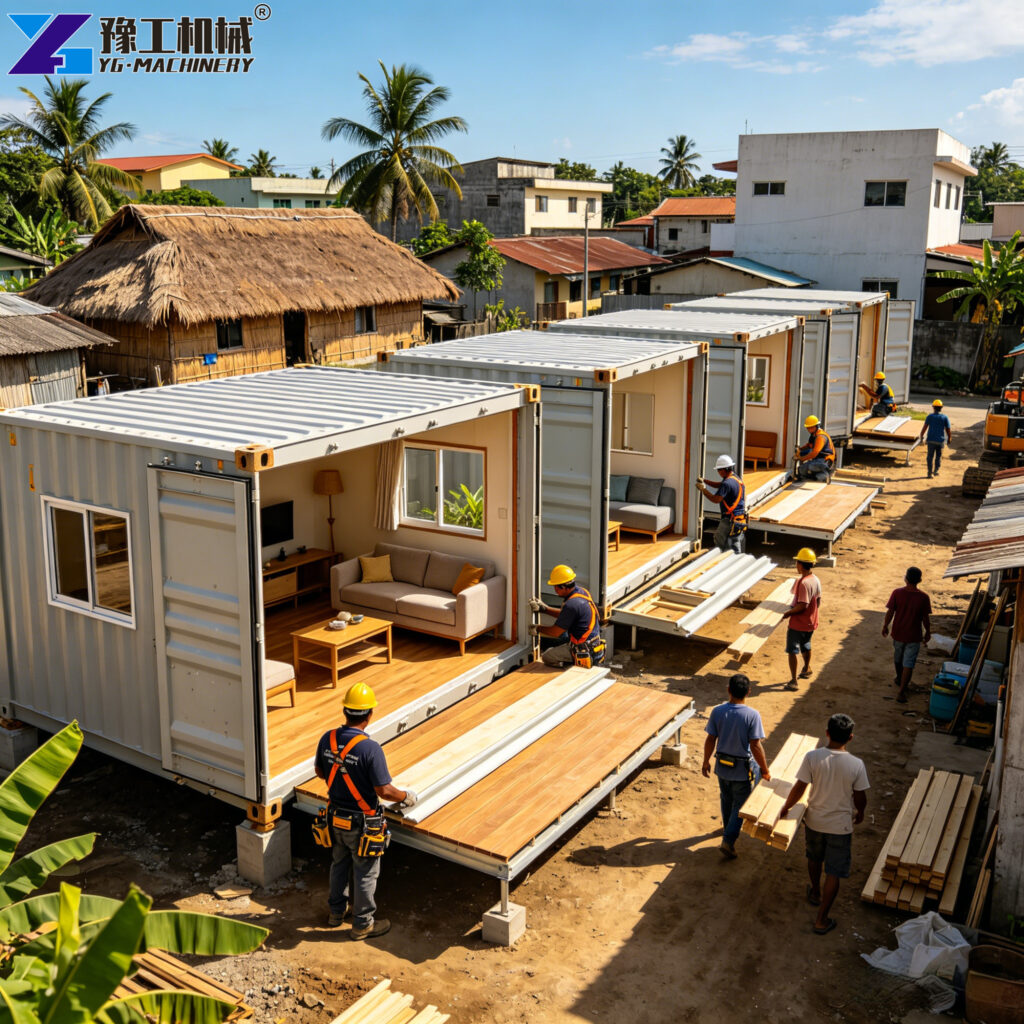
- We guided the local team remotely and helped them complete the installation in just 5 days
This approach eliminated long construction timelines and allowed the resort to prepare for peak season on schedule.
Why This Solution Worked
By choosing YG’s expandable modular houses, the Santos family avoided the key limitations of traditional construction:
- No long approval delays or heavy on-site construction
- No complex logistics for bulk building materials
- No excessive labor requirements
- No compromise on durability or aesthetics
Instead, they gained a fast, scalable, and future-ready accommodation solution that can easily expand as their business grows.
Usage Results
The new expandable home units were operational in time for the peak tourist season—a fraction of the time a traditional build would have required. Key outcomes included:
- 92% occupancy during peak months, with guests praising the modern design and comfort
- Zero structural issues during two typhoons that passed near Palawan, with the units performing exceptionally well
- Significant cost savings compared to traditional construction, estimated at approximately 35% lower total project cost
- Low maintenance due to the anti-corrosion materials and durable finishes
- Positive guest reviews highlighting the unique “container home” aesthetic and comfort
Customer Review
“We were skeptical at first—could a container house really stand up to Palawan’s weather and look good enough for a beach resort? The YG expandable home units exceeded every expectation. They arrived quickly, were installed in less than a week, and have performed flawlessly through storms. Our guests love them, and we’ve already ordered two more units to expand further. I can’t imagine going back to traditional construction.”
— Santos, Owner, Beachfront Resort, El Nido, Palawan
Planning a resort project in Palawan or Siargao? Talk to our engineers today for a free custom layout and instant quotation.
Why Expanding Container Homes Are Gaining Popularity Across the Philippines
1. Typhoon-Resistant Construction for the Philippine Climate
The Philippines experiences some of the strongest typhoons in the world. YG folding container houses for resorts are built from high-strength structural steel, with reinforced corner castings and welded seams. Unlike traditional wood or concrete structures, these units flex slightly under wind load without cracking or collapsing.
2. Quick Deployment for Remote Islands
Transporting materials to islands like Palawan, Siargao, or Bohol is a major challenge. YG’s foldable design reduces shipping volume by up to 70% compared to the expanded size, allowing more units per container ship. Once on site, a small crew can complete installation in 1–3 days per unit—no heavy equipment needed for the smaller models.
3. Space-Saving Foldable Design for Urban Areas
In Metro Manila, Cebu, and Davao, land is scarce and expensive. The foldable nature of these units allows them to be delivered to tight urban lots where traditional construction equipment cannot access. Once expanded, they provide generous interior space without requiring a large permanent footprint.
4. Cost-Effective Alternative to Traditional Building
When calculating total project costs—materials, labor, permits, and time—expanding container homes consistently outperform traditional construction. Factory fabrication ensures predictable costs with no surprises. Reduced labor requirements and rapid installation further lower expenses. For developers and individual homeowners alike, this represents exceptional value.
5. Eco-Friendly and Compliant with Local Standards
All YG portable container home units are manufactured using environmentally friendly processes. The steel structure is 100% recyclable, and the prefabricated approach generates zero construction waste on site. Units can be placed on simple foundations, minimizing land disturbance. These features help simplify the permitting process, particularly in environmentally sensitive areas like Palawan and Batangas.
Assembly Guide: How to Set Up Your Expandable Modular House in the Philippines
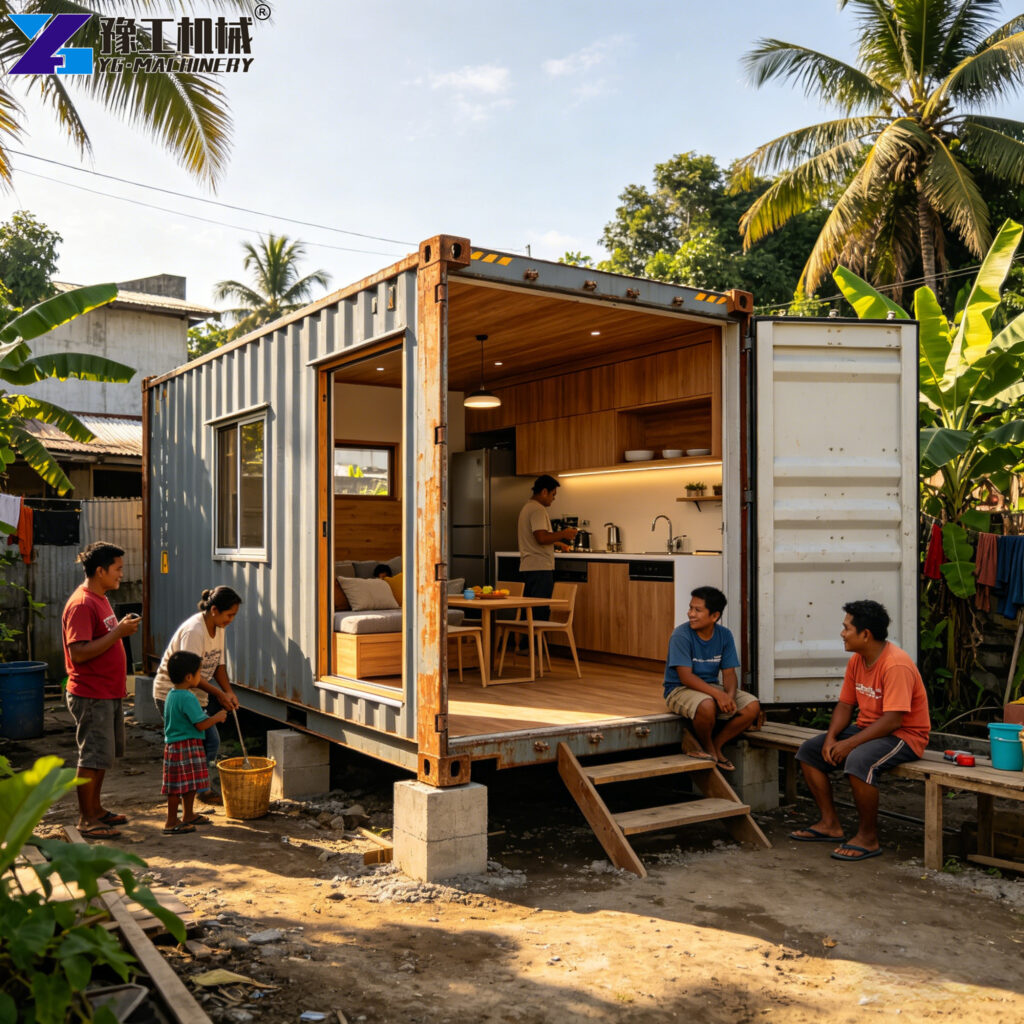
Step 1: Site Preparation and Foundation
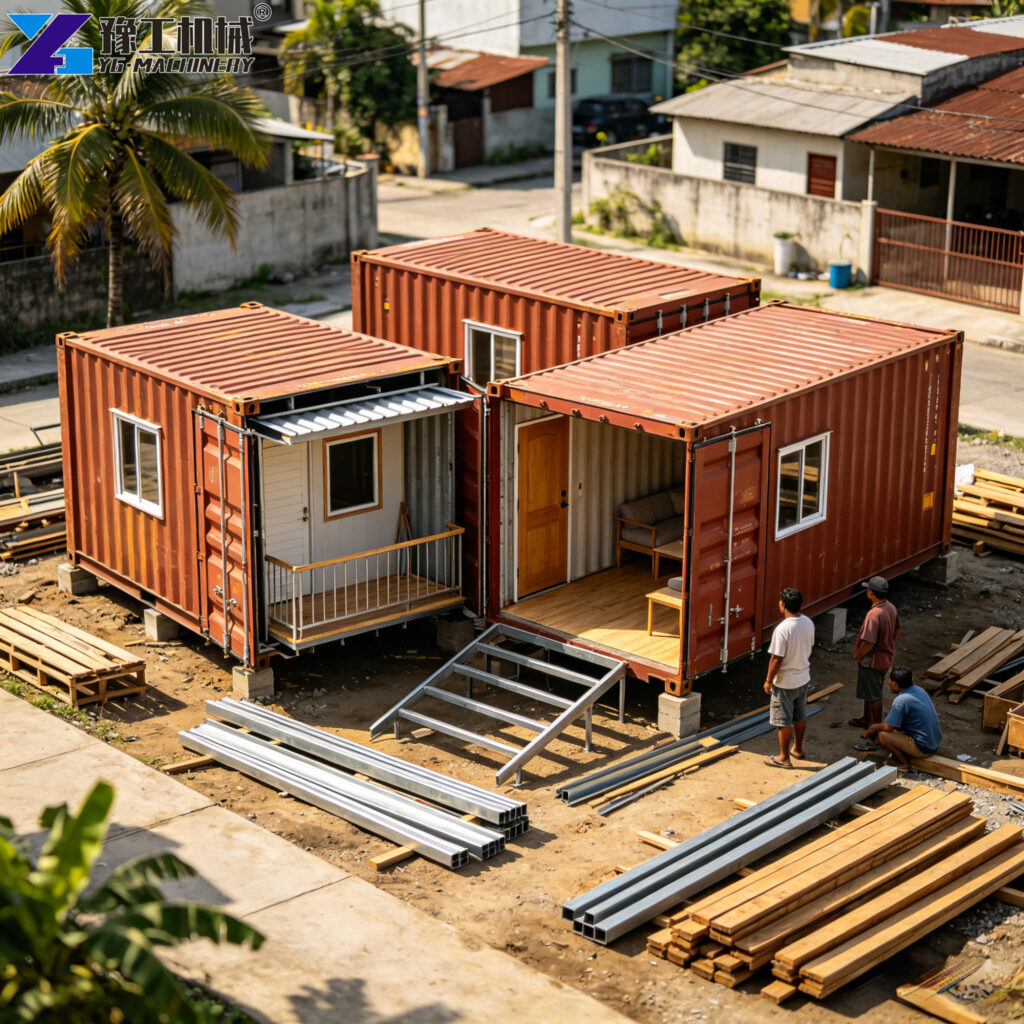
A level, stable site is essential. For most applications, concrete pier foundations at the four corners are sufficient. In areas with poor soil or high seismic risk, a reinforced concrete slab is recommended. Ensure all foundation points are perfectly level—any variation will affect the expansion mechanism.
Step 2: Delivery and Unloading
The unit arrives in its folded state, typically on a flatbed truck. Use a crane or forklift with sufficient capacity (refer to the total mass in the specifications table) to lift the unit from the truck. Position it directly above the prepared foundation points.
Step 3: Positioning and Leveling
Lower the folded unit onto the foundation. Use hydraulic jacks or leveling screws to fine-tune the height and ensure the unit is perfectly level in all directions. This step is critical for smooth expansion.
Step 4: Expanding the Unit
With the unit securely leveled, remove all transport locks and safety pins. Follow YG’s sequence to expand each side. For hydraulic expansion models, use a synchronized pump to ensure even movement. For manual systems, multiple workers should operate together to maintain balance. Once fully expanded, lock all mechanisms in place with the provided pins.
Step 5: Roof and Sealing
Install roof sections. Apply high-quality polyurethane sealant to all external seams and joints. This step is particularly important in the Philippines to prevent water infiltration during heavy monsoon rains.
Step 6: Utility Connections
Connect the unit to the site’s electrical, water, and sewage systems. YG units come with pre-installed internal wiring and plumbing, so connections are straightforward. Ensure all connections meet local electrical and plumbing codes.
Step 7: Final Inspection and Handover
Test all systems—lights, outlets, air conditioning, water pressure, drainage. Verify that doors and windows open and close properly. Once everything is confirmed, the unit is ready for occupancy.
FAQs About Expanding Container Homes
Q1: Are YG expanding container homes strong enough to withstand Philippine typhoons?
Yes. All YG units are constructed from high-strength structural steel. They have been successfully deployed in typhoon-prone areas with excellent results.
Q2: Can I customize the interior layout and finishes?
Absolutely. YG Machinery offers full customization for interior layouts, finishes, windows, doors, and fixtures. Whether you need a studio apartment, a family suite, or a commercial office, we can design to your specifications.
Q3: How does the expandable house price compare to traditional construction?
Total project costs—including materials, transport, installation, and finishing—typically come in 30–40% lower than traditional concrete construction of comparable size. Factory-direct pricing, reduced labor requirements, and rapid installation contribute to the savings.
Q4: How long does installation take?
For a single unit, a crew of 3–4 workers can complete installation in 1–3 days. Multiple units can be installed simultaneously, with larger projects typically completed within one to two weeks.
Q5: Do these units comply with Philippine building codes and environmental regulations?
YG units are designed to meet international building standards. In the Philippines, they are typically classified as prefabricated structures, which often have streamlined permitting processes. The zero-construction-waste installation helps simplify environmental compliance, particularly in protected areas.
Q6: Can I purchase a single unit, or do I need to buy in bulk?
YG Machinery supplies both single units for individual homeowners and bulk orders for developers, resorts, and commercial projects. All customers receive the same factory-direct pricing and quality assurance.
Q7: How do these homes handle severe coastal humidity and sea salt spray in island areas?
All YG expanding container frames are built using galvanized structural steel treated with anti-corrosion marine-grade coatings. Combined with high-density sandwich panel insulation, they effectively resist rust, humidity, and mold growth, making them ideal for long-term beachfront and tropical island environments.
Q8: How are the units shipped to the Philippines, and can they reach remote islands?
Units are fully folded in our factory to minimize volume (up to 70% space savings), allowing multiple units to fit into standard shipping containers. They are shipped via major sea ports (e.g., Manila, Cebu) and can be easily transferred to inter-island cargo vessels or flatbed trucks for final delivery to islands like Palawan, Siargao, or Bohol.
Q9: Do I need special plumbing or electrical setups for installation in the Philippines?
No. Every YG unit comes pre-wired and pre-plumbed according to standard specifications, including ready-to-use distribution boxes, outlets, lighting, and sanitary piping. Local contractors simply need to connect the external lines to your site’s main water supply, septic tank, and power grid.
Q10: Do you ship outside the Philippines, and do your homes comply with international building codes?
Yes, absolute global coverage! While we have a strong logistics presence in the Philippines, YG Machinery exports worldwide, including key markets like the United States, Canada, Australia, Malaysia, and Europe. Our factory designs units that comply with regional structural, electrical, and thermal insulation standards (such as local wind load, snow load, and wiring specifications) to ensure smooth customs clearance and site approval anywhere in the world.