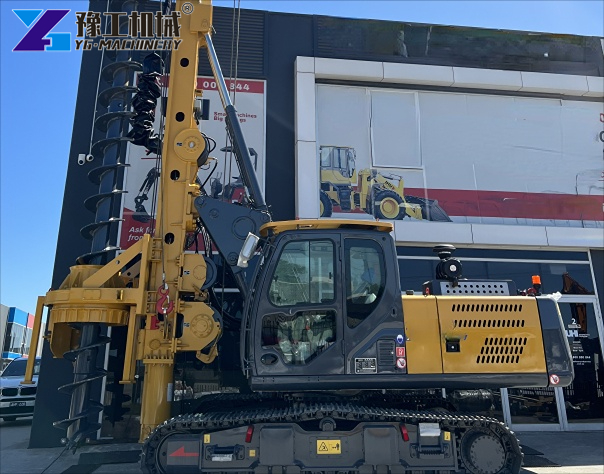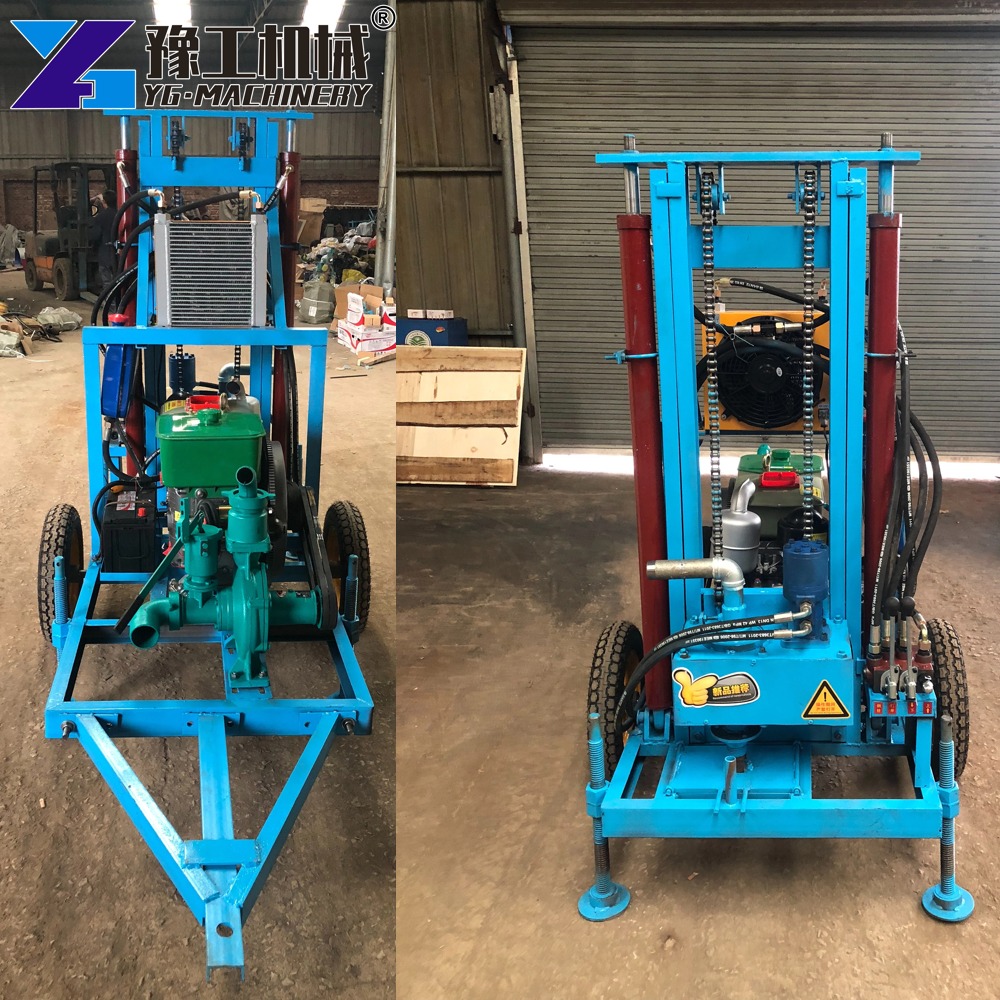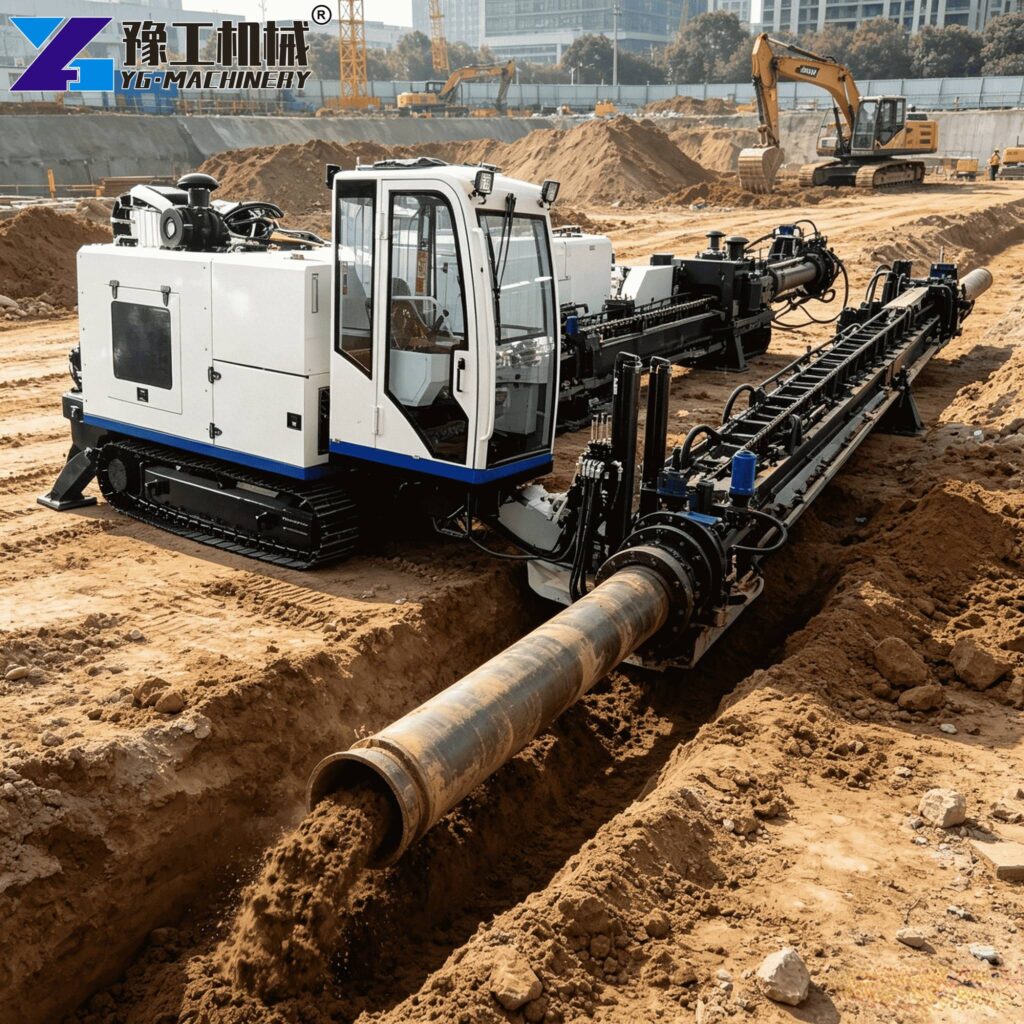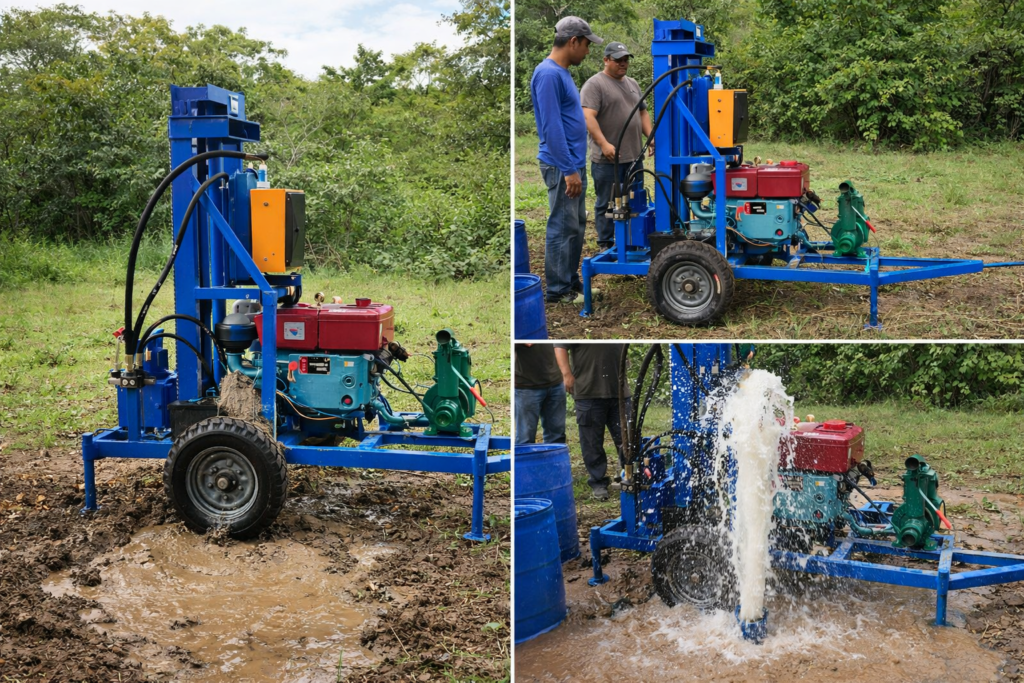
Drilling through hard rock formations requires equipment that delivers high impact energy, fast penetration rates, and reliable performance. Choosing the wrong drilling method can lead to slower progress, higher operating costs, and increased wear on drilling tools. A down-the-hole drilling rig (DTH drilling rig) is designed to overcome these challenges by combining powerful pneumatic impact with efficient rotary drilling, making it one of the most effective solutions for medium- and hard-rock applications.
Widely used in mining, quarrying, water well drilling, foundation engineering, blasting, and geothermal projects, a down-the-hole drilling rig offers excellent drilling accuracy, straighter boreholes, and consistent performance even in demanding geological conditions. Compared with many conventional rock drilling rigs, DTH technology provides faster drilling speeds, better hole quality, and lower operating costs in hard rock formations.
In this guide, you’ll learn how a DTH drilling rig works, its key components, common applications, drilling advantages, air compressor selection, DTH hammer matching, pricing factors, maintenance tips, and how to choose the right model for your project. Whether you’re a contractor, mining company, drilling service provider, or equipment distributor, this guide will help you make a more informed purchasing decision.
Need a Reliable DTH Drilling Rig for Your Project? Get direct factory pricing, detailed specifications, and custom drilling solutions from YG Machinery. 👉 Get a Free Quote Now
Start Your Project with the Right Equipment
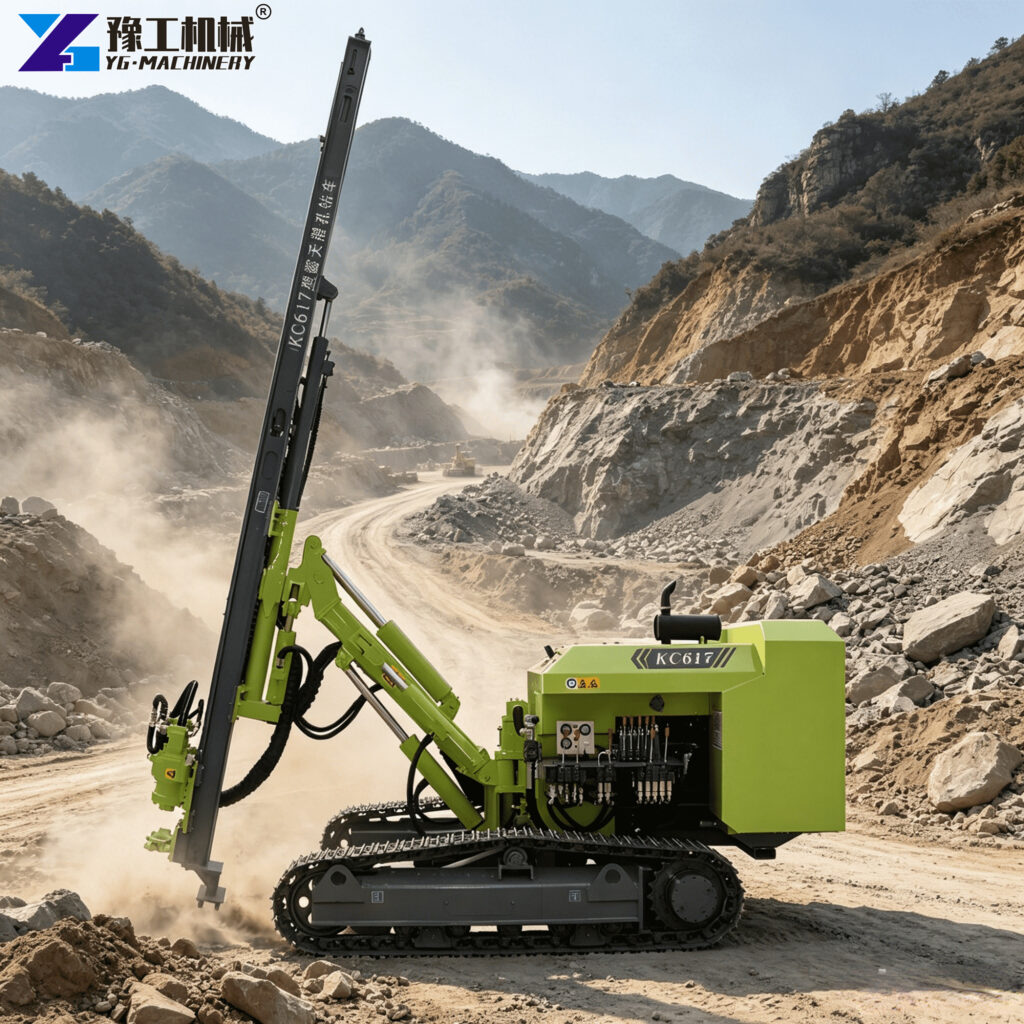
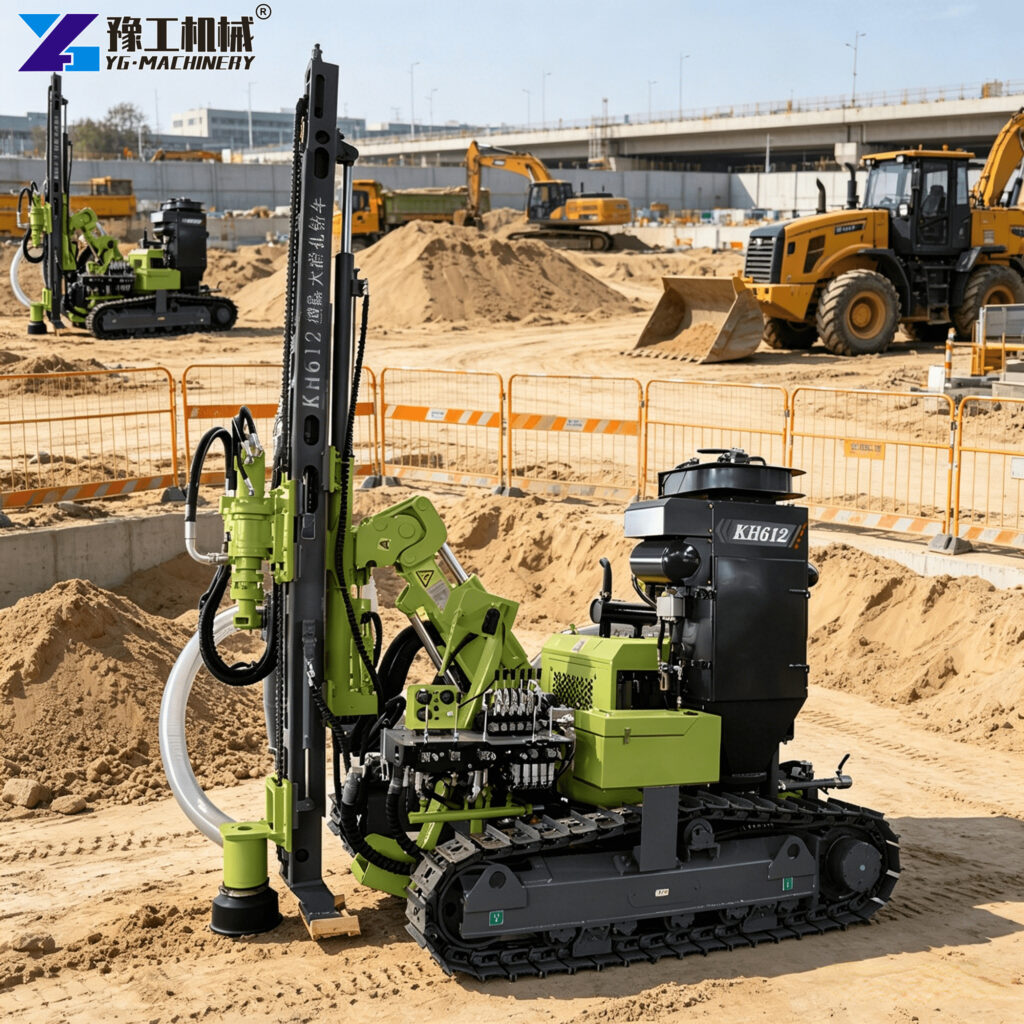
How Does a Down-the-Hole Drilling Machine Work?
It combines impact force, rotation, feed pressure, and compressed air flushing to achieve efficient drilling.
Basic Working Process
- The air compressor delivers high-pressure compressed air into the drill pipes.
- The compressed air drives the DTH hammer.
- The hammer piston repeatedly strikes the drill bit.
- The drill bit crushes rock through continuous percussion.
- The rotation system ensures uniform cutting.
- Exhaust air removes rock debris from the borehole.
The drilling efficiency of a DTH drilling rig mainly depends on:
- Air pressure
- Hammer performance
- Drill bit quality
- Feed force
- Rock hardness
Boost Productivity—Get a Free Quote
Common Applications of Down-the-Hole Drilling Machines
A down the hole drilling rig is widely used in industries that require fast, accurate, and efficient drilling in medium to hard rock formations. Thanks to its high penetration rate, straight boreholes, and reliable performance, DTH drilling technology has become a preferred solution for mining, construction, water well development, and infrastructure projects.
Mining and Quarry Blasting
DTH drilling rigs are widely used to drill blast holes in open-pit mines and quarries. Their high-impact drilling system delivers excellent penetration in hard rock such as granite, limestone, basalt, and marble. Straight and accurately positioned holes improve blasting efficiency, reduce explosive consumption, and help lower overall production costs.
Water Well Drilling
For water well construction, DTH drilling rigs provide reliable performance in fractured and hard rock formations where conventional drilling methods may struggle. They produce clean, straight boreholes with high drilling efficiency, making them suitable for agricultural irrigation, municipal water supply, industrial wells, and rural drinking water projects.
Foundation Engineering
Foundation contractors use DTH drilling rigs to create holes for micropiles, rock anchors, retaining walls, and foundation reinforcement. Accurate drilling ensures stable structural support while reducing construction time for bridges, high-rise buildings, highways, and other infrastructure projects.
Road and Tunnel Construction
During road expansion, railway development, and tunnel excavation, DTH drilling rigs are commonly used for controlled blasting and rock excavation. Their ability to drill accurately in confined or uneven terrain helps improve construction safety and project efficiency.
Geothermal and Energy Projects
DTH drilling technology is also used in geothermal energy development, ground-source heat pump installations, and other renewable energy projects. Its ability to drill deep, stable boreholes makes it suitable for installing underground piping systems in a wide range of geological conditions.
Solar Pile Foundation Installation
As solar energy projects continue to expand worldwide, DTH drilling rigs are increasingly used to drill foundation holes for solar mounting systems in rocky ground. Their fast drilling speed and excellent hole accuracy help improve installation efficiency while reducing labor and equipment costs on large-scale photovoltaic projects.
Why Choose a DTH Drilling Rig for These Applications?
Compared with many conventional drilling methods, a down the hole drilling rig offers faster penetration rates, better hole straightness, lower tool wear, and excellent performance in hard rock conditions. Whether your project involves mining, water well drilling, foundation construction, or renewable energy development, choosing the right DTH drilling solution can improve productivity, reduce operating costs, and deliver more consistent drilling results.
Not sure which model is right for your application? Contact YG Machinery today for expert advice and a customized drilling solution based on your project requirements.
Find the Right Model for Your Project
YG Down the Hole Drilling Rig Models
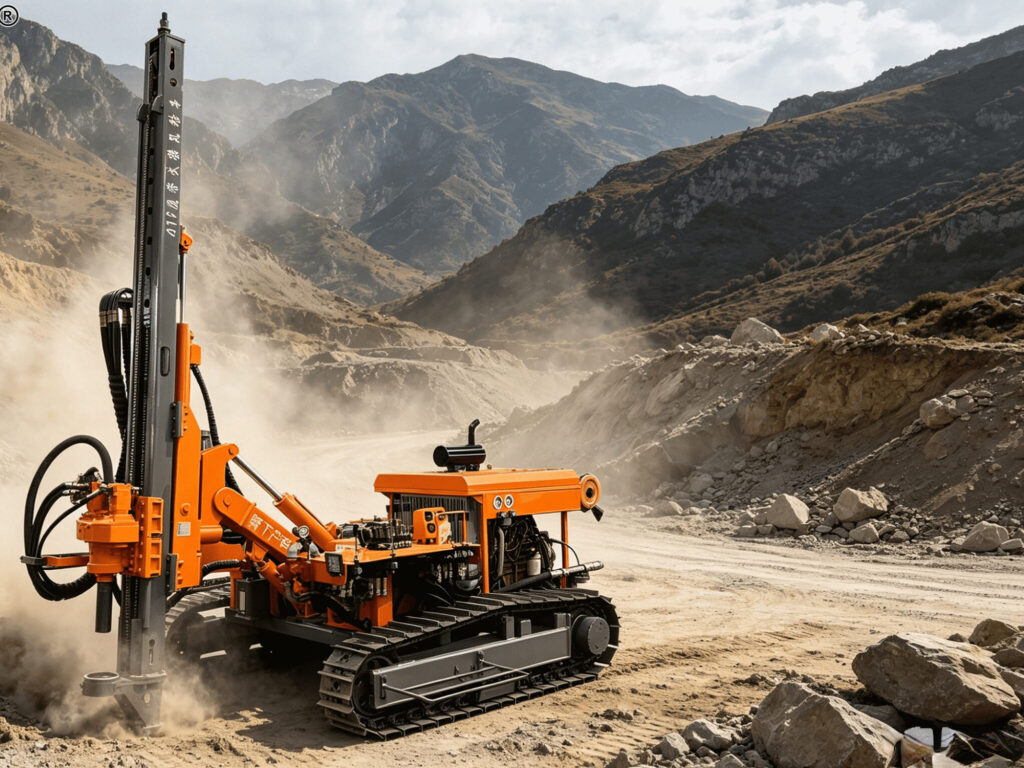
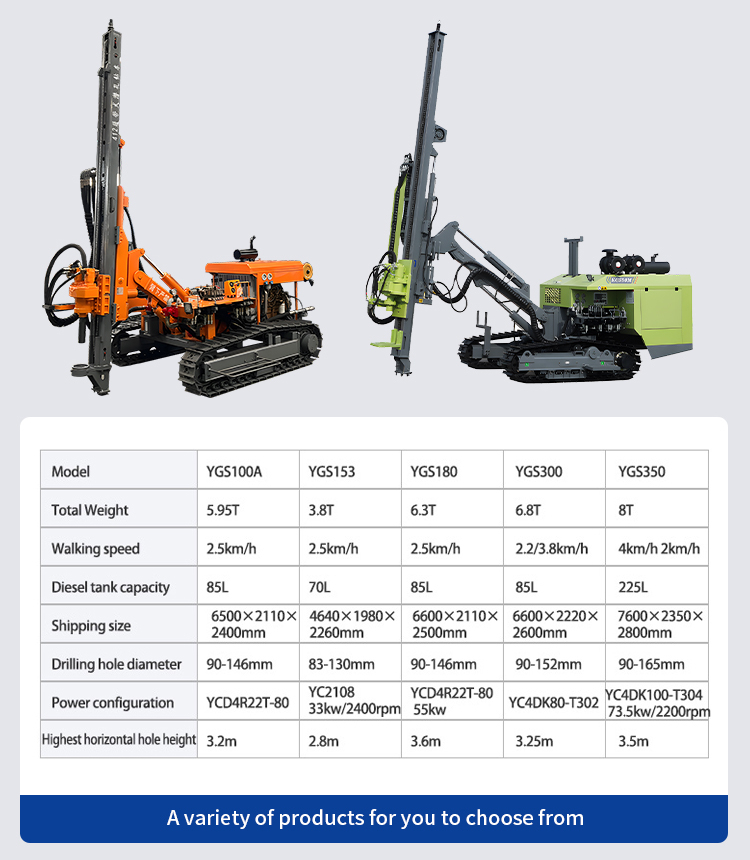
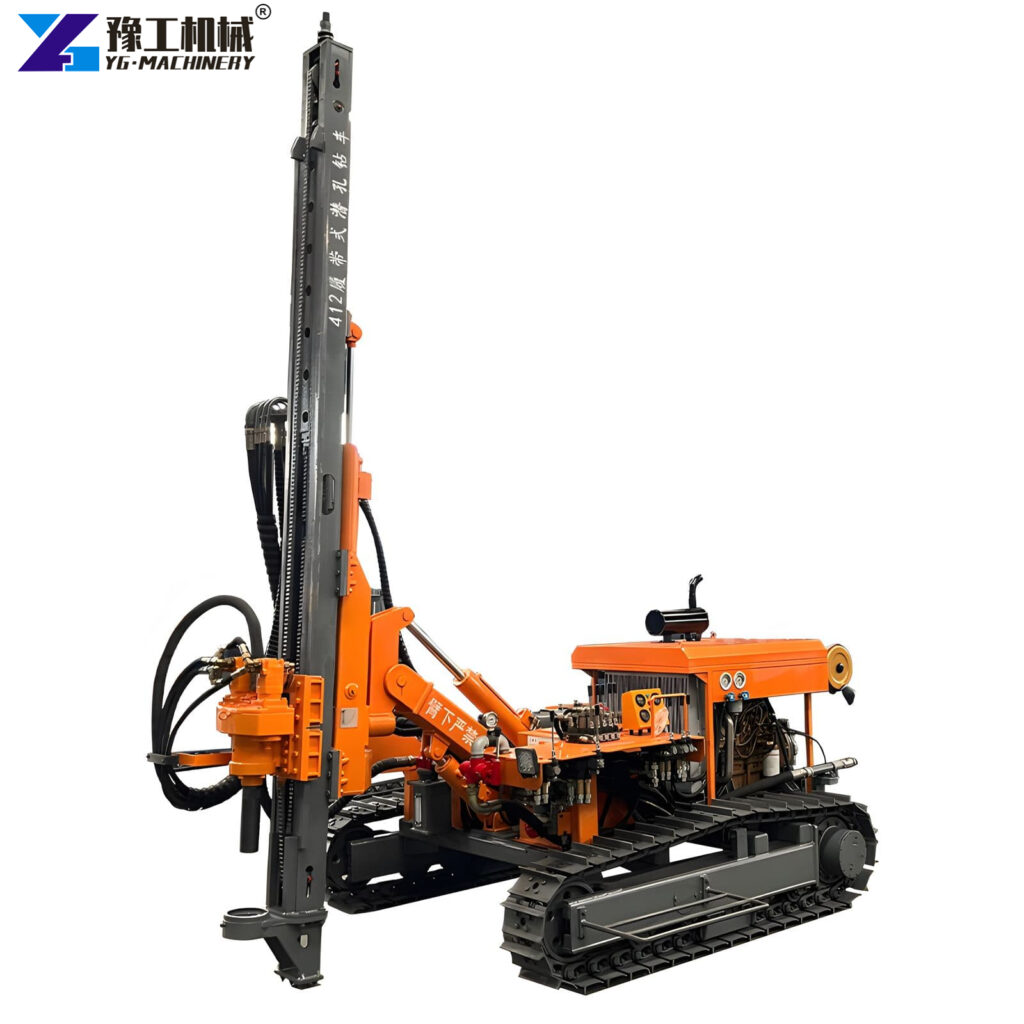
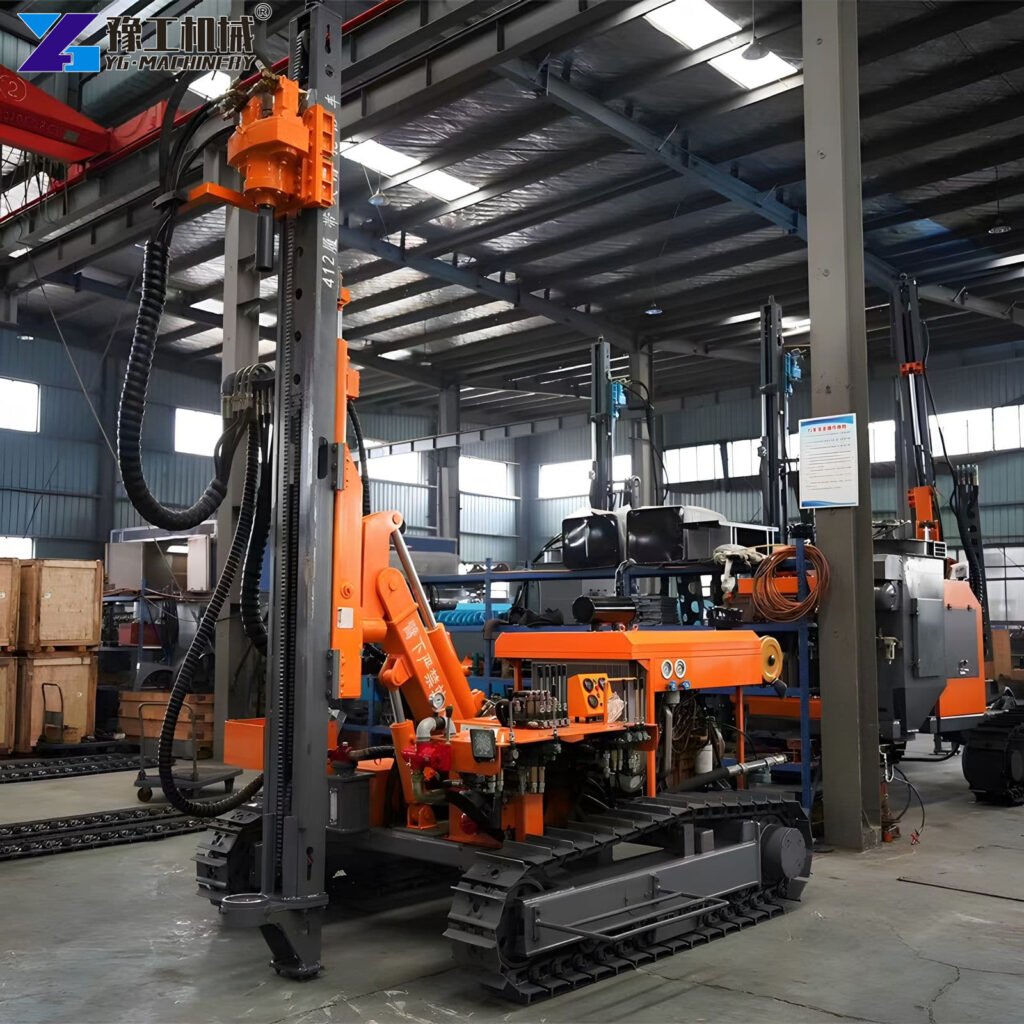
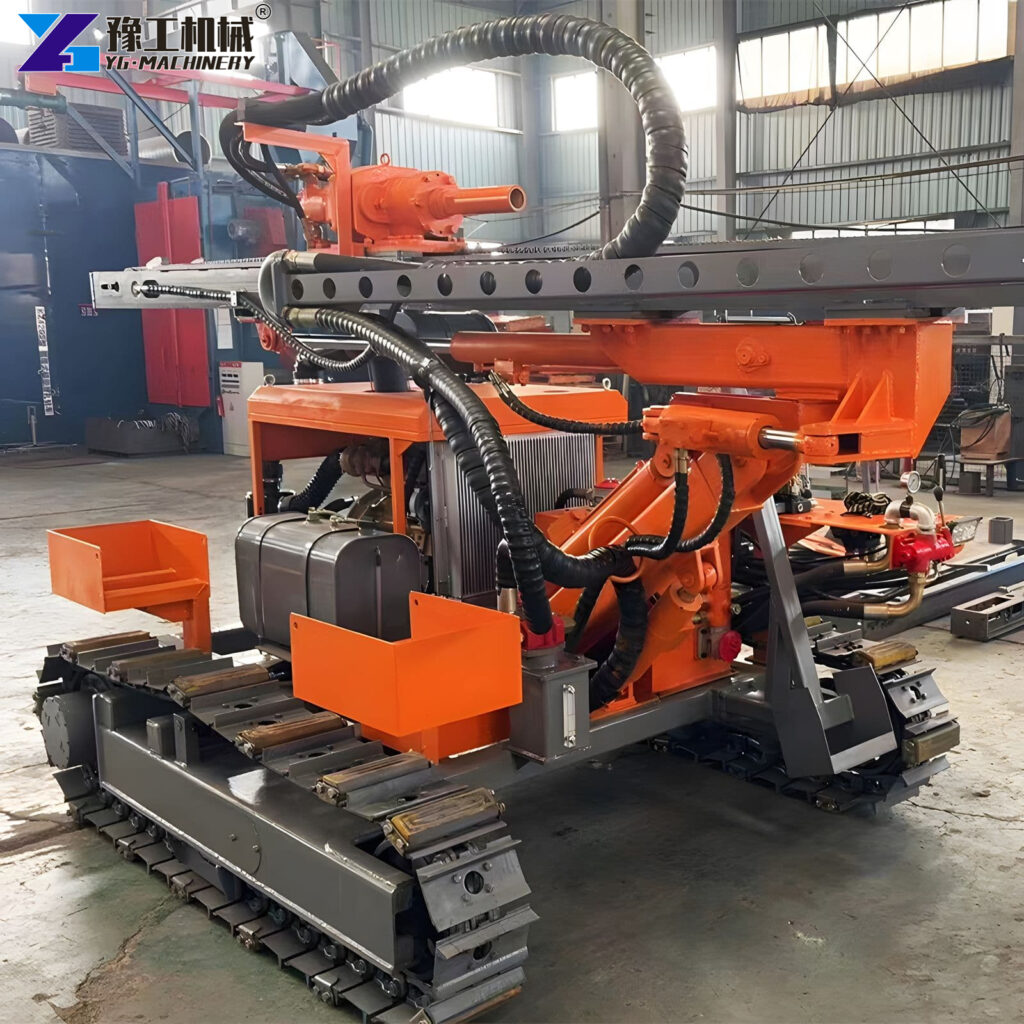
YG Machinery provides multiple down-the-hole drilling rig models suitable for mining, quarrying, water wells, and construction projects. The YGS series is designed for medium- and large-scale hard rock drilling operations.
| Model | YGS100A | YGS153 | YGS180 | YGS300 | YGS350 |
| Total Weight | 5.95T | 3.8T | 6.3T | 6.8T | 8T |
| Walking Speed | 2.5km/h | 2.5km/h | 2.5km/h | 2.2/3.8km/h | 4km/h / 2km/h |
| Diesel Tank Capacity | 85L | 70L | 85L | 85L | 225L |
| Shipping Size | 6500×2100×2400mm | 4640×1980×2260mm | 6600×2110×2500mm | 6600×2220×2600mm | 7600×2350×2800mm |
| Drilling Hole Diameter | 90-146mm | 83-130mm | 90-146mm | 90-152mm | 90-165mm |
| Power Configuration | YCD4R22T-80 | YC2108 33kw/2400rpm | YCD4R22T-80 55kw | YC4DK80-T302 | YC4DK100-T304 73.5kw/2200rpm |
| Highest Horizontal Hole Height | 3.2m | 2.8m | 3.6m | 3.25m | 3.5m |
These models are suitable for:
- Quarry blasting
- Open-pit mining
- Water well drilling
- Anchor hole drilling
- Geothermal drilling
- Foundation reinforcement
Learn more about the machine specifications and available models.
Compare Models and Get a Quote
What Do These Specifications Mean?
When comparing different down the hole drilling rigs, technical specifications provide valuable information about the machine’s capabilities. Understanding what these parameters mean can help you choose equipment that matches your drilling conditions, improves productivity, and reduces operating costs.
Drilling Diameter
The drilling diameter indicates the range of hole sizes the rig can produce. Smaller diameters are commonly used for anchor holes and foundation work, while larger diameters are suitable for quarry blasting, mining, and water well drilling. Choosing the correct diameter ensures efficient drilling and optimal hammer performance.
Maximum Drilling Depth
This specification shows the maximum depth the rig can achieve under suitable geological conditions. Projects involving deeper boreholes require machines with greater feed force, higher air pressure, and compatible drill rods to maintain stable drilling performance.
Rotary Torque
Rotary torque determines the rig’s ability to rotate the drill string through different rock formations. Higher torque provides better drilling performance in hard and fractured rock while reducing the risk of drill rod stalling.
Feed Force
Feed force controls how effectively the drill bit penetrates the rock surface. Proper feed pressure improves drilling speed, maintains stable hammer operation, and extends the service life of drilling tools.
Walking System
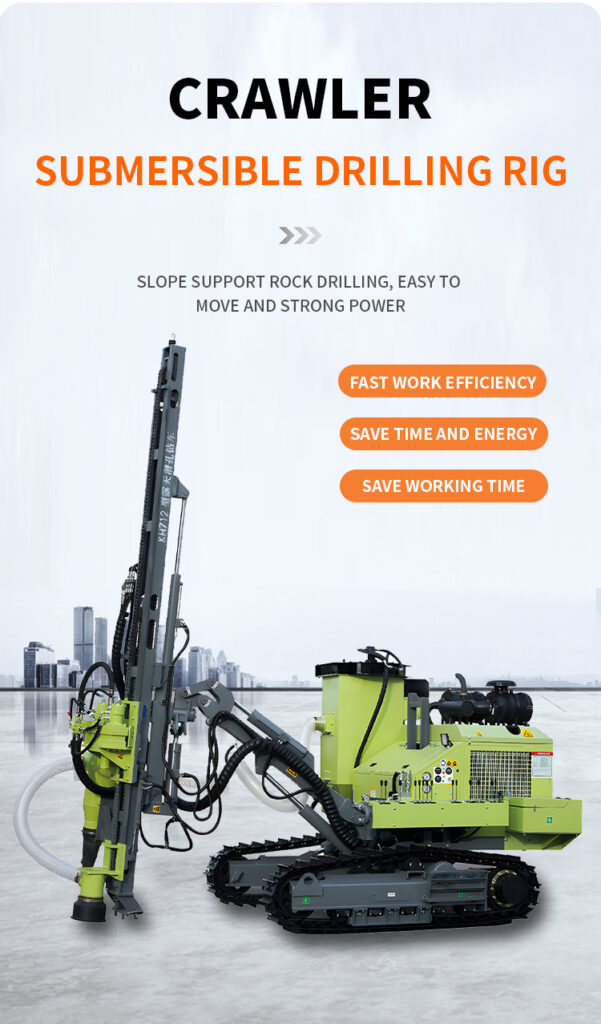
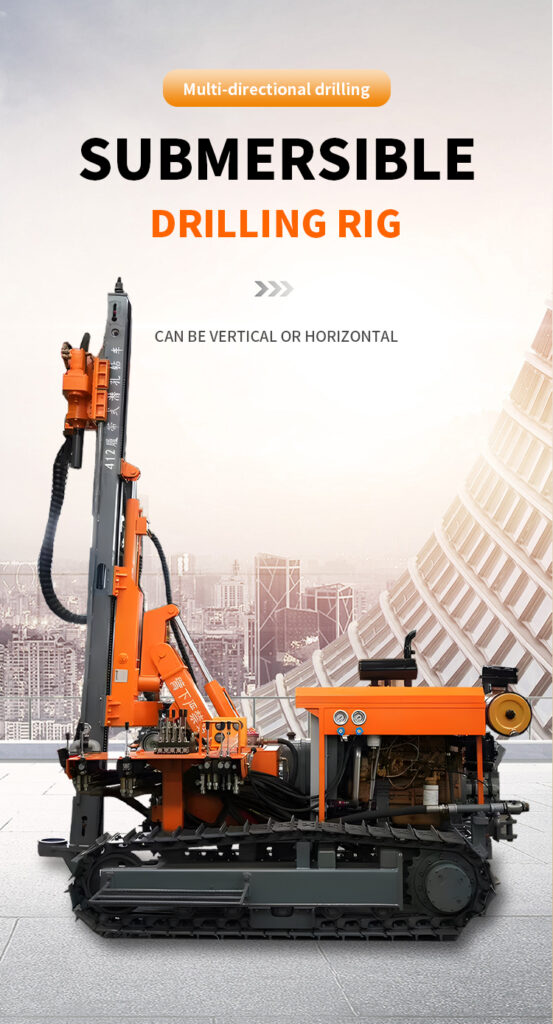
Crawler-type DTH drilling rigs provide excellent mobility on uneven terrain, making them ideal for mining sites, quarries, and mountain projects. A stable walking system also reduces repositioning time between drilling locations.
Engine Power
The engine supplies power for the hydraulic and pneumatic systems. A reliable diesel engine delivers stable performance, better fuel efficiency, and continuous operation under demanding working conditions.
Why These Specifications Matter
Selecting the right specifications is not about choosing the largest machine. The best down the hole drilling rig should match your drilling depth, hole diameter, rock conditions, and project requirements. Proper equipment selection improves productivity, reduces maintenance costs, and maximizes your return on investment.
Main Components of a Down-the-Hole Drilling Rig
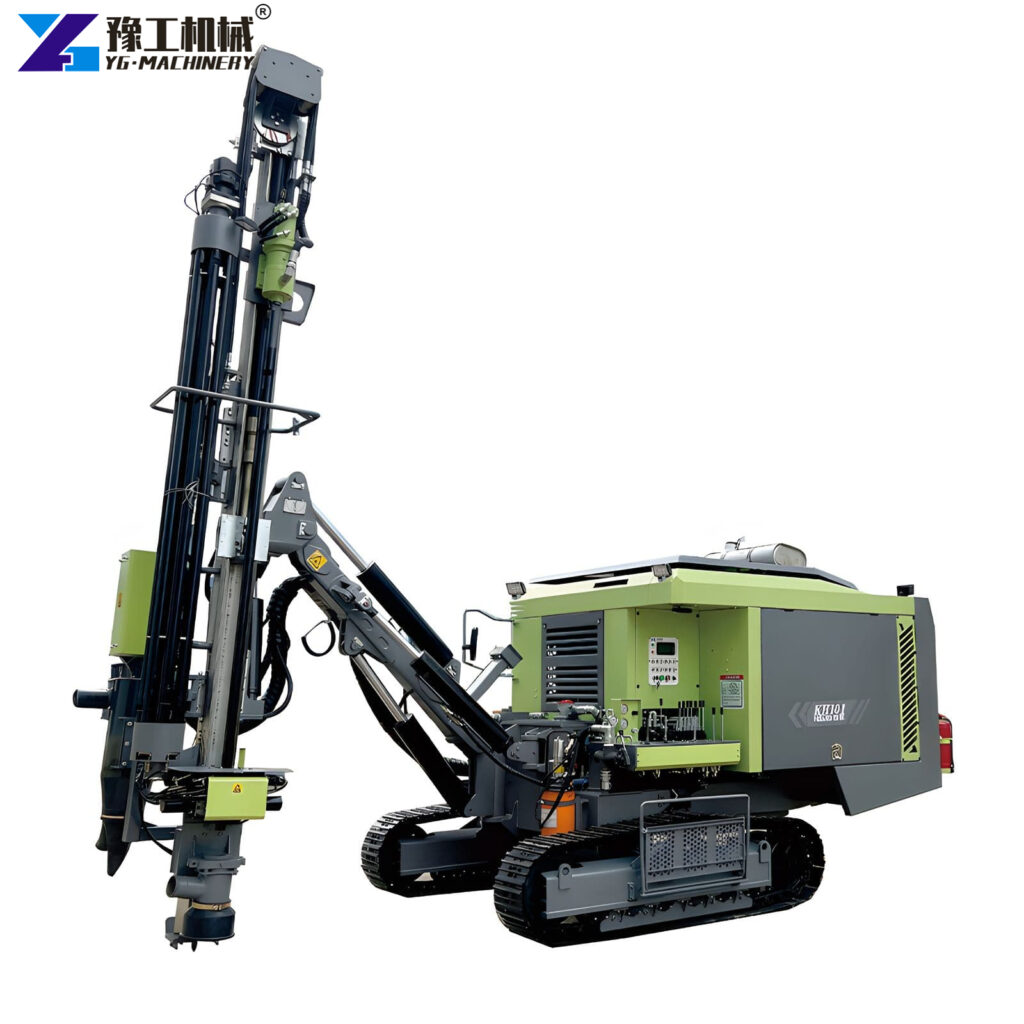
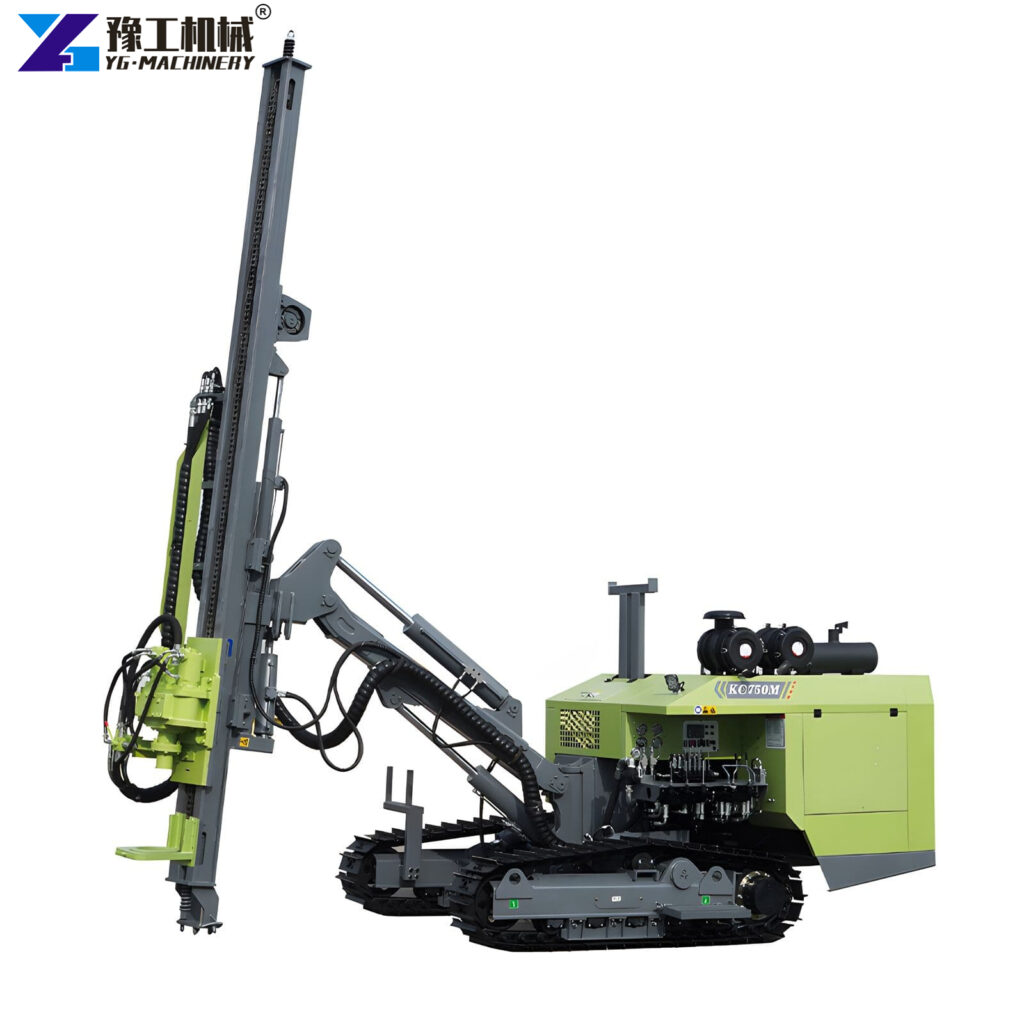
A complete down-the-hole drilling system usually includes the following parts:
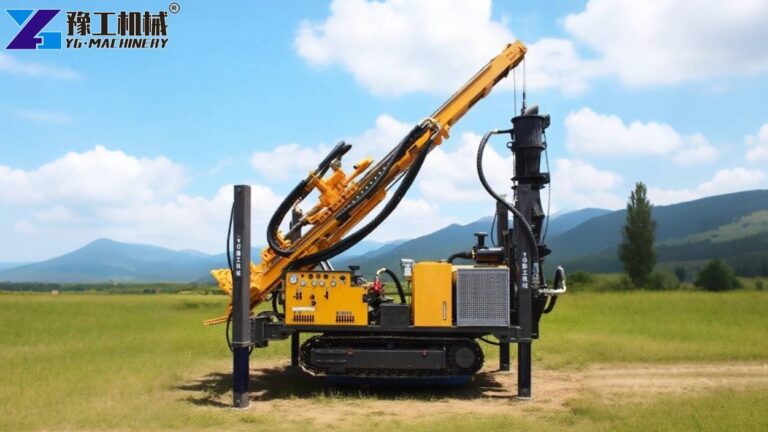
- Drilling Rig – The rig provides mobility, feed force, rotation torque, and drilling control.
- Air Compressor – The compressor supplies high-pressure air to power the DTH hammer.
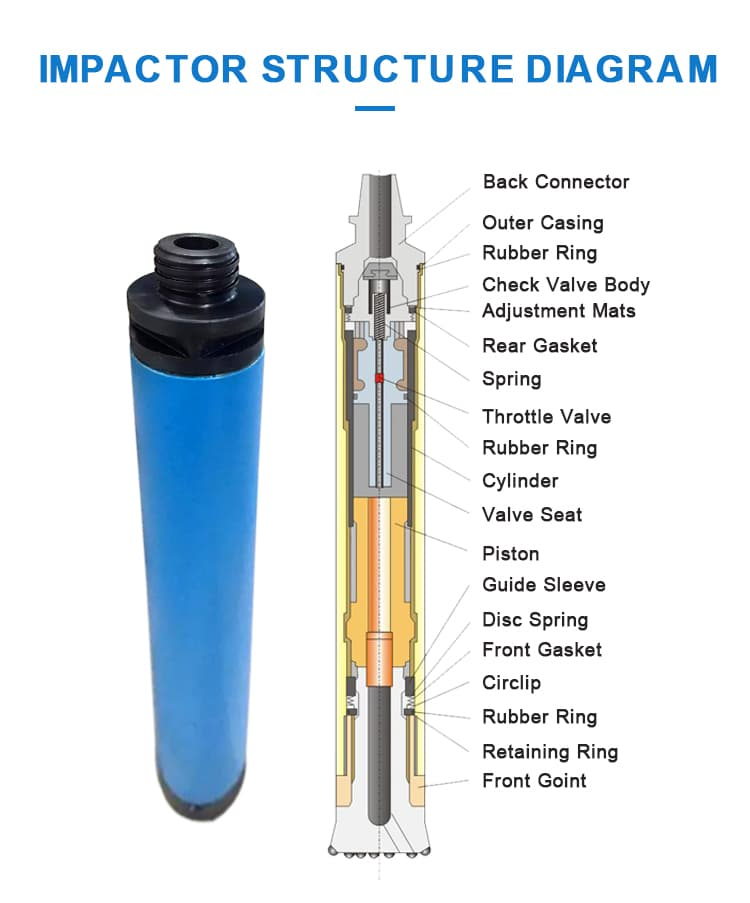
- DTH Hammer – Installed directly behind the drill bit, the hammer converts compressed air into impact energy.
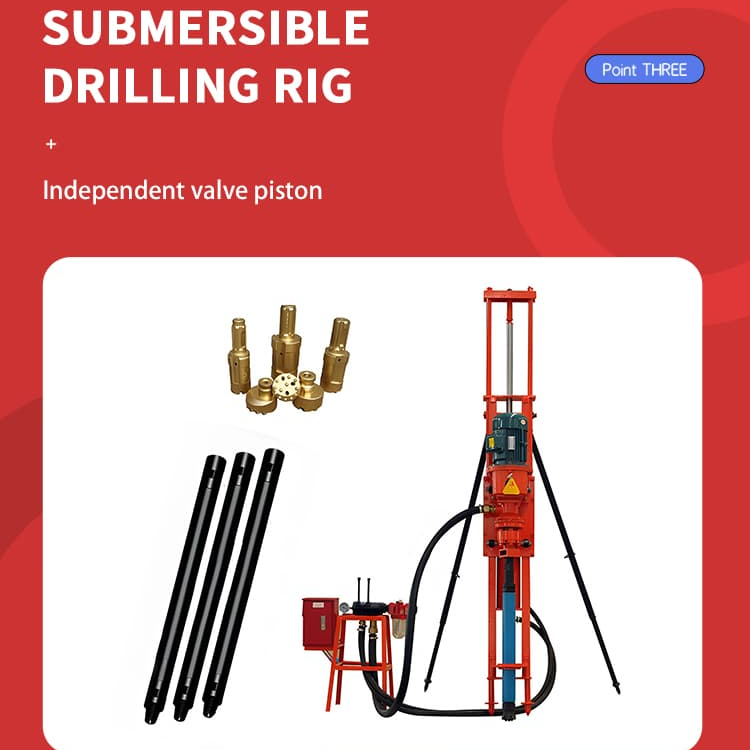
- Drill Bit – DTH button bits are commonly used for hard rock drilling applications.
- Drill Pipes – Drill rods transfer compressed air and rotational power to the hammer and bit.
How to Match an Air Compressor with a DTH Drilling Rig
Selecting the right air compressor is essential for achieving the best performance from a down-the-hole drilling rig. The compressor supplies high-pressure compressed air to power the DTH hammer, remove rock cuttings from the borehole, and maintain drilling efficiency. An undersized compressor can significantly reduce drilling speed, while an oversized unit may increase fuel consumption and operating costs without providing additional benefits.
When choosing an air compressor, contractors should consider the drilling diameter, drilling depth, rock hardness, and the specifications of the DTH hammer. Matching these components correctly helps maximize penetration rate, reduce equipment wear, and improve overall productivity.
Recommended Air Compressor Configuration
The following table provides general recommendations for matching a DTH drilling rig with an air compressor. Actual requirements may vary depending on geological conditions and hammer specifications.
| Hole Diameter | Recommended Air Pressure | Recommended Air Flow | Typical Application |
|---|---|---|---|
| 90–110 mm | 1.2–1.8 MPa | 10–12 m³/min | Quarry blasting, foundation drilling |
| 110–130 mm | 1.7–2.1 MPa | 14–18 m³/min | Water wells, mining, anchor holes |
| 130–165 mm | 2.1–2.4 MPa | 18–24 m³/min | Large blasting holes, infrastructure projects |
| 165 mm and above | 2.4 MPa or higher | 24–30 m³/min | Deep drilling and heavy-duty mining |
Factors to Consider When Selecting an Air Compressor
- Rock Hardness – Hard rock formations such as granite, basalt, and limestone require higher air pressure to maintain hammer impact energy, while softer rock requires less pressure to help optimize fuel consumption.
- Hole Diameter – Larger boreholes demand greater airflow to remove rock cuttings efficiently, preventing debris accumulation that can slow drilling progress and accelerate component wear.
- Drilling Depth – Deeper holes require compressors with sufficient pressure and airflow to offset pressure losses over distance and maintain consistent hammer performance.
- DTH Hammer Size – Properly matching the hammer and compressor ensures efficient operation, as larger hammers require higher air volume and pressure, preventing reduced drilling speeds and component wear.
Why Proper Matching Matters
A properly matched compressor offers several advantages:
- Faster drilling speed
- Higher drilling efficiency
- Better hole cleaning performance
- Reduced fuel consumption
- Longer hammer and drill bit service life
- Lower operating and maintenance costs
Instead of choosing the largest available compressor, contractors should select equipment based on their actual drilling conditions and production requirements.
At YG Machinery, our engineers can recommend the most suitable air compressor and down the hole drilling rig combination according to your drilling depth, hole diameter, rock conditions, and project requirements. Contact us today for professional advice and a customized drilling solution.
How to Choose the Right DTH Hammer
The DTH (Down-the-Hole) hammer is one of the most important components of a down the hole drilling rig. It directly impacts drilling speed, hole quality, and overall operating efficiency. Choosing the right hammer requires more than simply selecting the largest size—you need to consider the hole diameter, rock conditions, drilling depth, and air compressor capacity to achieve the best performance.
Match the Hammer to the Hole Diameter
The hammer size should correspond to the required borehole diameter. Using a hammer that is too small can reduce drilling efficiency, while an oversized hammer may increase operating costs without improving productivity.
| Hole Diameter | Recommended DTH Hammer |
|---|---|
| 90–110 mm | 3-inch Hammer |
| 110–130 mm | 4-inch Hammer |
| 130–152 mm | 5-inch Hammer |
| 152–203 mm | 6-inch Hammer |
| Above 203 mm | 8-inch Hammer or Larger |
Always verify the hammer specifications recommended by the manufacturer, as different models may have slightly different operating ranges.
Consider Rock Hardness
Rock conditions have a significant influence on hammer selection. Hard formations such as granite, basalt, and quartzite require high-impact hammers capable of delivering consistent performance under demanding conditions. Softer rocks generally place less stress on the hammer, allowing smaller models to achieve excellent drilling efficiency while reducing fuel consumption.
Match the Air Compressor
Every DTH hammer requires a specific range of air pressure and air flow to operate efficiently. An undersized compressor may reduce impact energy and slow drilling progress, while an oversized compressor increases fuel consumption and operating costs.
Before selecting a hammer, ensure your air compressor provides sufficient pressure and air volume to match both the hammer and the drilling rig.
Evaluate Drilling Depth
Deeper boreholes require a stable air supply and durable hammer components to maintain drilling performance. For deep mining, quarry blasting, and water well projects, choosing a high-quality hammer designed for continuous operation helps improve penetration rates while extending service life.
Consider Bit Compatibility and Maintenance
The DTH hammer should be compatible with the selected drill bit and drill rods. Using matched drilling tools improves energy transfer, reduces component wear, and ensures straighter boreholes. Regular inspection and timely replacement of worn parts also help maintain drilling efficiency and minimize downtime.
Work with an Experienced Manufacturer
Selecting the right hammer is only one part of a successful drilling system. The hammer, drill bit, rods, air compressor, and DTH drilling rig should work together as a complete solution. An experienced manufacturer can recommend the most suitable configuration based on your drilling depth, hole diameter, geological conditions, and project requirements.
At YG Machinery, we provide complete down the hole drilling solutions, including drilling rigs, DTH hammers, drill bits, drill rods, and air compressors. Contact our team today for professional recommendations and a customized solution tailored to your project.
DTH Drilling vs Rotary Drilling vs RC Drilling
Different drilling methods are designed for different applications. Understanding their advantages and limitations can help contractors select the most suitable solution for each project.
| Feature | DTH Drilling | Rotary Drilling | RC Drilling |
|---|---|---|---|
| Best Rock Type | Medium to Hard Rock | Soft to Medium Rock | Hard Rock |
| Hole Accuracy | Excellent | Good | Excellent |
| Drilling Speed | Fast | Moderate | Fast |
| Sample Collection | No | Limited | Excellent |
| Typical Hole Diameter | Medium to Large | Large | Medium |
| Operating Cost | Moderate | Moderate | Higher |
| Main Applications | Quarry, Mining, Water Well | Foundation, Water Well | Mineral Exploration |
DTH Drilling
A down the hole drilling rig uses compressed air to drive the hammer directly behind the drill bit. This design minimizes energy loss and delivers high impact energy, making it ideal for hard rock drilling, quarry blasting, and mining projects.
Rotary Drilling
Rotary drilling relies mainly on rotary force to break softer formations. It performs well in clay, sand, and other relatively soft geological conditions but is generally less efficient than DTH drilling in hard rock.
RC Drilling
Reverse circulation (RC) drilling uses dual-wall drill rods to collect uncontaminated rock samples. It is widely used in mineral exploration where accurate geological sampling is essential. Although RC drilling offers excellent sample quality, equipment investment and operating costs are typically higher.
Which Method Is Right for Your Project?
If your project involves hard rock, blasting holes, quarry operations, or water well drilling, a DTH drilling rig is often the most productive and cost-effective solution. For geological exploration requiring high-quality samples, RC drilling is the preferred choice, while rotary drilling remains suitable for softer formations and conventional drilling applications.
Down the Hole Drilling Rig Price: What Affects the Cost?
One of the most common questions buyers ask is, “How much does a down the hole drilling rig cost?” The answer depends on several factors, including drilling capacity, machine configuration, engine brand, and optional accessories. Rather than focusing only on the purchase price, contractors should evaluate the total value of the equipment, including productivity, fuel efficiency, durability, and after-sales support.
Drilling Capacity and Machine Size
The drilling depth and hole diameter are the primary factors influencing the price of a DTH drilling rig. Larger machines designed for deeper holes and bigger diameters require more powerful hydraulic systems, stronger frames, and higher-capacity rotary heads, resulting in a higher purchase price.
If your projects mainly involve shallow foundation drilling or small quarry operations, a compact model may be the most cost-effective choice. For mining, water well drilling, or large infrastructure projects, investing in a higher-capacity rig usually delivers better long-term productivity.
Engine and Hydraulic System
The engine is the heart of a drilling rig. Machines equipped with internationally recognized engines, such as Cummins, typically provide greater fuel efficiency, stable performance, and longer service life than lower-cost alternatives.
The hydraulic system also plays a major role in drilling efficiency. High-quality hydraulic components improve rotary torque, feed force, and overall machine reliability, helping reduce maintenance costs during continuous operation.
DTH Hammer and Drill Tools
The drilling rig is only one part of the complete drilling system. Buyers should also consider the cost of compatible DTH hammers, drill bits, and drill rods. Larger hammer sizes and premium carbide drill bits generally increase the initial investment but can improve penetration rates and extend service life in hard rock formations.
Selecting the correct drilling tools for your geological conditions can significantly reduce wear and improve overall drilling efficiency.
Optional Features and Customization
Many contractors require customized configurations based on their project needs. Optional features that may influence the final quotation include:
- Different engine brands
- Dust collection systems
- Hydraulic rod changers
- Remote control functions
- Customized crawler configurations
- Cold-weather or high-altitude packages
- Spare parts and maintenance kits
Choosing the right options ensures the machine matches your working environment without paying for unnecessary features.
Shipping and After-Sales Support
For international buyers, the total investment includes shipping, destination charges, customs duties, and local transportation. Reliable after-sales support is equally important. A manufacturer that provides technical guidance, spare parts, and responsive service can help reduce downtime and extend the service life of your equipment.
Get a Customized Factory Quote
There is no one-size-fits-all price for a down the hole drilling rig because every drilling project has unique requirements. To receive an accurate quotation, simply provide the following information:
- Required drilling depth
- Hole diameter
- Rock type and hardness
- Project application
- Destination country
- Preferred engine or optional features
At YG Machinery, we offer customized drilling solutions designed to match your project requirements. Our engineering team will recommend the most suitable DTH drilling rig, compatible air compressor, and drilling tools while providing a competitive factory price and professional technical support.
Contact YG Machinery today to request a free quotation and find the right drilling solution for your next project.
Boost Productivity—Get a Free Quote
Explore real project photos and customer feedback.
FAQs About Down the Hole Drilling Rig
A DTH drilling machine is especially suitable for medium to hard rock formations such as granite, basalt, limestone, and sandstone. It performs best where traditional rotary drilling becomes inefficient.
Key factors include air compressor pressure, hammer quality, drill bit condition, rock hardness, and drilling depth. Proper matching of equipment ensures higher efficiency and lower operating costs.
DTH drilling uses pneumatic impact at the bottom of the hole, while rotary drilling relies mainly on rotation and surface force. This makes DTH drilling rigs more efficient in hard rock and deep-hole applications.
When selecting a DTH drilling rig, consider hole diameter, drilling depth, rock hardness, mobility requirements, and engine power. Matching these factors ensures optimal performance for your project conditions.
Yes. The drill rods are manufactured from high-strength, wear-resistant alloy steel, allowing them to be reused over 200 times under proper maintenance conditions. In addition, the manufacturer also offers drill rod inspection and flaw detection services to ensure continued safe and reliable performance.
Yes. After purchase, the manufacturer provides comprehensive technical support, including free operator training on equipment use, drilling parameter adjustment, drill bit replacement, and routine maintenance. A professional engineering team is also available to offer on-site or remote construction guidance to help ensure efficient and trouble-free project execution.
DTH drilling operations typically require supporting equipment such as air compressors, generators, drill bits, and drill rods. To simplify procurement and ensure full system compatibility, the manufacturer offers a one-stop purchasing solution for complete down-the-hole drilling systems, helping avoid mismatch issues between components.