In modern mining, quarrying, foundation engineering, and construction projects, down hole drilling equipment plays a critical role in ensuring high penetration rate, stable performance, and cost-efficient rock drilling operations. Among various drilling technologies, the down the hole drilling machine (DTH drilling rig) is widely recognized for its superior efficiency in hard rock formations.
As a professional manufacturer, YG Machinery provides a full range of DTH drilling machine solutions designed for different geological conditions, hole diameters, and construction requirements.
This article introduces the working principle, advantages, applications, and technical specifications of YG Machinery’s DTH drilling series, helping global buyers make informed procurement decisions.
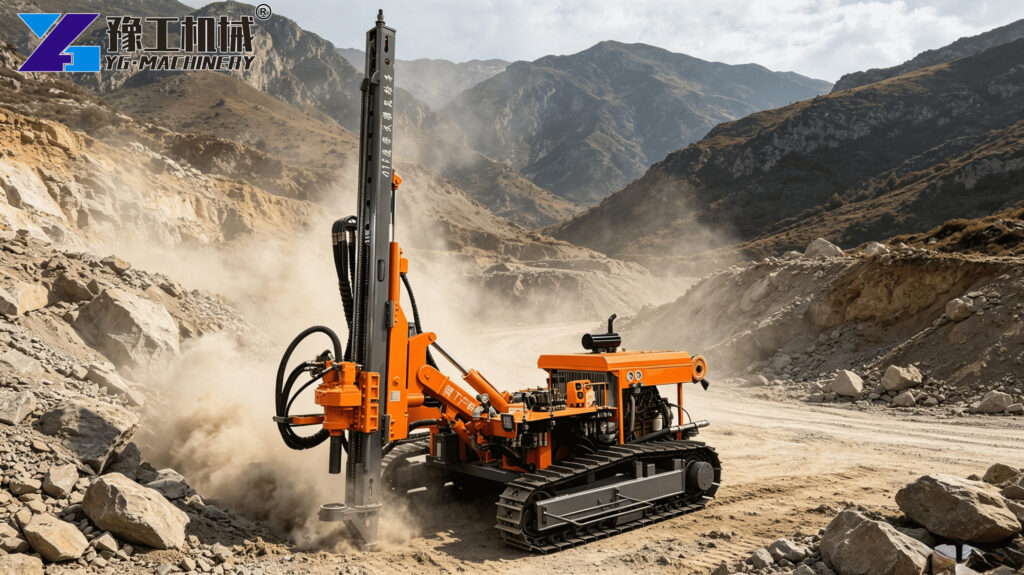
What Is Down Hole Drilling Equipment?
It refers to drilling systems where the hammer (DTH hammer) is located at the bottom of the drill string, directly impacting the rock surface.
Unlike top hammer systems, the energy loss is minimal because the percussion happens directly at the drilling point. This makes the system highly effective for:
- Hard rock formations
- Deep hole drilling
- Large diameter blasting holes
- Mining and quarry operations
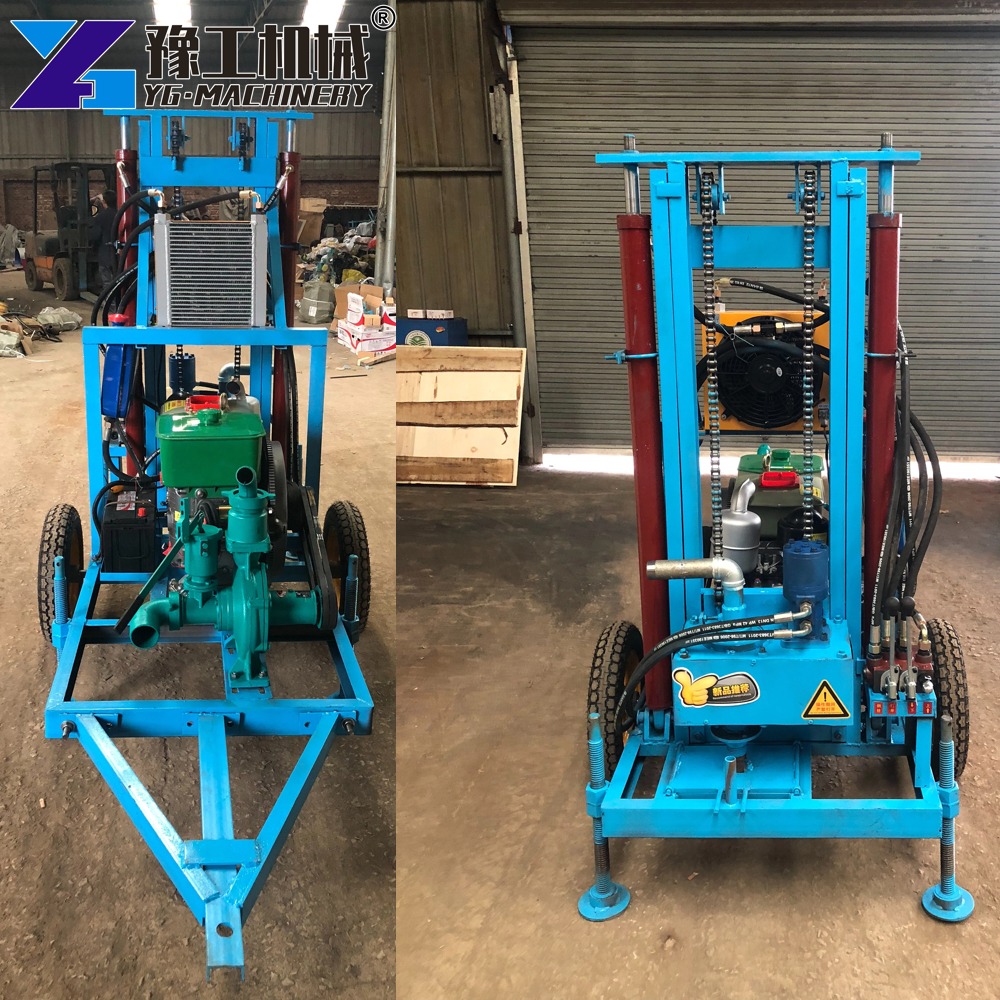
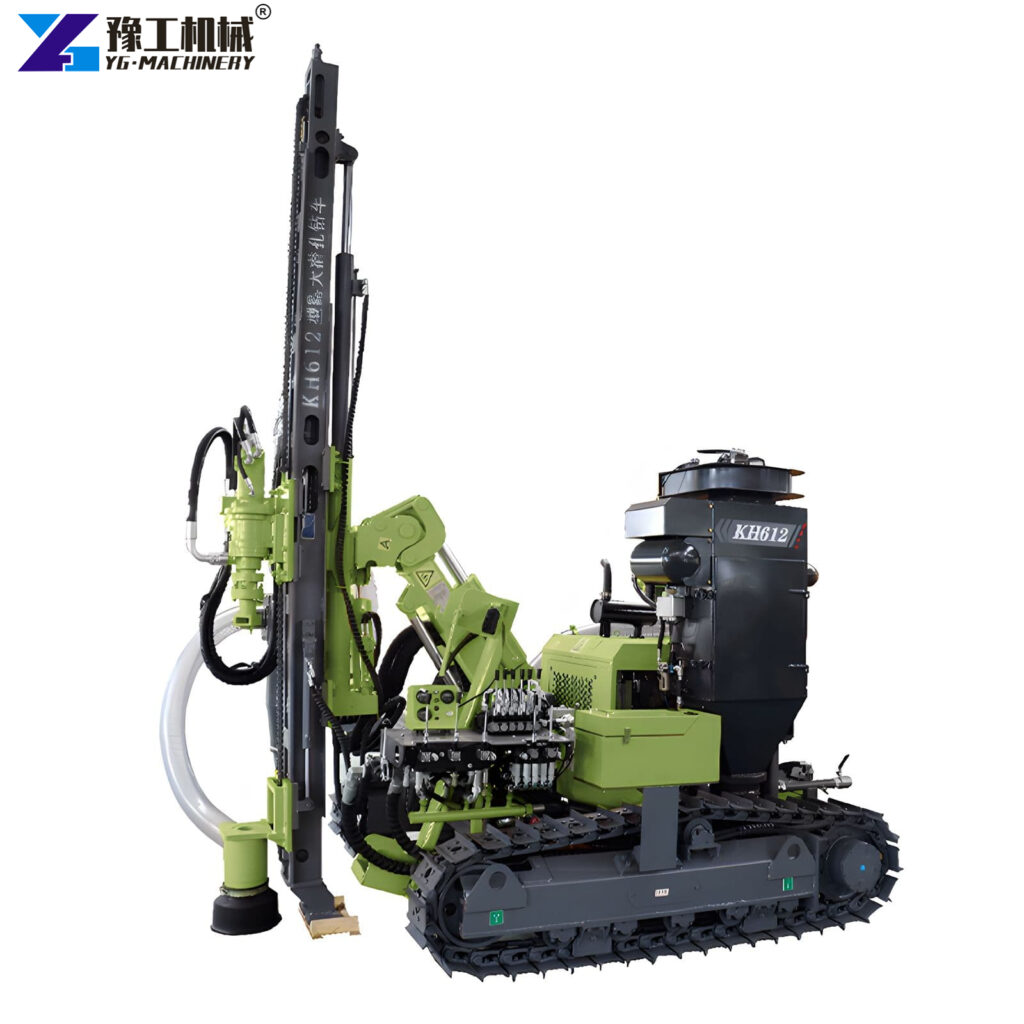
A typical down the hole drilling machine consists of:
- Compressor system
- Drill rig chassis
- DTH hammer
- Drill rods
- Rotary head
- Control system
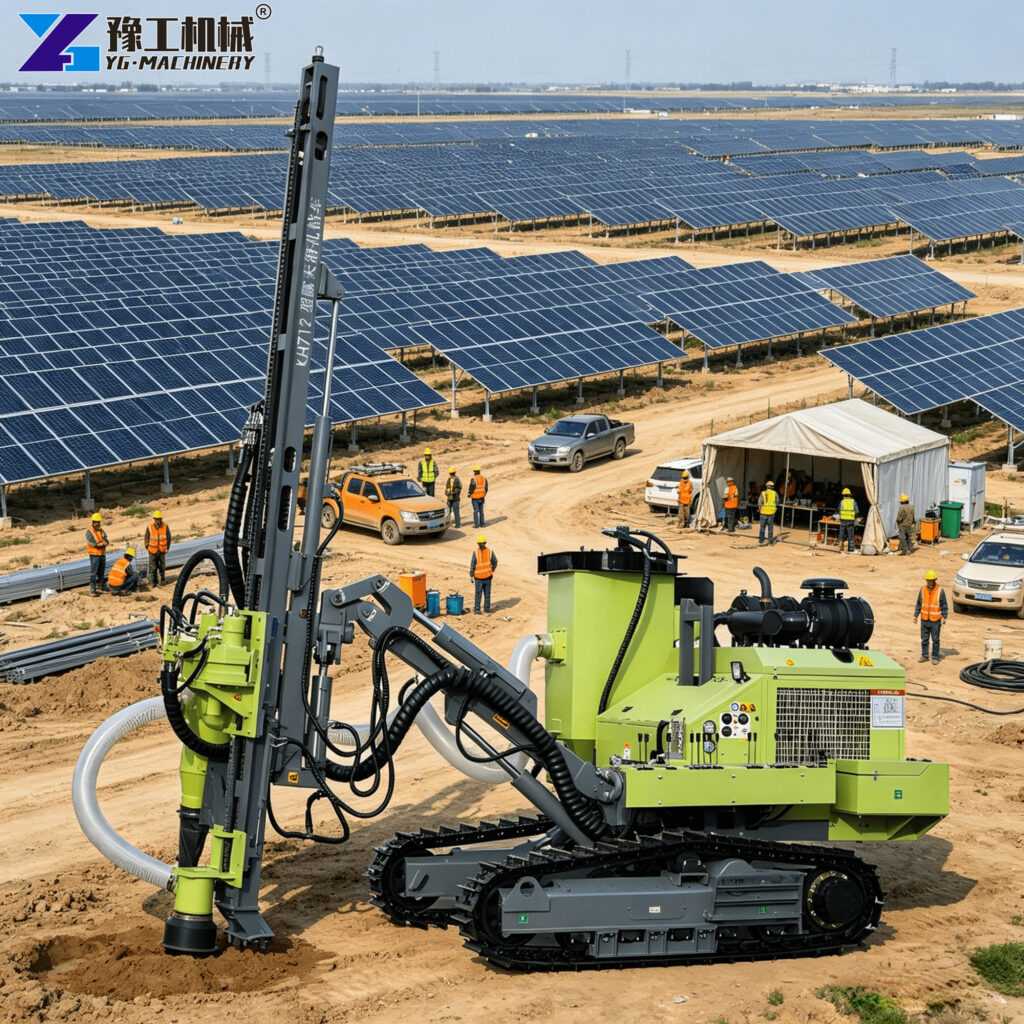
How DTH Drilling Rig Works
It operates on a simple but highly efficient principle: the drilling hammer is placed directly at the bottom of the borehole, rather than at the surface. This design ensures that impact energy is delivered straight to the rock, with minimal loss during transmission through the drill rods.
The system begins with a high-pressure air compressor supplying compressed air through the drill string. This air drives the DTH hammer, which repeatedly strikes the drill bit at the bottom of the hole. Each impact breaks the rock into small fragments. At the same time, the rotation system of the rig turns the drill string, ensuring continuous cutting and uniform hole formation.
As drilling continues, the compressed air also serves another important function—flushing. It carries the broken rock cuttings (dust and debris) upward through the annulus between the drill rod and the borehole wall, keeping the hole clean and preventing blockages. This allows the drilling process to remain stable even in deep or hard rock formations.
Compared with traditional top hammer systems, the down the hole drilling machine delivers significantly higher efficiency in hard rock because the impact energy is not weakened by long transmission paths. It also improves hole straightness, reduces deviation, and enhances blasting accuracy.
In practical applications such as mining, quarrying, and foundation engineering, the dth drilling machine ensures faster penetration rates, lower fuel consumption per meter, and more consistent drilling performance. This makes it one of the most reliable solutions for modern rock drilling operations.
Let’s take a closer look at how it works.
Key Advantages of Down the Hole Drilling Machine
- Enhanced Efficiency with Automation: The automatic rod changer streamlines operations by autonomously handling rod storage, changing, and connection, significantly boosting drilling efficiency and reducing manual intervention.
- Optimized Operator Comfort and Safety: The inclusion of a luxurious cabin and a hole locating device creates a safer and more comfortable operating environment, directly leading to reduced labor intensity and the need for fewer personnel on-site.
- Simplified Maintenance and Reduced Downtime: Unlike all-in-one rigs, the JK730-2’s design prioritizes convenient operation and maintenance, resulting in a lower downtime rate and improved overall productivity.
- Powerful Hydraulic Performance: Being a hydraulic DTH drill rig, it delivers robust and consistent power for effective drilling in various hard rock formations, ensuring reliable and efficient borehole creation.
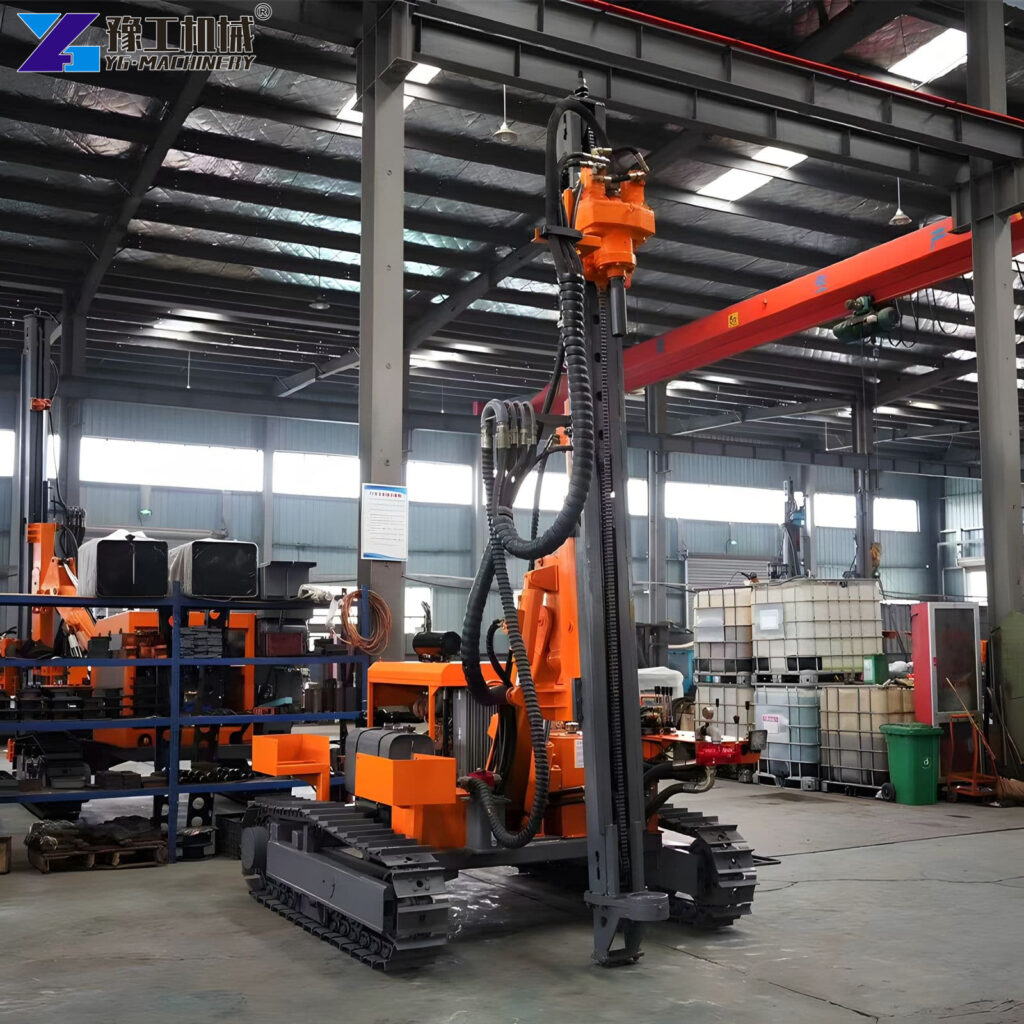
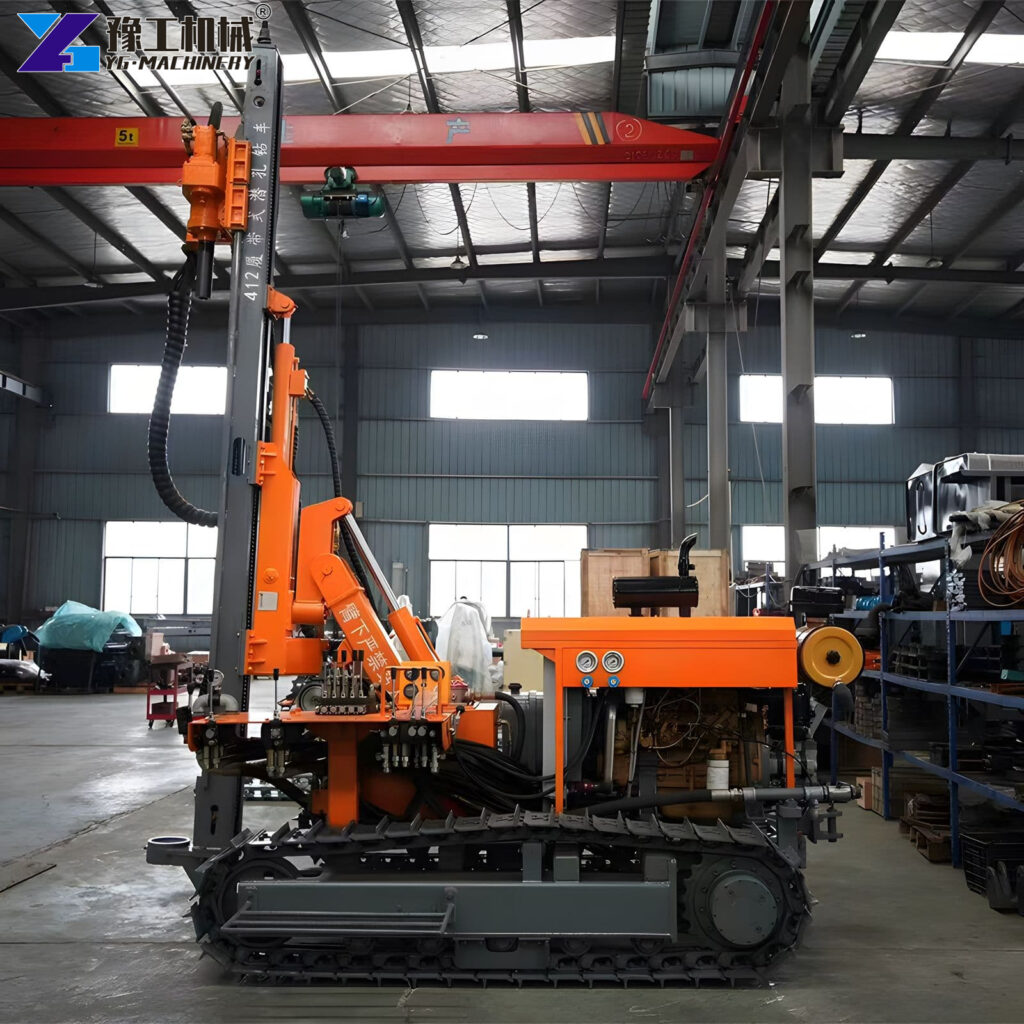
Technical Parameters of YG Machinery Down Hole Drilling Equipment
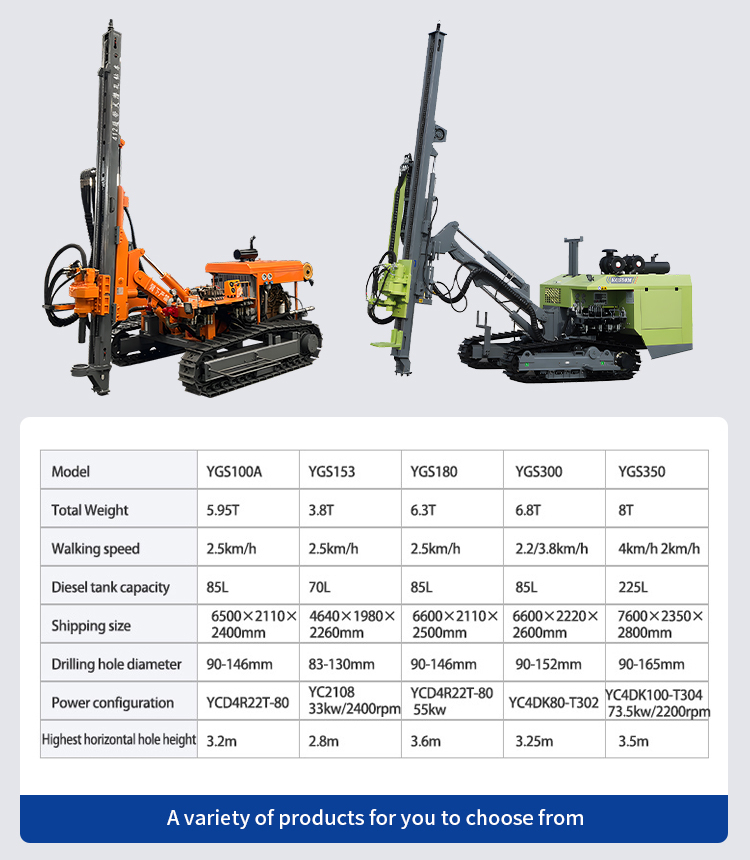
YG Machinery offers multiple DTH drilling models designed for different job site conditions.
| Model | YGS100A | YGS153 | YGS180 | YGS300 | YGS350 |
| Total weight | 5.95T | 3.8T | 6.3T | 6.8T | 8T |
| Walking speed | 2.5km/h | 2.5km/h | 2.5km/h | 2.2–3.8km/h | 4km/h / 2km/h |
| Diesel tank capacity | 85L | 70L | 85L | 85L | 225L |
| Shipping size | 6500×2100×2400mm | 4640×1980×2260mm | 6600×2110×2500mm | 6600×2220×2600mm | 7600×2350×2800mm |
| Drilling hole diameter | 90–146mm | 83–130mm | 90–146mm | 90–152mm | 90–165mm |
| Power configuration | YCD4R22T-80 | YC2108 33kw/2400rpm | YCD4R22T-80 55kw | YC4DK80-T302 | YC4DK100-T304 73.5kw |
| Max horizontal hole height | 3.2m | 2.8m | 3.6m | 3.25m | 3.5m |
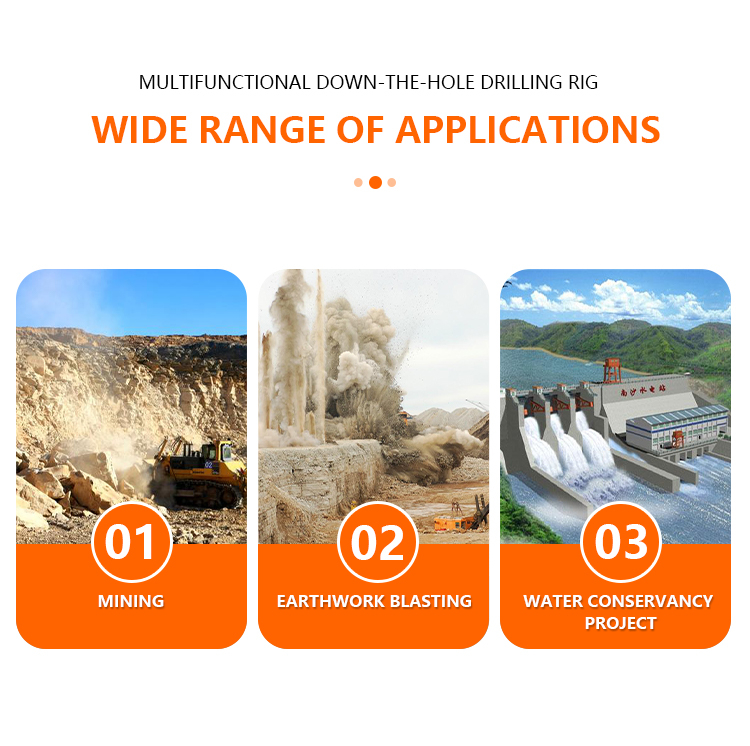
Application Areas of DTH Drilling Machine
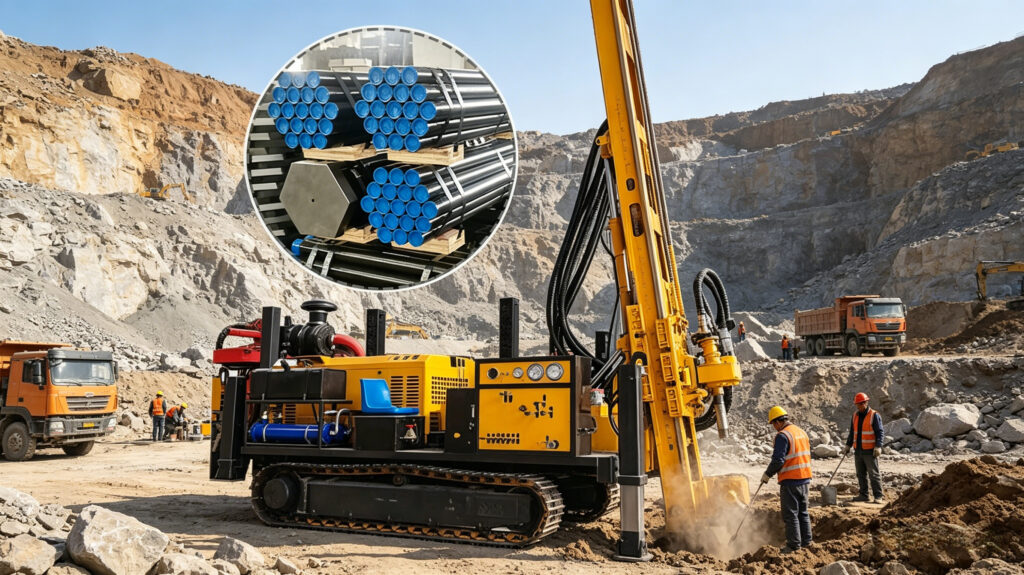
- Blasthole drilling: Production holes (for primary rock fragmentation), Pre-split holes (to create a fracture plane for controlled blasting)
- Mining: Mineral exploration, overburden removal, and creating space for infrastructure.
- Quarrying: Extracting stone blocks and preparing sites for aggregate production.
- Construction: Foundation drilling, piling, anchoring, and soil nailing.
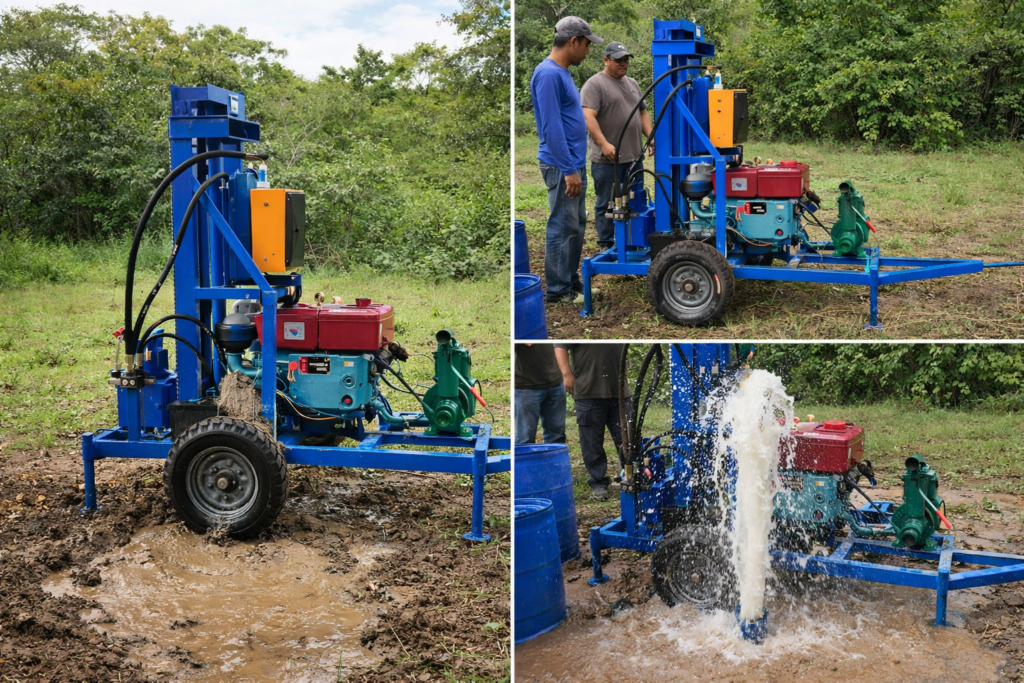
- Water well drilling: Creating boreholes for accessing underground water resources.
- Geothermal drilling: Drilling holes for geothermal energy extraction.
- Oil and gas drilling: For shallower wells where air hammers are suitable.
- Ground consolidation: Improving soil stability for construction projects.
- Geotechnical drilling: For soil investigation and analysis.
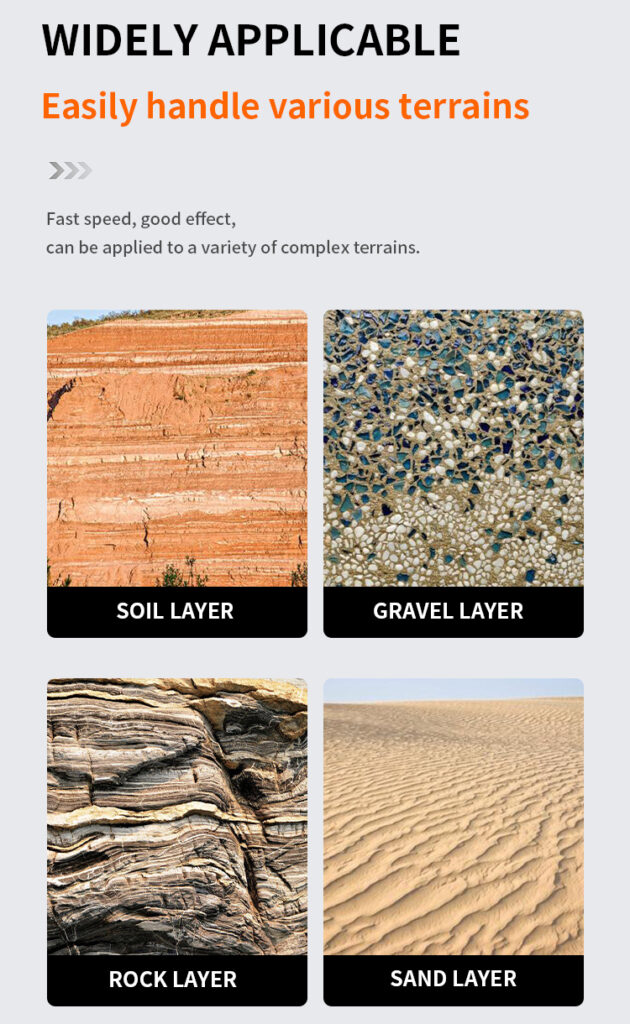
Explore real project photos and customer feedback.
Are DTH and MCF the same?
No, DTH (Down-The-Hole) drilling and MCF are not the same.
DTH refers to a type of drilling method and the equipment used, while MCF (thousand cubic feet) is a unit of measurement for natural gas volume.
DTH drilling rigs utilize a pneumatic hammer at the bottom of the borehole to fracture rock, making them efficient for hard rock formations. They are used in various applications like mining and water well drilling.
MCF, on the other hand, is a standard unit in the natural gas industry, primarily in the United States, to quantify the volume of natural gas produced or consumed. It’s a measure of quantity, not a drilling technique or equipment.
Why Choose YG Machinery Down the Hole Drilling Equipment?
Choosing the right down hole drilling equipment directly impacts project efficiency and cost control.
- Strong Manufacturing Capability: YG Machinery integrates R&D, production, and quality control to ensure stable machine performance.
- Wide Model Range: From compact models like YGS153 to heavy-duty YGS350, suitable for different working conditions.
- Stable Performance in Harsh Environments: Designed for high-temperature, dusty, and rocky environments.
- Easy Maintenance: Modular design reduces downtime and simplifies servicing.
- Global Export Experience: Machines are widely used in Africa, the Middle East, Southeast Asia, and South America.
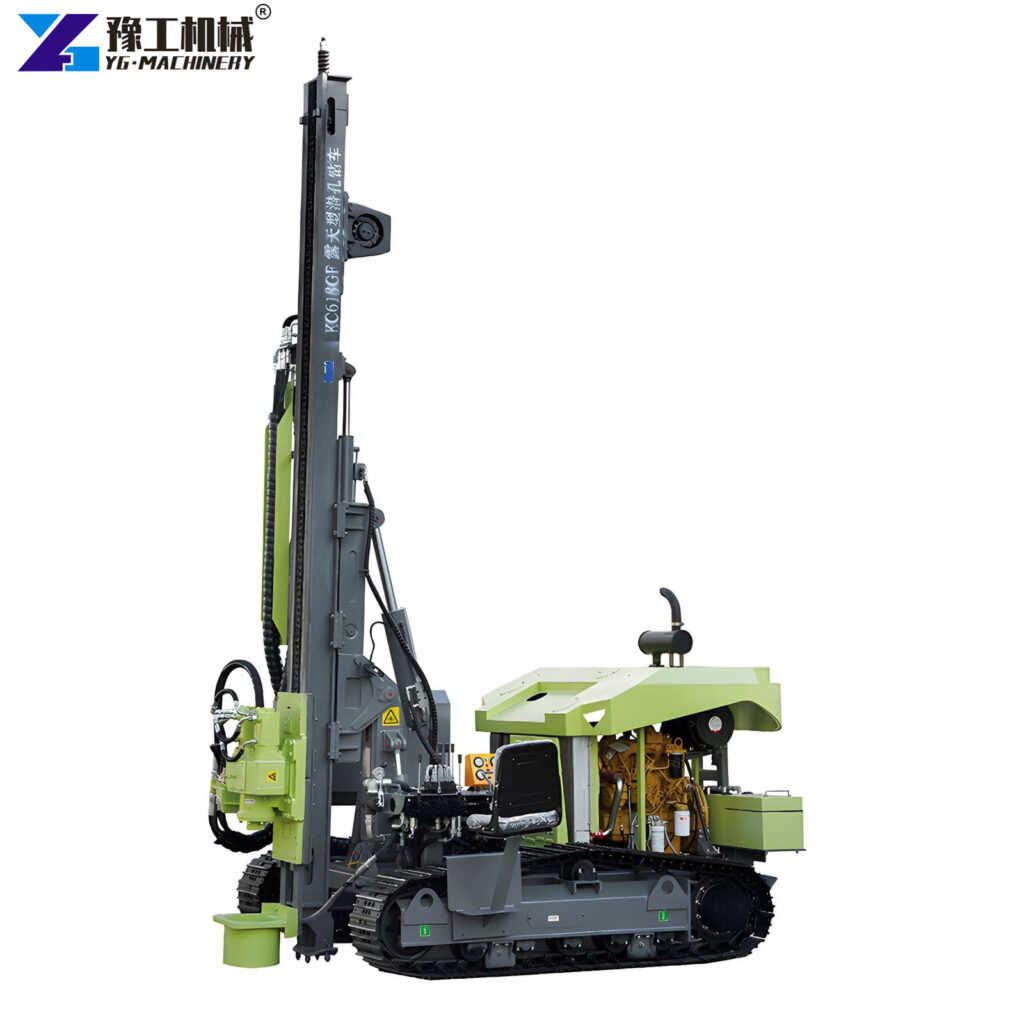
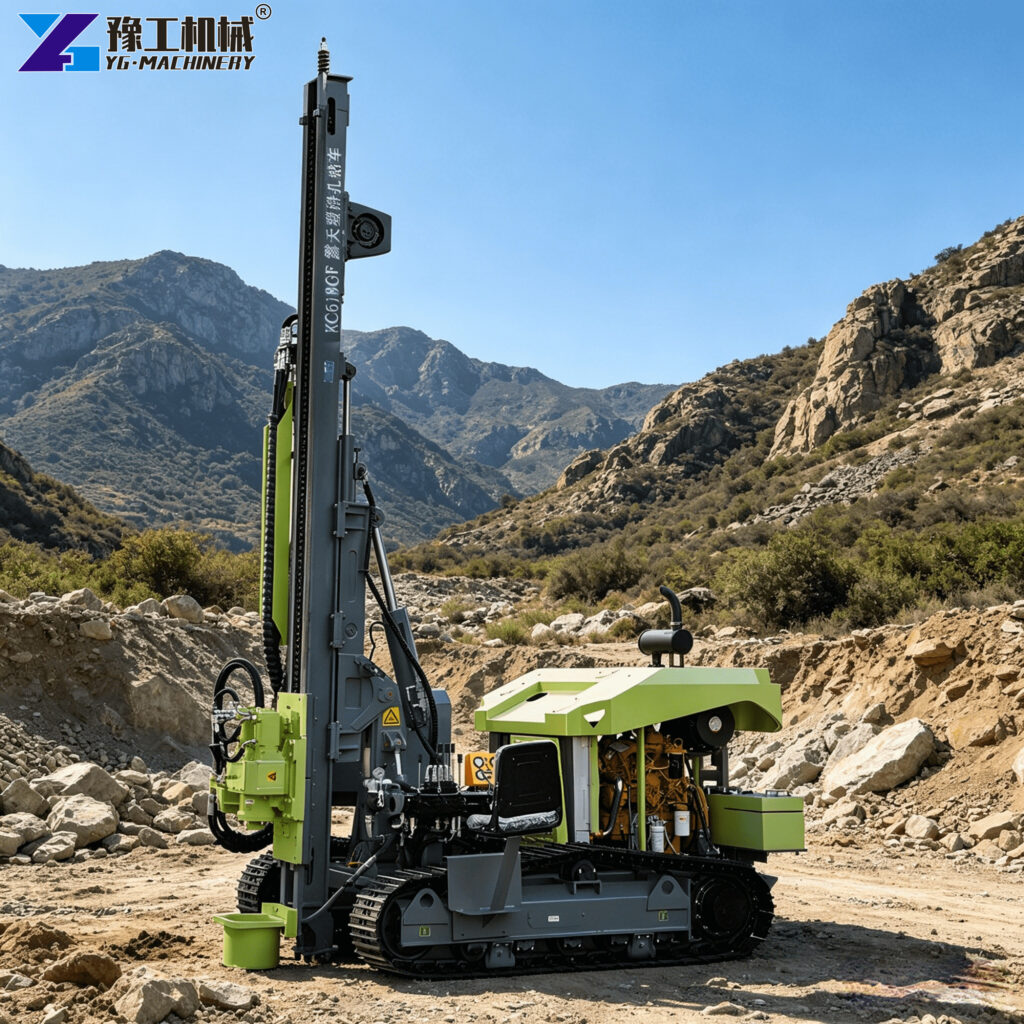
Check how this machine performs on-site.
Down the Hole Drilling Equipment vs Traditional Drilling
| Feature | DTH Drilling Machine | Top Hammer Drilling |
| Efficiency | High | Medium |
| Hole depth | Deep | Limited |
| Accuracy | High | Medium |
| Rock hardness adaptability | Excellent | Limited |
| Cost per meter | Lower | Higher |
The down the hole drilling machine clearly performs better in hard rock and deep drilling applications.
Buying Guide for DTH Drilling Rig
Before purchasing a DTH drilling, consider the following:
- Rock hardness level (F6–F20 or higher)
- Required hole diameter
- Drilling depth requirements
- Project environment (mine, quarry, construction site)
- Fuel efficiency and maintenance cost
YG Machinery provides technical consultation to help clients select the right model.
Get Factory Direct Pricing Today
If you are looking for reliable down hole drilling equipment, YG Machinery offers factory-direct pricing, ensuring competitive cost and long-term value.
Contact us today to get:
- Free technical consultation
- Customized drilling solution
- Latest quotation
- After-sales support
FAQs about Down Hole Drilling Equipment
The selection depends on the required hole diameter, drilling depth, and rock conditions. For small-scale construction, compact models like YGS153 are suitable, while mining and large quarry projects often require higher-capacity models such as YGS300 or YGS350 for better stability and efficiency.
The air compressor requirement depends on the hammer size and hole diameter. Generally, larger drilling diameters require higher air pressure and volume. It is important to match the compressor correctly with the rig to avoid low efficiency or equipment damage.
Yes. Most down the hole drilling equipment is designed with crawler chassis systems, allowing stable movement on rocky, uneven, or muddy job sites. However, extreme slopes or unstable ground may require additional site preparation for safe operation.
The lifespan of consumable parts depends on rock hardness and operating conditions. In general, drill bits and hammers can last from several hundred to several thousand meters of drilling. Regular inspection helps identify wear early and maintain drilling efficiency.
Yes. Although a DTH drilling is relatively easy to operate, proper training is recommended. Operators should understand pressure settings, drilling parameters, and basic maintenance to ensure safety and extend machine life.
YG Machinery provides technical support, including installation guidance, operation training, spare parts supply, and remote troubleshooting. For international clients, support is also available through video guidance and technical documentation.