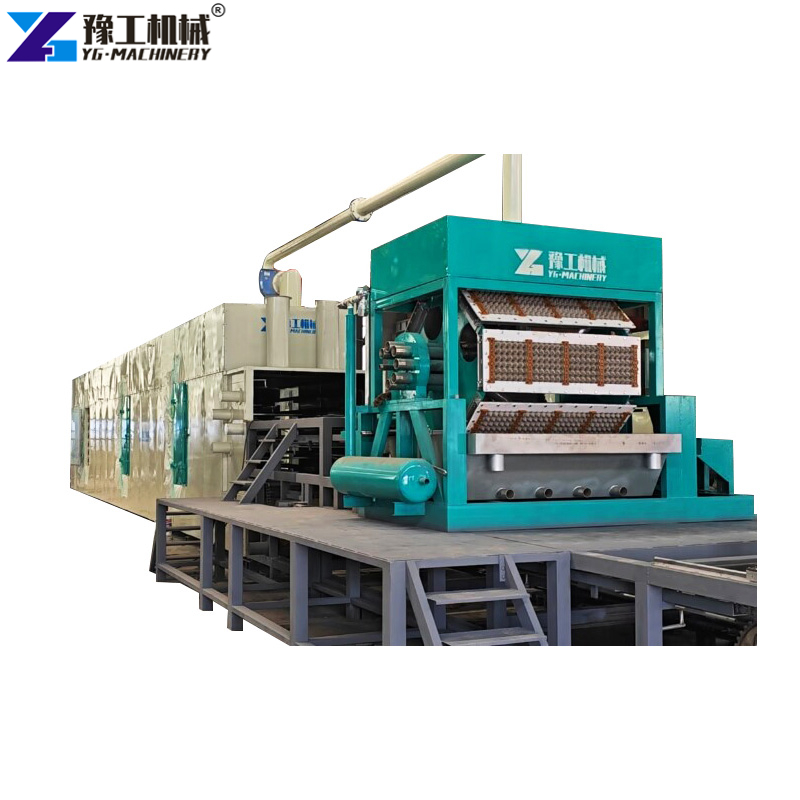
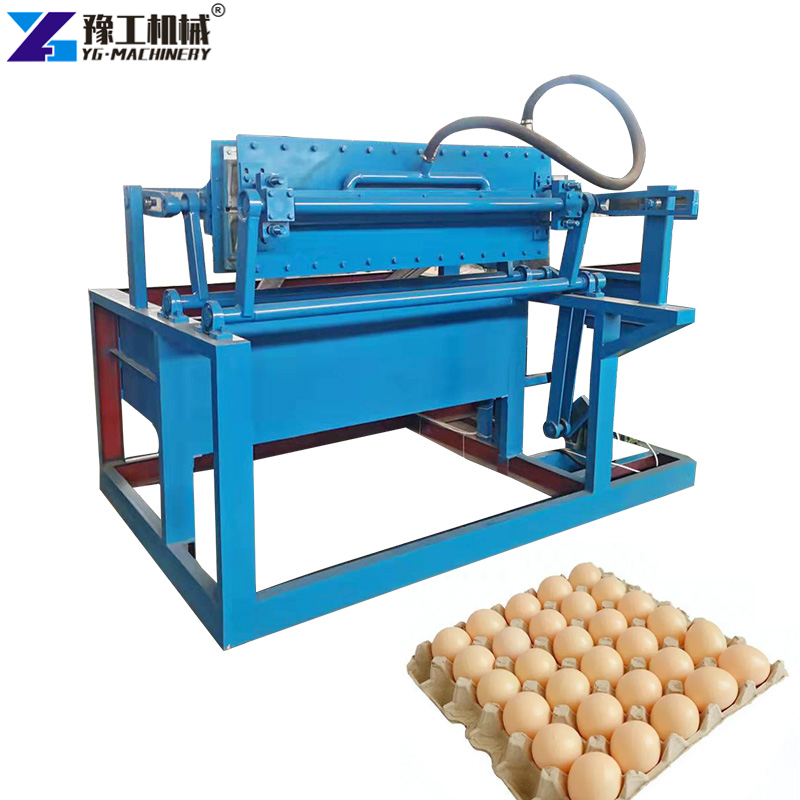
The egg carton making machine plays a vital role in the modern packaging and recycling industries. As global demand for eco-friendly packaging increases, more businesses are investing in automated production lines powered by advanced egg tray making machine technology.
Understanding the full production process of an egg tray making machine is essential for improving efficiency, reducing costs, and ensuring consistent product quality. From raw material preparation to final packaging, each step directly impacts output and profitability.
Egg trays and cartons are primarily made from recycled paper, making this process both sustainable and cost-effective.
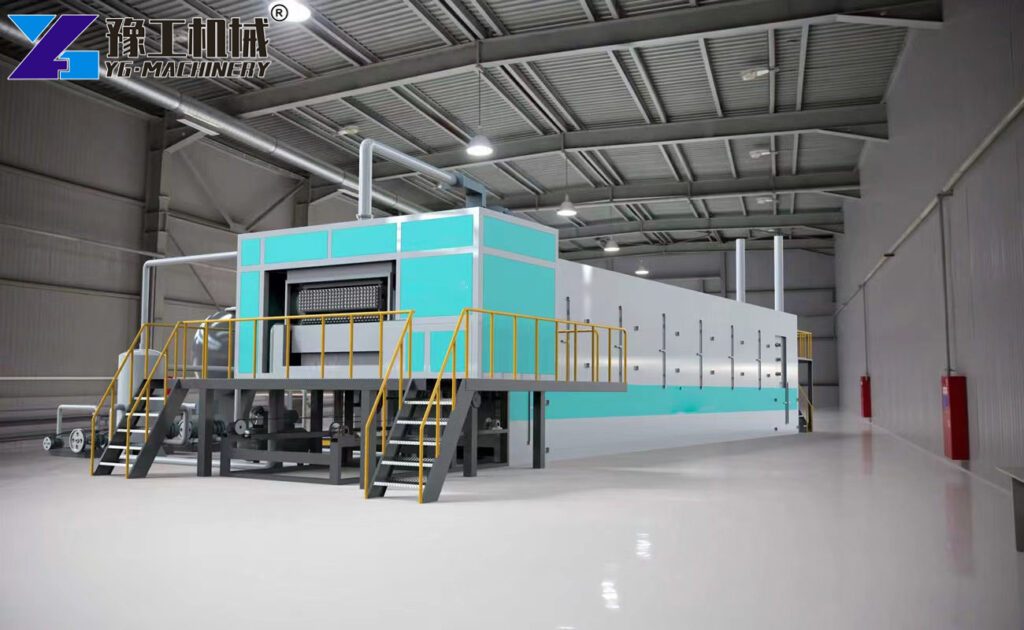
What Is an Egg Tray Manufacturing Machine and How It Works
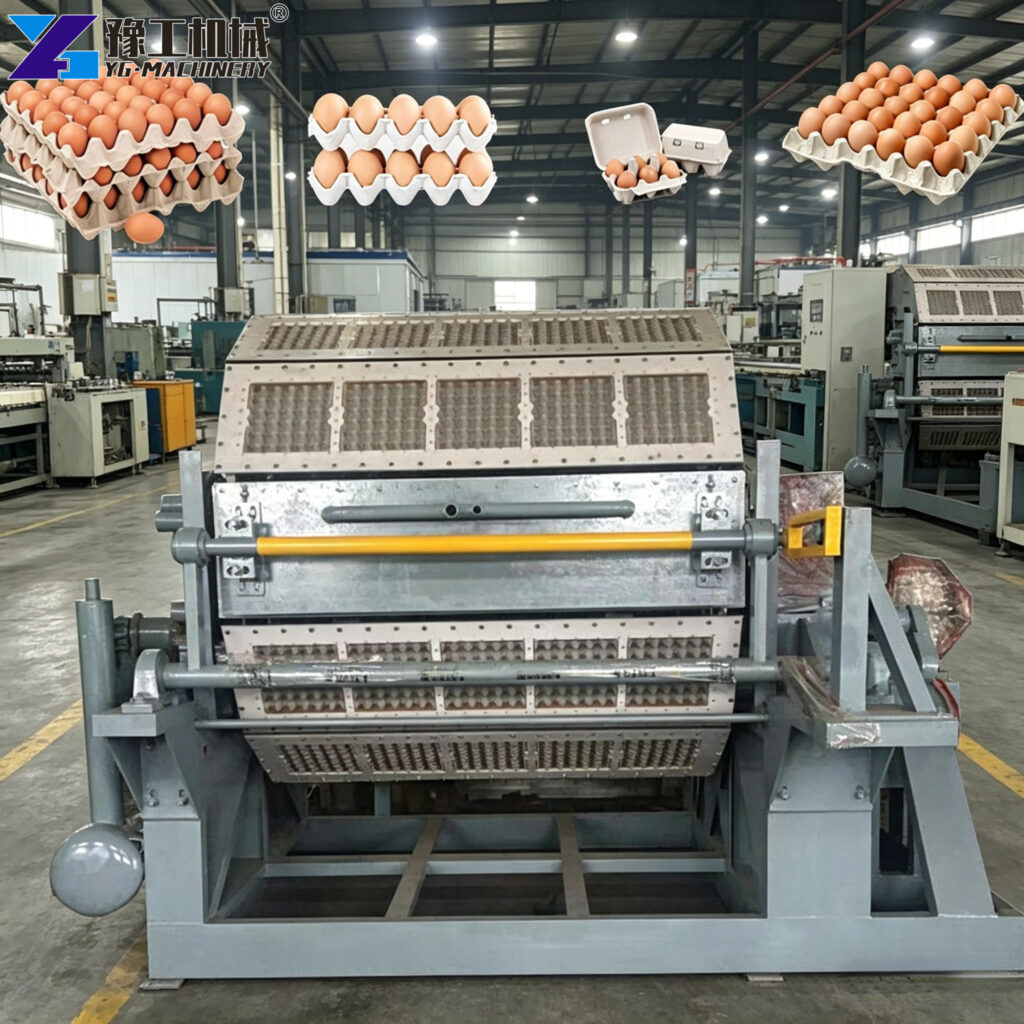
It’s a pulp molding system that converts waste paper into molded fiber products such as egg trays, egg cartons, and fruit trays.
The machine works through a continuous process:
- Waste paper is converted into pulp
- The pulp is molded into shape
- Products are dried and finished
This process typically includes pulping, molding, drying, and packaging stages.
Modern machines are highly automated, reducing labor costs while increasing production efficiency.
YG Egg Carton Making Machine Parameters
Before understanding the production process, it is important to choose the right egg tray making machine model based on your capacity and investment plan.
| Model | YG-1×3 | YG-1×4 | YG-3×4 | YG-4×4 | YG-4×8 | YG-5×8 | YG-6×8 |
| Capacity (pcs/h) | 1000 | 1500 | 2500 | 3500 | 4500 | 5500 | 7000 |
| Forming Mould Quantity | 3 | 4 | 12 | 16 | 32 | 40 | 48 |
| Total Power (kW) | 40 | 40 | 50 | 60 | 130 | 140 | 186 |
| Electricity Consumption (kW/h) | 28 | 29 | 35 | 42 | 91 | 98 | 130 |
| Worker Required | 3–5 | 4–6 | 4–6 | 4–6 | 4–6 | 5–7 | 6–8 |
How to Choose the Right Egg Tray Making Machine
- Small Scale (1000–1500 pcs/h):
Ideal for startups or small businesses - Medium Scale (2500–3500 pcs/h):
Balanced investment and output - Large Scale (4500–7000 pcs/h):
Suitable for industrial production and export businesses
Expert Tip:
Choose your machine based on daily output demand, not just price. A higher-capacity egg tray production machine can significantly reduce labor and unit costs.
Step 1 – Raw Material Selection and Pre-Treatment for Egg Carton Making Machine
The performance of an egg carton making machine starts with raw material quality. This step is not just about collecting waste paper—it directly determines product strength, appearance, and reject rate.
Material Selection Standards
- Best materials: Waste newspapers (ONP), corrugated paper
- Avoid: Coated paper, plastic-laminated paper (affects bonding)
Pre-Treatment Process
- Sorting → removing impurities (plastic, metal)
- Shredding → improves pulping efficiency
- Moisture control → prevents inconsistent pulp quality
Professional Insight:
A stable fiber composition ensures uniform molding thickness and reduces cracking during drying.
Step 2 – Pulping Process Optimization in Egg Tray Manufacturing Machine
In an egg tray manufacturing machine, pulping is not simply mixing water and paper—it is a controlled fiber processing stage.
Key Technical Parameters
- Pulp concentration: 4%–6% (optimal for molding)
- Pulping time: 20–30 minutes
- Water ratio: Typically 1:3 (paper: water)
Critical Control Points
- Uniform fiber dispersion
- Removal of heavy impurities (sand, staples)
- Stable slurry consistency
Advanced Tip:
Installing a refiner system improves fiber bonding, resulting in stronger egg trays with smoother surfaces.
Step 3 – Additives and Pulp Conditioning for Performance Enhancement
This stage is often underestimated but is essential for producing high-quality trays.
Common Additives and Functions
- Waterproof agents: Improve moisture resistance
- Dry strength agents: Increase load-bearing capacity
- Color additives: Improve product appearance
Mixing Control
- Additives must be evenly distributed
- Overuse may increase cost and reduce recyclability
Industry Insight:
Export-grade egg trays usually require waterproof and anti-fungal additives, especially for humid climates.
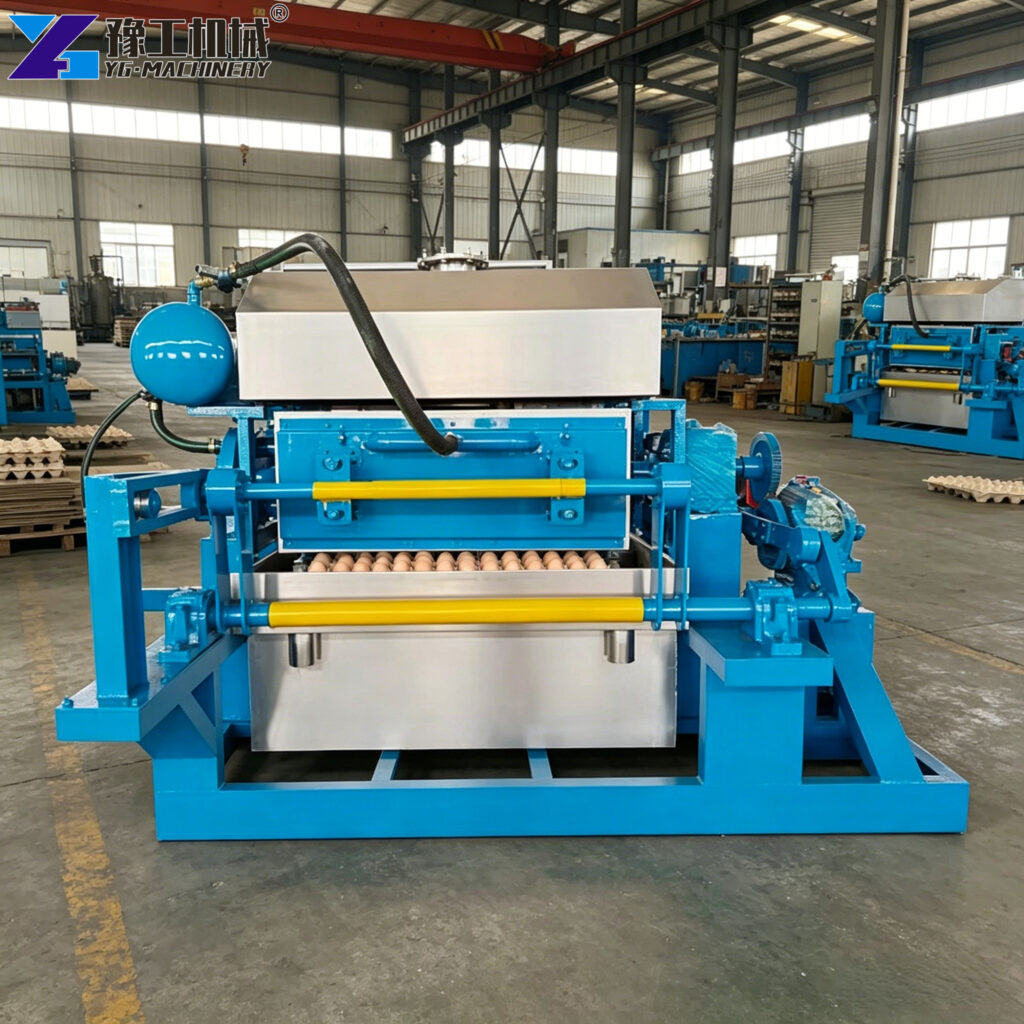
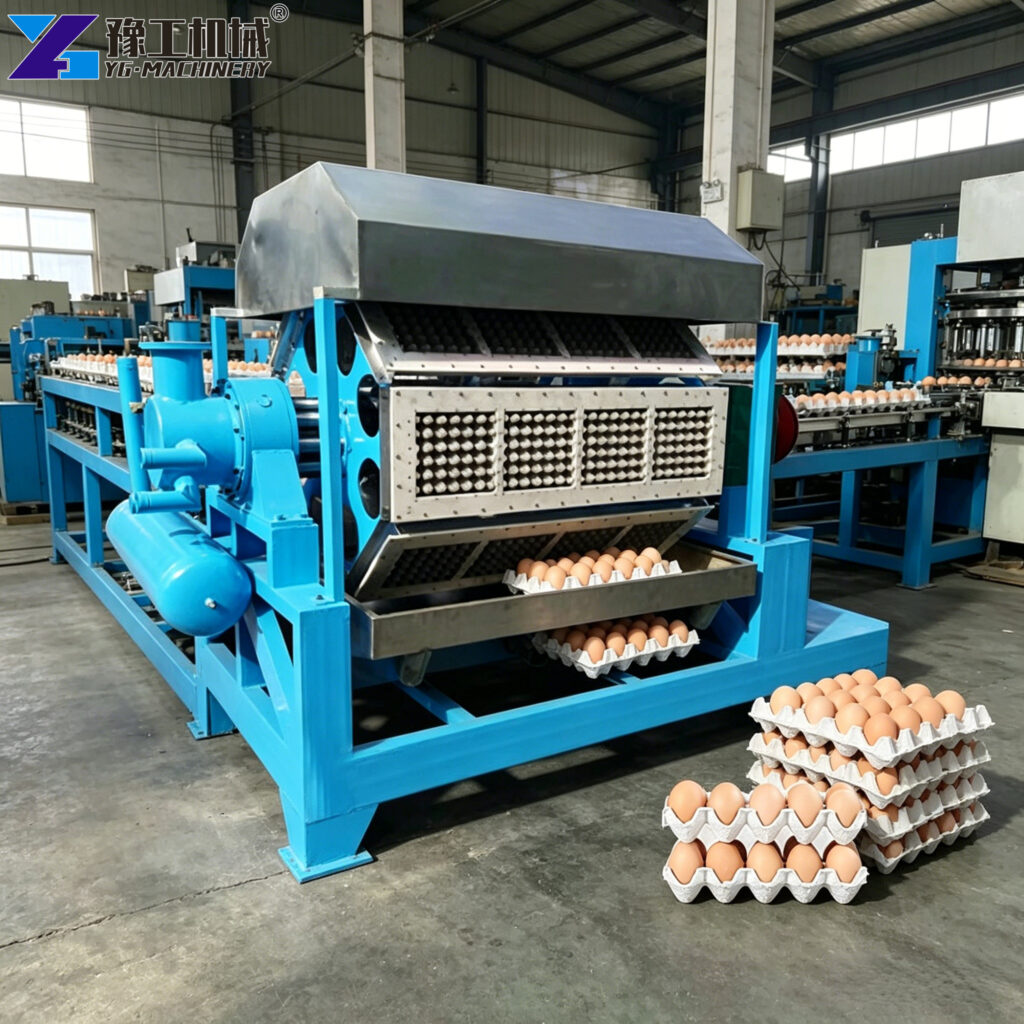
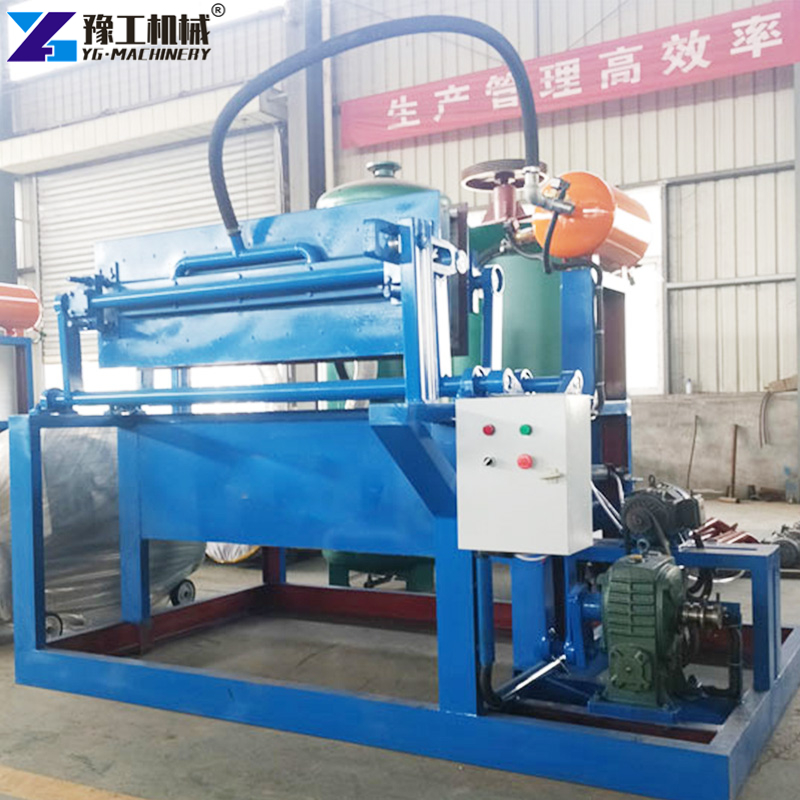
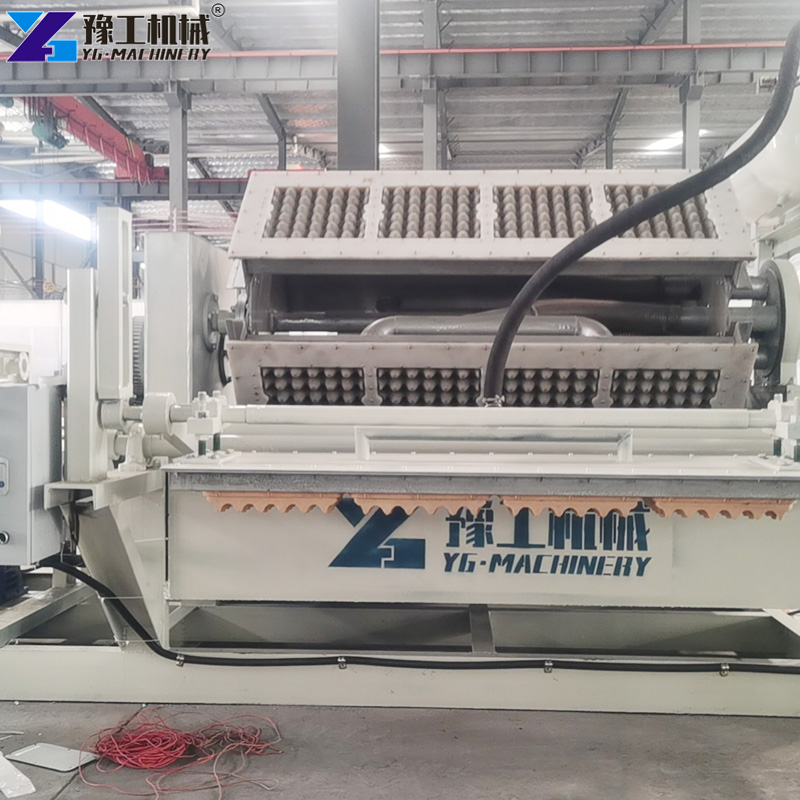
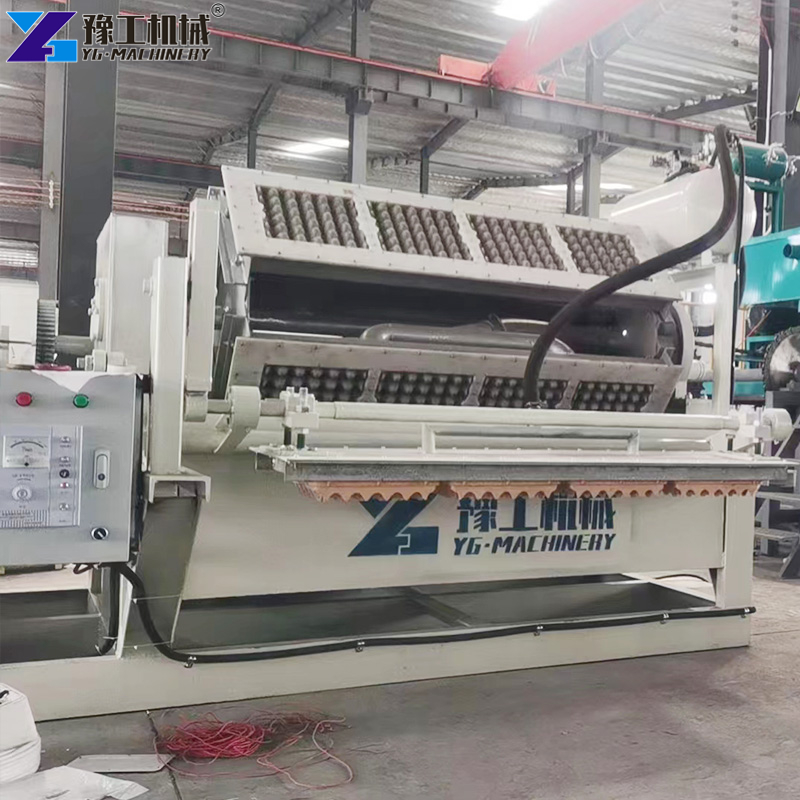
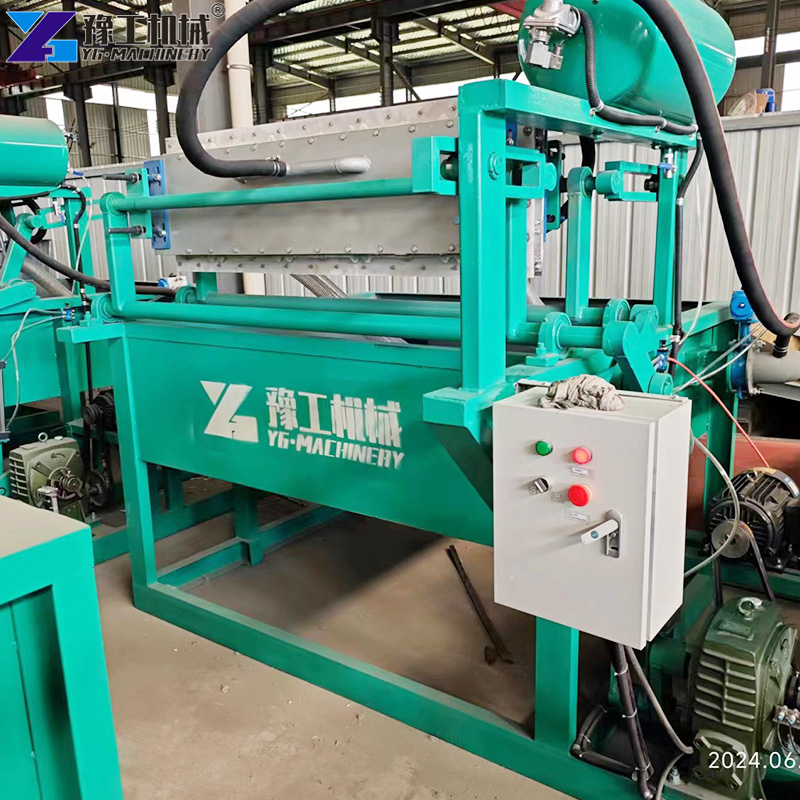
Step 4 – Precision Molding Process in Egg Crate Making Machine
This is the core stage of the egg tray making machine, where pulp is transformed into shape.
How the Process Works
- The vacuum system draws pulp onto molds
- Fibers form a uniform layer
- Water is extracted through mesh molds
Key Technical Parameters
- Vacuum pressure: 0.04–0.06 MPa
- Forming time: 8–15 seconds
- Moisture after forming: 75%–80%
Critical Quality Factors
- Mold precision determines product shape
- Uniform suction ensures consistent thickness
Professional Tip:
High-quality aluminum molds improve durability and product consistency compared to plastic molds.
Step 5 – Drying System Control in Egg Tray Production Machine
Drying is a critical stage in the egg tray making machine that directly impacts product strength and deformation rate.
Drying Methods Comparison
| Method | Advantage | Limitation |
| Natural drying | Low cost | Weather dependent |
| Brick kiln | Medium investment | Uneven drying |
| Metal dryer | High efficiency | Higher initial cost |
Technical Parameters
- Drying temperature: 150–200°C
- Drying time: 15–25 minutes (metal dryer)
- Final moisture content: <10%
Advanced Insight:
Improper drying leads to warping, cracking, or low strength, which directly affects product quality and customer satisfaction.
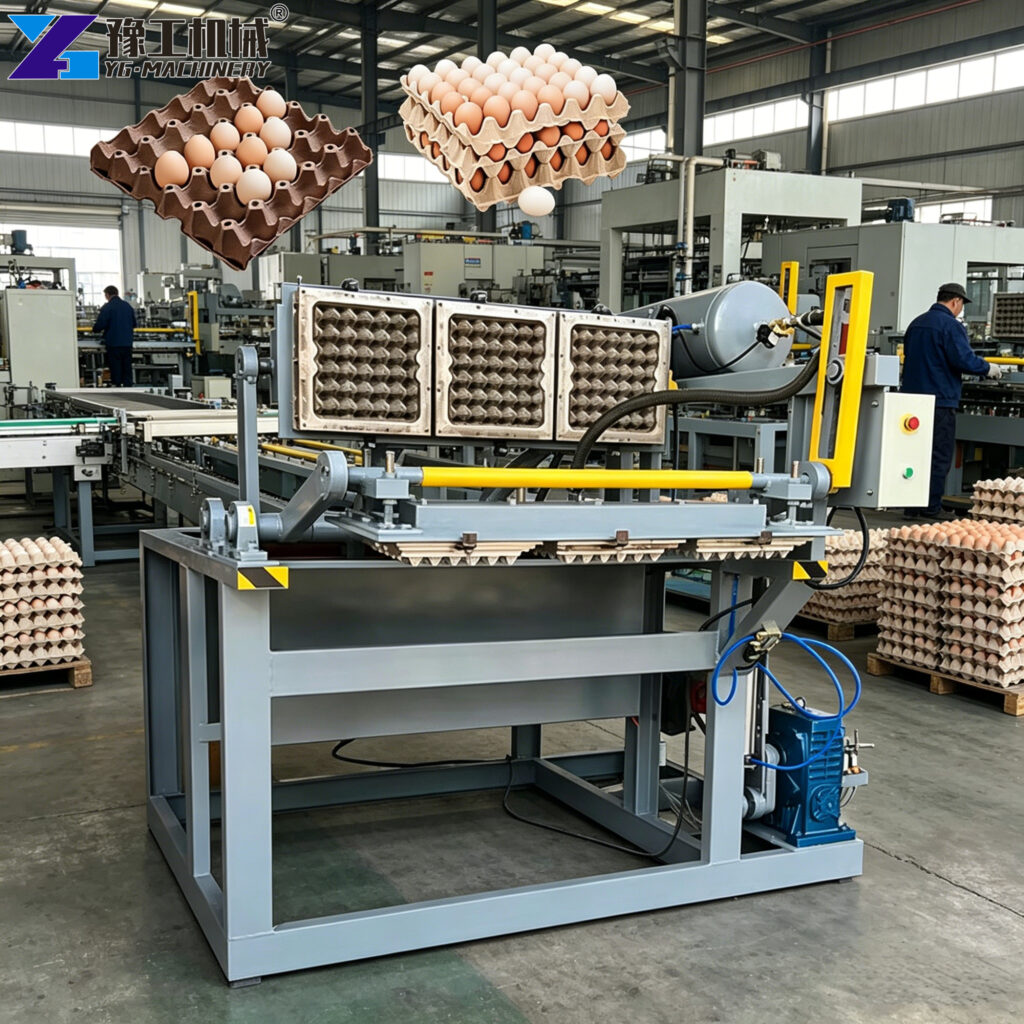
Hot Pressing, Shaping, and Automated Packaging in the Egg Crate Making Machine
The final stage enhances product quality and prepares it for the market.
Hot Pressing Function
- Smooth surface
- Improve structural strength
- Enhance appearance
Automation Process
- Automatic stacking system
- Counting and packaging
- Conveyor-based handling
Quality Control
- Check shape consistency
- Inspect edge integrity
- Ensure uniform thickness
Professional Tip:
Adding a hot press system is essential for high-end markets (supermarkets, export packaging).
Full Production Flow Summary
Waste Paper → Pulping → Additives → Molding → Drying → Hot Press → Packaging
Key Optimization Points and Final Insight for Egg Carton Making Machine Buyers
To maximize ROI when using an egg tray making machine, focus on:
- Stable pulp consistency
- High-quality molds
- Efficient drying system
- Automation level
These factors directly impact:
- Production cost per unit
- Labor requirements
- Product quality consistency
Final Insight
A modern egg tray making machine is not just a piece of equipment—it is a complete system combining material science, mechanical engineering, and process control.
Businesses that optimize each step can achieve:
- Higher production efficiency
- Lower defect rates
- Better market competitiveness
Advantages of Using a Modern Egg Tray Production Machine
Investing in a modern egg tray making machine offers multiple advantages:
- High Efficiency: Continuous automated production
- Low Cost: Uses recycled materials
- Eco-Friendly: Reduces environmental waste
- Scalable Production: Suitable for small and large factories
These benefits make pulp molding machines a smart investment for packaging businesses.
Egg Carton Making Machine Cost & Profit Analysis (ROI Guide)
How Much Does an Egg Tray Making Machine Cost?
The cost of it varies depending on capacity, automation level, and configuration.
Typical Investment Range
| Machine Type | Capacity | Estimated Price |
| Small (YG-1×3 / 1×4) | 1000–1500 pcs/h | $8,000 – $15,000 |
| Medium (YG-3×4 / 4×4) | 2500–3500 pcs/h | $15,000 – $30,000 |
| Large (YG-4×8 / 5×8 / 6×8) | 4500–7000 pcs/h | $30,000 – $80,000 |
Note: Final price depends on dryer type, automation, and customization.
Production Cost Breakdown (Per Day)
Take a medium-scale egg tray production machine (2500 pcs/h) as an example:
Daily Output
2500 pcs/hour × 8 hours = 20,000 trays/day
Estimated Daily Costs
| Cost Item | Estimated Cost |
| Waste paper raw material | $80 – $120 |
| Electricity | $20 – $40 |
| Labor (4–6 workers) | $60 – $100 |
| Maintenance | $10 – $20 |
| Total Cost | $170 – $280/day |
Revenue Estimation
Average selling price: $0.03 – $0.06 per tray
Daily Revenue
20,000 trays × $0.04 = $800/day
Profit Calculation
| Item | Value |
| Daily Revenue | $800 |
| Daily Cost | $170 – $280 |
| Daily Profit | $520 – $630 |
Return on Investment (ROI)
- Machine cost: ~$20,000
- Daily profit: ~$550
Estimated Payback Period:
30–45 days (high-efficiency operation)
Key Factors That Affect Profitability
1. Raw Material Cost
Lower-cost waste paper = higher profit
2. Energy Efficiency
Metal dryers consume more energy but increase output
3. Automation Level
Higher automation reduces labor costs
4. Product Quality
- Better trays = higher selling price
How to Maximize Your Profit
- Choose the right egg tray manufacturing machine capacity
- Use high-quality molds for better product consistency
- Optimize drying system (critical for efficiency)
- Reduce downtime with reliable equipment
Pro Tip:
A slightly higher investment in a fully automated egg crate-making machine can increase long-term profit by 20–40%.
For most investors, an egg tray production machine is not just equipment—it is a high-margin recycling business with:
- Low raw material cost
- Stable market demand
- Fast ROI
Get Your Custom Profit Plan
Want to know your exact profit based on your country, labor cost, and electricity price?
Contact YG Machinery now to get:
- Customized ROI calculation
- Machine configuration recommendation
- Factory-direct quotation
Send us your requirements and get a full business plan within 24 hours!
Choose the Right Egg Carton Making Machine for Your Business
The production process of an egg tray-making machine may seem simple, but each step plays a crucial role in determining final product quality and operational efficiency.
By mastering these six steps—raw material preparation, pulping, additives mixing, molding, drying, and packaging—you can significantly improve production performance and profitability.
Looking to build a high-efficiency egg tray production line?
YG Machinery provides customized egg carton making machine solutions based on your capacity, budget, and market needs.
Contact us today for a free technical consultation and quotation.