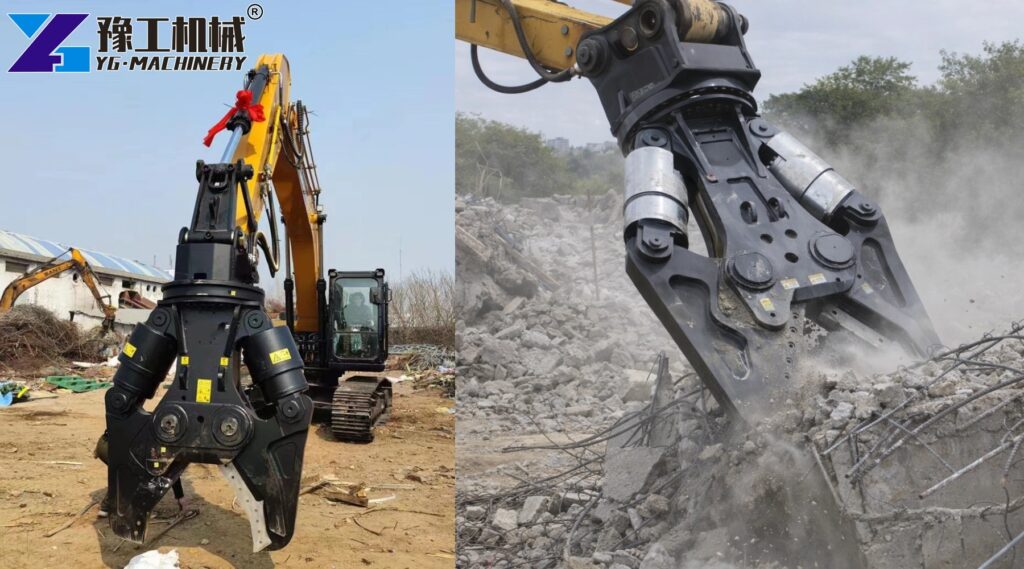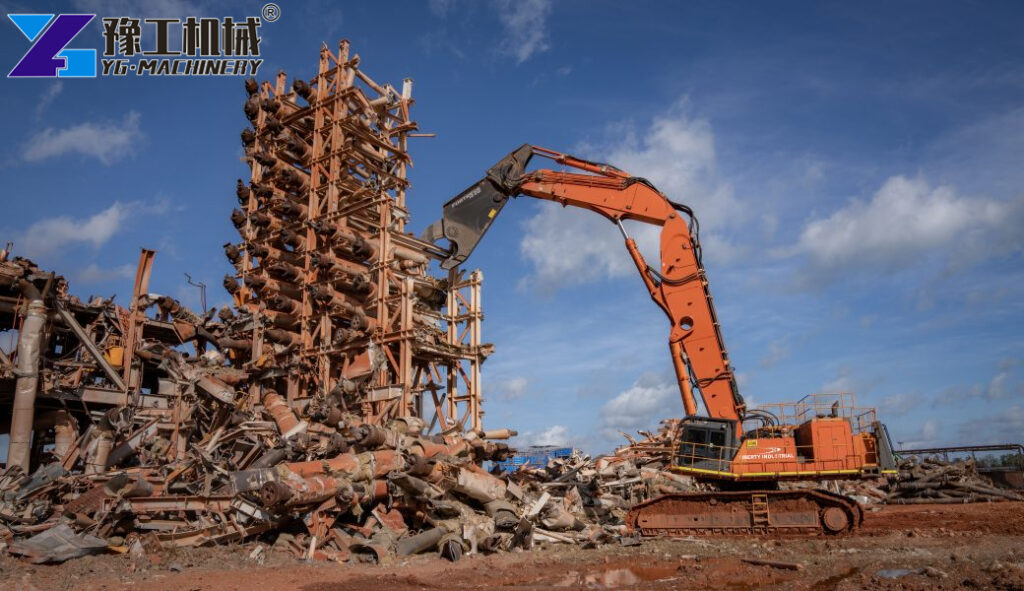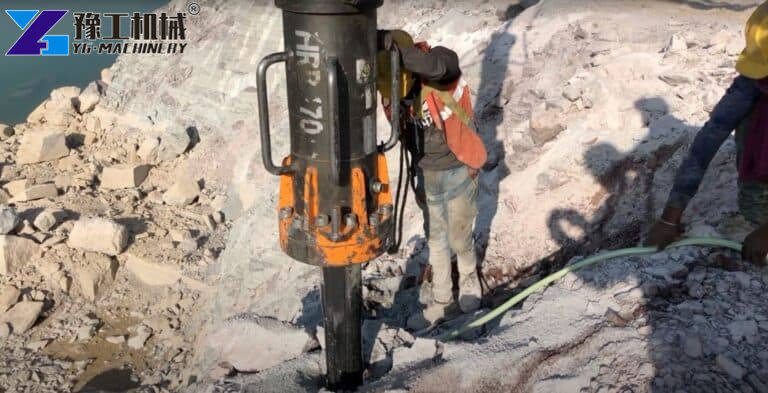
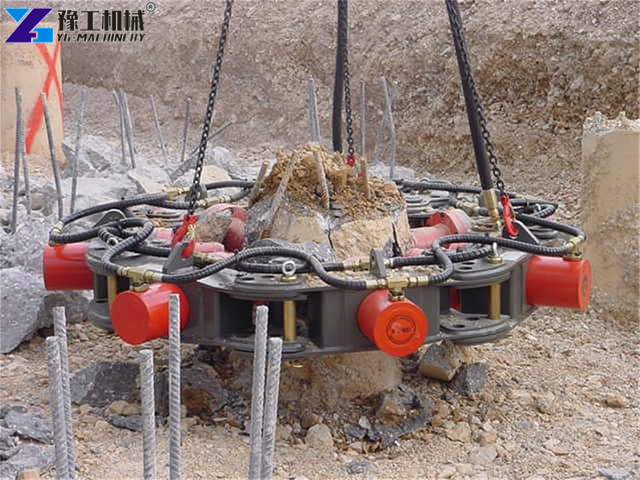
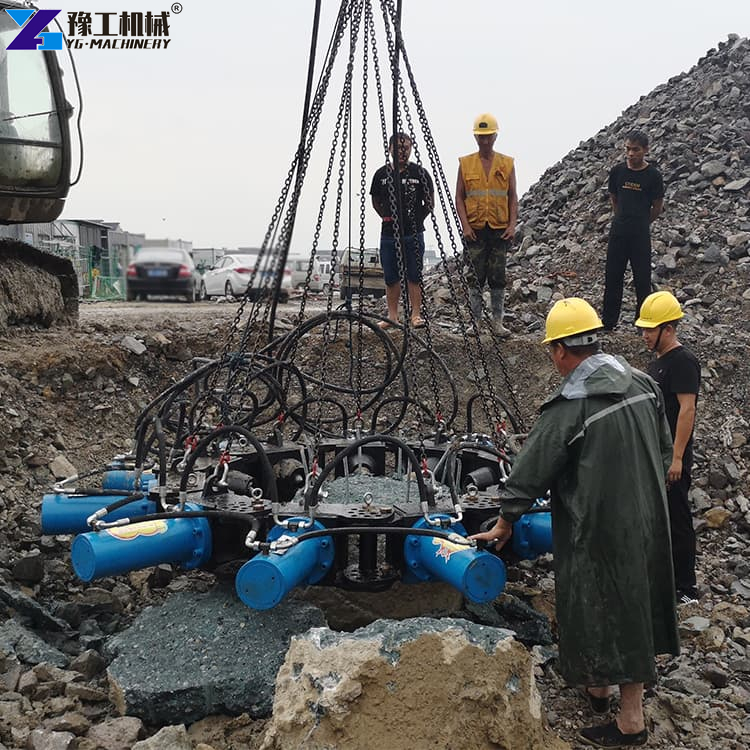
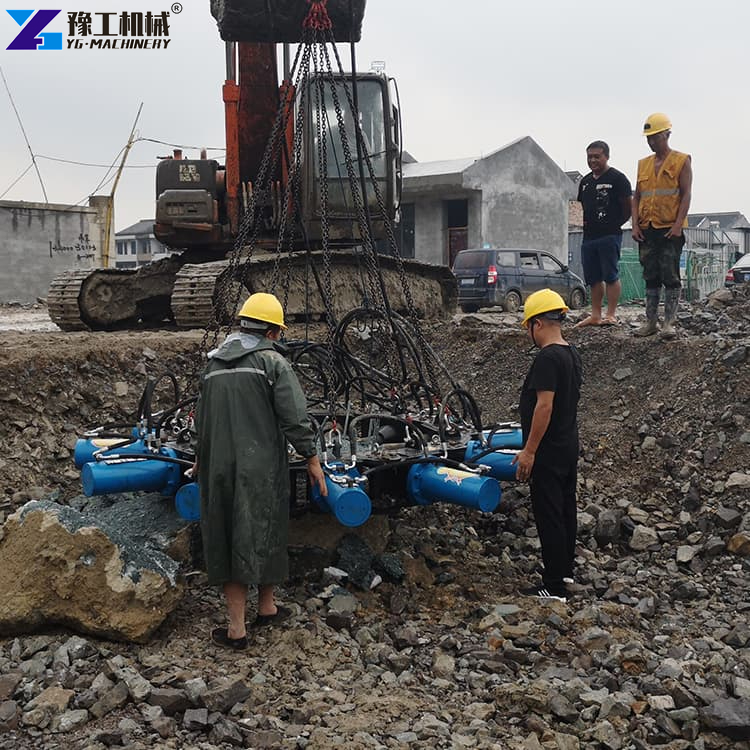
A pile breaker mounts on an excavator and cuts through concrete piles with hydraulic force. Instead of using jackhammers or hand tools, a single operator positions the machine around a pile, closes the jaws, and fractures the concrete cleanly. As a result, the rebar stays completely intact without causing any damage to the reinforcement. No flying debris. Without this attachment, crews spend hours chipping away at pile heads with handheld breakers. That work is loud, dusty, and hard on workers’ bodies. With this tool, the same job takes minutes. For foundation contractors, bridge builders, and marine construction crews, it cuts labour time by 80%.
Get a Free Pile Diameter Assessment & Quote
Product Specifications of YG Excavator Pile Breaker
You combine modules to match your pile diameter. The table below shows the full lineup.
| Model | YG-800 | YG-980 | YG-1150 | YG-1300 | YG-1500 | YG-1650 | YG-1800 | YG-2000 | YG-2150 | YG-2300 | YG-2500 |
| Applicable pile diameter | 600-800mm | 800-900mm | 1100-1150mm | 1150-1300mm | 1300-1500mm | 1500-1650mm | 1650-1800mm | 1800-2000mm | 2000-2150mm | 2150-2300mm | 2300-2500mm |
| Number of modules | 8 | 9 | 10 | 11 | 12 | 13 | 14 | 15 | 16 | 17 | 18 |
| Machine weight | 2400kg | 2700kg | 3000kg | 3300kg | 3600kg | 3900kg | 4200kg | 4500kg | 4800kg | 5100kg | 5400kg |
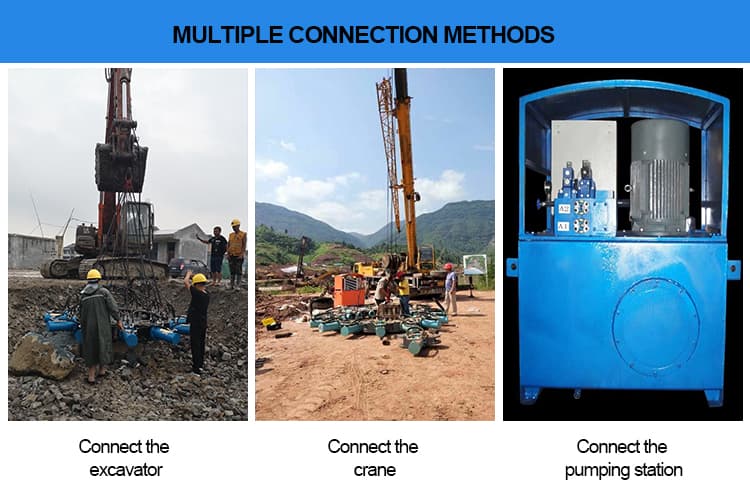
| Applicable excavator model | 20-30T | 20-30T | 20-30T | 30-40T | 30-40T | 30-40T | Hydraulic pump station | Hydraulic pump station | Hydraulic pump station | Hydraulic pump station | Hydraulic pump station |
| Cylinder stroke | 250mm | 250mm | 250mm | 250mm | 250mm | 250mm | 250mm | 250mm | 250mm | 250mm | 250mm |
| Working pressure | 35Mpa | 35Mpa | 35Mpa | 35Mpa | 35Mpa | 35Mpa | 35Mpa | 35Mpa | 35Mpa | 35Mpa | 35Mpa |
| Oil storage capacity of a single module | 5L | 5L | 5L | 5L | 5L | 5L | 5L | 5L | 5L | 5L | 5L |
| Breaking force | 70T | 70T | 70T | 70T | 70T | 70T | 70T | 70T | 70T | 70T | 70T |
The pile breaker is just one of our many excavator attachments. Visit our excavator attachment collection to explore hydraulic breakers, excavator rock grinders, grapples, crushers, and other attachments for a wide range of construction and mining applications.
Compare Models and Get a Quote
Common specifications across all models:
- Max. Thrust: 300KN
- Max. Cylinder Trip: 300mm
- Max. Cylinder Pressure: 300MPa
- Single Module Weight: 335KG
- Single Module Size: 1015×865×340mm
- Location Pin Diameter: Φ35mm
Leading Hydraulic Pile Breaker Manufacturer – YG Machinery
As a professional hydraulic pile breaker manufacturer with over 20 years of experience, YG Machinery designs and produces high-performance pile head breaking equipment for global foundation projects. We supply factory-direct pile croppers, custom module configurations, and quick delivery worldwide to ensure your construction stays on schedule.
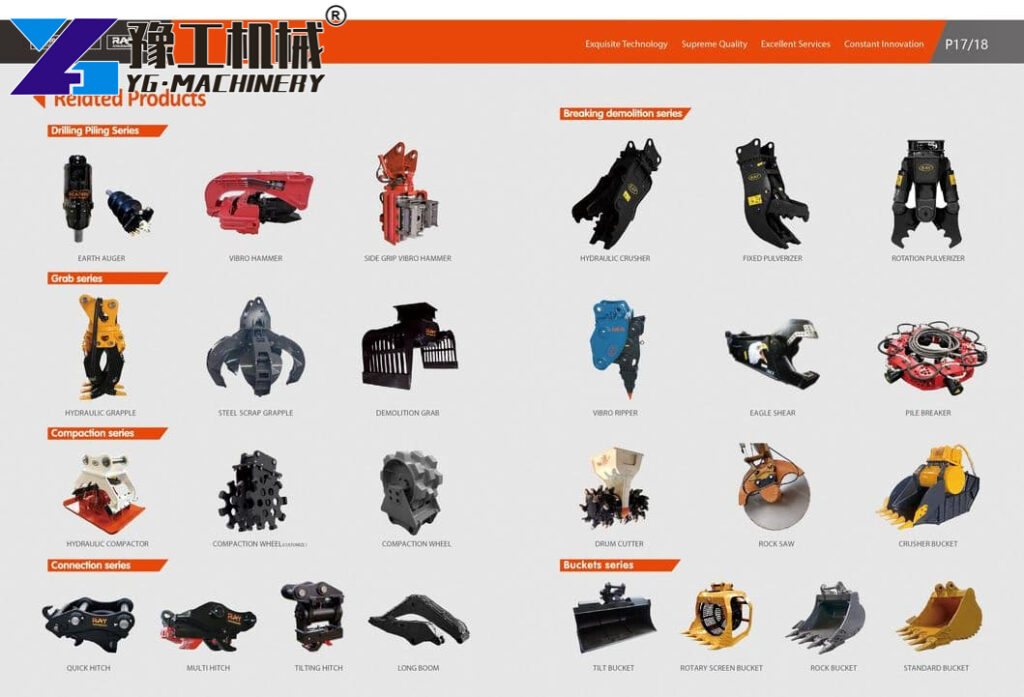
Beyond pile chipping machines, YG Machinery manufactures several other excavator attachments and construction equipment:
- Hydraulic breakers (from 200kg to 4000kg for 1-50 ton excavators)
- Hydraulic magnets (for scrap and demolition material handling)
- Mechanical grabs (for sorting and demolition work)
- Rotating pulverisers (for concrete crushing and rebar separation)
- Auger drives (for foundation drilling and pile pre-drilling)
- Compaction wheels (for trench backfill and landfill work)
- Quick couplers (pin grabber and hydraulic types for fast tool changes)
Contact YG Machinery directly for a full catalogue. They offer bundle pricing for pile breakers and breakers purchased together. Free pile diameter assessment is available before purchase.
Find the Right Model for Your Project
See how this equipment improved efficiency in an actual overseas project.
Concrete Pile Cutter Applications Across Construction Projects
This equipment works wherever concrete piles need trimming to grade. Here are the most common uses.
- Bridge foundations. Bridge piers sit on groups of concrete piles. After driving or pouring the piles, crews must cut them to the same elevation. A concrete pile cutter does all the piles on a bridge footing in one shift. Hand methods take three days.
- Building foundations. High-rise buildings transfer loads through piles to bedrock. Each pile needs a clean, flat head for the pile cap. The machine leaves a surface ready for concrete placement. No additional chipping or cleaning needed.
- Marine structures. Docks, piers, and jetties use piles driven into the seabed. Working over water makes hand methods dangerous. An excavator on a barge uses a pile breaker safely above the waterline. The broken concrete falls into the water – no problem.
- Wind turbine foundations. Each wind turbine sits on a ring of 20 to 40 piles. Each pile needs precise height trimming. A pile breaker moves from pile to pile quickly. The turbine foundation goes in days faster.
- Seismic retrofits. Older buildings get new pile foundations during earthquake upgrades. The new piles must tie into existing structures. Precise pile height control matters. The machine delivers that precision.
How This Pile Breaker Works
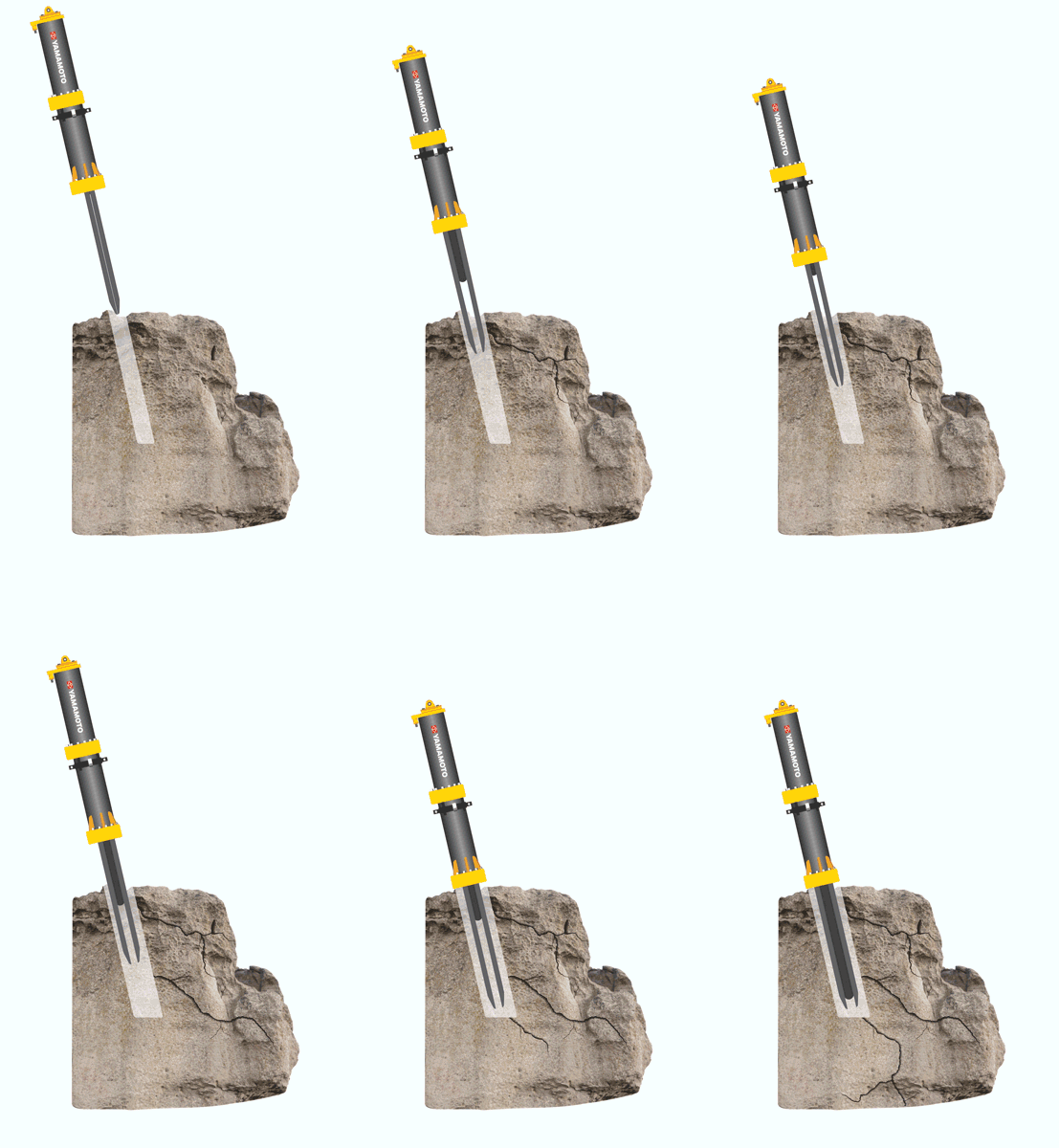
The pile cropper working principle relies on synchronized hydraulic power applied uniformly around the concrete pile:
- Rebar Protection: The chisels crush only the concrete matrix while leaving the inner steel rebar cage 100% intact and undamaged.
- Hydraulic Pressure Drive: High-pressure oil from the excavator auxiliary circuit forces the hydraulic cylinders in each module to extend simultaneously.
- Concentric Force Distribution: The modular jaws apply equal radial force toward the center of the pile, causing the concrete to fracture along a clean ring line.
Pile Cropper YouTube Video
How to Choose Pile Breaker Size for Your Project
If you are wondering how to choose pile breaker size for your foundation site, follow these key steps:
- Measure Pile Outer Diameter: Measure the maximum outer diameter of your concrete pile (e.g., 400mm to 2500mm).
- Calculate Module Count: Select the corresponding number of modular units (e.g., 4 modules for 400–600mm piles, 12 modules for 1300–1500mm piles).
- Match Excavator Tonnage: Ensure your excavator meets the minimum weight requirement (e.g., 20T–30T for up to 12 modules, 30T+ for larger setups).
- Check Hydraulic Flow: Verify that your excavator’s auxiliary circuit delivers sufficient hydraulic oil pressure (or add an external hydraulic pump station for 17+ modules).
5 Conditions Your Excavator Must Meet
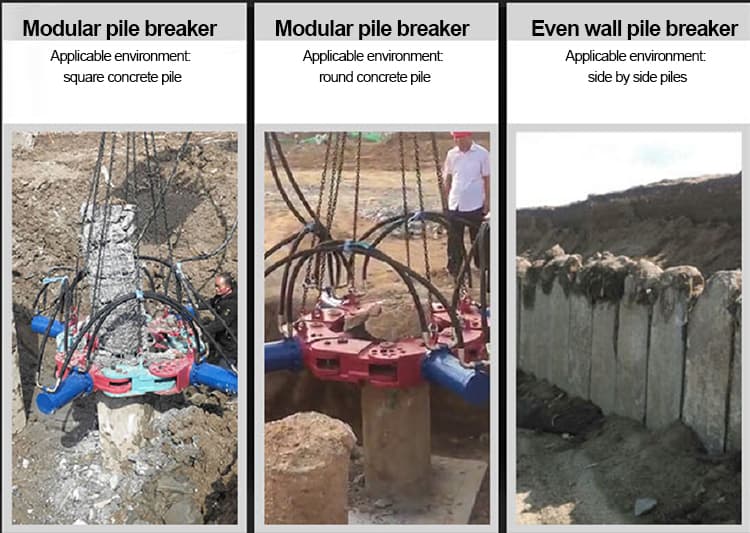
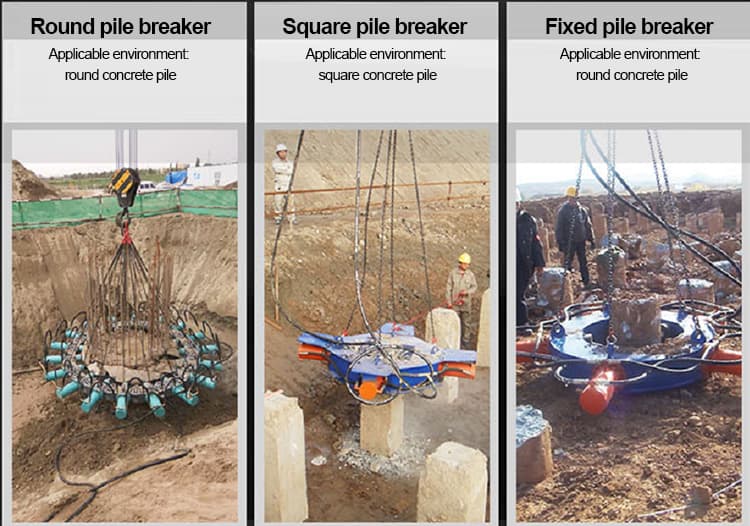
Pile Cutting Machine: Included Components & Key Design Features
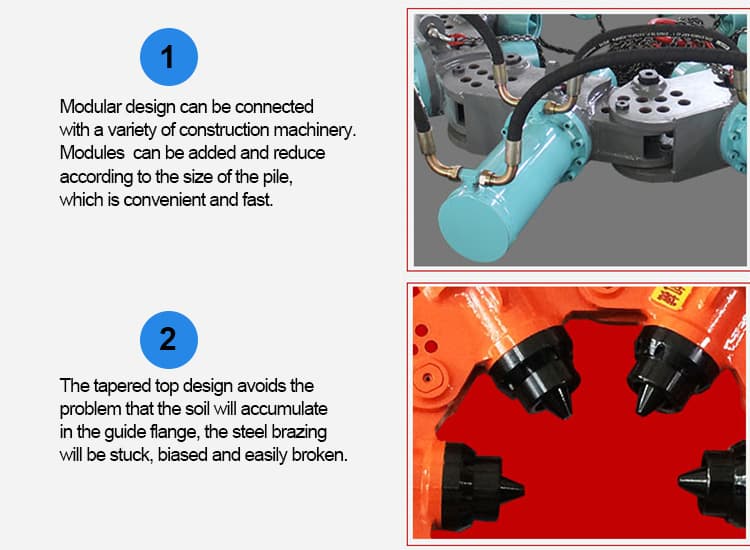
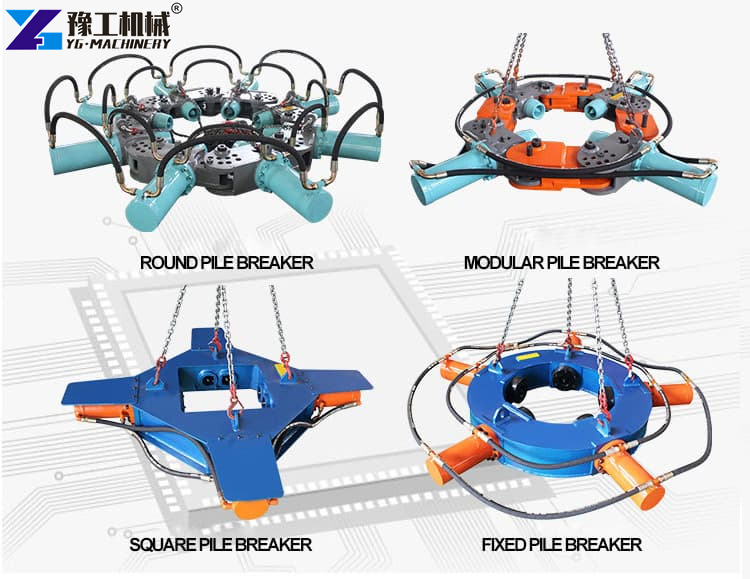
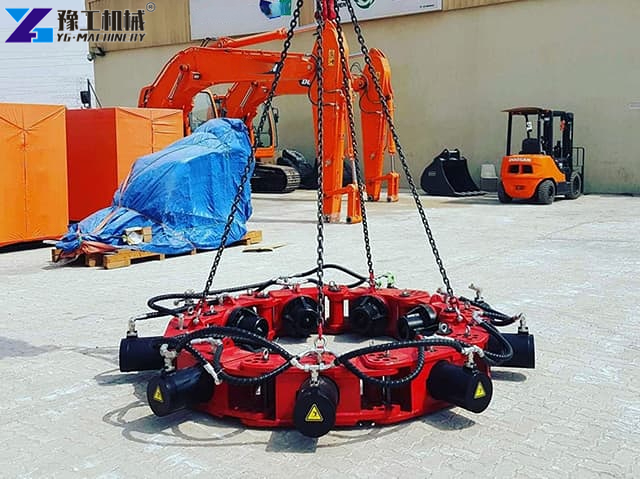
The excavator-mounted pile cutting machine is supplied as a ready-to-use modular kit with hydraulic hoses, Φ35 mm locating pins, carbide teeth, wear plates, and a central manifold. It connects directly to the excavator auxiliary hydraulic system and requires no complex electronics. The modular design allows quick assembly and makes it suitable for different pile diameters and construction conditions.
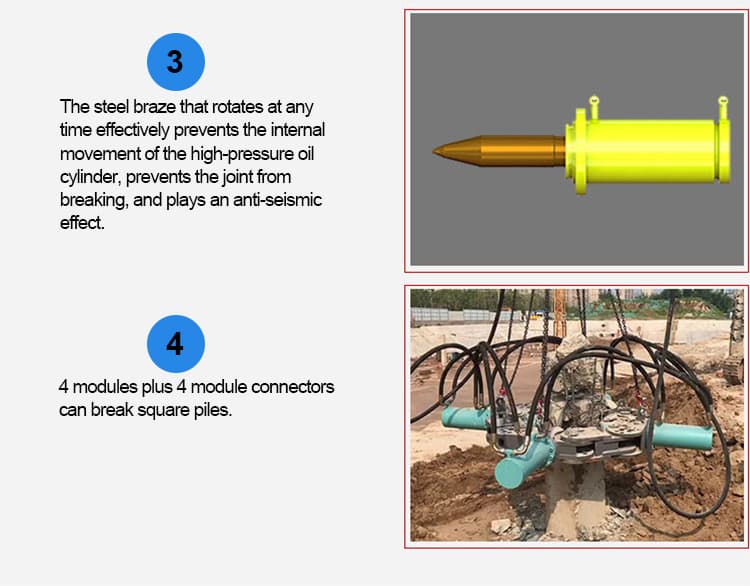
Built for demanding concrete pile breaking equipment applications, each module uses a high-strength cast steel frame, hardened pins, and enclosed hydraulic cylinders. Independent pressure relief valves help maintain stable operation. Replaceable carbide teeth and bolt-on wear plates simplify maintenance, making this pile head removal machine a practical solution for contractors handling precast concrete piles and large-scale foundation projects.
Get Factory Price & Free Assessment
FAQs About Pile Head Breaking Machine
Yes. The machine cracks only the concrete. The rebar stays intact. Even piles with dense rebar cages work fine. The jaws push concrete away from the steel. You may need an extra rotation if the rebar is very tight.
A typical 600mm diameter pile takes 30 to 60 seconds. A 1500mm pile takes 2 to 3 minutes. Hand methods take 20 to 40 minutes per pile. The time savings add up fast on large jobs.
Any excavator with an auxiliary hydraulic circuit works. The pile cutting machine needs 20 litres per minute. Most 20-ton and larger excavators meet this. For very large pile breakers (17-18 modules), YG recommends a separate hydraulic pump station.
No. The hydraulic cylinders and pins are not sealed for submersion. For underwater pile cutting, you need a specialised unit with marine seals. YG offers this as a custom order.
Measure your pile diameter at the cut point. Piles often flare near the top. Use the widest measurement. Match that to the Pile Diameter Range column in the table. Order the number of modules shown. For piles between sizes, order the larger unit.
Each module has its own cylinder. If one fails, the other modules still work. You can finish the pile or the shift. Then replace the failed module. YG stocks individual modules for quick swap-out. Keep one spare module on large jobs.
Ready to Upgrade Your Pile-Breaking Efficiency?
Ready to cut your pile-breaking time by 80%? Don’t let slow, dusty manual chipping hold back your project timeline. Whether you need to match a specific excavator model or calculate the perfect module count for your pile diameters, our technical team is here to help. Contact us today to get a free pile diameter assessment and a customized factory-direct quote!
Contact YG Machinery today via WhatsApp, email, or the website form. Every machine includes a warranty and remote support.【WhatsApp/WeChat/Phone】+86 183 3715 2861