Thinking about attaching a hydraulic pile breaker to your excavator? Before making a purchase, ensure your carrier meets the required technical specifications. Incompatibility often leads to low crushing force, slow cycle times, or severe hydraulic system damage.
As a professional pile breaker manufacturer, YG Machinery recommends checking these 5 essential excavator compatibility conditions before buying:
- Hydraulic Flow: Minimum 20 L/min per module (e.g., ≥160 L/min for 8 modules)
- Working Pressure: At least 280–300 Bar (28–30 MPa)
- Tonnage Match: Attachment weight equals 15%–20% of excavator operating weight
- Pile Diameter Mapping: Module count directly matches your pile size (400mm–2500mm)
- Front Structure: Arm support with a standard Φ35mm connection pin
Read on for the full parameter breakdown, quick reference tables, and step-by-step verification steps.
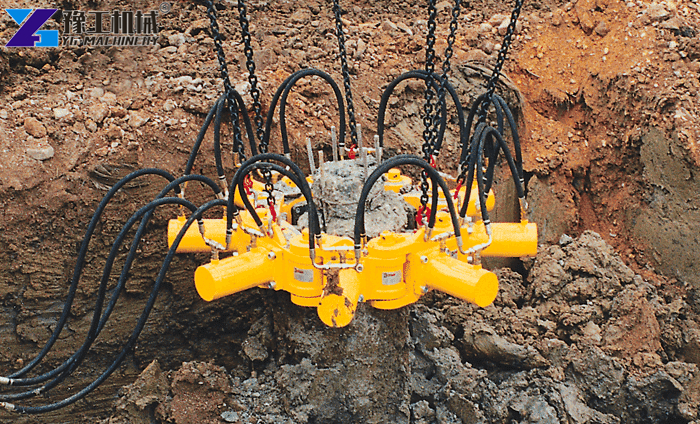
First Condition: Hydraulic Flow Rate (≥ 20 L/min per Module)
A hydraulic pile breaker needs a steady oil supply. Each module requires about 20L/min.
Let me show you how this works based on real equipment parameters from YG Machinery.
View full hydraulic pile cutter specification here.
| Module Number | Pile Diameter Range | Required Flow |
| 4 modules | 400–600mm | 80 L/min |
| 8 modules | 600–800mm | 160 L/min |
| 12 modules | 1300–1500mm | 240 L/min |
| 18 modules | 2360–2500mm | 360 L/min |
If your excavator cannot deliver enough flow, the pile breaker machine will move slowly. It cannot generate enough crushing force. Hard concrete piles will not break.
How to check your excavator flow
Look at your machine’s nameplate or service manual. Find the main pump flow rating. Most 20-ton excavators produce 120–160 L/min from a single pump. For larger pile crusher models, you need a dual pump confluence.
What to do if the flow is low
Add a confluence valve group. This costs about 3000–8000 RMB (400–1100 USD). Or choose a smaller pile breaker machine that fits your flow.
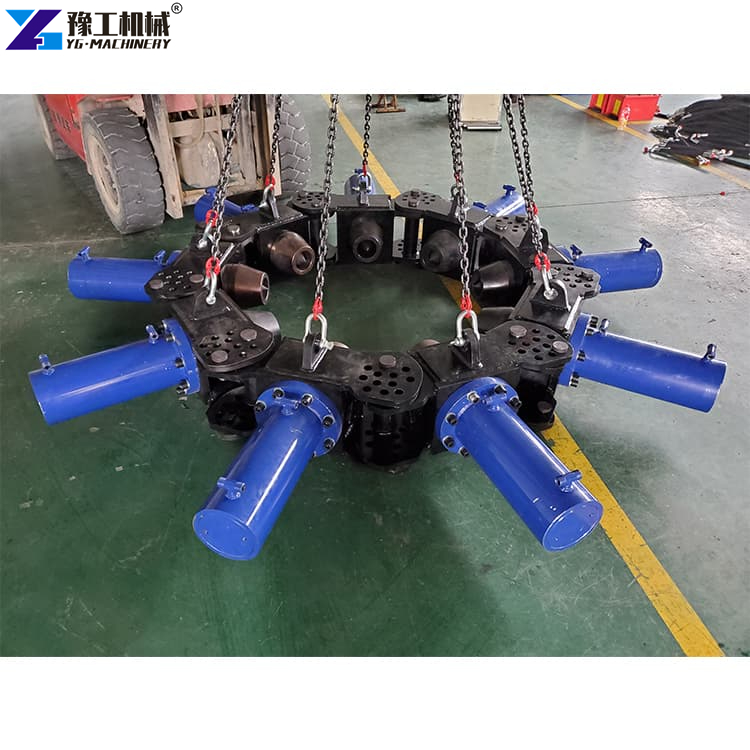
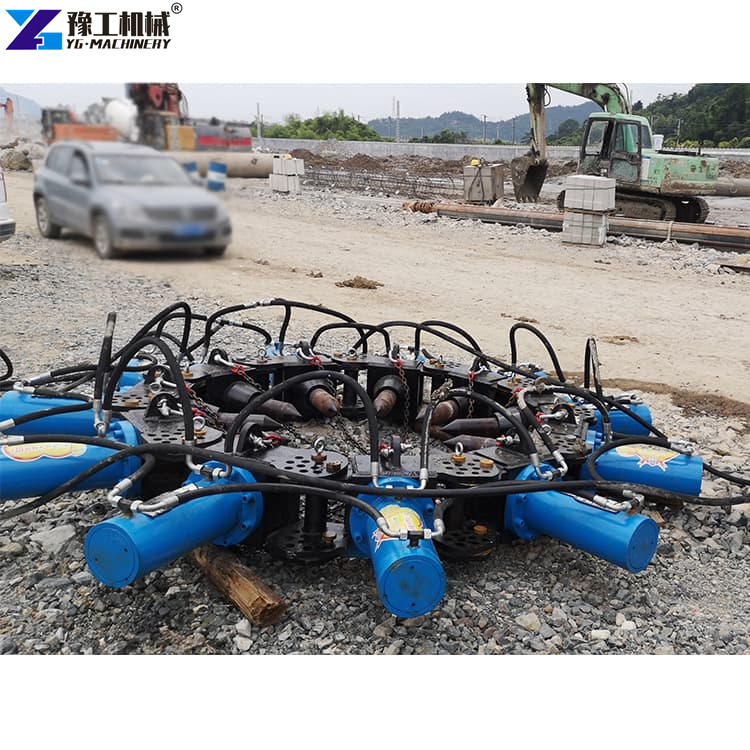
Second Condition: Working Pressure Requirements (≥ 280 Bar Minimum)
Flow gives you speed. Pressure gives you force.
A hydraulic pile breaker needs high pressure to crush concrete. Look at the parameter sheet. It shows Max. Cylinder Pressure at 300 bar (30MPa). Each cylinder delivers 300KN of thrust.
If your excavator pressure drops below 280 bar, the pile crusher cannot reach full power. Large diameter piles will not break cleanly. You end up going around the pile multiple times.
How to check your excavator pressure
Most modern 20–30 ton excavators operate at 280–350 bar. Older machines may have pump wear that reduces pressure. A simple pressure test at the auxiliary port gives you the real number.
What to do if the pressure is low
Check your hydraulic pump first. Sometimes a worn pump can be repaired. But if the machine is very old, consider renting a pile breaker machine instead of buying one.
Third Condition: Excavator Operating Weight & Tonnage Match (≥ 15-20%)
Weight matters more than people think. The table below shows the total weight for different module combinations.
| Module Number | Total Weight (kg) | Recommended Excavator Tonnage |
| 4 | 1600 | 20T–30T |
| 8 | 2640 | 20T–30T |
| 9 | 2970 | 30T–40T |
| 12 | 3960 | 30T–40T |
| 18 | 5940 | 35T–50T |
What happens if you choose wrong
Too heavy → The excavator tilts forward. Movement becomes unstable.
Too light → The hydraulic pile breaker lifts the machine instead of crushing the pile.
The rule is simple. Match your excavator pile breaker total weight to at least 15–20% of your machine’s operating weight for stable performance.
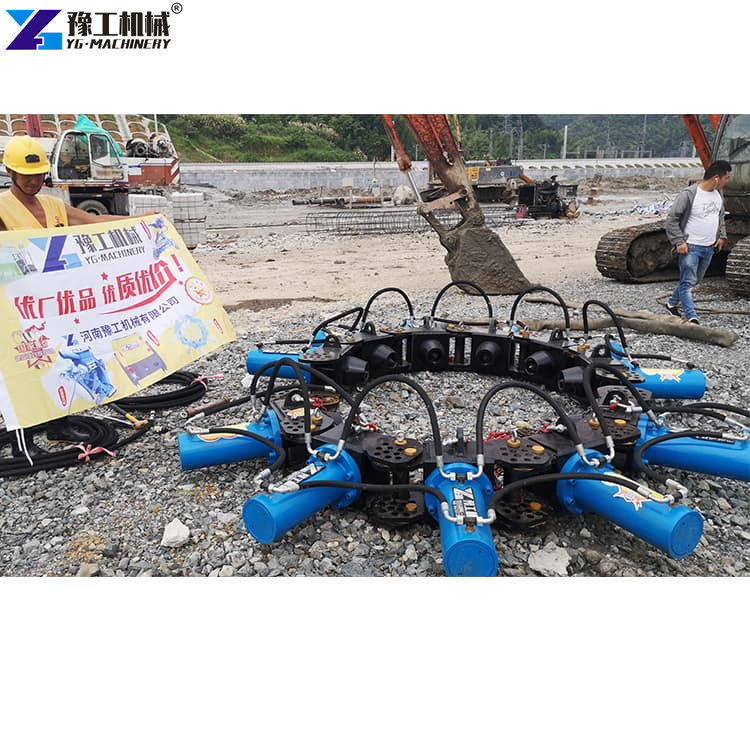
Need Professional Advice On Your Excavator Match?
YG Machinery provides free technical support to help you select the right hydraulic pile breaker for your specific machine model. No pushy sales, just real data.
Contact YG Machinery: Send your excavator model and pile diameter to admin@ygequip.com or WhatsApp +86 183 3715 2861. Get a matched recommendation within 24 hours.
Looking for real project feedback before purchasing? Read this customer case study.
Fourth Condition: Concrete Pile Diameter Range vs Module Combination
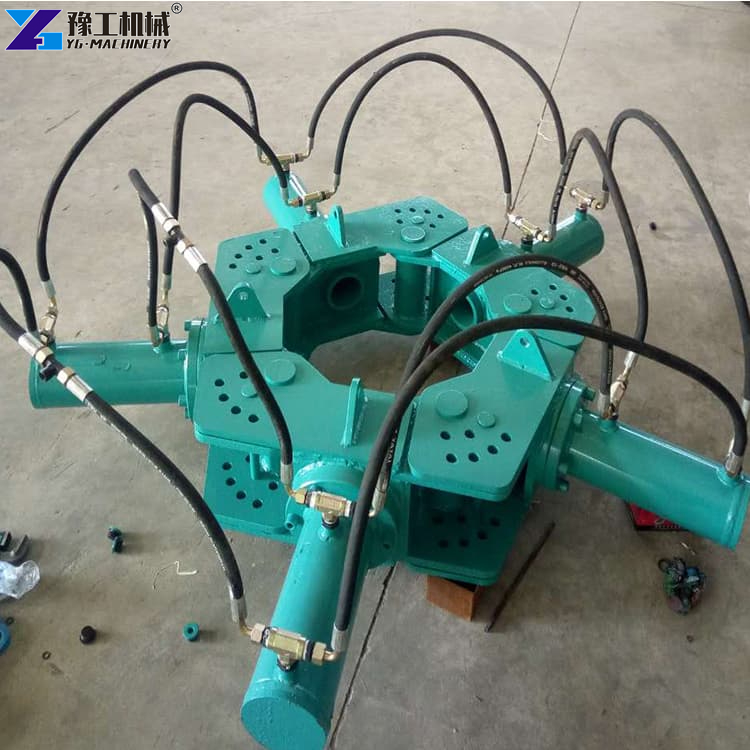
This condition is about geometry. A pile crusher works by surrounding the pile with modules. If the modules do not fit the diameter, you cannot crush evenly.
The parameter sheet gives a clear mapping.
| Module Number | Pile Diameter Range (mm) |
| 4 | 400–600 |
| 8 | 600–800 |
| 9 | 800–1000 |
| 10 | 1000–1150 |
| 11 | 1150–1300 |
| 12 | 1300–1500 |
| 13 | 1500–1650 |
| 14 | 1650–1800 |
| 15 | 1800–1970 |
| 16 | 1970–2200 |
| 17 | 2200–2360 |
| 18 | 2360–2500 |
What most contractors do
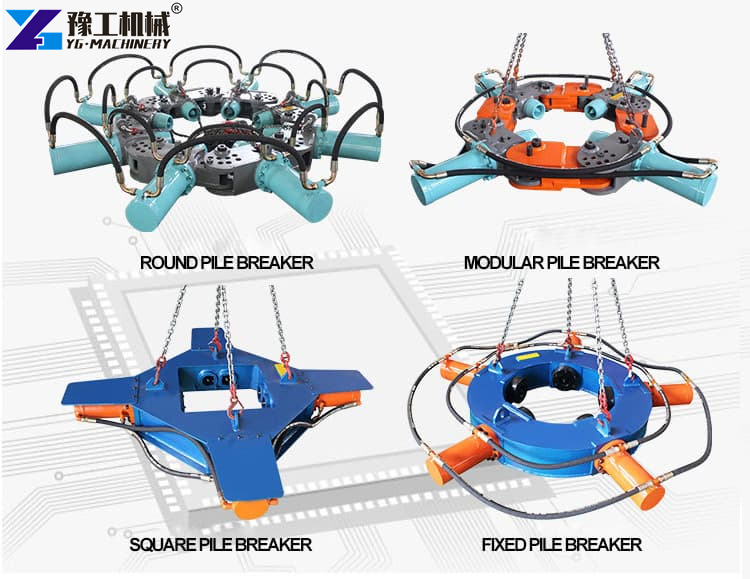
They pick one pile diameter range for 80% of their jobs. Then they buy a fixed module combination. If you work with multiple diameters, buy a modular pile breaker machine that allows adding or removing modules.
One warning
Do not try to crush a 1000mm pile with a 4-module hydraulic pile breaker. It will not work. The modules cannot close around the pile properly.
Fifth Condition: Front Arm Structure Strength & Connection Pin (Φ35mm)
This condition kills more retrofits than any other. People check flow and pressure, but forget the physical connection.
The parameter sheet specifies Location pin Φ35. Your excavator’s arm must accept a 35mm pin, or you need a custom adapter bracket.
Why structure strength matters
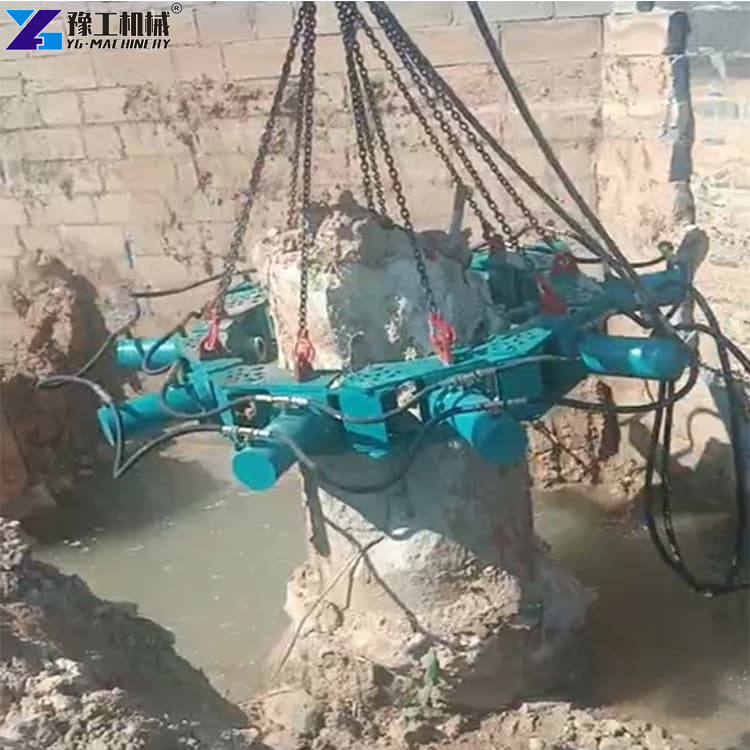
A pile crusher does not hammer like a breaker. It applies a steady clamping force. When the cylinders extend, they push against the pile. That force transfers back to your excavator arm and boom.
If your arm has cracks, thin steel plates, or worn pin holes, you will see deformation within weeks.
How to inspect your excavator
- Check the arm pin hole diameter. Is it 35mm or close to it?
- Look for weld cracks around the arm tip
- Measure steel plate thickness. Compared to the original factory spec
- Inspect the quick coupler if you use one
What to do if the structure is weak
Do not retrofit. Seriously. A structural failure with a heavy hydraulic pile breaker is dangerous. Rent a larger excavator that already has a proper attachment setup.
Quick Check Table: Does Your Excavator Pass All Five Conditions
Use this table before you call any supplier.
| Condition | Requirement | Your Excavator | Pass? |
| Flow | ≥ modules × 20 L/min | ___ L/min | ☐ |
| Pressure | ≥ 280 bar | ___ bar | ☐ |
| Tonnage | ≥ 20T (small combo) or ≥ 30T (large combo) | ___ tons | ☐ |
| Pile diameter | Your common pile size falls in selected module range | ___ mm | ☐ |
| Front structure | Pin Φ35, no cracks, strong steel | inspect | ☐ |
If you check all five, go ahead with your excavator pile breaker purchase.
If you miss one, you can fix it with modifications.
If you miss two or more, rent or buy a different excavator.
What Experienced Contractors Do Differently
I have talked to many contractors who run hydraulic pile breaker attachments every day. Here is what they do that you might not think of.
They oversize the excavator slightly
A 25-ton excavator running an 8-module pile crusher works with zero strain. The machine lasts longer. The pile breaker machine cycles faster.
They install a return oil filter
Pile crushing creates debris. Debris can enter hydraulic lines during quick coupler changes. A high-accuracy return filter (10 micron or less) saves your main pump.
They keep a spare module
One damaged module stops your whole job. Smart contractors buy one extra module. Total cost goes up slightly. Downtime goes down to zero.
They check module bolts every morning
Every single module weighs 335kg. Loose bolts mean a falling module. Tighten them daily. The manual says check before each shift. Follow that rule.
Daily Check Before Using Your Excavator Pile Breaker
You bought the right hydraulic pile breaker. Now keep it running.
Every morning (5 minutes)
- Look at hydraulic hoses. Any leaks? Replace worn hoses immediately.
- Check module connection bolts. Use a torque wrench if possible.
- Inspect chisel wear. The chisel diameter is 110mm. When it wears down, replace the tip.
- Grease all pivot pins.
Every week (30 minutes)
- Measure oil temperature during work. Keep it below 80°C.
- Check the accumulator pre-charge if your pile breaker machine has one.
- Examine the adapter bracket welds.
Every month
- Send a hydraulic oil sample for analysis if you work in dusty conditions.
- Check the main pin (Φ35) for oval wear.
A well-maintained pile crusher lasts 5–8 years. A neglected one fails in one season.
Conclusion: Key Takeaways Before Buying a Pile Crusher
A hydraulic pile breaker is a powerful tool. It removes pile heads faster than any manual method. It preserves steel bars. It keeps your crew safe.
But it only works well when your excavator meets the five conditions.
Remember the five
- Flow ≥ modules × 20L/min
- Pressure ≥ 280 bar
- Excavator tonnage matches pile breaker weight
- Module combination fits your pile diameter
- The front structure is strong with a Φ35 pin
Do not be the person who buys a pile breaker machine first and asks questions later. Check your excavator first. Match the numbers. Then buy.
If you have questions about your specific excavator model, leave it in the comments. Include your machine model and common pile diameter. I will help you check compatibility.
Ready To Order Your Hydraulic Pile Breaker?
YG Machinery offers fast shipping, a 12-month warranty, and 24/7 technical support. Tell us your excavator model and pile diameter, and we will recommend the exact module combination.
Email: admin@ygequip.com
WhatsApp: +86 183 3715 2861
Website: https://ygequip.com
Appendix: Quick Technical Specifications Reference Sheet
Single module data
- Weight: 335 kg
- Size: 1015 × 865 × 340 mm
- Chisel diameter: 110 mm
- Max. cylinder trip: 300 mm
- Max. hoist capacity: ≤500 mm
Total weight for common combinations
- 4 modules (400–600mm pile): 1600 kg
- 8 modules (600–800mm pile): 2640 kg
- 12 modules (1300–1500mm pile): 3960 kg
- 18 modules (2360–2500mm pile): 5940 kg
Keep this table handy when you talk to your excavator pile breaker supplier.
Video Demonstration: Hydraulic Pile Breaker in Action
Written by YG Machinery Senior Hydraulic Enginee