A rock grinder attachment for excavator is a hydraulic-powered excavator attachment designed to cut, mill, profile, and excavate hard materials such as rock, concrete, asphalt, frozen ground, and reinforced structures. Unlike hydraulic breakers that rely on repeated impact force, this attachment uses rotating drums equipped with wear-resistant picks to continuously grind and remove material.
As modern infrastructure projects demand higher precision and lower environmental impact, the rock grinder attachment for excavator has become an increasingly popular alternative to traditional blasting and hammering methods. Contractors use these attachments for tunnel excavation, trenching, mining, road construction, and demolition projects where accuracy and productivity are critical.
The core advantage of a rock grinder lies in its ability to produce controlled excavation with minimal vibration. This makes it particularly valuable in urban construction environments, near existing structures, and in projects where excessive noise and ground disturbance must be minimized.
Why Rock Grinder Attachment for Excavator Is Becoming More Popular
Construction companies worldwide are increasingly adopting rock grinders because they offer several advantages over conventional excavation methods.
Traditional hydraulic breakers generate significant vibration and shock loads. These impacts can damage nearby structures, create excessive noise, and accelerate wear on the excavator itself. A rock grinder delivers continuous cutting action instead of repeated impacts, resulting in smoother operation and improved precision.
For projects involving utility trenches, foundation preparation, tunnel enlargement, and slope trimming, operators can maintain exact excavation profiles without over-breaking surrounding material. This precision often reduces material waste and lowers overall project costs.
Another reason for the growing popularity is safety. In many urban projects, blasting may be restricted or prohibited. A rock grinder provides an effective mechanical excavation solution that eliminates the risks associated with explosives.
Excavator Milling Attachment Technology Explained
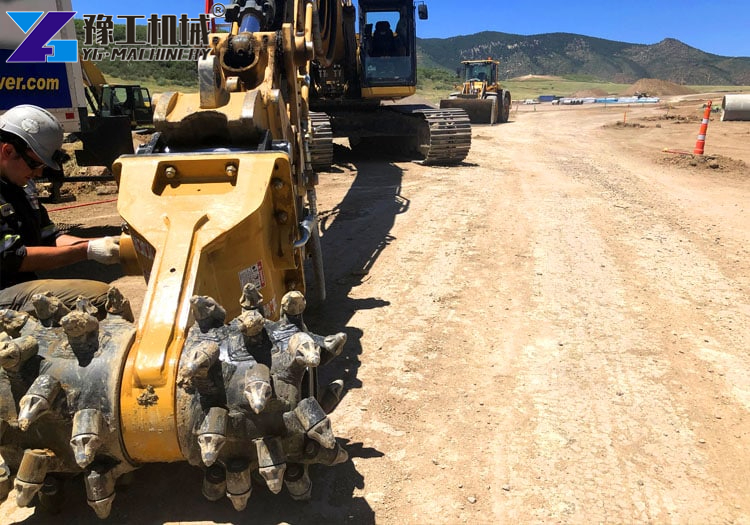
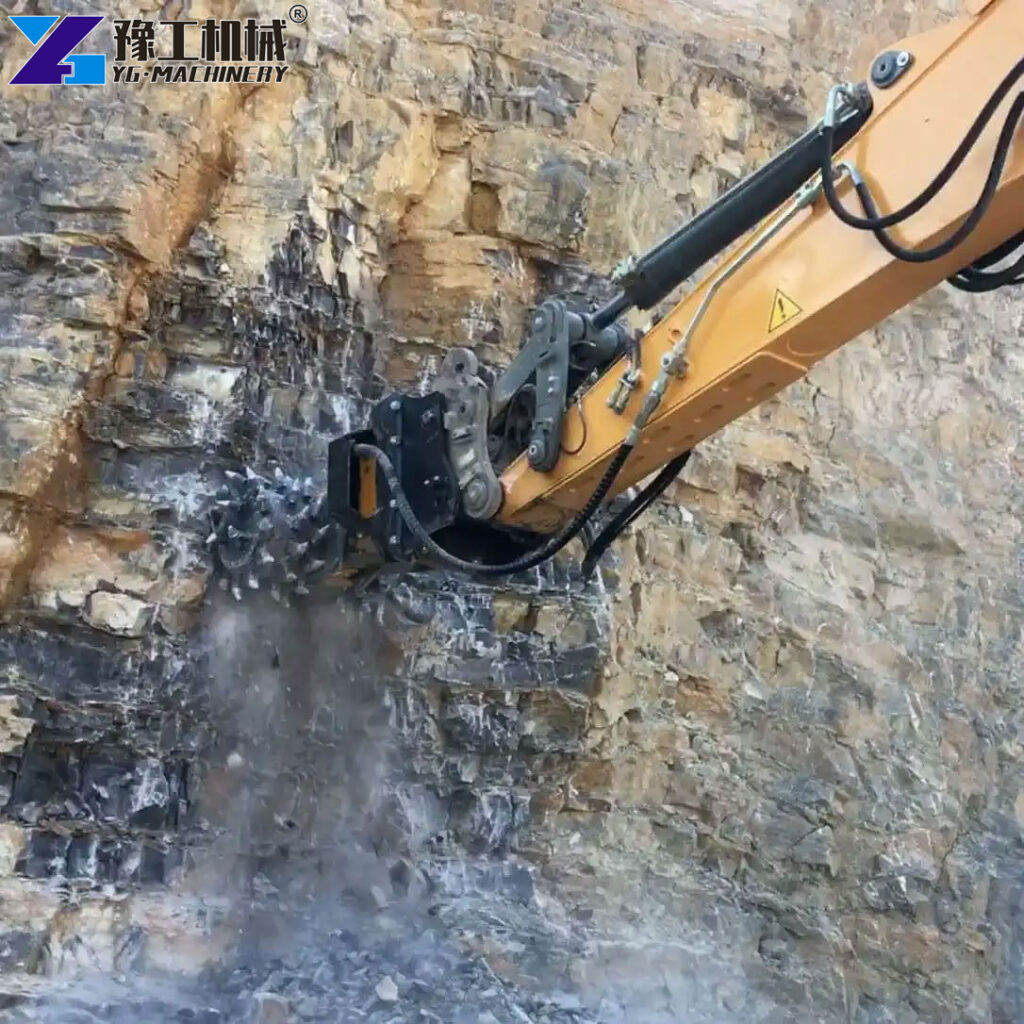
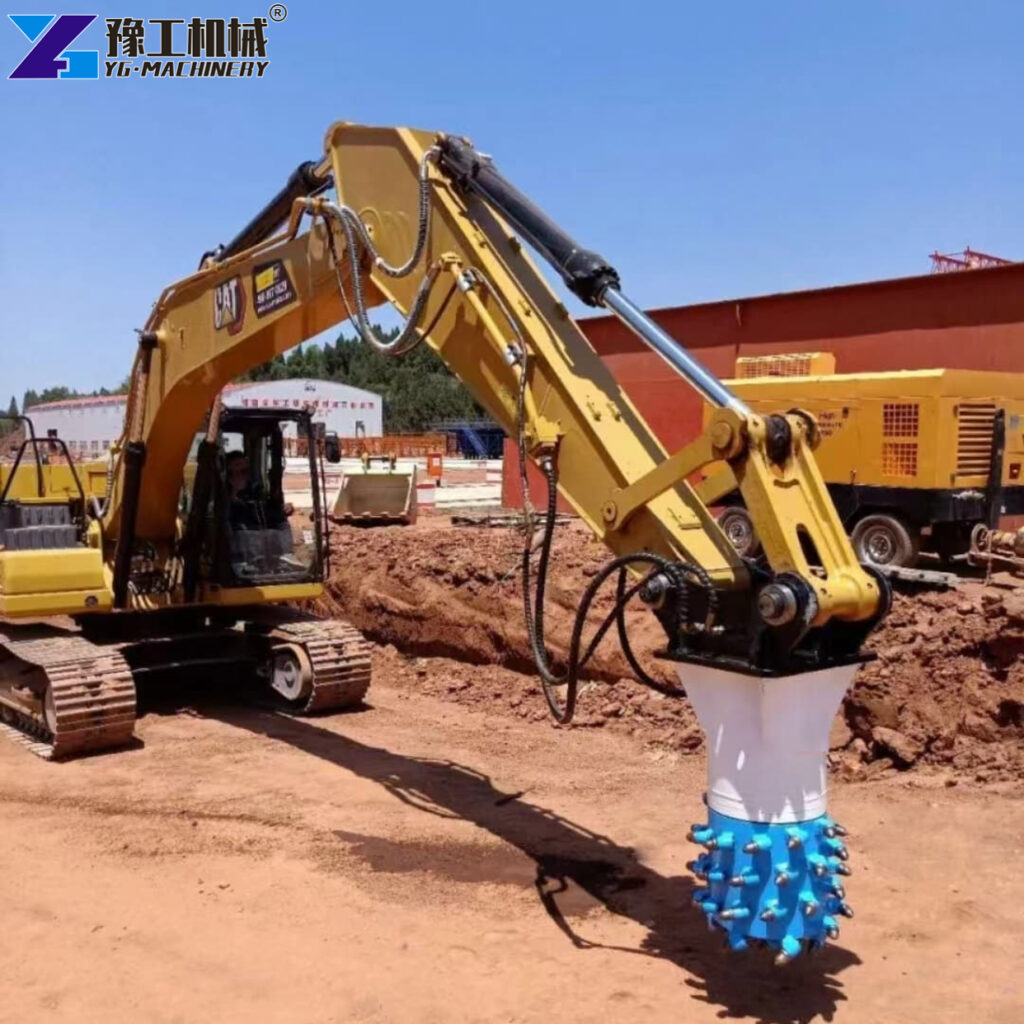
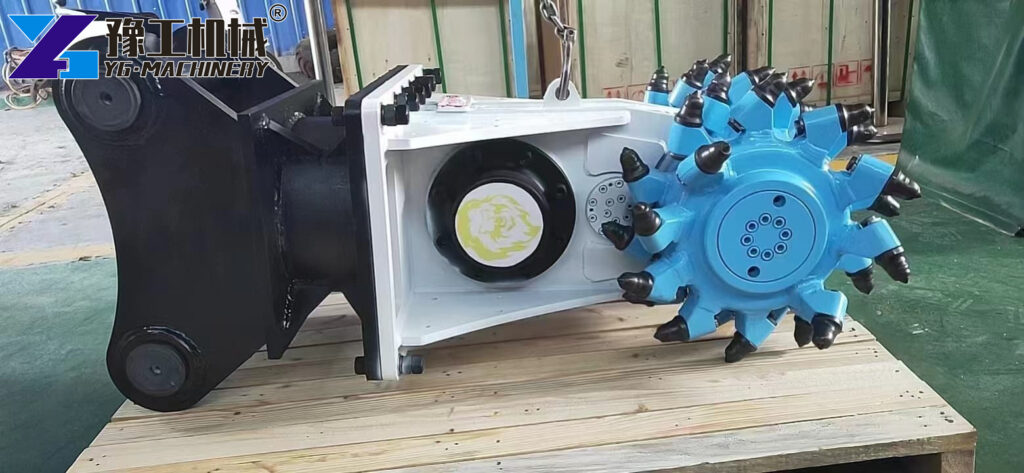
An excavator milling attachment converts hydraulic energy from the excavator into rotational force that drives one or two cutting drums.
These drums are fitted with tungsten carbide picks specifically designed to penetrate and grind hard materials. As the drums rotate, the picks continuously chip away at the surface, creating a controlled cutting action.
The hydraulic motor plays a critical role in overall performance. High-quality hydraulic systems provide stable torque output, allowing the attachment to maintain consistent cutting performance even in difficult geological conditions.
Modern excavator milling attachments are engineered to withstand high loads while maintaining efficient power transmission. Their robust construction enables long operating hours in demanding applications such as mining and infrastructure development.
The combination of hydraulic power, drum design, and durable cutting tools allows operators to achieve high productivity while maintaining exceptional accuracy.
Check how this machine performs on-site.
Common Applications of Rock Grinder Attachment for Excavator
One of the greatest strengths of a rock grinder attachment for an excavator is its versatility. Thanks to its precise cutting capability, low vibration, and continuous milling action, this attachment is widely used across construction, mining, infrastructure, and demolition industries. Below are some of the most common applications where contractors benefit from using a rock grinder.
Tunnel Excavation
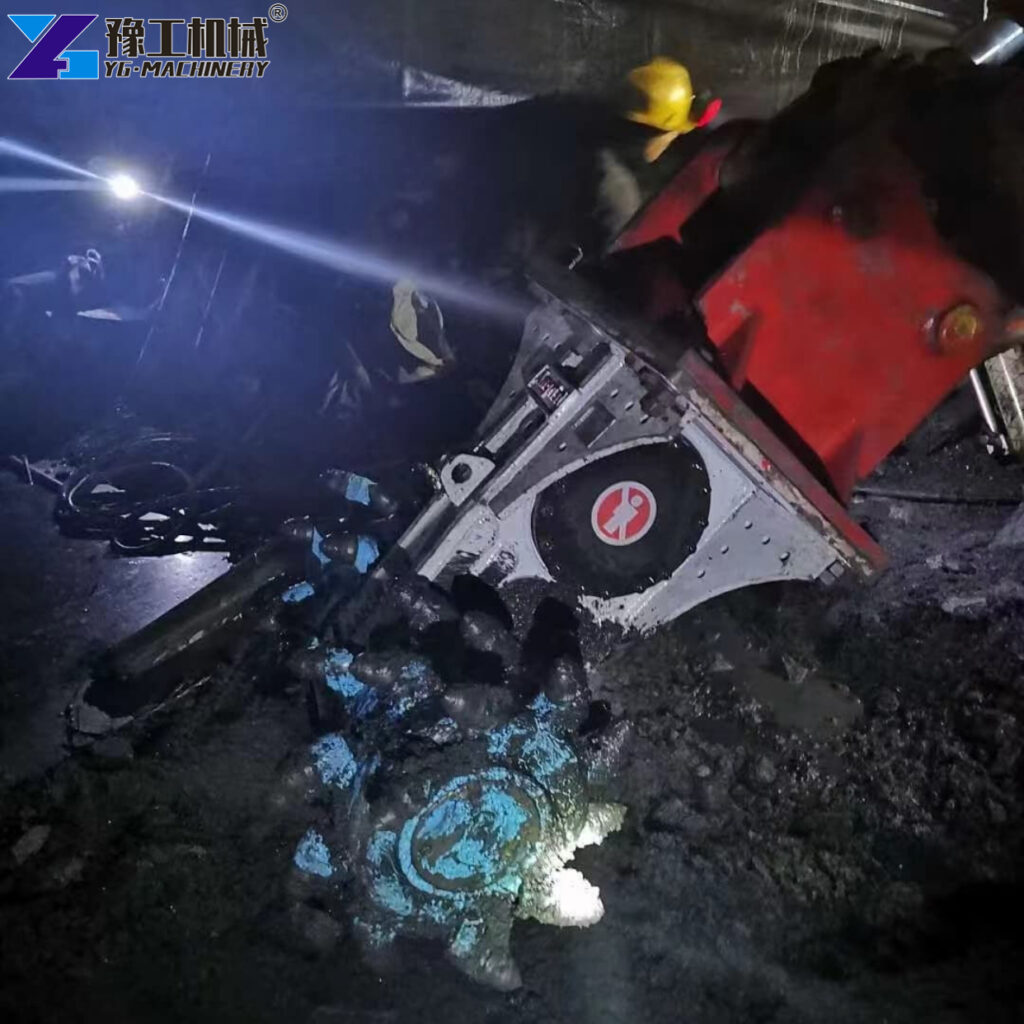
Tunnel construction requires accurate excavation profiles and controlled material removal. Traditional blasting methods often lead to over-excavation, while hydraulic breakers can create excessive vibration.
Benefits in Tunnel Projects
- Maintains precise tunnel dimensions and contours
- Reduces over-excavation and material waste
- Minimizes vibration that may affect surrounding rock stability
- Improves safety in confined underground environments
- Reduces the need for secondary trimming work
Typical Tunnel Applications
- Railway tunnel excavation
- Highway tunnel construction
- Metro and subway projects
- Utility and service tunnels
- Tunnel enlargement and rehabilitation
Trenching and Pipeline Installation
Pipeline and utility installation projects frequently encounter hard rock, concrete layers, or compacted ground conditions. A rock grinder attachment for excavator can efficiently create narrow and accurate trenches while preserving surrounding soil integrity.
Advantages for Trenching Operations
- Produces clean and uniform trench profiles
- Reduces disturbance to adjacent structures and utilities
- Allows precise depth and width control
- Minimizes backfill requirements
- Improves productivity in rocky terrain
Common Utility Projects
- Water pipeline installation
- Gas pipeline construction
- Electrical cable trenching
- Fiber optic network deployment
- Drainage and sewer system projects
Mining and Quarry Operations
Mining companies use rock grinders for selective excavation and material processing where precision is critical. Compared with blasting, rock grinders provide greater control over material removal and reduce unwanted rock fragmentation.
Key Mining Applications
- Ore body exposure
- Selective mineral extraction
- Bench profiling and shaping
- Scaling loose rock surfaces
- Quarry face preparation
Benefits for Mining Contractors
- Improves resource recovery rates
- Reduces ore dilution
- Enhances workplace safety
- Lowers environmental impact
- Supports continuous excavation operations
Road Construction Projects
Road and infrastructure projects often require cutting through rock formations, removing damaged pavement, or widening existing roadways. Rock grinders provide an efficient solution for these demanding tasks.
Common Road Construction Uses
- Road widening projects
- Rock slope cutting
- Asphalt and pavement removal
- Bridge approach excavation
- Highway foundation preparation
Advantages in Infrastructure Construction
- Creates smooth excavation surfaces
- Reduces noise compared with breakers
- Improves excavation accuracy
- Minimizes damage to nearby structures
- Supports faster project completion
Slope Stabilization and Scaling
Rock grinders are frequently used for slope correction and stabilization work in mountainous regions, highways, railways, and mining sites.
Typical Slope Applications
- Removing unstable rock sections
- Profiling steep rock faces
- Scaling loose materials
- Preparing retaining wall foundations
- Stabilizing excavation slopes
Why Contractors Choose Rock Grinders
- Precise material removal
- Improved worker safety
- Reduced risk of rock falls
- Better control in difficult terrain
- Lower environmental disturbance
Concrete Demolition and Renovation
Unlike hydraulic breakers that rely on impact force, rock grinders can selectively remove concrete while preserving surrounding structures. This makes them highly valuable for renovation and rehabilitation projects.
Common Demolition Applications
- Bridge deck removal
- Concrete wall modification
- Foundation removal
- Structural rehabilitation
- Urban demolition projects
Benefits for Concrete Removal
- Reduced vibration and noise
- Greater cutting precision
- Lower risk of structural damage
- Cleaner demolition process
- Improved safety in densely populated areas
Underwater and Special Engineering Projects
In specialized construction environments, rock grinders can also be used for underwater excavation and marine engineering operations.
Typical Special Applications
- Harbor and port construction
- Underwater trenching
- Dam maintenance projects
- Offshore infrastructure installation
- River channel improvement
Operational Advantages
- Effective performance in submerged conditions
- Precise excavation control
- Reduced environmental impact
- Improved project efficiency
- Compatibility with various excavator sizes
With such a wide range of applications, a rock grinder attachment for excavator has become an essential tool for contractors seeking precise, efficient, and cost-effective excavation solutions across multiple industries.
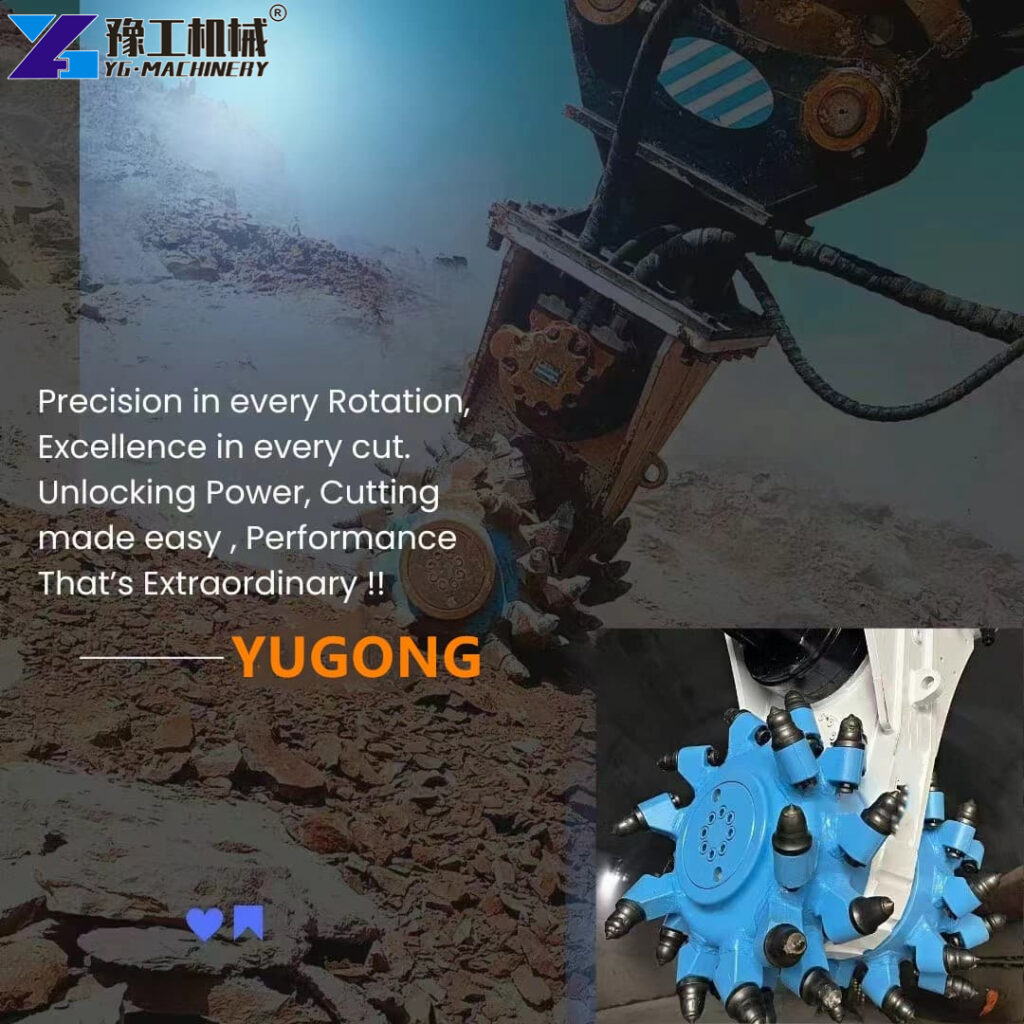
Excavator Drum Cutter vs Hydraulic Breaker
An excavator drum cutter and a hydraulic breaker both perform rock excavation, but their operating principles differ significantly.
Hydraulic breakers use impact energy. While effective in certain situations, they often create excessive vibration, noise, and material fragmentation.
Drum cutters use continuous rotary cutting. This produces smoother excavation surfaces, lower vibration levels, and better dimensional accuracy.
In urban construction, tunnel projects, and precision excavation work, drum cutters frequently outperform breakers because they minimize disturbance to surrounding structures.
Contractors also benefit from improved operator control and reduced risk of over-excavation.
Hydraulic Milling Attachment Advantages for Contractors
A hydraulic milling attachment offers numerous operational and financial benefits.
First, continuous cutting allows operators to maintain a steady production rate. Unlike impact tools, there is no need to repeatedly reposition the attachment after each strike.
Second, lower vibration reduces stress on the excavator boom, arm, and hydraulic components. This can contribute to lower maintenance costs over the life of the machine.
Third, the precision cutting capability minimizes unnecessary material removal. Contractors often save time and disposal costs because less excess material requires handling.
Finally, improved excavation accuracy frequently reduces downstream work such as trimming, scaling, and surface correction.
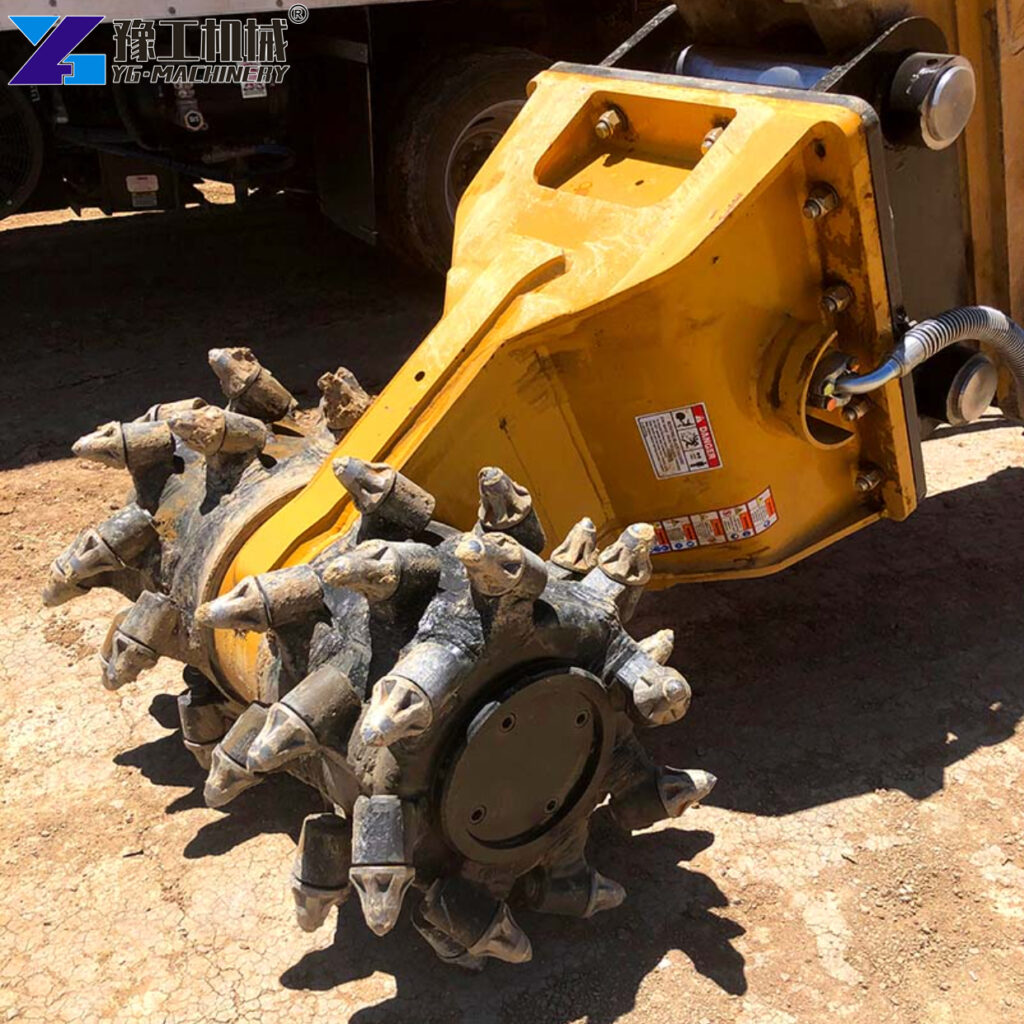
How to Choose the Right Rock Grinder Attachment for Excavator
Selecting the correct model requires careful evaluation of both the excavator and the project requirements.
The first consideration is excavator operating weight. The attachment must match the hydraulic capacity and structural capabilities of the carrier machine.
Hydraulic flow is equally important. Insufficient flow can reduce drum speed and cutting efficiency, while excessive flow may cause overheating and premature wear.
Rock hardness also influences equipment selection. Harder formations typically require higher torque output and more durable cutting tools.
Contractors should also consider project type. Tunnel excavation, trenching, mining, and demolition projects often require different attachment configurations.
YG Rock Grinder Attachment Technical Specifications
YG Rock Grinder Attachment Parameters
| Model | YG140 | YG160 | YG180 | YG240 |
|---|---|---|---|---|
| Height (H) | 650 mm | 820 mm | 830 mm | 1395 mm |
| Width (W) | 410 mm | 650 mm | 780 mm | 960 mm |
| Depth (D) | 390 mm | 460 mm | 480 mm | 620 mm |
| Excavator Weight | 5-10 T | 10-15 T | 15-21 T | 20-24 T |
| Max Power | 22 kW | 45 kW | 55 kW | 65 kW |
| Speed | 0-120 rpm | 0-100 rpm | 0-80 rpm | 0-90 rpm |
| Hydraulic Flow | 40 L/min | 100-110 L/min | 130-180 L/min | 200-250 L/min |
| Max Torque | 3200 N·m | 5400 N·m | 5600 N·m | 12800 N·m |
Which Model Fits Your Excavator?
- YG140: Suitable for 5–10 ton excavators and light excavation projects.
- YG160: Designed for medium-duty trenching and utility work.
- YG180: Ideal for mining, tunneling, and road construction.
- YG240: High-torque solution for demanding rock excavation applications.
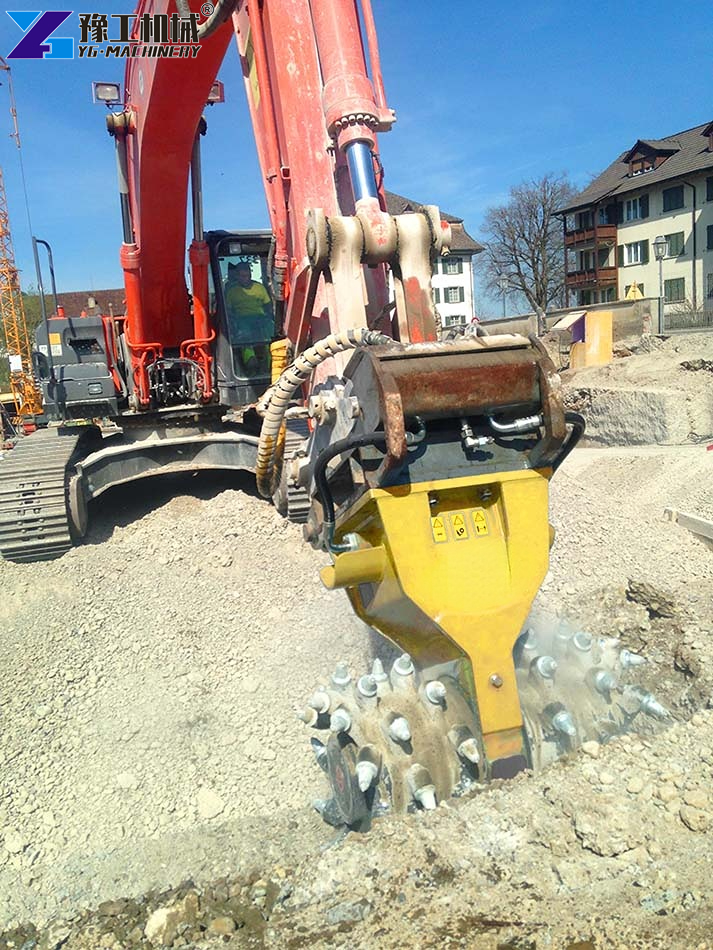
Conclusion: Excavator Drum Cutter Solutions
An excavator drum Cutter is one of the most versatile and efficient excavation tools available today. Compared with traditional breakers and blasting methods, it delivers superior precision, lower vibration, improved safety, and better project economics.
As construction and mining projects continue to demand higher efficiency and tighter environmental controls, rock grinders are becoming an essential attachment for modern excavators.
Get a Free Quote
Looking for the right rock grinder for your excavator?
Contact YG Machinery today for professional model recommendations, technical consultation, and factory-direct pricing.