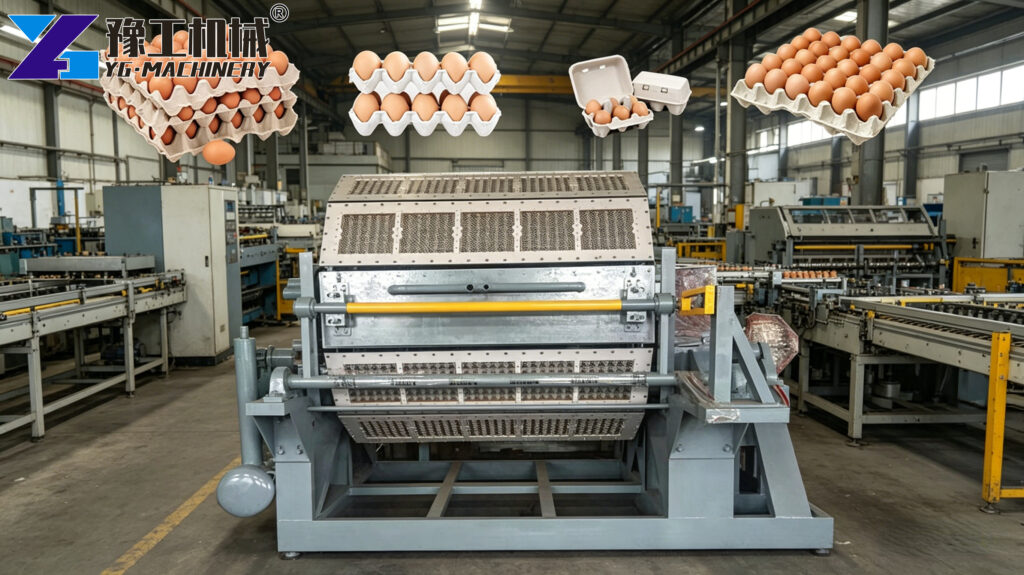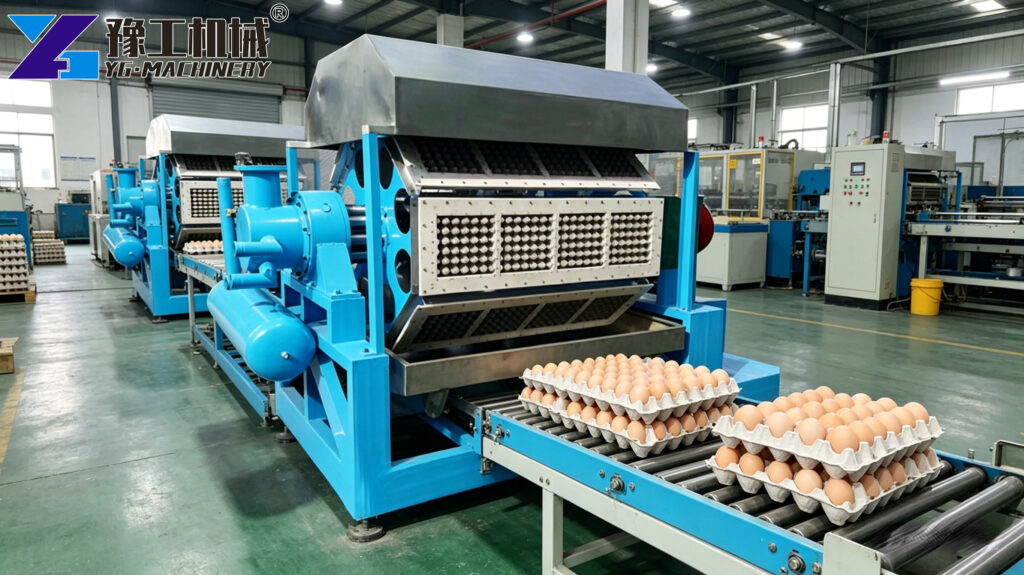
An egg tray manufacturing machine turns waste newspapers, cardboard, and office paper into sellable egg trays in minutes. Farmers, packers, and recycling entrepreneurs all use this equipment to cut packaging costs or start a new revenue stream. Unlike foam trays that clog landfills, paper trays biodegrade in weeks; unlike imported trays that eat into margins, making your own puts control back in your hands.
A good egg tray manufacturing machine pays for itself within 12 to 18 months. The math is simple. One ton of waste paper costs $30 to $50. That same ton makes about 12,000 egg trays. Sell those at $0.12 each, and you get $1,440 in revenue. Even after electricity, labor, and drying, the profit margin sits at 40-50%. Scale that across 300 working days, and the numbers look very good.
Boost Productivity—Get a Free Quote
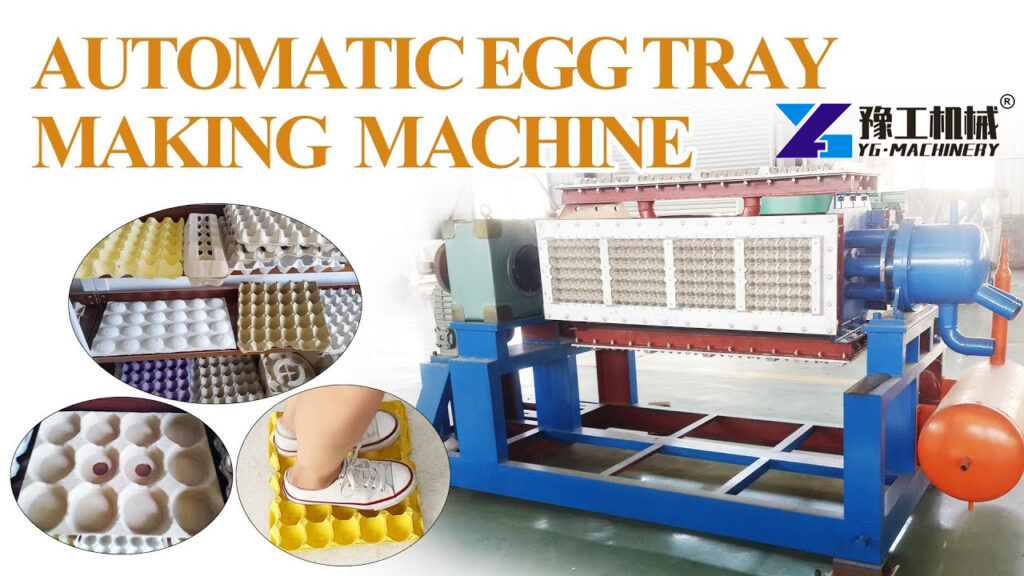
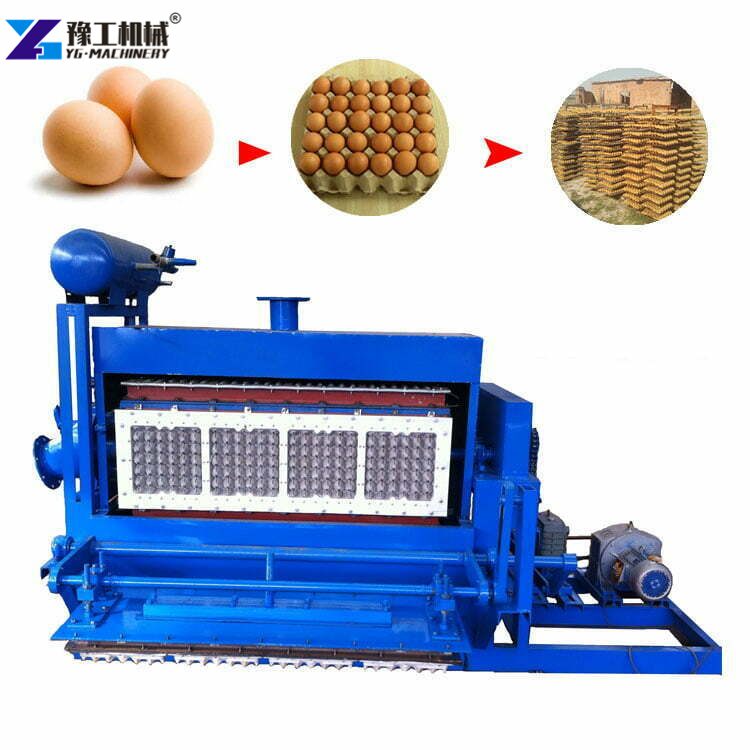
Product Specifications of Hot Sale Automatic Egg Tray Machine
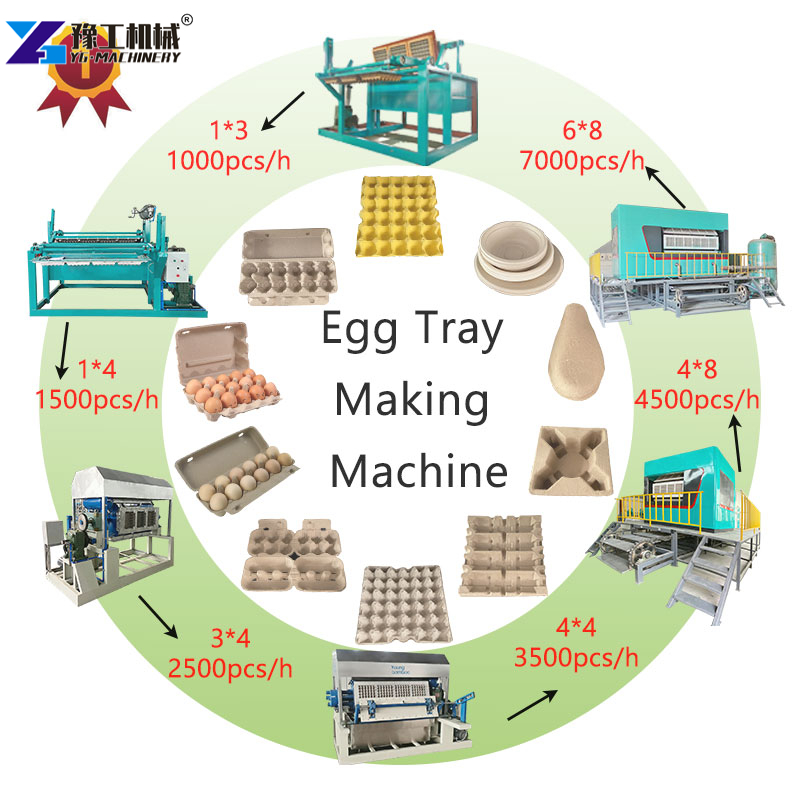
YG Machinery manufactures seven standard models of this equipment. Each one uses a rotary forming system. All wet-end components – molds, pulp tank, and pipes – are 304 stainless steel. The table below shows what each model delivers.
| Model | Capacity (pcs/h) | Forming Molds | Total Power (kW) | Electricity Use (kW/h) |
|---|---|---|---|---|
| YG-1×3 | 1000 | 3 | 40 | 28 |
| YG-1×4 | 1500 | 4 | 40 | 29 |
| YG-3×4 | 2500 | 12 | 50 | 35 |
| YG-4×4 | 3500 | 16 | 60 | 42 |
| YG-4×8 | 4500 | 32 | 130 | 91 |
| YG-5×8 | 5500 | 40 | 140 | 98 |
| YG-6×8 | 7000 | 48 | 186 | 130 |
The smallest model fits in a 200 square meter workshop. The largest needs about 500 square meters plus drying space. YG Machinery provides a free layout drawing for each model before any payment is made.
Compare Models and Get a Quote
What Determines Egg Tray Machine Price
Egg tray machine price depends on three factors: capacity, automation level, and included equipment. The table above shows the base machine prices increase as capacity goes up. But the real cost picture includes more than just the forming unit.
A complete production line includes four parts:
- Pulping system – Hydrapulper ($8,000-$15,000) and water pumps ($2,000)
- Forming machine – The main unit (price varies by model)
- Drying system – Tunnel dryers ($25,000-$60,000) or sun drying racks ($3,000)
- Packing area – Stacking tables and bundling equipment ($2,000-$5,000)
Labor savings change the math. A semi-auto line needs 8-10 workers per shift. The YG automatic models run with 4-6. Over a year, that labor saving alone can cover the price difference between machine types.
Used machines cost 40-60% less than new ones. But used units often need mold replacement ($5,000-$15,000) and cylinder rebuilding. New machines from YG include a 12-month warranty and installation support. For first-time buyers, new makes more sense.
Contact YG Machinery with your target daily output and available floor space. They will send a detailed quote with line-item costs for each component. No hidden fees. No surprise charges.
How an Automatic Egg Tray Machine Boosts Your Margins
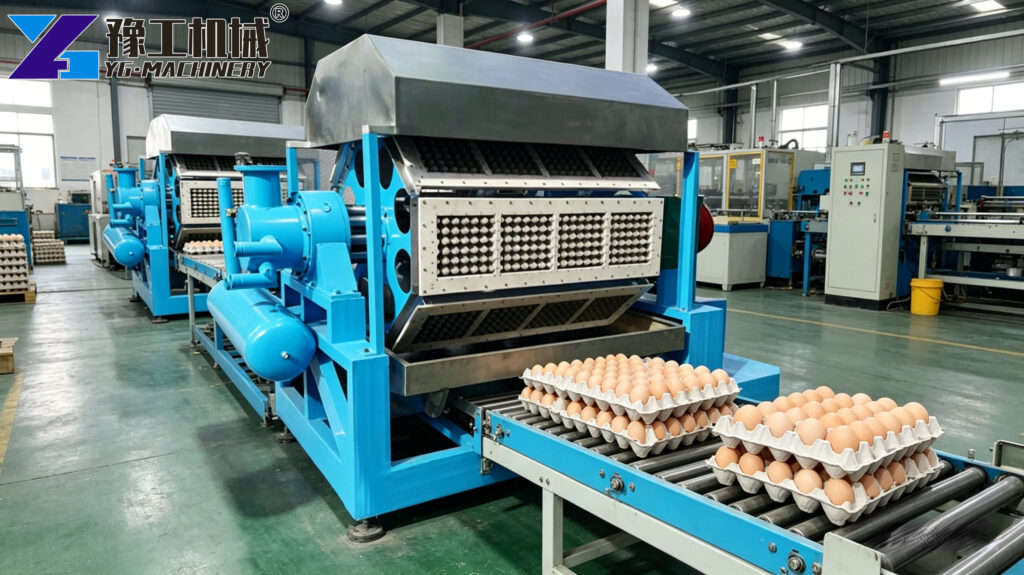
An automatic egg tray machine reduces manual work to just three tasks. Workers only need to feed waste paper, stack dried trays, and mix chemicals when needed. Everything else runs from a central control panel.
The numerical control system handles the entire forming cycle. Operators set two numbers: rotation speed and vacuum dwell time. The system then controls the motor, vacuum pump, and transfer timing automatically. If pressure drops or temperature rises too high, an alarm sounds. The equipment keeps running unless a serious fault occurs.
Key benefits of choosing an automatic model:
- Cuts labor costs by 40-50% compared to semi-auto machines
- Runs consistently without operator fatigue or shift changes
- Tracks production data to help you spot problems early
- Reduces waste because each cycle is identical
Compared to semi-automatic units, this type of equipment needs half the workers. A semi-auto line might require 8 to 10 people per shift. The YG automatic models run with 4 to 6. Over a year, that labor saving alone can cover the price difference between machine types.
The control panel also tracks production counts. At the end of each shift, the screen shows total trays made, average cycle time, and energy used. This data helps owners spot slowdowns before they become problems.
Request a video of the automatic control panel in action. YG Machinery will send a live recording of a running machine with your preferred language on the screen.
Compare Models and Get a Quote
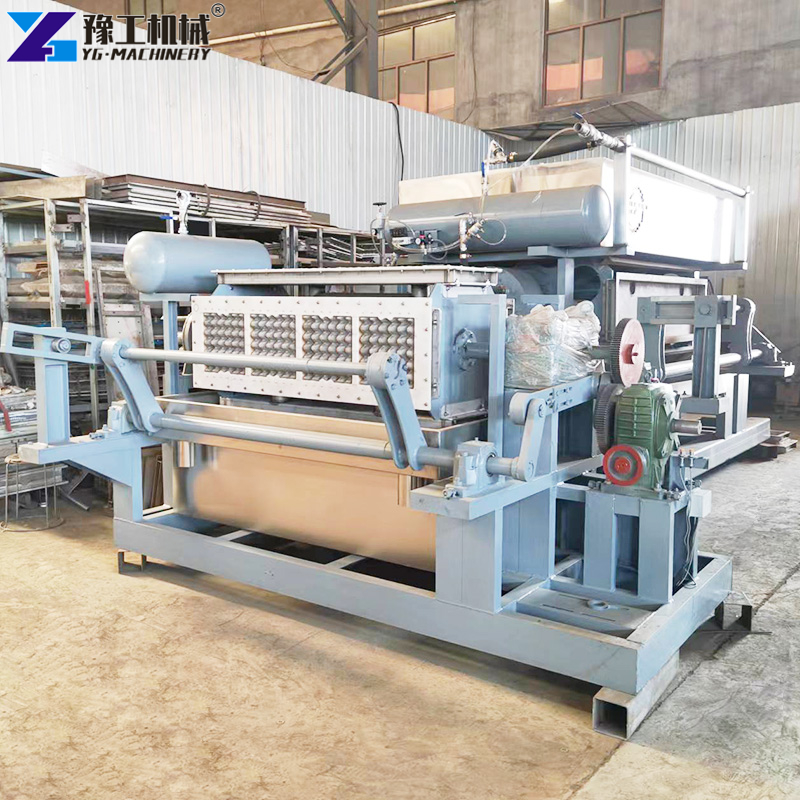
Steps to Start an Egg Box Making Machine Line
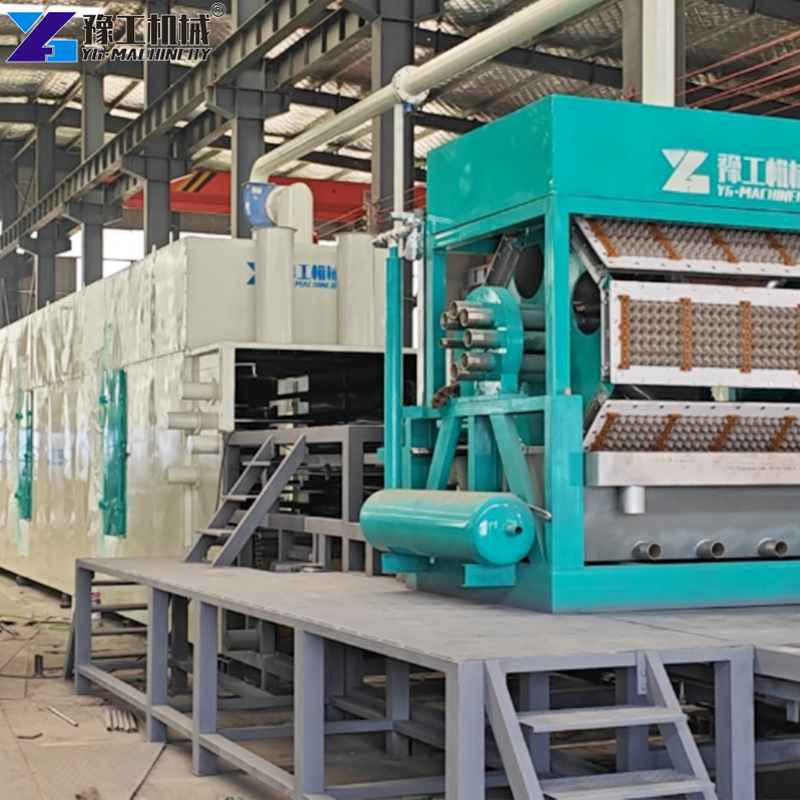
An egg box making machine line follows a simple process. Here is how it works from start to finish.
- Step 1: Pulping. Waste paper goes into a hydrapulper with water. A rotating drum breaks the paper down into a 1-2% fiber slurry. This takes 30-45 minutes per batch. Add water as needed to maintain consistency.
- Step 2: Forming. The slurry flows into a large tank below the forming section. A rotary drum dips into that tank. Vacuum pressure pulls fibers onto each forming mold. Each mold produces one tray per cycle.
- Step 3: Transfer. As the drum turns, a separate transfer mold picks up each wet tray. It places the tray onto a conveyor belt or a drying rack. The transfer happens without damaging the wet paper.
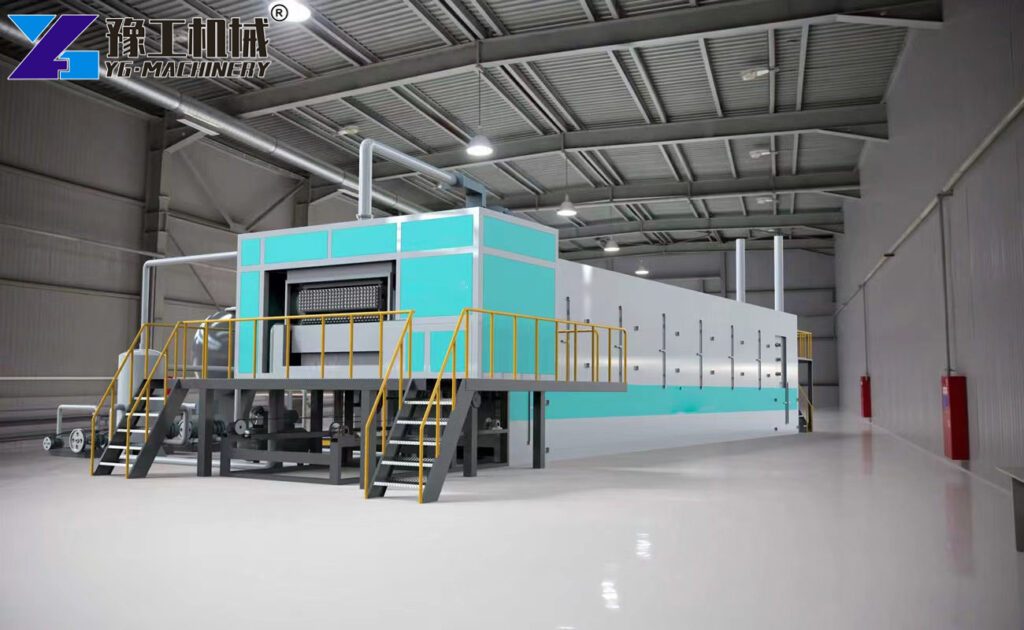
- Step 4: Drying. Trays move through a drying tunnel or sit in open sun-drying areas. Gas drying tunnels take 15-20 minutes. Sun drying takes 4-6 hours in warm weather.
- Step 5: Packing. Dry trays are stacked automatically or by hand. Workers count and bundle them into packs of 100 or 200. Ready for shipping to customers.
The whole cycle from waste paper to finished tray takes 45 minutes to 6 hours, depending on your drying method. The forming machine itself cycles every 8-12 seconds.
Automatic Egg Tray Making Machine Video | Factory Direct Manufacturer
How YG Machinery Compares to Other Suppliers
YG Machinery builds every egg carton machine with 304 stainless steel for all wet-end components. Many competitors use galvanized steel or painted mild steel. Those rust within 2-3 years. Stainless steel lasts 10+ years.
Here is what sets YG apart from other manufacturers:
- Materials – 304 stainless steel molds and tanks vs. painted carbon steel
- Vacuum system – 30mm bronze plate vs. cast iron that corrodes
- Indexer – Taiwan precision cam unit vs. generic Chinese parts
- Bearings – Japanese sealed bearings vs. open bearings that fail early
- Testing – 4-hour factory run with video proof vs. no testing
The vacuum pumper uses a 30mm thick bronze plate. Bronze lasts three times longer than cast iron in wet environments. Competitors use cast iron that corrodes and pits. Pitted surfaces lose vacuum pressure. Production slows down.
The rotary drum runs on a high-precision cam indexer from Taiwan. This component controls the stopping and starting of each mold position. Cheap indexers drift over time, causing misaligned trays. The YG indexer holds position within 0.1mm even after 10,000 hours of operation.
Bearings on all key shafts come from top Japanese brands. Sealed bearings keep paper dust out. Grease fittings let operators lubricate everything without disassembly. A machine that gets greased once a week will run for a decade with no major repairs.
Ask YG for photos of their stainless steel molds versus competitor rusted molds. They will show you the difference.
Where Buyers Install This Equipment
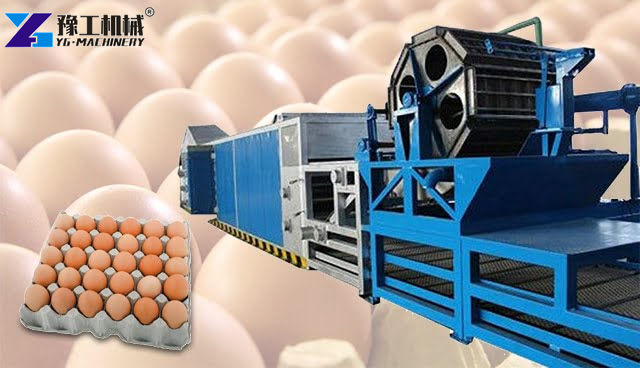
Poultry farms with 50,000+ laying hens use their own machine to eliminate packaging costs. One farm in Texas installed a YG-4×4 in 2020. They now save $0.08 per dozen on trays. At 2 million dozen per year, that is $160,000 in annual savings.
Small recycling businesses also profit from this equipment. Waste paper costs $30 to $50 per ton in most US cities. One ton makes about 12,000 egg trays. Sell those at $0.12 each wholesale, and you get $1,440 in revenue from $50 of raw material. Even after electricity, labor, and drying, margins run 40-50%.
New tray manufacturers supply packing stations, grocery chains, and farmer cooperatives. Many states now ban foam egg cartons. Paper trays are the only legal option. Demand grows every year.
The equipment also handles other pulp products with different molds. Change the forming molds, and the same machine makes:
- Apple trays (30 or 40 pockets)
- Bottle sleeves for wine or olive oil
- Cup carriers (4 or 6 cups)
- Corner protectors for furniture shipping
- Industrial packaging inserts for electronics
Mold changes take 4 to 6 hours for two workers. YG Machinery can engrave your logo into any mold at no extra charge.
Frequently Asked Questions About YG Egg Tray Making Machine
Any uncoated paper works well. Newspaper, office paper, cardboard boxes, egg carton waste, and paper mill scraps are all fine. Do not use waxed paper, plastic-coated cups, or glossy magazines. These do not break down properly. The machine runs best with a mix of newspaper and cardboard – about 60% newspaper, 40% cardboard.
The machine itself needs 10 to 30 square meters depending on the model. Drying space is larger. For natural sun drying, plan 200 to 500 square meters of open concrete. YG Machinery provides a custom layout drawing based on your building dimensions.
For small models up to 1500 pcs/h, one person can operate after training. For larger models, you need 4-6 people. The automatic control panel reduces labor, but someone must feed paper, stack trays, and handle packing. YG offers semi-automatic and fully automatic options based on your labor availability.
Sun drying works in warm climates. Arrange wire racks in direct sunlight. Trays dry in 4 to 6 hours on a sunny day. In rainy or cold weather, you need a drying room with dehumidifiers or a gas-fired tunnel. Drying tunnels cost more upfront but work year-round. Many customers start with sun drying, then add a tunnel after six months of profits.
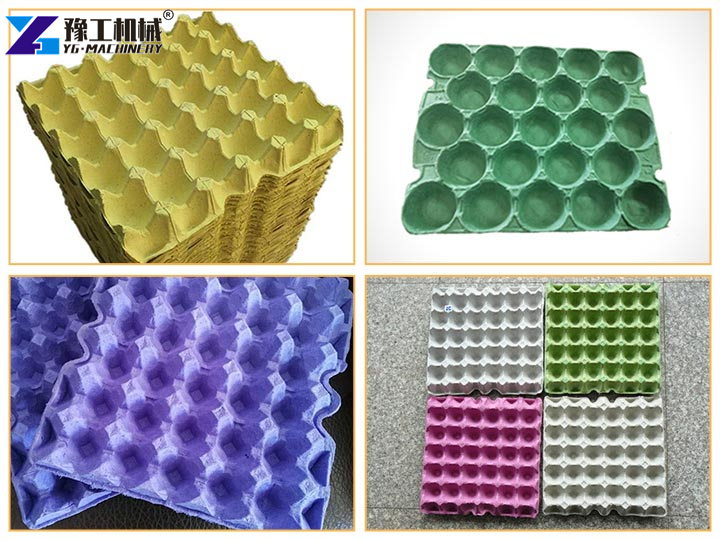
Yes. Add paper dye to the hydrapulper. Green, pink, blue, and yellow dyes are common. Colored trays sell for a premium to farmers who brand their eggs. For branded trays, YG can engrave your logo directly into the forming molds. This imprints your logo onto every tray.