In early 2025, a construction contractor from the Philippines contacted YG Machinery through the company website. He was managing a residential building project near Manila and needed a faster way to complete interior wall plastering. The project included multiple floors, and the traditional manual plastering method was creating delays.
The customer explained that his workers could complete only limited wall areas each day. Labor costs were increasing. The quality of plaster thickness was also difficult to keep consistent. Some walls needed additional repair before painting because of uneven surfaces.
During the first communication, the customer mainly asked about an automatic rendering machine that could reduce manual work and improve finishing quality. He wanted equipment suitable for local construction conditions. The machine needed to work with common cement and sand mixtures. It also needed simple operation because his workers had experience with traditional tools but had never used automatic wall finishing equipment.
The customer shared several details:
- Building type: Residential construction project
- Working environment: Indoor and outdoor wall surfaces
- Target efficiency: More than 400㎡ per working day
- Available power supply: 220V/380V
- Required rendering height: Around 3 meters
YG Machinery engineers reviewed the project information and arranged a technical discussion.
Start Your Project with the Right Equipment
Demand Analysis Through Online Meeting
Three days after the first inquiry, YG Machinery arranged a video meeting with the customer and his construction supervisor. The meeting focused on actual working conditions instead of only machine specifications.
The customer showed the construction site through video. The walls were mainly concrete block structures. Some areas had narrow working spaces, so the equipment size was an important factor. The team also checked the available material mixing ratio.
According to common construction practices, cement mortar plastering normally requires accurate control of material proportion and thickness. The customer planned to use a cement-sand ratio of 1:3, which matched the working requirements of YG Machinery’s equipment.
During the meeting, engineers explained:
- How the automatic spraying system controls mortar output
- How operators adjust plaster thickness
- How to clean the machine after daily operation
- How many workers are needed during operation
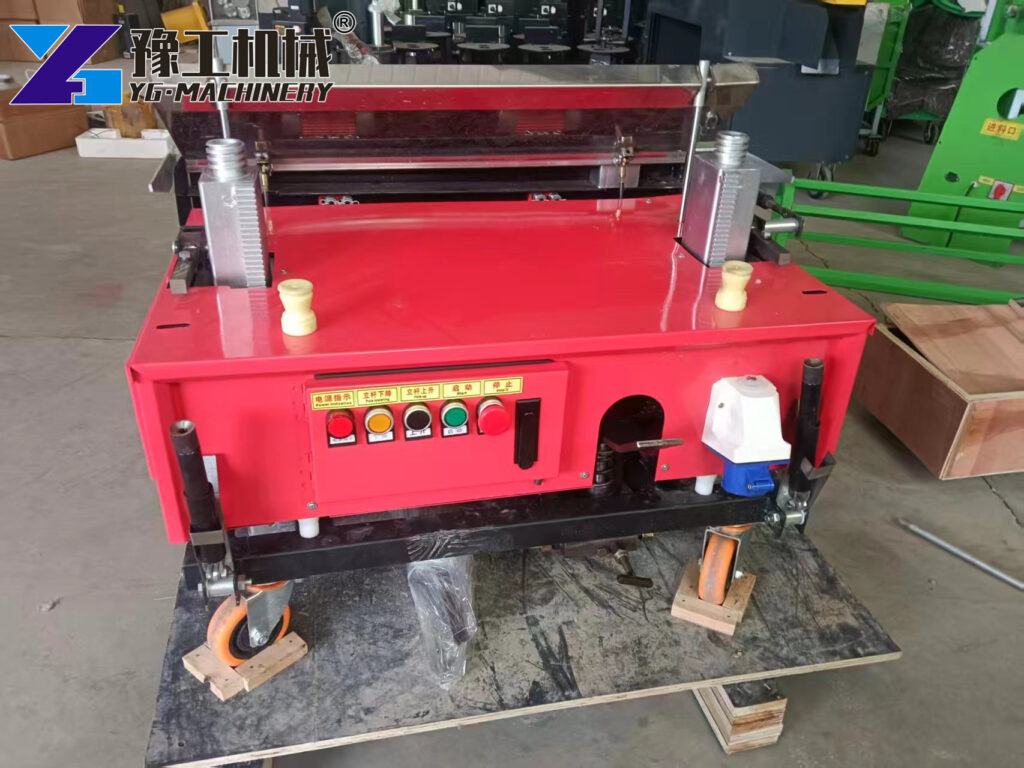
After reviewing the site conditions, YG Machinery recommended the YG-TP1000-5 model. Compared with traditional manual methods, the machine could provide a wider working area and more stable plaster thickness.
The customer also asked about maintenance. Engineers explained that the main structure was designed for repeated construction use. Regular cleaning and proper operation could extend service life and reduce downtime.
Configuration Confirmation and Final Quotation
After the technical meeting, the customer requested a detailed quotation and machine configuration sheet.
The main concern was whether the machine could handle different wall surfaces. Engineers confirmed that the equipment could work with suitable mortar materials after adjusting water content and mixture consistency.
The final configuration included:
- 1000mm plaster width
- 2.6-3.5m rendering height
- Adjustable plaster thickness from 5mm to 30mm
- 1.5kw motor power
- 220V/380V voltage option
- 130kg machine weight for easier transportation
The customer compared several suppliers before making the decision. One important factor was the complete technical support provided by YG Machinery. The customer wanted not only a machine but also guidance for the first installation and operation.
After confirming all technical details, both sides completed the contract. Payment was arranged according to the agreed export terms. Production started after receiving the payment.
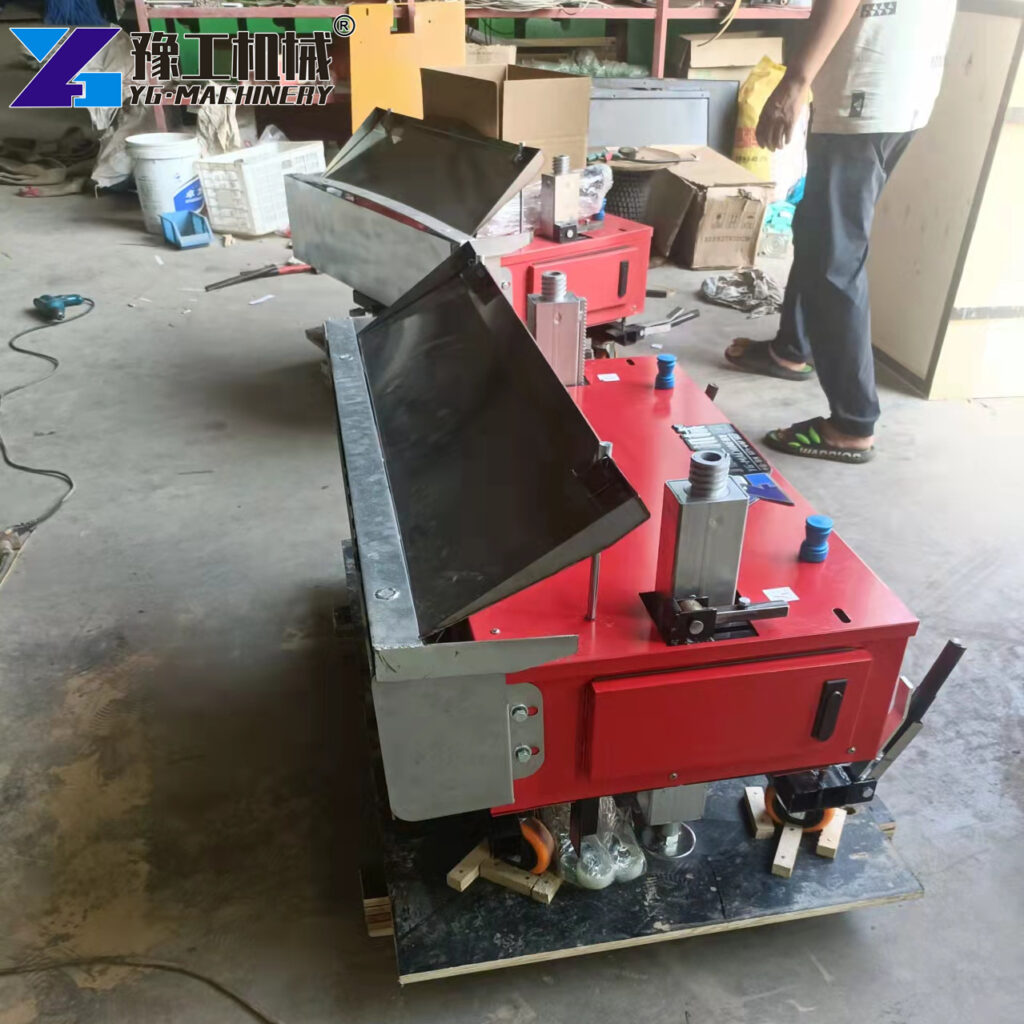
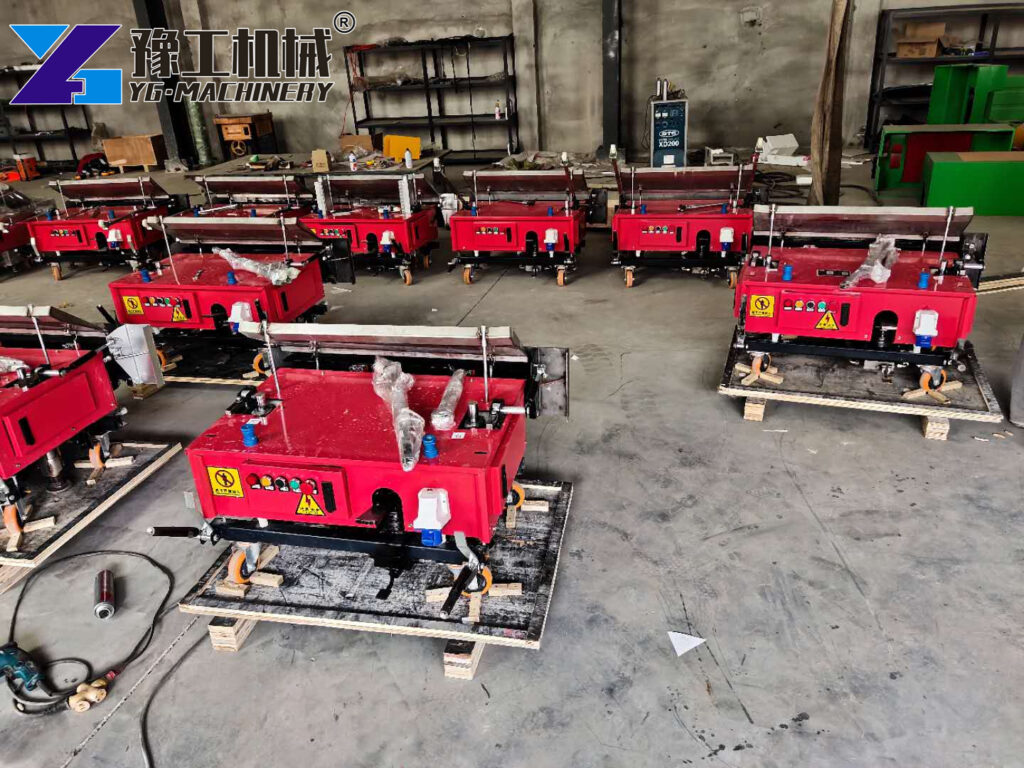
Production Process and Factory Preparation for Automatic Rendering Machine
During production, YG Machinery followed internal quality control procedures. Engineers checked the frame structure, motor system, spraying components, and electrical system step by step.
The production team first assembled the main body. Then they installed the plastering mechanism and tested the movement system. Each key component was checked before final assembly.
The machine was tested with mortar materials similar to the customer’s application. Engineers adjusted the output performance to make sure the plastering process remained stable.
Before shipment, the customer received production updates, including:
- Machine assembly photos
- Testing videos
- Component inspection records
The customer also joined a short online inspection before packing. He checked the machine appearance, operation functions, and accessories list.
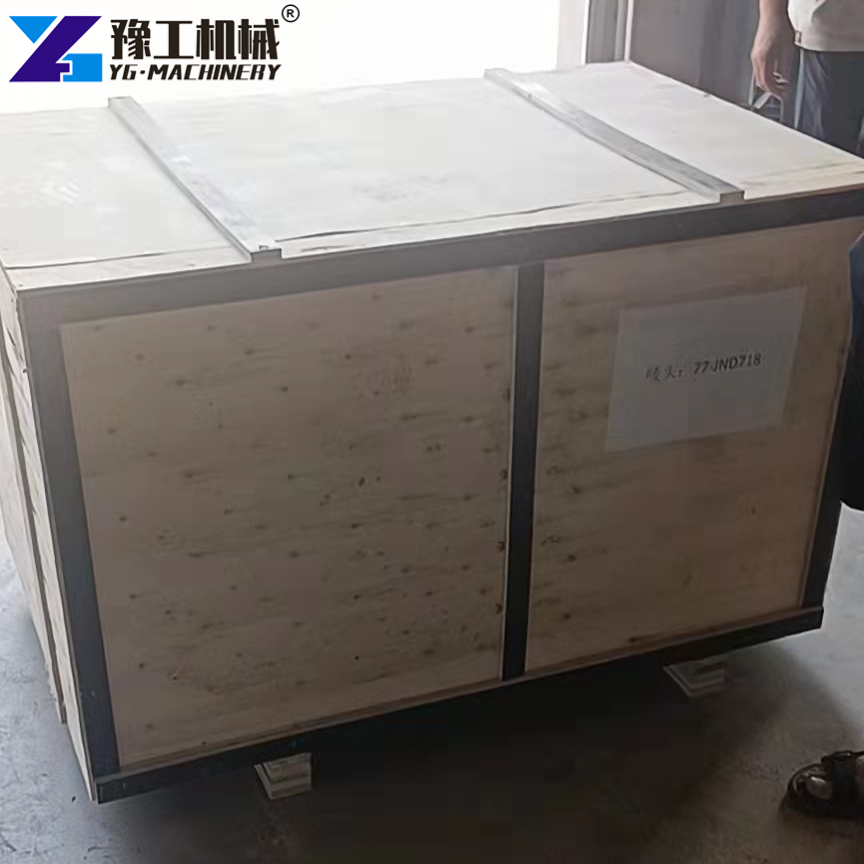
After confirming the details, the equipment was prepared for export packaging.
Factory Inspection and Export Preparation of Auto Plaster Machines for Sale
Before shipment, YG Machinery completed a final factory inspection. The inspection focused on real working conditions instead of only checking appearance.
The engineers tested the machine with mortar materials and checked several key points:
- Plastering width consistency
- Motor operation stability
- Material feeding performance
- Spraying thickness adjustment
- Electrical control response
The customer joined the inspection through an online video call. He watched the machine running and asked questions about daily operation. The engineers demonstrated the start-up process, mortar loading method, thickness adjustment, and cleaning procedure.
The inspection showed that the machine could complete wall plastering at a stable speed. The customer confirmed that the equipment matched the requirements discussed during the earlier technical meeting.
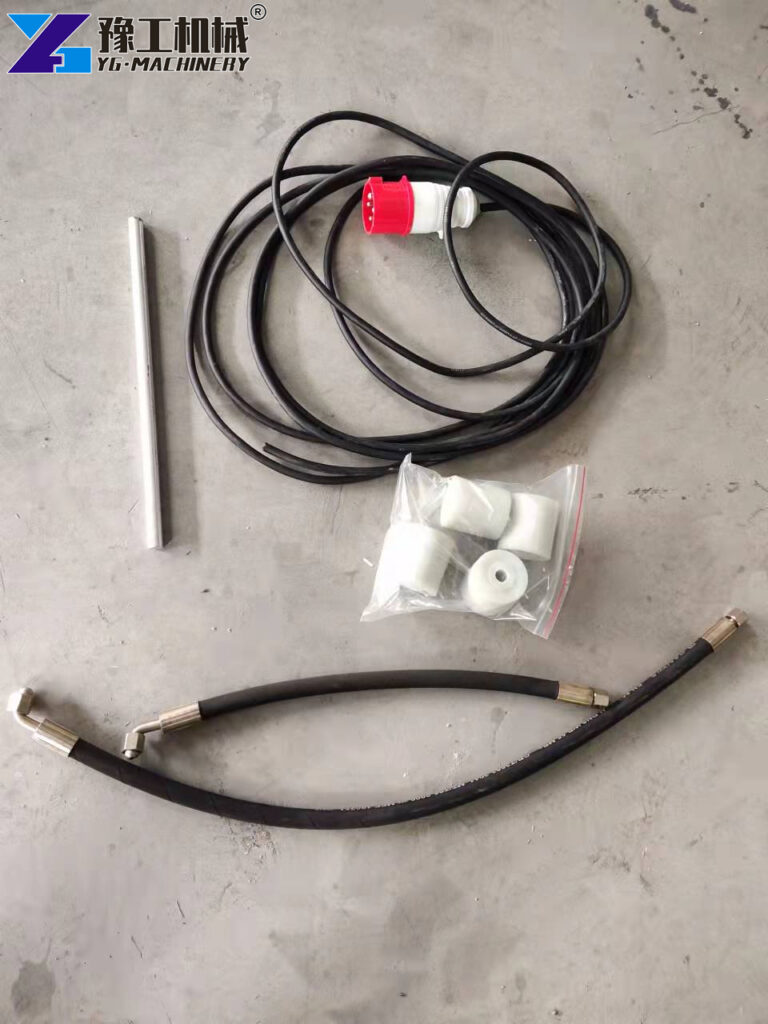
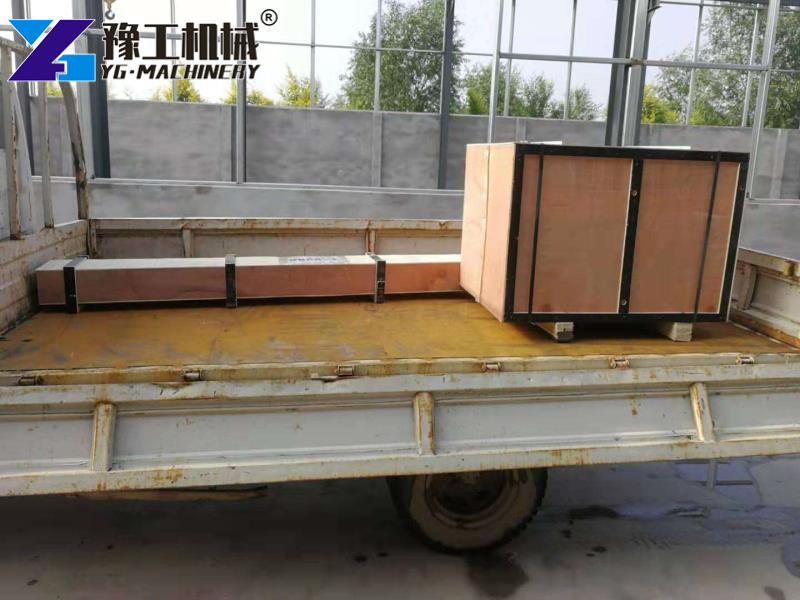
After approval, the machine was prepared for export. Accessories, operation manuals, and maintenance tools were packed together. The equipment was protected with suitable packaging materials to reduce the risk of damage during international transportation.
Philippines Shipping & Site Preparation for Auto Wall Plastering Machine
After completing export procedures, the automatic rendering machine was loaded and shipped to the Philippines.
Before arrival, YG Machinery kept in communication with the customer. The team provided installation guidance and checked the site preparation conditions. The customer prepared the required power supply and mortar materials before receiving the equipment.
When the machine arrived at the customer’s location, the construction team checked the package condition. All parts were complete. No transportation damage was found.
The customer recorded the unpacking process and shared photos with YG Machinery. Engineers then arranged an online installation session.
Because the equipment weighs only 130kg, the customer’s workers could move it easily inside the construction area. This was important because the project included several different building sections.
Installation, Training, and First Operation of an Automatic Rendering Machine
During installation, YG Machinery engineers guided the customer step by step through video communication.
The training covered:
- Machine assembly
- Mortar preparation
- Operation procedures
- Thickness adjustment
- Daily cleaning
- Basic maintenance
The customer’s workers completed the first operation under online guidance.
The first test was performed on an indoor wall. Engineers checked the spraying distance and material flow. After several adjustments, the plaster surface became even and smooth.
The customer’s team quickly learned the operation process. Unlike traditional manual plastering, only a small number of workers were needed:
- One operator controlled the machine
- One worker prepared mortar materials
- One worker assisted with surface checking
This improved labor organization at the construction site.
Working Performance of Automatic Rendering Machine After One Month
One month after installation, YG Machinery contacted the customer to collect operation feedback.
The customer reported that the machine had been working on multiple wall areas. The construction team completed approximately 500㎡ of wall plastering within 8 working hours under suitable conditions.
Compared with manual plastering, the project achieved several improvements:
- More stable wall thickness
- Reduced dependence on skilled plaster workers
- Faster daily progress
- Easier quality control
The customer also mentioned that the compact design helped the machine work in areas where large equipment could not enter.
For future projects, the contractor planned to use the equipment for additional residential buildings. He also asked YG Machinery about other construction machines that could improve site efficiency.
Automatic Rendering Machine Specification
| Project | YG-TP1000-5 |
|---|---|
| Plaster Width | 1000mm |
| Rendering Height | 2.6-3.5m |
| Rendering Thickness | 5mm-30mm |
| Aggregate Particle Size | 500㎡/8h |
| Voltage | 220V/380V |
| Motor Power | 1.5kw |
| Cement-Sand Ratio | 1:3 |
| Weight | 130kg |
| Host Package Size | 1200×800×800mm |