Evaluating a Single Head vs Multi Head Embroidery Machine setup is the most important machinery investment decision for custom apparel startups, promotional product suppliers, and growing textile factories. Choosing between a flexible single-station unit and a high-volume multi-head system directly impacts daily stitch output, workshop footprint, labor overhead, and order turnaround times. Single-head units provide incredible mobility, rapid job switching, and low entry costs for boutique custom orders. Multi-head configurations double or triple production volume per operator-hour, allowing commercial shops to profitably fulfill large wholesale orders for corporate uniforms, caps, and sports apparel. YG Machinery manufactures precision computerized embroidery equipment featuring 1000 RPM stitch speeds, DAHAO A15 touch controllers, and 270-degree wide cap systems to support business expansion at every stage.
Selecting the right machine architecture requires analyzing your current order volume, average batch sizes, and primary product types. Single-head models allow operators to run custom, one-off designs on T-shirts, jackets, and hats without stopping an entire production line. Multi-head setups run identical patterns concurrently across two, three, or more heads, cutting unit production costs dramatically on bulk production runs. YG Machinery equips both single and multi-head models with high-grade components, heavy-duty frames, and intuitive multi-language color LCDs to ensure immediate production readiness.
Start Your Project with the Right Equipment
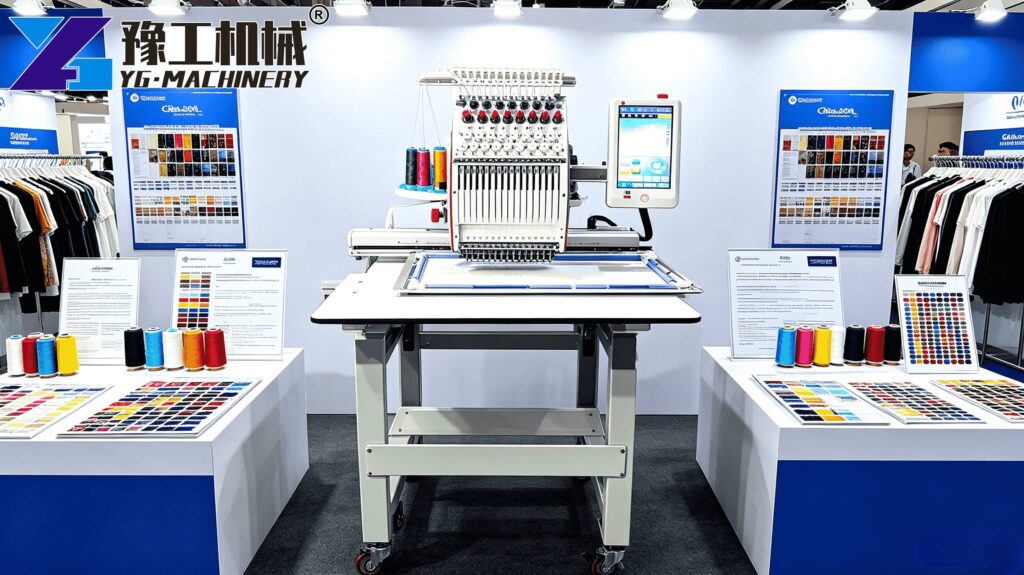
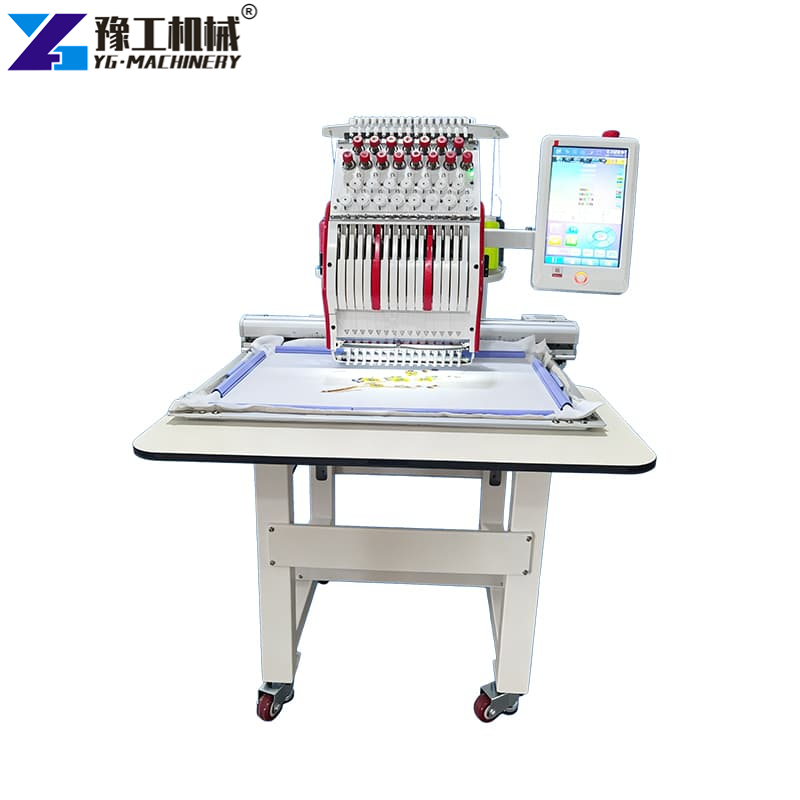
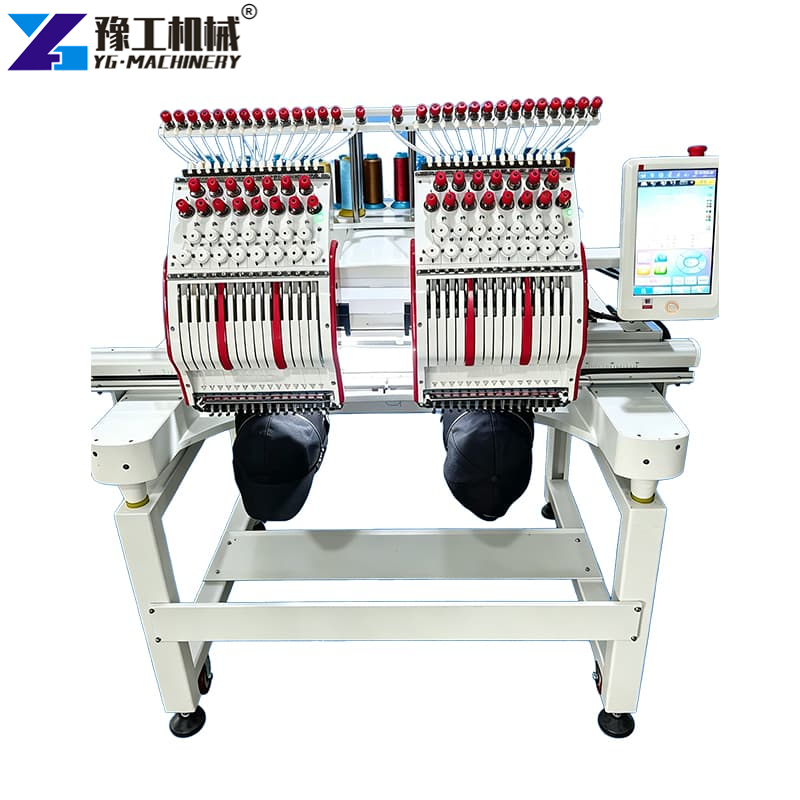
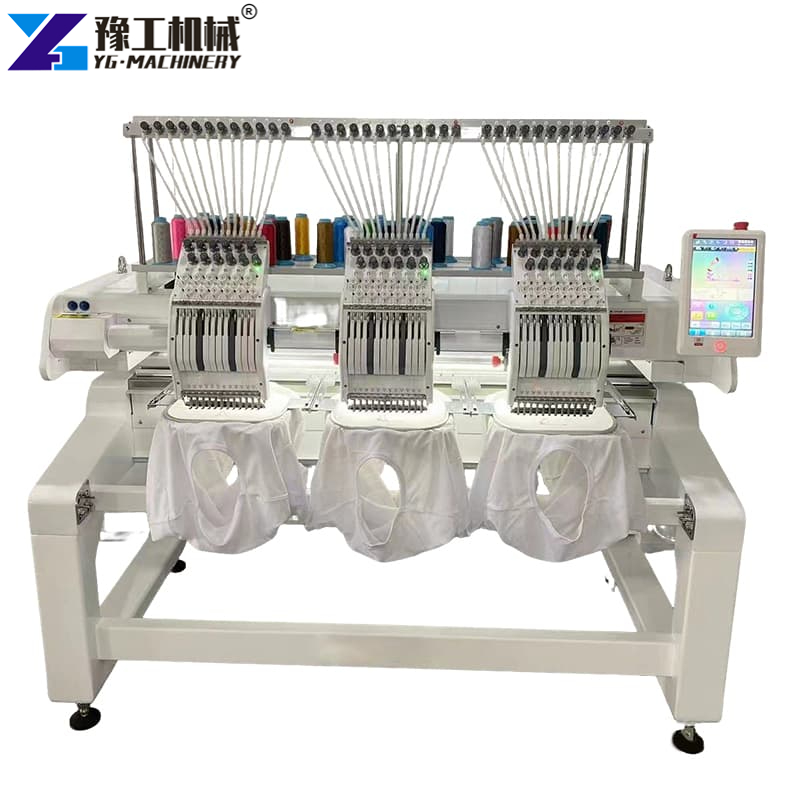
Comparing Core Technical Specifications Across 1, 2, and 3-Head Embroidery Machine Models
Selecting the ideal equipment capacity requires reviewing head counts, needle options, embroidery field dimensions, and chassis weights against your specific operational requirements. Purchasing directly from a dedicated equipment manufacturer guarantees strict quality control, CE-certified electronic safety standards, and immediate spare parts availability.
| Technical Parameter | Model YG-1201CT | Model YG-1202CT | Model YG-1203CT |
| Number of Heads | 1 Head | 2 Heads | 3 Heads |
| Needle Options | 9 / 12 / 15 Needles | 9 / 12 / 15 Needles | 9 / 12 / 15 Needles |
| Working Area (W×L) | 400 × 500 mm | 400 × 500 mm | 400 × 450 mm |
| Max Stitch Speed | 1000 RPM | 1000 RPM | 1000 RPM |
| Computer Control System | DAHAO A15 Touch Screen | DAHAO A15 Touch Screen | DAHAO A15 Touch Screen |
| Display Resolution | 1280 × 800 Color LCD | 1280 × 800 Color LCD | 1280 × 800 Color LCD |
| Memory Capacity | 200 Million Stitches | 200 Million Stitches | 200 Million Stitches |
| Pattern Storage | 500 Designs | 500 Designs | 500 Designs |
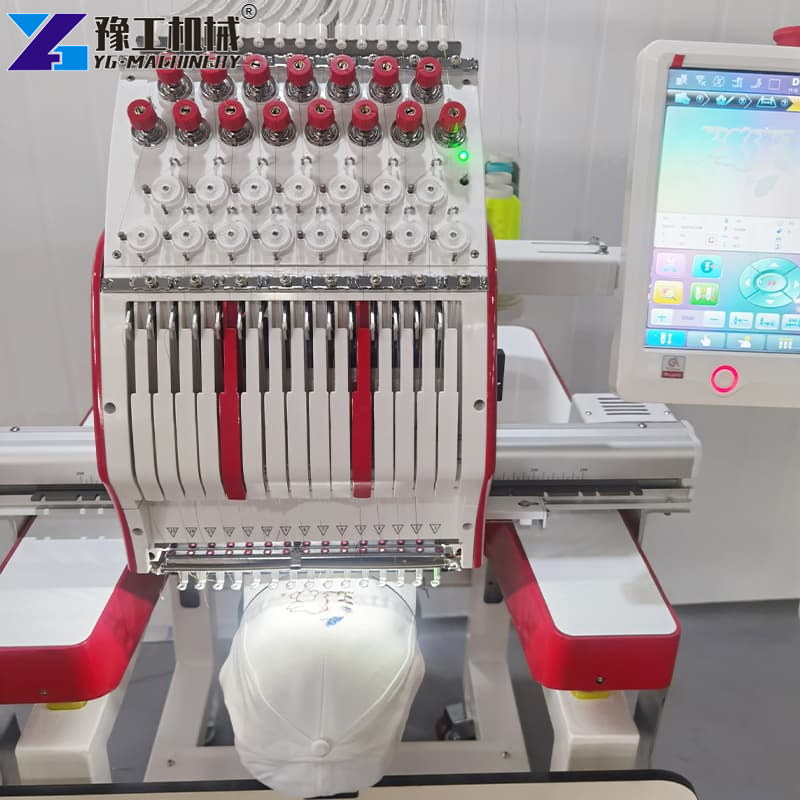
| Cap System Support | 270° Wide Cap Frame | 270° Wide Cap Frame | 270° Wide Cap Frame |
| Electrical Voltage | 110V/60Hz or 220V/50Hz | 110V/60Hz or 220V/50Hz | 110V/60Hz or 220V/50Hz |
| Gross Weight (Wooden Case) | 240 KG | 290 KG | 400 KG |
| Packing Dimensions | 92 × 88 × 85 cm | 1.37 × 1.12 × 0.92 m | 1.92 × 1.12 × 0.98 m |
All models support flat embroidery, structured 270-degree cap embroidery, and tubular finished garment hooping. The DAHAO A15 computer system supports 16 languages, real-time stitch tracking, USB design transfers, and intuitive pre-sew boundary tracing to prevent frame impacts.
Boost Productivity—Get a Free Quote
5 Production Differences Between Single Head and Multi Head Embroidery Machine Setups
- Daily Stitch Output: Single-head machines handle short-run custom items, while multi-head models stitch two or three identical items simultaneously at 1000 RPM.
- Labor Efficiency Ratio: Multi-head systems multiply production capacity per operator, reducing unit labor overhead on medium and large bulk orders.
- Order Flexibility: Single-head units switch between flat items, structured caps, and finished garments instantly without resetting complex multiple-head drive rails.
- Floor Space Footprint: Multi-head cabinets consolidate multiple embroidery heads into a single chassis, optimizing workshop floor space per active needle bar.
- Initial Capital Investment: Single-head equipment lowers entry barriers for new businesses, whereas multi-head machinery requires higher upfront capital but delivers faster ROI on volume jobs.
Commercial textile shops often start with single-head machinery to master digitizing software, thread tensions, and garment hooping techniques. As order volumes grow beyond 100 pieces per week, adding multi-head capacity prevents production bottlenecks and keeps delivery commitments on schedule.
Operators manipulate stitch traces, color sequences, and needle assignments effortlessly across both single and multi-head systems. Built-in thread break sensors and automatic color-changing motors minimize downtime across all active needle bars during intricate design execution.
Compare Models and Get a Quote
Why Choose a Commercial Single Head Embroidery Machine for Custom Shops?
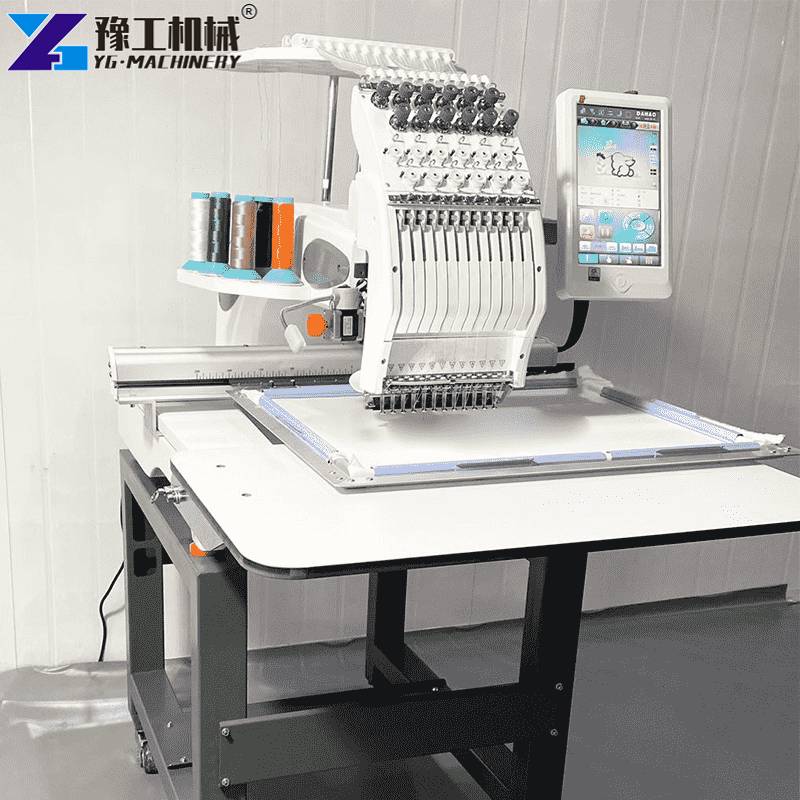
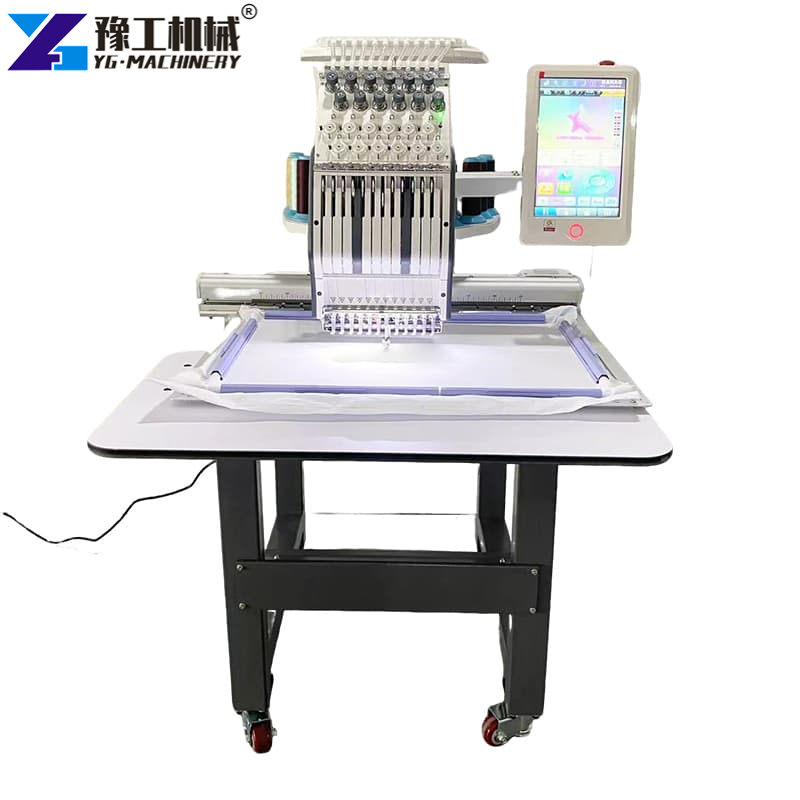
Single-head units excel in boutique custom shops, sports apparel stores, and personalization kiosks where job variety is high, and production quantities per design are small. Operating a single-head unit allows decorators to offer instant sample creation, custom name embroidery, and low-minimum orders cleanly.
- Rapid Job Setup and Changeover: Swapping between caps, flats, and T-shirts takes under two minutes, keeping short-run jobs moving without lengthy downtime.
- Low Power and Space Requirements: Compact frame dimensions allow standard doorway access and operate on standard 110V or 220V wall outlets without electrical upgrades.
- Dedicated Sample Development: Enables large manufacturing plants to stitch production samples without stopping high-volume multi-head production lines.
- Minimal Material Risk: Design or hooping errors affect only one garment at a time, lowering expensive fabric scrap during complex customization tests.
Investing in a versatile single-head system provides a low-risk foundation for mastering commercial embroidery operations. As your customer base expands, single-head units continue serving as dedicated short-run stations alongside high-output production machinery.
How an Industrial Multi-Head Embroidery Machine Scales Bulk Production
When order books demand hundreds of identical embroidered logos for school uniforms, corporate apparel, or promotional hats, multi-head machines provide massive operational advantages. Running multiple needle heads simultaneously turns time-consuming batch jobs into streamlined production workflows.
- Multiplied Output Speed: A 3-head machine completes three identical finished garments in the same time a single-head unit finishes one.
- Reduced Operator Labor Cost: One trained technician monitors framing, thread tension, and material hooping across multiple heads at the same time.
- Synchronized Color Changes: Automatic color-changing systems shift thread lines across all active heads simultaneously, maintaining uniform stitching quality across batches.
- Lower Cost per Stitch: Spreading operator labor costs over higher item quantities reduces total unit production cost and increases net profit margins.
Upgrading to multi-head hardware gives custom apparel businesses the capacity required to bid competitively on large institutional contracts. Heavy steel frames absorb high-speed vibration, ensuring stable thread tension and crisp design registration across all active embroidery heads.
Find the Right Model for Your Project
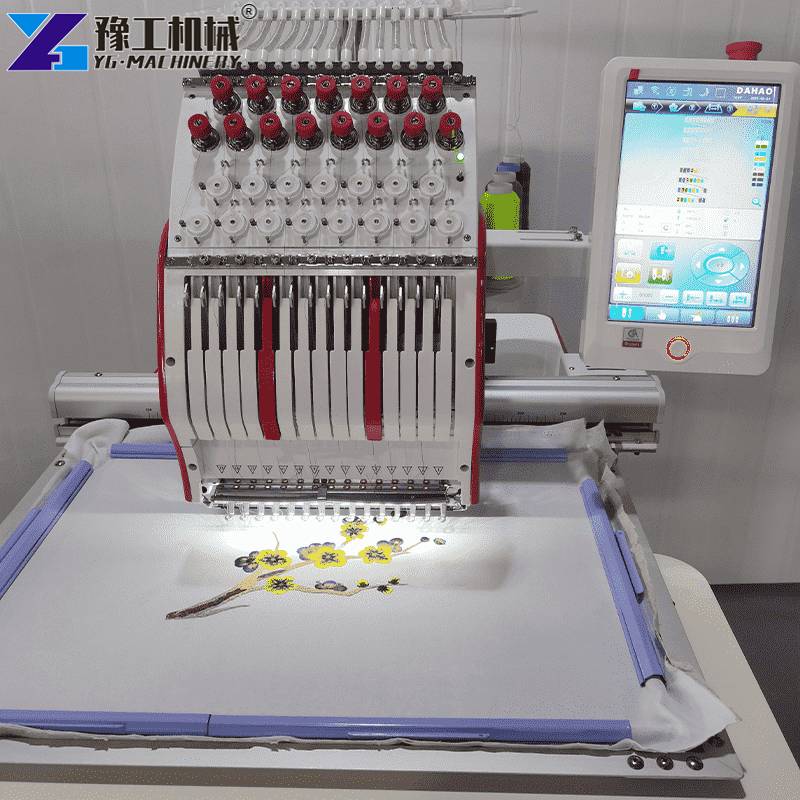
4 Essential Decision Factors Before Purchasing Commercial Equipment
Choosing between single-head and multi-head machinery requires evaluating key business variables to ensure your equipment selection supports long-term profitability.
- Average Order Quantity (AOQ): If over 70 percent of your orders consist of under 12 pieces, single-head systems offer superior operational agility. If bulk orders exceed 50 pieces regularly, multi-head systems are essential.
- Available Workshop Space: Measure entrance doorways, floor load capacity, and operator movement zones before choosing wide multi-head cabinets.
- Operator Experience Level: Single-head machines feature easier learning curves for new staff, while multi-head equipment benefits from experienced production technicians.
- Target Capital Payback Period: Calculate your average monthly stitch count to determine how fast multi-head efficiency gains offset higher initial equipment costs.
Balancing these commercial factors ensures your machinery investment aligns with your immediate budget constraints and long-term business growth plans.
Field Application Case Study: Scaling Custom Apparel Output in North Carolina
The Operational Challenge
A custom apparel decorator in North Carolina, USA, struggled to meet growing contract demands for regional sports teams and local corporate clients. Operating two single-head embroidery machines, their team could only produce 60 embroidered caps per eight-hour shift. Turning down large bulk orders hindered revenue growth and strained relationships with major wholesale clients.
The Technical Solution
To break through this production bottleneck, the business owner consulted with YG Machinery and added a 3-head YG-1203CT unit alongside their existing single-head machine. Featuring 15 needles per head, a 1000 RPM stitch speed, and 270-degree cap frames, the new multi-head system was assigned to bulk hat and T-shirt orders, leaving short-run personalized items on the single-head unit.
The Financial & Operational Results
Integrating the multi-head system transformed the North Carolina shop’s commercial performance:
- Output Multiplication: Daily cap production jumped from 60 units to over 240 units per shift without hiring additional operating staff.
- Turnaround Acceleration: Average customer lead times for bulk orders dropped from seven business days down to forty-eight hours.
- Labor Cost Reduction: Unit production costs dropped by 58 percent on orders exceeding 50 pieces due to synchronized three-head stitching.
- Rapid Capital Recovery: The increased production capacity enabled the shop to secure two major regional university uniform contracts, fully paying off the YG-1203CT investment within five months.
Request Your Factory-Direct Price Quote Today
Ready to elevate your embroidery business with reliable, high-speed commercial machinery? Do not let production limitations or slow turnaround times restrict your market growth any longer. YG Machinery provides factory-direct pricing, custom technical guidance, CE-certified hardware, and full global logistics support.
Getting a personalized quotation is simple—send us your target daily production volume, primary garment types, and destination port. Our technical engineering sales team will respond within 24 hours with an itemized price quote, technical specifications, and delivery lead times.
Contact our sales team today via email or inquiry form to secure your direct factory quote!
FAQs About Commercial Embroidery Machinery
A single-head unit stitches one item at a time, offering quick job setups for short runs. A multi-head unit stitches identical designs on two or more items simultaneously, multiplying output on bulk orders.
Yes, all YG Machinery models include 270-degree wide cap frames and curved drive systems designed specifically for structured caps, flat visors, and beanie hats.
All models feature the industry-proven DAHAO A15 touch-screen computer system with a 1280×800 color LCD screen, supporting 16 languages, USB transfers, and 200-million-stitch memory.
All YG-1201CT, YG-1202CT, and YG-1203CT models operate at maximum stitching speeds reaching 1000 RPM with automatic thread trimming and color changing.
Machines switch between standard 110V/60Hz and 220V/50Hz power supplies, allowing easy operation in home workshops, commercial storefronts, or industrial facilities.