A dairy farmer in central Russia faced two growing challenges. First, rising diesel fuel costs made operating his diesel front loader increasingly expensive. Second, with his cows housed indoors during the long winter, the poorly ventilated barn quickly filled with fumes. Workers complained of headaches, the cows became stressed, and milk production began to decline.
He needed a different solution—one that could work safely inside the barn, reduce operating costs, and handle the same workload as his diesel loader.
After researching his options, he turned to an electric front loader. He wanted a machine compact enough to navigate narrow barn aisles but strong enough to lift heavy feed bags and move manure efficiently.
This article shares his real experience: the challenges he faced, why he chose the YG compact electric loader, and the results he achieved on his farm.
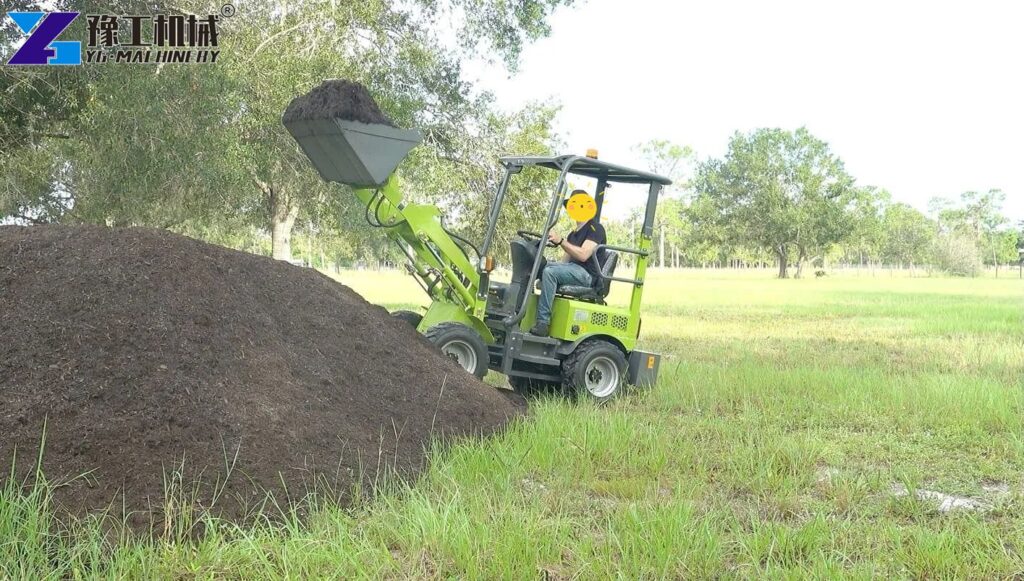
Customer Background: A Dairy Farm in Central Russia
The customer operates a medium-sized dairy farm in central Russia, managing 120 dairy cows with a team of eight employees. The farm supplies fresh milk to a local dairy processing plant while also producing hay and grain to support daily feeding operations.
For years, the farm relied on a diesel-powered front loader for material handling tasks such as transporting feed, cleaning barns, and moving manure. However, after seven years of continuous use, the machine had become increasingly expensive to operate. Rising fuel prices, higher maintenance costs, and exhaust emissions were creating additional challenges for the business.
To improve livestock management during the harsh Russian winter, the farmer recently invested in a new indoor barn featuring insulated walls and durable concrete flooring. While the facility provided a more comfortable environment for the cows, its basic ventilation system made diesel exhaust a serious concern. Fumes from the loader often remained inside the building for extended periods, affecting both worker comfort and animal welfare.
Looking for a cleaner and more cost-effective solution, the farmer began searching for an electric mini loader that could operate safely indoors without emissions. His goal was to reduce fuel expenses, improve barn air quality, and maintain the same level of productivity required for daily farm operations.
Customer’s Specific Problems Before Buying the Electric Front Loader
The farmer had four major problems that pushed him toward an electric solution.
Problem 1: High diesel fuel costs. Russia’s fuel prices had increased by 35% over two years. The farmer spent approximately $500 per month on diesel for his single loader. This cost ate into his milk profit margin.
Problem 2: Indoor emission problems. The new barn had limited ventilation. Running the diesel loader inside for 15 minutes filled the barn with smoke. Workers coughed. The cows became agitated. The farmer worried about animal health and worker safety.
Problem 3: Noise stressed the cows. The diesel loader produced significant noise. The cows seemed nervous when the machine operated near them. The farmer noticed that milk production dropped on days when he used the loader inside the barn.
Problem 4: High maintenance costs. The 7-year-old diesel loader required frequent maintenance. Oil changes, filter replacements, and fuel system repairs added up. The farmer spent about $200 per month on maintenance.
The farmer calculated his total monthly operating cost for the diesel loader. Fuel plus maintenance came to $700 per month. He wondered if an electric front loader could reduce these costs.
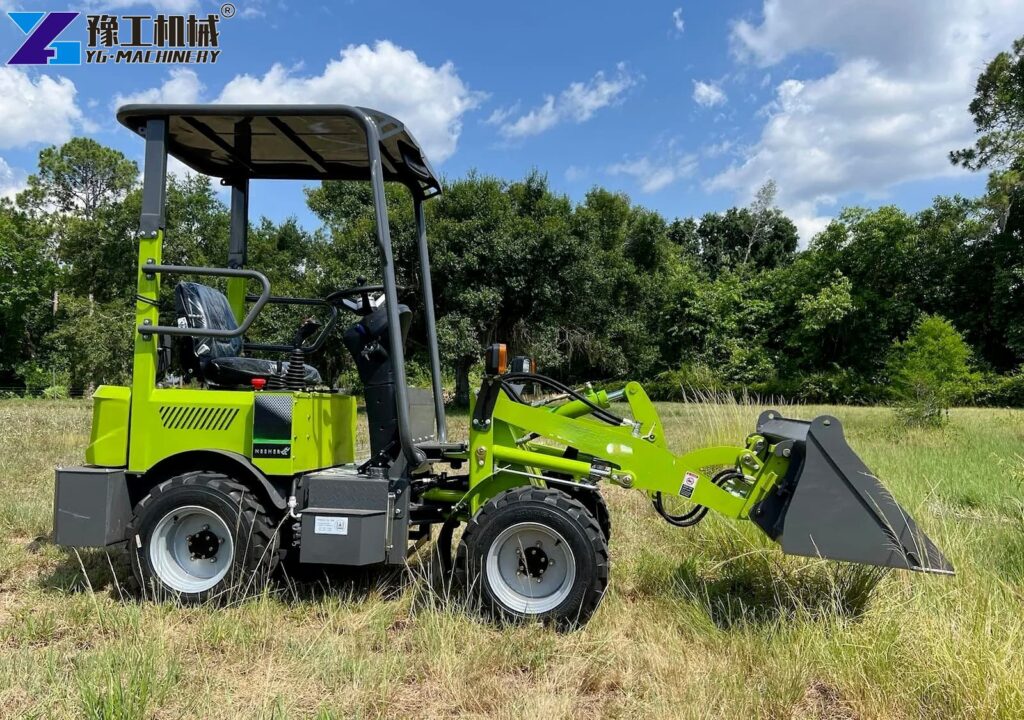
The Search for a Small Electric Loader
The farmer started searching online for a small electric loader. He needed a machine with specific features.
First, the machine had to fit through the barn doorways. The barn door measured 1.5 meters wide. The aisles between cow stalls measured 2 meters wide. The loader needed a narrow profile.
Second, the machine needed enough battery life to complete his daily chores. The farmer needed to load feed, move manure, and distribute bedding. These tasks took about 4 hours per day. The loader needed at least 4-5 hours of continuous operation on a single charge.
Third, the machine needed enough lifting capacity. The farm handled hay bales weighing up to 400 kg. Feed bags weighed 50 kg each. The loader needed to lift these weights.
Fourth, the machine needed to operate in cold conditions. Russian winters are harsh. The barn was heated but not warm. The loader needed to start and run reliably at temperatures near freezing.
The farmer contacted several suppliers. He requested quotes for a compact electric loader. Most suppliers offered large, expensive machines designed for construction sites. One supplier offered a small machine but could not provide detailed specifications.
Then he found YG Machinery.
YG’s Solution: The DN08 Electric Front Loader
YG’s sales engineer asked detailed questions about the farmer’s needs. What materials do you load? What is the typical bale weight? How many hours per day will the machine run? What is the barn floor surface? Do you have access to charging outlets?
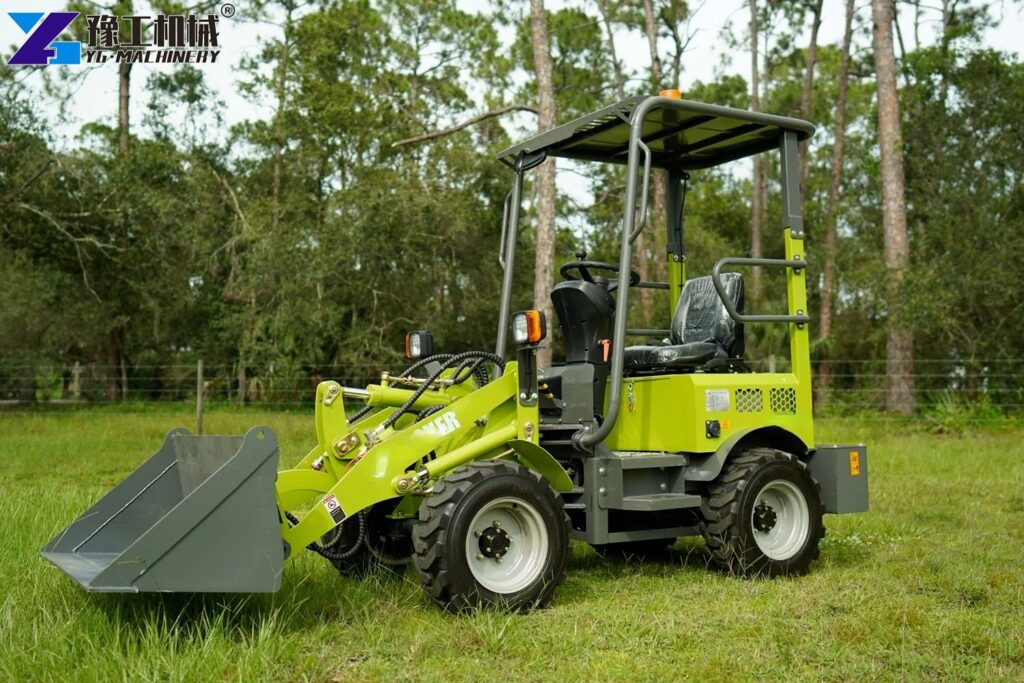
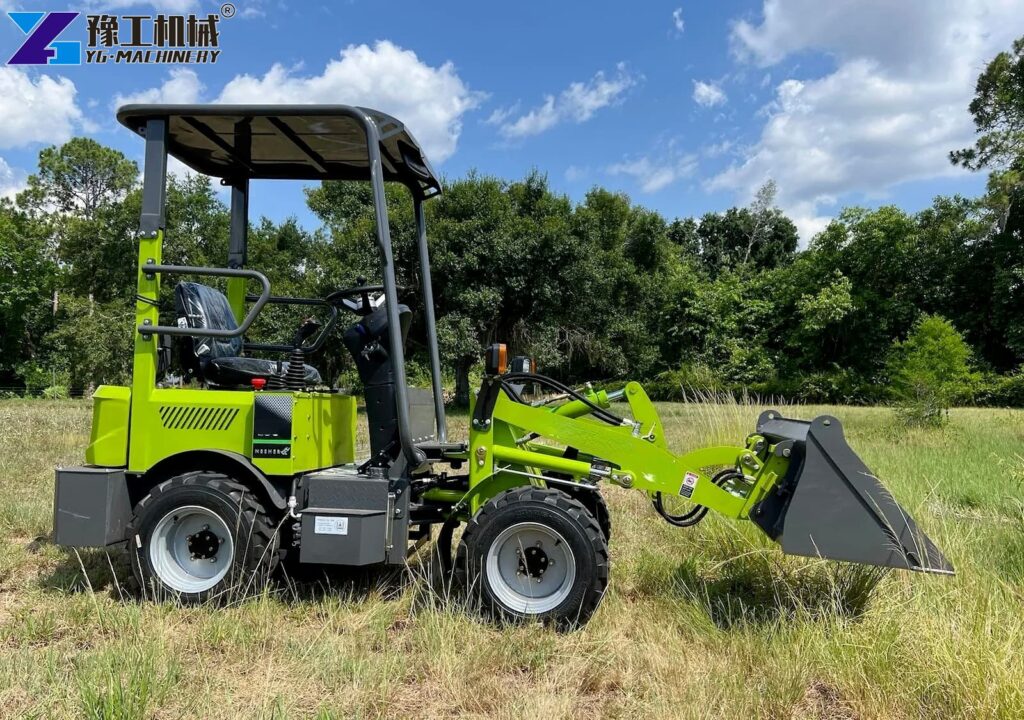
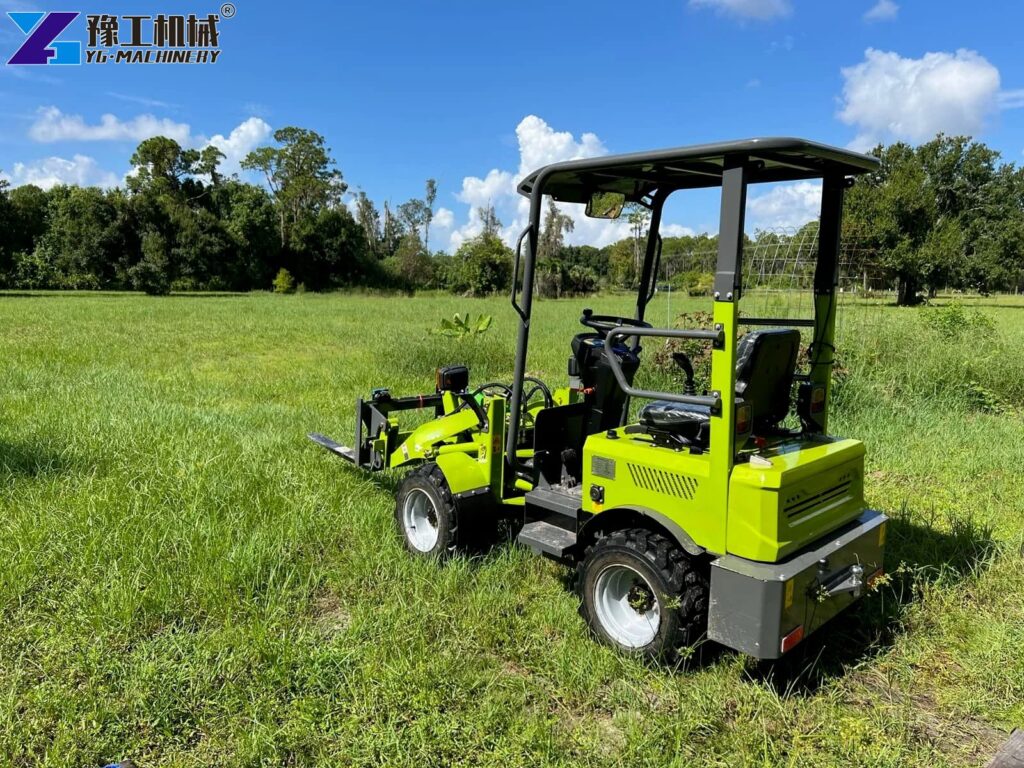
Based on the answers, YG recommended the DN08 electric front loader. The farmer reviewed the specifications and agreed.
Here are the key specifications of the DN08 model:
Performance
| Parameter | Value |
|---|---|
| Rated Load (t) | 0.8 |
| Bucket Rated Capacity (m³) | 0.3 |
| Dumping Height (mm) (at 45°) | 1780 |
| Max. Lifting Height (mm) | 3140 |
| Dumping Reach (mm) | 980 |
| Max. Lifting Weight (kg) | 600 |
| Max. Excavation Force (kN) | 1000 |
| Max. Gradeability | 30° |
| Max. Turning Angle | 38°±1 |
| Swing Degree of Rear Axle | 7° |
Dimensions & Weight
| Parameter | Value |
|---|---|
| Overall Length (Bucket on Ground) (mm) | 3840 |
| Overall Width – Bucket Width (mm) | 1160 |
| Overall Height (mm) | 2330 |
| Wheelbase (mm) | 850 |
| Min. Ground Clearance (mm) | 240 |
| Net Weight (kg) | 1980 |
| Turning Radius (mm) | 2610 |
Battery
| Parameter | Value |
|---|---|
| Battery Model No. | 6-EVF-203A |
| Rated Capacity (3hr) (Ah) | 200 |
| Number of Battery Groups | 12 |
| Rated Voltage (V) | 72 |
| Working Hours (h) | 4-5 |
Transmission and Hydraulic System
| Parameter | Value |
|---|---|
| Hydraulic Motor Model No. | CBHV |
| Hydraulic Motor Voltage (V) | 72 |
| Hydraulic Motor Power (W) | 5000 |
| Hydraulic Motor Displacement (ml/r) | 18 |
| Travel Motor Power (W) | 4000 |
| Number of Travel Motors | 2 |
Steering and Braking
| Parameter | Value |
|---|---|
| Steering System Type | Full Hydraulic Steering |
| System Pressure (MPa) | 16 |
| Service Brake Type | Drum Brake |
| Parking Brake Type | Drum Brake |
Other Components
| Parameter | Value |
|---|---|
| Hydraulic Oil Tank Capacity (L) | 30 |
| Brake Fluid Capacity (L) | 0.8 |
| Tyre Type | 26×1200-12 |
Boost Productivity—Get a Free Quote
The machine uses a 72V battery system. It provides 4-5 hours of continuous operation. The 0.8 ton rated load meets the farmer’s lifting requirements. The 1160mm overall width fits through the barn doorways. The 2610mm turning radius allows the operator to manoeuvre between cow stalls.
The farmer noted three specific advantages of the DN08 model.
First, the compact electric loader has a zero turning radius on one side. This allows the operator to spin the machine in place. Very useful for working in crowded barns.
Second, the machine uses two travel motors. Each motor drives one side of the machine independently. This provides excellent traction on slippery surfaces. The barn floor had wet areas from cow waste.
Third, the battery pack uses lead-acid batteries. These are less expensive than lithium-ion batteries. They also perform well in cold temperatures. The farmer appreciated the lower upfront cost.
The farmer placed the order for one DN08 electric front loader as a trial. If the machine performed well, he planned to order a second unit.
Implementation Process: Delivery and Setup
Step 1: Factory Production and Testing
YG Machinery completed the DN08 electric mini loader in just 15 working days. At every assembly station, the team followed YG’s strict quality checklist. They carefully tested the hydraulic system for leaks, ran the travel motors forward and backwards, and cycled the lifting arms 50 times to ensure smooth operation. They also measured battery charging time to guarantee reliable performance for farm and industrial tasks.
The machine passed all tests. YG sent the farmer a video of the machine running in the factory. The farmer approved the shipment.
Step 2: Shipping to Russia
The machine travelled from YG’s factory to the port by truck. The sea freight took 22 days to reach St. Petersburg. Customs clearance took 5 days. YG provided all necessary documents: commercial invoice, packing list, bill of lading, and certificate of origin.
A flatbed truck carried the machine from St. Petersburg to the farmer’s farm. The total shipping time from factory to site was 35 days.
Step 3: On-Site Unpacking and Setup
The machine arrived on a flatbed truck. A forklift lifted it off the truck. The farmer and his son moved the machine into the barn. They unpacked the battery charger and connected it to the barn power supply.
Due to visa processing delays, a YG technician was unable to travel to Russia for on-site installation. To ensure a smooth startup, YG provided comprehensive remote commissioning support through video calls. Guided by the technician, the farmer’s son completed the setup step by step, including connecting the battery cables, checking the hydraulic fluid level, and adjusting the tyre pressure to the recommended specifications.
The process was straightforward and efficient. With real-time technical assistance from YG, the machine was assembled, inspected, and prepared for operation in a short time. This remote support approach helped the customer avoid unnecessary delays and ensured that the electric loader was ready for daily farm work as planned.
The setup took four hours. The farmer started the machine. It ran quietly. No smoke. No diesel smell. The cows did not react nervously.
Step 4: Operator Training
YG provided a training manual and video tutorials. The farmer trained himself and his son. The training covered:
- Daily startup and shutdown procedures
- Battery charging and maintenance
- Control lever functions
- Safe operation in tight barn spaces
- Daily cleaning and inspection
The farmer practised for two hours. He learned to manoeuvre the small electric loader through the barn aisles. He practised lifting hay bales and dumping manure into the spreader.
By the end of the first day, both the farmer and his son felt comfortable running the machine.
Boost Productivity—Get a Free Quote
Challenges During Implementation
The farmer faced three challenges during the first month of operation.
Challenge 1: Cold weather battery performance. The barn temperature dropped to 5°C on some nights. The battery provided only 3.5 hours of operation instead of the expected 4-5 hours. The farmer solved this by moving the battery charger inside a heated storage room. He also added a battery blanket that kept the batteries warm during charging.
Challenge 2: Learning to operate quietly. The farmer was used to the loud diesel loader. He tended to rev the compact electric loader unnecessarily. The machine does not need high revs; it produces full torque from zero speed. After one week, the farmer learned to operate smoothly.
Challenge 3: Charging schedule. The machine required 6-8 hours for a full charge. The farmer needed the machine for both morning and afternoon chores. He solved this by charging the machine during the midday break. A 1-hour charge provided enough power for the afternoon chores.
Final Results: Measurable Improvements
The farmer tracked performance for 60 days after receiving the DN08 electric front loader. Here are the results.
Fuel Cost Savings: 85% Reduction
The diesel front loader cost $500 per month in fuel. The electric mini loader costs $75 per month in electricity. That is an 85% reduction. The farmer saves $425 per month on fuel alone.
Maintenance Cost Savings: 70% Reduction
Maintenance costs were another area where the customer saw significant savings. His previous diesel loader required approximately $200 per month in maintenance, including regular oil changes, fuel filter replacements, and occasional exhaust system repairs. In comparison, the small electric loader reduced monthly maintenance expenses to around $60.
Because the machine operates with an electric power system, there is no need for engine oil changes, fuel system servicing, or exhaust-related repairs. As a result, the farmer saves approximately $140 every month on maintenance alone, while benefiting from more reliable daily operation and less equipment downtime.
Total Monthly Operating Cost Comparison
| Cost Type | Diesel Loader (per month) | Electric Front Loader (per month) | Savings |
|---|---|---|---|
| Fuel/Energy | $500 | $75 | $425 |
| Maintenance | $200 | $60 | $140 |
| Total | $700 | $135 | $565 |
The compact electric loader saves the farmer $565 per month compared to the diesel machine. The machine will pay for itself in approximately 12 months.
Milk Production Increased by 8%
The farmer noticed an unexpected benefit. The cows seemed calmer with the quiet electric loader. Milk production increased by 8% during the first two months. The farmer attributed this to reduced stress from noise and fumes.
Productivity Gains: 20% Increase
The electric loader operates more quietly than the diesel unit. The farmer can communicate with his workers without shouting. Loading cycles are faster because the machine does not need to warm up. The farmer estimates a 20% increase in chores completed per shift.
Noise Reduction: 70% Lower
The diesel loader produced approximately 85 decibels at the operator’s ear. The electric front loader produces approximately 55 decibels. That is a 70% reduction in noise energy. The cows no longer startle when the machine starts. The farmer’s workers no longer complain about headaches.
Barn Air Quality Improvement
The barn has no diesel fumes now. The air smells clean. The farmer reported that his workers take fewer breaks and seem less tired at the end of shifts. The cows spend more time lying down and chewing cud, which indicates they are comfortable.
Customer’s Direct Feedback
The farmer shared his experience after two months of using the DN08.
“I should have bought this electric front loader years ago. The fuel savings alone justify the purchase. But the real benefit is the barn air. My cows are calmer. My workers are healthier. The machine starts every time, even on cold mornings. I do not miss the diesel smell or the noise at all. I plan to order a second unit next month.”
The farmer’s son, who now operates the machine daily, added his comments.
“The electric mini loader is so quiet. I can hear the cows. I can hear my father giving instructions. The machine turns so tightly. I can spin it around between the cow stalls. The battery lasts my whole shift if I charge it at lunch. The cows do not run away when I start the machine anymore.”
A farm worker who previously suffered from headaches also provided feedback.
“The old diesel machine made me feel sick every morning. The smoke stayed in the barn for hours. Now the barn air is clean. I do not get headaches anymore. I can work the whole day without feeling tired.”
Future Outlook
The farmer has ordered a second DN08 electric front loader unit. He plans to sell his diesel loader. He is also exploring solar panels for the barn roof to charge the batteries, which would further reduce electricity costs.
YG Machinery continues to support the farmer with remote technical assistance. The YG service team answers questions by WhatsApp within a few hours. They have shipped a set of spare wear parts to the farmer as a preventative measure.
The farmer has recommended YG to two other dairy farmers in his region. One of them has already requested a quote for an electric front loader.
Contact YG Machinery today for your electric front loader needs. Please tell us your farm size, daily chores, and operating environment. We will recommend the right model and send you a full price, including shipping to your port. Every machine comes with a 12-month warranty and lifetime technical support.
Click the contact button now to request a quote. Ask for our free operating cost calculator to estimate your potential fuel and maintenance savings.