A heavy equipment manufacturer in Thailand faced a growing problem. Their production line for truck chassis and structural parts kept slowing down at the surface preparation stage. The company needed to clean, de-rust, and profile large metal components before painting. But their existing method could not keep up with rising order volumes.
The manufacturer used handheld sandblasting guns in an open area. Workers wore protective suits and masks. Dust spread across the workshop. The process took hours per part. Quality varied from worker to worker. Some parts received insufficient cleaning. Others got over-blasted. The paint adhesion suffered. Customers complained about premature rust.
The production manager realized a more efficient solution was required. A large sandblasting booth was needed to handle oversized workpieces while maintaining high productivity. At the same time, he required a fully enclosed system to control dust, protect surrounding operations, and ensure consistent, repeatable surface treatment results.
This article tells his real story. You will see the challenges he faced, how he chose YG’s industrial sandblasting room, and what results he achieved.
Customer Background: A Heavy Equipment Manufacturer in Thailand
The customer operates a manufacturing facility in Thailand’s eastern industrial zone. The company produces truck chassis, trailer frames, and structural components for the construction and logistics industries. They employ 120 people. Their production line runs 8 hours per day, five days per week.
Before buying from YG, the customer used an open-area sandblasting setup. This involved a single portable blasting gun connected to a compressor. Workers wore full protective gear. The process created significant dust that affected the entire workshop.
The customer had three main surface preparation requirements. First, the system needed to handle large workpieces, including chassis frames up to 5 meters long. Second, the system had to provide consistent cleaning results across all parts. Third, the system needed to control dust to improve worker safety and comply with Thai environmental regulations.
The customer started searching for a shot blasting room that could meet these requirements.
Customer’s Specific Problems Before Buying the Large Sandblasting Booth
The manufacturer had five major problems with their existing surface preparation method.
- Problem 1: Inconsistent quality. Each operator used different techniques. Some workers spent more time on certain areas. Others rushed through the job. The result was variable surface profiles. Some parts had remaining rust. Others had pitting from over-blasting. Paint adhesion suffered.
- Problem 2: Slow production speed. A single truck chassis took 3-4 hours to blast. The company produced 8-10 chassis per week. The blasting station became a bottleneck, limiting overall output. The company turned down orders because they could not prepare parts fast enough.
- Problem 3: Dust contamination. The open-area blasting created a cloud of abrasive dust. The dust settled on nearby equipment. It affected other production processes. Workers in adjacent stations complained about visibility and breathing issues.
- Problem 4: High abrasive consumption. The open system wasted abrasive media. The operator could not recover and reuse the blasting material. The company spent $1,200 per month on new abrasive supplies.
- Problem 5: Worker health concerns. The company received multiple health complaints from blasting operators. Despite wearing protective equipment, workers experienced respiratory irritation. Turnover in the blasting department was high. The company struggled to retain trained operators.
The production manager calculated the total monthly cost of their current system. Labor, abrasive consumption, rework, and health-related costs added up to approximately $6,500 per month. He wanted a sandblasting booth for sale that could reduce these costs.
Compare Models and Get a Quote
The Search for an Industrial Sand Blasting Room
The production manager started searching online for an industrial sand blasting room. He needed a system with specific features.
First, the booth had to accommodate large workpieces. The largest chassis measured 5 meters long, 2.5 meters wide, and 2 meters high. The booth needed interior dimensions large enough to allow workers to access all surfaces.
Second, the booth had to provide consistent, repeatable results. The system needed to deliver the same surface profile on every part. This required controlled blasting parameters and proper lighting.
Third, the booth had to include an effective dust collection system. The manufacturer needed to contain dust and meet Thai environmental standards. The system also needed to recycle abrasive media to reduce operating costs.
Fourth, the booth had to be durable enough for continuous industrial use. The system would run 8 hours per day, five days per week.
The manager contacted several shot blasting room suppliers. He requested quotes for a booth that could handle 5-meter workpieces. Some suppliers offered systems that met his requirements but at high prices. Other suppliers offered lower prices but could not guarantee the level of performance he needed.
Then he found YG Machinery.
YG’s Solution: The Custom Shot Blasting Room
YG’s sales engineer conducted a detailed consultation with the manufacturer to understand their operational needs. He asked about the maximum dimensions of the workpieces, the types of materials being blasted, and the required surface profile standards. He also inquired about the expected production output per shift and whether an abrasive recovery system was needed to support continuous, cost-efficient operation.
Based on the answers, YG recommended a custom sandblasting booth with the following specifications:
| Size of Blasting Room | Size of Workpieces | Blasting Gun Qty |
|---|---|---|
| 8000×6000×5000mm | 5000×3000×2500mm | 2 |
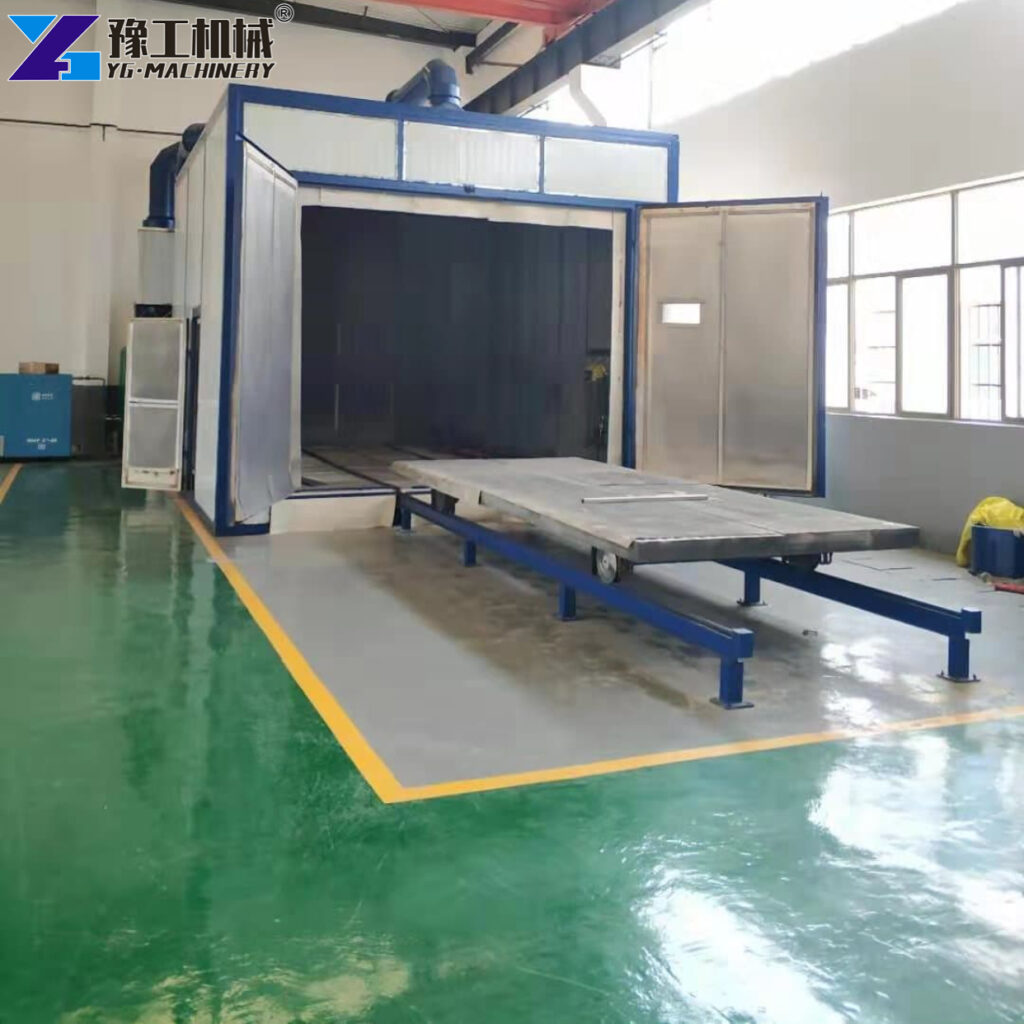
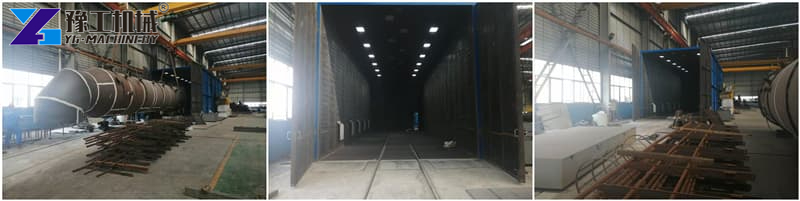
The booth dimensions of 8 meters long, 6 meters wide, and 5 meters high provide ample space for the customer’s 5-meter workpieces. The two blasting guns allow two operators to work simultaneously, cutting processing time in half.
The customer noted several specific advantages of the YG industrial sand blasting room.
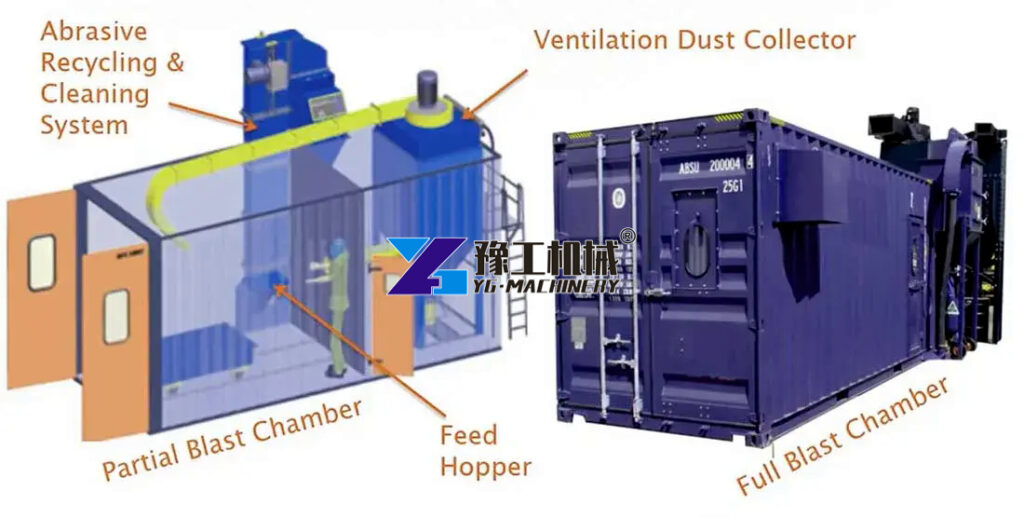
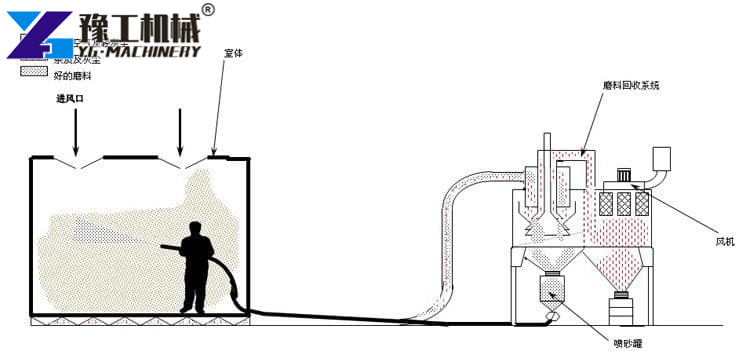
- First, the booth includes a complete dust collection system with cartridge filters. The system captures 99.9% of airborne dust. The filtered air returns to the workshop, keeping the work environment clean.
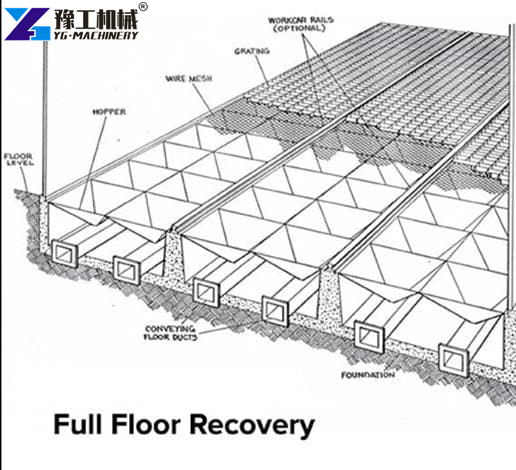
- Second, the booth includes an abrasive recovery system. Used abrasive falls through the floor grating into a hopper. A screw conveyor moves the abrasive to an elevator. The elevator lifts the abrasive to a separator. The separator removes dust and fines. Clean abrasive returns to the pressure pot for reuse. This system reduces abrasive consumption by 80%.
- Third, the booth includes explosion-proof lighting. The high-intensity LED lights provide bright, shadow-free illumination inside the booth. Workers can see the surface clearly and achieve consistent results.
- Fourth, the booth includes a pressure vessel system with remote controls. The operator can adjust blasting pressure from a control panel outside the booth. The system maintains consistent pressure throughout the blasting cycle.
- Fifth, the booth includes a ventilation system that creates negative pressure inside the booth. This prevents dust from escaping when workers open the door to load or unload workpieces.
The customer placed the order for one 8000×6000×5000mm sandblasting booth as a replacement for their open-area setup.
Implementation Process for Large Sandblasting Booth: Delivery and Setup
Step 1: Factory Production and Testing
YG Machinery completed the shot blasting room within 30 working days. During installation, the assembly team strictly followed YG’s quality checklist at every stage. They conducted comprehensive testing of the dust collection system to ensure stable airflow, verified the abrasive recovery system for smooth material circulation, checked the lighting system for sufficient brightness, and performed pressure tests on the vessel to confirm there were no leaks.
The system passed all tests. YG sent the customer a video of the booth operating in the factory. The customer approved the shipment.
Step 2: Shipping to Thailand
The system traveled from YG’s factory to the port by truck. The sea freight took 14 days to reach Laem Chabang Port in Thailand. Customs clearance took 4 days. YG provided all necessary documents: commercial invoice, packing list, bill of lading, and certificate of origin.
The customer’s freight forwarder handled the customs process. The system cleared customs without issues. Two flatbed trucks carried the system components from Laem Chabang to the customer’s facility. The total shipping time from factory to site was 28 days.
Step 3: On-Site Installation
YG Machinery dispatched two service technicians to Thailand, who arrived at the customer’s facility two days ahead of the system delivery. Upon arrival, they carefully inspected the installation site, assessed floor flatness and load-bearing capacity, and verified the electrical supply and compressed air connections to ensure full readiness for installation and commissioning.
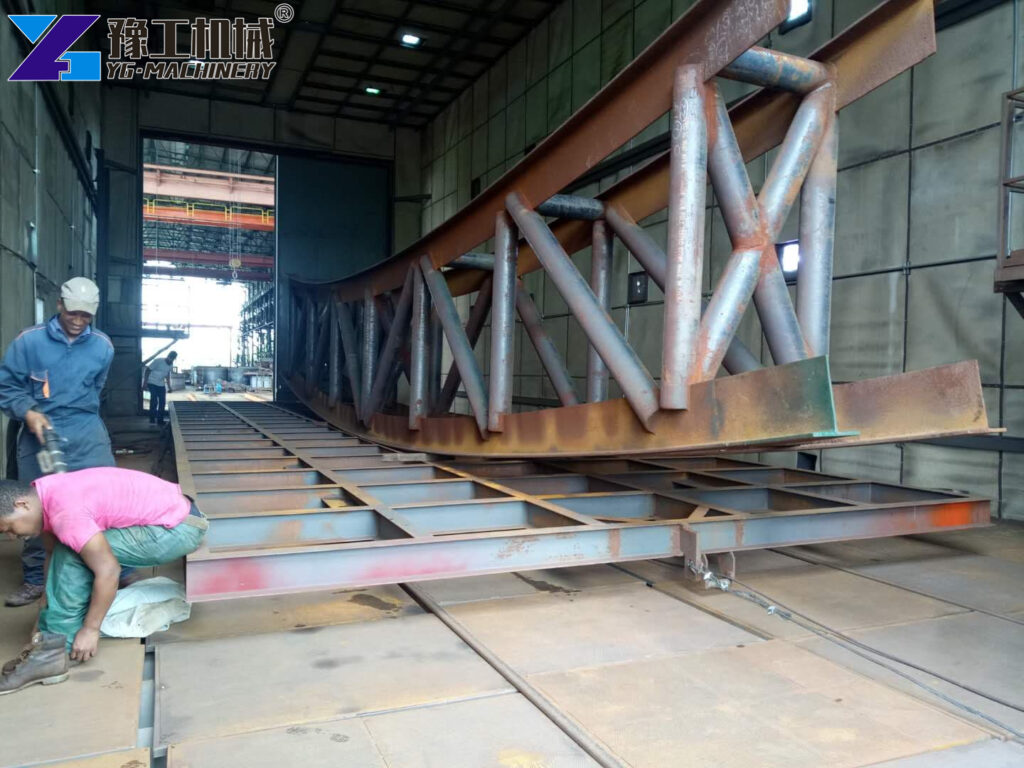
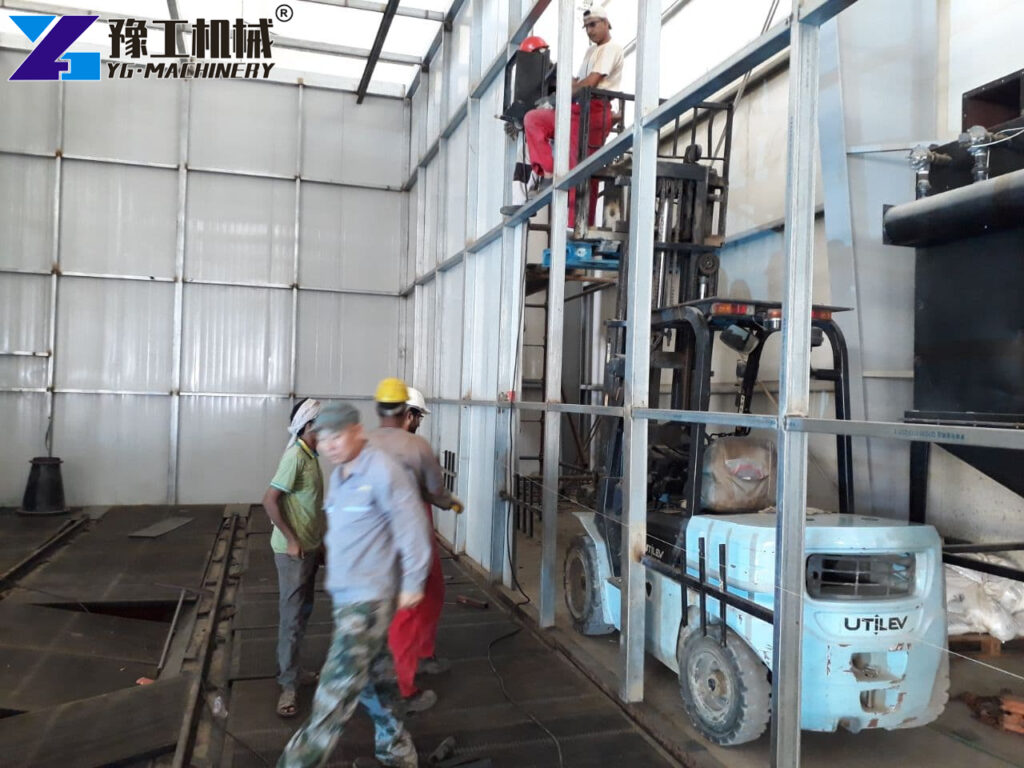
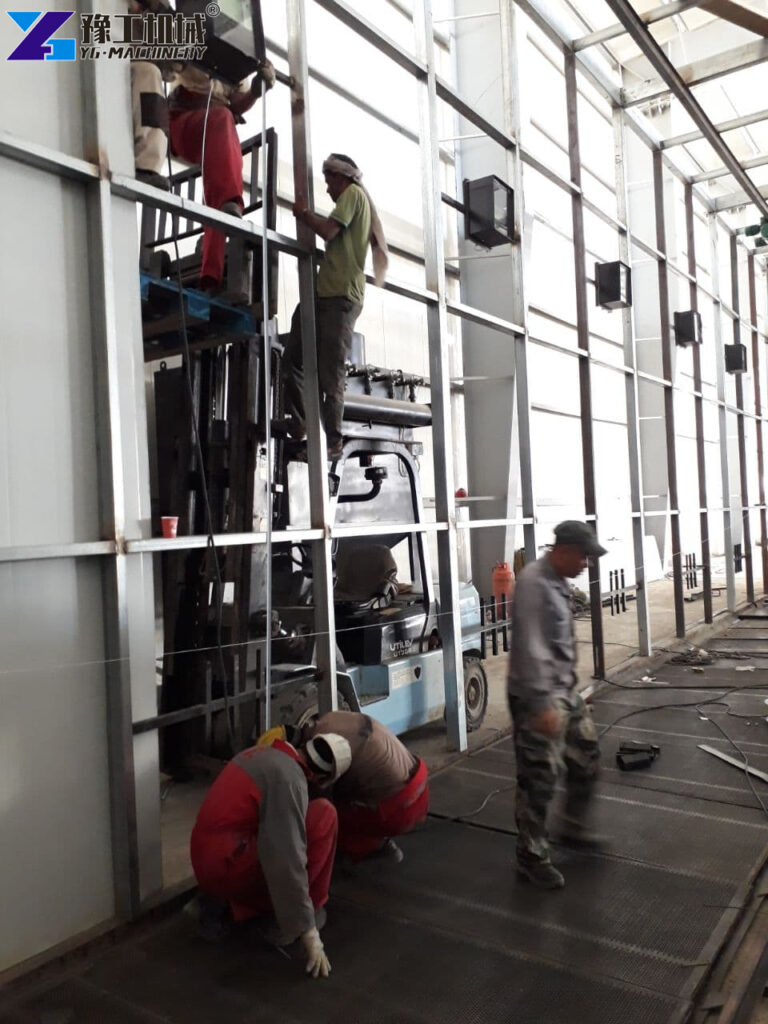
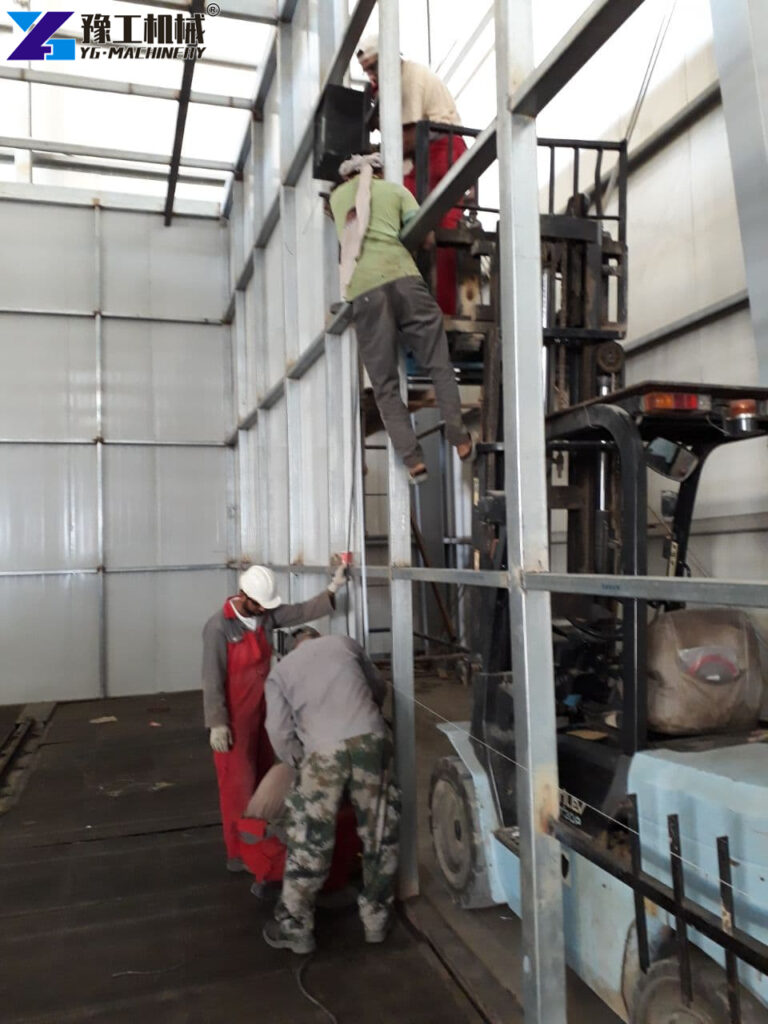
The system components were delivered on flatbed trucks and carefully unloaded using a forklift and crane. The YG technicians worked closely with the customer’s team to assemble the booth panels in sequence, followed by installation of the floor grating. They then completed the setup of the dust collection system and abrasive recovery system, and finished by installing the lighting and control systems to ensure full operational readiness.
The installation took five days. The technicians ran a series of tests. The system operated correctly on the first attempt.
Step 4: Operator Training
The YG technicians trained four of the customer’s operators. The training covered:
- Daily startup and shutdown procedures
- Control panel operation
- Blasting pressure adjustment
- Abrasive loading and unloading
- Dust collection system maintenance
- Abrasive recovery system operation
- Safety procedures
- Troubleshooting common issues
Each operator practiced blasting test workpieces for two hours. They learned to achieve consistent results. They learned to maintain the system.
The technicians stayed for five days. They answered questions and watched the team operate the system. They left a training manual and a spare parts list.
Challenges During Implementation of a Large Sandblasting Booth
The customer faced three challenges during the first month of operation.
Challenge 1: Compressed air supply. The existing compressor did not provide sufficient airflow for two blasting guns simultaneously. The customer installed a larger compressor with a 10m³/min capacity. The problem was resolved.
Challenge 2: Workpiece handling. The customer’s existing hoists could not lift the larger workpieces into the booth. The customer purchased a new overhead crane with a 5-ton capacity. The problem was resolved.
Challenge 3: Operator adaptation. The operators were used to the open-area blasting method. They initially struggled to adjust to the booth’s enclosed environment. The YG technicians provided additional coaching. After one week, the operators adapted fully.
Measurable Improvements: Final Results from Your Shot Blasting Room
The customer tracked performance for 60 days after receiving the sandblasting booth. Here are the results.
Processing Time Reduction: 67% Faster
The open-area method took 3-4 hours per chassis. The industrial sandblasting room takes 1-1.5 hours per chassis. Two operators working simultaneously achieve the same result in one-third the time.
Abrasive Consumption Reduction: 80% Lower
The open system consumed 2 tons of abrasive per month. The shot blasting room with a recovery system consumes 0.4 tons per month. The savings amount to $960 per month.
Rework Rate Reduction: 95% Lower
The open system produced 8% rework due to inconsistent quality. The sandblasting booth produces less than 1% rework. The consistent surface profile ensures excellent paint adhesion.
Production Output Increase: 150% Higher
The company previously prepared 8-10 chassis per week. They now prepare 22-25 chassis per week. The production line no longer waits for surface preparation.
Worker Health Improvement
The company has received zero health complaints from blasting operators since the installation. The dust collection system keeps the booth air clean. Worker turnover in the blasting department has stopped entirely.
Find the Right Model for Your Project
What Customers Say: Direct Feedback on the Sand Blasting Booth for Sale
The production manager shared his experience after two months of using the
sandblasting booth.
“I should have bought this industrial sandblasting room years ago. The processing time reduction alone justifies the investment. The booth produces consistent results on every part. The dust collection works perfectly. My workers no longer complain about respiratory issues. The abrasive recovery system saves us money every month. I plan to order a second booth for our other facility.”
The lead operator added his comments.
“The YG shot blasting room changed my job completely. I no longer wear a heavy suit and breathe dust. The controls are simple. The lighting is bright. I can see exactly what I am doing. The two guns make the work faster. I enjoy coming to work now.”
Contact YG Machinery today for your large sandblasting booth needs. Tell us your workpiece dimensions and production targets. We will recommend the right model and send you a full price, including shipping to your port. Every system comes with a 12-month warranty and lifetime technical support.
Click the contact button now to request a quote. Ask for our free production calculator to estimate your potential time and cost savings.