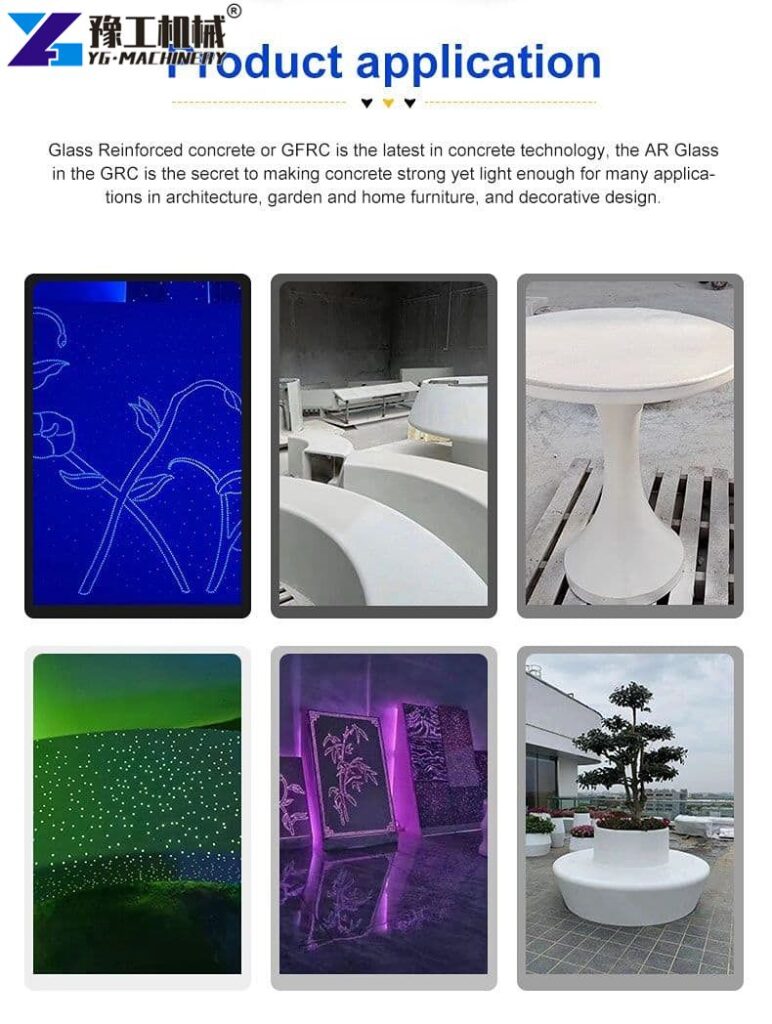
GRC Production Equipment transforms raw cement mortar and alkali-resistant (AR) glass fibers into high-strength, lightweight architectural panels. These advanced components directly replace heavy traditional precast concrete.
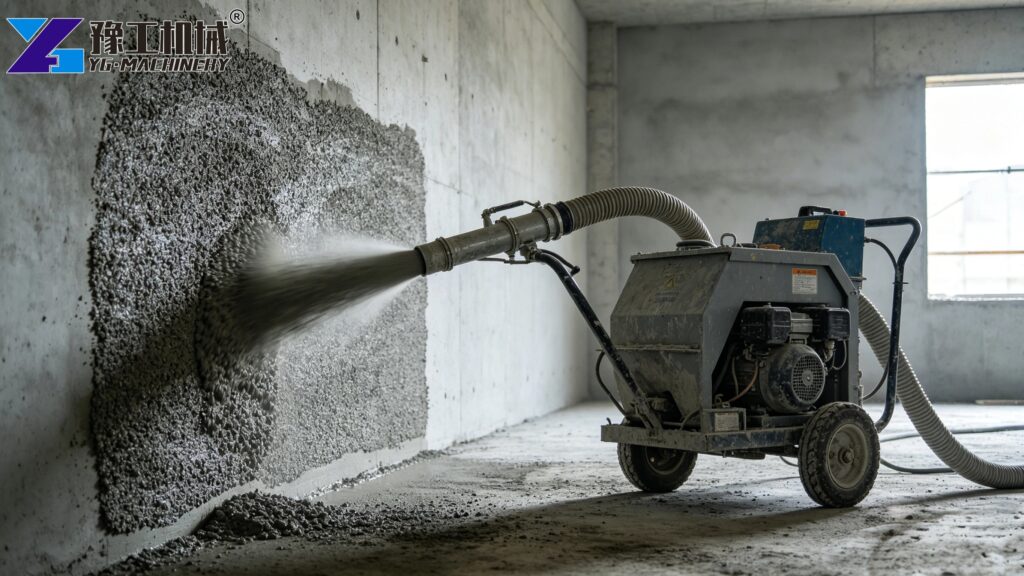
The system features a dual-head coaxial spray gun, a progressive cavity pump, and a high-shear mortar mixer. During operation, it continuously cuts AR glass roving into 15–25 mm fibers while projecting a uniform cement slurry onto complex molds.
Modern prefabricated projects demand ultra-thin cladding, intricate Roman columns, and decorative cornices. Standard casting techniques cannot produce these efficiently. Automated spraying technology forces glass fibers into a multi-directional matrix within wet mortar, creating thin-wall components (10–15 mm thick) that achieve compressive strengths matching C30–C50 concrete standards.
Equipped with stepless speed regulation, pneumatic controls, and wear-resistant rotors, these mobile units enable manufacturing crews to spray up to 400 square meters per hour. As a result, industrial operations can drastically reduce overall labor costs.

Start Your Project with the Right Equipment
Why Is Automated GRC Production Equipment Essential for Modern Architectural Facades?
Automated GRC Production Equipment is essential for modern architectural facades because it combines alkali-resistant glass fibers and cement slurry at the spray nozzle, creating thin, lightweight panels that deliver superior flexural strength without heavy structural dead weight. Traditional concrete cladding weighs up to 80% more, requiring massive crane capacity, expensive steel support frames, and heavy foundational footings. Spraying glass fiber reinforced concrete directly onto flexible molds solves these logistical challenges permanently.
- Lightweight Thin-Wall Design: Produces durable exterior cladding panels only 10 mm to 15 mm thick, reducing dead load on high-rise building frames.
- Complex Geometric Freedom: Sprays smoothly into intricate curved molds, decorative window surrounds, cornices, and detailed architectural relief elements.
- Superior Tensile and Flexural Strength: Multi-directional AR glass fiber distribution prevents micro-cracking and dramatically improves impact resistance.
- Corrosion and Weather Resistance: Non-metallic glass fiber reinforcement will not rust, ensuring decades of exterior durability under extreme coastal or industrial exposure.
Eliminating heavy crane lifts and reducing structural steel requirements keeps commercial building projects running smoothly on budget. Production teams roll the compact sprayer directly to the mold line, filling complex panel molds within minutes.
What Technical Parameters Define a High-Output GRC Spray Machine for Sale?
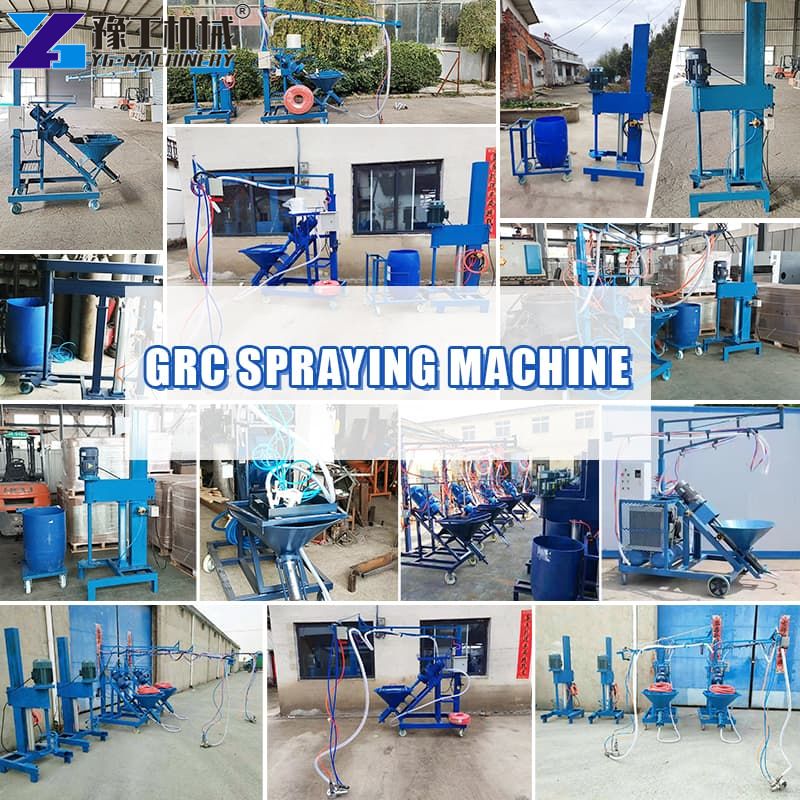
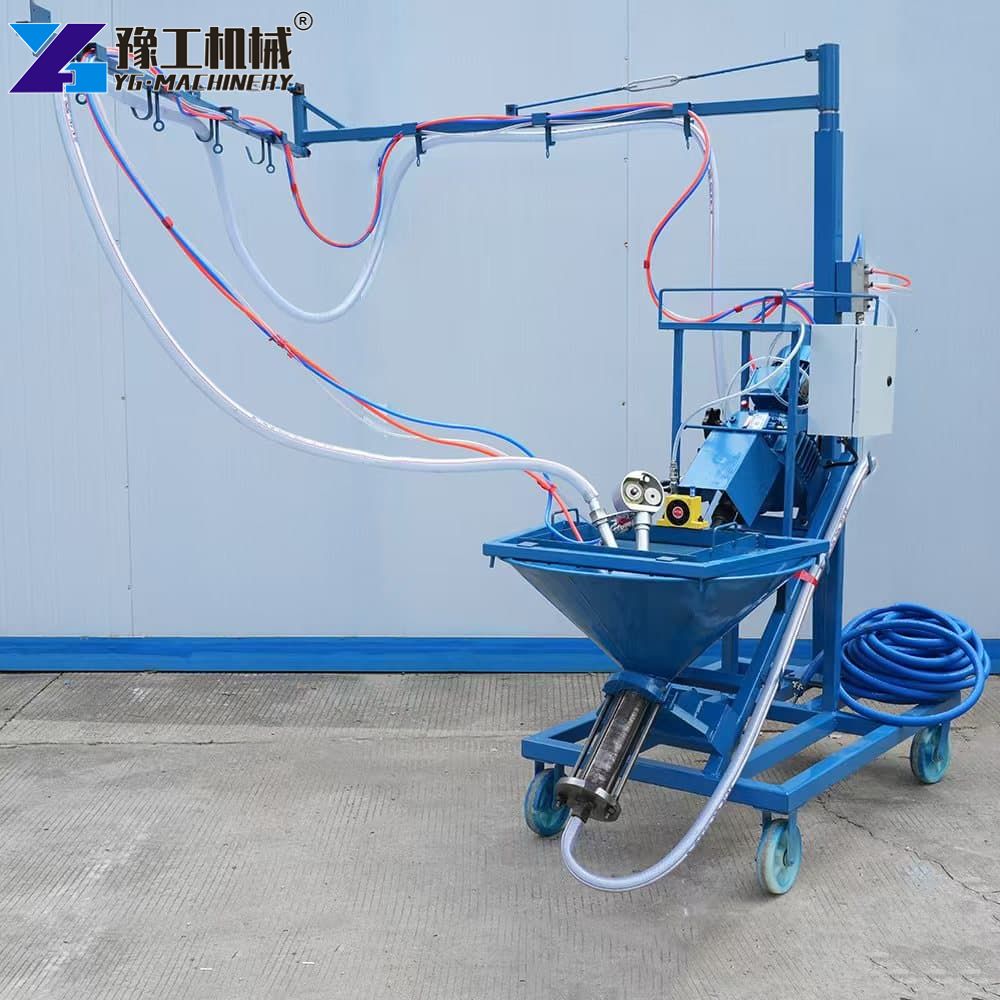
A high-output GRC spray machine for sale is defined by a delivery capacity of 300 to 1600 kg/h, production efficiency reaching 200 to 400 m²/h, and a 2.2-4.0 kW stepless speed regulation motor operating across a 4.5-meter workspace. Evaluating pump pressure stability, hopper volume, and motor speed controls ensures you invest in machinery that meets your daily output requirements without operational downtime.
| Parameter Category | Specification / Parameter Item | Factory Parameter Value |
| Product Name | Machinery Specification | Glass Fiber Reinforced Concrete (GRC) Spray Machine |
| Power System | Drive Motor Power | 2.2 – 4.0 kW Stepless Speed Motor |
| Voltage & Frequency | Power Supply Requirement | 380V / 50Hz (Customizable) |
| Speed Range | Rotating Speed Control | 20 – 200 r/min |
| Workspace Reach | Boom Arm Working Radius | 4.5 m |
| Delivery Capacity | Slurry Conveying Rate | 300 – 1600 kg/h |
| Production Efficiency | Surface Coverage Rate | 200 – 400 m²/h |
| Hopper Capacity | Sprayer Hopper Volume | 60 L |
| Sprayer Dimensions | Overall Unit Size (LWH) | 2000 * 1050 * 1600 mm |
| Mixer Dimensions | High-Shear Mixer (LWH) | 1550 * 1000 * 2100 mm |
| Machine Weight | Total Equipment Mass | 800 kg |
Compare Models and Get a Quote
When selecting a high-performance GRC spray machine, choosing an integrated setup with a matching high-shear mortar mixer guarantees a lump-free cement slurry. The progressive cavity pump utilizes a stainless steel rotor and durable stator to deliver pulsation-free slurry flow straight to the spray gun.
How Does an Automatic GRC Spray Machine Slash Production Overhead by 40%?
An automatic GRC spray machine slashes production overhead by 40% by eliminating manual hand-layup labor, reducing material waste through precise slurry atomization, and doubling daily square-footage output per shift. Manual slurry placement requires large teams to apply concrete paste and hand-cut fiber mats in tedious, time-consuming layers.
- Integrated Chopper Gun Assembly: Automatically feeds and chops AR glass roving into exact lengths (15–25 mm) right at the nozzle tip, ensuring uniform 3%–5% fiber ratios.
- Continuous Non-Pulsation Pumping: Progressive cavity pumps move dense cementitious mortar smoothly without surging, delivering consistent wall thickness.
- Reduced Material Rebound: Precision pneumatic pressure settings minimize overspray waste, keeping material consumption tightly controlled.
- Rapid Mold Demolding Cycles: Dense spray compaction reduces excess mix water, accelerating initial setting times and enabling faster mold turnover.
Deploying an automatic GRC spray machine streamlines factory workflows, enabling a small three-person operator crew to outperform manual production teams four times their size.
Why Partner with a Direct Glass Fiber Concrete Spraying Equipment Supplier?
Partnering directly with an experienced glass fiber concrete spraying equipment supplier secures factory-direct wholesale pricing, guarantees 100% component compatibility, and provides lifetime engineering technical support. Sourcing machinery from third-party distributors often results in delayed replacement parts, inflated markup costs, and poor technical guidance during machine setup.
At YG Machinery, we manufacture complete, fully integrated GRC production units engineered for demanding industrial environments. Working with a certified glass fiber concrete spraying equipment supplier provides key operational benefits:
- German Pneumatic Components: Integrates high-precision air regulators and valves to maintain stable spray pressure fluctuations below 0.1 MPa.
- High-Wear Resistant Rotor & Stator: Extends pump component service life beyond 8,000 operational hours under abrasive slurry conditions.
- Modular Disassembly Design: Reduces routine cleanup and stator maintenance time to just 30 minutes per shift.
- Custom Mix Design Support: Engineering guidance helps optimize your cement-to-sand ratio (1:1 to 1:1.5) and water-cement ratio (0.35–0.45) for maximum product density.
Direct factory partnerships give your manufacturing facility a decisive competitive edge, guaranteeing fast global shipping, immediate spare parts dispatch, and step-by-step operator training.
Boost Productivity—Get a Free Quote

Field Case Study: Luxury Hotel Facade Production Line
The Operational Challenge
A prefabricated building component manufacturer in Southeast Asia secured a contract to produce 12,000 square meters of intricate architectural facade panels and GRC columns for a luxury resort project. The project schedule allowed only 45 days for full panel fabrication. Manual hand-layup methods produced only 50 m² per day per shift, which threatened massive delay penalties under the construction contract.
The Equipment Solution
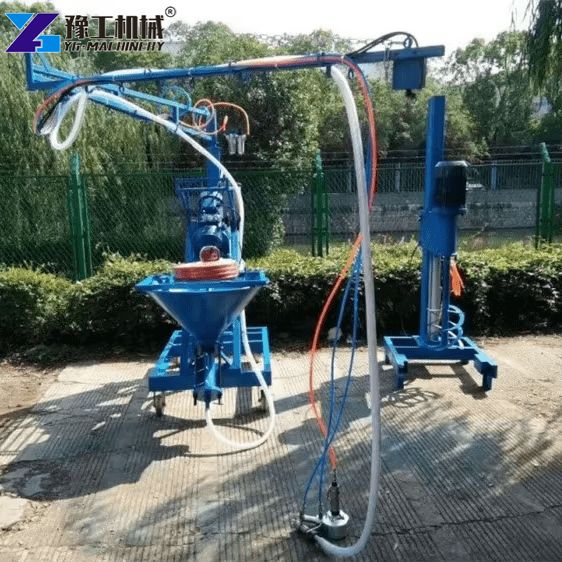
The manufacturer purchased a complete GRC production line from YG Machinery, incorporating a high-shear mortar mixer and a mobile GRC spray unit featuring step-less speed regulation (20–200 r/min) and a 4.5-meter workspace boom. The factory technicians adjusted the water-cement ratio to 0.38 and set the glass fiber content to 4% by weight.
Production Results and Return on Investment (ROI)
Upgrading to automated glass fiber spraying transformed plant efficiency instantly:
- Output Surge: Daily production jumped from 50 m² to over 320 m² per shift, completing the entire order 8 days ahead of schedule.
- Labor Savings: Replaced 14 manual layup workers with a streamlined 3-person spray team, cutting direct labor expenses by 68%.
- Zero Reject Rate: Precise fiber cutting and atomization achieved 99.4% product yield with zero surface micro-cracking upon curing.
- Capital Cost Payback: The manufacturer fully amortized the machinery investment cost within the first 18 days of production.
Request Your Direct Factory Price Quote Today
Ready to elevate your factory output and slash labor overhead with heavy-duty GRC Production Equipment? Do not let slow hand-layup methods, material waste, or unreliable third-party suppliers compromise your precast manufacturing margins any longer. YG Machinery offers factory-direct pricing, custom mix design consultations, full spare parts inventory, and rapid global shipping support.
Selecting the right equipment package follows a simple 3-step decision path:
- Define Your Output Target: Choose between standalone mobile sprayers or complete automated mixing and spraying production lines based on your daily square-meter goals.
- Select Power & Accessories: Specify your local voltage requirements (380V/50Hz standard or custom) and select optional auxiliary tools like hand compaction rollers or extra AR glass roving cutters.
- Receive Itemized Quotation: Our engineering sales team will review your project specifications and deliver a detailed price quote, technical drawings, and shipping timeline within 8 hours.
Contact our technical sales team today via email or online inquiry form to claim your direct factory price quote!
FAQs About GRC Spraying Machinery
A1: The optimal cement-to-sand ratio ranges from 1:1 to 1:1.5 by weight, combined with a low water-cement ratio of 0.35 to 0.45 for maximum structural density.
A2: AR (alkali-resistant) glass fiber content should be between 3% and 5% of the total mix weight to deliver optimal flexural and tensile strength.
A3: Flush the entire hopper, progressive cavity pump, and delivery hose thoroughly with clean water for 20 to 30 minutes immediately after every production shift.
A4: While one operator handles the coaxial spray gun, a standard production workflow operates best with two to three workers managing batch mixing, spraying, and hand-roller compaction.
A5: Step-less speed regulation (20–200 r/min) allows operators to fine-tune slurry delivery volume to match complex mold contours precisely, preventing surface runs and air pockets.