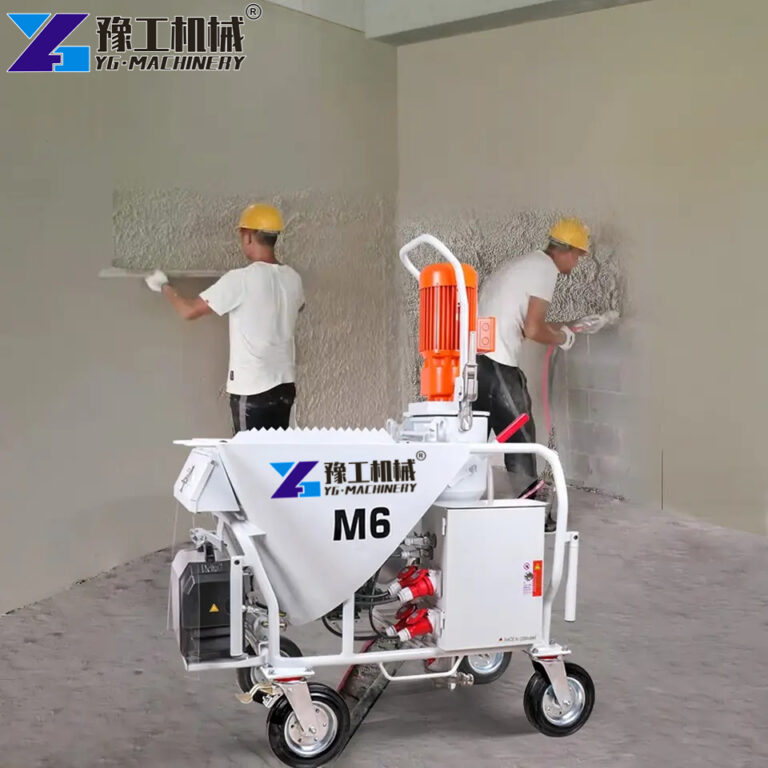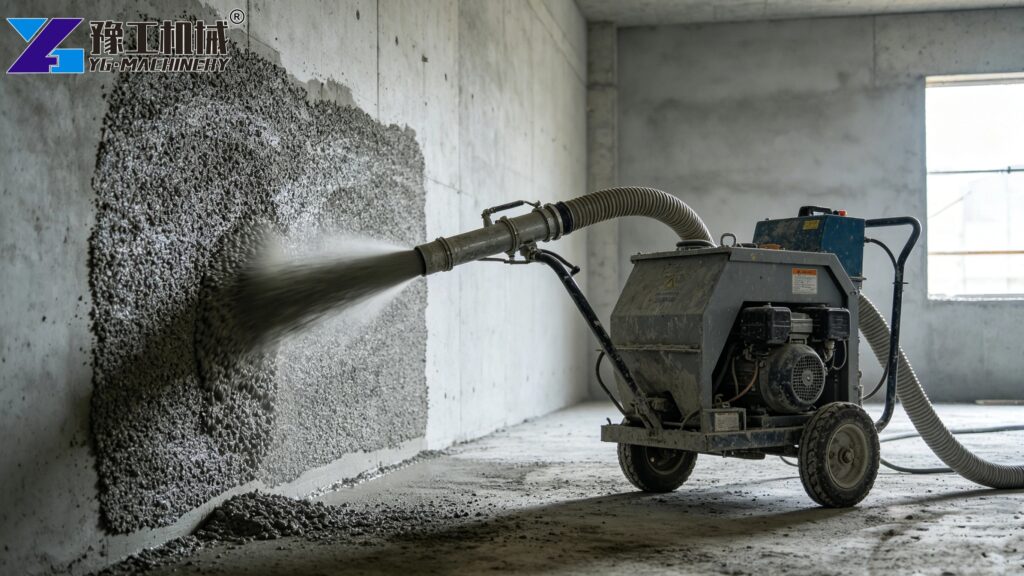
Labor shortages, rising construction costs, and increasing project deadlines have made traditional manual plastering less efficient than ever. An auto wall plastering machine helps contractors complete wall plastering faster while improving surface consistency and reducing labor requirements.
Designed for residential, commercial, and industrial construction projects, an automatic wall plastering machine applies cement mortar evenly to brick, concrete, and block walls with high precision. Compared with manual plastering, it delivers smoother finishes, minimizes material waste, and significantly increases daily productivity, making it an ideal solution for builders, contractors, and equipment rental companies.
At YG Machinery, we manufacture reliable wall plaster machines that combine stable performance, durable construction, and easy operation. Whether you’re working on apartments, hotels, office buildings, schools, or warehouses, our machines help improve construction efficiency while lowering overall project costs.
Explore our machine specifications, key features, application scenarios, pricing factors, and buying guide below to find the right model for your construction needs.
Start Your Project with the Right Equipment
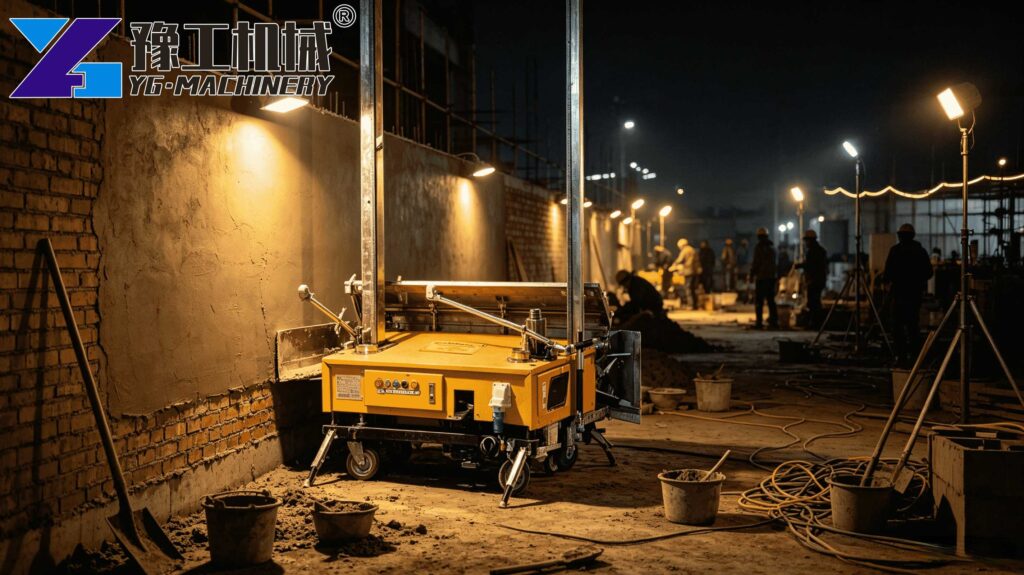
5 Structural Advantages of an Auto Wall Plastering Machine
- High Daily Rendering Output: Plasters up to 550 cubic meters per eight-hour shift to keep large construction projects ahead of schedule.
- Flexible Vertical Reach: Renders walls below 4 meters or 5 meters high in a single smooth vertical pass.
- Adjustable Mortar Thickness: Controls rendering depth precisely between 2 mm and 30 mm to satisfy varying architectural specifications.
- Dual Voltage Compatibility: Operates on standard 220V single-phase or 380V three-phase electrical connections effortlessly.
- Compact and Portable Frame: Weighs under 300 kg, allowing two workers to move and set up the unit in tight indoor rooms.
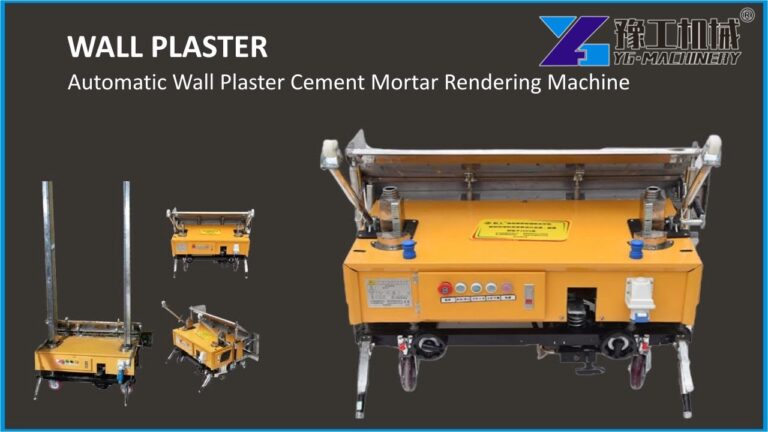
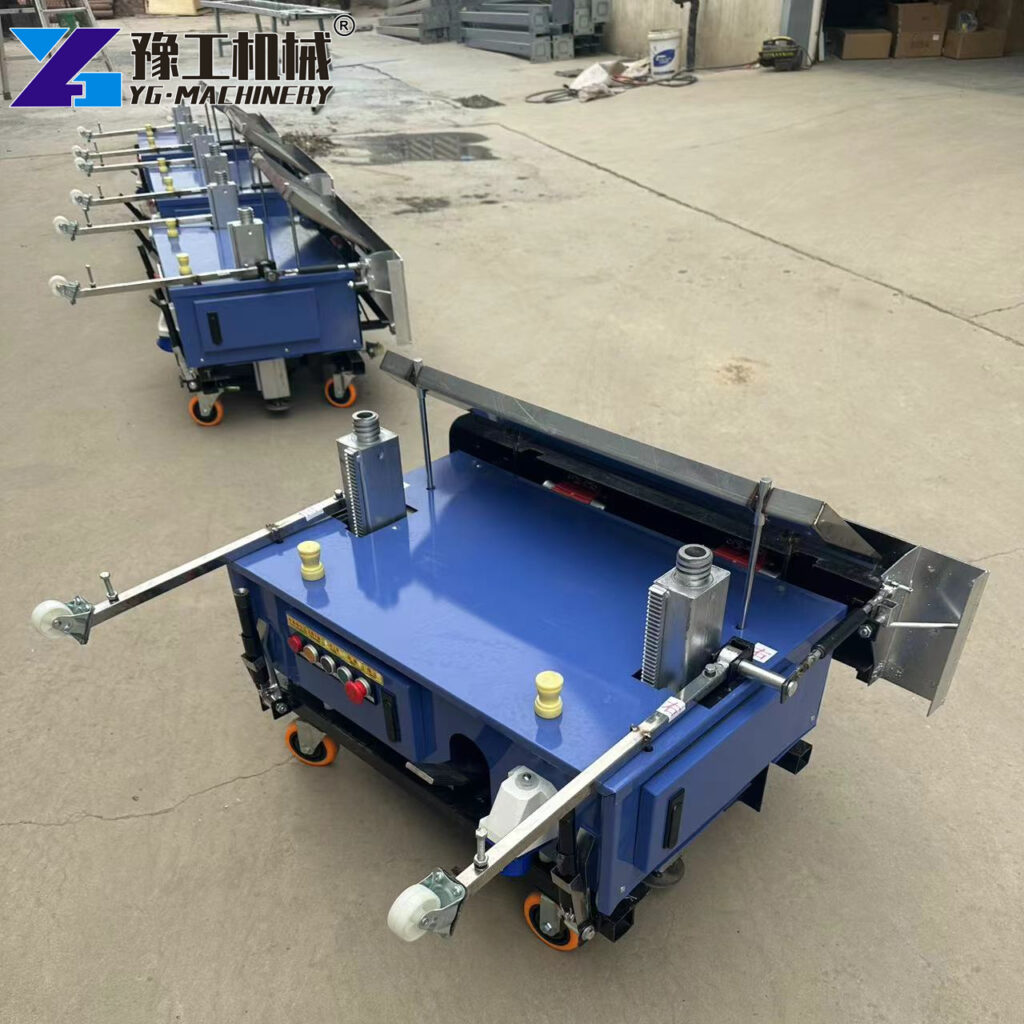
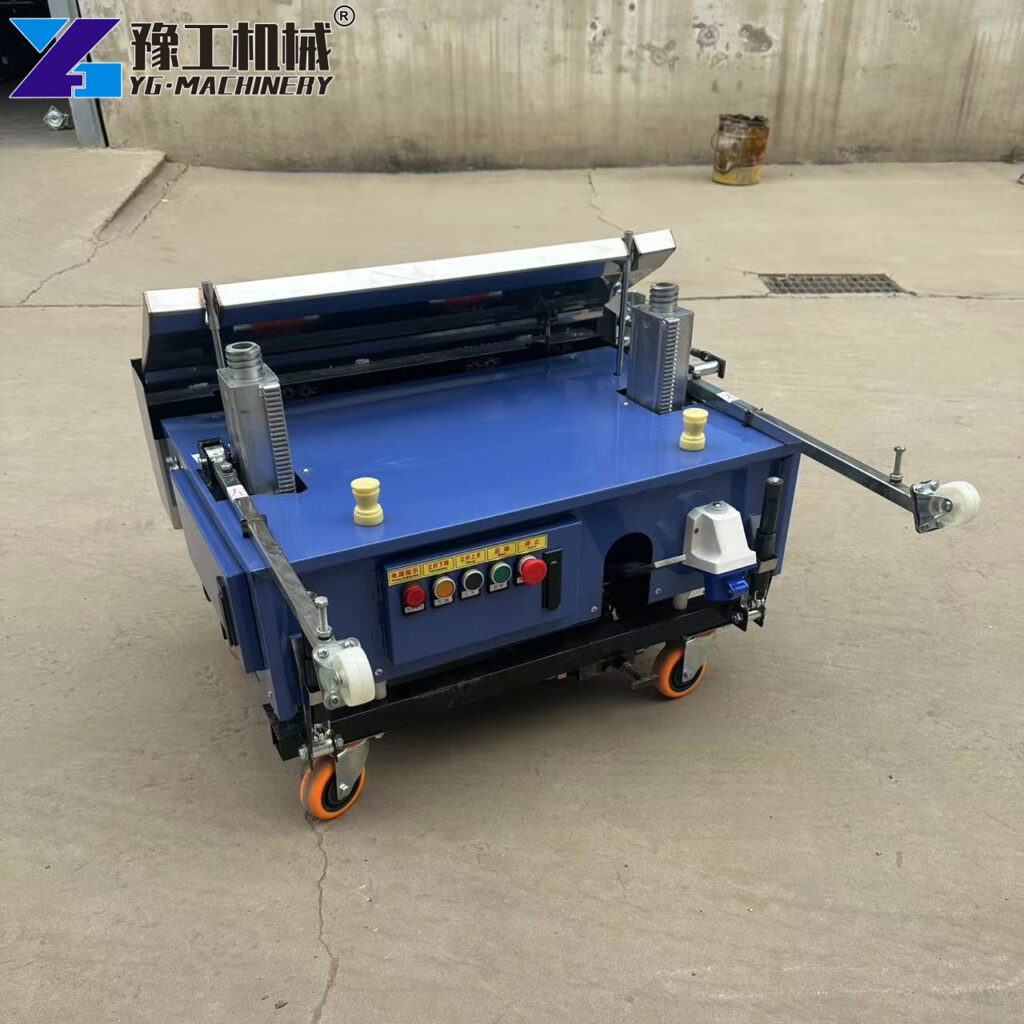
Selecting a wall rendering machine eliminates the quality variations typical of manual wall finishing. The hydraulic lifting posts lock firmly between the floor and ceiling, maintaining perfect plumb lines without wobbling during ascent. Operators adjust the troweling angle directly via intuitive controls, ensuring dense compaction and smooth surface finishes every time. This consistent application prevents air pockets and protects structural integrity across long continuous shifts.
Additionally, the lightweight steel chassis fits easily through standard interior doorway openings. Fast disassembly features allow site crews to move the equipment between room layouts without heavy-lifting cranes. Your workforce spends less time setting up and more time rendering finished walls efficiently.
Why Choose an Interior Wall Plastering Machine for Commercial Projects?
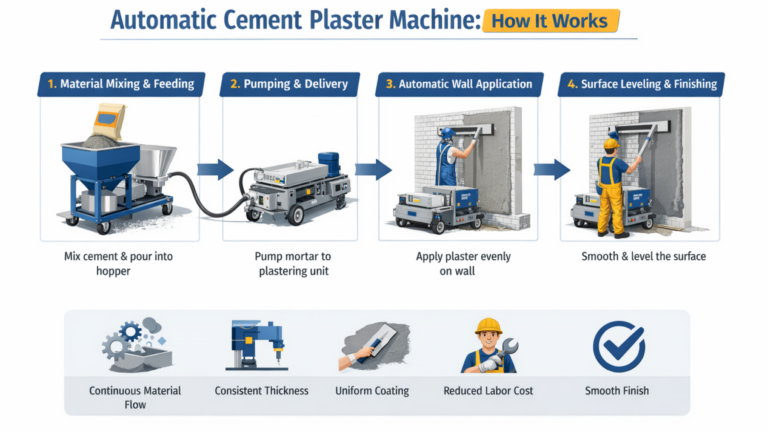
Using an automatic cement plastering machine reduces on-site labor requirements, cuts material waste to under one percent, and guarantees uniform wall flatness that exceeds strict architectural standards. Manual plastering often leads to uneven surface depths, slow output rates, and high material dropping losses on the floor. Automated vertical wipers press the mortar firmly against the masonry wall under consistent mechanical pressure, driving out trapped air and forming a strong bond.
- Lower Labor Cost per Square Meter: Replaces up to ten manual plasterers with a single two-person operator team.
- Zero Hollow Wall Defects: High-pressure mechanical smoothing forces mortar deep into brick joints to prevent future cracking.
- Cleaner Jobsite Operations: Collects excess mortar automatically during the upward stroke to eliminate messy floor drops.
- Simple Operator Learning Curve: Requires minimal technical training for site workers to achieve professional finishing results.
Equipping your crew with specialized vertical rendering equipment gives your company a competitive edge when bidding on high-rise residential or hotel projects. The predictable output rates allow project managers to coordinate subsequent painting and tiling trades without scheduling delays. Sourcing directly from an established machinery manufacturer ensures access to technical support and durable replacement parts whenever needed.
Boost Productivity—Get a Free Quote
How Does a Plastering Machine for Construction Drive Jobsite Efficiency?
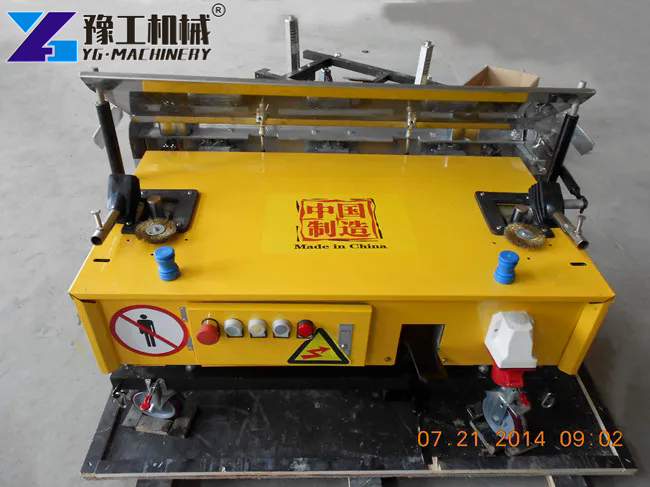
It replaces slow hand troweling by combining mortar feeding, vertical smoothing, and automatic leveling into a single continuous mechanical process that renders up to 550 cubic meters in an eight-hour shift.
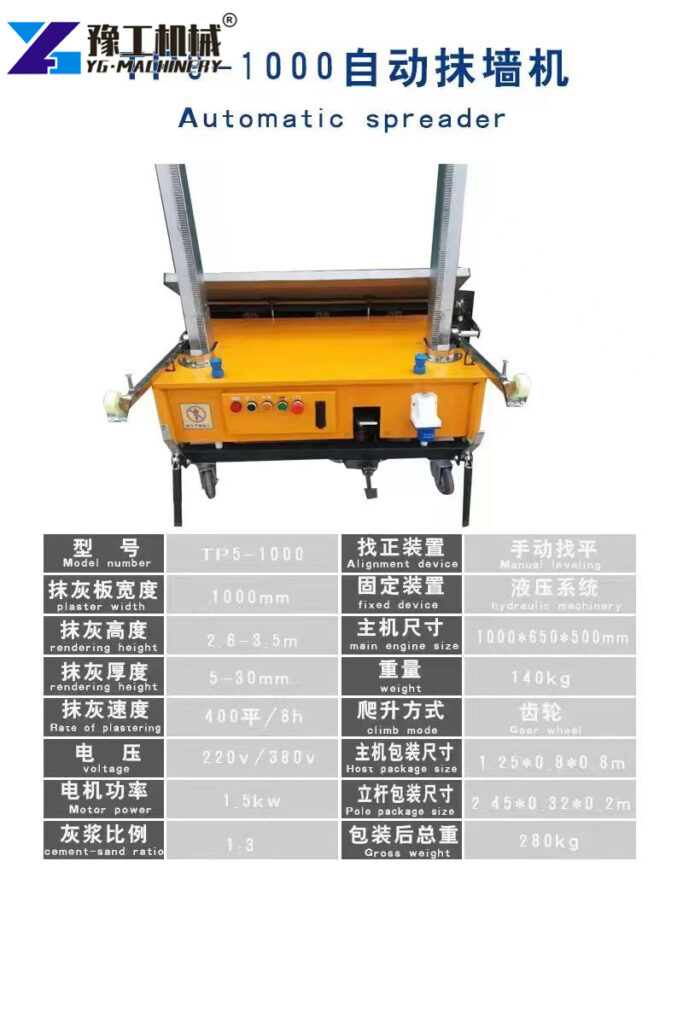
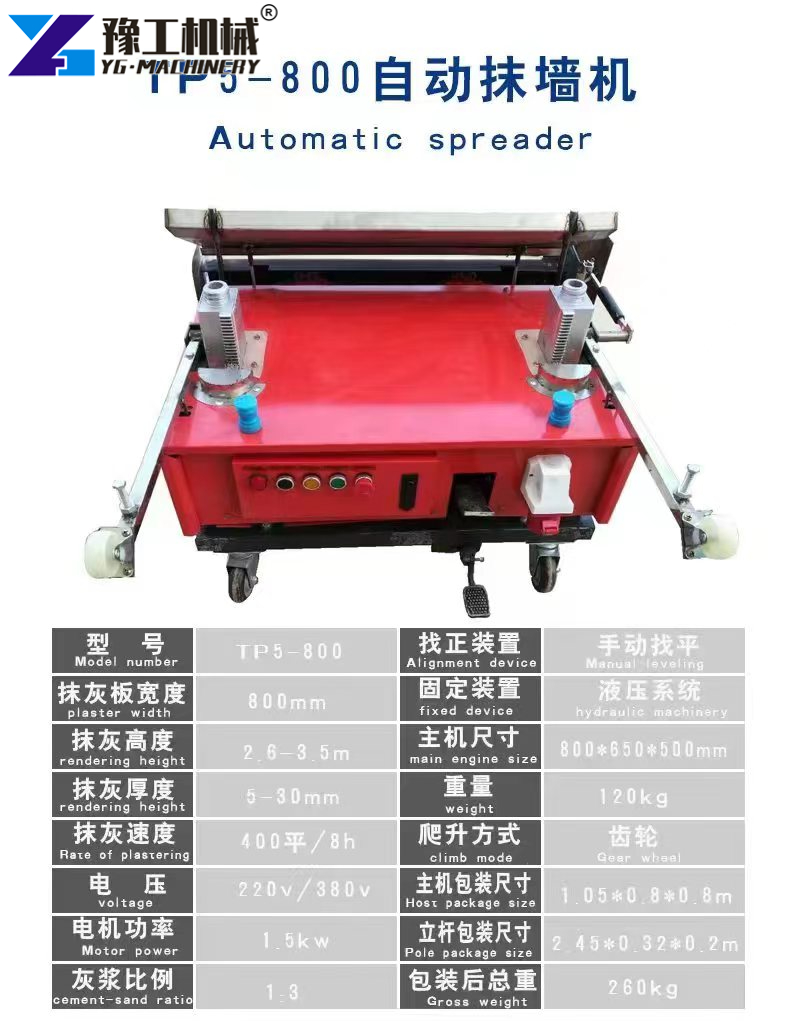
| Technical Parameter | Model YG-800 | Model YG-1000 |
| Max Plastering Height | Below 4 meters | Below 5 meters |
| Machine Weight | 270 kg | 290 kg |
| Plastering Thickness | 2 – 30 mm | 2 – 30 mm |
| Motor Drive Power | 1.5 KW | 1.5 KW |
| Plastering Efficiency | 500 CBM / 8 Hours | 550 CBM / 8 Hours |
| Voltage Options | 220V / 380V Optional | 220V / 380V Optional |
What Do These Specifications Mean?
When comparing different auto wall plastering machines, specifications tell you much more than the machine’s size or power. Each parameter affects construction efficiency, plastering quality, labor costs, and overall project performance. Understanding what these specifications mean will help you choose the right machine for your application instead of simply selecting the lowest-priced model.
Maximum Plastering Height
Why it matters: The plastering height determines how high the machine can work without being repositioned.
Buyer benefit: A machine with a suitable working height allows contractors to complete walls more efficiently, especially in apartments, villas, hotels, warehouses, and commercial buildings. Fewer adjustments during operation mean faster project completion and lower labor costs.
Adjustable Plastering Thickness
Why it matters: This specification indicates the thickness of mortar the machine can apply in a single pass.
Buyer benefit: Adjustable thickness allows one machine to handle different construction requirements, from thin finishing coats to thicker base layers. It also helps reduce material waste while ensuring a smooth and uniform wall surface.
Working Efficiency
Why it matters: Working efficiency is usually measured by the plastering area completed per hour or per day.
Buyer benefit: Higher productivity enables contractors to complete more projects with fewer workers. Compared with manual plastering, an automatic wall plastering machine delivers consistent plaster quality while significantly reducing labor costs and project timelines.
Motor Power
Why it matters: Motor power directly affects machine stability and continuous operating performance.
Buyer benefit: A high-quality motor provides smooth mortar delivery, reliable operation, and a longer service life. It also minimizes downtime caused by overheating, making the machine suitable for demanding construction environments.
Voltage
Why it matters: Different countries use different electrical standards.
Buyer benefit: Most wall plaster machines can be customized for 220V or 380V power supplies to match local requirements. Choosing the correct voltage allows the machine to be installed and operated immediately after delivery without additional modifications.
Machine Weight and Dimensions
Why it matters: The size and weight of the machine influence transportation, storage, and movement around the job site.
Buyer benefit: A compact and well-designed machine is easier to transport between floors or work areas while maintaining excellent operating stability. This is particularly valuable for contractors working on residential renovation projects or multiple construction sites.
Choosing the Right Specifications for Your Project
The best automatic wall plastering machine for sale is not necessarily the one with the highest specifications—it is the one that best matches your construction requirements. Before purchasing, consider your wall height, plaster material, daily workload, power supply, and project type. Selecting the right configuration will improve plastering quality, reduce operating costs, and maximize your return on investment.
At YG Machinery, our engineers can recommend the most suitable machine based on your specific project needs. Simply share your application details, and we will provide a customized solution together with a competitive factory quotation.
Compare Models and Get a Quote
Can an Automatic Cement Plastering Machine Handle Different Mortar Mixes?
Yes, the stainless steel wiper and hopper feed system processes standard Portland cement mortar, lime mortar, gypsum plaster, and pre-mixed dry mortar smoothly.
- Versatile Material Application: Works with various traditional and modern mortar formulations without clogging the feed mechanism.
- Uniform Compaction Force: Ensures dense, void-free adhesion across concrete blocks, red bricks, and expanded wall panels.
- Easy Hopper Washdown: Smooth internal surfaces allow rapid water cleaning at the end of each work shift.
- Precise Thickness Control: Maintains exact 2mm to 30mm depths regardless of the chosen mortar density.
This broad material compatibility gives contractors the flexibility to take on diverse commercial, residential, and industrial contracts without purchasing separate rendering units. The smooth mortar application creates a perfect base for paint or wallpaper, reducing the need for extensive secondary sanding.
USA Field Case Study: Finishing a 12-Story Commercial Tower in California
- The Challenge: A commercial building contractor in California, USA, faced severe labor shortages and tight completion deadlines on a 12-story interior wall project. Hand plastering was too slow, costing over $3,500 daily in manual labor and producing inconsistent surface flatness that failed client quality inspections.
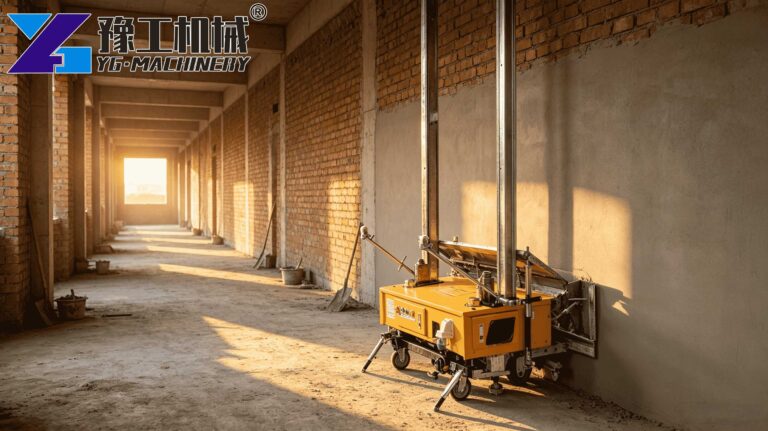
- The Solution: The site manager ordered two YG-1000 rendering units with 5-meter extension poles. The two-person site team set up the equipment directly inside the residential units to handle continuous vertical rendering passes.
- The Result: The California crew completed over 520 CBM of wall rendering per day, increasing overall speed by 400 percent compared to hand methods. Material dropping waste was reduced from 12 percent down to less than 1 percent. The contractor completed the interior wall phase three weeks ahead of schedule, saving $68,000 in labor costs and securing a full return on their machinery investment within two months.
Auto Wall Plastering Machine Price: What Determines the Cost?
One of the most common questions from contractors and distributors is, “How much does an auto wall plastering machine cost?” The answer depends on several factors. The auto wall plastering machine price is not fixed because every construction project has different requirements, and machine configurations can vary accordingly. Understanding what affects the price will help you compare quotations more effectively and choose a machine that offers the best long-term value rather than simply the lowest purchase price.
Machine Model and Performance
The first factor is the machine model and its working capacity. Larger models designed for commercial projects generally cost more than compact models for residential construction. Machines with higher plastering speed, greater daily output, and better leveling accuracy require stronger motors and more durable components, resulting in a higher price. However, these machines can significantly reduce labor costs and complete projects much faster, making them a worthwhile investment for contractors with a high workload.
Plastering Specifications
Wall height, plaster thickness, and the type of construction project also influence the final quotation. A machine designed for high-rise buildings or large commercial sites usually requires a more advanced lifting system and stronger structural support. In addition, compatibility with different plaster materials, such as cement mortar, gypsum plaster, or ready-mixed mortar, may require upgraded feeding and pumping systems. Choosing a machine that matches your application ensures better plaster quality while avoiding unnecessary investment in features you do not need.
Power Configuration and Optional Features
Electrical configuration is another important consideration. Most automatic wall plastering machines can be customized for different voltage standards, such as 220V or 380V, depending on your local power supply. Optional accessories can also affect the total price. Common upgrades include longer guide rails, additional mortar hoses, spare wear parts, and customized electrical components. While these options increase the initial investment, they often improve efficiency and reduce maintenance costs over time.
Shipping and Total Investment
For international buyers, the total investment includes more than the machine itself. Ocean freight, destination port charges, customs duties, and local transportation all contribute to the final landed cost. To receive an accurate quotation, it is helpful to provide your destination country, nearest seaport, preferred trade terms (FOB, CIF, or EXW), and the quantity you plan to purchase.
Why Choose YG Machinery as Your Auto Wall Plastering Machine Manufacturer?
Choosing a reliable auto wall plastering machine manufacturer is essential for ensuring machine quality, stable performance, and long-term support. At YG Machinery, we provide more than just construction equipment—we deliver practical solutions that help contractors improve efficiency, reduce labor costs, and complete projects with confidence.
Reliable Manufacturing and Quality
Our automatic wall plastering machines are built using durable materials and carefully selected components to ensure stable operation under demanding construction conditions. Every machine is tested before shipment to verify its performance, helping customers receive equipment that is ready for immediate use.
Customized Solutions
Different markets have different construction standards and power requirements. YG Machinery offers customized configurations to meet your project needs, including 220V or 380V voltage options, customized plugs, and optional accessories. Whether you are purchasing for a local construction company or expanding your equipment distribution business, we can recommend the right model for your application.
Professional Technical Support
Our experienced team supports customers throughout the purchasing process. From machine selection and operation guidance to troubleshooting and spare parts supply, we are committed to providing responsive after-sales service that helps reduce downtime and maintain productivity.
Serving Customers Worldwide
YG Machinery has supplied construction equipment to customers in more than 120 countries and regions. Our machines are widely used in residential, commercial, and infrastructure projects, giving us valuable experience in serving contractors, distributors, and equipment rental companies across different markets.
Partner with YG Machinery
When you choose YG Machinery, you gain a manufacturing partner focused on quality, reliability, and customer success. We work closely with every customer to recommend the most suitable wall plaster machine based on project requirements, ensuring you receive the best balance of performance, durability, and value.
Contact YG Machinery today to receive a customized solution, competitive factory pricing, and professional support for your next construction project.
Auto Wall Plastering Machine Video
FAQs About Commercial Rendering Equipment
The plaster spraying machine is a modern construction innovation that speeds up the process of applying plaster to walls, ensuring a smooth, even finish with minimal effort. This tool is ideal for large- scale projects, reducing manual labor and increasing efficiency
Cement Plastering
This plastering method provides strong and durable surfaces suitable for both internal and external walls. It is widely used because it offers good resistance to weather and moisture.
Traditional plaster walls are rarely used today because drywall is much faster, cheaper, and easier to install. While plaster creates a dense, durable, and fire-resistant surface, building with it requires skilled labor, extensive multi-coat application, and long drying times.
It increases rendering speed by up to 400 percent while ensuring uniform wall flatness and eliminating hollow spots.
Standard models cover heights up to 4 meters, while extended models handle vertical walls up to 5 meters high.
Key factors include maximum rendering height capacity, motor power options, efficiency ratings, and optional accessories.
The vertical hydraulic wiper applies continuous mechanical pressure during ascent, driving the mortar firmly into the wall matrix for superior adhesion.
No, two workers can master the setup, hydraulic leveling, and washdown procedures within two hours of hands-on operation.