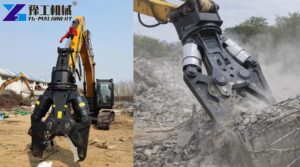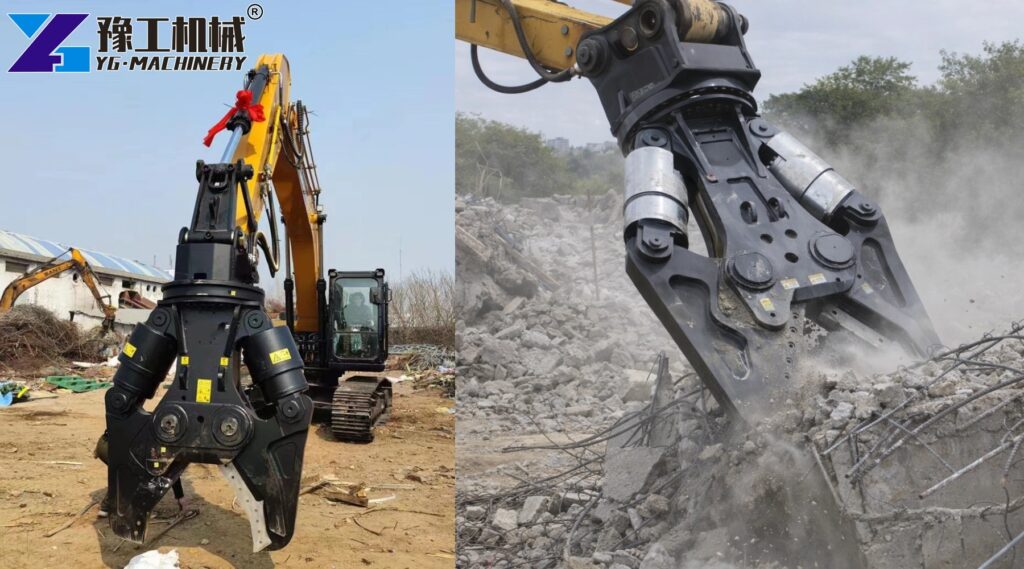
An excavator demolition shear mounts directly onto 5-ton to 50-ton carrier excavators, transforming standard machinery into high-powered metal processing, scrap recycling, and structural demolition tools. Built with high-strength alloy steel frames and indexable cutting blades, these hydraulic attachments crush rebar, slice through I-beams, and process scrap metal rapidly without thermal cutting torches or manual labor crews. Operators process scrap efficiently utilizing maximum jaw opening widths up to 801 mm and impressive tip cutting forces reaching 147.2 tons. YG Machinery manufactures these heavy-duty demolition shears to handle tough structural steel processing, bridge dismantling, and scrap yard processing while extending carrier machine versatility.
Integrated 360-degree rotation systems allow operators to position the jaw precisely at any angle, reducing unnecessary carrier maneuvering and cutting fuel consumption during complex structural teardowns. Dual-cylinder designs and heavy-duty guide blocks maintain blade alignment under extreme side loads, preventing jaw deflection and extending blade segment service life on demanding jobsites.

Start Your Project with the Right Equipment
5 Core Advantages of Modern Hydraulic Demolition Shears
- Massive Jaw Cutting Power: Delivers bottom jaw shear force up to 387.2 tons, allowing instant cutting of thick steel plates, rebar bundles, and structural beams.
- Full 360-Degree Positioning: Features advanced hydraulic rotation motors that allow seamless positioning during high-reach demolition or awkward scrap picking.
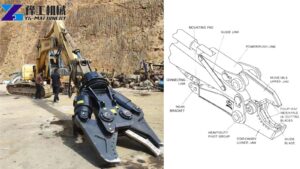
- Heavy-Duty Reversible Blades: Uses four-way indexable alloy steel blades that flip quickly to provide fresh cutting edges, minimizing machine downtime.
- Low Maintenance Cylinder Design: Encloses hydraulic cylinders inside high-tensile steel housings to protect piston rods against falling steel debris.
- Universal Carrier Compatibility: Mounts cleanly onto standard 5-ton to 50-ton excavator booms or stick positions via quick-hitch pins.
Using manual cutting torches or mechanical drop balls creates severe jobsite hazards, generates toxic fumes, and increases labor expenses. Equipping your fleet with automated hydraulic shears speeds up material sizing, keeps operators safely inside climate-controlled excavator cabs, and significantly increases daily scrap throughput.
Precision machining ensures minimal gap clearance between upper and lower cutting blades. This tight tolerance prevents thin sheet metals or tangled rebar from jamming inside the throat, allowing smooth continuous recycling work.
Comparing Standard Specifications Across Models
Selecting the right attachment configuration requires matching working pressure, jaw dimensions, cutting force ratings, and carrier weight parameters. Buying directly from an established equipment manufacturer ensures thorough quality inspection, factory warranty backing, and prompt spare blade shipments.
| Parameter Item | Model YG-620 | Model YG-1413 | Model YG-2200 | Model YG-2977 | Model YG-4052 |
| Applied Excavator Weight | 5 – 9 T | 10 – 19 T | 20 – 25 T | 28 – 35 T | 38 – 50 T |
| Operating Weight | 620 kg | 1413 kg | 2200 kg | 2977 kg | 4052 kg |
| Max Open Size | 334.4 mm | 540 mm | 500 mm | 660 mm | 801 mm |
| Overall Width | 864 mm | 1175 mm | 1370 mm | 1600 mm | 1700 mm |
| Overall Height | 1521 mm | 2050 mm | 2380 mm | 2600 mm | 2700 mm |
| Effective Shear Depth | 286 mm | 348 mm | 486 mm | 578 mm | 736 mm |
| Rotating Method | 360 Collision | 360 Hydraulic | 360 Hydraulic | 360 Hydraulic | 360 Hydraulic |
| Working Pressure | 235 Bar | 300 Bar | 320 Bar | 320 Bar | 320 Bar |
| Bottom Shear Force | 81.2 T | 138.2 T | 171.2 T | 330.2 T | 387.2 T |
| Medium Shear Force | 50.2 T | 80.2 T | 100.2 T | 189.2 T | 218.2 T |
| Tip Shear Force | 32.2 T | 53.2 T | 75.2 T | 127.2 T | 147.2 T |
Compare Models and Get a Quote
Every model manufactured by YG Machinery features high-pressure main hydraulic valves to prevent thermal fluid overheating. The standardized mounting pin design guarantees straightforward setup across popular carrier brands globally.


Why Is a Rotating Hydraulic Shear Essential for Complex Scrap Jobs?
Continuous 360-degree rotation allows operators to approach structural steel elements from any angle without repositioning the main excavator chassis continuously. This maneuverability speeds up dismantling cycles and reduces track assembly wear significantly.
- Precise Angle Adjustment: Hydraulic swivel motors turn the cutter head smoothly, letting operators nip horizontal beams, vertical columns, and angled trusses cleanly.
- Reduced Fuel Consumption: Eliminates constant carrier track movements, preserving diesel fuel and reducing total operating expenses per processed ton.
- Enhanced Operator Visibility: Enables clear sightlines into tight structure frames, minimizing accidental contact with surrounding concrete walls or utility lines.
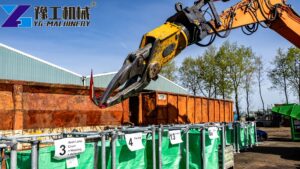
- Efficient Scrap Sorting: Rotates easily to grab, orient, and stack cut steel sections directly into waiting transport trailers or recycling hoppers.
Equipping your crew with continuous rotating attachments improves site safety while cutting project completion timelines dramatically. The robust slewing ring mechanism absorbs heavy rotational shocks during tough structural twisting maneuvers.
How Does a Steel Demolition Hydraulic Shear Process Tough Rebar?
Processing reinforced concrete structures yields high volumes of tangled rebar, steel mesh, and structural support angles. High-capacity steel shears slice through dense metal matrices without clogging or dulling blade edges prematurely.
- Specialized Piercing Tip Design: Upper jaw tips feature aggressive piercing teeth that puncture heavy steel plates and start clean shear lines immediately.
- Integrated Guide Blade System: Keeps main cutting blades aligned under severe lateral pressure, preventing material jamming between shear jaws.
- Deep Throat Cutting Zone: Deep throat depths up to 736 mm maximize cutting leverage, allowing operators to process thick structural steel pipes easily.
- Clean Shearing Action: Slices clean ends across rebar bundles, creating compact scrap metal that commands higher prices from steel mills.
Upgrading to specialized scrap shears transforms tedious concrete recycling contracts into profitable metal recovery operations. Heavy alloy housings resist abrasive concrete dust wear during continuous processing shifts.
Find the Right Model for Your Project
What Factors Influence Real-World Hydraulic Shear Cutting Force?
Understanding jaw force distribution across the blade profile allows site managers to select the correct attachment model for their target metal thicknesses. Cutting force varies significantly depending on where the material contacts the jaw blade.
- Bottom Throat Force Peak: Maximum power occurs at the bottom throat, reaching up to 387.2 tons on model YG-4052 to slice heavy structural beams.
- Mid-Blade Force Reserve: Medium shear forces ranging from 50.2 to 218.2 tons easily cut standard steel plates, pipes, and hollow structural sections.
- Tip Force Penetration: Tip force reaching up to 147.2 tons punctures flat plates and grips slippery pipe surfaces before full shearing action begins.
- Hydraulic Pressure Input: Operating pressures up to 320 Bar ensure maximum power transmission from the carrier’s primary pump system.
Matching target metal dimensions against appropriate force zones prevents blade overloading and ensures consistent daily processing speed across all scrap categories.


Top 5 Operational Applications for Excavator Demolition Shears
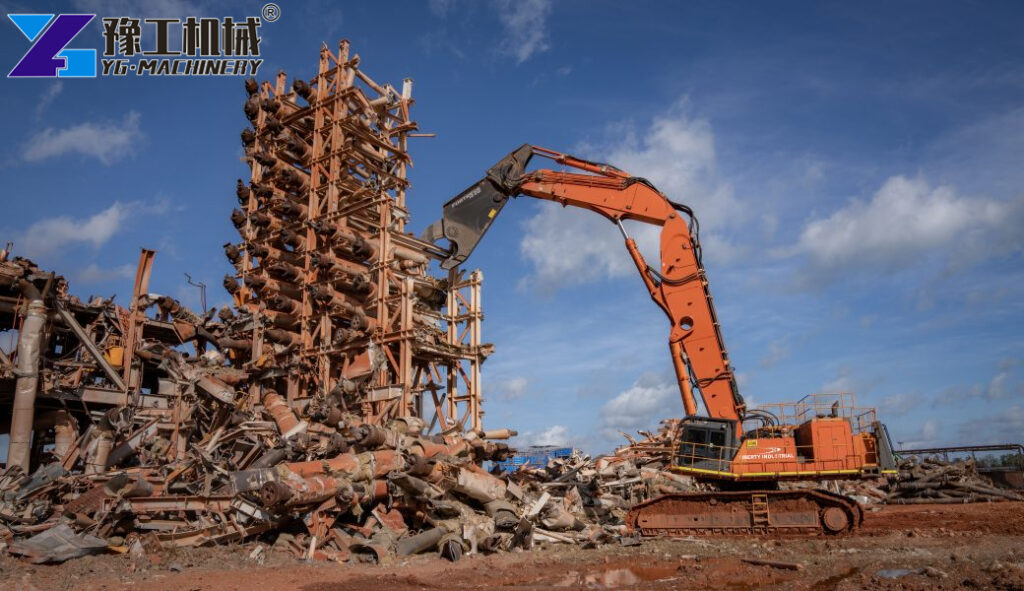
- Industrial Plant Demolition: Dismantles steel-framed factories, boiler rooms, oil storage tanks, and structural support towers efficiently.
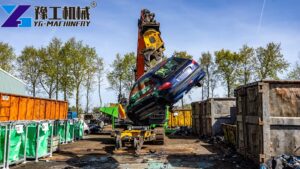
- Scrap Yard Metal Processing: Cuts bulk structural steel, obsolete machinery, heavy pipes, and automotive frames down to mill-ready sizes.
- Bridge and Highway Teardowns: Cuts steel girders, rebar matrices, and support pillars safely without using open-flame cutting torches.
- Shipbreaking and Rail Car Recycling: Slices thick hull plates, steel deck plates, and rail car frames into manageable transport pieces.
- Concrete Recycling Facility Operations: Extracts embedded rebar and steel mesh from crushed concrete structures quickly, leaving clean aggregate behind.
Deploying versatile metal shears across these industrial environments eliminates manual burning costs while increasing daily material handling throughput significantly.
Complete Your Fleet with Compatible Demolition Attachments
To maximize jobsite efficiency, professional demolition contractors often combine rotating steel shears with a complete lineup of hydraulic excavator attachments:
- Hydraulic Pulverizer / Crusher: Ideal for secondary concrete crushing and separating steel rebar before final metal shearing.
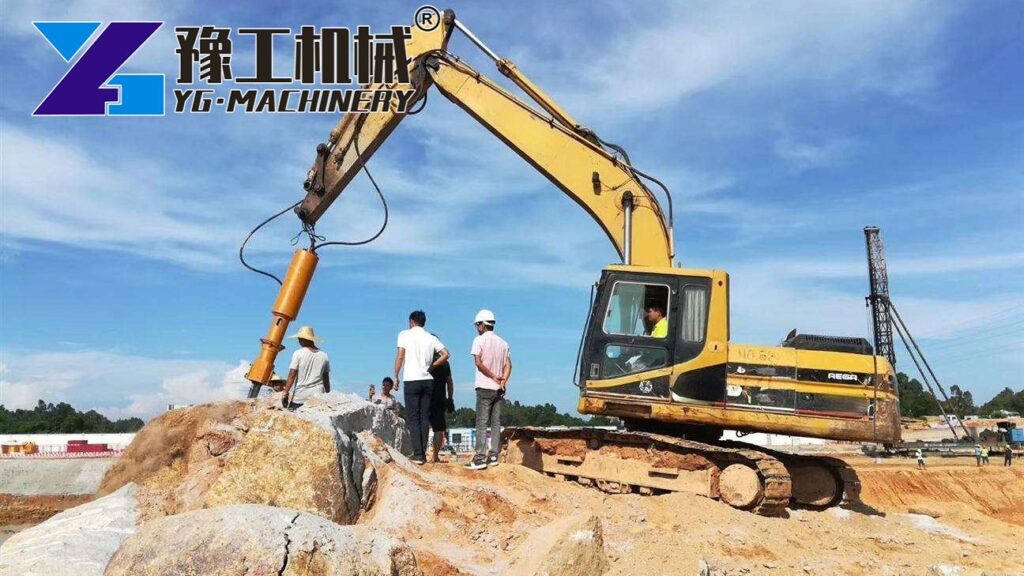
- Excavator Hydraulic Breaker: Essential for breaking down thick concrete foundations, reinforced walls, and heavy bridge piers.
- Demolition & Sorting Grapple: Perfect for clearing site debris, sorting mixed materials, and loading processed scrap into trucks.
- Excavator Quick Coupler: Allows operators to switch between the demolition shear and other attachments in minutes without leaving the cab.
Request Your Direct Factory Price Quote Today
Ready to boost your scrap processing speed and jobsite profitability with high-force hydraulic demolition shears? Do not let slow torch cutting or low-power attachments delay your demolition contracts any longer. YG Machinery offers direct factory pricing, custom pin-adapter hitches, and fast worldwide shipping support.
Getting a custom quote is simple—just send us your excavator model, target metal types, and destination port. Our technical team will deliver a comprehensive price quotation, equipment datasheets, and delivery timelines within 8 hours.
Contact our sales team today via email or inquiry form to claim your direct factory quote!


5 Essential FAQs About Excavator Demolition Shears
A1: Match your carrier machine weight (5T to 50T) and hydraulic pump flow/pressure capabilities against the attachment parameter table to ensure optimal performance.
A2: Full 360-degree hydraulic rotation allows operators to cut structural steel at any angle without repositioning the excavator chassis, saving time and fuel.
A3: Maximum thickness depends on model size and jaw position; top units like Model YG-4052 deliver 387.2 tons of throat shear force to cut heavy structural steel plates cleanly.
A4: Force is highest at the throat (bottom force), medium along the mid-blade section, and lowest at the tip, allowing operators to position heavy metal near the pivot pin for maximum leverage.
A5: Grease slewing ring bearings daily, inspect blade bolt tightness, check hydraulic hose connections for leaks, and rotate four-way indexable blades when wear appears.