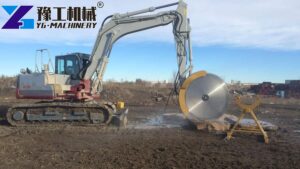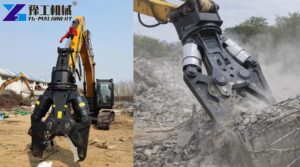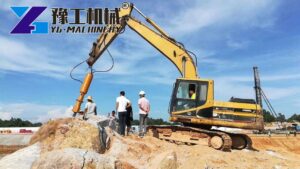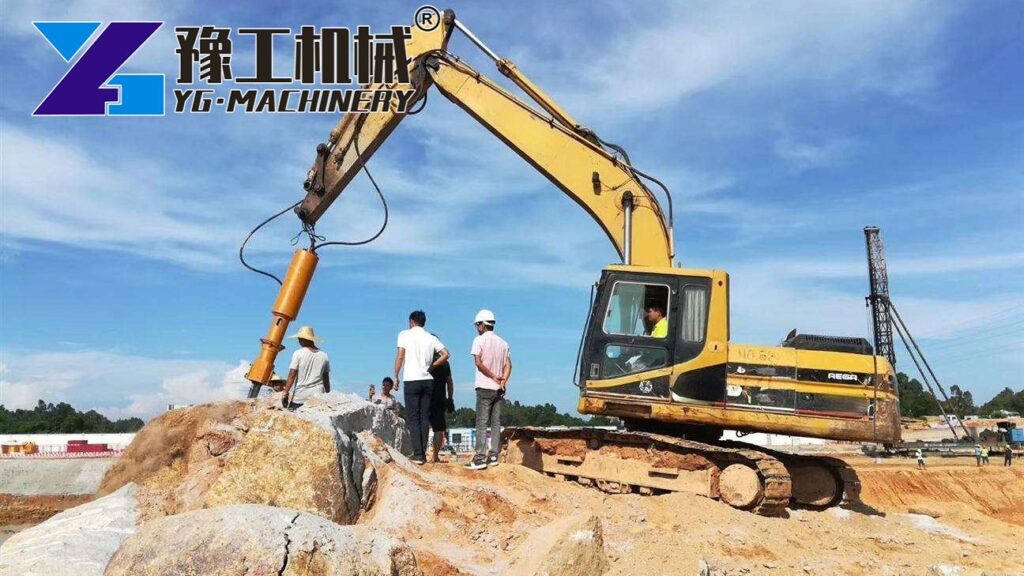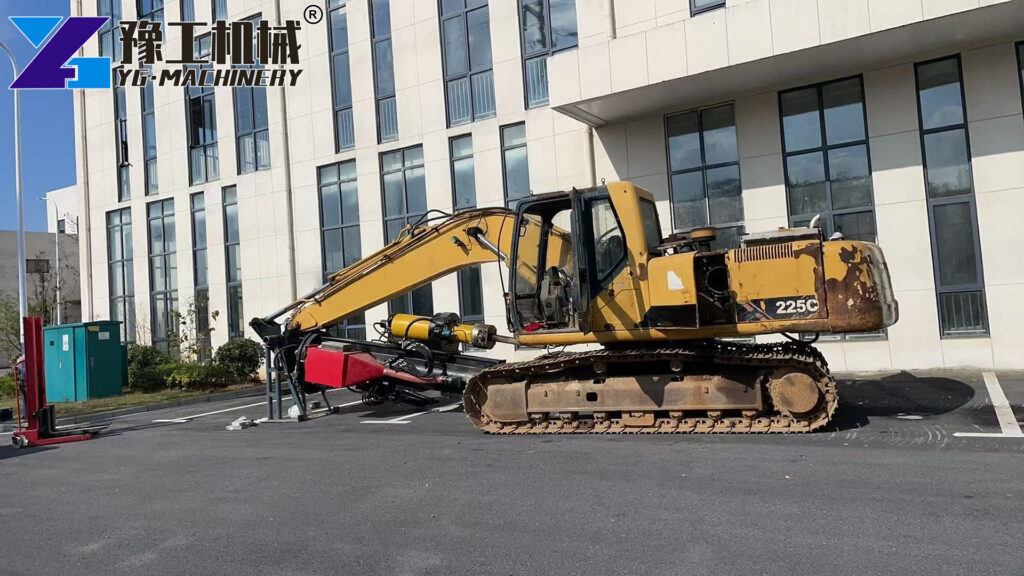
An industrial metal excavator saw attaches directly to 2-ton to 30-ton hydraulic excavators, converting standard diggers into powerful continuous rock, concrete, and metal cutting machines. Engineered with high-torque hydraulic motors and heavy-duty steel mounting brackets, these attachments slice through reinforced concrete, granite, basalt, and steel structures without high vibration or micro-fracturing surrounding ground. Operators control cutting depth up to 1400 mm using precise hydraulic pressure (30 MPa) and flow rates up to 190 L/min. YG Machinery manufactures these heavy-duty attachment units to streamline utility trenching, quarrying, road construction, and building demolition while protecting primary excavator booms from mechanical fatigue.
Equipped with synthetic diamond blade segments, these hydraulic saw attachments cut clean, straight trenches through mixed hard strata in a single continuous pass. Integrated water-cooling nozzles suppress airborne dust and prolong segment life, while reversible motor rotation frees jammed blades instantly without manual operator intervention.
Start Your Project with the Right Equipment

5 Engineering Features of Heavy Excavator Saw Attachments
- High-Torque Hydraulic Drive Systems: High-pressure hydraulic motors run efficiently at 30 MPa, delivering steady rotational torque through tough rock and steel rebar.
- Heavy-Duty Diamond Blade Segments: High-grade synthetic diamond segments provide long wear life when slicing through hard granite, reinforced concrete, and steel mesh.
- Precision Depth Control: Variable blade diameters from 0.4 m to 2.8 m allow operators to achieve exact trenching depths up to 1400 mm accurately.
- Bi-Directional Motor Rotation: Reverses blade direction instantly via cab controls to clear pinched blade segments or adjust cutting angles safely.
- Integrated Water Suppression System: Dual-line water jets cool the cutting disc continuously while capturing silica dust at the point of impact.
Standard hydraulic hammer attachments shatter stone unpredictably, leaving jagged trench walls that require manual cleanout. Utilizing an automated saw attachment leaves flat, vertical walls that reduce backfill volume and lower total restoration costs significantly.
Furthermore, low vibration levels protect surrounding underground pipes, electrical conduits, and adjacent building foundations from shockwave damage. Operators monitor hydraulic pressure directly from the excavator cab, matching feed speed to rock hardness effortlessly.
Boost Productivity—Get a Free Quote
Technical Comparison Specs for an Excavator Rock Saw for Sale
Matching attachment capacity to carrier weight, hydraulic flow, and required trench depth ensures optimal jobsite productivity and equipment longevity. Ordering directly from an established equipment manufacturer guarantees complete structural testing, custom mounting hitches, and direct access to replacement blade segments.
| Technical Parameter | Model YG-CF1 | Model YG-CF2 | Model YG-CF3 | Model YG-CF4 |
| Suitable Excavator Weight | 2 ~ 4 Ton | 6 ~ 9 Ton | 10 ~ 18 Ton | 20 ~ 30 Ton |
| Saw Disc Diameter | 0.4 ~ 0.8 M | 1.2 ~ 1.6 M | 1.8 ~ 2.2 M | 2.0 ~ 2.8 M |
| Cutting Width | 5 mm | 9 mm | 14 mm | 20 mm |
| Maximum Cutting Depth | ≤ 400 mm | ≤ 800 mm | ≤ 1100 mm | ≤ 1400 mm |
| Operating Hydraulic Pressure | 30 MPa | 30 MPa | 30 MPa | 30 MPa |
| Required Hydraulic Flow | 30 L/min | 80 L/min | 120 L/min | 190 L/min |
All models feature reinforced steel guard housings to contain flying debris during high-speed cutting. Standard quick-coupler mounting brackets fit major excavator brands seamlessly without structural modifications.
Find the Right Model for Your Project


Top 5 Application Scenarios for Hydraulic Excavator Saws
- Urban Utility Trenching: Slices narrow, vertical slots through asphalt and concrete roadways for water, gas, power, and fiber-optic pipe installations with minimal traffic disruption.
- Controlled Building Demolition: Cuts reinforced concrete foundation walls, bridge decks, and steel rebar structures cleanly without transmitting damaging vibration to nearby buildings.
- Quarrying and Dimensional Stone Mining: Extracts square blocks of granite, marble, sandstone, or limestone without micro-cracking the surrounding natural rock face.
- Road Construction and Foundation Edge Trimming: Trims uneven asphalt pavement, concrete footings, and retaining wall edges to exact engineering tolerances in a single pass.
- Underwater Canal and Harbor Channel Slitting: Operates underwater in shallow rivers, canals, and ports to cut rock floors and concrete seawalls safely without motor damage.
Deploying rotary saw attachments across these specialized applications prevents expensive secondary trimming work. The low-vibration cutting action protects operator health and preserves nearby underground utilities.
How Diamond Saws Cut Utility Trenching and Demolition Costs
Equipping excavators with synthetic diamond saws allows contractors to slice through mixed rock, asphalt, and concrete pavement without switching attachments. High rotational blade speeds slice clean boundaries, preventing over-excavation and reducing expensive hauling volume.
- Lower Material Removal Volume: Narrow blade widths from 5 mm to 20 mm create precise slots, minimizing total excavated waste.
- Reduced Excavator Boom Wear: Smooth rotary action eliminates continuous hammer pounding, extending hydraulic cylinder and boom pin service life.
- Faster Utility Line Installation: Clean trench walls allow immediate pipe laying without manual hand-tool trimming or secondary wall shoring.
- Noise-Restricted Jobsite Compliance: Rotary cutting produces lower decibel levels than hydraulic breakers, permitting nighttime work in urban zones.
Investing in high-speed rotary saw hardware transforms standard excavators into versatile trenching systems. Choosing robust hydraulic components ensures your attachments withstand harsh quarry conditions without unexpected mechanical downtime.


4 Purchasing Factors for Fleet Managers and Equipment Buyers
Selecting the right hydraulic saw configuration requires evaluating carrier hydraulics, material hardness, and daily production goals before finalizing procurement contracts.
- Carrier Hydraulic Flow Capacity: Verify your excavator auxiliary pump supplies adequate oil flow (30 L/min to 190 L/min) at 30 MPa pressure.
- Target Trenching Depth and Width: Match required slot dimensions against blade options ranging from 0.4 m to 2.8 m in diameter.
- Blade Segment Matrix Hardness: Select softer bronze matrix segments for hard granite, or harder steel matrix segments for abrasive sandstone and asphalt.
- Quick-Hitch Compatibility: Ensure the attachment bracket matches your fleet quick-coupler system for fast field installation.
Balancing these technical factors guarantees that your investment delivers immediate productivity gains across all planned earthmoving and trenching projects.
Field Project Case Study: Utility Pipe Installation in Australia
The Operational Challenge
A civil infrastructure contractor in Queensland, Australia, secured a contract to lay 8 kilometers of underground fiber-optic and water piping through dense blue granite strata. Traditional pneumatic drilling and blasting were prohibited due to nearby residential housing, and hydraulic breakers managed less than 4 meters of trench per hour while causing excessive wear on 22-ton excavator booms.
The Custom Technical Solution
The project director partnered with YG Machinery and sourced the YG-CF4 hydraulic rock saw attachment fitted to a 25-ton excavator. Utilizing a 2.5-meter diamond blade, the unit operated at 30 MPa pressure and 190 L/min hydraulic flow, cutting a clean 20 mm slot down to a depth of 1200 mm in a single continuous pass.
Financial and Production Results
Deploying the heavy-duty hydraulic saw transformed site productivity and project margins:
- Trenching Speed Multiplication: Daily trenching output surged from 30 meters per day using breakers up to 180 meters per day using the rotary saw.
- Substantial Labor Savings: Eliminating manual trench cleanout crew requirements reduced daily site labor costs by 45 percent.
- Minimal Over-Breakage: Precise 20 mm slot cutting saved over $28,000 in backfill gravel and asphalt patching materials.
- Project ROI Recovery: High production speeds allowed the contractor to complete the contract 18 days ahead of schedule, completely covering the initial purchase cost of the attachment.


Excavator Rock Saw Attachment Factory
Ready to maximize your excavator productivity with heavy-duty rock and concrete cutting saws? Do not let slow hydraulic hammering or high attachment rental fees delay your construction deadlines any longer. YG Machinery provides direct factory pricing, custom mounting options, and fast worldwide logistics support.
Getting a customized quotation is fast and simple—just send us your excavator model, required trench depth, material type, and destination port. Our engineering team will deliver an itemized quotation, CAD hitch drawings, and delivery timelines within 8 hours.
Contact our technical sales team via email or inquiry form today to claim your direct factory quote!
FAQs About Excavator Hydraulic Rock Saws
A1:High-grade synthetic diamond segments cut through concrete and embedded steel rebar simultaneously without binding or ripping rebar from the concrete matrix.
A2:Pricing depends on blade diameter size (0.4 M to 2.8 M), hydraulic motor power requirements, cutting depth rating, and custom quick-hitch adapters.
A3:Diamond segments maintain sharp cutting edges in hard granite and basalt (over 100 MPa compressive strength), whereas carbide teeth dull rapidly and overheat.
A4:Check hydraulic hose connections for leaks, inspect diamond blade segments for wear, grease rotational bearings daily, and verify water spray nozzles remain unclogged.
A6:Yes, sealed heavy-duty hydraulic motors and corrosion-resistant frames allow underwater operation in shallow rivers, canals, and coastal ports.