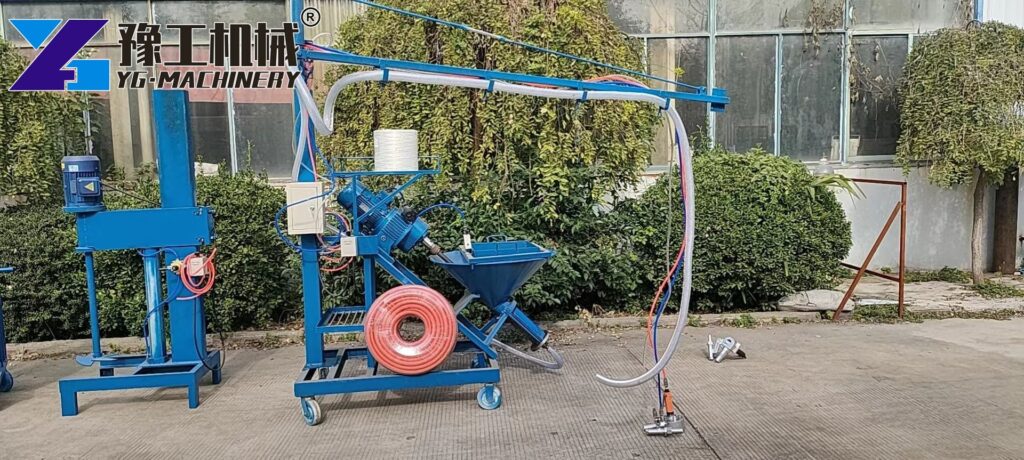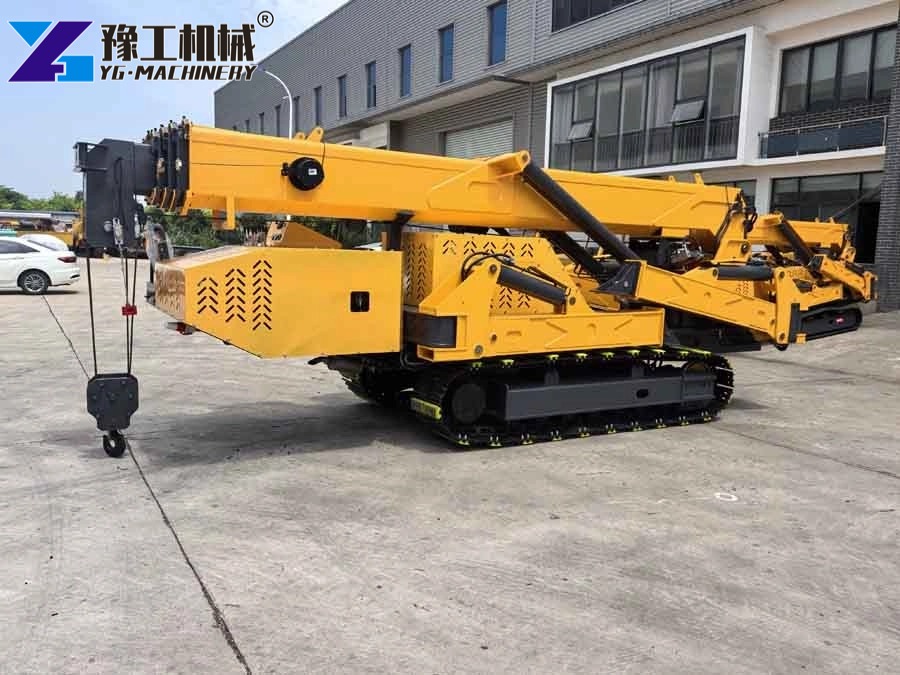
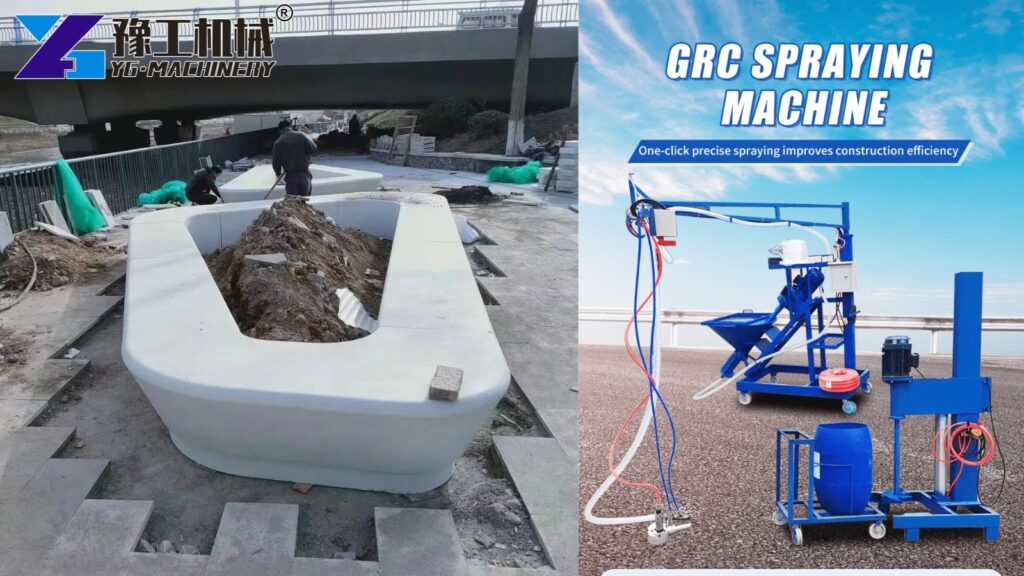
A GRC machine delivers precise slurry pumping and high-velocity fiber chopping to create lightweight, high-strength architectural cladding panels and decorative facade moldings. Modern precast manufacturers rely on this continuous spraying system to blend cementitious mortar with chopped alkali-resistant glass fibers right at the spray gun nozzle. YG Machinery engineered this high-output spraying equipment to achieve uniform fiber distribution, high flexural strength, and smooth surface finishes across large architectural panels. Utilizing this automated spraying platform allows precast plants to boost daily output, minimize material waste, and satisfy strict structural engineering standards.
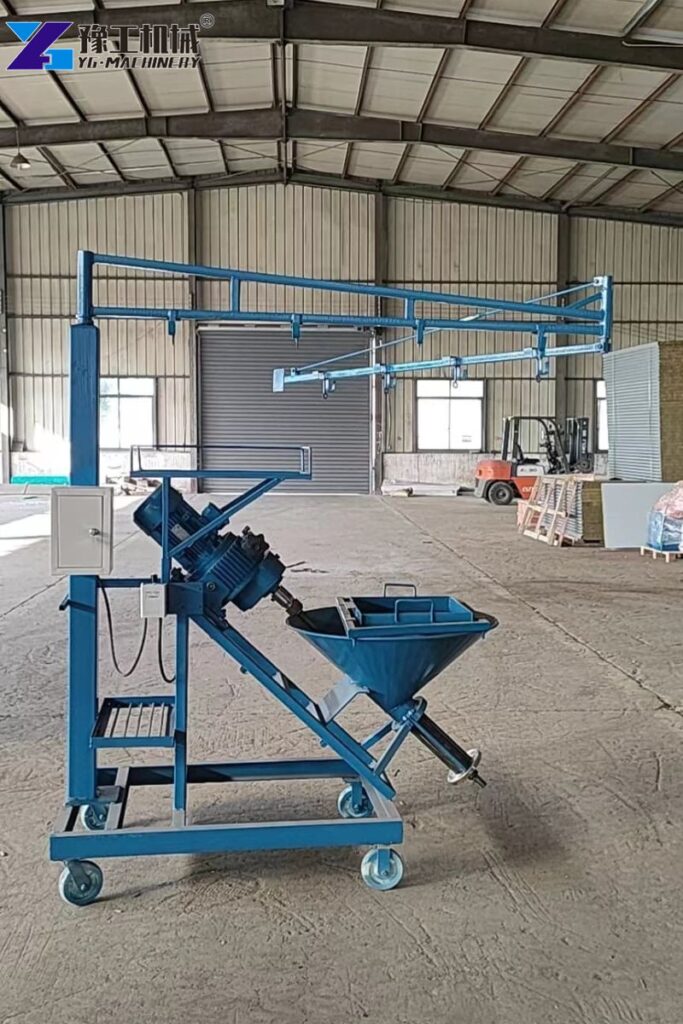
Investing in continuous high-pressure pumping technology transforms traditional precast casting workflows completely. The integrated variable-speed motor delivers precise material flow rates, while the heavy-duty fiber chopper cuts glass roving strands cleanly without clogging the atomizing air nozzle. A generous 4.5-meter working radius allows operators to cover large panel molds effortlessly without frequently repositioning the main chassis. Deploying this industrial-grade equipment upgrades your manufacturing capacity and helps your enterprise secure profitable commercial architecture contracts.
Start Your Project with the Right Equipment
5 Structural Advantages of Investing in a Modern GRC Machine
- High Delivery Output Capacities: Delivers between 300 kg and 1600 kg of cementitious slurry per hour to cover up to 400 square meters daily.
- Precise Fiber Chopper Control: Atomizes slurry and chops glass roving fibers simultaneously to ensure total mechanical bond integrity.
- Wide Operational Reach: A 4.5-meter flexible boom arm provides maximum maneuverability across intricate architectural mold layouts.
- Variable Speed Control System: Operates smoothly between 20 r/min and 200 r/min, enabling seamless adaptation to simple or complex mold shapes.
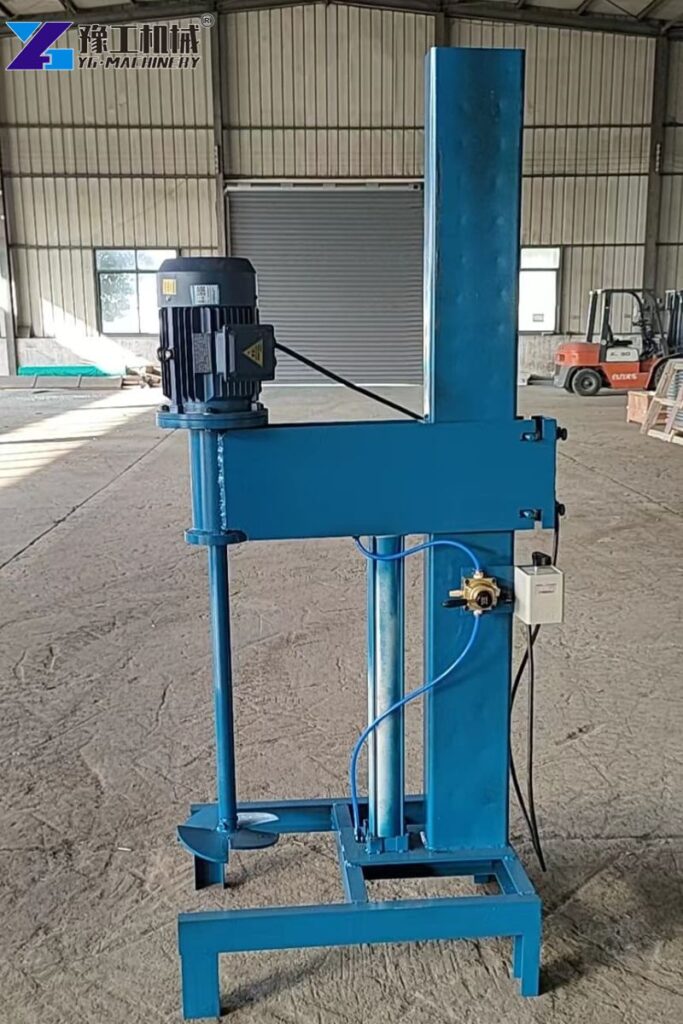
- Heavy-Duty Separate Mixer Assembly: Paired with a dedicated 60-liter mixing station that ensures homogeneous mortar slurry consistency before pumping.
Precast factory owners must prioritize pump durability and motor power when expanding their production lines. Selecting a system powered by a robust 2.2 kW to 4.0 kW motor ensures continuous slurry flow without pressure drops during peak manufacturing shifts. The dual-unit configuration separates spraying and mixing tasks cleanly, keeping maintenance workflows straightforward. Your plant team stays focused on staging molds and fulfilling client orders ahead of tight construction deadlines.
Additionally, the robust chassis handles demanding factory environments without structural wear or chassis vibration. Operators adjust atomizing air pressures and slurry delivery rates dynamically to match specific panel thickness specifications. This precise control protects raw material margins and delivers a flawless exterior surface every single time.
Why Choose a Certified GRC Spray Machine for Sale for Your Precast Plant?
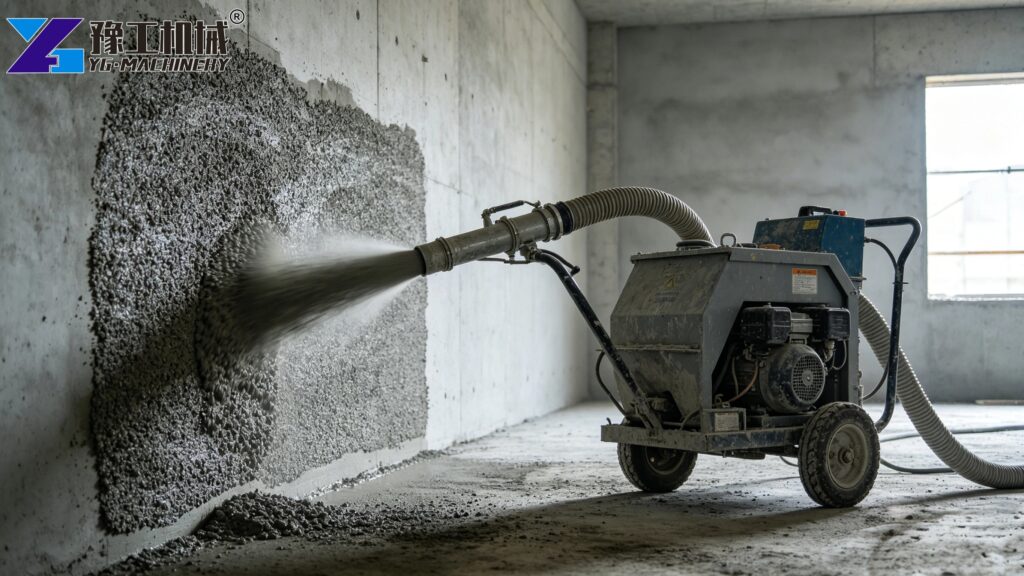
Certified industrial spraying equipment eliminates manual troweling bottlenecks and ensures uniform glass fiber matrix distribution throughout every cast panel. Hand-mixing or manual pour methods often lead to uneven fiber dispersion, creating structural weak spots and surface cracking over time. Automated high-pressure spraying packs the cementitious slurry tightly against the mold walls, removing trapped air pockets and dramatically increasing the structural density of finished architectural elements.
- Lower Labor Cost per Square Meter: High-speed spraying allows small operator teams to complete massive facade panels in minutes.
- Superior Flexural Strength: Simultaneous fiber chopping and spraying locks glass strands into a dense multi-directional matrix.
- Reduced Panel Structural Weight: Thin-wall spraying techniques produce lightweight panels that lower building structural loads and freight costs.
- Minimal Raw Material Waste: Precise nozzle spray patterns concentrate the material stream inside the mold boundaries cleanly.
Operating continuous spray lines gives precast manufacturers a distinct competitive edge when bidding on large-scale municipal or commercial projects. The reliable delivery rate keeps production lines moving predictably throughout multi-shift workdays. Sourcing directly from an established machinery manufacturer guarantees access to high-grade replacement parts and expert technical guidance whenever expansion demands arise.
Boost Productivity—Get a Free Quote
What Key Factors Determine the Complete GRC Spray Machine Price Evaluation?
Equipment investment costs are determined primarily by motor wattage, delivery volume capabilities, and the inclusion of automated mixing units. Evaluating total lifecycle performance against initial purchase pricing reveals that industrial-grade components deliver much lower operating costs per square meter over years of continuous service.
| Technical Parameter | Specification Value |
| Product Name | Glass Fiber Reinforced Concrete GRC Spray Machine |
| Drive Motor Power | 2.2 kW – 4.0 kW |
| Operating Voltage | 380V / 50Hz (3-Phase) |
| Variable Speed Range | 20 – 200 r/min |
| Effective Working Radius | 4.5 Meters |
| Material Delivery Capacity | 300 – 1600 kg/h |
| Production Efficiency | 200 – 400 m²/h |
| Hopper Holding Volume | 60 Liters |
| Sprayer Dimensions | 2000 × 1050 × 1600 mm |
| Mixer Dimensions | 1550 × 1000 × 2100 mm |
| Total Equipment Weight | 800 kg |
Heavy-duty steel construction and precision-machined rotor-stator pumps prevent premature abrasion from abrasive sand and cement mixtures. Sourcing equipment directly from factory floors eliminates middleman markups and guarantees complete access to original spare parts packages. Low maintenance requirements protect your ongoing profit margins across high-volume production cycles.
Find the Right Model for Your Project
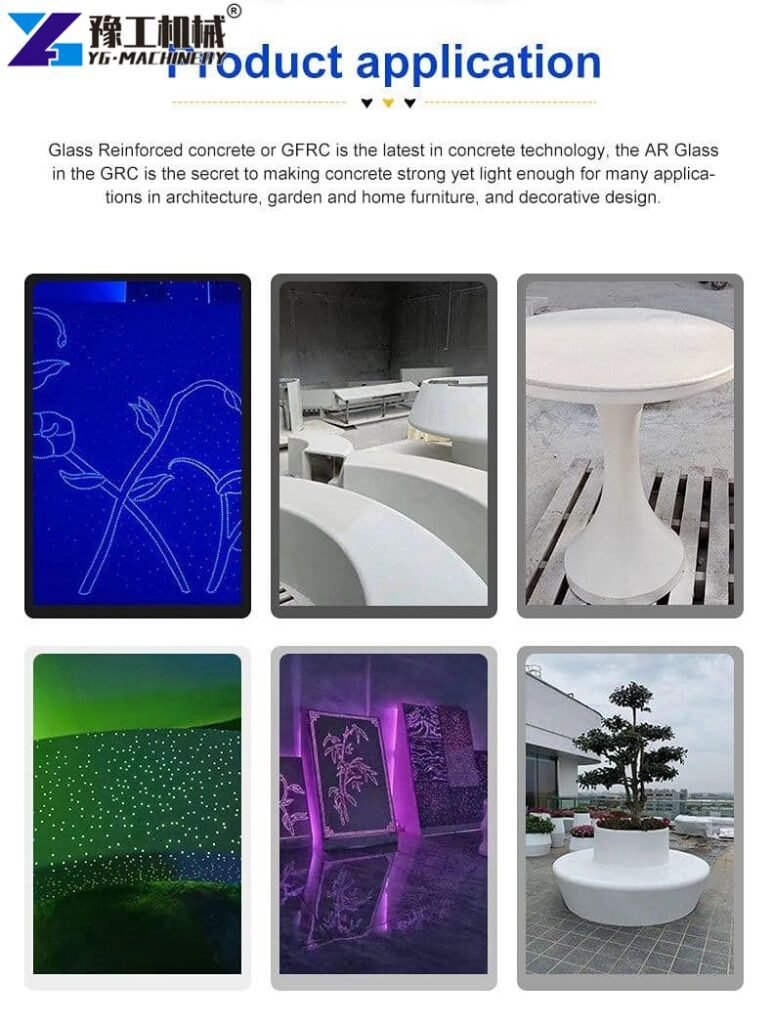
How Does a Glass Fiber Reinforced Concrete Spray Machine Elevate Architectural Quality?
High-pressure spraying atomizes the slurry into fine particles, driving the matrix deep into intricate mold textures and sharp architectural corners effortlessly. This deep penetration creates crisp surface detail for decorative cornices, Roman columns, and complex three-dimensional facade panels that traditional pouring methods cannot match.
- Crisp Surface Detail Replication: Captures fine mold textures cleanly without surface pinholes or air voids.
- Uniform Material Density: High-velocity impact consolidates the mortar matrix naturally without requiring secondary mechanical vibration.
- Seamless Multi-Layer Application: Allows operators to spray face coats and structural fiber layers in rapid succession.
- Versatile Material Compatibility: Processes standard Portland cement, sand mixtures, and specialized admixtures smoothly.
YG Machinery manufactures a complete range of precast production machinery, high-shear slurry mixers, and automated fiber feeding systems. If the standard technical specifications listed above do not fully match your target panel dimensions or factory output requirements, please contact our engineering team directly to explore custom model configurations and factory-direct solutions.
USA Field Case Study: Scaling Architectural Panel Output in Florida
- The Challenge: An architectural precast manufacturer in Florida, USA, faced severe production delays while fulfilling a large commercial facade contract. Their manual hand-layup process was too slow, requiring six workers per shift and yielding inconsistent panel thicknesses that failed strict structural quality inspections.
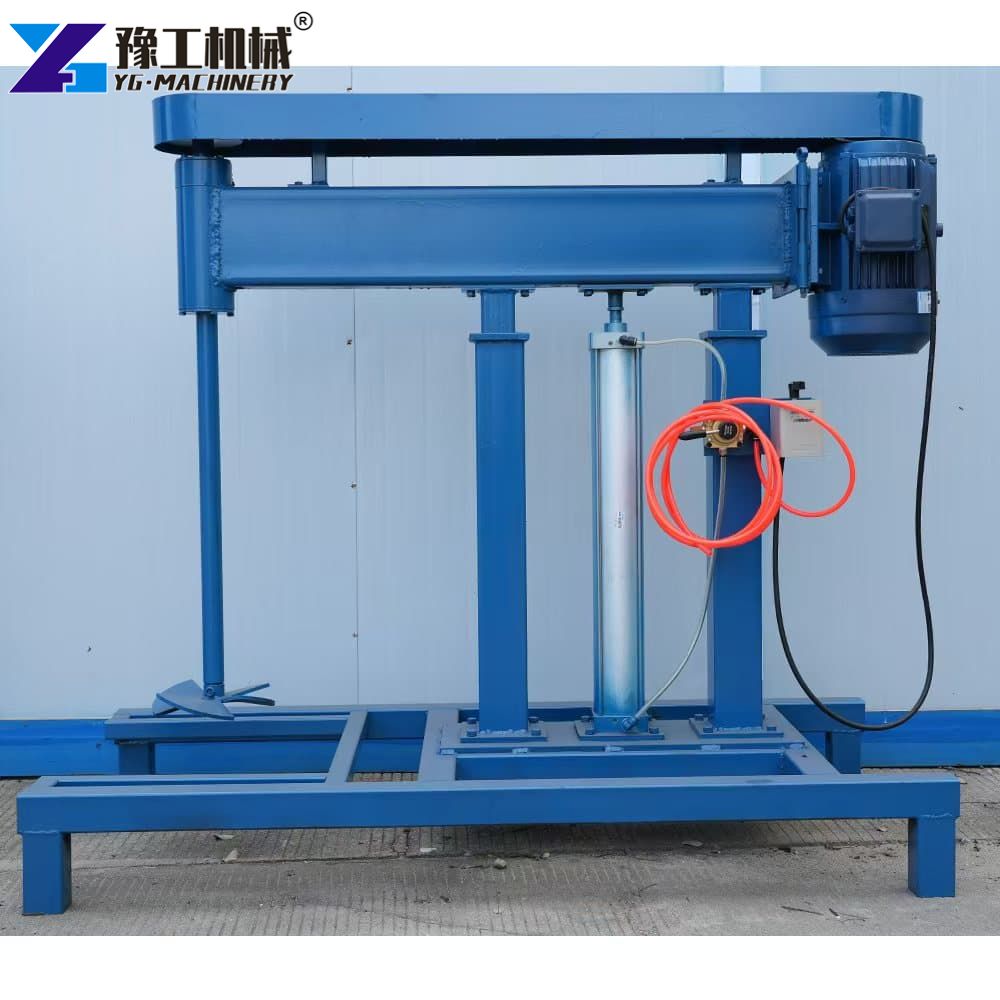
- The Solution: The plant manager upgraded their facility by installing two YG-380V automated spraying units equipped with 60-liter high-shear mixing stations. The integrated system allowed two operators to mix, pump, and spray continuous fiber-reinforced slurry directly into large-format panel molds.
- The Result: The Florida facility increased daily panel production from 80 m² to over 320 m² within the first two weeks of operation, representing a 300% efficiency gain. The uniform spraying process eliminated panel rejections, saving over $45,000 in wasted raw materials during the first quarter. The plant owner recovered their machinery investment within seven months and secured three additional commercial contracts.
Request Your Direct Factory Price Quote Today
Ready to transform your precast manufacturing facility with high-output automated GRC spraying equipment? Do not let slow manual casting methods or high third-party distributor fees limit your company’s growth potential. Contact YG Machinery right now to receive a comprehensive factory-direct price quotation tailored to your production requirements.
- Step 1: Submit Your Project Details. Share your target daily output, mold dimensions, and electrical power specifications through our quick contact form.
- Step 2: Review Your Custom Proposal. Receive an itemized factory quotation, technical drawings, and estimated shipping dimensions within 24 hours.
- Step 3: Confirm & Scale Production. Track your equipment manufacturing progress directly from our factory floor and receive complete online operational training from our engineers.
Upgrading your plant infrastructure with our certified spraying equipment delivers immediate operational speed, structural precision, and profit growth. Contact our sales division today to request your wholesale direct quote!
FAQs About Commercial GRC Machine
The difference between GFRC and GRC is nothing. They both refer to the same material. The reason that there are two separate acronyms is because of variations of the term “glass fiber”: Glassfibre Reinforced Cement (GRC)
It is an industrial spraying station that pumps cementitious slurry and chops glass fibers simultaneously to manufacture lightweight, high-strength architectural panels.
The system operates on a standard industrial 380V 50Hz 3-phase electrical supply to power its 2.2 kW to 4.0 kW drive motors smoothly.
The overall cost depends on motor power options, delivery capacity requirements, and whether you include the separate 60-liter high-shear mixing station.
The integrated chopper gun processes standard alkali-resistant (AR) glass roving strands, cutting them to 25 mm to 35 mm lengths while blending them into the slurry spray.
Yes, every unit includes a comprehensive factory warranty, direct access to spare parts, and full technical guidance from our engineering team.