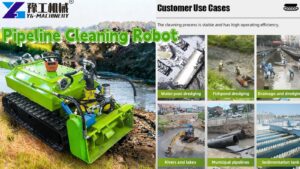
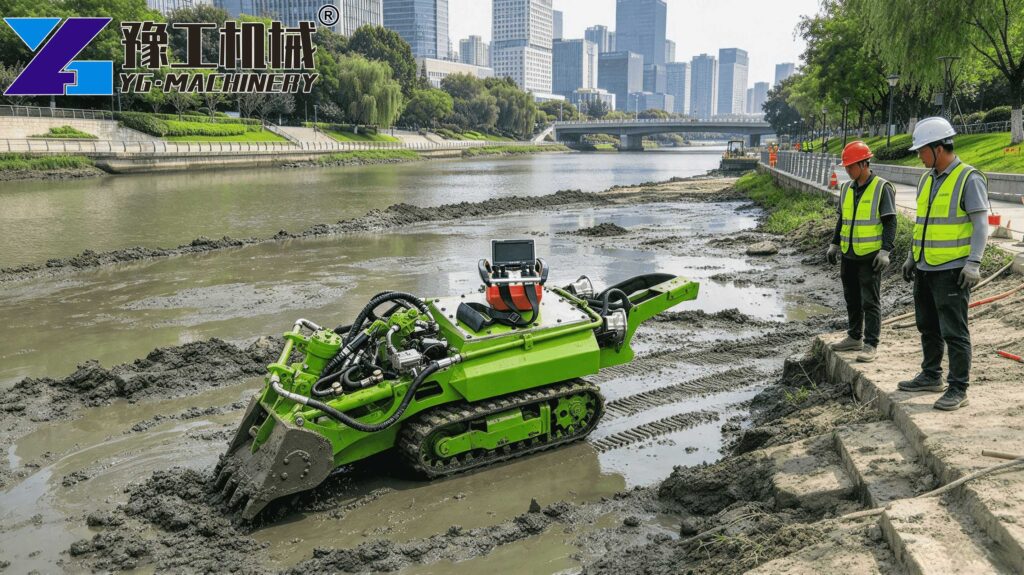
Saudi Arabia continues investing heavily in wastewater treatment facilities, industrial parks, desalination infrastructure, and municipal drainage networks. As these facilities expand, operators face increasing pressure to remove accumulated sludge while minimizing downtime and improving workplace safety. Manual dredging methods often expose workers to confined spaces, hazardous gases, and unstable sludge conditions. Because of these challenges, automated cleaning equipment has become an increasingly practical solution.
In early 2025, a wastewater treatment contractor from Dammam contacted YG Machinery after searching online for a Remote Control Dredging Robot suitable for industrial sludge removal. The company maintained several municipal wastewater plants and industrial sedimentation tanks for government infrastructure projects. Their maintenance team wanted equipment capable of operating continuously inside tanks without requiring workers to enter hazardous environments.
During the initial email exchange, the customer explained that existing cleaning methods relied heavily on manual excavation and vacuum trucks. Although those methods completed the work, they required long shutdown periods, large maintenance crews, and extensive safety preparation before workers could enter confined tanks. Management hoped to introduce robotic cleaning equipment that would improve productivity while reducing operational risks.
YG Machinery responded by requesting detailed project information rather than recommending equipment immediately. Our engineers collected data regarding sludge characteristics, tank dimensions, access openings, cleaning frequency, discharge distance, and daily operating requirements. These engineering details became the foundation for selecting the most appropriate robot configuration.
Several days later, both companies arranged an online technical meeting. During the discussion, the customer shared videos and layout drawings of the treatment facility. After reviewing every operating condition, YG Machinery recommended the YG900 configuration, which combined high pumping capacity, stable crawler movement, and wireless remote operation. That engineering consultation marked the beginning of a successful cooperation between the two companies.
Start Your Project with the Right Equipment
Understanding The Customer’s Requirements
The online engineering meeting focused on the customer’s actual operating environment rather than product specifications. Every sludge removal project differs in tank size, sludge density, water depth, and access conditions. Selecting the correct robot required a complete understanding of these factors before production could begin.
The Saudi contractor maintained three wastewater treatment facilities serving nearby industrial zones. Most cleaning work involved sedimentation tanks, sludge storage basins, and underground wastewater channels. Some tanks had limited access openings, while others contained compacted sludge that accumulated after long operating cycles. Manual cleaning exposed workers to confined spaces and required lengthy preparation before maintenance could begin.
Several operational requirements became clear during the discussion.
- Wireless remote operation
- Stable crawler movement
- High sludge pumping capacity
- Continuous daily operation
- Easy transportation between sites
- Reliable hydraulic performance
- Simple maintenance procedures
The customer also emphasized workplace safety. Maintenance activities followed confined-space procedures similar to internationally recognized practices such as ISO 45001 Occupational Health and Safety Management Systems. Reducing worker exposure inside sludge tanks remained one of the company’s highest priorities. The engineering team therefore preferred robotic cleaning equipment capable of completing most maintenance tasks remotely.
Daily productivity represented another important consideration. Existing cleaning methods often required several days to complete one sedimentation tank. Management hoped automated equipment would shorten maintenance shutdowns while allowing technicians to supervise operations from outside hazardous areas.
After evaluating every operating condition, YG Machinery recommended the YG900 Dredging Robot. The model offered sufficient pumping capacity, wide cleaning coverage, wireless remote control, and excellent mobility for industrial sludge removal projects across multiple treatment facilities.
Why The Customer Selected The Remote Control Dredging Robot
Following the engineering consultation, YG Machinery prepared a detailed technical proposal comparing the YG700, YG800, YG900, and YG1200 models. Instead of recommending the largest available machine, our engineers focused on balancing cleaning efficiency, transportation convenience, operating cost, and future project expansion.
The customer initially considered the YG700 because it offered lower investment costs. However, several maintenance contracts involved large sedimentation tanks where higher pumping capacity would significantly reduce cleaning time. After reviewing projected workloads, management agreed that investing in a larger model would improve long-term operating efficiency.
The YG900 ultimately became the preferred solution because it matched both current maintenance requirements and future expansion plans.
Several technical advantages influenced the final purchasing decision.
- 900 mm dredging width
- 200 m³/h pumping capacity
- 22 kW main motor
- Wireless remote control
- Underwater LED lighting
- 50 mm particle handling capacity
- Four-inch discharge system
- Stable crawler drive system
The customer particularly appreciated the wireless operating system. Operators could control the robot from outside the tank while maintaining clear visibility through inspection openings and camera monitoring. Compared with manual cleaning, remote operation greatly reduced confined-space entry while improving overall operational safety.
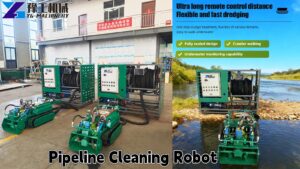
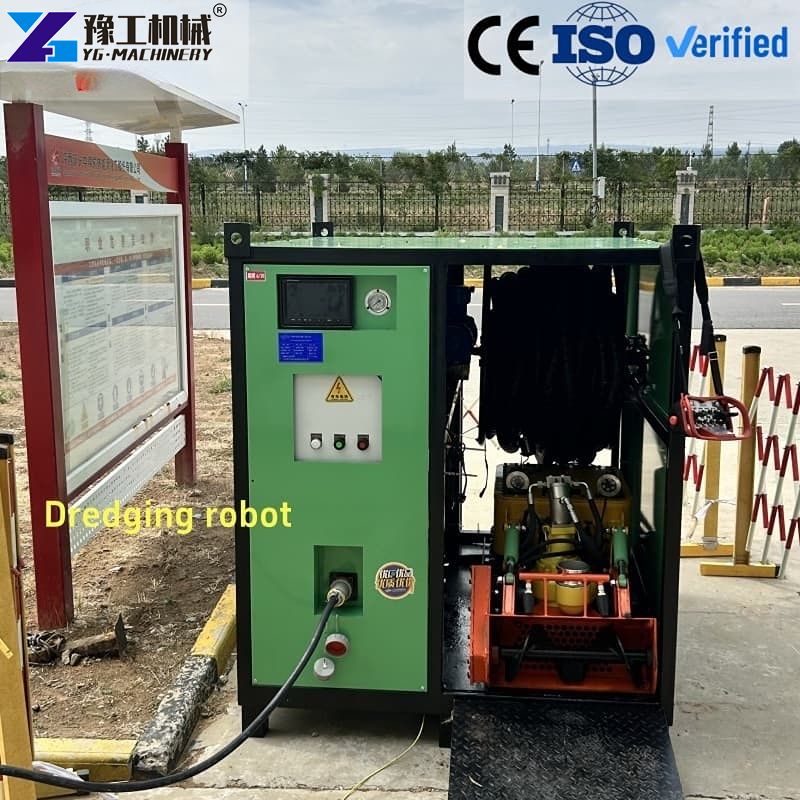
Another important advantage involved transport flexibility. The compact hydraulic station and crawler robot could be moved between different wastewater plants without requiring specialized transportation equipment. This flexibility allowed one machine to support multiple maintenance contracts throughout the year.
Boost Productivity—Get a Free Quote
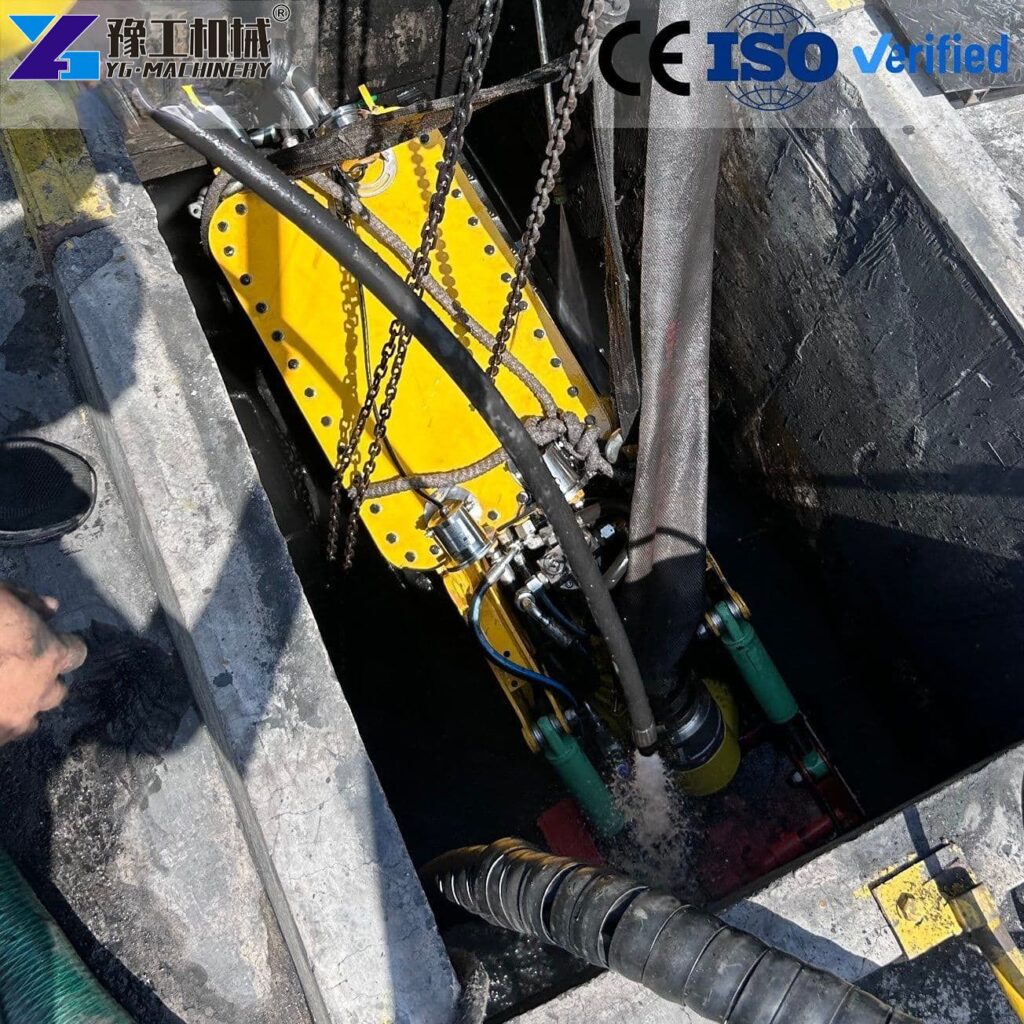
Dredging Robot For Sale Solution
After confirming the equipment model, both companies organized another video conference to finalize the technical configuration. Rather than shipping a standard production machine, YG Machinery optimized several details according to the customer’s operating environment and regional conditions.
Because summer temperatures in eastern Saudi Arabia frequently exceed 45°C, the customer requested additional attention to hydraulic cooling performance. Our engineering team reviewed the expected operating schedule and confirmed that the hydraulic system would maintain stable performance during continuous operation under high ambient temperatures.
Several customized configurations were added before production officially began.
- English operating interface
- High-temperature hydraulic hoses
- Extra wireless remote battery
- Spare wear parts package
- Reinforced transport frame
- Extended maintenance toolkit
- Export electrical labeling
The customer also requested additional guidance regarding preventive maintenance intervals. Since the robot would operate across several wastewater facilities, maintenance scheduling needed to remain simple and consistent. YG Machinery therefore prepared customized maintenance documentation covering hydraulic inspection, crawler servicing, sludge pump maintenance, and electrical system checks.
Before manufacturing started, detailed technical drawings, electrical layouts, and configuration lists were submitted for final approval. Once every document received confirmation from the customer’s engineering department, production officially entered the manufacturing stage.
Remote Control Dredging Robot Technical Specifications
The Saudi customer selected the YG-900 model after comparing different cleaning widths, pumping capacities, and operating requirements. The table below compares all available models to help contractors choose the most suitable equipment for different sludge removal projects.
| Parameter | YG-500 | YG-600 | YG-700 | YG-800 | ⭐ YG-900 (Saudi Project) | YG-1200 |
|---|---|---|---|---|---|---|
| Robot Dimensions | 1500×500×650 mm | 1500×600×650 mm | 1600×700×650 mm | 1600×850×700 mm | 1650×960×750 mm | 1900×1200×750 mm |
| Dredging Width | 500 mm | 600 mm | 700 mm | 800 mm | 900 mm | 1200 mm |
| Track Travel Speed | 3–15 m/min | 3–15 m/min | 3–15 m/min | 3–15 m/min | 3–15 m/min | 3–15 m/min |
| Robot Weight | 320 kg | 350 kg | 380 kg | 400 kg | 420 kg | 500 kg |
| Pump Output Diameter | 3 inch | 3 inch | 4 inch | 4 inch | 4 inch | 4 inch |
| Pump Flow Rate | 100 m³/h | 100 m³/h | 200 m³/h | 200 m³/h | 200 m³/h | 200 m³/h |
| Hydraulic Station Dimensions | 2200×1200×1700 mm | 2200×1200×1700 mm | 2200×1200×1700 mm | 2200×1200×1700 mm | 2200×1200×1700 mm | 2120×1240×1200 mm |
| Main Motor Power | 22 kW | 22 kW | 30 kW | 30 kW | 30 kW | 45 kW |
| Hydraulic System Pressure | 0–16 MPa | 0–16 MPa | 0–16 MPa | 0–16 MPa | 0–16 MPa | 0–16 MPa |
| Maximum Particle Size | 15 mm | 15 mm | 38 mm | 38 mm | 38 mm | 60 mm |
| Reeling System Speed | 0–10 r/min | 0–10 r/min | 0–10 r/min | 0–10 r/min | 0–10 r/min | 0–10 r/min |
| Hydraulic Hose | 50 m | 50 m | 50 m | 50 m | 50 m | 50 m |
| Control System | Wireless Remote | Wireless Remote | Wireless Remote | Wireless Remote | Wireless Remote | Wireless Remote |
| Lighting System | 2× Underwater LED | 2× Underwater LED | 2× Underwater LED | 2× Underwater LED | 2× Underwater LED | 2× Underwater LED |
Why The Saudi Customer Chose The YG-900
Although several models met the customer’s basic requirements, the YG-900 offered the best balance between cleaning efficiency, pumping capacity, and mobility. Its 900 mm dredging width reduced the number of cleaning passes required in large sedimentation tanks, while the 200 m³/h slurry pump maintained continuous sludge removal during long operating shifts. The compact crawler structure also allowed the robot to pass through standard maintenance openings without sacrificing stability during underwater operation. These advantages made the YG-900 the most economical solution for the customer’s long-term wastewater maintenance projects.
Compare Models and Get a Quote
Want More Remote Control Dredging Robot Models?
The specifications above represent one of our most popular configurations for municipal and industrial sludge removal. YG Machinery also manufactures several Remote Control Dredging Robot models with different dredging widths, pumping capacities, crawler sizes, and hydraulic systems to suit various maintenance environments.
Whether your project involves municipal wastewater treatment plants, industrial settling ponds, mining tailings ponds, stormwater channels, or large drainage culverts, our engineering team can recommend the most suitable solution based on your actual operating conditions.
Contact YG Machinery today to receive:
- Complete product catalog
- Detailed technical specifications
- Customized equipment recommendations
- Factory testing videos
- Latest factory quotations
- Professional engineering support
Simply tell us your tank dimensions, sludge type, water depth, particle size, and expected cleaning capacity, and our engineers will recommend the most suitable underwater dredging robot for your project.
Manufacturing, Inspection, And Export Preparation
After receiving final approval, YG Machinery scheduled production according to the agreed delivery timeline. Since the robot would operate continuously in corrosive wastewater environments, manufacturing focused on structural durability, hydraulic stability, and long-term electrical reliability.
Before assembly began, technicians inspected every major component individually. The crawler chassis, hydraulic pumps, travel motors, control valves, underwater lighting system, wireless controller, and electrical harnesses all underwent dimensional and functional inspections before entering the assembly line.
The following components received complete quality inspection.
- Hydraulic pumps
- Hydraulic motors
- Wireless control system
- Sludge pump assembly
- Crawler drive mechanism
- Electrical control cabinet
- Hydraulic hoses
- Underwater LED lighting
Only qualified components proceeded to final assembly. Every inspection result was recorded to ensure complete product traceability throughout manufacturing.
After assembly, engineers transferred the completed robot to the testing area for comprehensive operational verification. The robot completed repeated movement simulations, hydraulic pressure testing, wireless communication verification, sludge pumping tests, crawler mobility inspections, and continuous operating trials. Engineers monitored oil temperature, hydraulic pressure, pump flow, and remote-control response throughout the testing process.
Before shipment, the Saudi customer participated in an online Factory Acceptance Test (FAT). During the live video inspection, our engineers demonstrated crawler movement, sludge pumping performance, underwater lighting, wireless control, and emergency stop functions. After reviewing every operating procedure and confirming the agreed specifications, the customer formally approved shipment.
Find the Right Model for Your Project
Shipping And Delivery To Saudi Arabia
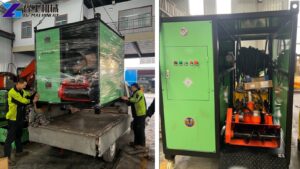
Following factory acceptance, the export department prepared the equipment for international transportation. Special attention was given to protecting hydraulic components, electrical systems, and wireless control equipment throughout the ocean shipping process.
Several protective measures were completed before loading.
- Anti-corrosion treatment
- Hydraulic connector protection
- Reinforced steel transport frame
- Moisture-resistant packaging
- Heavy-duty container fastening
- Export-standard electrical protection
The robot, hydraulic station, accessories, and spare parts were securely loaded into the shipping container using reinforced fastening systems. Every component remained fixed throughout transportation to prevent movement caused by vessel vibration.
After the shipment departed China, YG Machinery continued supporting the customer with logistics updates, customs documentation, and estimated arrival schedules. The Saudi contractor completed customs clearance before delivery to the wastewater treatment facility, ensuring that installation could begin according to the planned maintenance schedule.
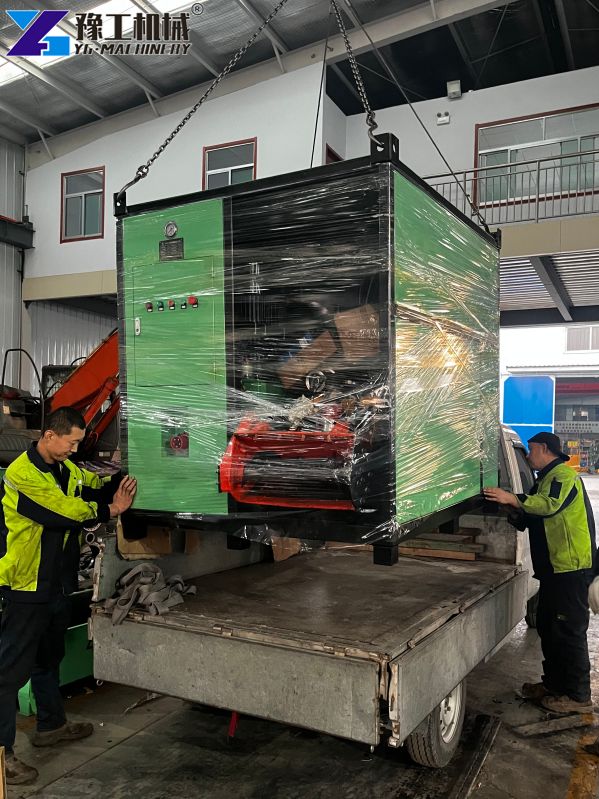
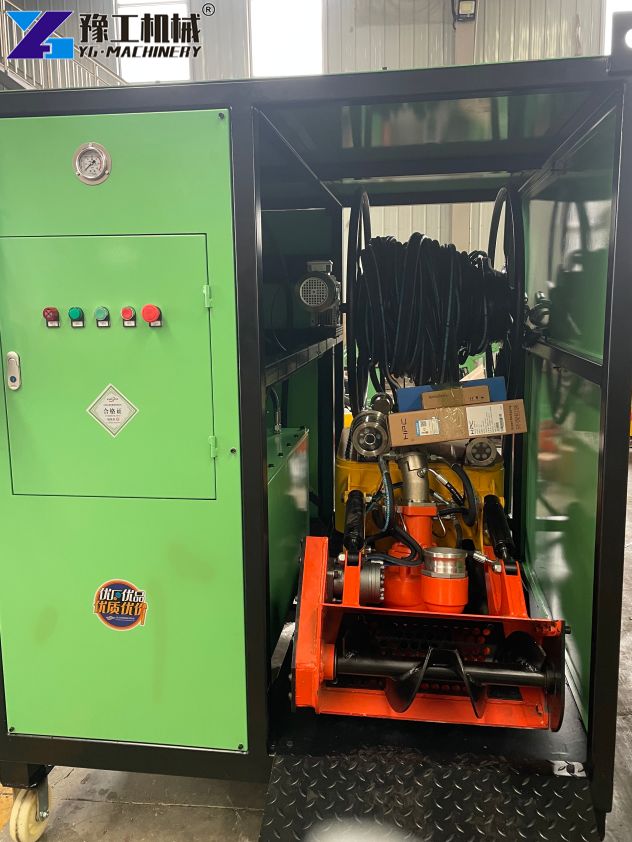
Installation, Training, And Commissioning
After customs clearance, the equipment arrived at the customer’s wastewater treatment facility in Dammam. The maintenance team completed unloading according to the installation drawings supplied by YG Machinery. Since the robot had already passed comprehensive factory testing, commissioning focused mainly on hydraulic connections, electrical inspection, wireless controller pairing, and operational verification.
YG Machinery provided remote technical guidance throughout the installation process. Engineers assisted the customer with hydraulic hose connections, winch installation, controller calibration, pump inspection, and emergency stop verification. Each subsystem was tested individually before the complete machine entered trial operation.
Operator training emphasized practical field operation rather than classroom instruction. Most maintenance technicians already possessed experience with hydraulic equipment, allowing them to become familiar with the robot within a short period.
Training covered the following topics.
- Wireless remote operation
- Hydraulic system inspection
- Daily maintenance procedures
- Sludge pump servicing
- Crawler track inspection
- Emergency shutdown procedures
- Battery and electrical inspection
- Safe confined-space operation
Following two days of practical training, operators completed several trial cleaning exercises inside an empty sedimentation basin. The robot demonstrated smooth crawler movement, stable pumping performance, and precise remote control throughout the testing period. After successful commissioning, the equipment officially entered commercial service.
Performance During The First Wastewater Cleaning Project
The customer’s first project involved cleaning a primary sedimentation tank that had accumulated sludge over several months of continuous operation. Previously, this maintenance work required workers to enter the basin after extensive gas monitoring and safety preparation. Cleaning frequently occupied several working days and interrupted plant operation.
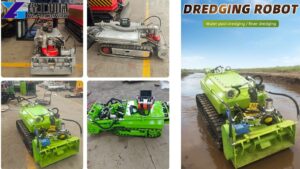
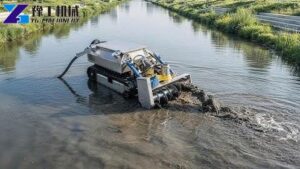
With the Remote Control Dredging Robot, the maintenance process changed significantly. Operators remained outside the tank while controlling the robot through the wireless remote system. The crawler platform moved steadily across the basin floor, collecting sludge and pumping it directly through the discharge pipeline.
Several operational improvements became apparent during the first project.
- Reduced confined-space entry
- Continuous sludge removal
- Stable crawler traction
- Reliable pumping performance
- Lower labor requirements
- Shorter maintenance shutdowns
Maintenance supervisors also noticed that sludge removal became more consistent across the entire basin. The wide cleaning path reduced missed areas, while stable crawler movement prevented the robot from becoming trapped in soft sediment. Because operators maintained full visibility throughout the process, positioning accuracy improved considerably compared with manual excavation methods.
The wastewater treatment facility completed the maintenance project ahead of its planned schedule. Plant managers reported that shorter cleaning periods reduced operational interruptions while allowing treatment capacity to recover more quickly after maintenance.
Long-Term Operating Results And Customer Feedback
Approximately six months after commissioning, YG Machinery conducted a scheduled follow-up with the customer to evaluate long-term operating performance. During that period, the YG900 had completed maintenance work across several wastewater treatment tanks, sludge storage basins, and industrial sedimentation ponds. According to the customer’s maintenance department, the equipment continued operating reliably under demanding site conditions.
Routine servicing proved straightforward. Operators mainly inspected hydraulic oil, crawler tracks, pump wear parts, electrical connections, and wireless control functions before each project. Preventive maintenance followed the schedule provided by YG Machinery, helping maintain stable performance throughout continuous operation.
The customer compared the robotic cleaning process with their previous maintenance methods. The improvements became increasingly noticeable as additional projects were completed. Fewer personnel entered hazardous work areas, cleaning quality became more consistent, and maintenance planning became easier because project durations were more predictable.
According to the customer’s internal maintenance records, several measurable improvements were achieved.
- Reduced cleaning time
- Lower labor requirements
- Improved operational safety
- Higher cleaning consistency
- Reduced plant downtime
- Better equipment utilization
The Maintenance Manager summarized the operating experience during the follow-up meeting.
“The robot performs reliably in different sludge conditions. Remote operation has greatly reduced the need for personnel to enter confined tanks.”
The Operations Supervisor highlighted another important advantage.
“Cleaning efficiency improved immediately after commissioning. The pumping system remains stable even during long operating shifts.”
The Mechanical Engineer also shared practical observations after several maintenance cycles.
“Routine maintenance is straightforward. The crawler system and hydraulic components have performed consistently throughout daily operation.”
These comments reflected actual operating experience rather than promotional language. For the customer, the greatest value came from improved worker safety, stable cleaning performance, and shorter maintenance shutdowns across multiple wastewater treatment facilities.
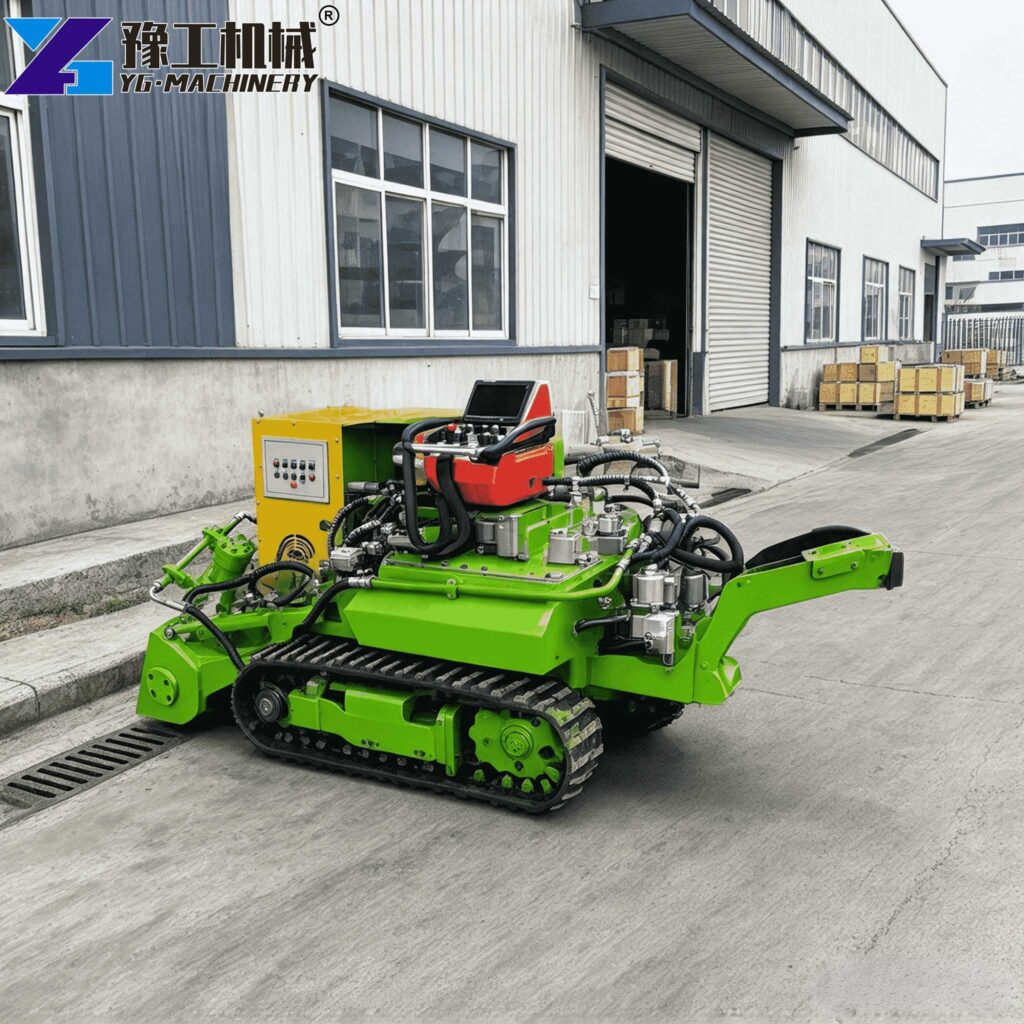
Why Choose YG Machinery
Every sludge removal project presents unique engineering challenges. Tank dimensions, sludge composition, particle size, pumping distance, and maintenance frequency all influence equipment selection. Instead of recommending a standard configuration immediately, YG Machinery evaluates each customer’s operating environment before proposing the most suitable solution.
Our engineering team studies sludge characteristics, facility layouts, discharge requirements, and long-term operating plans to ensure the selected equipment matches both current maintenance tasks and future expansion projects.
Before shipment, every industrial dredging robot undergoes comprehensive factory testing, including:
- Hydraulic pressure testing
- Pump flow verification
- Wireless control inspection
- Crawler mobility testing
- Continuous operation testing
- Electrical safety inspection
- Emergency stop verification
- Factory acceptance testing
Beyond equipment delivery, YG Machinery provides installation guidance, operator training, preventive maintenance recommendations, spare parts support, and long-term technical assistance. These services help customers maximize equipment availability while reducing operating costs throughout the machine’s service life.
Request A Quote For Your Sludge Removal Project
Whether you operate a municipal wastewater treatment plant, an industrial sedimentation basin, a mining tailings pond, or a stormwater drainage facility, selecting the right dredging equipment directly affects maintenance efficiency, operating costs, and workplace safety.
YG Machinery manufactures Remote Control Dredging Robot systems for a wide range of sludge removal applications. Our product line includes multiple models with different dredging widths, pumping capacities, crawler sizes, and hydraulic configurations to match various operating environments.
Contact YG Machinery today to receive:
- Complete product catalog
- Detailed technical specifications
- Customized equipment recommendations
- Factory testing videos
- Latest factory quotations
- Professional engineering consultation
Simply tell us your tank dimensions, sludge type, water depth, particle size, and required pumping capacity, and our engineers will recommend the most suitable Remote Control Dredging Robot for your project.
Frequently Asked Questions
The robot is widely used in municipal wastewater treatment plants, industrial sedimentation tanks, mining tailings ponds, drainage channels, reservoirs, and other sludge removal projects.
Yes. The crawler chassis and hydraulic pumping system are designed to maintain stable movement in soft sludge and sediment. The final operating depth depends on the project conditions.
The YG900 can transport particles up to 50 mm under normal operating conditions, making it suitable for sludge containing sand, gravel, and other solid materials.
In most applications, operators control the robot remotely from outside the working area. This significantly reduces confined-space entry and improves operational safety.
Yes. We provide remote commissioning, operator training, maintenance guidance, spare parts support, and long-term technical assistance after delivery.
Yes. Dredging width, pumping capacity, hydraulic station configuration, hose length, and other specifications can be customized according to your project requirements.