Quick Answers
| Feature | Details |
|---|---|
| Best For | Steel plates, structural steel, pipes, H-beams, fabricated components |
| Surface Treatment | Rust removal, mill scale removal, paint removal, surface preparation |
| Abrasive | Steel shot or steel grit |
| Automation | Semi-automatic or fully automatic |
| Dust Collection | Integrated dust collector available |
| OEM Service | Supported |
| Installation | Remote guidance and technical support |
| Export Markets | Worldwide |
Key Takeaway
- Removes rust, mill scale, welding residue, and old coatings efficiently.
- Creates a uniform surface profile for painting, galvanizing, and coating.
- Supports continuous production with automatic abrasive recycling.
- Reduces labor costs and improves production efficiency.
- Available in multiple configurations for different workpiece sizes and production capacities.
- OEM customization and global delivery are available.
Start Your Project with the Right Equipment
Steel plates, structural steel, pipes, H-beams, and fabricated metal components are constantly exposed to rust, mill scale, welding residue, and surface contamination during manufacturing and storage. If these impurities are not removed before painting, galvanizing, powder coating, or welding, they can reduce coating adhesion, shorten product service life, and increase maintenance costs. For manufacturers handling large production volumes, manual grinding and chemical cleaning are often too slow, inconsistent, and labor-intensive to meet modern production requirements.
An industrial shot blaster for sale offers a faster, cleaner, and more reliable solution for industrial surface preparation. By propelling high-speed steel shot onto the workpiece, the machine removes rust, oxidation, scale, old coatings, and other contaminants while creating a uniform anchor profile that improves coating adhesion. Compared with manual cleaning methods, industrial shot blasting significantly increases productivity, reduces labor requirements, and delivers consistent surface quality across large batches of steel components.
Industrial shot blasting technology is widely used in steel fabrication, bridge construction, shipbuilding, pipeline manufacturing, wind power equipment, heavy machinery production, automotive components, and other industries that require durable protective coatings. Modern shot blasting machines also recycle abrasive automatically through separation and recovery systems, reducing operating costs and improving environmental performance.
Choosing the right industrial shot blasting machine involves more than selecting the largest model. Cleaning width, blast wheel configuration, production capacity, abrasive recovery efficiency, dust collection performance, and automation level all affect long-term productivity and return on investment. Understanding these factors helps manufacturers choose equipment that matches both current production requirements and future business growth.
In this comprehensive buying guide, you’ll learn how an industrial shot blaster works, the different machine types available, how to select the best model for your production line, what influences equipment pricing, and why manufacturers around the world choose YG Machinery for reliable shot blasting solutions.
What Is an Industrial Shot Blaster?
An industrial shot blaster is a surface preparation machine that uses high-speed centrifugal blast wheels to propel steel shot or steel grit onto metal surfaces. The impact of the abrasive removes rust, mill scale, oxidation, welding slag, old paint, and other contaminants while creating a controlled surface profile that improves the adhesion of protective coatings.
Unlike manual grinding or chemical cleaning, shot blasting combines cleaning, surface roughening, and abrasive recycling into a single continuous process. This makes it one of the most efficient and cost-effective methods for preparing steel before painting, powder coating, galvanizing, thermal spraying, or welding.
Industrial shot blasters are widely used for processing:
- Steel plates
- H-beams
- Structural steel
- Steel pipes
- Steel profiles
- Fabricated metal components
- Castings
- Welded assemblies
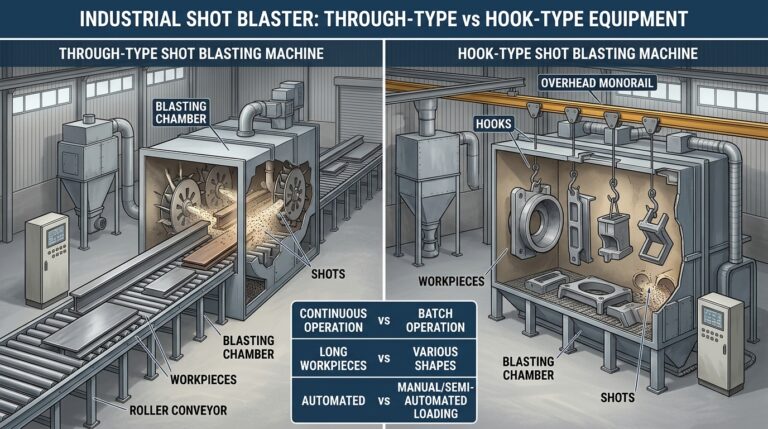
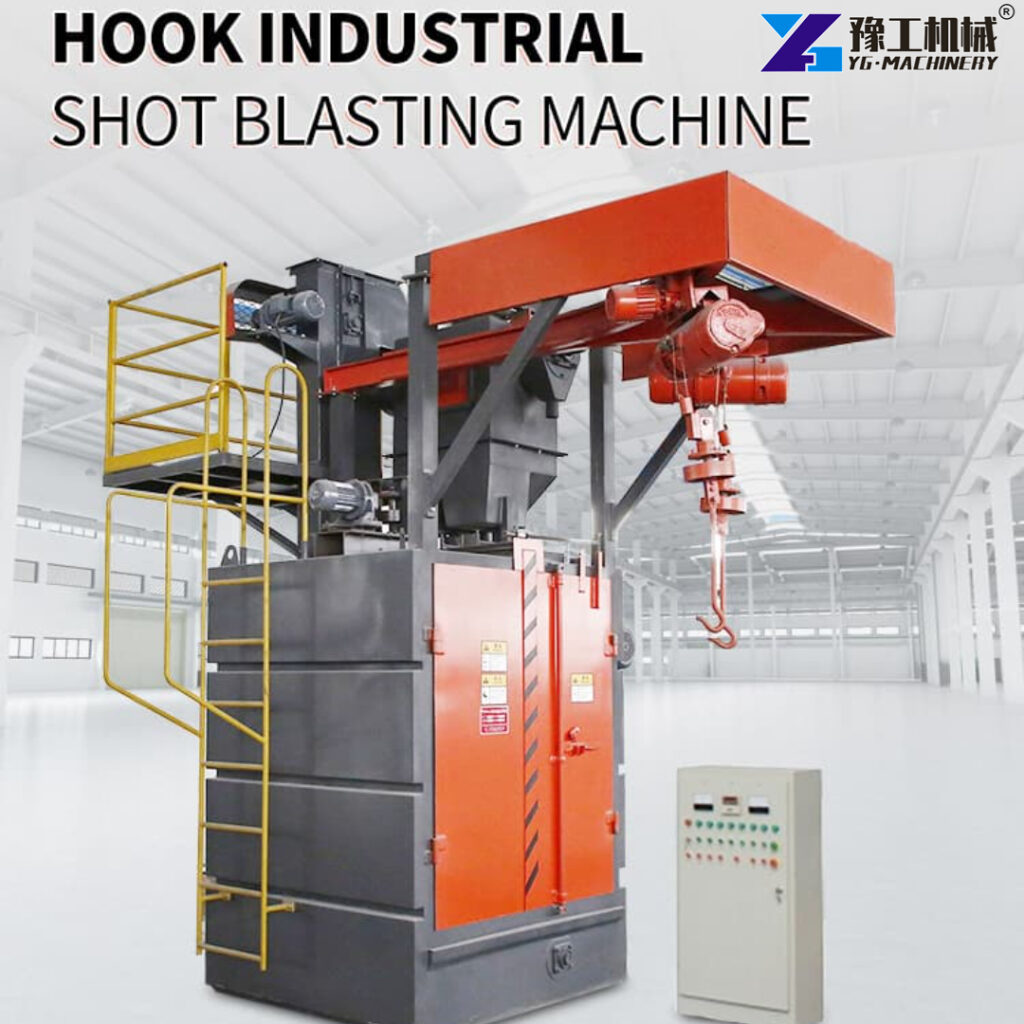
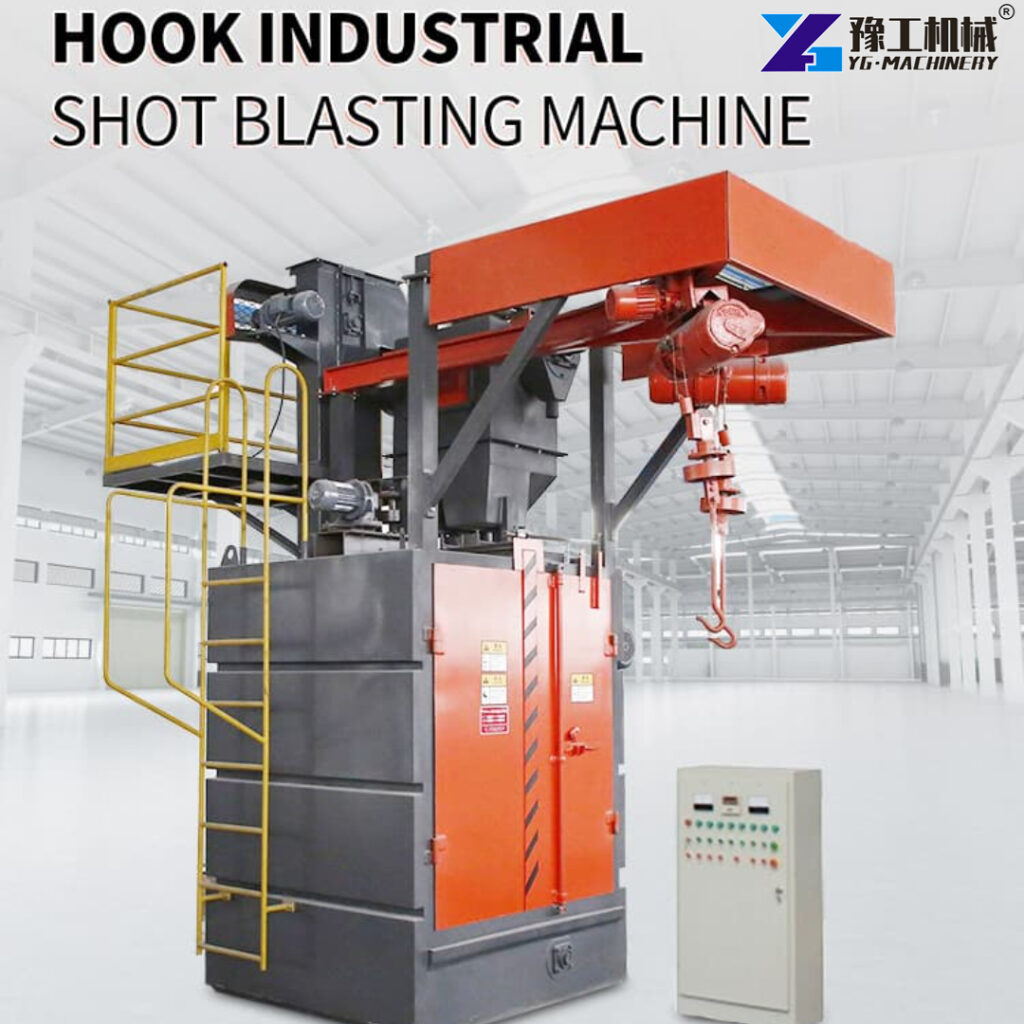
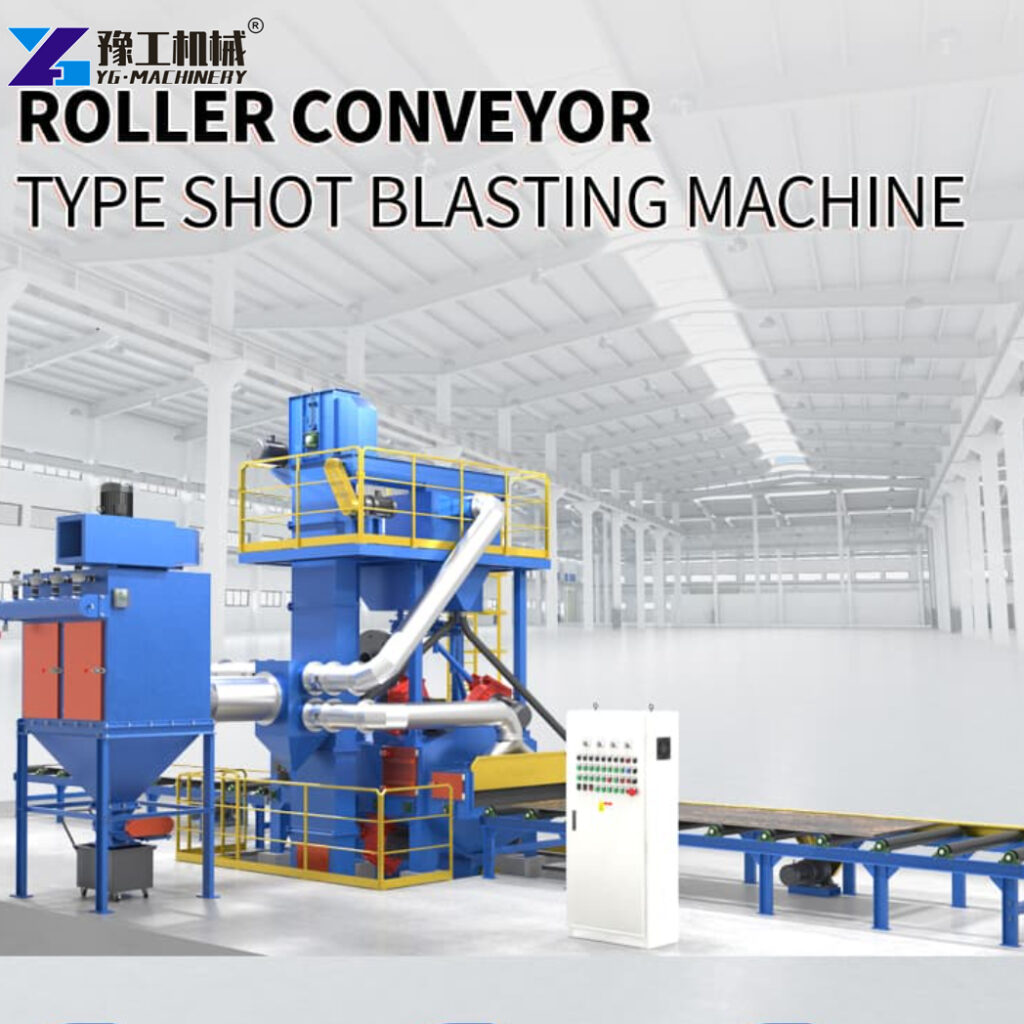
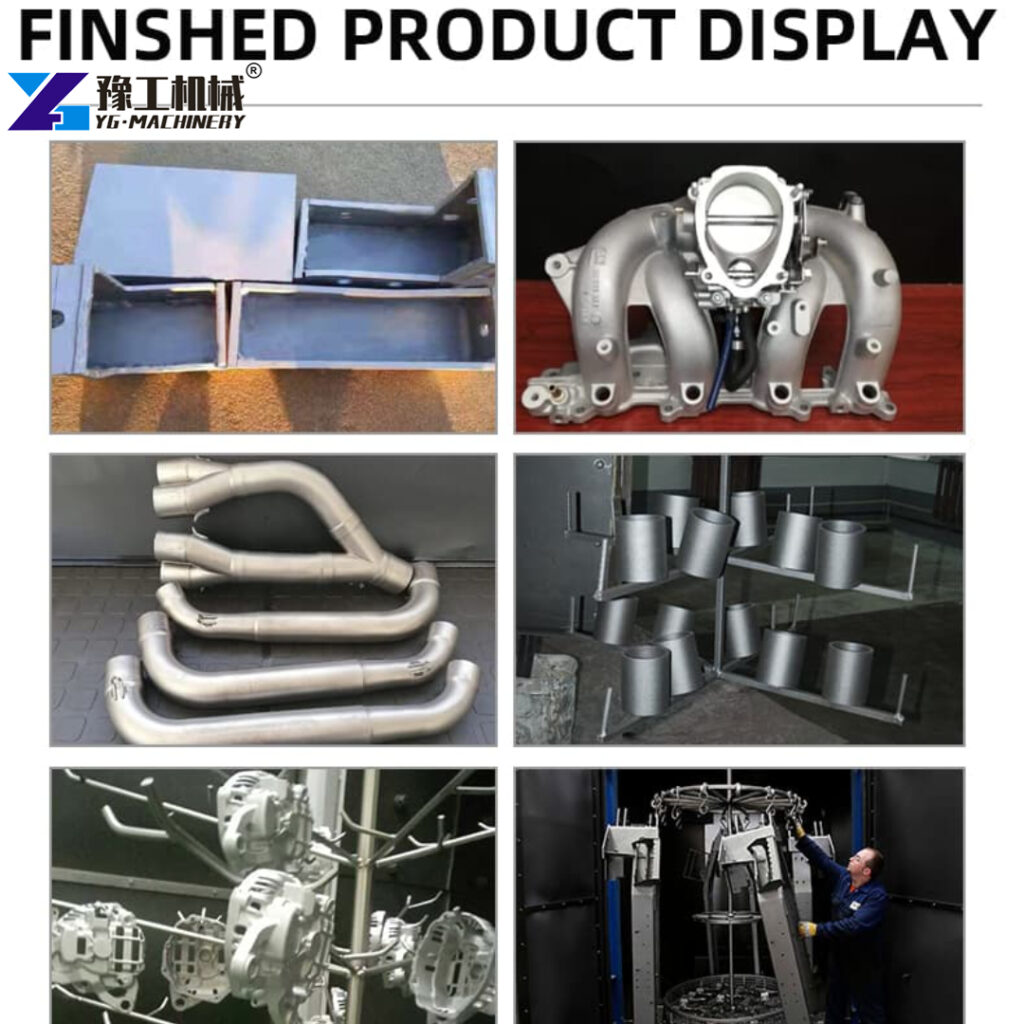
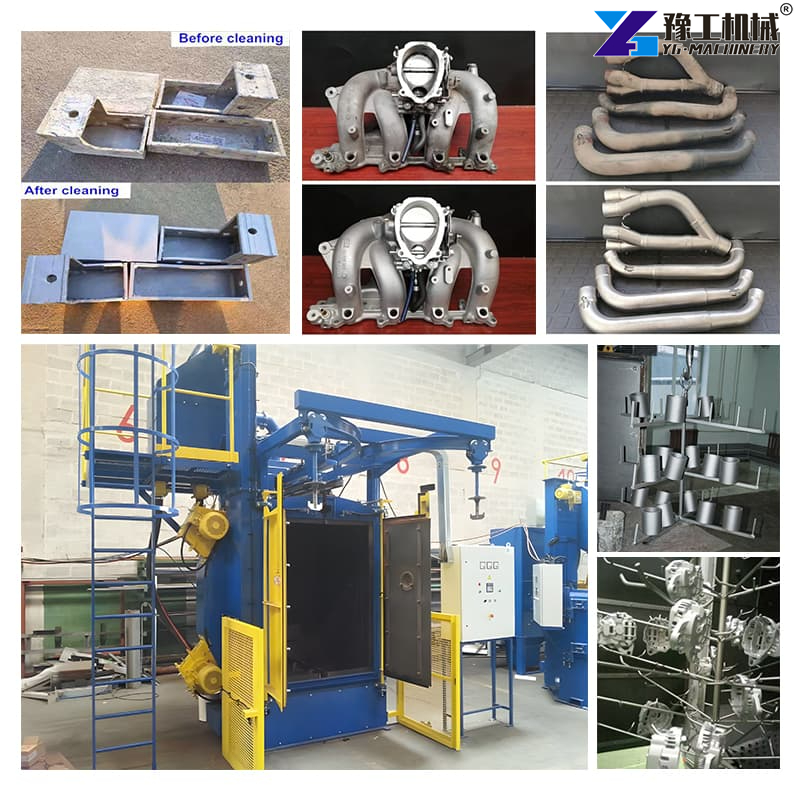
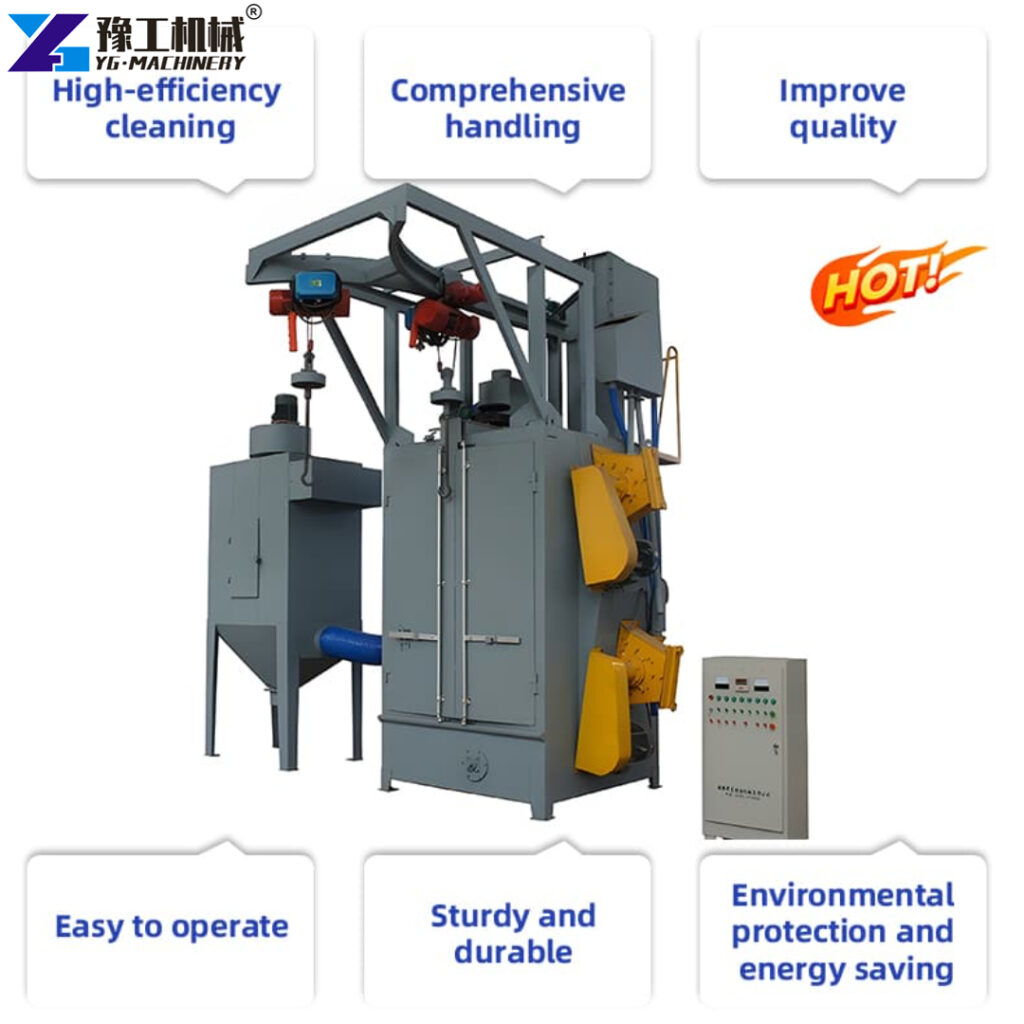
Depending on the application, different machine designs are available. Roller conveyor shot blasting machines are ideal for steel plates, beams, and profiles in continuous production lines. Hook-type and hanger-type machines are commonly used for large fabricated parts or irregular workpieces, while tumble belt and rotary table models are better suited for small castings, forgings, and batch production.
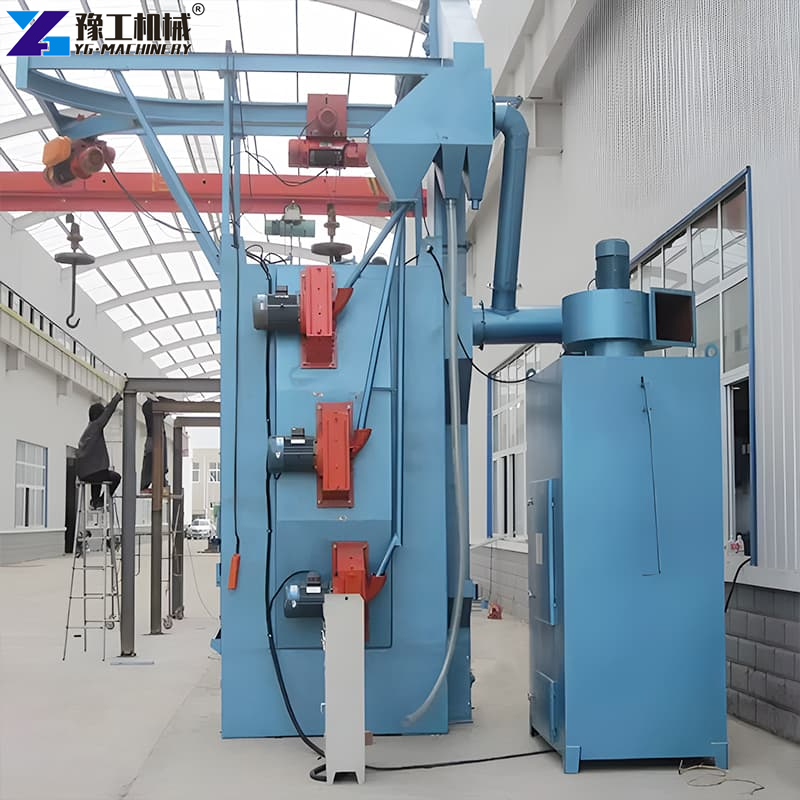
A complete industrial shot blasting system typically includes several integrated components that work together to achieve efficient surface preparation:
- Blast wheels that accelerate steel shot at high speed.
- A roller conveyor, hook, or rotary table to transport workpieces.
- An abrasive recovery system that collects and recycles reusable steel shot.
- A separator that removes broken abrasive and dust.
- A bucket elevator and screw conveyor that return clean abrasive to the blast wheels.
- A high-efficiency dust collector that maintains a clean working environment.
- An electrical control system for safe and reliable machine operation.
One of the biggest advantages of modern industrial shot blasting equipment is its ability to operate continuously with minimal manual intervention. Automatic abrasive recycling not only reduces consumable costs but also maintains consistent cleaning performance throughout long production cycles. Combined with efficient dust collection and programmable controls, industrial shot blasters help manufacturers improve product quality, reduce operating costs, and meet increasingly demanding production schedules.
Boost Productivity—Get a Free Quote
How Does an Industrial Shot Blaster Work?
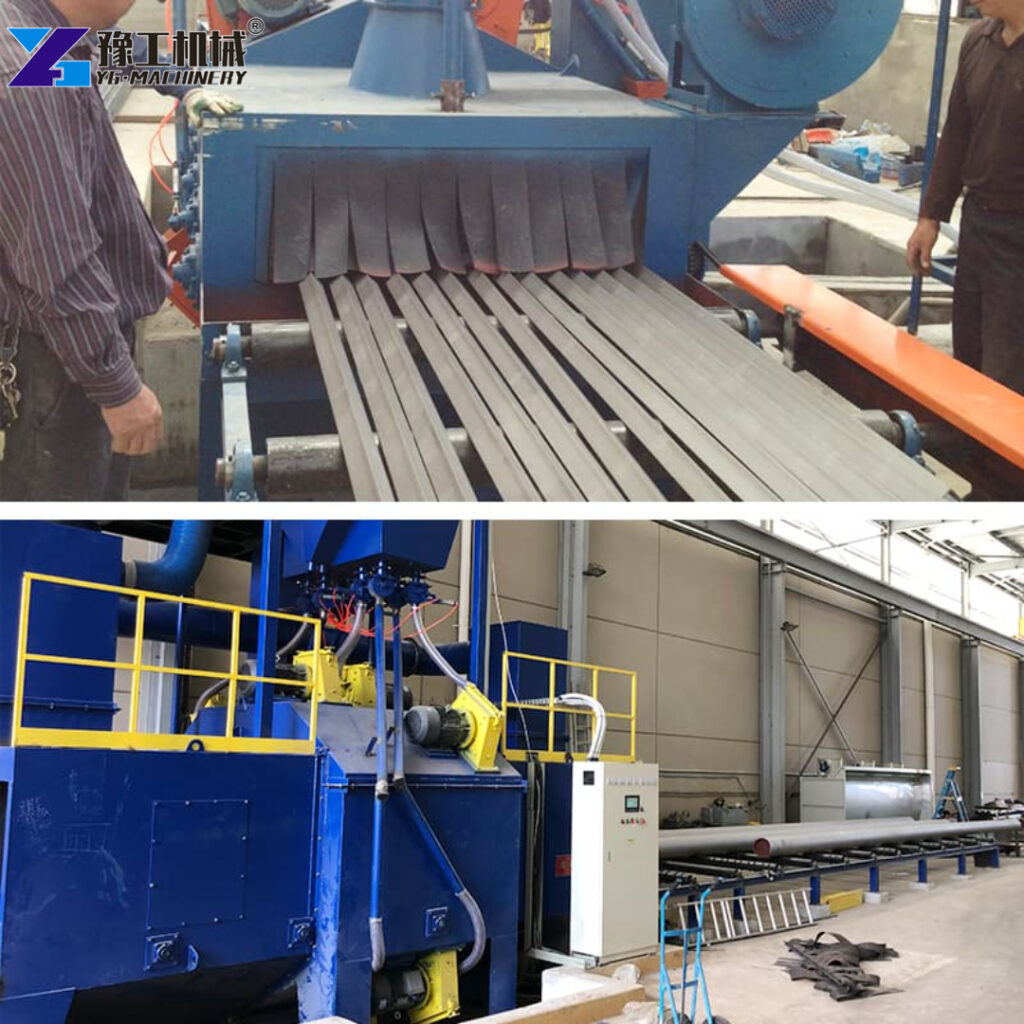
An industrial shot blaster for sale cleans metal surfaces by projecting high-speed steel shot or steel grit onto a workpiece inside a sealed blasting chamber. Unlike manual grinding or chemical cleaning, the entire process is automated, allowing manufacturers to achieve consistent surface quality while reducing labor costs and improving production efficiency.
During operation, each system works together to clean the workpiece, recover the abrasive, and maintain a clean working environment.
Step 1 – Load the Workpiece
Steel plates, structural beams, pipes, castings, or fabricated components are placed on the machine’s transport system. Depending on the machine type, the workpiece may move through the blasting chamber on a roller conveyor, rotate on a table, tumble inside a belt drum, or hang from a hook conveyor.
Selecting the correct feeding system ensures stable transportation and efficient cleaning for different workpiece sizes and shapes.
Step 2 – Blast Wheels Accelerate Steel Shot
Once the workpiece enters the blasting chamber, high-speed blast wheels accelerate steel shot using centrifugal force.
The abrasive strikes the metal surface at high velocity, removing:
- Rust
- Mill scale
- Oxidation
- Welding slag
- Old paint
- Surface contaminants
At the same time, the impact creates a controlled surface profile that improves coating adhesion before painting, powder coating, galvanizing, or thermal spraying.
Step 3 – Abrasive Recovery and Separation
After striking the workpiece, the steel shot falls into the recovery system instead of being discarded.
A screw conveyor transports the used abrasive to a bucket elevator, which lifts it into an air separator.
The separator removes:
- Broken abrasive
- Rust particles
- Dust
- Other contaminants
Clean steel shot is then returned to the storage hopper and reused for the next blasting cycle, helping reduce operating costs and material waste.
Step 4 – Dust Collection
Dust generated during blasting is extracted by a high-efficiency dust collection system.
Clean air is discharged after filtration, while collected dust is stored for disposal.
An effective dust collector helps improve workplace safety, protects machine components, and supports stable long-term operation.
Step 5 – Finished Surface Preparation
After blasting, the workpiece exits the chamber with a clean and uniform surface suitable for:
- Painting
- Powder coating
- Galvanizing
- Thermal spraying
- Welding
- Bonding
- Assembly
The entire process is continuous, making industrial shot blasting ideal for high-volume manufacturing environments.
Find the Right Model for Your Project
Industrial Shot Blasting Process
Workpiece Loading
↓
Automatic Conveyor Feeding
↓
High-Speed Blast Wheels
↓
Rust & Scale Removal
↓
Steel Shot Recovery
↓
Abrasive Separation
↓
Dust Collection
↓
Clean Surface Ready for Coating
Compared with traditional cleaning methods, this automated workflow improves production consistency, reduces manual handling, and lowers long-term operating costs, making industrial shot blasting one of the most efficient surface preparation technologies available.

Main Components of an Industrial Shot Blasting Machine
The performance of an industrial shot blaster depends on the quality and coordination of its major components. Understanding these systems helps buyers choose equipment that delivers reliable cleaning performance while minimizing maintenance costs.
Blast Wheels
Blast wheels are the core of every shot blasting machine.
They accelerate steel shot to high speed using centrifugal force and determine:
- Cleaning efficiency
- Surface finish quality
- Production capacity
- Abrasive consumption
High-performance blast wheels provide stable abrasive flow, longer wear life, and lower maintenance requirements.
Blasting Chamber
The blasting chamber is built with wear-resistant liners to withstand continuous impact from steel shot.
Its enclosed structure prevents abrasive from escaping while ensuring operators can work safely.
A well-designed chamber also improves blasting efficiency by directing abrasive toward the workpiece more effectively.
Roller Conveyor or Transport System
The transport system moves workpieces through the blasting chamber at a controlled speed.
Different transport methods are available depending on the application:
- Roller conveyor
- Hook conveyor
- Rotary table
- Tumble belt
- Overhead hanger
Choosing the right transport system helps improve productivity and reduce unnecessary handling.
Abrasive Recovery System
Instead of wasting steel shot after one use, industrial shot blasters automatically recover reusable abrasive.
The recovery system usually includes:
- Screw conveyor
- Bucket elevator
- Storage hopper
Automatic recycling significantly reduces abrasive consumption and operating costs.
Abrasive Separator
The separator removes broken steel shot, rust, dust, and other contaminants before reusable abrasive is returned to the blast wheels.
Efficient separation improves cleaning consistency while extending the service life of blast wheel components.
Dust Collection System
A high-performance dust collector keeps the blasting chamber clean and improves the working environment.
Its main functions include:
- Removing airborne dust
- Protecting machine components
- Improving visibility inside the chamber
- Supporting environmental compliance
Regular filter maintenance also helps maintain stable airflow and cleaning performance.
Electrical Control System
Modern industrial shot blasting machines are equipped with PLC-based control systems that simplify machine operation.
Typical functions include:
- Automatic start and stop
- Blast wheel monitoring
- Conveyor speed adjustment
- Safety protection
- Fault alarms
- Production parameter settings
Automation improves operating efficiency while reducing the possibility of human error.
Types of Industrial Shot Blasting Machines
Different manufacturing industries require different cleaning methods. Selecting the correct machine type improves productivity, reduces operating costs, and ensures the best cleaning results for each workpiece.
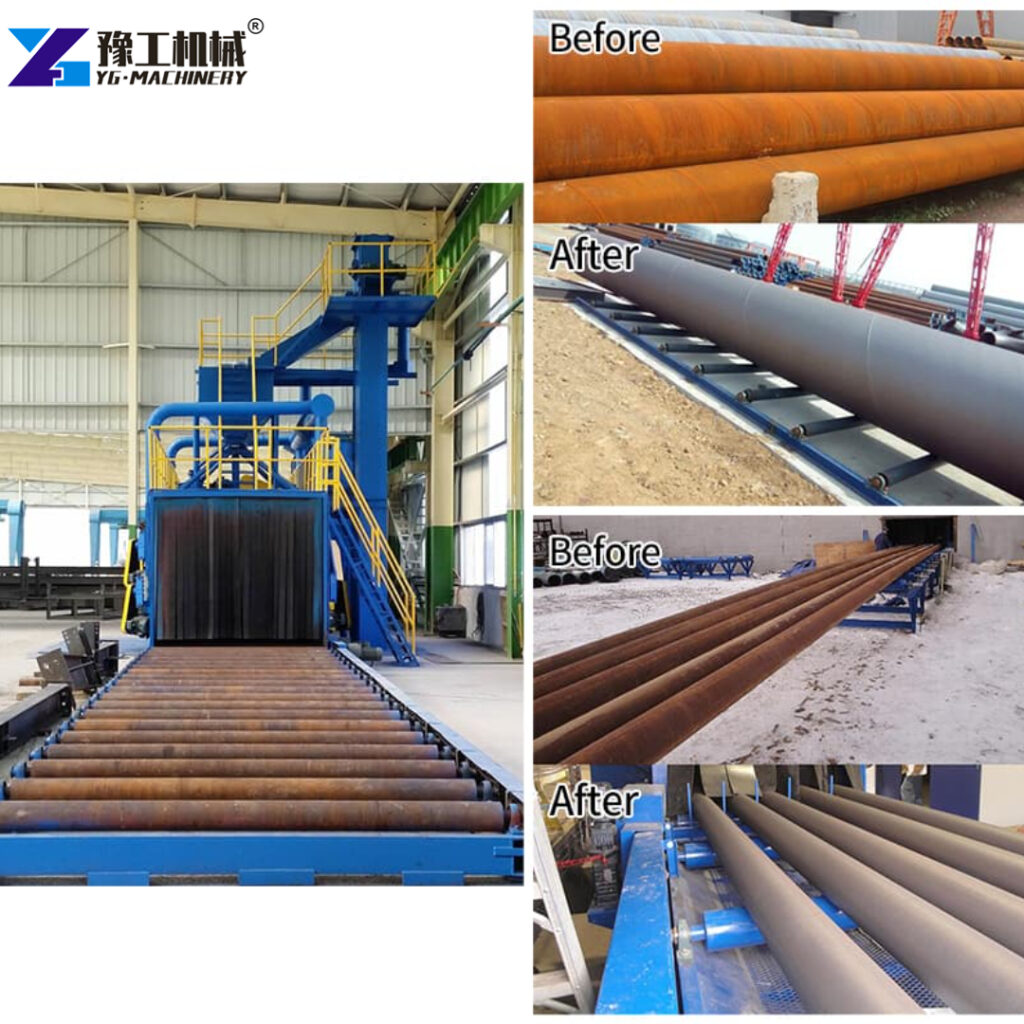
Roller Conveyor Shot Blasting Machine
This is one of the most widely used industrial shot blasting machines.
It is ideal for:
- Steel plates
- H-beams
- Structural steel
- Steel profiles
- Large welded components
Roller conveyor systems provide continuous operation, making them suitable for high-volume production lines.
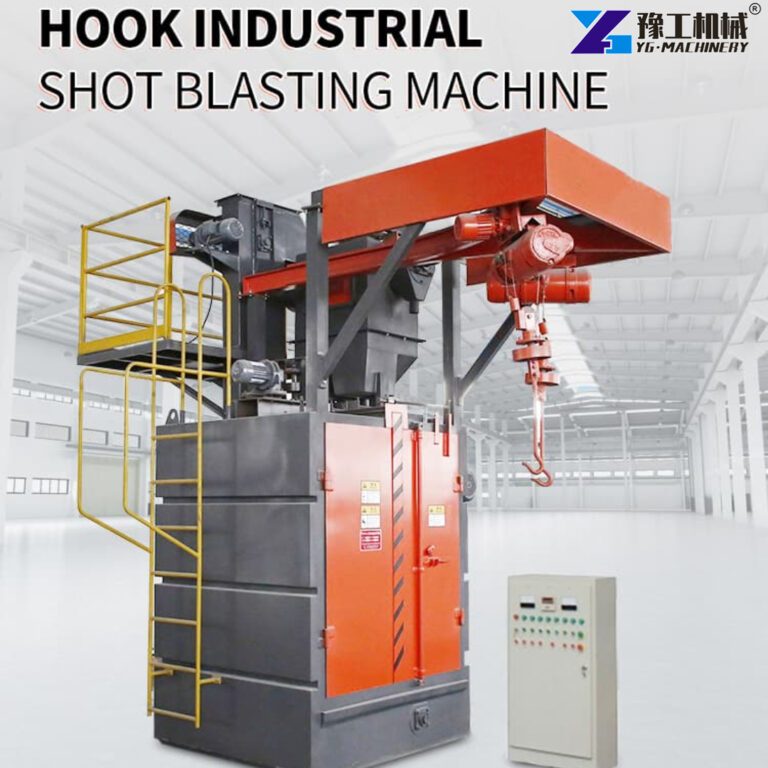
Hook Type Shot Blasting Machine
Hook-type machines suspend workpieces from rotating hooks during blasting.
They are commonly used for:
- Steel fabrications
- Castings
- Automotive parts
- Machinery components
Their flexibility makes them suitable for irregularly shaped workpieces that cannot be transported on rollers.
Hanger Type Shot Blasting Machine
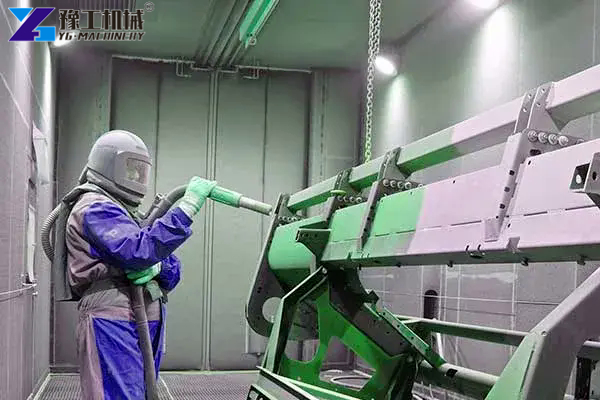
Hanger-type machines are designed for medium and large fabricated components that require complete surface cleaning.
Typical applications include:
- Construction equipment
- Agricultural machinery
- Heavy steel fabrications
The rotating hanger improves blasting coverage while reducing shadow areas.
Rotary Table Shot Blasting Machine
Rotary table machines clean workpieces placed on a rotating platform.
They are often selected for:
- Gears
- Valves
- Flanges
- Precision components
The rotating table ensures even exposure to the abrasive stream.
Tumble Belt Shot Blasting Machine
Tumble belt machines are designed for small parts produced in large quantities.
Suitable workpieces include:
- Forgings
- Fasteners
- Small castings
- Springs
- Hardware components
Continuous tumbling allows every surface to be exposed to the abrasive, providing uniform cleaning without manual repositioning.
Compare Models and Get a Quote
Applications of Industrial Shot Blasters
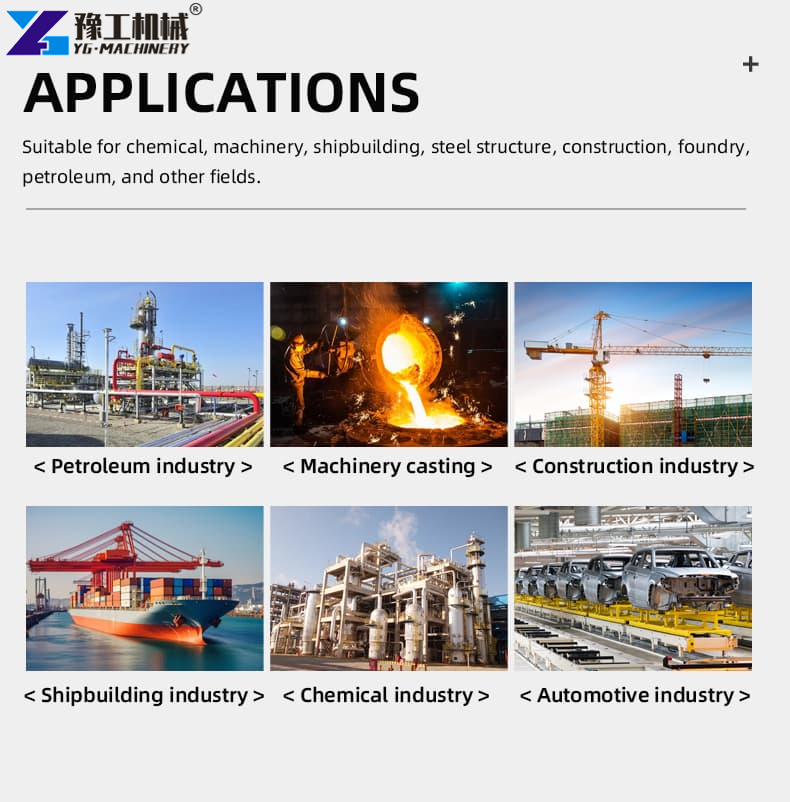
Industrial shot blasting is widely used wherever metal surfaces require cleaning, rust removal, or preparation before protective coating. By combining high cleaning efficiency with automatic abrasive recycling, these machines support continuous production across many manufacturing industries.
Steel Plate Processing
Steel plates are commonly blasted before painting, welding, or fabrication to remove rust, mill scale, and oxidation while creating a clean surface for subsequent processing.
Structural Steel Fabrication
H-beams, I-beams, channels, and fabricated structural components require consistent surface preparation before corrosion protection coatings are applied.
Industrial shot blasting improves coating adhesion and helps extend the service life of structural steel used in buildings, bridges, and industrial plants.
Steel Pipe Manufacturing
Pipes used in oil, gas, water, and infrastructure projects often require shot blasting before internal or external coating.
Uniform surface preparation improves coating performance and helps protect pipelines from corrosion during long-term service.
Shipbuilding and Offshore Engineering
Hull plates, steel sections, and offshore structural components are frequently exposed to harsh marine environments.
Shot blasting removes contaminants before marine coatings are applied, helping improve corrosion resistance and coating durability.
Heavy Machinery Manufacturing
Construction machinery, mining equipment, agricultural machinery, and industrial equipment all require high-quality surface preparation before painting or assembly.
Industrial shot blasting improves appearance while supporting better long-term protection against wear and corrosion.
Industrial Shot Blasting Applications by Industry
Industrial shot blasting is used across many manufacturing sectors because different industries require different surface preparation standards. Choosing the right machine configuration based on the workpiece and production line helps improve efficiency while reducing operating costs.
| Industry | Typical Workpiece | Recommended Machine Type |
|---|---|---|
| Steel Fabrication | Steel plates, H-beams, channels | Roller conveyor shot blasting machine |
| Shipbuilding | Hull plates, structural sections | Roller conveyor shot blasting machine |
| Bridge Construction | Steel girders, welded structures | Roller conveyor shot blasting machine |
| Oil & Gas | Steel pipes, pipe fittings | Pipe shot blasting machine |
| Wind Power | Tower sections, flanges | Roller conveyor or hanger type |
| Automotive | Chassis, castings, suspension parts | Hook type shot blasting machine |
| Foundry | Castings, forgings | Tumble belt shot blasting machine |
| Heavy Equipment | Frames, buckets, fabricated components | Hook type or hanger type |
By selecting a machine designed for your production process, you can achieve better cleaning consistency, reduce material handling, and improve production efficiency.
Benefits of Using an Industrial Shot Blaster
Investing in an industrial shot blaster for sale is about more than removing rust. It helps manufacturers improve production efficiency, reduce operating costs, and achieve a higher-quality finish before coating or assembly.
Improve Surface Quality
Shot blasting removes rust, mill scale, welding residue, and old coatings while creating a uniform anchor profile.
This surface profile allows paint, powder coating, and galvanizing layers to bond more effectively, improving durability and corrosion resistance.
Increase Production Efficiency
Automatic shot blasting processes multiple workpieces continuously without the need for extensive manual labor.
Compared with grinding or wire brushing, manufacturers can process significantly more material within the same production shift.
Reduce Labor Costs
Manual surface preparation often requires several operators and produces inconsistent results.
An automated shot blasting machine reduces labor requirements while delivering repeatable cleaning quality across every workpiece.
Lower Abrasive Consumption
Unlike disposable blasting methods, industrial shot blasting machines recover and recycle steel shot automatically.
Efficient abrasive recycling reduces material consumption and lowers long-term operating costs.
Improve Workplace Safety
The enclosed blasting chamber and integrated dust collection system help reduce airborne dust and improve working conditions.
A cleaner production environment also helps protect machine components and supports routine maintenance.
Support Continuous Production
Industrial shot blasting machines are designed for continuous operation and can be integrated into automated production lines.
This makes them ideal for manufacturers processing large quantities of steel products every day.
Industrial Shot Blaster vs. Sand Blasting
Both shot blasting and sandblasting are used for surface preparation, but they differ significantly in efficiency, operating cost, and suitable applications.
| Feature | Industrial Shot Blaster | Sand Blasting |
|---|---|---|
| Abrasive | Steel shot or steel grit | Sand or disposable media |
| Abrasive Reuse | Yes | Usually limited |
| Automation | High | Mostly manual |
| Cleaning Efficiency | High | Medium |
| Dust Generation | Lower with dust collector | Higher |
| Operating Cost | Lower over time | Higher consumable cost |
| Production Capacity | Continuous | Batch operation |
| Suitable for Production Lines | Yes | Limited |
| Environmental Performance | Better | Depends on media and recovery |
For manufacturers with continuous production requirements, industrial shot blasting generally offers better productivity and lower operating costs than manual sandblasting.
How to Choose the Right Industrial Shot Blaster for Sale
Selecting the right equipment involves more than choosing the largest machine. The best solution depends on your workpiece dimensions, production volume, required surface quality, and future expansion plans.
Step 1 – Identify Your Workpiece
Different machines are designed for different products.
For example:
- Steel plates
- H-beams
- Steel pipes
- Structural components
- Castings
- Forgings
Understanding your primary workpiece helps narrow the selection quickly.
Step 2 – Determine the Cleaning Width
The cleaning width should match the maximum dimensions of your workpieces.
Choosing equipment that is too small may limit production, while an oversized machine can increase investment and operating costs unnecessarily.
Step 3 – Evaluate Production Capacity
Consider:
- Daily production volume
- Working shifts
- Continuous or batch production
- Future business growth
Selecting a machine that supports expected production capacity helps maximize long-term return on investment.
Step 4 – Choose the Right Blast Wheel Configuration
Blast wheel quantity and power directly affect cleaning efficiency.
Machines designed for heavy-duty industrial production usually include multiple blast wheels to provide uniform surface treatment across large workpieces.
Step 5 – Consider Dust Collection Performance
An efficient dust collection system helps maintain stable machine performance while creating a cleaner and safer working environment.
High-quality filtration also reduces maintenance requirements and supports environmental compliance.
Step 6 – Evaluate Automation Requirements
Manufacturers operating high-volume production lines may benefit from:
- PLC control systems
- Automatic conveyor speed adjustment
- Automatic abrasive recycling
- Intelligent fault monitoring
Higher automation can reduce labor costs while improving production consistency.
Step 7 – Select a Reliable Manufacturer
Equipment quality is only one part of the investment.
A reliable supplier should also provide:
- Professional technical consultation
- Installation guidance
- Operator training
- Spare parts support
- After-sales service
Long-term support helps reduce downtime and protects your investment.
Boost Productivity—Get a Free Quote
Which Industrial Shot Blaster Fits Your Production Line?
Different production environments require different machine configurations. The following guide provides a simple reference for selecting the most suitable equipment.
| Production Requirement | Recommended Machine |
|---|---|
| Steel plates and structural sections | Roller conveyor shot blasting machine |
| Large welded fabrications | Hook type shot blasting machine |
| Irregular heavy components | Hanger type shot blasting machine |
| Small castings and forgings | Tumble belt shot blasting machine |
| Precision circular components | Rotary table shot blasting machine |
| Automated production line | Roller conveyor with PLC control |
If you are unsure which model best suits your production process, our engineering team can recommend a customized solution based on your workpiece dimensions, production capacity, and factory layout.
Industrial Shot Blaster Specifications
YG Machinery offers multiple industrial shot blasters for sale to meet different production requirements. Whether you process steel plates, structural steel, pipes, fabricated components, or castings, selecting the correct machine configuration helps improve cleaning quality while reducing operating costs.
(Insert your specification table here.)
Recommended parameters include:
| Item | Description |
|---|---|
| Cleaning Width | 800–4000 mm (customizable) |
| Blast Wheel Quantity | According to production capacity |
| Blast Wheel Power | According to model |
| Conveyor Speed | Adjustable |
| Abrasive Type | Steel shot / Steel grit |
| Dust Collector | Pulse bag filter |
| Control System | PLC or standard electrical control |
| Power Supply | Customizable |
| OEM Service | Available |
Tip: If your production line has special requirements, YG Machinery can customize the cleaning width, conveyor system, blast wheel configuration, and electrical controls.
How to Read Industrial Shot Blaster Specifications
When comparing different machines, many buyers focus only on the cleaning width. However, overall performance depends on several key specifications working together.
Cleaning Width
The cleaning width determines the maximum size of workpieces the machine can process. It should match the largest steel plate, beam, or fabricated component in your production line.
Blast Wheel Configuration
More blast wheels generally provide higher cleaning efficiency and more uniform surface treatment, especially for large workpieces.
Conveyor Speed
Adjustable conveyor speed allows operators to balance cleaning quality with production efficiency.
Abrasive Recovery System
A high-efficiency recovery system minimizes abrasive consumption and lowers long-term operating costs.
Dust Collection Capacity
Proper dust extraction keeps the blasting chamber clean, protects machine components, and improves the working environment.
Automation Level
PLC-controlled systems simplify operation, reduce manual intervention, and improve production consistency.
Industrial Shot Blaster Price: What Affects the Cost?
One of the most common questions buyers ask is, “How much does an industrial shot blaster cost?”
There is no universal price because every production line has different technical requirements. Instead of focusing only on the initial purchase cost, manufacturers should evaluate the total value the equipment delivers throughout its service life.
Several factors influence the final quotation.
Machine Type
Roller conveyor, hook type, hanger type, rotary table, and tumble belt machines have different structures and production capacities, resulting in different price ranges.
Cleaning Width
Larger cleaning widths require larger blasting chambers, stronger conveyors, and higher-capacity dust collection systems, increasing manufacturing costs.
Blast Wheel Quantity
Machines equipped with more blast wheels generally offer higher productivity but also require greater initial investment.
Automation Level
Optional PLC systems, automatic loading devices, conveyor integration, and intelligent monitoring functions can improve efficiency while affecting the total machine cost.
Customization
Customized voltage, conveyor length, machine dimensions, abrasive recycling systems, and OEM branding may also influence pricing.
Shipping Destination
International freight, packaging requirements, and destination ports vary by country, affecting the final delivered cost.
Request a quotation: Tell us your workpiece dimensions, production capacity, and destination country, and our engineers will recommend the most suitable configuration with an accurate quotation.
Common Mistakes When Buying an Industrial Shot Blaster
Purchasing the right shot blasting machine is a long-term investment. Avoiding the following mistakes can help reduce unnecessary costs and improve production efficiency.
Choosing Equipment Based Only on Price
The lowest-priced machine may not provide the durability, efficiency, or after-sales support required for continuous industrial production.
Selecting the Wrong Machine Type
Different workpieces require different machine designs. Choosing the wrong transport system may reduce cleaning efficiency and increase handling costs.
Ignoring Blast Wheel Quality
Blast wheels directly affect cleaning performance and maintenance frequency. High-quality components generally provide longer service life and more stable operation.
Overlooking Dust Collection Performance
An inadequate dust collection system can reduce cleaning efficiency, increase maintenance, and negatively affect the working environment.
Forgetting Future Production Growth
Purchasing equipment based only on current production needs may require costly upgrades as business expands. Selecting a machine with moderate expansion capacity often provides better long-term value.
ROI Analysis: Is an Industrial Shot Blaster Worth the Investment?
While the initial investment in an industrial shot blasting machine may be higher than manual cleaning equipment, the long-term savings are often substantial.
Example Production Scenario
- Workpiece: Structural steel
- Daily Output: 120 steel sections
- Surface Preparation Method: Rust removal before painting
| Item | Manual Grinding | Industrial Shot Blasting |
|---|---|---|
| Operators Required | 8 | 2 |
| Daily Production | Lower | Higher |
| Surface Consistency | Varies | Uniform |
| Abrasive Recycling | No | Yes |
| Operating Cost | Higher | Lower over time |
By reducing manual labor, improving coating quality, and shortening production cycles, many manufacturers recover their investment through lower operating costs and higher production efficiency.
Need a customized ROI estimate? Our team can calculate expected savings based on your production volume, labor costs, and operating schedule.
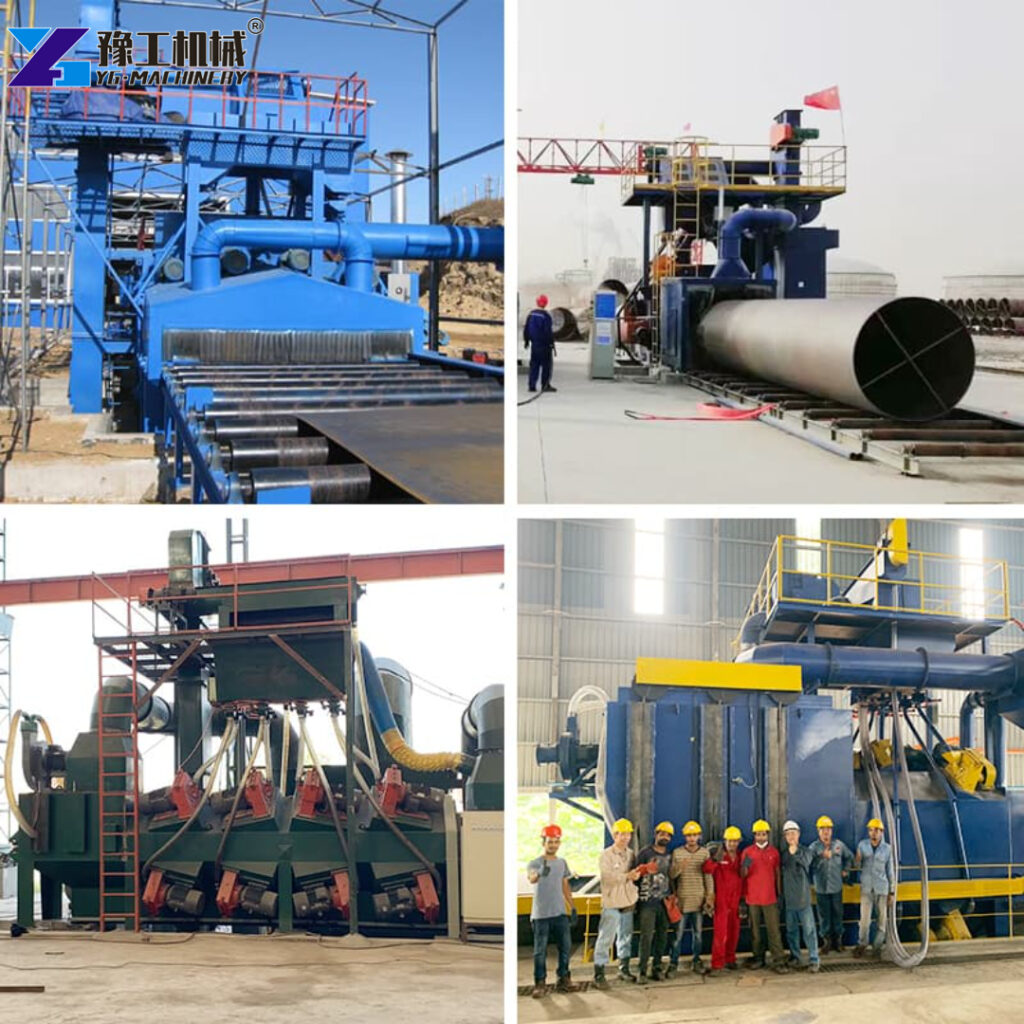
Customer Success Story: Roller Conveyor Shot Blasting Machine Delivered for Structural Steel Production
A steel fabrication company required a more efficient solution to prepare structural steel before painting. Manual grinding could not keep pace with production demand, and inconsistent cleaning quality affected coating performance.
After reviewing the customer’s production process, YG Machinery recommended a roller conveyor industrial shot blasting machine with automatic abrasive recycling and a high-efficiency dust collection system.
Customer Challenges
- High daily production volume
- Large steel sections
- Labor-intensive manual cleaning
- Inconsistent coating adhesion
Our Solution
- Roller conveyor transport system
- Multiple high-performance blast wheels
- Automatic abrasive recovery
- Pulse dust collection system
- PLC control for stable operation
Results
After installation, the customer reported:
- Increased production efficiency
- More consistent surface quality
- Reduced labor requirements
- Lower abrasive consumption
- Improved coating adhesion
The equipment now operates as part of the customer’s continuous steel fabrication line, helping improve productivity while reducing operating costs.
Why Buyers Trust YG Machinery
Manufacturers worldwide choose YG Machinery because we combine reliable equipment with practical engineering support.
Our Strengths
- Founded in 2005
- 50+ Engineers and Technicians
- Exported to 100+ Countries
- 5,000+ Machines Delivered
- OEM & Custom Manufacturing
- Professional Technical Support
- Spare Parts Supply
- Global Shipping Experience
These strengths enable us to provide equipment solutions tailored to different industries and production requirements.
Why Choose YG Machinery?
Selecting the right supplier is just as important as selecting the right machine.
YG Machinery provides complete support throughout the purchasing process, from equipment selection to installation and after-sales service.
What We Offer
- Professional equipment recommendations
- Customized machine configurations
- OEM and private label services
- Strict quality inspection before shipment
- Installation guidance and operator training
- Spare parts support
- Responsive after-sales service
- Worldwide delivery solutions
Whether you are upgrading an existing production line or building a new manufacturing facility, our team is ready to help you select the most suitable industrial shot blasting solution.
Compare Models and Get a Quote
Frequently Asked Questions About Industrial Shot Blasters
An industrial shot blaster is used to remove rust, mill scale, oxidation, welding slag, old paint, and other surface contaminants from steel components. It also creates a uniform surface profile that improves the adhesion of paint, powder coating, galvanizing, and other protective finishes.
Industrial shot blasting machines are suitable for many metal workpieces, including:
Steel plates
Structural steel
H-beams
Steel pipes
Castings
Forgings
Welded fabrications
Machinery components
Different machine types are available depending on the size and shape of the workpiece.
Shot blasting uses reusable steel shot or steel grit propelled by centrifugal blast wheels, making it highly efficient for industrial production. Sandblasting generally relies on compressed air and disposable abrasive media, making it more suitable for smaller or specialized applications.
Most industrial shot blasters can achieve surface cleanliness levels up to Sa2.5 or Sa3, depending on the machine configuration, abrasive type, and blasting parameters. These standards are commonly required before painting, galvanizing, or applying protective coatings.
Yes. Industrial shot blasting machines automatically recover, separate, and recycle steel shot through an abrasive recovery system. Reusable abrasive significantly reduces material consumption and long-term operating costs.
Selection depends on several factors, including:
Workpiece dimensions
Daily production volume
Surface cleanliness requirements
Available factory space
Automation level
Budget
YG Machinery can recommend the most suitable model after reviewing your production requirements.
The final price depends on machine type, cleaning width, blast wheel quantity, automation level, dust collection system, electrical configuration, customization requirements, and shipping destination.
Routine maintenance includes:
Inspecting blast wheel wear parts
Cleaning the dust collection system
Checking conveyor components
Monitoring abrasive quality
Lubricating moving parts
Inspecting electrical systems
Preventive maintenance helps ensure stable performance and extends machine life.
Yes. YG Machinery offers OEM and customized solutions, including:
Cleaning width
Conveyor design
Voltage and frequency
PLC control systems
Machine color
Company logo
Special production line integration
Yes. We provide installation guidance, commissioning assistance, operation manuals, operator training, technical consultation, spare parts support, and responsive after-sales service.
YG Machinery provides reliable industrial shot blasting equipment backed by engineering support, OEM customization, quality inspection, global export experience, and responsive after-sales service. We help manufacturers select equipment that matches their production requirements rather than offering a one-size-fits-all solution.
People Also Ask
With proper maintenance and timely replacement of wear parts, an industrial shot blaster can operate reliably for many years in continuous production environments.
Steel shot is commonly used for general surface cleaning, while steel grit is preferred when a rougher surface profile is required for coating adhesion.
Compared with disposable abrasive methods, industrial shot blasting is generally more environmentally friendly because it automatically recovers and reuses abrasive while reducing dust through an enclosed blasting chamber and dust collection system.
Yes. By removing contaminants and creating a controlled anchor profile, shot blasting significantly improves coating adhesion and helps extend the service life of painted or galvanized products.
Industrial Shot Blaster Buying Checklist
Before requesting a quotation, preparing the following information will help our engineers recommend the most suitable equipment.
- ✔ Type of workpiece
- ✔ Maximum workpiece dimensions
- ✔ Material thickness
- ✔ Daily production capacity
- ✔ Required surface cleanliness (Sa2.5, Sa3, etc.)
- ✔ Preferred automation level
- ✔ Available workshop space
- ✔ Power supply requirements
- ✔ Destination country
- ✔ Delivery port
Providing complete project information allows us to recommend the right machine configuration and prepare an accurate quotation more quickly.
Get Your Industrial Shot Blaster Solution Today
Choosing the right industrial shot blaster for sale is not simply about purchasing equipment—it’s about improving production efficiency, reducing operating costs, and delivering consistent surface quality for every workpiece.
At YG Machinery, our engineers work closely with manufacturers to recommend equipment based on actual production requirements rather than generic specifications. Whether you process steel plates, structural steel, pipes, castings, or fabricated components, we can help you identify the most suitable shot blasting solution.
Contact us with the following information:
- Your workpiece type and dimensions
- Daily production capacity
- Required surface preparation standard
- Factory layout or production line information
- Destination country and delivery port
You’ll receive:
- Professional machine selection advice
- Customized equipment configuration
- Detailed technical specifications
- FOB or CIF quotation
- Production photos and testing videos
- Shipping and packaging recommendations
- Installation guidance and operator training
- Spare parts and long-term technical support
Whether you are upgrading an existing production line or building a new steel fabrication facility, YG Machinery is committed to providing reliable shot blasting equipment and responsive service to support your business.
Contact us today to receive a customized industrial shot blasting solution and a competitive quotation.