Large glass panels are becoming increasingly common in commercial buildings, shopping centers, office towers, and curtain wall projects across Canada. While modern architectural designs create attractive buildings, they also introduce significant lifting challenges. Contractors often need to move heavy glass panels through narrow openings, work inside completed buildings, and operate in areas where traditional cranes cannot access.
In 2025, a Canadian glazing contractor contacted YG Machinery seeking a compact lifting solution for a curtain wall installation project. After evaluating several suppliers and comparing different lifting methods, the customer finally selected a spydercrane mini crawler crane from YG Machinery. The machine was delivered quickly and successfully and became one of the most frequently used pieces of equipment on the project site.
This case study explains the customer’s challenges, selection process, equipment configuration, installation experience, and real-world operating feedback.
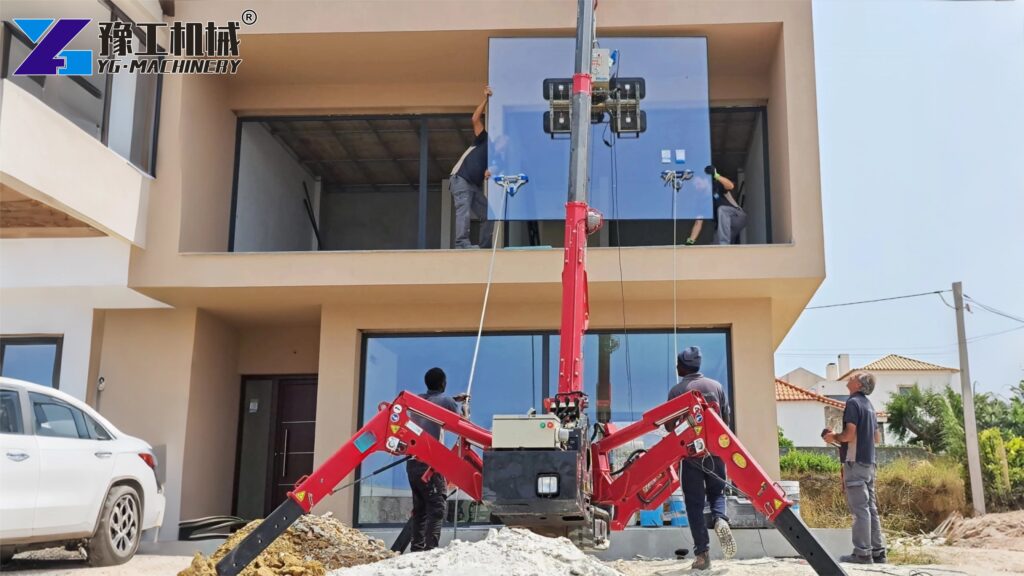
Why Canadian Glass Installation Contractors Need Compact Lifting Solutions
Canada’s construction industry continues to invest heavily in commercial buildings, healthcare facilities, airports, shopping centers, and residential high-rise developments.
Glass curtain walls are widely used because they provide:
- Modern architectural appearance
- Better natural lighting
- Improved energy efficiency
- Increased property value
However, glass installation presents several difficulties:
- Heavy glass panels require precise positioning
- Limited access inside buildings
- Weight restrictions on finished floors
- Narrow doorways and elevators
- Safety requirements for workers
- Short project schedules
Traditional truck cranes can handle lifting capacity requirements but often cannot reach installation areas inside buildings.
Manual lifting creates safety risks and lowers productivity.
As a result, many contractors now use compact spider cranes specifically designed for glass installation work.
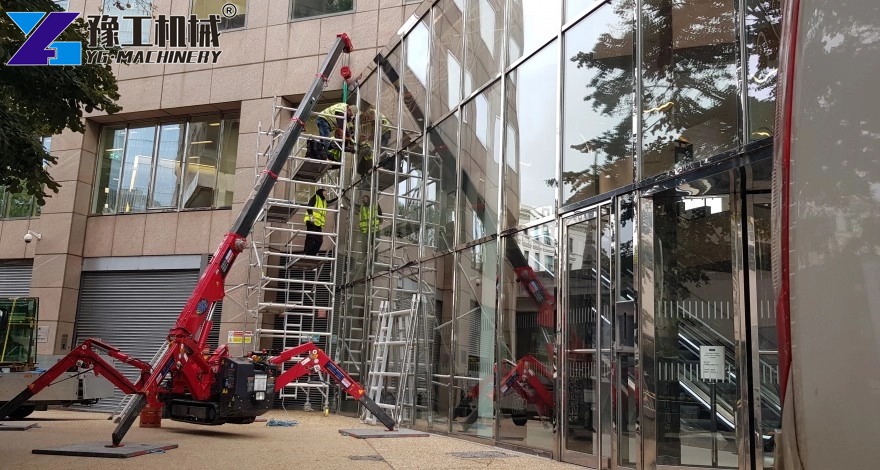
Customer Background and Glass Installation Challenges
The Canadian customer specializes in:
- Curtain wall installation
- Commercial glazing
- Building renovation
- Interior glass wall systems
- High-end office construction
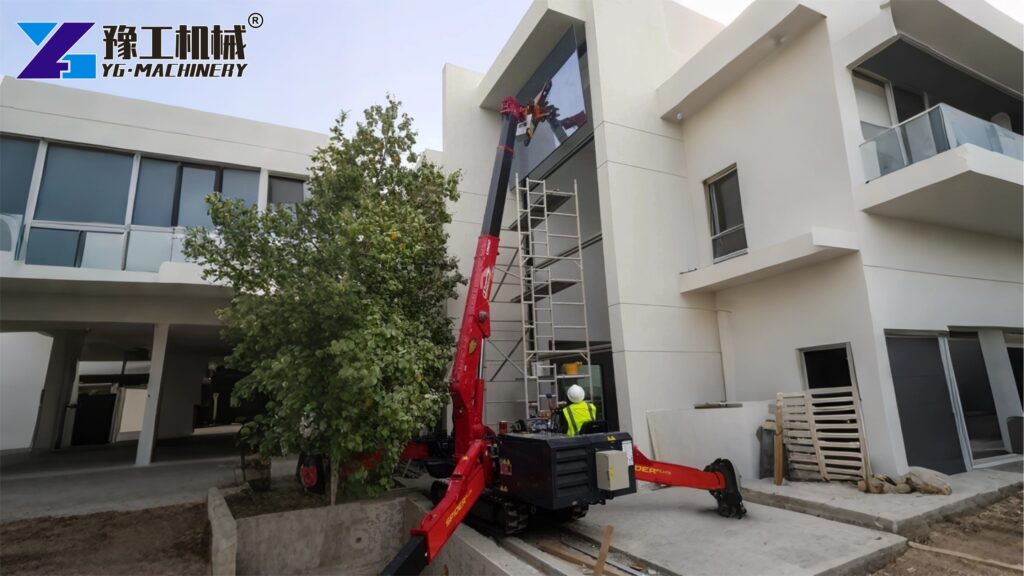
The project involved installing large laminated glass panels in a newly completed commercial complex.
Several project conditions created challenges:
Restricted Access
The installation area was located inside the building.
A conventional crane could not enter through the completed entrance.
Finished Interior Environment
Flooring and wall finishes had already been completed.
Heavy equipment could damage expensive interior materials.
Limited Working Space
The installation area provided minimal maneuvering room.
Equipment needed to operate safely within narrow corridors.
High Precision Requirement
Glass panels required millimeter-level positioning accuracy.
Any sudden movement could damage expensive glass materials.
Tight Construction Schedule
The project owner demanded rapid installation without compromising safety.
The contractor needed a machine that could begin work immediately after arrival.
Because of these requirements, the customer began evaluating several lifting solutions.
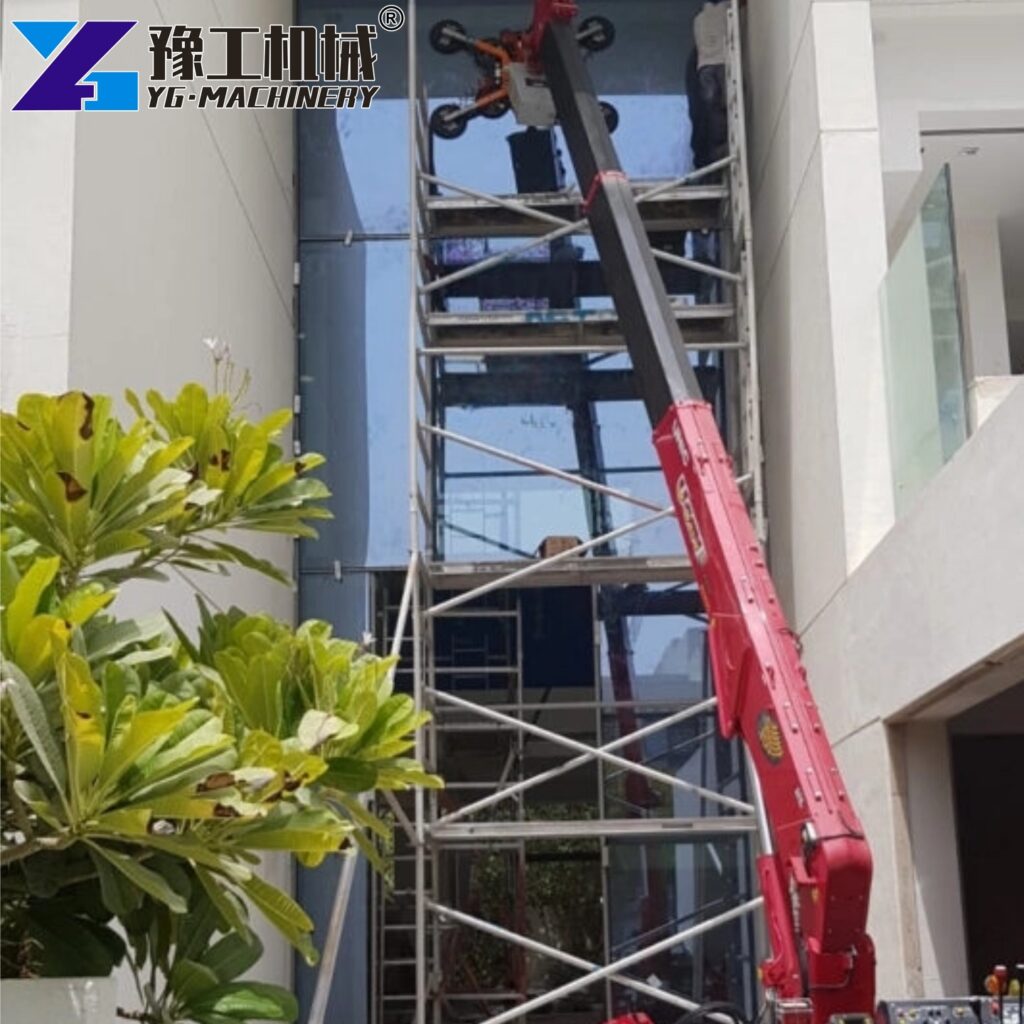
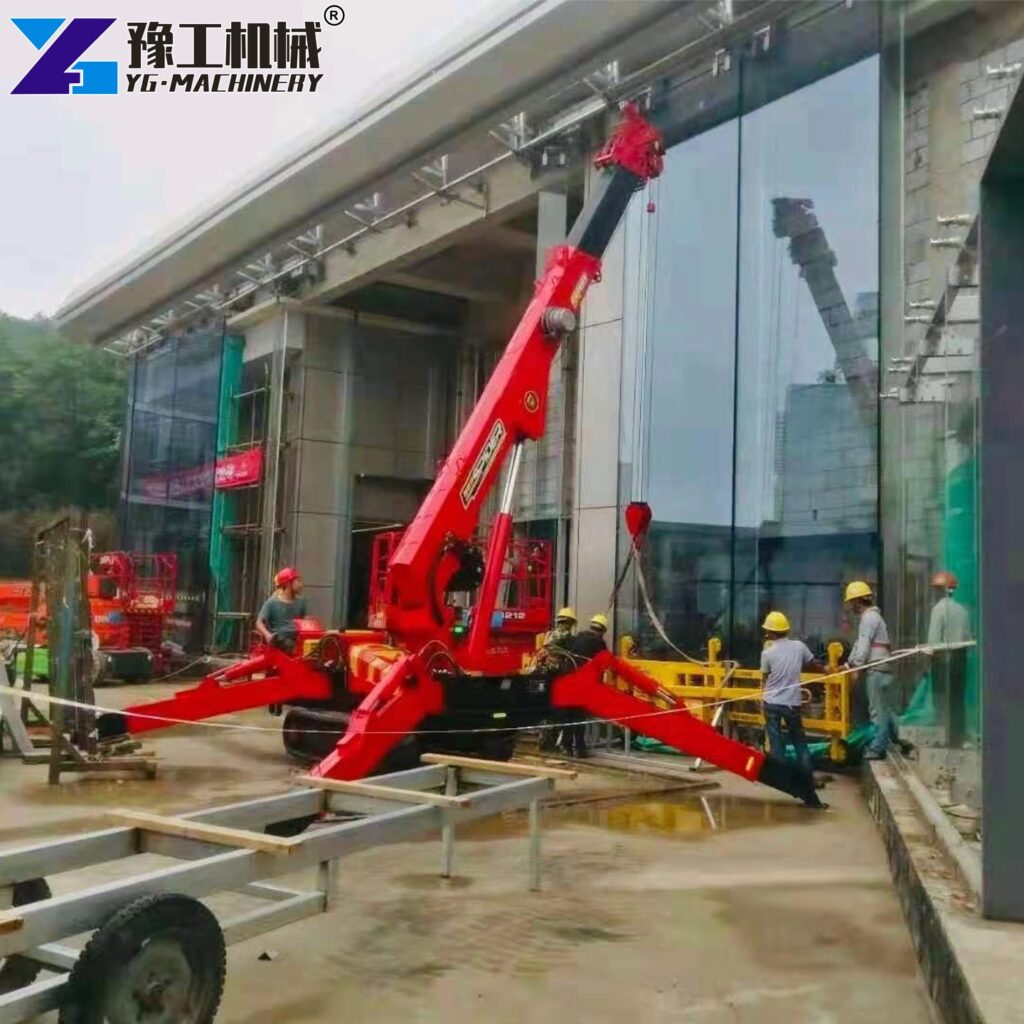
Why the Customer Compared Several Mini Spider Crane Suppliers Before Buying
Before purchasing, the contractor reviewed multiple manufacturers from Asia, Europe, and North America.
The customer compared:
- Lifting capacity
- Working radius
- Transportation dimensions
- Delivery time
- Service support
- Spare parts availability
- Overall investment cost
The evaluation team initially considered renting equipment locally.
However, rental costs for long-term projects were extremely high.
The company also planned future curtain wall projects across multiple Canadian cities.
Purchasing equipment became a more economical option.
Several suppliers offered standard lifting equipment, but many machines were either:
- Too large for indoor work
- Too expensive
- Difficult to transport
- Limited in lifting radius
After reviewing YG Machinery’s proposal, the customer found a better balance between performance, compact size, and budget.
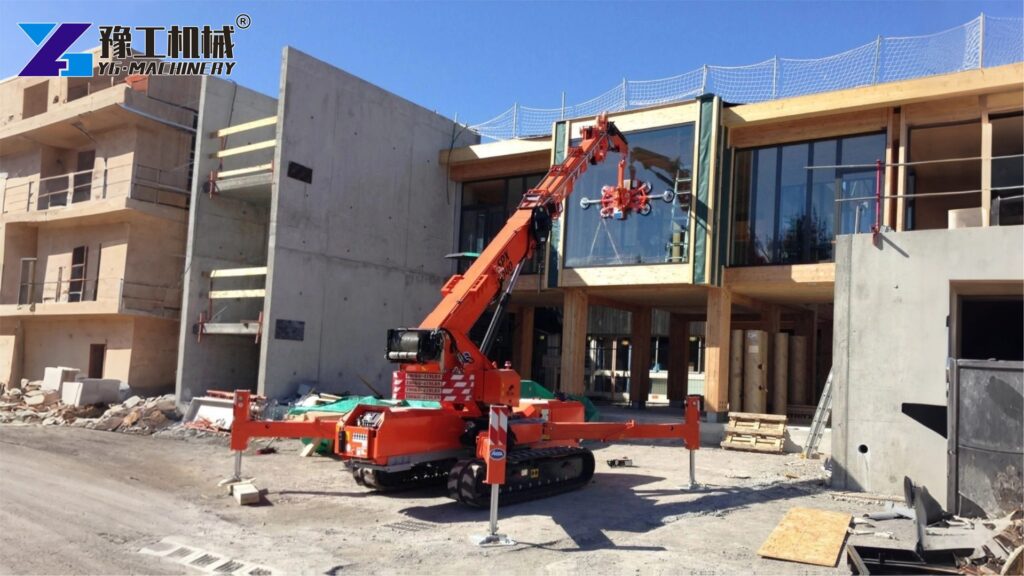
Spydercrane Mini Crawler Crane Solution Recommended by YG Machinery
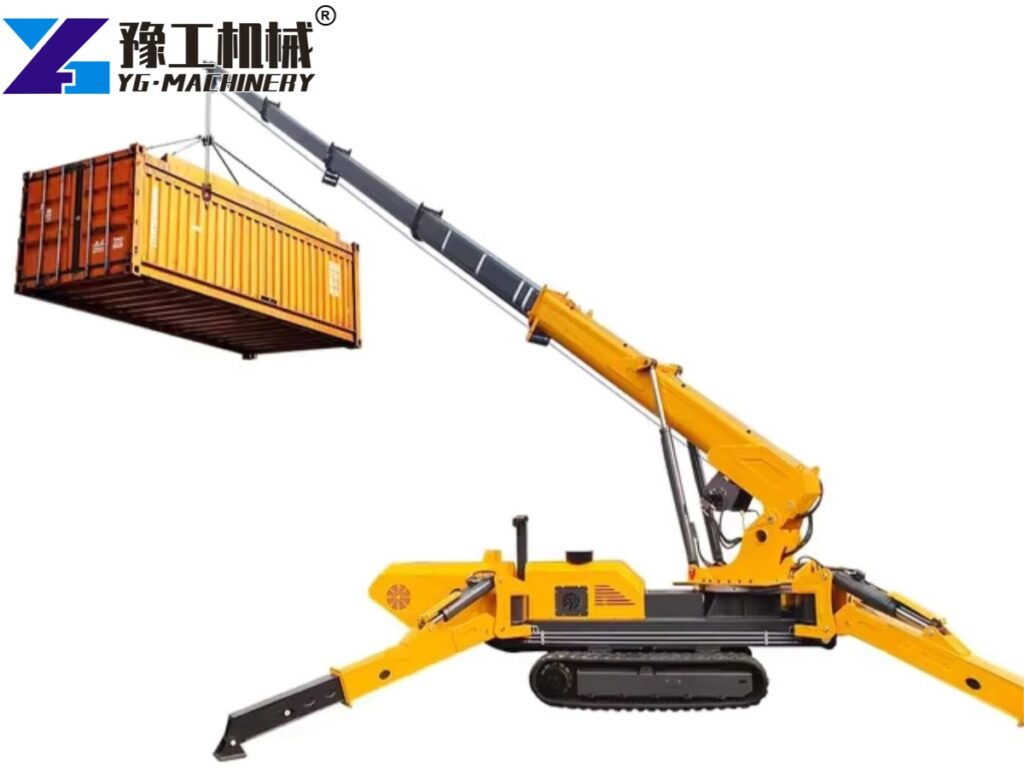
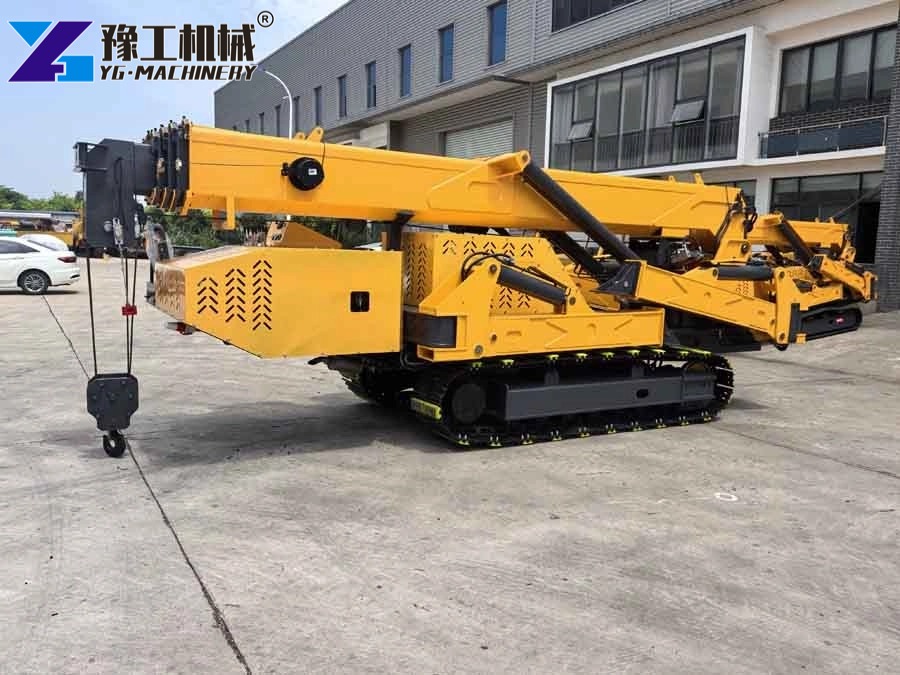
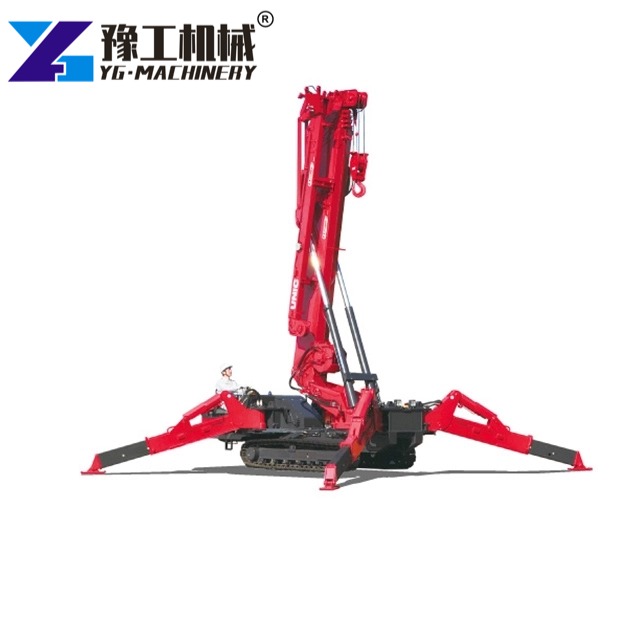
After analyzing project requirements, YG Machinery recommended the spydercrane mini crawler crane series.
The customer selected a model capable of handling large glass panels while maintaining excellent maneuverability inside confined spaces.
Key advantages included:
Compact Transportation Size
The machine could pass through restricted entrances and move easily inside the building.
Telescopic Boom Design
The multi-section boom provided flexible lifting capabilities without requiring excessive working space.
360-Degree Continuous Rotation
Operators could position glass panels precisely from different angles.
Hydraulic Crawlers
The crawler system allowed smooth movement across construction surfaces while maintaining stability.
Remote Control Operation
Remote control increased operator visibility and improved installation precision.
Low Ground Pressure
The machine reduced risk of damage to finished flooring.
These advantages directly addressed the customer’s concerns.
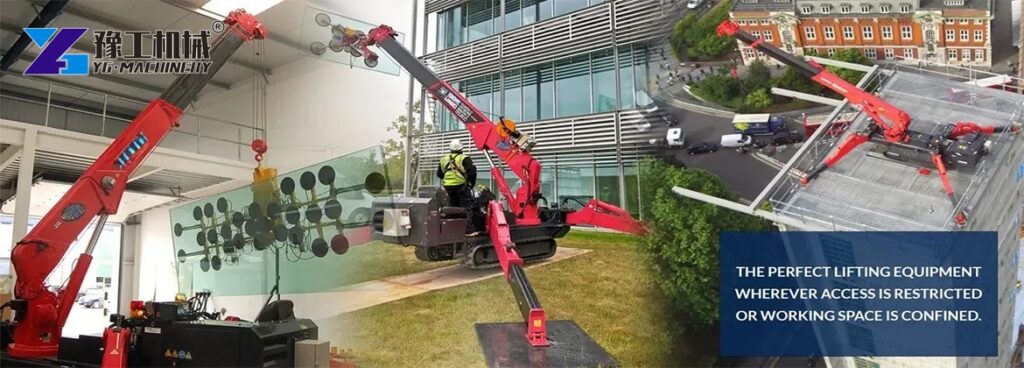
Spydercrane Mini Crawler Crane Specifications Used in Canada Project
To help future buyers evaluate equipment suitability, the customer requested detailed performance specifications before purchasing.
YG Mini Spider Crane Specifications
| Model | YG-3 | YG-5 | YG-8 |
|---|---|---|---|
| Capacity | 3t | 5t | 8t |
| Max Working Radius | 8.83m × 0.15t | 14m × 0.5t | 16.5m |
| Max Lifting Height | 9.9m × 0.7t | 16.8m | 18m |
| Rope Diameter | φ8mm × 45m | Φ11mm × 80m | Φ11mm × 80m |
| Boom Type | 5-section | 5-section | 5-section |
| Boom Length | 3.1-9.2m | 12.3m | 12.3m |
| Boom Angle | 0°-78° | 0°-78° | 0°-78° |
| Slew Angle | 360° Continuous | 360° Continuous | 360° Continuous |
| Walking Speed | 0-2.5km/h | 0-2.5km/h | 0-2.5km/h |
| Gradeability | 36% | 36% | 36% |
| Transport Size | 2950×980×1560mm | 5000×1500×1900mm | 5000×1600×2180mm |
| Weight | 2700kg | 6200kg | 7200kg |
The customer selected the configuration best suited to glass panel dimensions and site access conditions.
See the full specifications, customization options, and delivery details.
How the Mobile Spider Crane Was Delivered and Commissioned
Once the order was confirmed, YG Machinery coordinated production, quality inspection, export packaging, and shipment.
The process included:
Factory Testing
Before shipment, engineers performed:
- Hydraulic system testing
- Load testing
- Boom extension inspection
- Stability verification
- Safety device testing
Export Preparation
The machine was packed securely for international transportation.
All documentation was prepared in advance:
- Commercial invoice
- Packing list
- Operating manual
- Maintenance guide
- Spare parts list
Arrival in Canada
After customs clearance, the equipment was transported directly to the project location.
Operator Training
YG Machinery provided:
- Operation guidance
- Safety instructions
- Maintenance recommendations
- Troubleshooting support
The customer reported that installation and commissioning proceeded smoothly.
The crane entered service shortly after delivery.
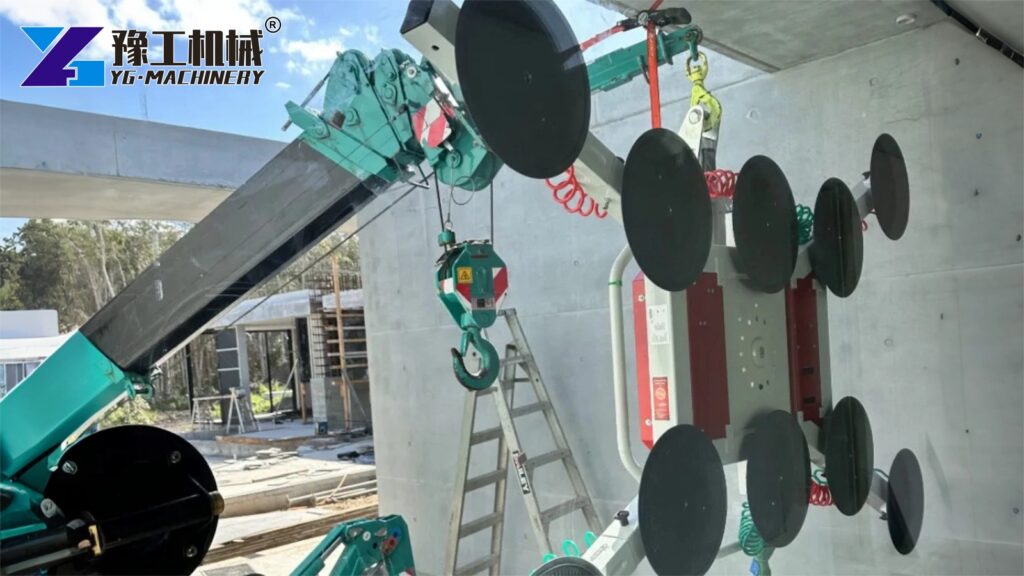
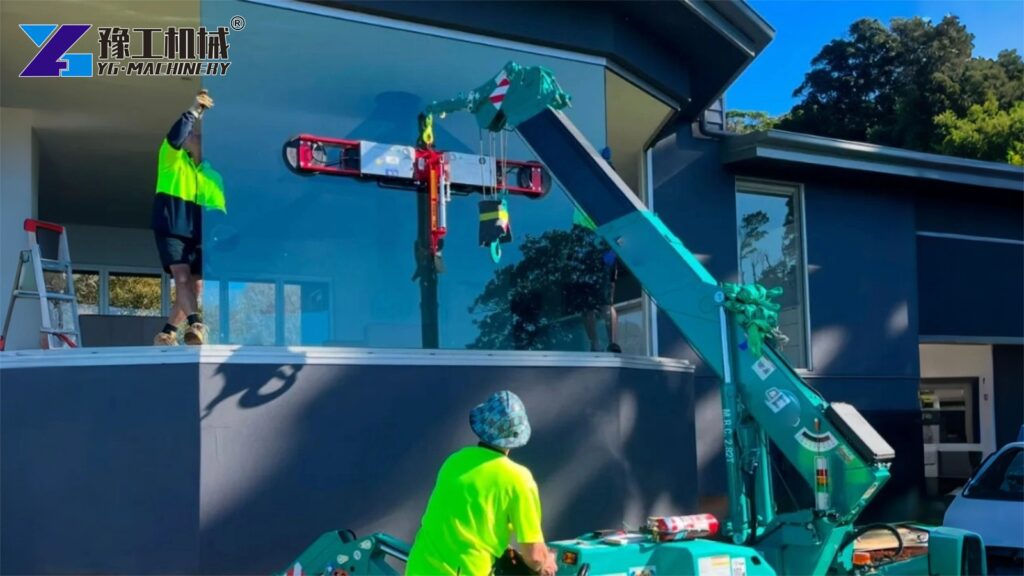
Real Performance Feedback from the Canadian Job Site
After several months of operation, the contractor shared detailed feedback.
According to the project manager:
“The machine performed exactly as expected. It moved easily inside the building, handled glass installation accurately, and reduced labor requirements significantly. The remote control system made positioning safer and more efficient.”
Additional observations included:
Faster Installation Speed
Glass installation time decreased considerably compared with manual handling methods.
Improved Safety
Workers maintained safer distances during lifting operations.
Reduced Labor Costs
Fewer workers were needed for panel positioning.
Excellent Maneuverability
The equipment accessed areas where larger cranes could not operate.
Reliable Operation
The hydraulic system remained stable throughout the project.
High Return on Investment
The contractor planned to use the crane on future projects after completion of the current installation.
What This Spider Crane for Sale Case Means for Future Buyers
Many buyers searching for a spider crane for sale focus only on lifting capacity.
However, this Canadian project demonstrates that successful equipment selection depends on several factors beyond tonnage.
Future buyers should evaluate:
- Access dimensions
- Floor loading restrictions
- Working radius requirements
- Indoor versus outdoor applications
- Transportation logistics
- Future project pipeline
- Maintenance support availability
This project also highlights the growing demand for compact lifting solutions in modern construction environments.
For glazing contractors, curtain wall companies, and building maintenance firms, investing in a mobile spider crane can provide long-term operational advantages.
Instead of relying on expensive equipment rentals, contractors gain:
- Better scheduling flexibility
- Lower long-term operating costs
- Faster project completion
- Greater competitiveness when bidding projects
The Canadian customer originally purchased equipment for one curtain wall installation project. After seeing the results, the company began planning additional uses including:
- Glass replacement work
- Interior atrium construction
- Building renovation projects
- Shopping mall maintenance
- High-end residential installations
This expanded utilization significantly increased the overall value of the investment.
Need a Spydercrane Mini Crawler Crane for Your Glass Installation Project?
YG Machinery supplies 3T, 5T, and 8T spider cranes with CE-certified quality, competitive pricing, and global delivery support.
Send your lifting requirements today and get a free solution and quotation within 24 hours.