The rapid expansion of utility-scale photovoltaic projects continues to reshape the renewable energy industry across the United States. According to the Solar Energy Industries Association (SEIA), solar power has become one of the fastest-growing sources of new electricity generation, with large ground-mounted projects accounting for a significant share of newly installed capacity. As project sizes continue to increase, contractors are placing greater emphasis on foundation installation efficiency, equipment reliability, and construction safety.
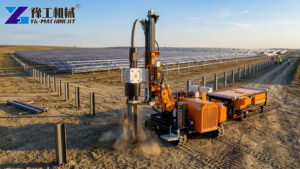
In early 2026, an EPC contractor based in Texas contacted YG Machinery after searching for a lightweight crawler solar pile driver capable of supporting a new utility-scale photovoltaic installation. The customer needed equipment that could travel across uneven construction sites, complete drilling and pile driving with one machine, and maintain stable performance under long daily working hours.
Unlike conventional construction projects, solar farms require thousands of foundation piles to be installed with consistent spacing and vertical accuracy. Even small deviations can affect subsequent mounting structure installation. The contractor therefore wanted equipment that could improve productivity while reducing equipment transfers and labor costs.
After several rounds of technical discussions, YG Machinery recommended a customized hydraulic crawler model configured specifically for the customer’s soil conditions and pile specifications. The machine was successfully delivered to the United States and later entered full operation during the first phase of the solar farm construction.
This case documents the complete project process, from the initial inquiry to on-site commissioning, and demonstrates how selecting the correct piling equipment contributed to improved construction efficiency and reliable field performance.
Start Your Project with the Right Equipment
Why The Customer Needed A Lightweight Crawler Solar Pile Driver
The customer is an engineering contractor specializing in utility-scale photovoltaic power stations throughout the southern United States. Most projects involve open land construction where thousands of steel foundation piles must be installed before mounting structures and solar modules can be assembled.
For previous projects, the contractor relied on separate drilling equipment and hydraulic hammers. Although the existing workflow could complete foundation installation, it created several operational problems as project sizes continued to increase.
The project management team identified several major challenges:
- Equipment transfers between drilling and pile driving consumed valuable working time.
- Multiple machines increased fuel consumption and maintenance costs.
- Labor shortages made equipment scheduling increasingly difficult.
- Mixed soil conditions required frequent equipment adjustments.
- Daily installation targets became difficult to maintain.
The Texas project presented additional challenges. Geotechnical reports showed alternating layers of clay, gravel, and weathered rock. Approximately fifteen percent of the site contained compact formations requiring pre-drilling before pile installation. The contractor therefore wanted one machine capable of handling multiple construction conditions without replacing equipment.
During the first technical discussion, the customer explained that improving productivity was more important than simply increasing drilling power. Machine mobility, hydraulic stability, and positioning accuracy were equally important because the project schedule required several thousand piles to be completed within a limited construction window.
After reviewing the preliminary project information, YG Machinery suggested conducting a detailed engineering evaluation before recommending a final configuration.
How YG Engineers Selected The Right Hydraulic Solar Pile Driver
Before recommending equipment, YG Machinery engineers collected detailed project information from the contractor. Instead of selecting a standard configuration, the engineering team analyzed the actual working conditions expected during construction.
Several important technical factors were evaluated:
- Required pile diameter
- Foundation depth
- Geological investigation report
- Daily production target
- Transportation limitations
- Hydraulic hammer requirements
- Local operating environment
The customer also supplied project drawings, GPS layout plans, and photographs taken during preliminary site surveys. These documents allowed engineers to estimate crawler mobility requirements and determine whether one machine could complete both drilling and pile driving operations efficiently.
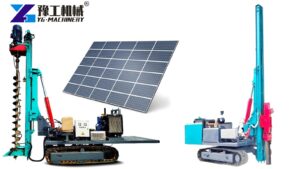
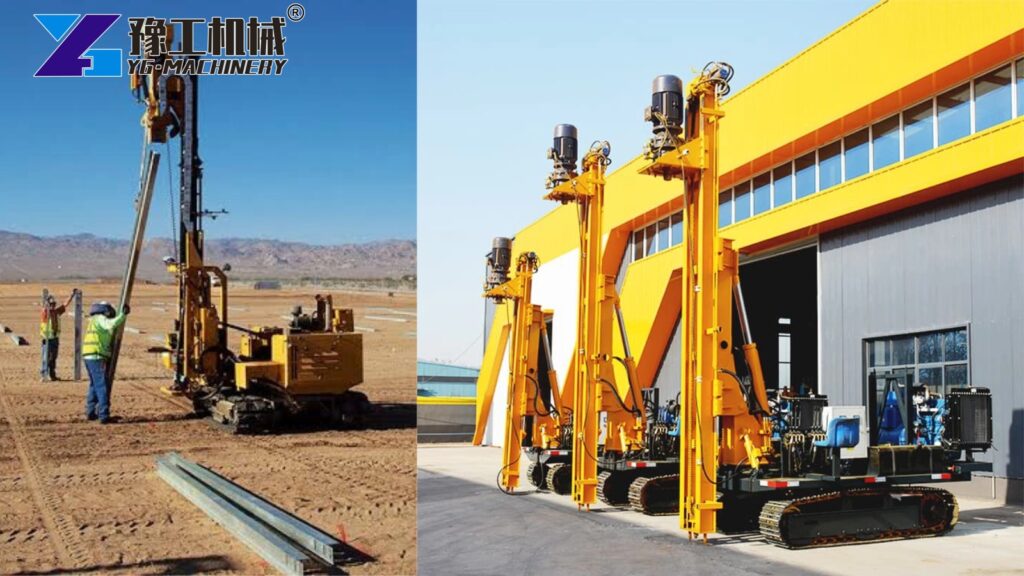
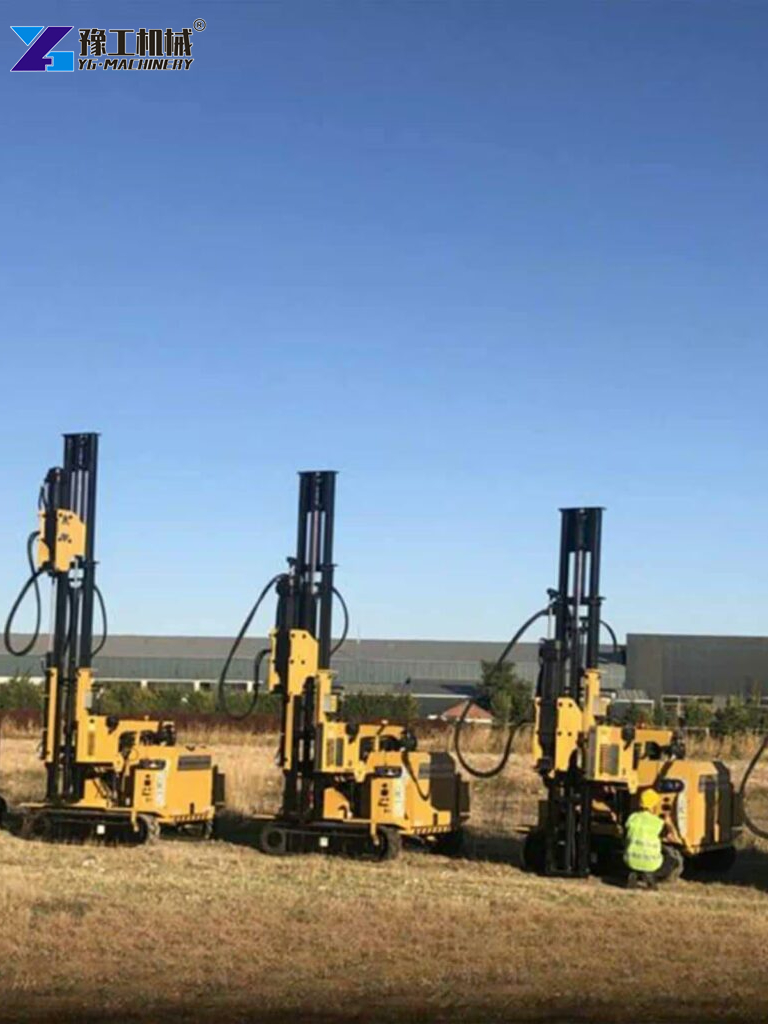
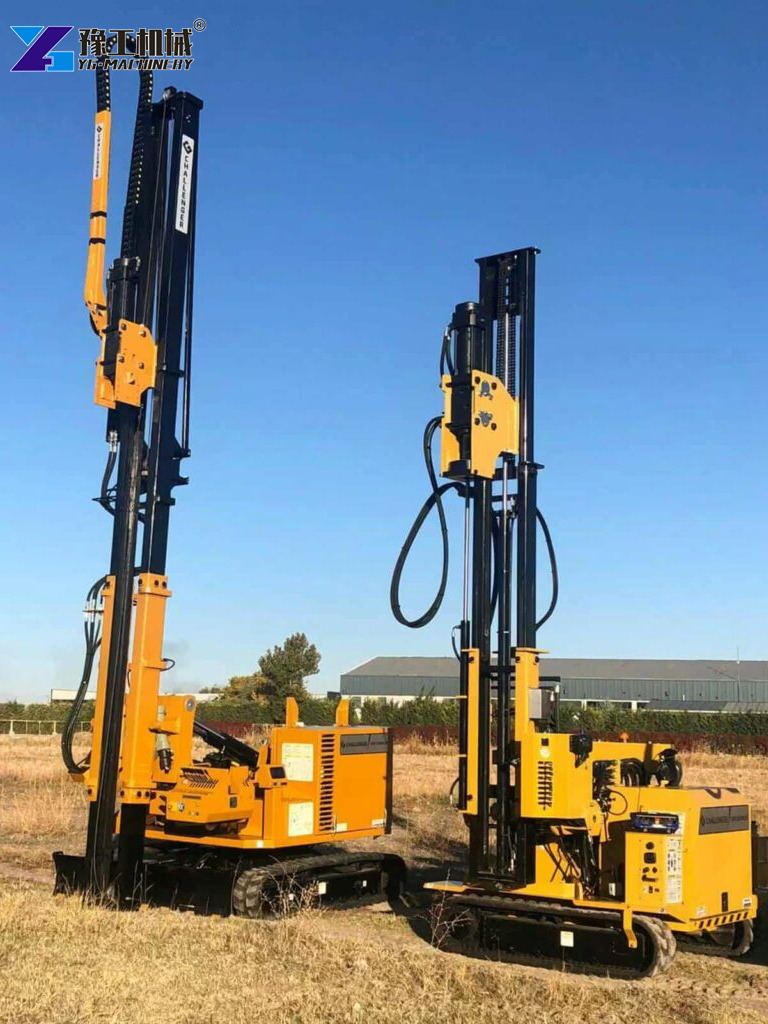
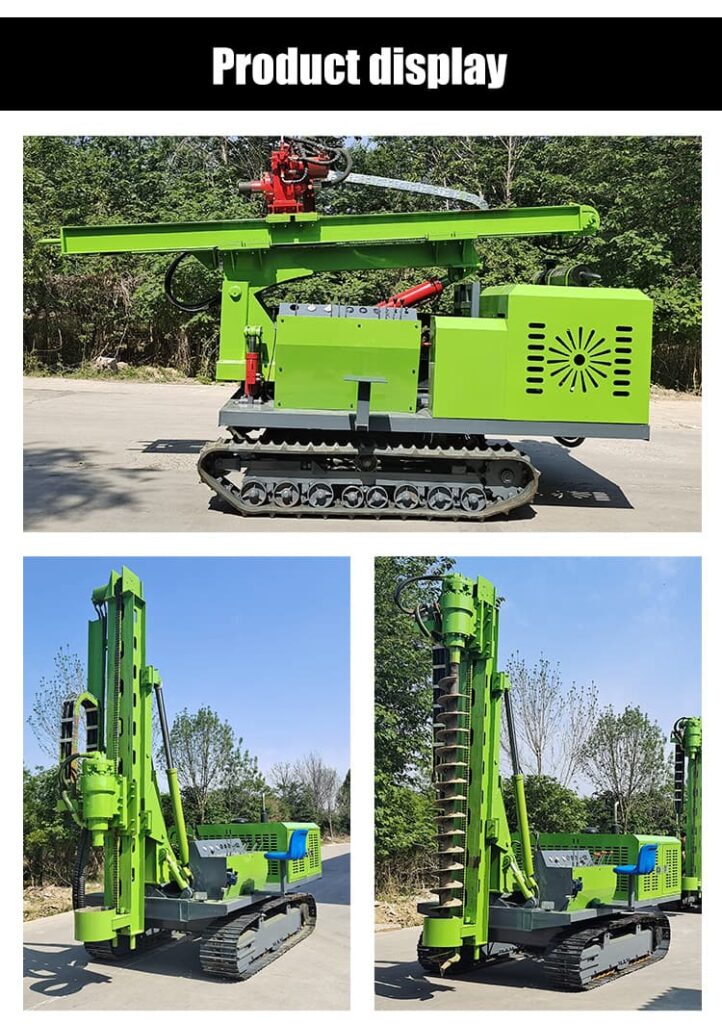
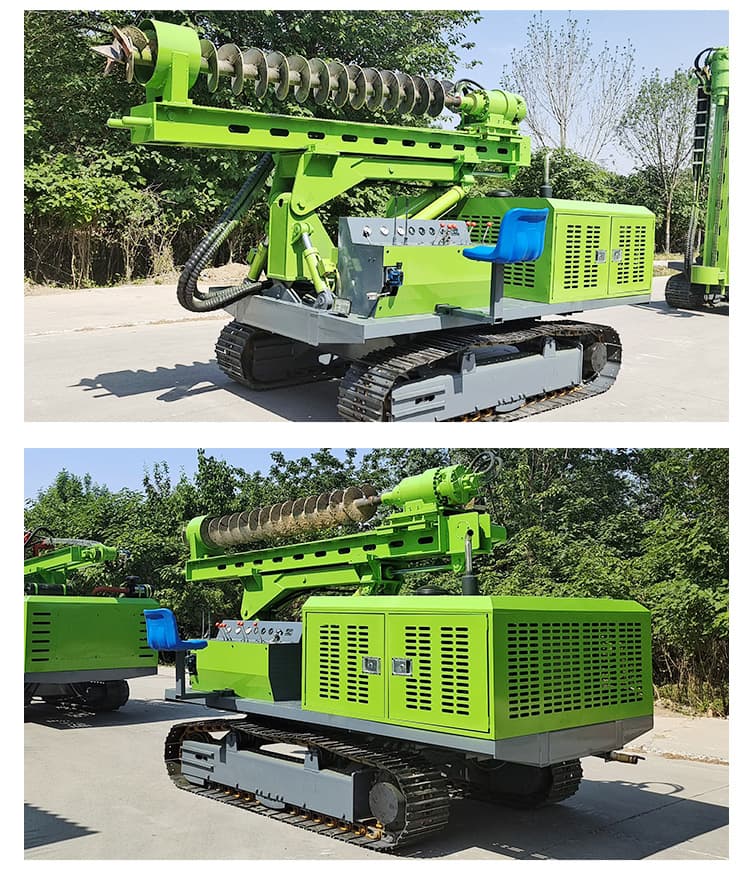
Based on this evaluation, YG Machinery recommended a hydraulic solar pile driver equipped with a high-torque rotary drive system, triple hydraulic pump, and crawler chassis suitable for uneven terrain. The machine also provided flexible mast movement, allowing operators to maintain accurate pile positioning while reducing machine relocation time.
Compared with the customer’s previous equipment arrangement, the integrated design offered a simpler workflow. Drilling and pile installation could now be completed using the same platform, reducing unnecessary equipment movement across the construction site.
Boost Productivity—Get a Free Quote
Video Meeting And Solution Optimization
After receiving the preliminary proposal, both companies arranged a two-hour technical video conference. Rather than discussing commercial terms immediately, the meeting focused entirely on construction requirements and equipment suitability.
The contractor shared the latest geotechnical investigation report, pile layout drawings, and project schedule. Engineers carefully reviewed the drilling depths, steel pile dimensions, and expected daily installation targets. Several sections of the project included harder geological formations that required pre-drilling before pile driving could begin.
During the discussion, YG Machinery engineers proposed several configuration improvements to better match the actual working environment.
Recommended adjustments included:
- Increasing hydraulic system stability for continuous operation.
- Optimizing mast positioning accuracy.
- Improving hydraulic hose protection.
- Reinforcing crawler components for uneven terrain.
- Adjusting hammer parameters according to pile specifications.
The customer also requested easier maintenance access because the equipment would operate continuously throughout multiple construction phases. Engineers therefore modified several service points to simplify routine inspection and hydraulic maintenance.
After the meeting, revised technical drawings, updated specifications, and the final equipment configuration were submitted for customer confirmation.
Quotation Confirmation And Order Process
Once the technical configuration had been finalized, YG Machinery prepared a detailed commercial quotation covering equipment specifications, spare parts, production schedules, export packaging, and after-sales technical support.
Instead of evaluating price alone, the customer compared several suppliers based on engineering capability, manufacturing quality, and long-term service support.
Several factors influenced the final purchasing decision:
- Complete technical documentation.
- Transparent equipment specifications.
- Factory testing procedures.
- Stable hydraulic configuration.
- Spare parts availability.
- Professional engineering support.
Following the final online meeting, both parties confirmed the production schedule, inspection procedures, payment arrangement, and shipment timetable. After the agreed deposit was received, YG Machinery immediately arranged material procurement and scheduled production according to the project delivery plan.
The manufacturing department then began preparing the machine for assembly while maintaining continuous communication with the customer regarding production progress.
Find the Right Model for Your Project
Technical Specifications Of The Lightweight Crawler Solar Pile Driver
Before production began, YG Machinery prepared a complete technical specification sheet for the customer. Rather than recommending the largest available machine, the engineering team selected a model that balanced drilling performance, pile driving capacity, transportation convenience, and operating efficiency.
The proposed configuration matched the contractor’s steel pile dimensions, drilling depth requirements, and daily production targets. Engineers also considered future projects involving larger photovoltaic sites, ensuring the equipment could remain productive beyond the current installation.
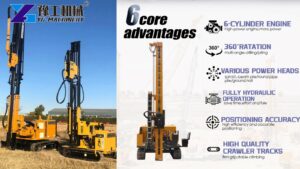
The selected model provided several practical advantages.
- Compact crawler structure for narrow access roads
- High hydraulic efficiency during continuous operation
- Stable drilling torque for mixed soil conditions
- Wide mast adjustment range
- Easy transportation between project sections
- Convenient daily maintenance
The solar farm pile driver was capable of completing drilling and pile installation without requiring separate equipment for most working conditions. This integrated design reduced idle time and simplified construction planning throughout the project.
Technical Parameters
| Item | Specification |
|---|---|
| Drilling Diameter | 90–300 mm |
| Maximum Drilling Depth | 0–6 m |
| Hydraulic Hammer Type | High-frequency hydraulic impact hammer |
| Rotary Torque | 13,000 Nm |
| Mast Swing Angle | ±150° |
| Mast Inclination | Left 30° / Right 8° |
| Hydraulic System | Triple hydraulic pump |
| Walking Mode | Steel crawler hydraulic drive |
| Engine Power | 84–92 kW (optional configuration) |
| Climbing Ability | 30° |
| Operating Weight | Approximately 8–10 tons |
| Application | Solar foundations, guardrail posts, screw piles, H-piles, ground anchors |
Following technical confirmation, the customer approved the final configuration without requesting additional modifications.
Factory Manufacturing, Inspection And Export Preparation
Production officially began after the advance payment was received. Every major structural component entered the manufacturing process according to YG Machinery’s production schedule. Engineers monitored machining accuracy throughout fabrication to ensure reliable assembly and long-term field performance.
The crawler chassis, rotary drive system, mast assembly, hydraulic cylinders, and control system were inspected individually before final installation. Hydraulic hoses and connectors were installed only after pressure testing confirmed stable performance under simulated working conditions.
After assembly, the complete machine entered the factory testing area.
The inspection program included:
- Hydraulic pressure testing
- Rotary drilling verification
- Hammer impact testing
- Mast positioning accuracy inspection
- Hydraulic leakage inspection
- Continuous operating simulation
- Emergency stop verification
- Electrical system inspection
The customer attended the factory acceptance inspection through a live video conference. During the demonstration, engineers completed drilling operations, pile driving tests, mast positioning, crawler movement, and hydraulic system evaluation using actual steel piles prepared for testing.
Performance data collected during the inspection matched the design targets established during earlier technical meetings. The customer approved the equipment after reviewing the testing results and operation videos.
Once acceptance was completed, technicians prepared the machine for export transportation. Hydraulic ports received protective sealing caps, exposed steel components were coated with anti-corrosion materials, and sensitive electrical components were wrapped with moisture-resistant protection.
The equipment, spare parts, maintenance tools, and technical documentation were securely fixed before container loading. Every package was labeled according to the export packing list, simplifying customs inspection and unloading after arrival in the United States.
Shipping And Customs Clearance
The completed machine departed from the factory and was transported to the designated export port according to the agreed delivery schedule. Throughout the shipping process, YG Machinery maintained regular communication with the customer regarding logistics progress.
Shipping documentation included:
- Commercial invoice
- Packing list
- Bill of lading
- Certificate of origin
- Equipment operation manuals
- Spare parts inventory
Before the vessel arrived, the American EPC contractor had already arranged customs brokerage and inland transportation. This preparation minimized delays after customs clearance and allowed the machine to reach the project site shortly after unloading at the port.
YG Machinery continued providing shipment updates until the solar piling machine safely arrived at the Texas construction project.
Installation And Operator Training
After transportation to the solar farm, installation began immediately. Before commissioning, technicians inspected hydraulic oil, engine fluids, crawler tension, and electrical connections to verify that transportation had not affected machine performance.
YG Machinery engineers provided remote commissioning through scheduled video sessions. Each operating function was tested before production started.
Commissioning procedures included:
- Hydraulic flow adjustment
- Rotary head calibration
- Hammer performance verification
- Mast vertical alignment
- GPS positioning confirmation
- Crawler travel inspection
- Safety protection testing
Operator training emphasized practical construction techniques instead of theoretical explanations. Drivers learned how to position piles accurately, adjust drilling depth according to geological conditions, monitor hydraulic temperatures, and perform daily maintenance inspections.
Special attention was given to pile verticality because photovoltaic mounting systems require accurate foundation alignment. Operators also practiced switching efficiently between drilling and pile driving modes, allowing construction teams to reduce unnecessary equipment movement across the site.
After several days of commissioning and trial operation, the machine entered normal production and began supporting the first phase of the utility-scale solar project.
Performance During The First Utility-Scale Solar Project
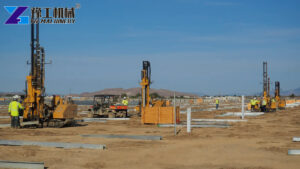
The contractor deployed the machine during the first construction phase of a utility-scale photovoltaic project in western Texas. The site covered several hundred acres and required thousands of foundation piles before mounting structures could be installed. Soil conditions varied considerably across the project, including compact clay, gravel layers, and weathered rock.
During the first week, operators focused on optimizing drilling parameters according to changing ground conditions. Once the hydraulic settings were finalized, daily production became increasingly consistent. The integrated drilling and pile-driving system reduced equipment relocation and simplified coordination between construction crews.
After approximately four months of continuous operation, the project management team compared production records with those from previous solar projects that used separate drilling equipment and hydraulic hammers.
Several measurable improvements were recorded:
- Daily pile installation increased by approximately 28%.
- Equipment relocation time decreased by nearly 35%.
- Fuel consumption was reduced because fewer machines operated simultaneously.
- Foundation alignment became more consistent across installation zones.
- Hydraulic system stability remained reliable during extended work shifts.
- Scheduled maintenance required less downtime than expected.
The contractor also noted that machine mobility became an important advantage. The crawler chassis traveled efficiently across uneven terrain without requiring additional transport equipment between adjacent working areas. This flexibility allowed construction teams to maintain continuous progress despite varying ground conditions.
As installation continued, project supervisors reported improved scheduling accuracy because equipment performance remained predictable throughout daily operations. Fewer interruptions meant that downstream activities, including mounting structure installation, could begin according to the original construction schedule.
Customer Feedback After Six Months
Approximately six months after commissioning, YG Machinery conducted a routine follow-up interview with the customer’s project management team to evaluate long-term equipment performance.
The Project Manager summarized the experience as follows:
“The machine adapted well to different ground conditions. We completed drilling and pile driving with fewer interruptions than previous projects. Daily production planning became much easier.”
The Site Supervisor highlighted the operational advantages observed by field personnel.
“Operators learned the controls quickly. Hydraulic performance remained stable throughout long shifts. Maintenance requirements were lower than we originally expected.”
The maintenance department also provided positive feedback. Routine servicing mainly involved lubrication, hydraulic oil inspection, and standard wear checks. No significant hydraulic failures occurred during the first several months of operation, allowing the contractor to maintain a high equipment utilization rate.
Because of the successful performance on this project, the customer informed YG Machinery that additional photovoltaic developments were already under construction. Management expressed interest in expanding its equipment fleet with similar machines for future utility-scale solar projects across the United States.
Why Contractors Choose YG Machinery to Buy a Solar Pile Driver
Modern photovoltaic construction demands more than powerful equipment. Contractors require reliable engineering support, practical equipment selection, consistent manufacturing quality, and responsive after-sales service.
YG Machinery supplies piling solutions for solar farms, highway projects, guardrail installation, foundation engineering, and ground improvement applications. Every recommendation begins with a technical evaluation rather than a standard quotation.
Our engineering team evaluates:
- Soil and geological conditions
- Pile specifications
- Required drilling depth
- Daily production targets
- Hydraulic system requirements
- Transportation limitations
- Future project expansion plans
Every machine undergoes comprehensive factory testing before shipment, including hydraulic inspection, drilling simulation, mast positioning verification, and continuous operation testing. Customers also receive operation manuals, spare parts documentation, commissioning guidance, and technical support throughout the equipment’s service life.
This engineering-first approach helps contractors reduce project risks while improving construction efficiency from the first day of operation.
Request A Quote For A Lightweight Crawler Solar Pile Driver
Every solar project has different foundation requirements. Selecting the correct piling equipment can improve installation efficiency, reduce operating costs, and help maintain project schedules.
YG Machinery manufactures complete solar piling solutions suitable for utility-scale photovoltaic projects, ground-mounted solar farms, guardrail installation, screw piles, H-piles, and foundation engineering.
Our engineers can recommend the most suitable configuration according to your project specifications, soil conditions, pile dimensions, and production targets.
Contact YG Machinery today to receive:
- Professional equipment recommendations
- Technical specifications
- Factory testing videos
- Project-based configuration advice
- Competitive quotations
- Comprehensive after-sales support
We look forward to supporting your next photovoltaic construction project.
Frequently Asked Questions About YG Solar Pile Drive
It can install H-piles, steel pipe piles, screw piles, C-channel piles, and various photovoltaic foundation piles used in utility-scale solar projects.
Yes. The integrated drilling system allows operators to pre-drill through compact formations before completing pile installation, making it suitable for mixed geological conditions.
Depending on the selected model and drilling tools, the equipment can generally complete drilling depths of up to 6 meters for photovoltaic foundation construction.
Yes. We provide remote commissioning, installation guidance, operation training, maintenance instructions, and long-term technical support.
Yes. Hydraulic hammers, drilling heads, mast height, crawler configuration, and other components can be customized according to project requirements.
We recommend providing pile type, pile dimensions, required depth, soil report, daily production target, project location, and available excavator or hydraulic specifications, if applicable.