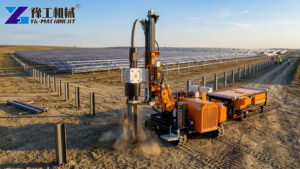
In late 2025, a Mexico-based EPC contractor sent a short inquiry through the YG Machinery website. The subject line read: “Solar pile driving machine for 45MW project.” The sender, Miguel, was a procurement manager. He did not write a long message. He listed three facts. The project site was in northern Mexico. The soil had a rock hardness of 6–20F. The pile depth needed to reach 6 meters. That was the first contact. Buyers often search for a solar piling machine, a hydraulic solar pile driver, or a solar farm pile driver. Miguel used the first term.
First Inquiry: A Solar Pile Driving Machine for a 45MW Mexico Project
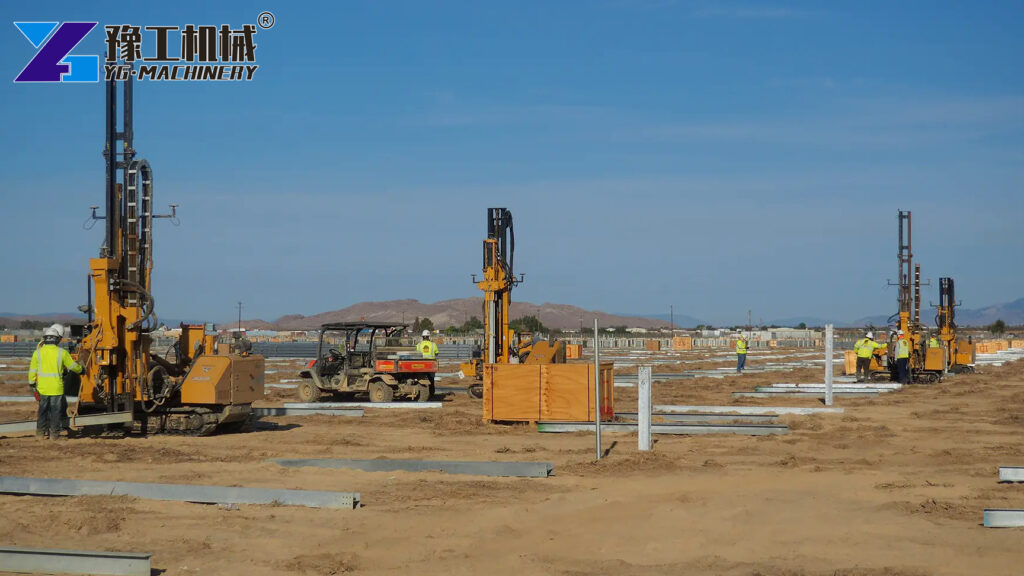
Miguel’s first email was direct. He asked for equipment that could drive photovoltaic piles into rocky ground. He attached a soil report. The report showed limestone layers and scattered basalt. The project needed 1,200 piles. Each pile had to hold a solar panel mounting structure. The deadline was tight. The crew had 30 working days to finish pile installation. Miguel wrote that his current equipment was too slow. A previous contractor used an excavator-mounted breaker. It took 12 minutes per pile. That pace would miss the deadline. He needed a dedicated machine.
YG’s sales engineer replied the same day. He asked four questions. What is the pile diameter? What is the required verticality? What is the available access road width? What is the budget range? Miguel answered within two hours. The pile diameter was 200 mm. Verticality had to stay within 1%. Access road width was 3.5 meters. Budget was mid-range. The sales engineer then sent a short video. The video showed a YG machine drilling 6 meters in similar rock. Miguel watched it twice. He replied: “Can we have a video call tomorrow?”
Video Call: Matching the Hydraulic Solar Pile Driver to Hard Rock
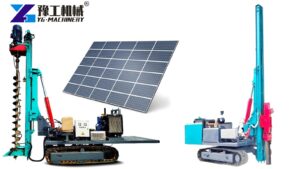
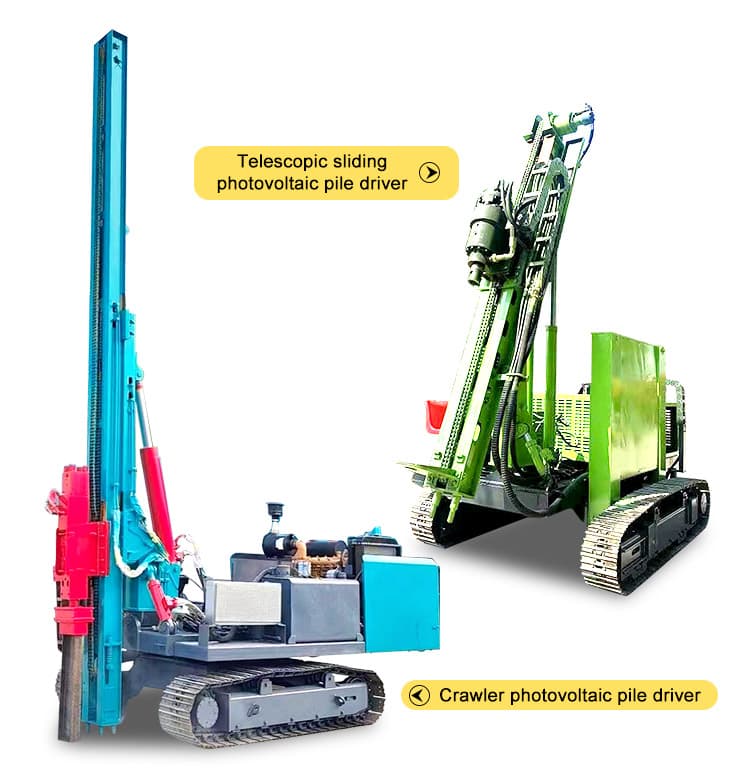
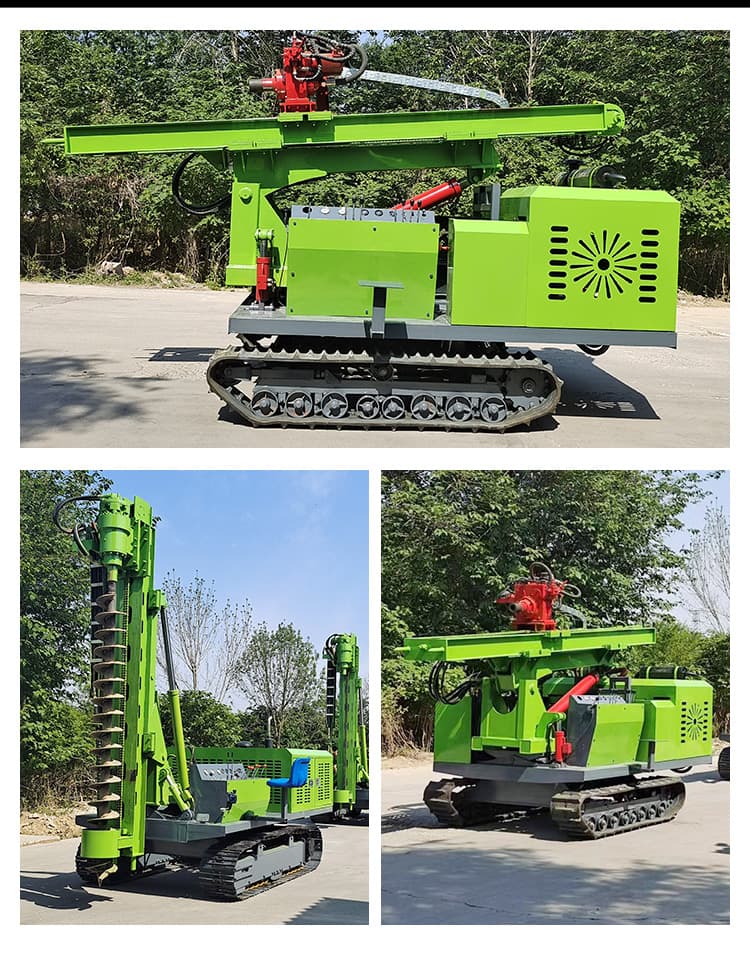
The video call took place at 9:00 AM Mexico time. YG’s engineer stood in the factory yard. He showed two machines. One was the hydraulic photovoltaic pile driver. The other was the crawler photovoltaic pile driver. Miguel asked about drilling diameter. The engineer explained that the hydraulic model handles 80–500 mm. The crawler model handles 80–600 mm. Miguel asked about rock hardness. The engineer pointed to the specification sheet. The hydraulic model is rated for 6–20F rock. The crawler model uses an 88 kW motor and a hydraulic hammer. Its impact frequency is 350–800 BPM. Its hydraulic system pressure is 25 MPa.
Miguel then asked a practical question. “Can it drive 1,200 piles in 30 days?” The engineer did a quick calculation. At 70 piles per day, the machine could finish in 18 days. That left room for weather delays. Miguel asked about verticality. The engineer showed the slide tilt angle: 120°. The drill arm swing angle: left and right 150°. The slide swing angle: left and right 40°. These features allow fine adjustment. Miguel nodded. He asked for a revised quotation.
Configuration Changes for the Solar Farm Pile Driver
Miguel requested three changes. First, he wanted a wider track shoe. The standard width was 400 mm. He wanted 500 mm for soft soil sections. Second, he wanted an extra set of drill pipes. The standard set handled 6 meters. He wanted a spare set for deep piles. Third, he wanted the machine painted white. The project owner required white equipment for heat reflection.
YG’s team reviewed the changes. The wider track shoe was possible. The extra drill pipes were in stock. The white paint would add five days to production. Miguel accepted the timeline. YG sent a revised quotation. It included the machine, spare parts, shipping to Manzanillo, and on-site training. Miguel signed the proforma invoice. He paid a 30% deposit by bank transfer. YG started production the next day.
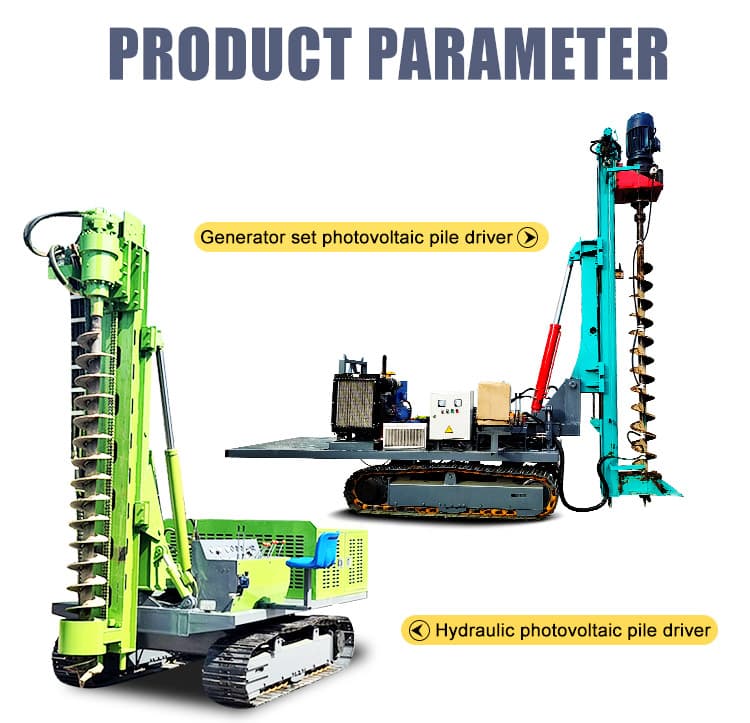
Parameter Table: YG Solar Pile Driving Machine Specifications
| Parameter | Hydraulic Photovoltaic Pile Driver | Crawler Photovoltaic Pile Driver |
|---|---|---|
| Overall dimensions | 4700×2100×2800 mm | 4700×2200×2800 mm |
| Track shoe width | 400 mm | 400 mm |
| Motor | 4108 | 4108 |
| Generator power | — | 88 kW motor |
| Drilling diameter | 80–500 mm | 80–600 mm |
| Drilling depth | 0–6 m | 0–6 m |
| Reducer torque | 13000 N.m | — |
| Mainstream pump | triple pump | — |
| Oil pump | 40/40/32 | 40/40/32 |
| Drill pipe rotational speed | 180 r/min | — |
| Gradability | 30° | — |
| Rock hardness | 6–20F | — |
| Slide tilt angle | 120° | — |
| Drill arm swing angle | left and right 150° | — |
| Slide swing angle | left and right 40° | — |
| Driving speed | 0–3 km/h | 3 km/h |
| Hydraulic hammer flow | — | 50–110 L/min |
| Impact frequency | — | 350–800 BPM |
| Hydraulic system pressure | — | 25 MPa |
| Strong wind heat dissipation | — | yes |
Factory Test and Container Loading for the Solar Piling Machine
Production took 25 days. YG sent Miguel daily photos. The photos showed the frame welding, the motor installation, and the hydraulic hose routing. On day 25, YG ran a full test. The machine drilled three test piles. Each pile reached 6 meters. The verticality measured 0.8%. That was inside the 1% limit. The hydraulic pressure held at 25 MPa. The impact frequency stayed at 720 BPM. Miguel watched the test by video call. He approved the shipment.
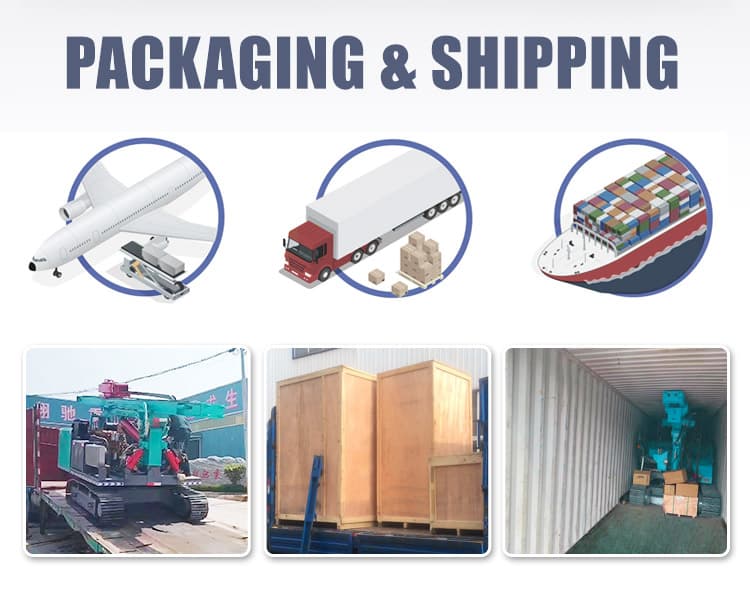
The machine dimensions were 4,700 × 2,200 × 2,800 mm. It weighed about 4.5 tons. YG loaded it onto a flat rack container. The drill pipes, spare parts, and training manuals went into a wooden crate. The container left the factory on day 28. It reached the port on day 30. The vessel departed on day 32.
Shipping, Arrival, and Customs at Manzanillo
The sea freight took 24 days. The vessel arrived at Manzanillo on day 56. Miguel’s customs broker handled the import. The broker needed the commercial invoice, packing list, bill of lading, and certificate of origin. YG provided all documents in advance. Customs cleared the machine in three days. A flatbed truck carried it to the project site. The machine arrived on day 60. Miguel sent a photo. The white machine sat on the flatbed. The site was ready.
Installation and Operator Training in Northern Mexico
YG sent a service engineer to Mexico. He arrived on day 62. The installation took one day. The engineer checked the hydraulic oil level. He checked the track tension. He connected the control system. He ran the machine without load. Then he ran it with a test pile. The first production pile went into the ground on day 63.
Training lasted five days. Three operators joined. The YG engineer taught daily inspection. He taught pile layout. He taught verticality adjustment. He taught how to change drill pipes. He taught emergency shutdown. Each operator drilled 20 test piles. By day 67, all three could run the machine alone. Miguel watched the training. He later wrote: “The operators were confident by day three.”
Formal Operation: 1,200 Piles in 18 Days
Production started on day 70. The crew worked 10 hours per day. The machine averaged 67 piles per day. The best day reached 74 piles. The worst day reached 51 piles due to rain. The project followed GB 50794-2012. That standard limits pile position deviation to 20 mm. It limits verticality to 1%. The machine held position deviation at 15 mm. It held verticality at 0.8%. The project engineer checked 100 random piles. All passed.
The machine consumed about 8 liters of diesel per hour. The 100L fuel tank lasted more than one shift. The hydraulic system temperature stayed stable. The strong wind heat dissipation design helped. The track shoe width of 400 mm handled the rocky ground. The wider track shoe was not needed. Miguel kept it as a spare.
Customer Feedback and the Next Solar Pile Driving Machine Order
Miguel sent a final report on day 88. The crew finished 1,200 piles in 18 working days. That was 12 days ahead of schedule. He wrote: “The machine did not stop for major repairs. We changed one hydraulic filter. That was all.” He also noted that the YG engineer stayed until the crew was fully independent. “He did not leave early. He made sure we could do it alone.”
The project owner asked Miguel for a second machine. The next project is a 60MW solar farm in Sonora. The soil is similar. Miguel contacted YG again. He requested the same crawler model. This time, he asked for a larger drill diameter of 600 mm. YG confirmed the specification. The second machine is now in production.
Miguel’s final email was short. “The solar pile driving machine paid for itself on the first project. We will buy a third one next year.” That was the end of the first project. The machine is still running in northern Mexico. The white paint has faded slightly. The hydraulic system still holds 25 MPa. The operators still use the same training manual. The project owner still uses the same flatness checklist. The story is not over.
Contact YG Machinery today for your solar pile driving machine needs. Tell us your pile diameter, depth, and soil conditions. We will recommend the right model and send you a full price, including shipping to your port. Every machine comes with a 12-month warranty and lifetime technical support.
Click the contact button now to request a quote. Ask for our free pile driving productivity calculator to estimate your time and cost savings.