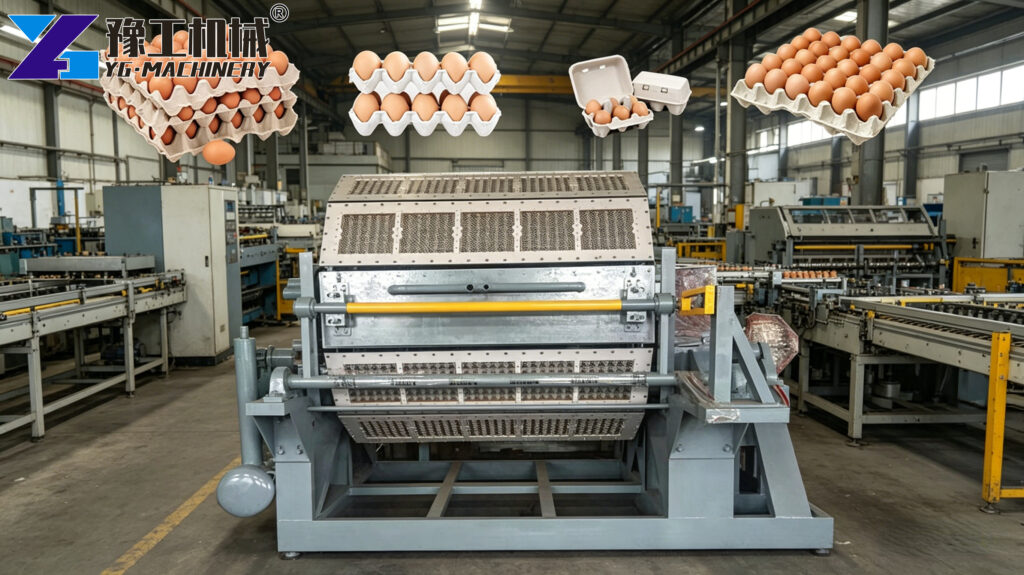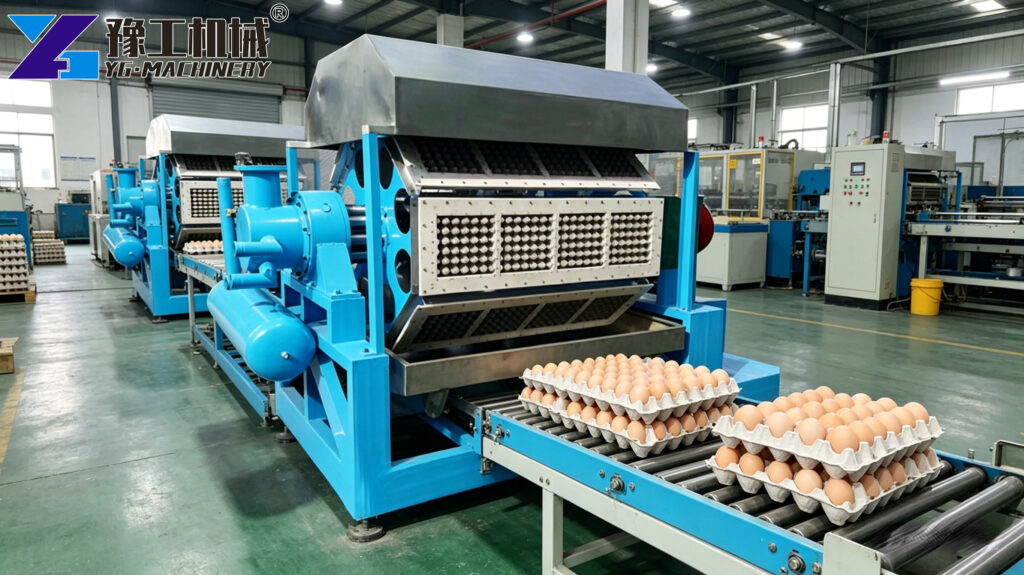
An automatic egg tray machine turns waste newspapers, cardboard, and office paper into sellable egg trays without constant manual intervention. Unlike semi-automatic models that need an operator at every step, this equipment runs continuously once you set the parameters. Farmers, packaging suppliers, and recycling entrepreneurs all use it to cut costs or start new revenue streams.
A good automatic egg tray machine pays for itself within 12-18 months. One ton of waste paper costs $30-$50 and makes about 12,000 egg trays. Sell those at $0.12 each wholesale, and you get $1,440 in revenue. After electricity, water, and labor, the profit margin sits at 40-50%. Run that across 300 working days, and you are looking at real money.
Automatic Egg Tray Machine Specifications That Matter
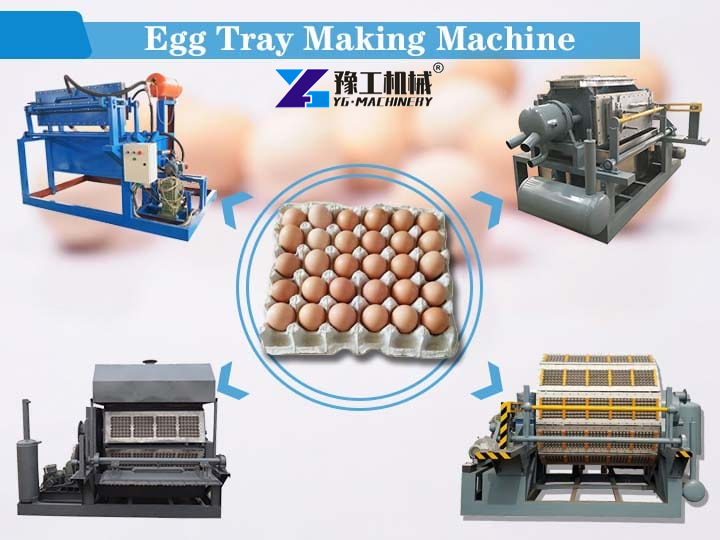
YG Machinery manufactures seven models of this equipment. The table below shows what each model delivers.
| Model | Capacity | Power (kW/hour) | Weight (kg) | Paper Consumption | Water Consumption |
|---|---|---|---|---|---|
| YG-1000-3X1 | 1000 pcs/h | 38 | 2500 | 80 kg/h | 160 kg/h |
| YG-1500-4X1 | 1500 pcs/h | 38 | 3000 | 120 kg/h | 240 kg/h |
| YG-2500-3X4 | 2500 pcs/h | 55 | 4000 | 200 kg/h | 400 kg/h |
| YG-3000-4X4 | 3000 pcs/h | 60 | 4800 | 240 kg/h | 480 kg/h |
| YG-4000-4X8 | 4000 pcs/h | 95 | 7000 | 320 kg/h | 640 kg/h |
| YG-5000-5X8 | 5000 pcs/h | 95 | 8000 | 400 kg/h | 800 kg/h |
| YG-7000-6X8 | 7000 pcs/h | 120 | 10000 | 480 kg/h | 960 kg/h |
The smallest model fits in a 200 square meter workshop. The largest needs about 500 square meters plus drying space. YG Machinery provides a free layout drawing for each model before any payment is made.
Compare Models and Get a Quote
What Makes This Paper Egg Tray Machine Different
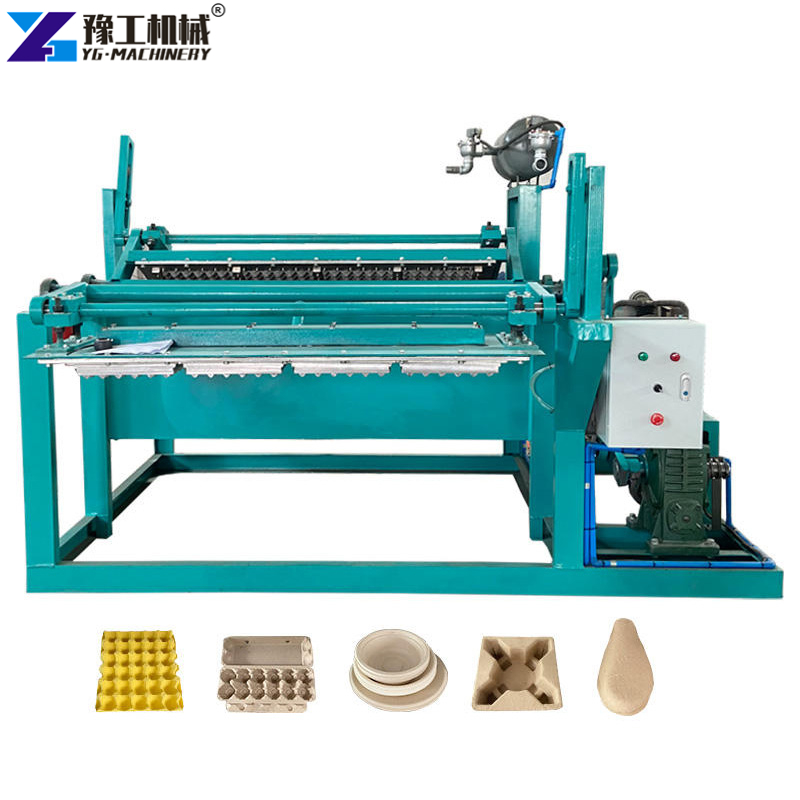
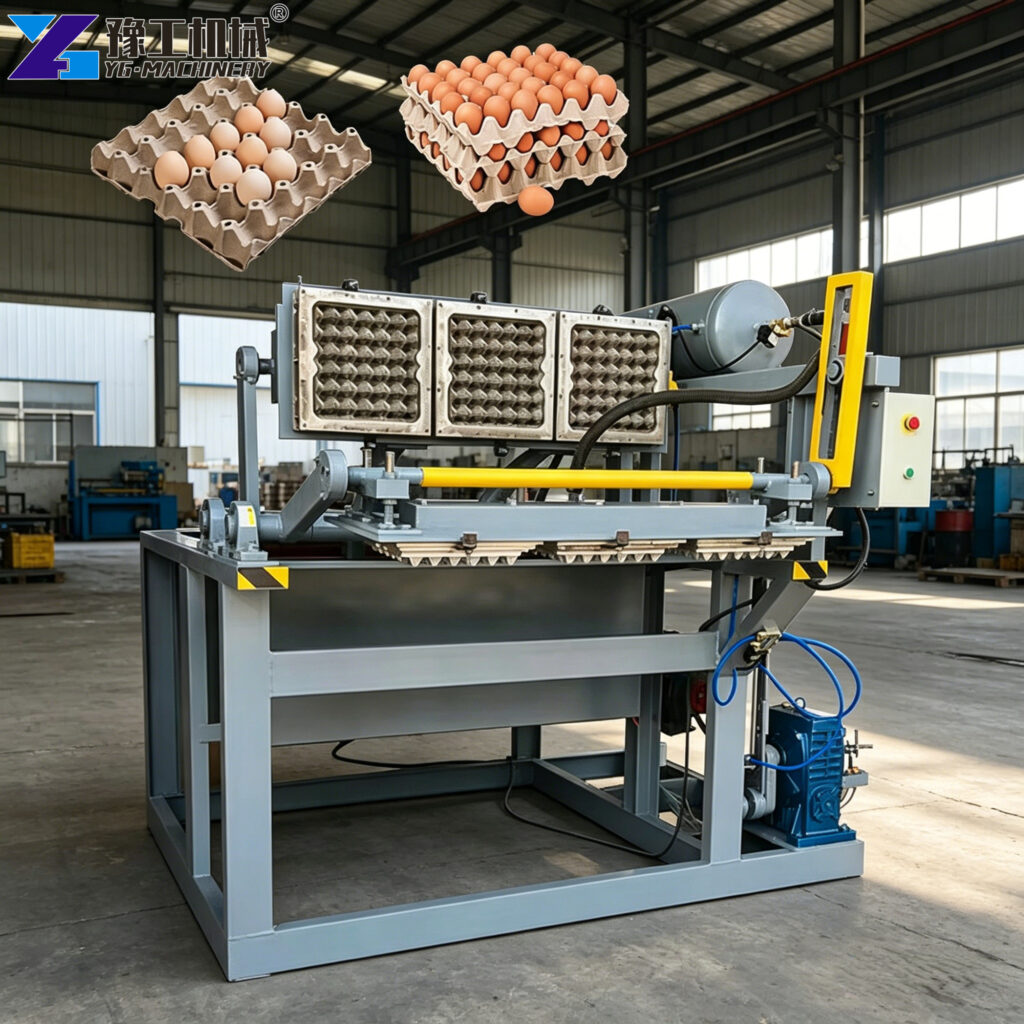
A paper egg tray machine from YG stands out because of how it handles the wet end. All components that touch water and pulp – molds, pulp tank, and pipes – use 304 stainless steel. Many competitors use galvanized steel or painted mild steel. Those rust within 2-3 years. Stainless steel lasts 10+ years.
Key features that protect your investment:
- 304 stainless steel forming molds that resist corrosion
- Bronze vacuum pumper plate (30mm thick) vs. cast iron that pits
- Taiwan precision cam indexer that holds position within 0.1mm
- Japanese sealed bearings with grease fittings for easy maintenance
- 4-hour factory test run with video proof before shipping
The vacuum pumper uses thick bronze because it lasts three times longer than cast iron in wet environments. When cast iron corrodes and pits, surfaces lose vacuum pressure. Production slows down. You waste paper. You waste time.
The rotary drum runs on a high-precision cam indexer from Taiwan. Cheap indexers drift over time, causing misaligned trays. This equipment holds position even after 10,000 hours of operation.
How an Egg Carton Making Machine Saves You Labor
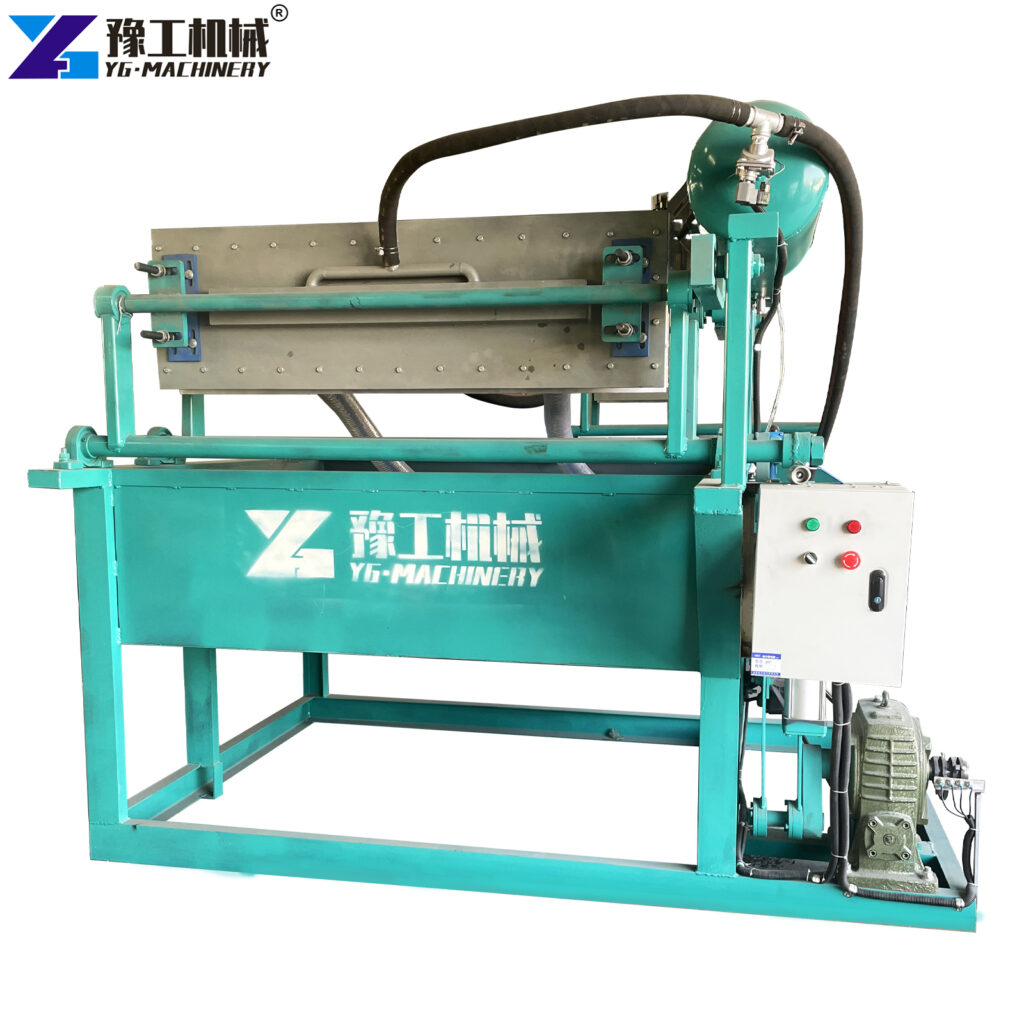
An egg carton making machine with automatic controls reduces manual work to just three tasks. Workers only need to feed waste paper, stack dried trays, and mix chemicals when needed. Everything else runs from a central control panel.
The numerical control system handles the entire forming cycle. Operators set two numbers: rotation speed and vacuum dwell time. The system then controls the motor, vacuum pump, and transfer timing automatically. If pressure drops or temperature rises too high, an alarm sounds. The equipment keeps running unless a serious fault occurs.
Here is what automation does for your bottom line:
- Cuts labor costs by 40-50% compared to semi-auto machines
- Runs consistently without operator fatigue slowing things down
- Tracks production data to help you spot problems early
- Reduces waste because each cycle is identical
A semi-auto line might require 8-10 people per shift. The YG automatic models run with 4-6. Over a year, that labor saving alone can cover the price difference between machine types.
The control panel also tracks production counts. At the end of each shift, the screen shows total trays made, average cycle time, and energy used. This data helps owners spot slowdowns before they become problems.
What an Egg Tray Maker Machine Line Looks Like
An egg tray maker machine line follows five steps. Here is how it works from start to finish.
- Step 1: Pulping. Waste paper goes into a hydrapulper with water. A rotating drum breaks the paper down into a 1-2% fiber slurry. This takes 30-45 minutes per batch.
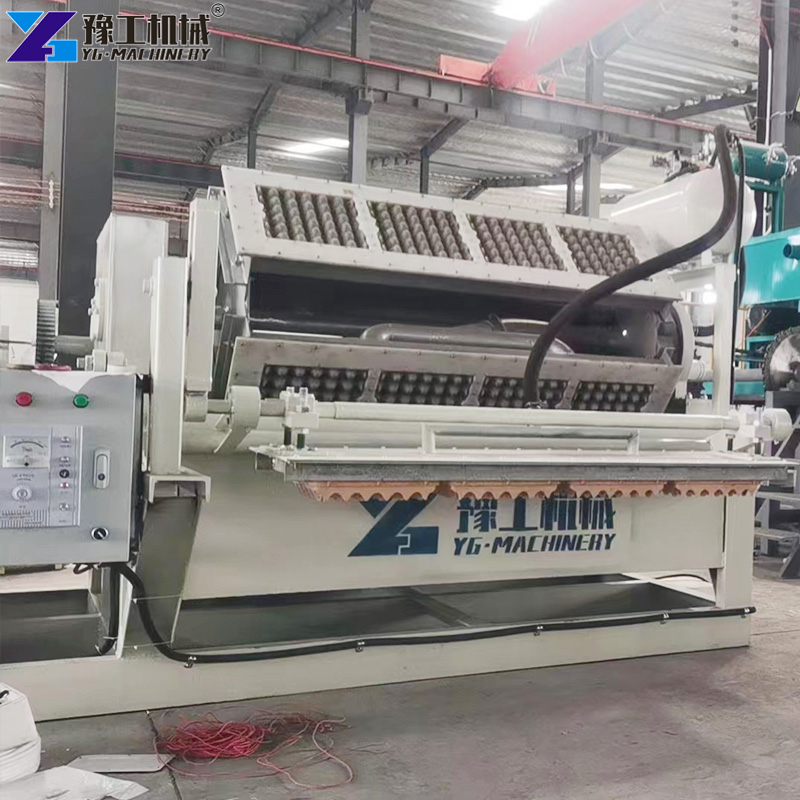
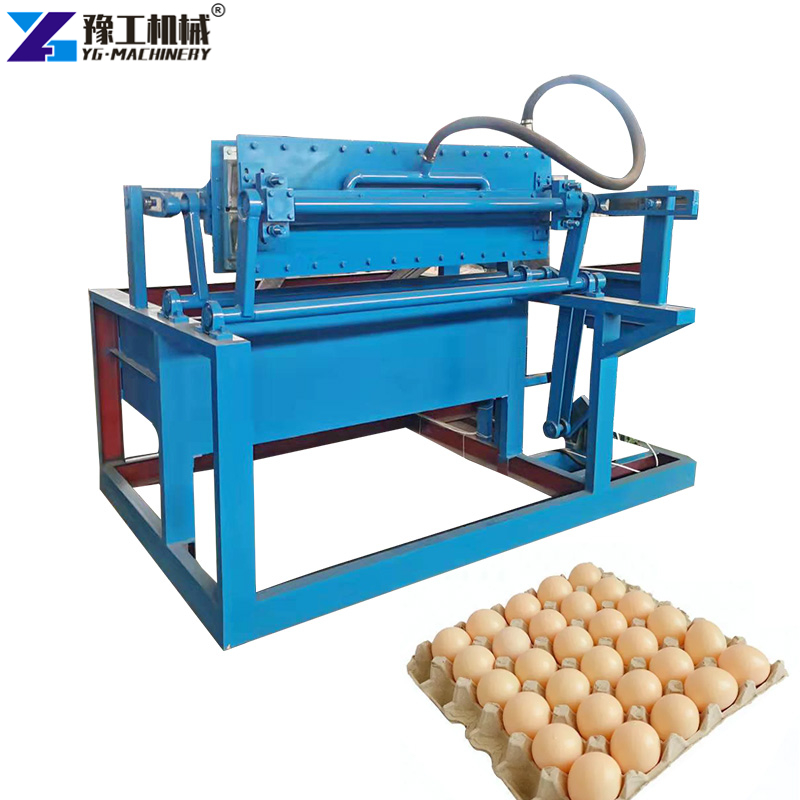
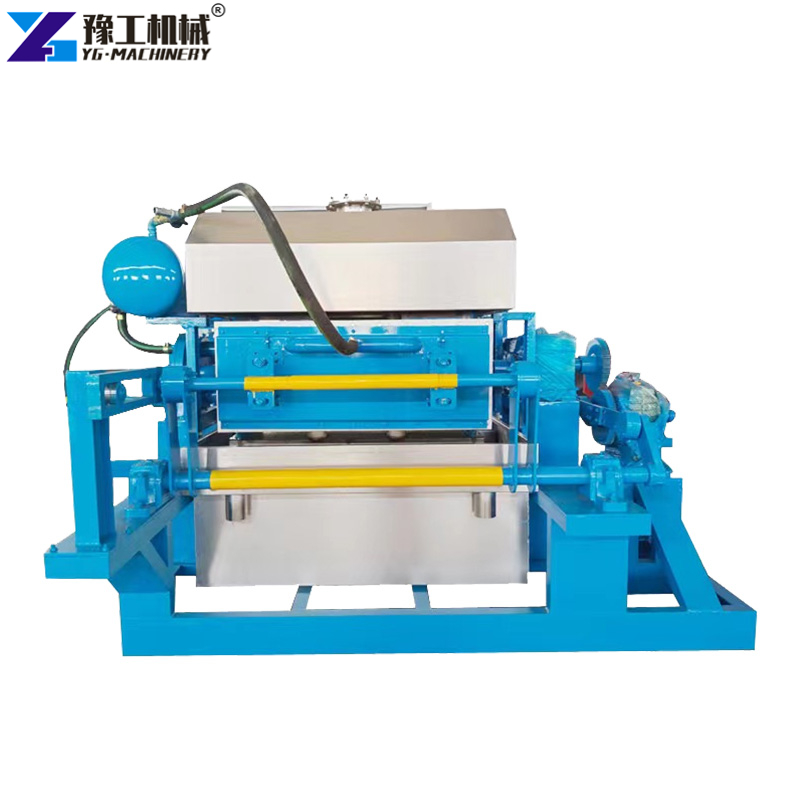
- Step 2: Forming. The slurry flows into a large tank below the forming section. A rotary drum dips into that tank. Vacuum pressure pulls fibers onto each forming mold. Each mold produces one tray per cycle.
- Step 3: Transfer. As the drum turns, a separate transfer mold picks up each wet tray. It places the tray onto a conveyor belt or drying rack without damaging the wet paper.
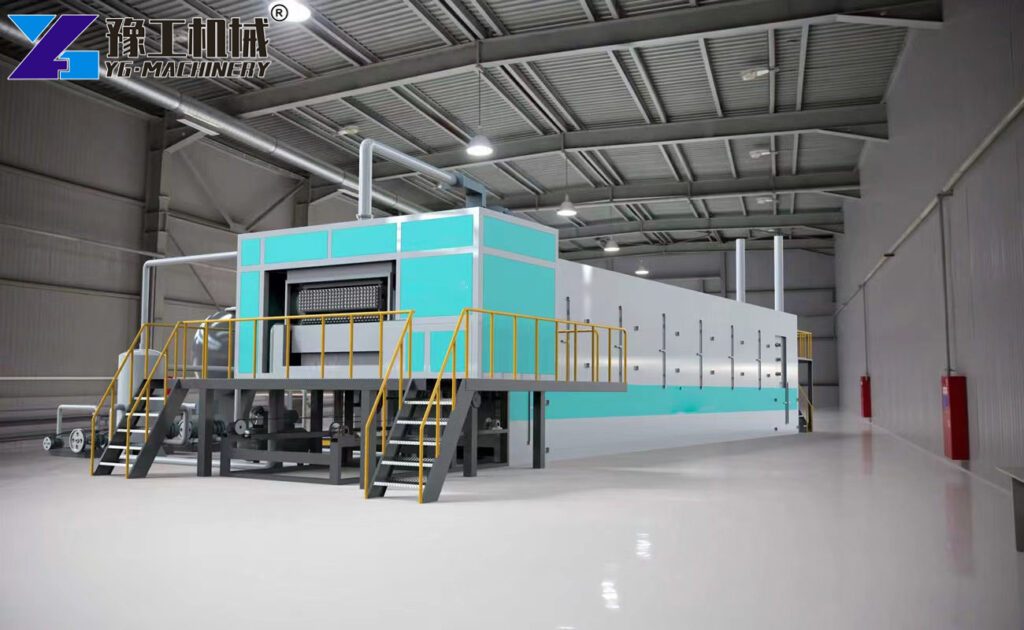
- Step 4: Drying. Trays move through a multi-layer drying tunnel or sit in open sun-drying areas. Gas drying tunnels take 15-20 minutes. Sun drying takes 4-6 hours in warm weather.
- Step 5: Packing. Dry trays stack automatically or by hand. Workers count and bundle them into packs of 100 or 200.
The whole cycle from waste paper to finished tray takes 45 minutes to 6 hours depending on your drying method. The forming machine itself cycles every 8-12 seconds.
Find the Right Model for Your Project
Power, Water, and Paper – What You Need to Run an Automatic Egg Tray Machine
Each model consumes different amounts of resources. Here is what to plan for.
| Model | Paper per Hour | Water per Hour | Power per Hour |
|---|---|---|---|
| YG-1000-3X1 | 80 kg | 160 kg | 38 kW |
| YG-1500-4X1 | 120 kg | 240 kg | 38 kW |
| YG-2500-3X4 | 200 kg | 400 kg | 55 kW |
| YG-3000-4X4 | 240 kg | 480 kg | 60 kW |
| YG-4000-4X8 | 320 kg | 640 kg | 95 kW |
| YG-5000-5X8 | 400 kg | 800 kg | 95 kW |
| YG-7000-6X8 | 480 kg | 960 kg | 120 kW |
Paper and water mix at a 1:2 ratio. You can recycle most of the water. The system includes settling tanks that let you reuse water multiple times before discharge. This cuts your water bill significantly.
All models run on 380V 50HZ three-phase power. YG Machinery can supply transformers or voltage converters for buyers in countries with different electrical standards. Just ask when ordering.
Where Customers Install This Automatic Egg Tray Machine
Poultry farms with 50,000+ laying hens use their own machine to eliminate packaging costs. Small recycling businesses also profit. Waste paper costs $30-$50 per ton in most US cities. One ton makes about 12,000 egg trays. At $0.12 per tray wholesale, you get $1,440 in revenue from $50 of raw material.
New tray manufacturers supply packing stations, grocery chains, and farmer cooperatives. Many states now ban foam egg cartons. Paper trays are the only legal option. Demand grows every year.
The equipment also handles other pulp products with different molds. Change the forming molds, and the same machine makes:
- Apple trays (30 or 40 pockets)
- Bottle sleeves for wine or olive oil
- Cup carriers (4 or 6 cups)
- Corner protectors for furniture shipping
- Industrial packaging inserts for electronics
Mold changes take 4-6 hours for two workers. YG Machinery can engrave your logo into any mold at no extra charge.
A Real Customer Case: How an Indiana Egg Farm Saved $40,000+ Annually
In mid-2022, a family-owned egg farm in Indiana with 60,000 laying hens faced mounting operational challenges. They were spending $4,200 every month purchasing foam egg cartons from a regional supplier 200 miles away. Supply chain bottlenecks caused frequent delivery delays, leaving them unable to pack eggs during peak holiday rush periods.
To take control of their packaging supply chain, they invested in a YG-2500-3X4 automatic egg tray machine and set up a compact production line inside an unused 300 m² barn.
- Rapid Payback: The initial investment paid for itself in just 11 months. Today, the farm not only meets 100% of its own packaging needs but also generates extra revenue by selling surplus eco-friendly paper trays to three neighboring poultry farms within a 50-mile radius.
- Raw Material Strategy: They partnered with a local furniture factory to haul away waste corrugated cardboard for free, turning local industrial waste into high-quality pulp.
- Streamlined Labor: Operating the machine requires just 3 workers per shift—handling paper loading, quality inspection, and tray stacking.
- Production & Savings: Output stabilized at 2,500 trays per hour. Monthly operating costs (electricity, water, and labor) dropped to $800 per month, generating direct monthly savings of $3,400.
View more overseas project cases.
FAQ About Automatic Egg Tray Machine
The machine needs 10–30 m² depending on the model. For drying, allow 200–500 m² if using natural sun drying, or about 50 m² for a multi-layer drying tunnel. Packing and storage require an additional 30 m². YG Machinery can provide a customized layout based on your workshop size.
Yes, small models up to 1,500 trays/hour can be operated by one trained worker. Larger models usually require 4–6 workers for feeding paper, stacking trays, and packing. Training is provided during installation.
Most waste paper is suitable, including newspapers, office paper, cardboard, used egg cartons, and paper mill scraps. Avoid waxed, plastic-coated, or glossy paper. A mix of 60% newspaper and 40% cardboard delivers excellent results.
In warm climates, trays can be sun-dried on racks within 4–6 hours. In rainy or cold regions, a drying room or drying tunnel is recommended. Many customers start with sun drying and upgrade later as production grows
Weekly maintenance includes greasing bearings, checking vacuum pump oil, cleaning molds, inspecting belts, and tightening bolts. This takes about 45 minutes. Monthly maintenance includes changing vacuum pump oil and cleaning the pulp tank.
Yes. Paper dyes can be added to produce green, blue, pink, or yellow trays. YG Machinery can also engrave your logo directly onto the forming molds, helping you create branded packaging and increase product value.
Ready to Start Your Egg Tray Business with Automatic Egg Tray Machine?
YG Machinery offers free consultation for first-time buyers. Tell them your target daily output, available floor space, and local waste paper cost. They will recommend the right model and provide a detailed ROI calculation.
Three ways to move forward:
- Request a quote – Send your requirements. Get pricing within 8 hours.
- Watch a test run – Ask for a video of your chosen model running at the factory.
- Visit the factory – See production and meet the engineering team in Zhengzhou.
Contact YG Machinery today via WhatsApp, email, or the website form. Every machine includes a 12-24-month warranty and lifetime remote support.