A hydraulic crawler drill machine is designed for modern drilling contractors who need stable performance, deep drilling capability, and strong adaptability across complex geological conditions. As projects move into harder rock formations and deeper water sources, efficiency becomes the key factor that determines profitability.
This equipment combines hydraulic power transmission with a crawler-mounted structure, allowing stable movement and precise drilling control. Compared with traditional rigs, it reduces manual effort while improving drilling speed and accuracy. YG Machinery has delivered drilling solutions to global markets including Africa, Southeast Asia, and the Middle East, supporting water well, mining, and infrastructure projects with reliable engineering design.
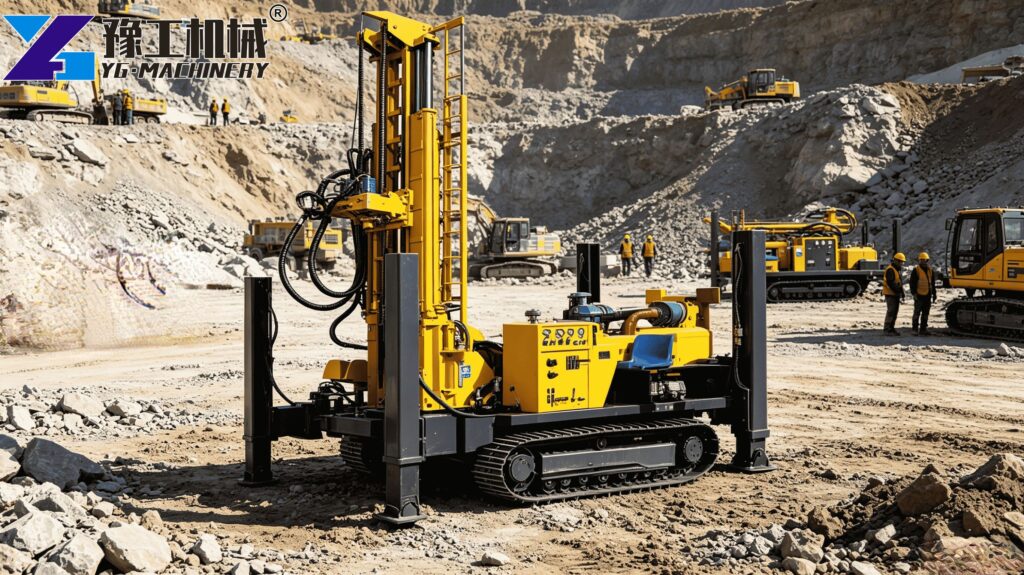
Hydraulic Crawler Drill Machine Technical Models for Deep Drilling Projects
The equipment is available in multiple configurations to meet different drilling requirements. Each model is designed for specific depth, torque, and air pressure conditions.
| Model | YG-180 | YG-200 | YG-300 | YG-300A | YG-400 | YG-600 |
|---|---|---|---|---|---|---|
| Drilling Depth | 180m | 200m | 300m | 300m | 400m | 600m |
| Hole Diameter | 140–254mm | 140–305mm | 140–325mm | 140–325mm | 140–350mm | 140–350mm |
| Lifting Force | 15T | 12T | 20T | 16T | 22T | 28T |
| Power | 55kW | 65–70kW | 84kW | 75.8kW | 92kW | 115kW |
| Air Pressure | 1.7–3.5MPa | 1.7–3.5MPa | 1.7–3.5MPa | 1.7–3.5MPa | 1.7–3.5MPa | 1.7–3.5MPa |
| Weight | 4500kg–12000kg |
These models allow contractors to select equipment based on project scale, soil hardness, and required drilling depth.
Key configuration advantages include:
- High torque output for hard rock drilling
- Adjustable drill pipe combinations for different formations
- Stable crawler chassis for rough terrain
- Strong lifting capacity for deep boreholes
- Efficient air consumption control system
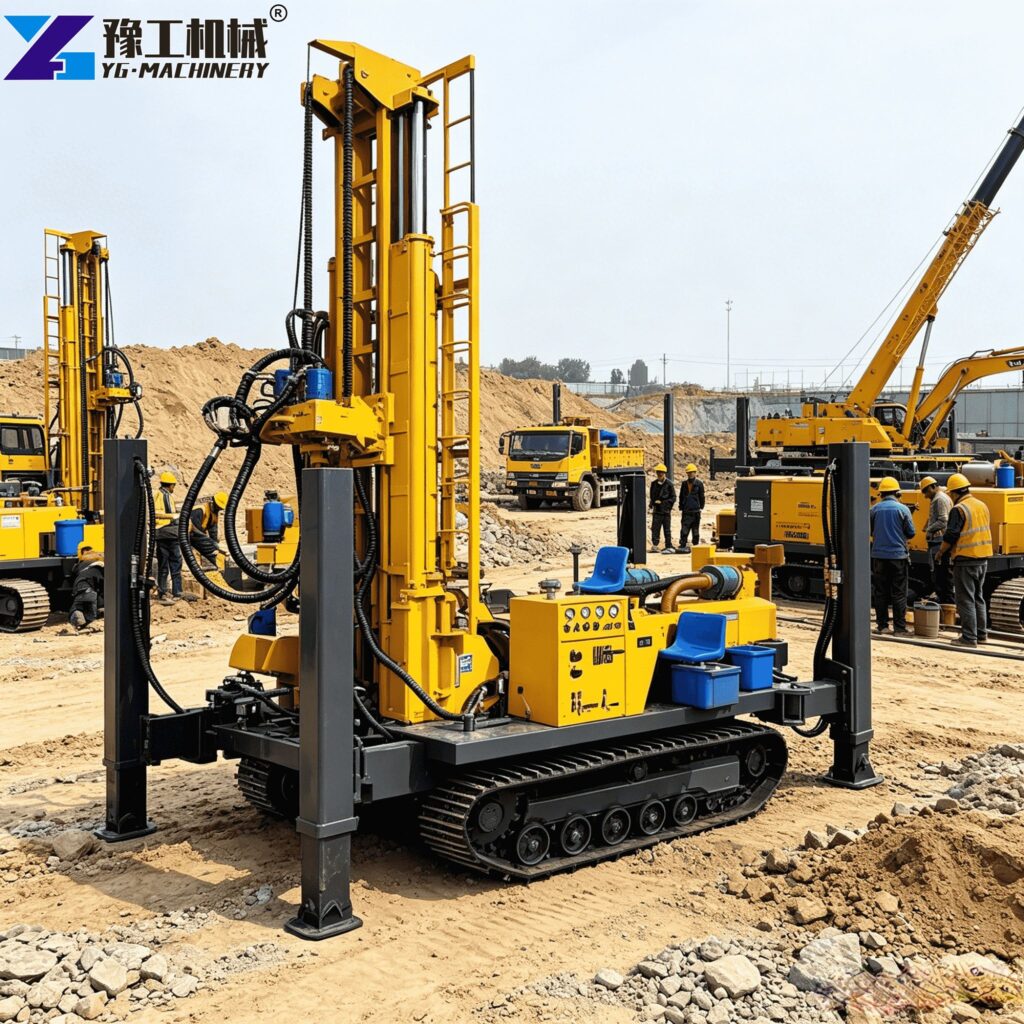
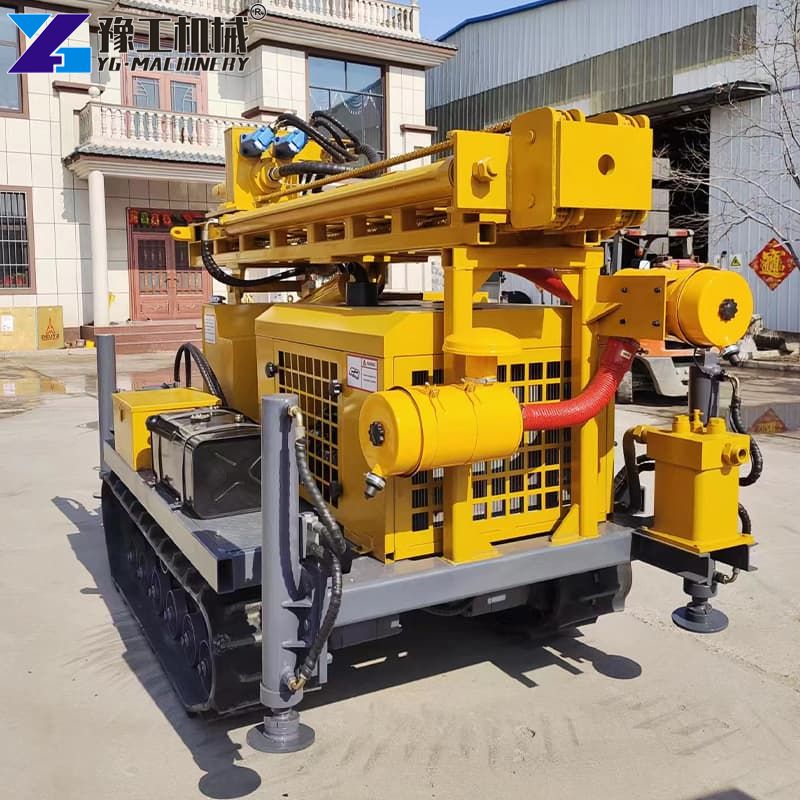
Air Track Drill Rig vs Conventional Drilling Systems
The Air Track Drill Rig represents a major technological upgrade compared with traditional rotary drilling systems, especially in demanding geological environments where efficiency and stability are critical.
Key differences include:
- Drilling Speed Efficiency
Conventional rigs rely mainly on mechanical rotation, which limits performance in hard formations. This system combines compressed air impact energy with hydraulic torque, delivering stronger breaking force at the drill bit and significantly increasing penetration speed in granite, basalt, limestone, and mixed rock layers. - Mobility and Setup Time
The crawler-mounted structure allows direct movement between drilling points without external transport equipment. This reduces relocation downtime and increases daily drilling output, making it highly efficient for multi-site operations. - Energy Utilization
The optimized air compression and hydraulic coordination system improves energy transfer efficiency. Air pressure is delivered more precisely to the hammer system, reducing energy loss and lowering overall operating costs during long drilling cycles. - Maintenance Requirements
Compared with traditional systems that rely on more complex mechanical transmissions, this design reduces friction points and mechanical stress. As a result, it delivers fewer breakdowns, longer service intervals, and lower maintenance expenses over time. - Adaptability to Hard Rock
The system performs reliably in granite, basalt, limestone, and fractured formations. Stable torque output ensures consistent drilling performance even under changing geological conditions, reducing the need for frequent tool changes. - Overall Project Efficiency Impact
These combined advantages improve drilling continuity, reduce downtime, and help contractors complete projects faster, ultimately increasing profitability in water well drilling, mining exploration, and infrastructure construction projects.
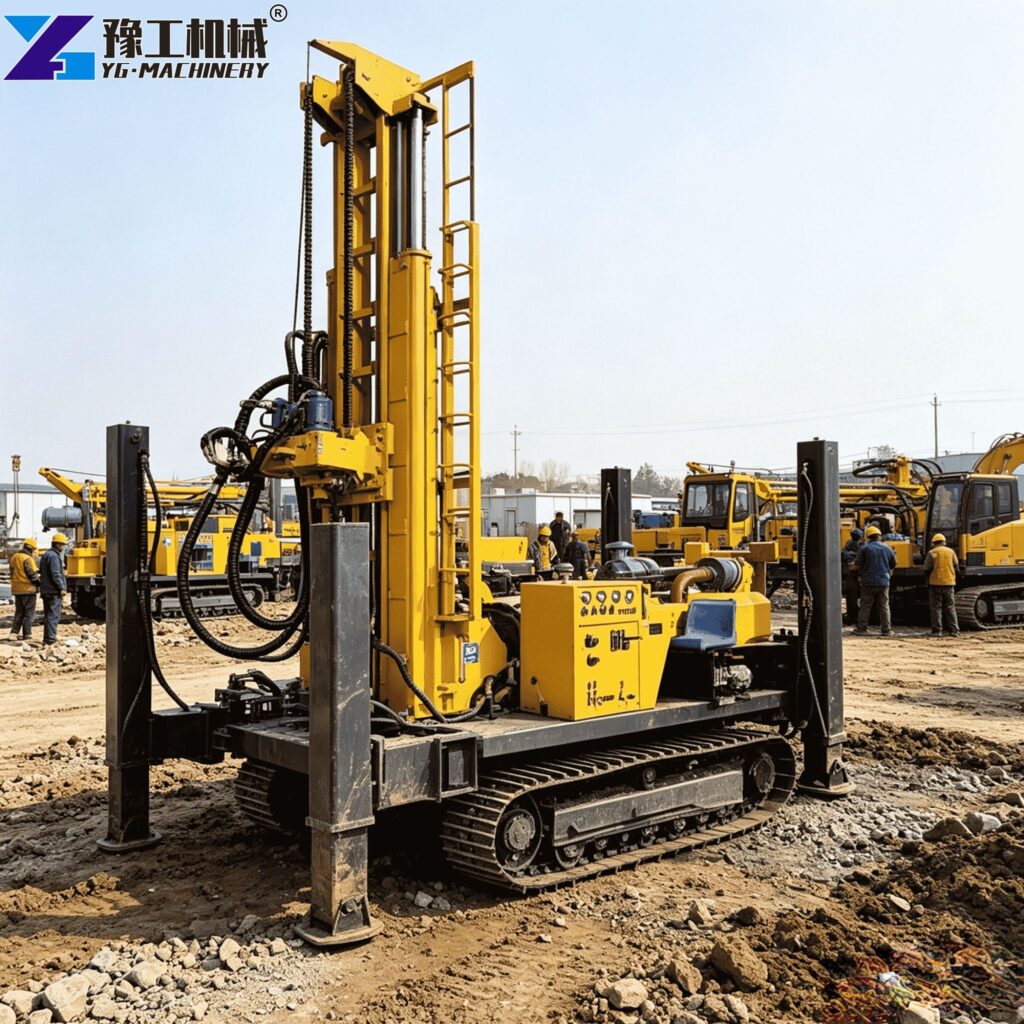
Hydraulic Crawler Drill Machine Working Principle and System Design
The system operates through a combination of hydraulic transmission and pneumatic impact drilling. This hybrid structure ensures both power and stability during deep drilling operations.
The working process includes:
- Positioning Phase
The crawler system moves the machine into position and stabilizes the frame. - Hydraulic Power Transmission
Hydraulic pumps convert engine power into rotational and lifting force. - Pneumatic Impact Drilling
High-pressure air drives the hammer system to break rock layers efficiently. - Cuttings Removal
Airflow removes debris from the borehole, keeping drilling speed stable. - Continuous Deep Drilling
The system maintains torque and pressure until the target depth is reached.
Compared with conventional drilling rigs, this system provides:
- Higher penetration speed in hard formations
- Lower mechanical wear due to optimized torque control
- Better hole straightness and drilling accuracy
- Reduced downtime during long drilling cycles
The combination of hydraulic control and pneumatic impact gives this machine a clear advantage in complex geological environments.
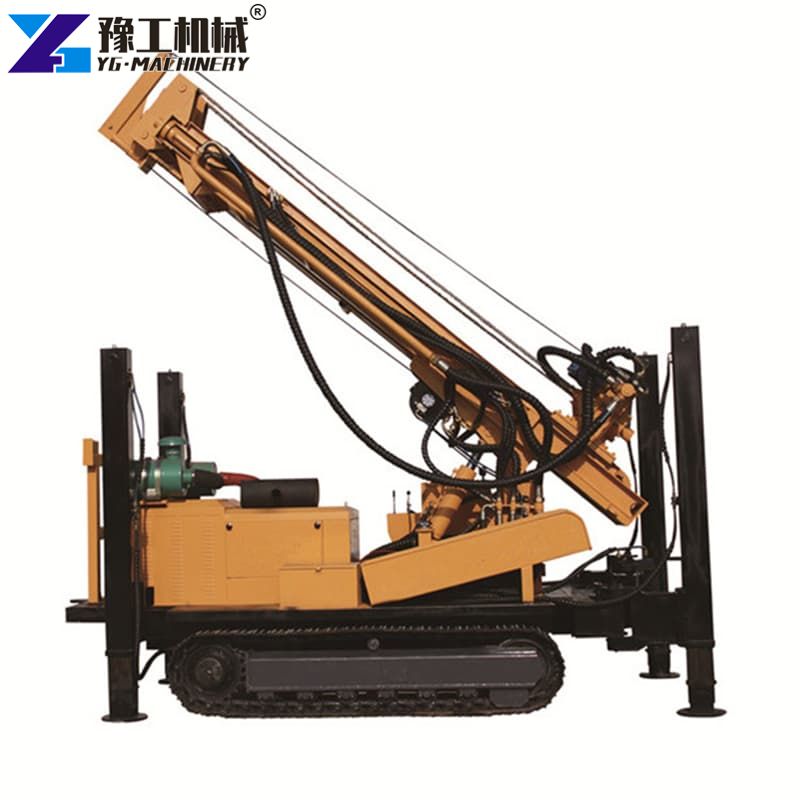
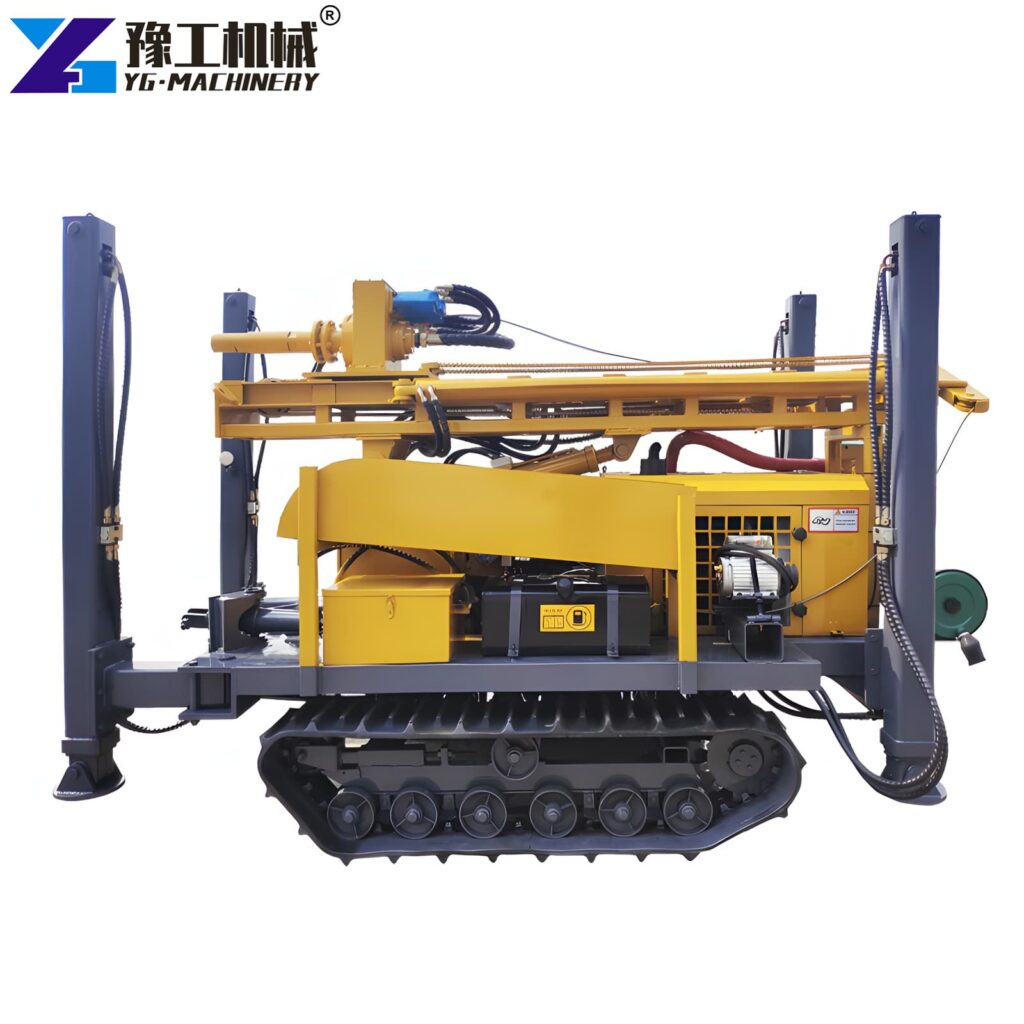
Pneumatic Crawler Drill for Multi-Environment Drilling Applications
We use the pneumatic crawler drill configuration widely in projects that require strong rock-breaking capability and reliable mobility in remote environments.
Typical applications include:
- Agricultural Water Wells
Used for irrigation systems where stable groundwater access is required. Faster drilling helps farmers solve seasonal water shortages. - Industrial Water Supply Projects
Factories use it for cooling systems and production water sources, where drilling accuracy and efficiency are critical. - Remote Area Water Development
The crawler structure allows easy movement in mountainous and rural regions, reducing transport challenges. - Geological Exploration Work
Used for soil analysis and underground water level detection with high repeatability.
YG Machinery supports global drilling contractors by providing customized configurations based on project conditions and site requirements.
Crawler Mounted Drill Rig Performance Advantages and Business Value
The Crawler Mounted Drill Rig design ensures stable performance across different terrains and project conditions.
Core advantages include:
- Strong climbing ability up to 30° slopes
- Continuous 360° rotation system for flexible drilling angles
- High lifting force up to 28 tons
- Long drilling depth capacity up to 600 meters
- Multi-diameter drill pipe compatibility
From a business perspective, this means:
- Faster project completion cycles
- Higher equipment utilization rates
- Reduced labor dependency
- Increased profitability per drilling project
YG Machinery focuses on building equipment that helps contractors scale operations efficiently while maintaining consistent drilling quality.
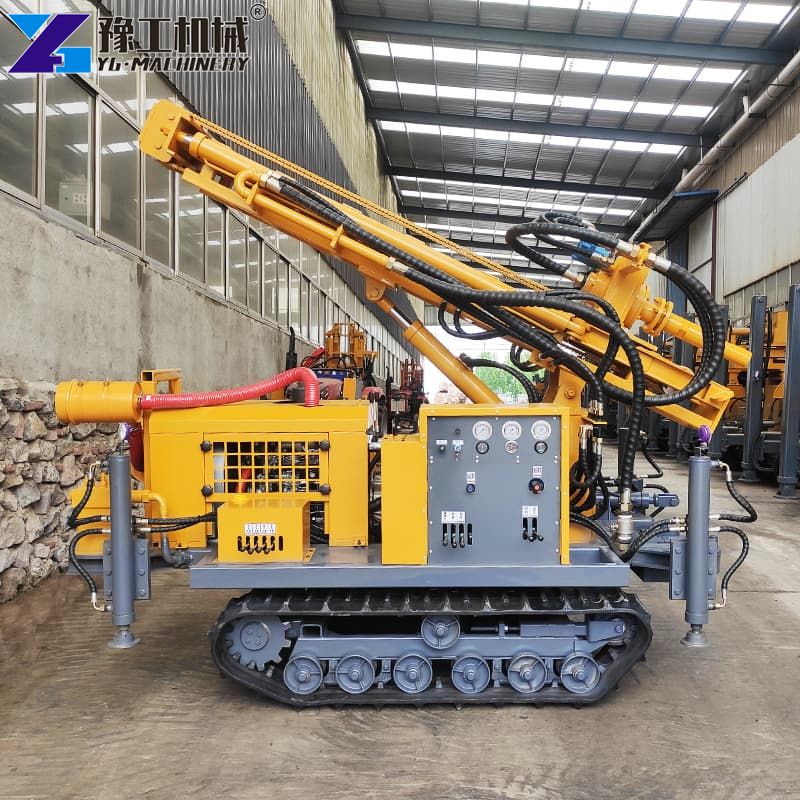
Real Case: Hydraulic Crawler Drill Machine in Deep Water Well Drilling
- Project Location: Southeast Asia
- Geological Environment: Hard limestone & fractured rock layers
- Equipment Selected: YG-300 Hydraulic Crawler Drill Rig
A leading water engineering contractor in Southeast Asia was tasked with drilling deep water supply wells across severe karst and hard limestone formations. The site conditions presented frequent borehole wall collapses and slow penetration rates using conventional rotary drilling equipment, driving up operational costs and delaying project delivery.
To overcome these geological challenges, the contractor upgraded to YG Machinery’s hydraulic crawler drilling rig. The results were immediate and measurable:
- 40%+ Increase in Penetration Speed: The combined pneumatic impact energy and stable hydraulic torque rapidly penetrated tough limestone layers, achieving a drilling speed of 12–15 meters per hour.
- 60% Reduction in Maintenance Downtime: The heavy-duty crawler chassis and optimized hydraulic cooling system ensured continuous operation without overheating, significantly extending component lifespan.
- Superior Hole Straightness: Precise hydraulic feed control reduced drill pipe deviation, ensuring high borehole quality for smooth casing installation.
- Reduced Operational Costs: High drilling efficiency cut down fuel consumption per meter and lowered manual labor dependency on-site.
Following the successful completion of the initial contract ahead of schedule, the contractor expanded their regional fleet by acquiring additional YG crawler rigs to handle large-scale municipal water supply projects.d operations and added multiple rigs for regional water supply projects, demonstrating the long-term value of a stable investment in drilling equipment.
👉 Contact YG Machinery for full technical configuration, pricing, and project consultation support.
FAQ: Hydraulic Crawler Drill Machine
The machine is highly automated and very easy to operate. We provide an operation manual and instructional videos for guidance. If needed, you can also hire a local engineer for installation and training.
We use Changchai, Quanchai, Yuchai, and Cummins engines. Custom engine configurations are also available based on customer requirements.
Water can be pumped out using a standard water pump or a solar-powered pump. Solar pumps are energy-efficient and ideal for remote areas without electricity.
The drilling speed is typically 10–15 meters per hour, depending on geological conditions and operator skill.
It depends on geological conditions, but under normal use, it lasts about 6 months. Hard rock may reduce lifespan, while softer formations extend it.
Yes, a mud pump can be installed to improve drilling fluid circulation, enhance hole cleaning, and support better drilling performance.
Yes, an operator seat can be added to improve comfort and efficiency during long working hours.
We can equip eccentric drilling tools to stabilize the borehole and reduce collapse risk, especially in loose soil conditions.
Yes, we offer 4-wheel, crawler-type, and tractor-style rigs to suit different terrains and mobility needs.