A pizza dispenser project began with a short email received by YG Machinery in March 2026. The customer was an entrepreneur from Arizona, USA. He had operated several snack vending machines for years and wanted to expand into freshly prepared hot food. After researching unattended retail trends and comparing different business models, he believed freshly baked pizza could generate higher revenue than traditional vending products. His first installation site had already been confirmed near a university campus with nearly 18,000 students and faculty members passing through every day.
Instead of opening a traditional pizza shop, he planned to install a fully automatic vending solution that could operate around the clock without requiring full-time staff. According to the National Automatic Merchandising Association (NAMA), unattended food retail continues to grow because consumers increasingly expect convenient access to fresh meals outside normal restaurant hours. This industry trend encouraged him to search for an equipment supplier capable of providing stable operation, food safety, remote management, and customized branding. After comparing several manufacturers online, he submitted an inquiry through the YG Machinery website.
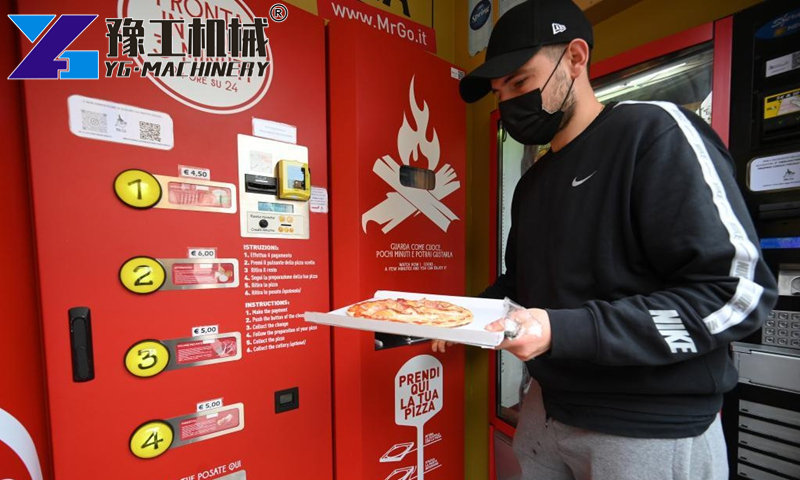
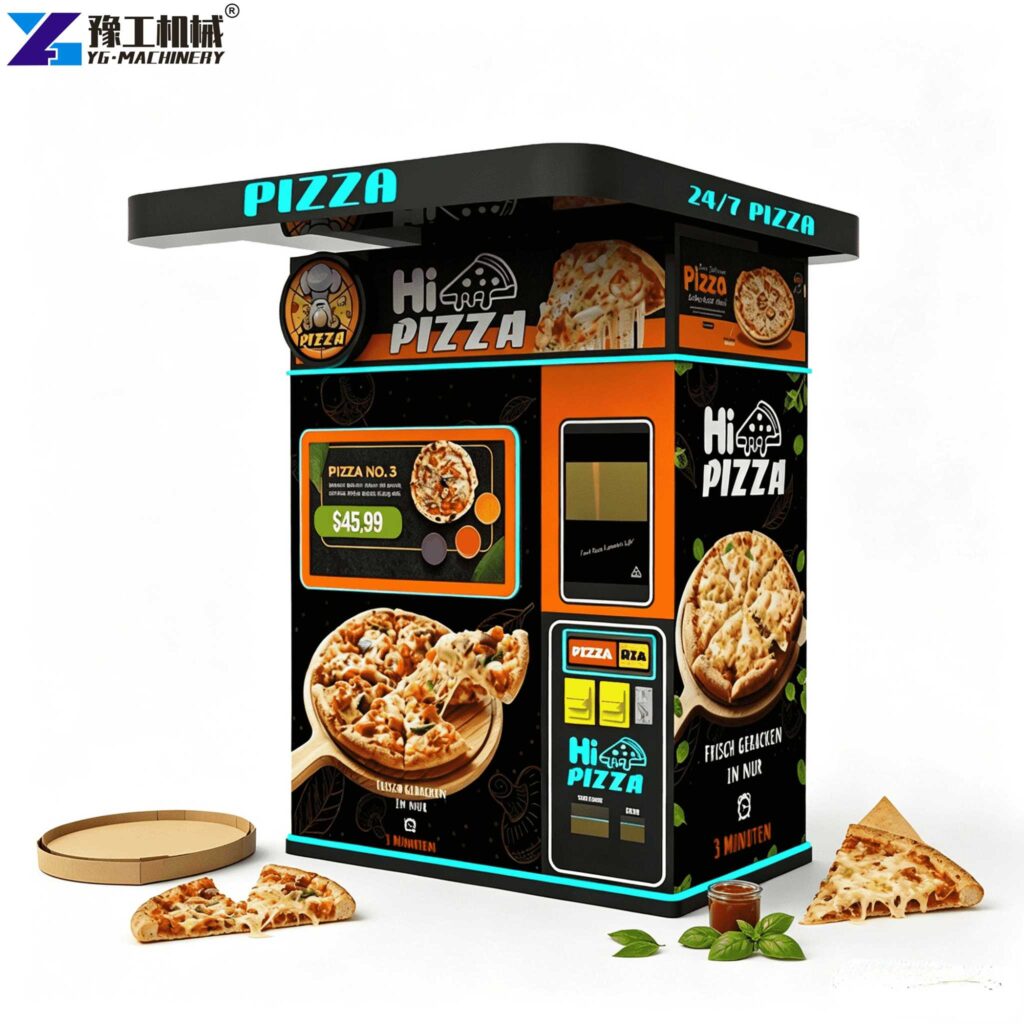
Automatic Pizza Dispenser Product Specifications
| Parameter | YG-13A | YG-13B | YG-14A | YG-14B |
|---|---|---|---|---|
| Size | L1790 × W978 × H2275 mm | L1790 × W978 × H2275 mm | L1790 × W978 × H2275 mm | L1790 × W978 × H2275 mm |
| Weight | 650 KG | 650 KG | 650 KG | 650 KG |
| Main Structure | Sheet Metal | Sheet Metal | Sheet Metal | Sheet Metal |
| Flavor Options | 50+ Kinds | 50+ Kinds | 50+ Kinds | 50+ Kinds |
| Power | 7500 W | 7500 W | 7500 W | 7500 W |
| Fresh-Keeping System | 1℃ Refrigerated | 1℃ Refrigerated | 1℃ Refrigerated | 1℃ Refrigerated |
| Oven Heating System | Air Circulation Heating Motorized | Air Circulation Heating Motorized | Air Circulation Heating Motorized | Air Circulation Heating Motorized |
| Transmission System | Imported Transmission Slider Module | Imported Transmission Slider Module | Imported Transmission Slider Module | Imported Transmission Slider Module |
| Payment Method | Cash, Coin, Bank Card | Cash, Coin, Bank Card | Cash, Coin, Bank Card | Cash, Coin, Bank Card |
Start Your Project with the Right Equipment
Pizza Vending Machine Operation Manual
Understanding the Customer’s Business Plan
The first email contained a detailed introduction instead of a simple price inquiry. The customer explained where the machine would be installed, how much daily traffic the location received, the expected selling price of each pizza, and the estimated daily sales target. He also attached several photos of the installation site, electrical connections, and available floor space.
During the following two days, both teams exchanged several emails. Instead of discussing only machine specifications, most conversations focused on business operations. Questions included ingredient storage time, oven heating efficiency, payment systems, software language, remote monitoring, maintenance intervals, and local food safety requirements. Because the customer planned to manage multiple locations in the future, he wanted all machines connected to a single cloud management platform. This would allow inventory monitoring, sales analysis, and fault alerts from his office.
A video meeting was arranged later that week. Engineers from YG Machinery demonstrated machine operation through live video. Every process was shown, including ingredient refrigeration, dough delivery, topping placement, baking, cutting, and automatic packaging. The customer watched the complete cycle several times and asked practical questions based on daily business operation rather than laboratory testing.
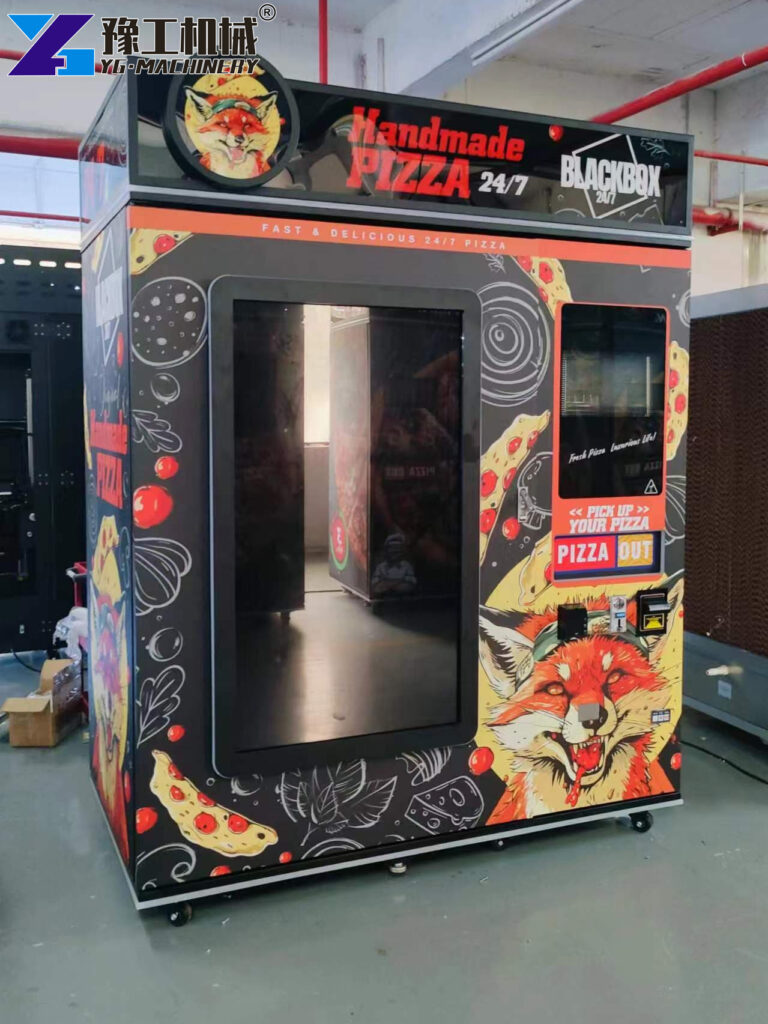
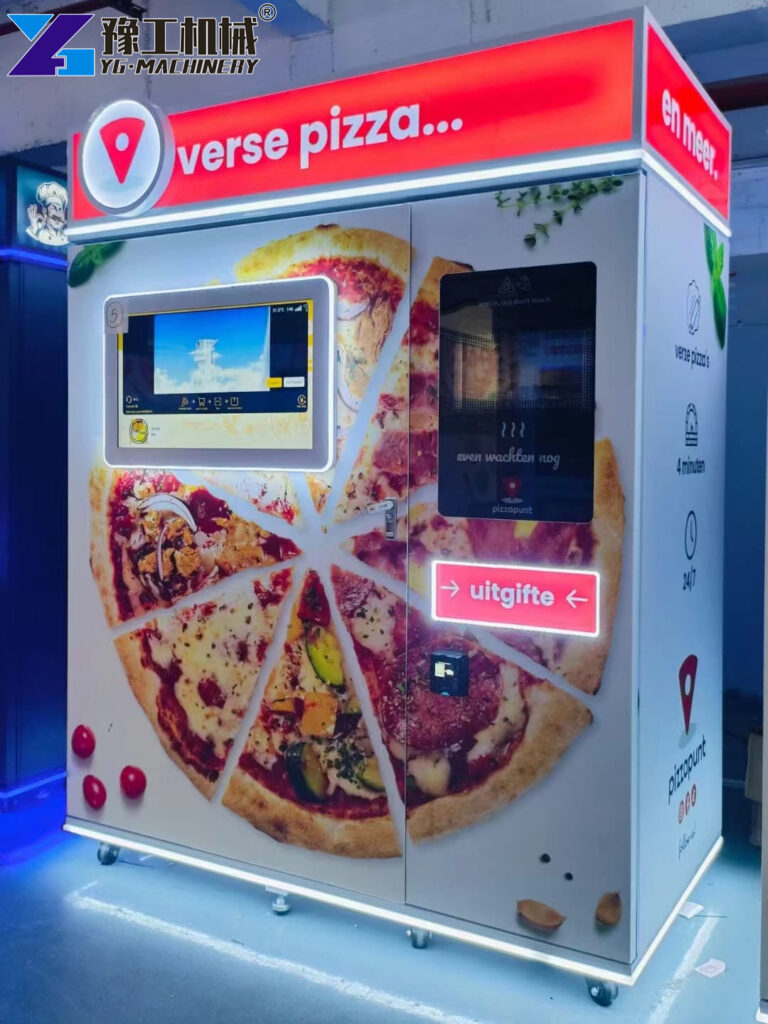
Equipment Configuration Changed After the Video Meeting
The original quotation included the standard commercial pizza vending machine configuration. However, after discussing the actual operating environment, several modifications became necessary.
The first change involved the payment system. Since most university students preferred cashless payments, the customer requested support for bank cards, along with mobile payment integration, provided by his local payment service company. The engineering team reserved additional interface ports to simplify future integration.
The second modification involved exterior branding. Instead of using standard factory graphics, the customer supplied his own restaurant logo, menu colors, and promotional design. Engineers adjusted the front advertising panel, touch screen interface, and LED lighting to match his existing brand identity.
Storage management also required adjustment. The customer planned to provide more than twenty pizza varieties during the first operating phase. Different ingredient combinations required careful refrigeration management. After discussing inventory turnover, both sides determined the most practical stocking plan while maintaining the 1℃ fresh-keeping environment.
Finally, the customer requested additional operator training because this was his first fully automated food business. The training program was expanded to include software operation, ingredient replacement, routine cleaning, troubleshooting, and preventive maintenance. By the end of the meeting, both sides had finalized the technical configuration, confirmed production drawings, and approved the manufacturing schedule.
24 Hour Pizza Vending Machine Configuration Confirmed Before Production
One week after the video meeting, the customer signed the commercial invoice and paid the agreed deposit. Production started immediately. Since the project targeted a university campus, reliability was considered more important than maximum production speed. Students would purchase meals during lunch breaks, evenings, and late-night study sessions. Any unexpected downtime could directly affect sales and customer satisfaction.
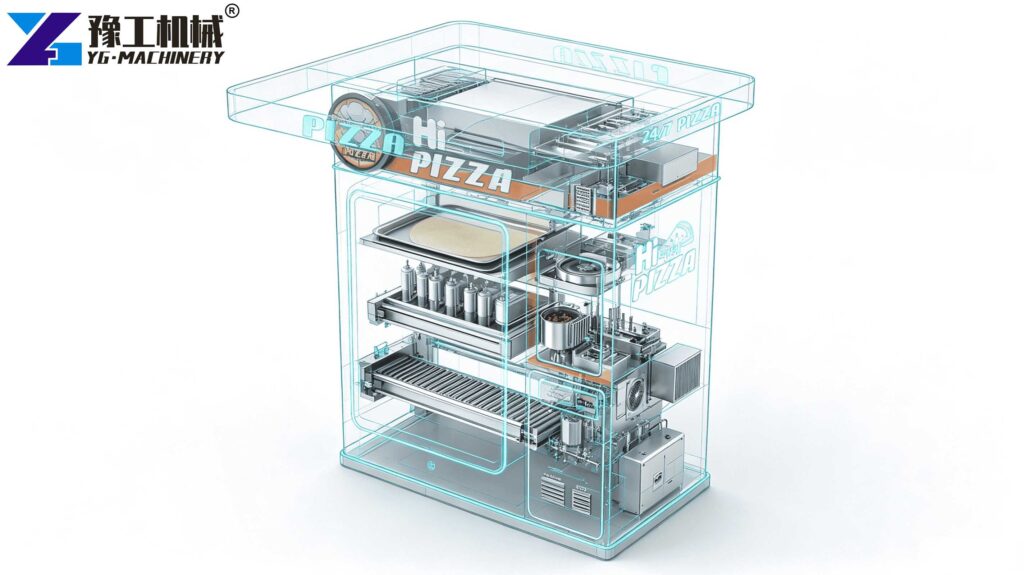
The engineering team therefore focused on several core systems before manufacturing. The refrigeration unit maintained ingredients at approximately 1℃ throughout daily operation. The air circulation oven was tested repeatedly to ensure every pizza received even heating without overcooking the crust. The imported transmission slider module completed each movement smoothly, reducing vibration during ingredient delivery and packaging.
Throughout production, weekly progress reports were shared with the customer. Factory staff sent photos of the cabinet assembly, electrical wiring, refrigeration installation, and software commissioning. Short testing videos were also recorded so the customer could monitor every stage without visiting China. This transparent communication reduced uncertainty and allowed several small software interface adjustments before the machine entered final testing.
Find the Right Model for Your Project
Factory Acceptance Testing Focused on Real Operation
Before shipment, the machine completed a full factory acceptance test under simulated operating conditions. Engineers checked the refrigeration system, baking performance, payment function, ingredient delivery, and automatic packaging. More than 150 continuous operating cycles were completed to verify stable performance.
The customer joined the inspection through a live video meeting and watched the entire operating process in real time. After confirming that every function met the agreed specifications, he approved the final inspection. Minor software and parameter adjustments were completed according to the customer’s requirements before the machine was packed and shipped.
Export Packaging and Ocean Transportation
After the final inspection, the machine was cleaned, secured, and packed in a reinforced wooden case for international transportation. All accessories, operation manuals, and spare parts were packed together and labeled clearly for easy installation.
The container was shipped from Shanghai Port to the United States. During transit, YG Machinery provided regular logistics updates while the customer prepared the installation site, including electrical connections and network access. After arrival, the machine was unloaded successfully with no transportation damage, allowing installation to begin as scheduled.
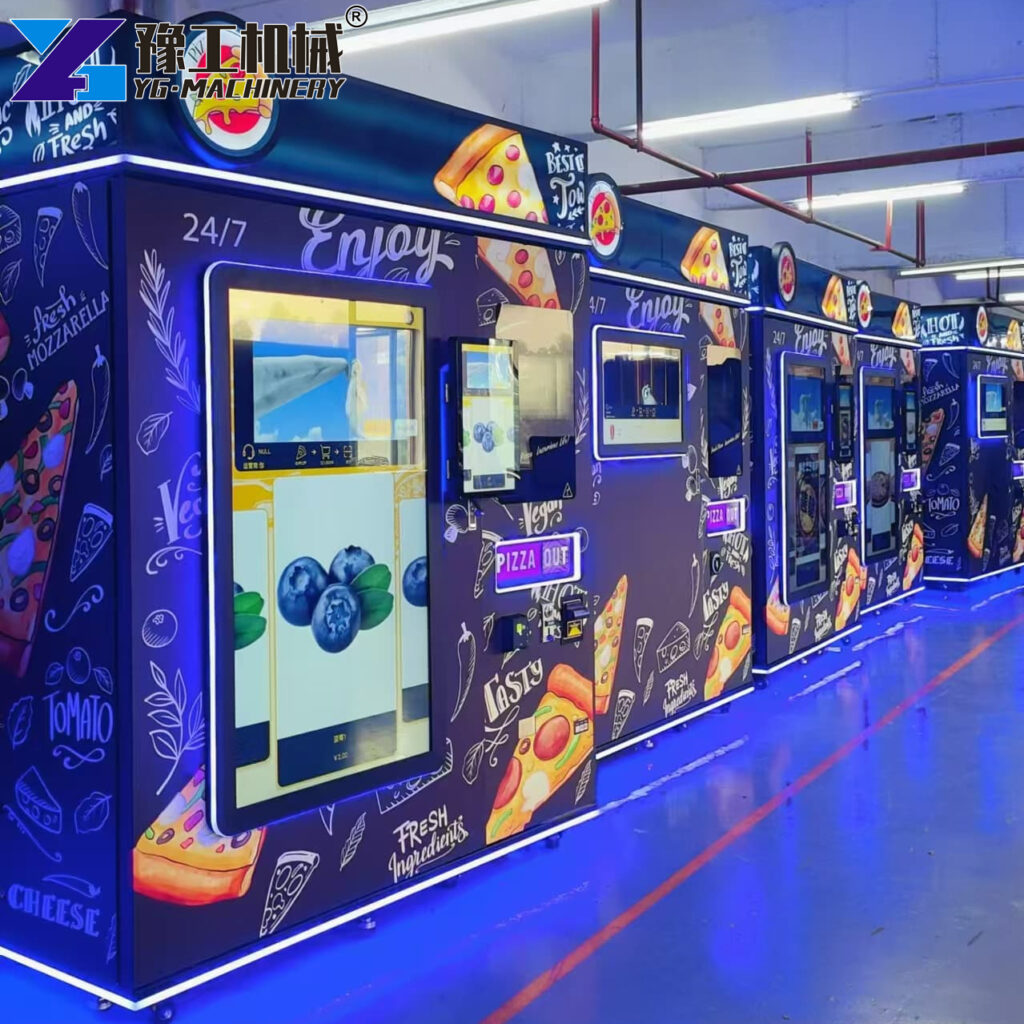
Self-Service Pizza Machine Began Serving Customers Within One Day
Installation started the day after the machine arrived. Before powering on the equipment, engineers from YG Machinery held an online meeting with the customer’s local technician. Together they checked the electrical supply, floor leveling, internet connection, ventilation space, and refrigeration status. Because the machine had been fully assembled before shipment, on-site work mainly involved positioning, connecting power, configuring the network, and completing software activation. The entire process took less than one working day.
Training followed immediately after installation. Instead of only explaining the operating manual, engineers demonstrated daily procedures step by step. The customer learned how to replace pizza ingredients, clean food-contact components, inspect the refrigeration system, monitor oven temperature, and review sales reports through the cloud management platform. Several simulated equipment alarms were also created so operators could understand how to respond quickly without interrupting business. By the end of the training session, the customer completed every operation independently while engineers observed remotely.
Pizza Dispenser Customer Feedback After One Month of Operation
The machine officially entered commercial operation on a Friday afternoon to coincide with increased campus traffic before the weekend. During the first several days, the customer mainly observed customer behavior and adjusted product pricing. The menu initially included twelve popular flavors, including Pepperoni, Hawaiian, BBQ Chicken, Meat Lovers, Four Cheese, Vegetarian, and several locally preferred recipes. Additional varieties were gradually added after analyzing sales data collected by the management system.
After one month of operation, the customer shared detailed performance statistics. Daily sales averaged between 60 and 85 pizzas during weekdays, while weekends remained stable because nearby residential communities also used the machine. Peak purchasing hours occurred between 11:30 a.m. and 1:30 p.m., followed by another busy period from 8:00 p.m. until midnight when students finished evening classes.
The customer also reported several operational improvements compared with his previous snack vending business.
- Fresh hot meals generated significantly higher average order values.
- Remote inventory monitoring reduced unnecessary site visits.
- Automatic fault notifications shortened maintenance response time.
- Consistent baking quality helped maintain repeat customers.
- The refrigeration system kept ingredients fresh throughout daily operation.
- Cleaning and routine maintenance required less than one hour each day.
Most importantly, the machine operated continuously without major mechanical failures during its first month of service. The customer commented that stable operation was more valuable than adding unnecessary functions because reliability directly affected customer confidence and repeat purchases.
Pizza Vending Machine Business Expanded Beyond the First Location
Three months after the first installation, the customer arranged another online meeting with the YG Machinery team. Instead of discussing maintenance, the conversation focused on business expansion. Sales reports showed that the university location consistently exceeded the original business forecast. The customer had already identified two additional locations near a hospital and a mixed-use commercial center where late-night food demand remained strong.
During the meeting, both sides reviewed operational data from the first machine. Product preferences, peak purchasing hours, ingredient turnover, and maintenance records were analyzed to optimize the next deployment. Based on these results, the customer decided that future machines would use the same hardware configuration while adding several localized pizza recipes designed for different consumer groups.
This project demonstrated how careful planning, transparent communication, and thorough factory testing contributed to a successful unattended retail operation. Rather than treating the equipment as a single purchase, both teams managed the project from initial inquiry to stable commercial operation. Continuous technical support after delivery allowed the customer to focus on business growth while maintaining reliable daily service.
Start Your Automated Pizza Project with YG Machinery
Whether you plan to launch your first unattended food business or expand an existing vending network, YG Machinery can provide customized pizza vending solutions based on your market, menu, and installation environment. From equipment configuration and factory testing to international shipping, remote installation, and operator training, our engineering team supports every stage of your project.
If you are planning a new pizza dispenser business, contact us with your location, expected daily sales, and preferred menu. We will recommend the most suitable machine configuration and help you build a reliable automated pizza operation.