Buying a backhoe loader represents a significant investment. Choose wrong, and you struggle with too little power, poor visibility, or constant breakdowns. Choose right, and the machine pays for itself within months. This guide walks you through every decision point when you shop for a hydraulic backhoe loader. You will learn about engine options, transmission types, sizing, and budget considerations. YG Machinery manufactures the YG series of diesel-powered backhoe loaders. None of these machines runs on electricity. All of them use reliable hydraulic systems for smooth digging and loading. Let us start with the basics.
What Makes a Hydraulic Backhoe Loader Different from Other Machines
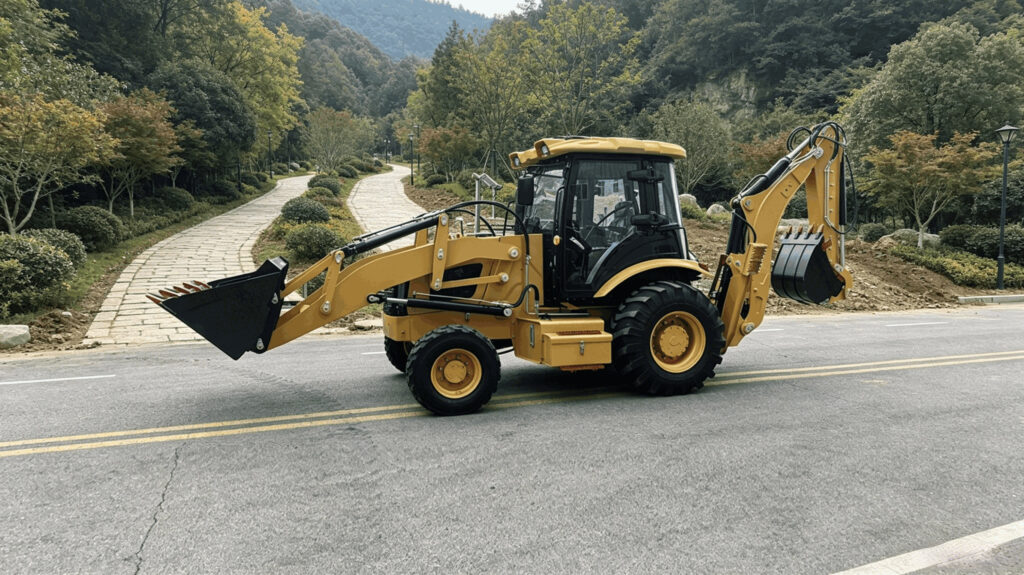
A standard backhoe loader uses mechanical linkages and cables to control the digging arm and loader bucket. A hydraulic backhoe loader uses pressurized fluid to perform every function. Hydraulics deliver smoother operation, more precise control, and greater lifting power. You can feather the controls for delicate work near foundations or slam them to full travel for aggressive digging.
The hydraulic system also reduces operator fatigue. You do not wrestle with stiff mechanical linkages. The machine responds instantly to your inputs. This makes a backhoe loader ideal for long days of trenching, loading, or grading.
Many buyers also search for a compact tractor loader backhoe. This term refers to a smaller, more maneuverable version of a full-size backhoe. YG Machinery’s YG series fits squarely in this compact category. You can tow these machines behind a standard truck and fit them through narrow gates. Yet they still pack serious hydraulic power for real work.
YG Machinery Small Backhoe Loader – Complete Specification Table
Below is the full specification table for all YG series backhoe loader models. Review these numbers carefully before making your decision.
| Model | Transmission Type | Dumping Height (m) | Bucket Width (m) | Configuration / Engine | Additional Specifications |
| YG-920 | Mechanical | 3.2 | 1.8 | High/Low Speed / Isuzu Engine | — |
| YG-926 | Continuously Variable Transmission (CVT) | 3.2 | 1.8 | 265 Engine / Small Hub Reduction Axle | — |
| YG-928 | CVT | 3.2 | 1.8 | Dual 265 Engine / Small Hub Reduction Axle | — |
| YG-930 | CVT | 3.2 | 1.8 | Dual 265 Engine / Small Hub Reduction Axle | — |
| YG-940 | CVT | 3.5 | 2.0 | Dual 265 / Large Hub Reduction Axle | Engine Power: 4102 Turbocharged / Air Brake System / Tire Size: 16.70–20 |
| YG-946 | CVT | 3.5 | 2.0 | Dual 280 / Large Hub Reduction Axle | Engine Power: 4102 Turbocharged / Air Brake System / Tire Size: 16.70–20 |
| YG-949 | CVT | 3.5 | 2.0 / 2.2 | Dual 300 Split / Large Hub Reduction Axle | Engine Power: 4108 Turbocharged / Air Brake System |
Use this table to compare models side by side. Notice how dumping height jumps from 3.2m to 3.5m starting with the YG-940. Notice also how bucket width increases from 1.8m to 2.0m or 2.2m on the larger units. These differences directly affect daily productivity.
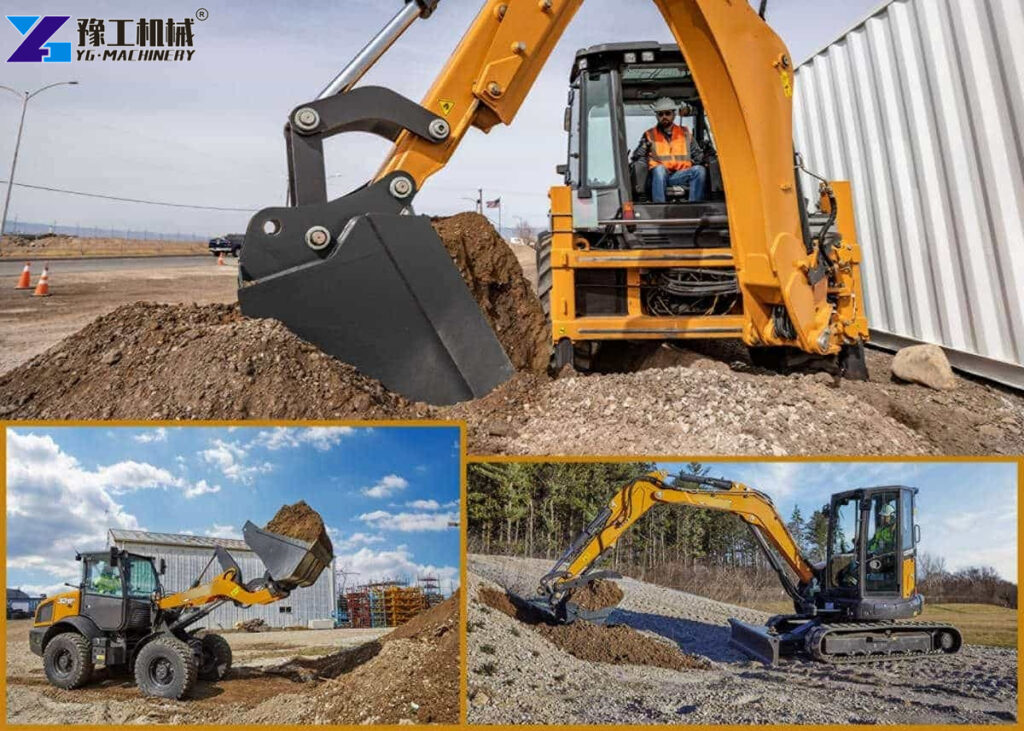
Backhoe Loader vs Excavator: Which Machine Is Better for Construction Projects?
Diesel Power vs Electric Hydraulic Backhoe Loader – Why YG Machinery Sticks with Diesel
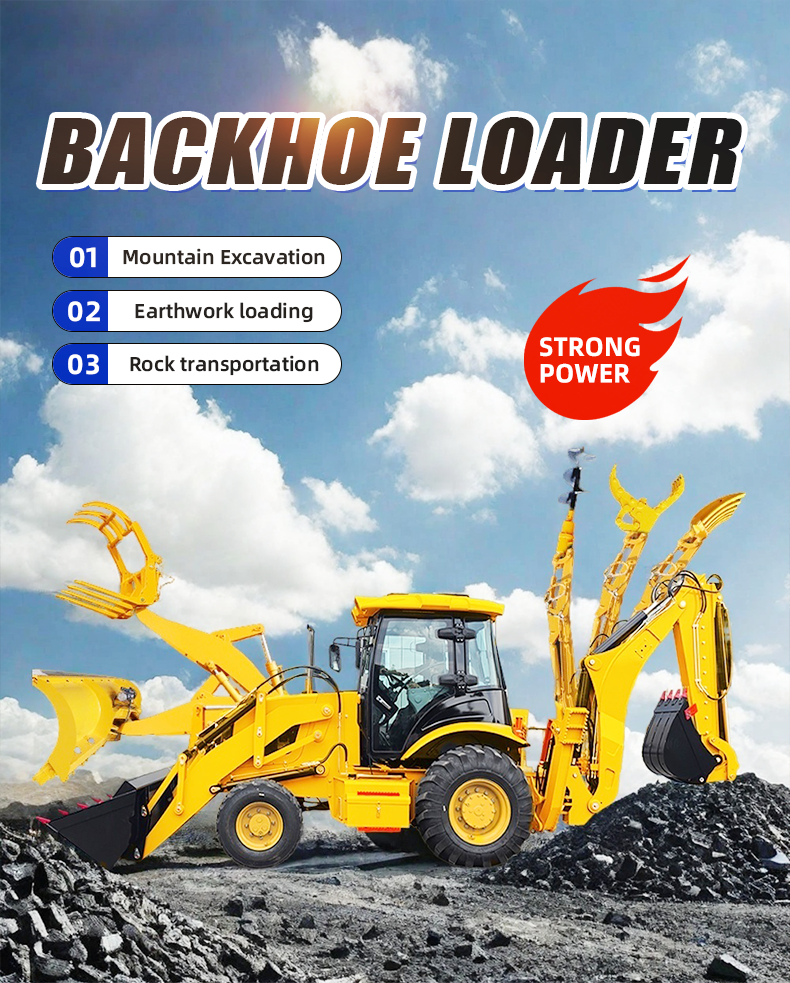
Some manufacturers now push electric machines. YG Machinery does not. Every YG series backhoe loader runs on diesel. Here is why diesel remains the smarter choice for a hydraulic backhoe loader:
Diesel delivers more torque – Hydraulic pumps need torque to generate pressure and flow. Diesel engines produce maximum torque at low RPM, exactly where hydraulic systems operate best.
Diesel runs all day – A full tank gives you 8 to 10 hours of continuous work. Electric machines need battery swaps or lengthy charging breaks. Job sites rarely have high-voltage charging stations.
Diesel handles tough conditions – Dust, mud, extreme heat, and cold do not stop a diesel engine. Electric components suffer in these environments.
Diesel holds resale value – Used diesel equipment sells quickly. Early-generation electric machines face uncertain resale markets.
All YG series models use proven diesel engines. The YG-920 features an Isuzu engine. Larger models use dual 265, 280, or 300 split diesel configurations with turbocharging on the YG-940, YG-946, and YG-949.
Transmission Choices – Mechanical or CVT on Your Hydraulic Backhoe Loader
The transmission affects how the machine drives and operates. YG Machinery offers two options across the YG series.
Mechanical Transmission (YG-920) – This traditional gearbox requires clutching and shifting. It offers high and low speed ranges. Mechanical transmissions cost less up front. Experienced operators often prefer the direct feel and control of mechanical shifting. Repair costs also tend to be lower.
CVT – Continuously Variable Transmission (YG-926 through YG-949) – CVT provides infinite speed ratios without any shift shock. You simply press the pedal and go. CVT reduces operator fatigue during long days of loader work. It also protects the drivetrain from sudden torque spikes. New operators learn CVT in minutes.
Which transmission should you choose for your hydraulic backhoe loader? If you have experienced operators and want to save money, the YG-920 with mechanical transmission works well. If you run a rental fleet or hire less experienced crew members, choose a CVT model like the YG-926 or higher.
Sizing Your Hydraulic Backhoe Loader – Dumping Height and Bucket Width
Two specifications directly impact daily productivity. Pay close attention to them.
Dumping Height – This tells you how high the front loader can lift material. The YG-920 through YG-930 models dump at 3.2 meters (about 10.5 feet). This clears most small dump trucks and trailers. The YG-940, YG-946, and YG-949 dump at 3.5 meters (about 11.5 feet). The extra 30 centimeters makes a noticeable difference when you load larger trucks or build taller stockpiles.
Measure your truck bed height before buying. Add 30 centimeters for clearance. Choose 3.2 meters or 3.5 meters based on that number.
Bucket Width – A narrower bucket digs deeper with less resistance. A wider bucket moves more material per pass. The YG-920 through YG-930 use a 1.8 meter (71 inch) bucket. The YG-940 and YG-946 use a 2.0-meter (79-inch) bucket. The YG-949 offers a choice between 2.0 and 2.2 meters (87 inches).
Choose a narrower bucket for rocky soil, hard clay, or precision trenching. Choose a wider bucket for sand, gravel, or snow removal.
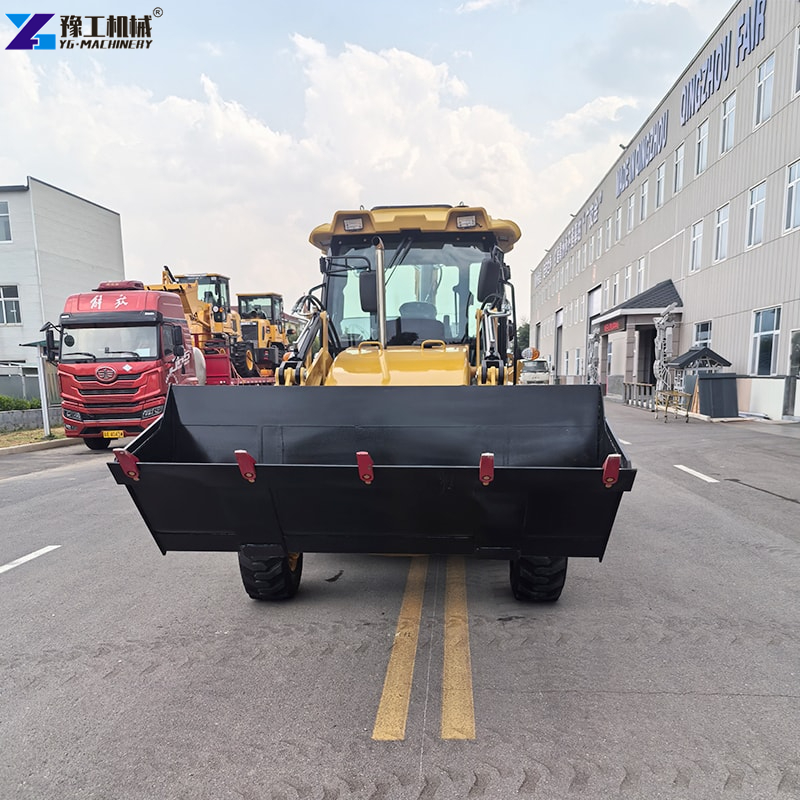
Buyers searching for a wheel backhoe loader often focus on these sizing specifications. The wheel configuration gives you road speed between jobs. Tracks cannot do that. Make sure your chosen machine has the right dumping height and bucket width for your typical loads.
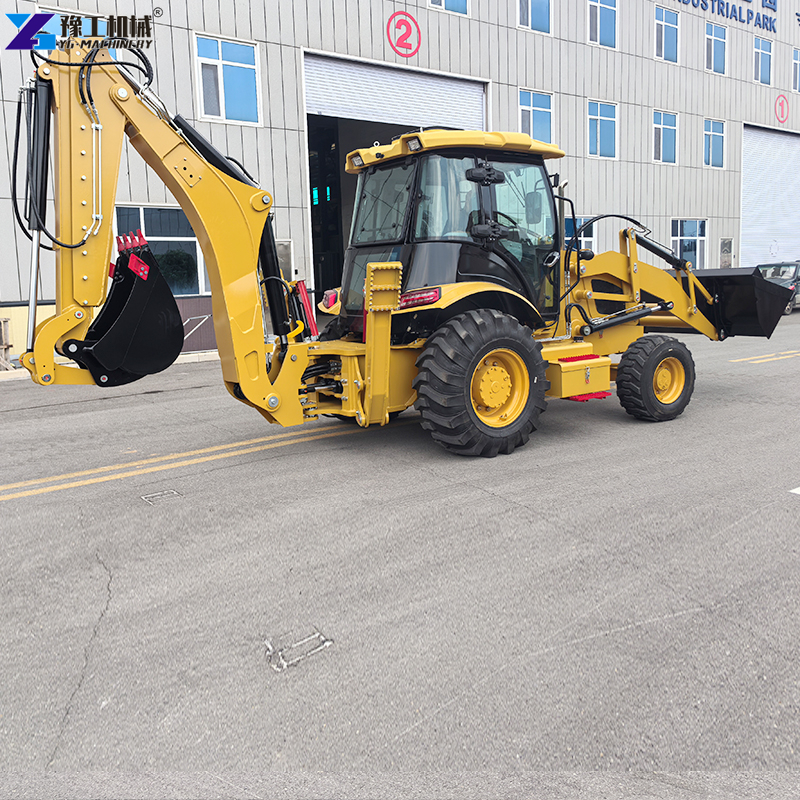
Single vs Dual Diesel Engines in Compact Tractor Loader Backhoe: Key Configurations
YG Machinery uses different engine setups across the YG series. Understanding them helps you match power to your work.
Single Isuzu Engine (YG-920) – Reliable, fuel-efficient, and easy to service. Perfect for light-duty work and occasional use.
Single 265 Engine (YG-926) – More power than the Isuzu. Still simple and serviceable. Good for daily use on smaller job sites.
Dual 265 Engines (YG-928 and YG-930) – Two engines working together. If one needs service, the other keeps you running. Ideal for commercial use where downtime costs money.
Dual 280 Engines (YG-946) – Additional displacement for heavier work. Combined with large hub reduction axles and air brakes.
Dual 300 Split Engine (YG-949) – The most powerful option. 4108 turbocharged diesel delivers serious torque for the toughest jobs.
For most contractors, the dual 265 configuration (YG-928 or YG-930) offers the best balance of power, reliability, and value. For heavy daily use, step up to the YG-946 or YG-949.
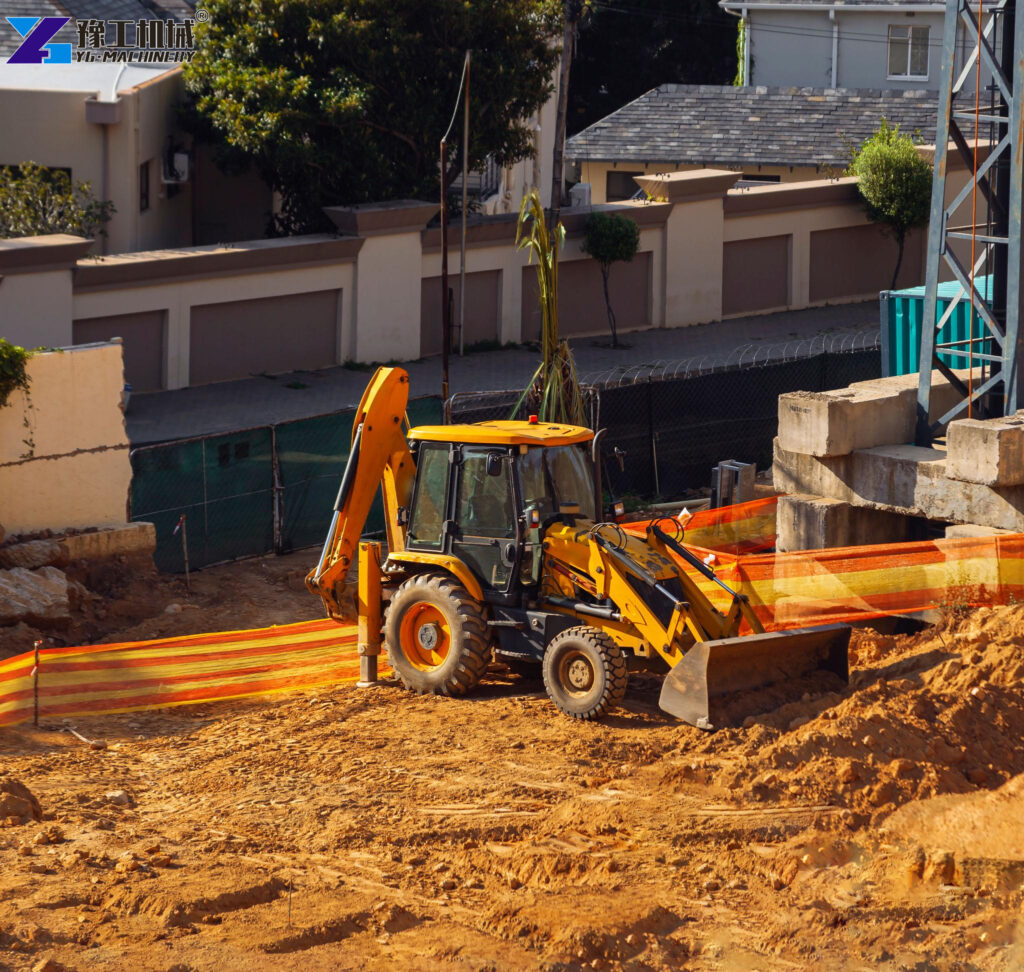
Axles and Brakes for Your Wheel Backhoe Loader – What You Need for Your Terrain
Axles and brakes often get overlooked. They should not.
Small Hub Reduction Axles – Found on YG-926, YG-928, and YG-930. These work well for flat job sites, light to medium loads, and occasional road travel. They cost less and weigh less.
Large Hub Reduction Axles – Found on YG-940, YG-946, and YG-949. These handle heavy daily use, rough terrain, and maximum loader loads. They provide greater durability and longer service life.
Brake Systems – YG-920 through YG-930 use standard hydraulic brakes. These work fine for flat ground and light loads. YG-940, YG-946, and YG-949 come with air brakes. Air brakes provide stronger stopping power, especially when you tow the machine or work on hills.
If your job site has slopes, you haul heavy loads, or you tow the machine frequently, choose a model with large hub reduction axles and air brakes. The YG-940 is the entry point for these features.
Finding a Small Backhoe Loader That Fits Your Budget
Many buyers search for a small backhoe loader because they do not need a massive machine. A smaller unit costs less, transports more easily, and fits into tighter spaces. YG Machinery offers two excellent options in this category.
YG-920 – The smallest and most affordable model. Mechanical transmission. Isuzu diesel engine. 3.2 meter dumping height. 1.8 meter bucket width. Perfect for landscaping, small farms, and residential construction.
YG-926 – Still compact but adds CVT transmission. Same 3.2 meter dumping height and 1.8 meter bucket width. The CVT makes operation much easier for less experienced users.
When you look for a mini backhoe loader, focus on your typical job size. A YG-920 handles trenches up to 6 feet deep and loader work up to 1,500 pounds. That covers most small contracting and farming tasks. If you regularly work bigger jobs, step up to the YG-930 or YG-940.
Avoid the temptation to buy the cheapest machine from an unknown seller. Quality varies wildly in the mini backhoe loader market. YG Machinery builds its YG series with proven diesel engines, reliable hydraulics, and serviceable components. You will find parts when you need them.
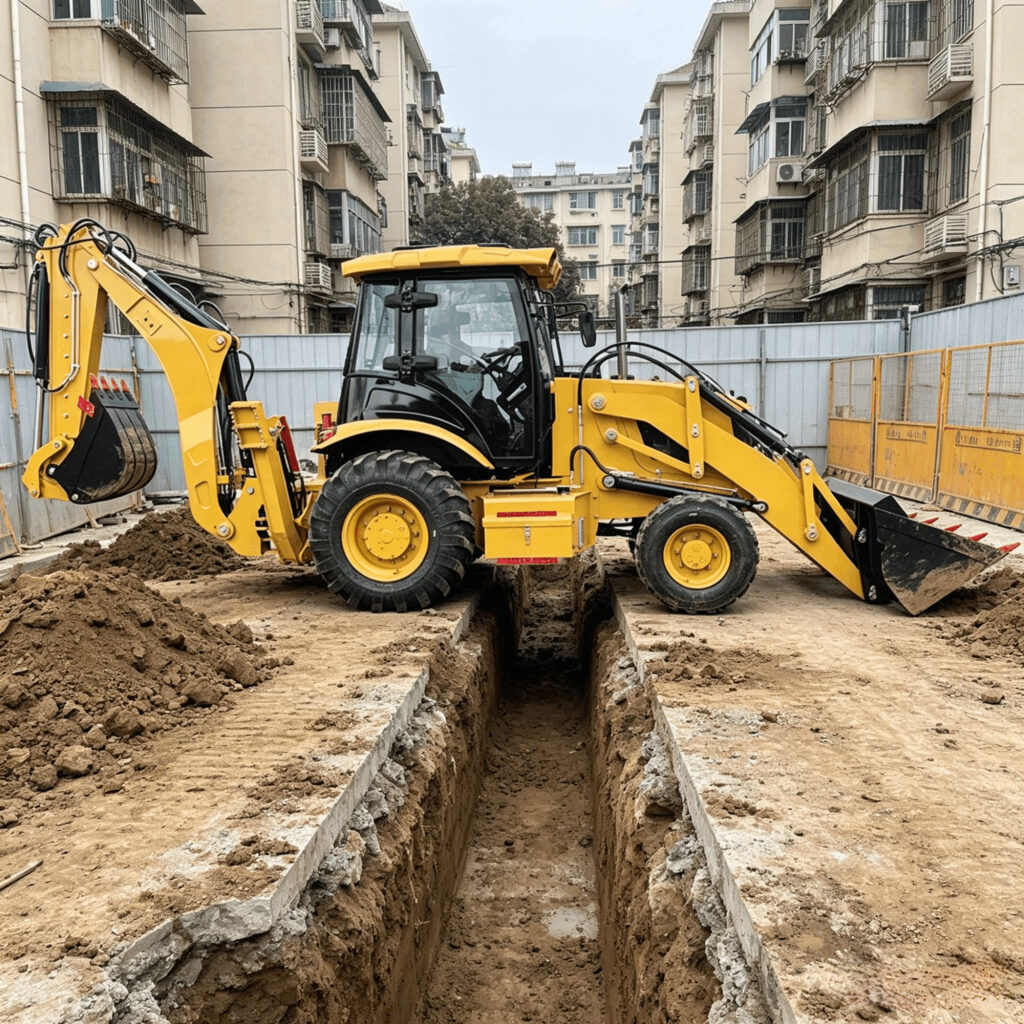
Common Applications for a Hydraulic Backhoe Loader
A well-chosen backhoe loader handles dozens of tasks. Here are the most common:
- Digging trenches for water lines, electrical conduits, and drainage pipes
- Excavating foundations for decks, additions, and small buildings
- Loading trucks with dirt, gravel, sand, or demolition debris
- Grading and leveling uneven ground for landscaping
- Removing tree stumps and large rocks
- Clearing snow from driveways and parking lots
- Cleaning barns and animal pens on farms
- Moving pallets of blocks, bags of concrete, or hay bales
One machine replaces a separate tractor, loader, and excavator. You save on purchase price, maintenance, and storage space.
Maintenance Tips to Extend Machine Life
Proper maintenance keeps your backhoe loader running for years. Follow this schedule.
Daily Checks (5 minutes) – Check engine oil and coolant. Look for hydraulic leaks around hoses and fittings. Grease all loader and backhoe pivot points. Inspect tires for cuts or low pressure. Test lights and warning signals.
Weekly Maintenance (30 minutes) – Clean the radiator and oil cooler fins. Tap dust out of the air filter. Check battery terminals for corrosion. Inspect bucket teeth and cutting edge for wear.
Every 200 Hours – Change engine oil and filter. Replace fuel filters. Check brake adjustment. Inspect axle oil levels. Grease driveline u-joints.
Yearly Service – Flush and replace hydraulic fluid. Replace CVT transmission fluid. Pressure test hydraulic hoses for weakness. Replace worn bucket teeth and cutting edge.
Diesel Engine Care – Use clean fuel from busy stations. Add anti-gel treatment in freezing weather. Never run the tank dry (this damages injection pumps). Change fuel filters every 200 hours.
A maintained machine holds its value. A neglected machine becomes a money pit.
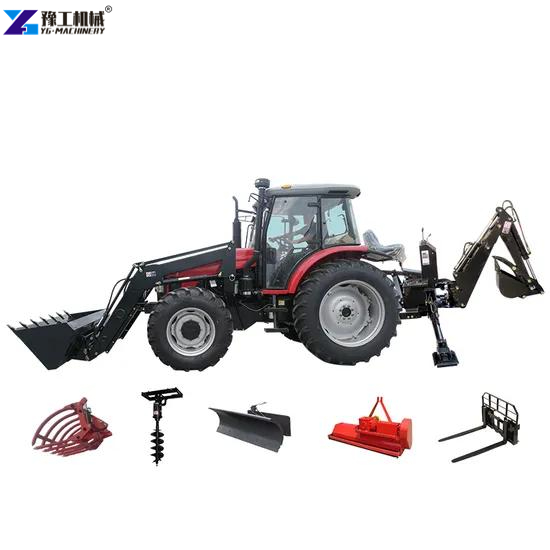
Conclusion on YG Hydraulic Backhoe Loader
Choosing the right hydraulic backhoe loader comes down to matching the machine to your work. Start with engine type (diesel only). Then decide on transmission (mechanical or CVT). Pick your dumping height (3.2 or 3.5 meters) based on your trucks. Select bucket width (1.8, 2.0, or 2.2 meters) based on your material. Finally, choose axles and brakes based on your terrain.
YG Machinery’s YG series offers a model for every need. The YG-920 serves as an excellent entry-level compact tractor loader backhoe. The YG-926 adds CVT convenience. The YG-930 provides dual engines for reliability. The YG-940 and above deliver large axles, air brakes, and turbocharged power for heavy daily use. If you search for a wheel backhoe loader or a small backhoe loader, the YG series has you covered.
Review the specification table, identify your required features, and contact YG Machinery for a quote.
Get a Free Quote Today
Tell YG Machinery your typical digging depth, loader work, and job site conditions. We will recommend the right YG series model for your operation. Ask about spare parts kits and financing options. Email us or use the online form for a same-day response.