Australia’s construction and civil engineering sectors continue to invest in compact excavation equipment for urban redevelopment, utility installation, road maintenance, and landscaping projects. Mini excavators have become increasingly popular because they can operate efficiently in confined spaces while reducing transportation costs. As a result, demand for reliable hydraulic breakers has also increased, particularly among contractors seeking attachments that deliver consistent impact energy without excessive maintenance.
In March 2025, a contractor based in Brisbane contacted YG Machinery after searching online for a hydraulic breaker for mini excavator. The company mainly handled municipal utility projects, residential foundation demolition, and rock trench excavation. Their existing breaker had accumulated thousands of operating hours and frequently required seal replacement, resulting in unexpected downtime and rising maintenance expenses.
Following several online meetings, technical evaluations, factory inspections, and shipment preparation, the customer selected a YG530 hydraulic breaker designed for a 2.5–4.5 ton excavator. After installation in Australia, the attachment quickly became part of the contractor’s daily operations, improving demolition efficiency while reducing maintenance interruptions.
Boost Productivity—Get a Free Quote
Why The Customer Needed A Hydraulic Breaker For Mini Excavator
The Australian contractor operated several compact excavators across multiple construction sites. Most projects involved trench excavation, concrete removal, rock breaking, and utility installation within residential neighborhoods where larger machines were impractical.
During the first technical discussion, the customer explained several challenges experienced with the previous attachment. Frequent nitrogen leakage reduced impact performance, while worn bushings increased vibration during operation. Hydraulic oil temperature also rose quickly after long working hours, affecting productivity throughout the day.
Management established several purchasing requirements before selecting a new supplier.
- Stable impact performance
- Long service life
- Lower maintenance frequency
- Compatibility with existing excavators
- Easy spare parts replacement
- Reliable technical support
- Competitive operating costs
Rather than purchasing the lowest-priced attachment, the customer wanted equipment capable of supporting continuous daily work with fewer unexpected repairs.
Hydraulic Breaker For Sale Configuration Analysis
YG Machinery engineers first collected detailed information about the customer’s excavator fleet before recommending a suitable model. During the video conference, both parties reviewed excavator specifications, auxiliary hydraulic flow, operating pressure, and the materials normally encountered on site.
Several important factors influenced the selection.
The contractor primarily used 3-ton excavators equipped with auxiliary hydraulic systems delivering approximately 30–45 L/min. Most demolition work involved reinforced concrete foundations, weathered sandstone, and compacted rock. Daily operation usually exceeded six hours, requiring reliable sealing performance and stable impact frequency.
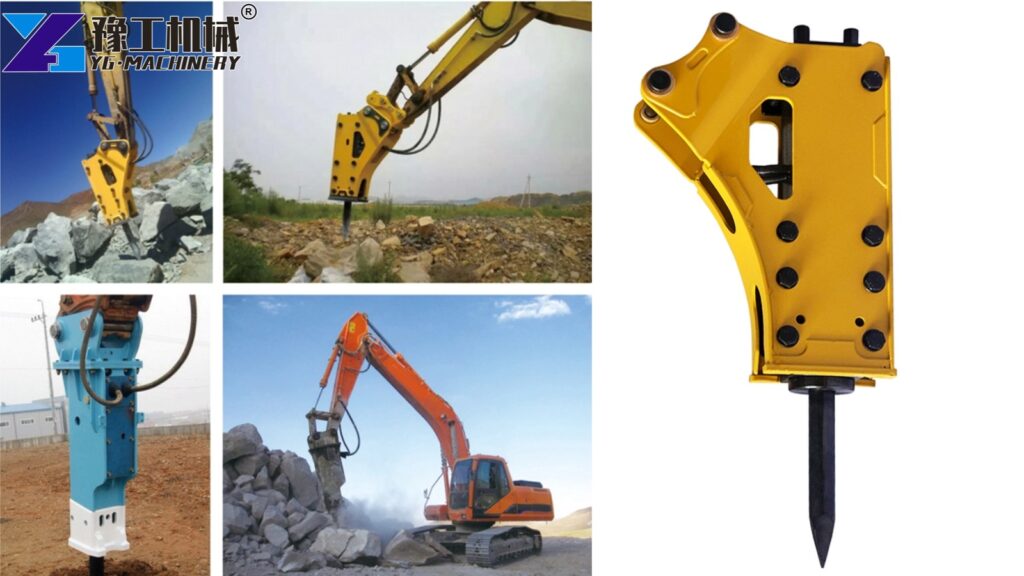
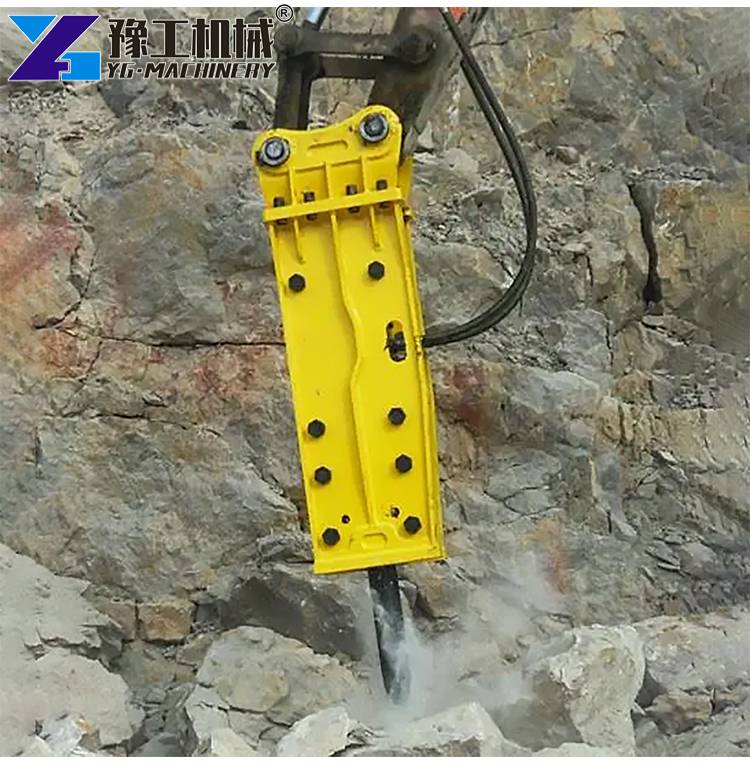
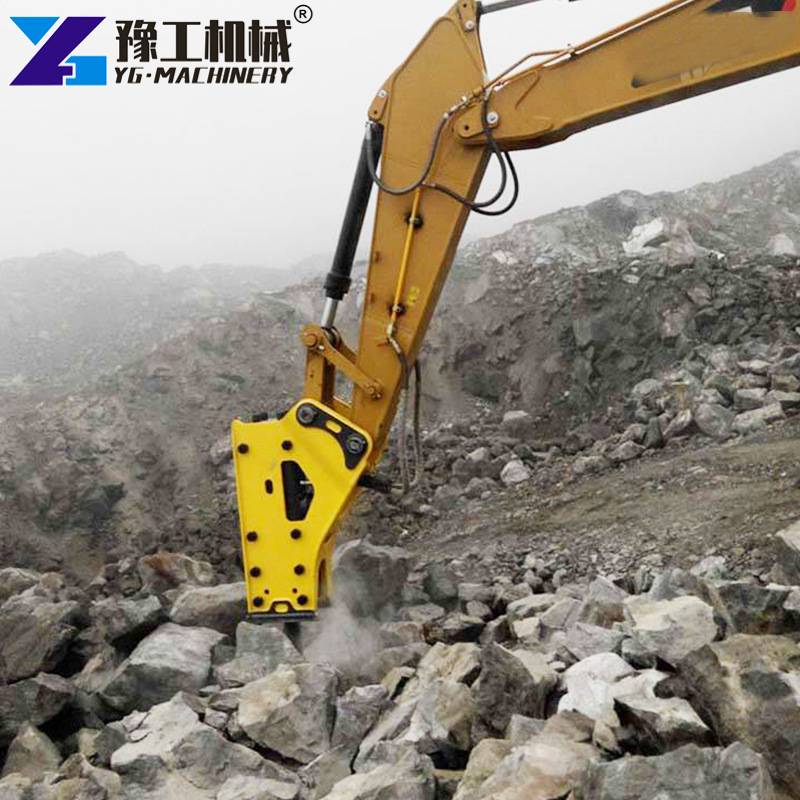
Although larger breaker models offered greater striking force, they would overload smaller excavators and reduce operating efficiency. After comparing multiple configurations, YG Machinery recommended the YG530 Breaker Hammer for Excavator, which provided the most suitable balance between hydraulic flow, carrier weight, and operating performance.
The selected configuration offered several advantages.
- 53 mm chisel diameter
- 85 kg breaker weight
- Suitable for 2.5–4.5 ton excavators
- Operating pressure of 90–120 kg/cm²
- Hydraulic oil flow of 25–50 L/min
- Blow frequency between 600 and 1100 bpm
The customer approved the recommendation after reviewing operating videos, technical specifications, and previous export projects involving similar applications.
Start Your Project with the Right Equipment
Hydraulic Hammer For Excavator Technical Parameters
Before confirming production, YG Machinery prepared a complete comparison covering multiple hydraulic breaker models. Engineers explained that selecting the correct attachment depends on carrier weight, hydraulic oil flow, operating pressure, and intended applications rather than simply choosing the largest available model.
For this Australian project, the YG530 matched both the excavator size and the expected demolition workload, providing efficient impact energy without placing unnecessary stress on the carrier machine.
| Model | Suitable Carrier (T) | Chisel (mm) | Weight (kg) | Operating Pressure (kg/cm²) | Oil Flow (L/min) | Blow Frequency (bpm) |
|---|---|---|---|---|---|---|
| YG350 | 0.5–1 | 35 | 40 | 90–120 | 15–25 | 800–1300 |
| YG400 | 1–3 | 40 | 53 | 90–120 | 15–25 | 800–1300 |
| YG450 | 1.2–3 | 45 | 67 | 90–120 | 20–30 | 700–1200 |
| YG530 | 2.5–4.5 | 53 | 85 | 90–120 | 25–50 | 600–1100 |
| YG600 | 2–5 | 60 | 140 | 90–120 | 25–50 | 600–1100 |
| YG680 | 4–7 | 68 | 152 | 110–140 | 40–70 | 500–900 |
The engineering team also discussed future expansion plans. If the customer later upgraded to larger excavators, YG Machinery could recommend higher-capacity breaker models while maintaining compatible maintenance procedures and spare parts support.
Video Meeting And Factory Inspection Before Production
After the customer approved the recommended model, both companies scheduled another technical meeting to finalize the configuration. Engineers reviewed hydraulic circuit drawings, breaker dimensions, mounting brackets, hose specifications, and nitrogen charging procedures. Because the attachment would operate on several excavators, compatibility became a major topic during the discussion.
The customer also wanted to reduce future maintenance costs. YG Machinery therefore recommended reinforced front bushings, high-quality seal kits, and wear-resistant chisels suitable for Australia’s hard rock conditions. These modifications increased component durability without significantly increasing the overall investment.
Before confirming payment, the customer requested a complete factory inspection. YG Machinery recorded detailed videos covering assembly, hydraulic testing, impact frequency measurement, nitrogen charging, and continuous operation. Each inspection report was shared before shipment. After reviewing the testing documents, the customer approved production and confirmed the shipping schedule.
Compare Models and Get a Quote
Manufacturing, Quality Inspection And Export Preparation
Production began immediately after the order confirmation. Every hydraulic breaker passed through multiple inspection stages before final assembly. Quality engineers checked raw materials, cylinder machining accuracy, piston tolerance, valve body dimensions, and hydraulic sealing surfaces.
Before leaving the factory, every completed attachment underwent a comprehensive performance test.
Inspection items included:
- Hydraulic pressure verification
- Nitrogen pressure testing
- Impact frequency measurement
- Hydraulic oil leakage inspection
- Chisel movement verification
- Noise and vibration observation
- Continuous operation testing
Only machines that passed every inspection stage proceeded to export packaging.
Because the shipment would travel by sea to Australia, additional protection measures were applied before loading. Hydraulic ports were sealed to prevent contamination, exposed steel components received anti-corrosion treatment, and the breaker body was securely fixed inside reinforced wooden crates. Spare seal kits, toolboxes, operating manuals, and maintenance instructions were packed together to simplify commissioning after arrival.
Excavator Rock Breaker Installation And Commissioning In Australia
The shipment arrived in Brisbane according to the planned logistics schedule. Customs clearance was completed smoothly, and the attachment was transported directly to the contractor’s maintenance workshop. Before installation, technicians inspected the excavator’s auxiliary hydraulic circuit and replaced the hydraulic oil filter to ensure a clean operating environment.
YG Machinery provided remote commissioning support throughout the installation process. Engineers guided the customer’s technicians through bracket installation, hose connection, nitrogen pressure verification, hydraulic flow adjustment, and trial operation. Every parameter was checked before the breaker entered field service.
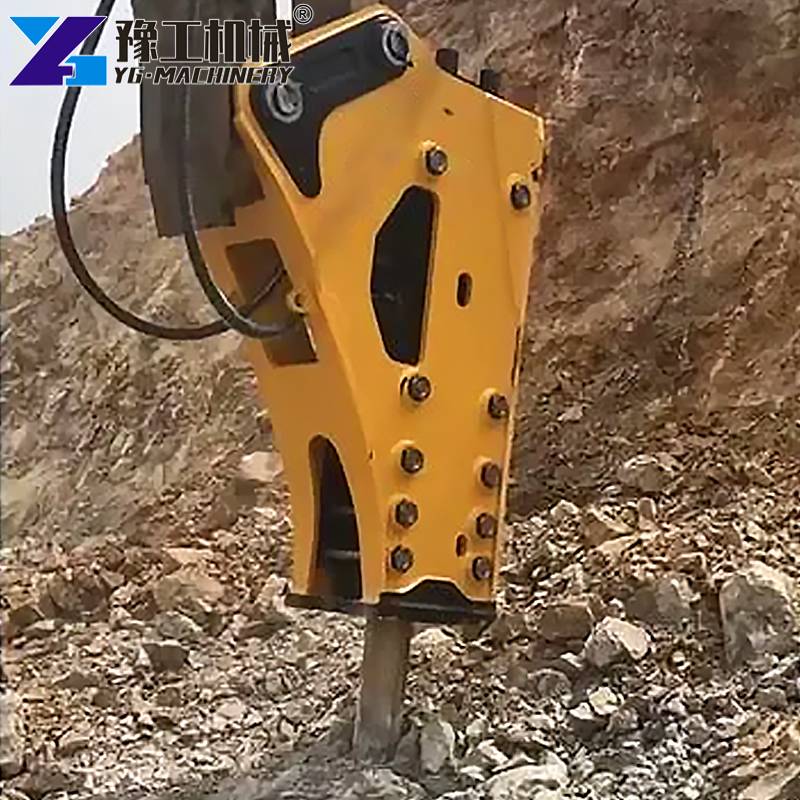
Operator training focused on practical daily operation rather than theory. Drivers learned how to position the chisel correctly, avoid blank firing, monitor hydraulic oil temperature, and inspect wear components during routine maintenance. Proper operating techniques help reduce unnecessary stress on both the breaker and the excavator while extending service life.
After several hours of testing, the attachment entered normal production without requiring additional adjustments.
Find the Right Model for Your Project
Excavator Rock Breaker Improved Daily Productivity
The contractor first used the breaker during a municipal drainage project involving reinforced concrete removal and trench excavation through weathered rock. These applications previously required longer operating hours because the old attachment had lost striking efficiency after extended use.
The new equipment immediately demonstrated more stable impact performance throughout the working day. Hydraulic pressure remained consistent, while vibration levels became noticeably lower than the previous breaker. Operators also reported smoother control when working around underground utilities and confined construction areas.
After approximately four months of operation, the contractor reviewed production records and compared them with historical project data.
Several improvements became evident:
- Concrete demolition efficiency increased by approximately 22%.
- Daily fuel consumption decreased because breaking time was shorter.
- Unexpected maintenance interruptions were significantly reduced.
- Chisel wear remained lower than expected.
- Hydraulic oil temperature remained stable during continuous operation.
- Equipment utilization improved across multiple job sites.
Maintenance personnel also reported that routine inspections became simpler because the breaker required fewer seal replacements and maintained stable nitrogen pressure throughout the evaluation period.
Customer Feedback After Six Months
Six months after commissioning, YG Machinery conducted a follow-up interview with the customer’s operations manager and maintenance supervisor to evaluate long-term performance.
According to the operations manager, the attachment performed consistently across residential demolition, utility trenching, and small rock excavation projects. Operators appreciated the stable striking force and predictable hydraulic response, especially during long working days where productivity previously declined.
The maintenance supervisor noted that servicing requirements were lower than anticipated. Routine inspections mainly involved lubrication, chisel wear measurement, and hydraulic hose checks. No major hydraulic failures occurred during the first six months, allowing the contractor to complete scheduled projects without unexpected equipment downtime.
Because of the positive operating experience, the customer confirmed plans to purchase additional hydraulic attachments from YG Machinery as the excavator fleet expands over the coming year.
Why Contractors Choose YG Machinery Hydraulic Breakers
Selecting the correct hydraulic breaker involves more than matching the excavator weight. Hydraulic flow, operating pressure, application type, and maintenance accessibility all influence long-term performance. A properly matched attachment can improve productivity while reducing operating costs over thousands of working hours.
YG Machinery supplies hydraulic breakers for carriers ranging from 0.5 to 80 tons, covering landscaping, utility construction, quarry operations, municipal engineering, mining, and demolition projects. Every recommendation begins with a technical evaluation rather than a standard quotation.
Our engineering team considers:
- Excavator operating weight
- Hydraulic oil flow and pressure
- Working material hardness
- Daily operating hours
- Chisel type selection
- Local maintenance conditions
- Future fleet expansion plans
Each breaker undergoes factory testing before shipment to verify impact frequency, hydraulic sealing performance, nitrogen pressure, and continuous operating stability. This quality control process helps reduce commissioning risks after arrival at the customer’s project site.
From technical consultation to after-sales support, YG Machinery works closely with contractors to ensure every attachment performs reliably under real working conditions.
Request A Quote For A Hydraulic Breaker for Mini Excavator
Every construction project requires different breaking performance. Choosing the correct breaker helps improve efficiency while protecting the excavator’s hydraulic system.
YG Machinery manufactures a complete range of hydraulic breakers suitable for mini, medium, and large excavators. Our engineers can recommend the most appropriate model according to your excavator specifications, hydraulic flow, and working conditions.
Whether your projects involve concrete demolition, trench excavation, quarry work, or municipal construction, we can provide customized attachment solutions and professional technical support.
Contact YG Machinery today to receive product specifications, model recommendations, factory videos, and a competitive quotation for your next hydraulic breaker project.
Frequently Asked Questions About YG Excavator Rock Breaker
The correct model depends on excavator weight, hydraulic oil flow, operating pressure, and application. Matching these parameters helps maximize impact performance while reducing unnecessary wear on both the excavator and the breaker.
Yes. When hydraulic flow and operating pressure remain within the recommended range, the breaker can perform continuous rock-breaking operations. Proper lubrication and routine inspections help maintain long-term reliability.
Nitrogen pressure should be inspected periodically according to operating hours and working conditions. Maintaining the correct pressure helps ensure stable impact energy and reduces unnecessary stress on internal components.
Moil points are commonly used for rock breaking, while wedge or flat chisels are often selected for reinforced concrete demolition. YG Machinery recommends the appropriate chisel according to the customer’s applications.
Yes. We supply seal kits, chisels, diaphragms, bushings, pistons, side bolts, hoses, and other replacement parts. Technical support is also available throughout the equipment’s service life.
Yes. Mounting brackets, hose connections, and hydraulic interfaces can be customized for excavators from Caterpillar, Komatsu, Hitachi, Volvo, Kubota, Bobcat, JCB, Doosan, Hyundai, SANY, XCMG, and many other brands.