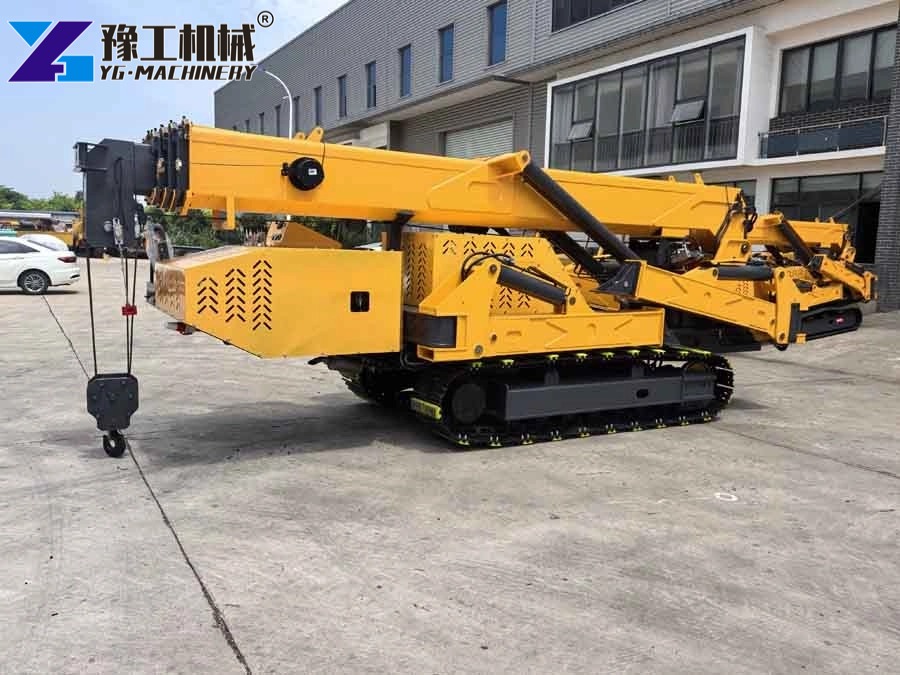
Spain continues to invest in commercial buildings, hotels, museums, airports, and historical renovation projects. Many construction sites are located in city centers where space is extremely limited. Contractors often need lifting equipment that can enter narrow passages without affecting nearby traffic. According to European construction safety practices and lifting standards, compact cranes have become an increasingly practical solution for indoor lifting and façade installation.
In early 2025, a glazing contractor based in Madrid contacted YG Machinery after searching online for a reliable 5 ton spider crane. The company specialized in curtain wall installation, oversized glass replacement, and steel structure erection for commercial buildings. Their existing lifting equipment worked well on open sites but frequently encountered access problems inside historic districts. The customer wanted a compact crane that delivered stable lifting performance while remaining easy to transport between projects.
Instead of requesting pricing immediately, the customer submitted detailed project information, architectural drawings, and photographs from several ongoing construction sites. Those materials allowed our engineering team to understand the actual lifting conditions before recommending equipment. From the beginning, both companies focused on solving practical construction challenges rather than simply comparing machine specifications.
Start Your Project with the Right Equipment
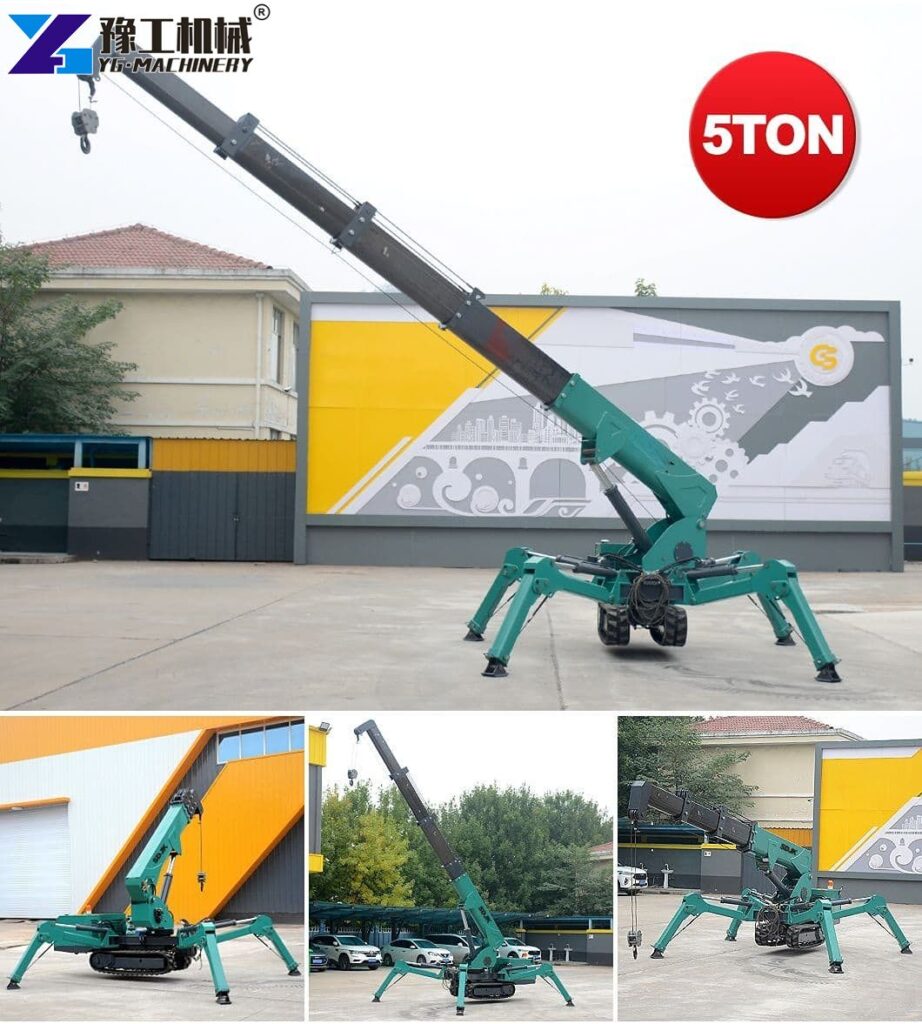
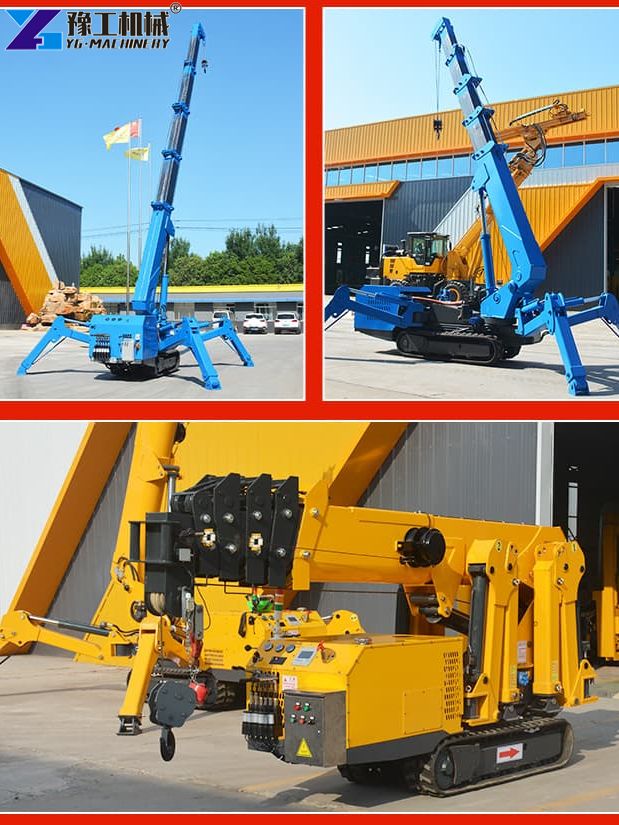
The First Inquiry For A 5 Ton Spider Crane
The initial inquiry arrived through the YG Machinery website together with several photographs from an office renovation project in central Madrid. One image showed workers attempting to position lifting equipment inside a narrow courtyard. Another showed glass panels waiting to be installed while surrounding streets remained open to public traffic.
During the first email exchange, the purchasing manager explained that conventional truck cranes often required temporary road closures before lifting could begin. Obtaining local permits delayed construction schedules and increased project costs. On several projects, equipment simply could not enter the working area because surrounding buildings limited access.
The customer listed several key requirements before requesting a quotation.
- Compact transportation dimensions
- Stable lifting performance
- Remote control operation
- Reliable hydraulic system
- Easy daily maintenance
- CE-compliant electrical components
- Long-term spare parts support
After reviewing the photographs and construction drawings, YG Machinery engineers believed that a compact spider crane would provide a much more efficient solution than traditional mobile lifting equipment.
Understanding The Project Requirements
Before recommending a machine, YG Machinery arranged a technical video meeting involving engineers from both companies. Rather than discussing commercial terms immediately, the meeting focused on understanding the customer’s lifting requirements, working environment, and future construction plans.
The contractor explained that most projects involved installing laminated curtain-wall glass weighing between several hundred kilograms and two tons. Lifting operations frequently took place inside shopping centers, hotels, office buildings, and historical structures where space remained extremely limited. Equipment mobility therefore became just as important as lifting capacity.
Engineers carefully reviewed several technical factors, including maximum lifting height, working radius, transportation restrictions, ground bearing conditions, and expected daily operating hours. Future business expansion was also considered because the customer planned to undertake additional façade projects throughout Spain.
Several important requirements influenced equipment selection.
- Restricted indoor working areas
- Narrow transportation passages
- Accurate glass positioning
- Stable lifting over long shifts
- Fast equipment deployment
- Low maintenance requirements
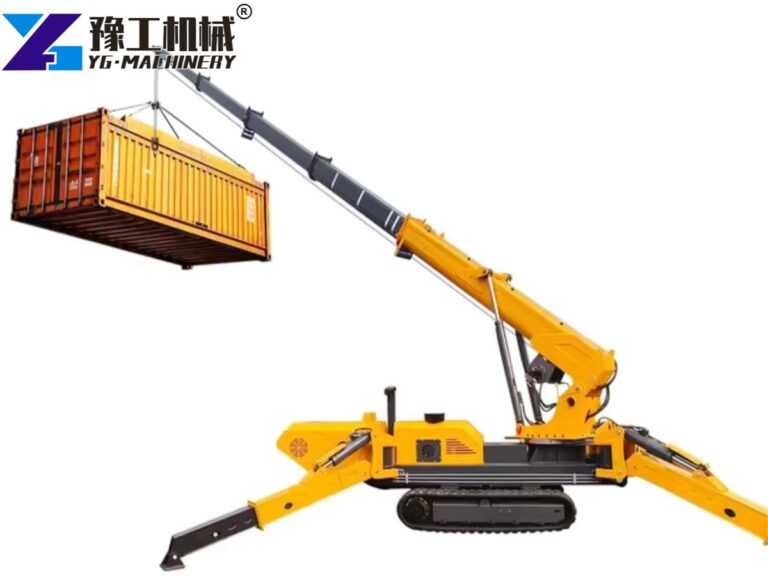
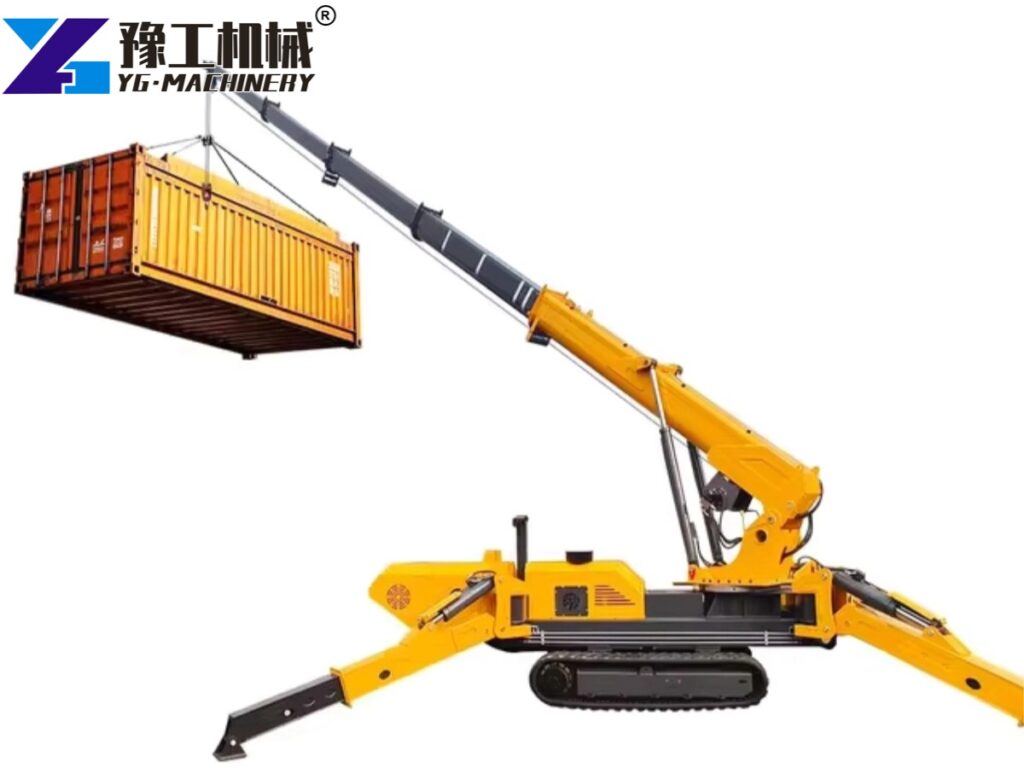
After evaluating every construction condition, our engineering team concluded that the YG-5 model provided the best balance between lifting performance, compact dimensions, and transportation convenience.
Boost Productivity—Get a Free Quote
Why The Customer Chose A Mini Crawler Spider Crane
During the evaluation process, the contractor compared several lifting solutions from European and Asian suppliers. Although specification sheets appeared similar, practical operating performance became the deciding factor.
YG Machinery recommended a mini crawler spider crane because it could travel through narrow entrances while maintaining excellent stability after the outriggers were fully deployed. Compared with larger truck-mounted cranes, the compact crawler design reduced transportation complexity and minimized disruption around busy commercial buildings.
The customer appreciated several practical advantages. Remote control allowed operators to maintain excellent visibility throughout lifting operations. The five-section telescopic boom provided sufficient working height for curtain wall installation, while continuous 360-degree slewing improved positioning efficiency inside confined spaces.
Instead of selecting equipment based solely on purchase price, the customer evaluated long-term operating costs, maintenance requirements, and equipment utilization. Because one crane could support glass installation, steel erection, maintenance work, and machinery positioning, the investment offered greater flexibility across multiple future projects.
Video Meeting With A Spider Crane Manufacturer
Before confirming the order, the customer requested a live factory inspection to evaluate the equipment under actual operating conditions. YG Machinery organized a two-hour online meeting involving production engineers, quality inspectors, and the customer’s project management team.
As an experienced spider crane manufacturer, YG Machinery demonstrated complete lifting operations rather than presenting only promotional materials. Engineers operated the crane through multiple boom angles, working radii, and lifting cycles while explaining hydraulic functions, safety systems, and routine maintenance procedures. The customer also requested additional demonstrations using loads similar to laminated glass panels commonly installed on commercial buildings.
The factory demonstration covered several important operating functions.
- Hydraulic boom extension
- Outrigger deployment
- Remote control response
- Winch operation
- Continuous slewing
- Walking performance
- Emergency stop testing
- Daily maintenance inspection
Following the demonstration, both engineering teams discussed hydraulic servicing intervals, spare parts availability, wire rope inspection, and preventive maintenance schedules. The customer concluded that the machine matched the lifting requirements for current projects while providing sufficient flexibility for future façade installation work.
Find the Right Model for Your Project
Technical Specifications of The 5 Ton Spider Crane
After confirming the lifting requirements, YG Machinery prepared a detailed technical proposal for the customer. Instead of recommending the largest available model, our engineers selected equipment that balanced lifting capacity, transportation convenience, working radius, and long-term operating costs.
The selected configuration fully matched the customer’s façade installation projects while providing additional capacity for future steel structure and maintenance work. Engineers also verified that the machine could enter the narrow access routes shown during the video meeting, eliminating the need for temporary road closures on many projects.
The customer appreciated that the crane combined compact transportation dimensions with excellent lifting performance. This allowed one machine to support multiple construction applications instead of purchasing separate lifting equipment.
Technical Parameters
| Parameter | YG-5 |
|---|---|
| Rated Capacity | 5 Ton |
| Maximum Working Radius | 14 m × 0.5 t |
| Maximum Lifting Height | 16.8 m |
| Boom Type | Five-section Pentagonal Boom |
| Boom Length | 3.1–12.3 m |
| Boom Extension Time | 54 s |
| Boom Elevation | 0°–78° |
| Slewing Range | Continuous 360° |
| Hook Speed | 12 m/min (4 Rope) |
| Wire Rope | Φ11 mm × 80 m |
| Travel Speed | 0–2.5 km/h |
| Gradeability | 36% |
| Driving System | Hydraulic Motor |
| Control Method | Manual & Remote Control |
| Machine Weight | 6200 kg |
| Overall Dimensions | 5000 × 1500 × 1900 mm |
After reviewing the specification sheet, the customer approved the proposed configuration without requesting additional performance upgrades. Both engineering teams agreed that the selected model offered the best return on investment for the contractor’s current workload.
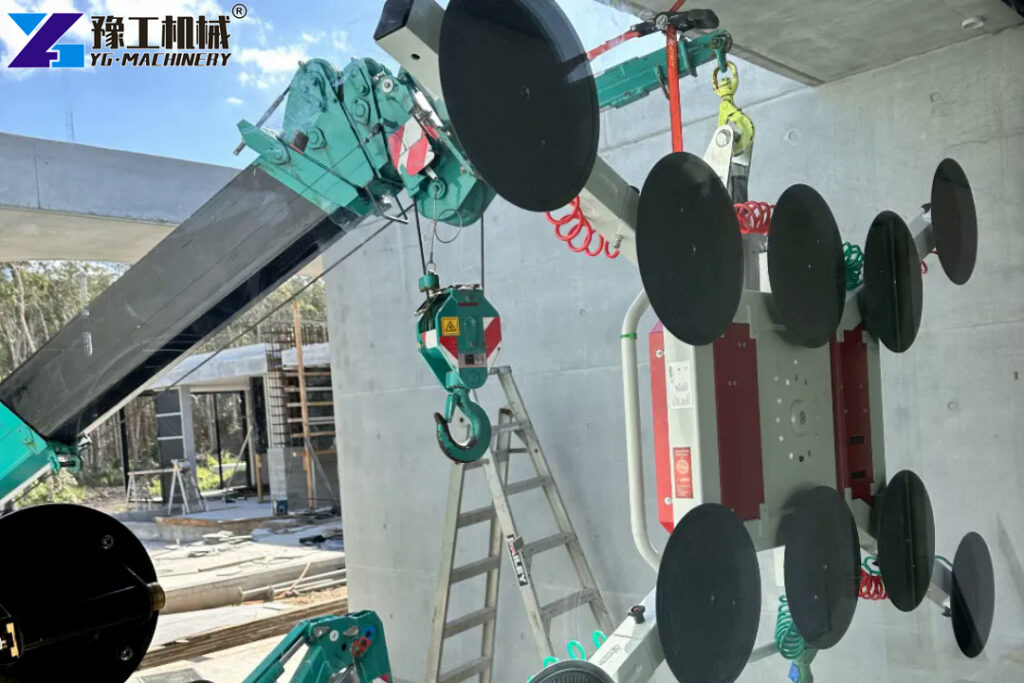
Order Confirmation And Production Planning
Following several rounds of technical discussions, the customer confirmed the final equipment configuration and requested a formal commercial quotation.
Before issuing the purchase order, several practical modifications were added to the standard package. These adjustments ensured that the crane would comply with European operating practices while simplifying future maintenance after delivery.
The confirmed configuration included:
- CE-compliant electrical system
- English operation manuals
- Remote control package
- Additional maintenance toolkit
- Spare hydraulic hose set
- Common sealing components
- Factory inspection documents
Once the commercial invoice was approved and payment was received, YG Machinery immediately scheduled production according to the agreed delivery timeline.
The engineering department released manufacturing drawings, while the purchasing department prepared hydraulic components, electrical assemblies, telescopic boom sections, and structural steel parts. Production planning also reserved factory testing time before shipment, ensuring that the customer could participate in final acceptance through live video inspection.
Manufacturing And Quality Inspection
Manufacturing officially began several days after production scheduling was completed. Throughout the assembly process, quality inspectors monitored every major component before it entered final installation.
The hydraulic system, telescopic boom, slewing mechanism, crawler chassis, outriggers, winch assembly, and electrical cabinet were all inspected independently. Dimensional accuracy and welding quality were verified according to internal production standards before mechanical assembly continued.
Once the crane had been fully assembled, engineers transferred it to the factory testing area for comprehensive operational verification.
The inspection program included:
- Hydraulic pressure testing
- Boom extension inspection
- Winch load testing
- Outrigger synchronization
- Slewing accuracy verification
- Remote control testing
- Safety protection inspection
- Continuous lifting simulation
During factory testing, engineers completed multiple lifting cycles using steel test loads that closely matched the weight of laminated glass panels commonly installed by the customer. Hydraulic pressure remained stable throughout continuous operation, and boom movement remained smooth across different working radii.
The customer attended the factory acceptance inspection through a scheduled video conference. Every requested operating function was demonstrated in real time, including boom telescoping, crawler travel, remote control operation, emergency stop procedures, and lifting performance under simulated working conditions.
After reviewing the inspection report and testing videos, the customer formally approved shipment.
Export Packing And Shipping To Spain
Following factory acceptance, the export department prepared the crane for international transportation. Every exposed hydraulic connection and electrical component received protective treatment before loading.
Technicians applied several export protection measures to minimize transportation risks.
- Anti-corrosion coating
- Waterproof wrapping
- Hydraulic connector protection
- Reinforced transportation brackets
- Wooden blocking supports
- Complete export documentation
The crane was then secured inside the shipping container according to the approved loading plan. Additional fastening devices prevented movement during ocean transportation and protected the telescopic boom throughout the voyage.
After departure from China, YG Machinery continued providing shipping updates together with customs documentation support. The customer received regular logistics reports until the container arrived safely at the designated Spanish port.
Following customs clearance, the crane was transported directly to the contractor’s equipment yard outside Madrid, where installation and commissioning preparations immediately began.
Installation And Operator Training
After customs clearance, the crane was transported to the customer’s equipment yard near Madrid before entering its first construction project. Before commissioning began, technicians completed a detailed inspection to ensure that transportation had not affected hydraulic performance, electrical connections, or structural components.
YG Machinery provided remote commissioning through scheduled video sessions. Engineers guided the customer’s technical team step by step, ensuring every operating function met the factory testing results. Hydraulic pressure, boom movement, slewing accuracy, crawler travel, and remote-control communication were verified before lifting operations started.
Operator training emphasized practical construction tasks rather than theoretical instruction. Most operators already possessed mobile crane experience, allowing them to become familiar with the new machine quickly.
Training covered the following topics.
- Safe outrigger deployment
- Load chart interpretation
- Remote-control operation
- Hydraulic system inspection
- Daily lubrication
- Wire rope examination
- Emergency stop procedures
- Routine maintenance planning
Within two working days, operators completed several simulated lifting exercises using steel frames before beginning actual glass installation. According to the project supervisor, the control system was intuitive, and experienced operators adapted much faster than originally expected.
Excellent Performance During The First Curtain Wall Project
The first assignment involved replacing oversized laminated glass panels on a six-story commercial office building in central Madrid. The project presented several logistical challenges because surrounding streets remained open to traffic while the building courtyard provided extremely limited working space.
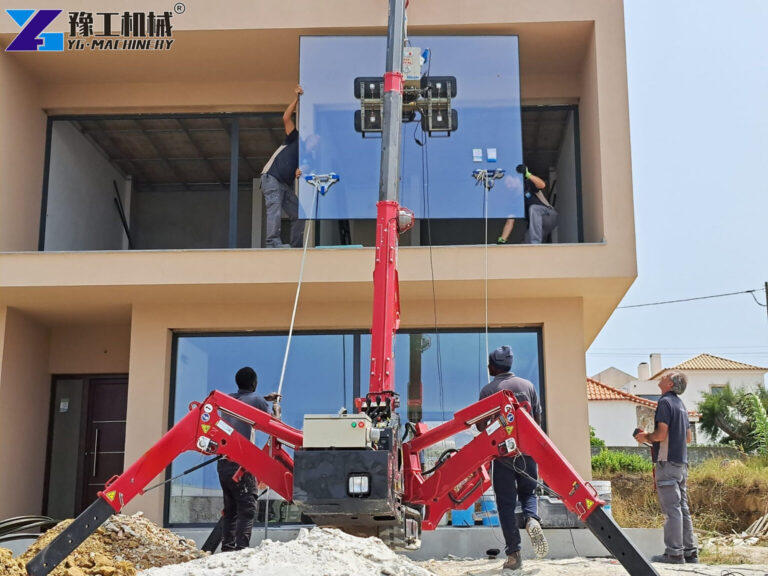
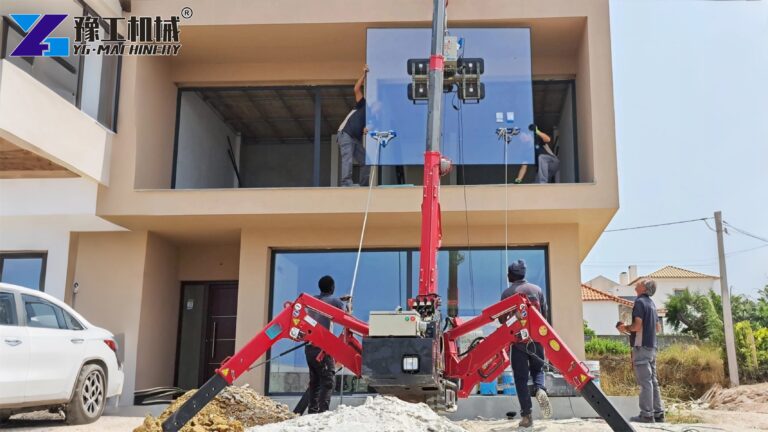
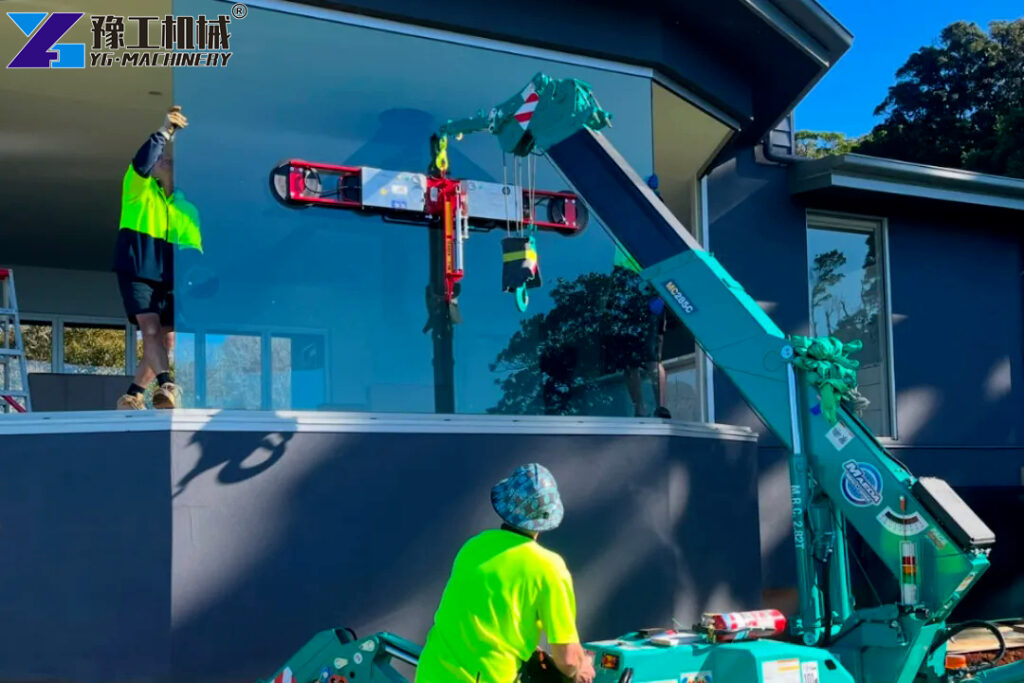
Previously, the contractor rented truck-mounted cranes for similar projects. Those machines required temporary road closures, additional transportation permits, and longer setup times. On this project, however, the 5 ton spider crane entered the courtyard through a narrow service entrance before deploying its outriggers inside the working area. This significantly reduced preparation time and eliminated unnecessary traffic disruption.
As installation progressed, the lifting team reported smoother coordination between crane operators and glazing technicians. Remote control allowed precise positioning while maintaining excellent visibility throughout every lifting cycle. The compact crawler chassis also reduced unnecessary movement inside confined spaces, improving overall jobsite efficiency.
After several weeks of continuous operation, the contractor recorded noticeable improvements.
- Equipment setup became considerably faster.
- Glass positioning accuracy improved.
- Labor coordination became more efficient.
- Daily lifting capacity increased.
- Transportation costs declined.
- Project scheduling became more predictable.
The project manager later confirmed that the crane quickly became the preferred lifting solution for restricted-access construction sites throughout the company’s operations.
Customer Feedback After Six Months
Approximately six months after commissioning, YG Machinery conducted a routine follow-up interview with the customer’s management team to evaluate long-term operating performance. By that time, the crane had already completed several curtain wall, glazing, and steel installation projects across Madrid and nearby cities.
According to the customer, the equipment consistently delivered reliable hydraulic performance while requiring only routine preventive maintenance. Stable operation allowed project managers to schedule lifting work more accurately, reducing delays caused by equipment availability or transportation restrictions.
The Project Manager commented:
“This crane solved problems that larger machines simply could not. We now complete many city-center projects without arranging road closures. That saves both time and operating costs.”
The Site Supervisor shared another observation:
“Remote control gives operators much better visibility. Glass positioning has become faster, and installation accuracy has improved.”
The Maintenance Engineer also provided positive feedback.
“Routine servicing is straightforward. Daily inspections take very little time, and the hydraulic system has remained stable since commissioning.”
Internal operating records also demonstrated measurable improvements.
- Lower equipment rental expenses
- Faster project mobilization
- Reduced transportation costs
- Improved lifting precision
- Better equipment utilization
- Increased scheduling flexibility
Management concluded that purchasing the spider crane created greater long-term value than continuing to rent larger lifting equipment for every project.
Why Contractors Choose YG Machinery
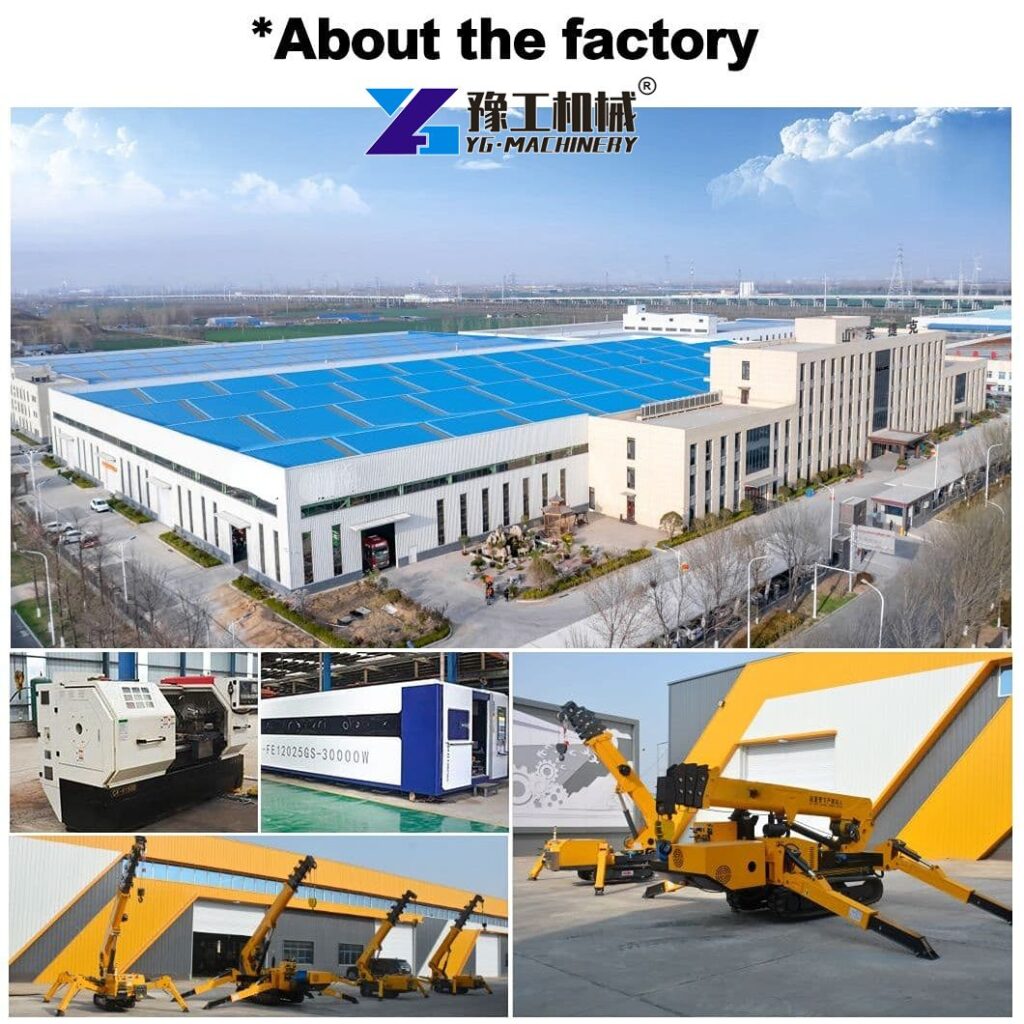
Modern lifting projects require more than high lifting capacity. Contractors also need reliable engineering support, consistent manufacturing quality, responsive after-sales service, and equipment suited to real construction conditions.
Before recommending any lifting solution, YG Machinery carefully evaluates project requirements rather than supplying a standard machine configuration. Our engineers review lifting loads, working radius, transportation restrictions, access conditions, ground bearing capacity, and future project plans before proposing equipment.
Every spider crane undergoes comprehensive factory testing before shipment.
Inspection includes:
- Hydraulic pressure verification
- Load testing
- Boom alignment inspection
- Slewing accuracy testing
- Winch performance evaluation
- Remote-control verification
- Safety system inspection
- Continuous operating simulation
Customers also receive installation guidance, commissioning assistance, operator training, maintenance documentation, spare parts support, and long-term technical service. This engineering-focused approach helps contractors reduce operational risks while improving lifting efficiency across different construction projects.
Boost Productivity—Get a Free Quote
Request A Quote For Your Spider Crane Project
Every lifting project presents unique challenges. Building access, working radius, lifting height, and transportation conditions all influence equipment selection.
YG Machinery supplies compact spider cranes for curtain wall installation, structural steel erection, glass replacement, industrial maintenance, bridge repair, and restricted-access lifting projects worldwide. Our engineering team can recommend the most suitable model according to your project requirements and future construction plans.
Contact YG Machinery today to receive:
- Professional equipment recommendations
- Technical specifications
- Factory testing videos
- Customized project solutions
- Competitive factory quotations
- Comprehensive after-sales support
Whether you are replacing rental equipment or expanding your lifting fleet, we are ready to help you select the right spider crane for your next project.
Frequently Asked Questions About Mini Crawler Spider Crane
The crane is widely used for curtain wall installation, glass lifting, steel erection, industrial maintenance, bridge repair, equipment positioning, and indoor construction projects where space is limited.
Yes. Its compact dimensions allow it to pass through narrow entrances and operate safely inside factories, shopping malls, hotels, and commercial buildings.
Yes. The standard configuration includes remote control, allowing operators to maintain better visibility and improve lifting accuracy during installation work.
Yes. We provide long-term spare parts supply, together with technical documentation and online engineering support.