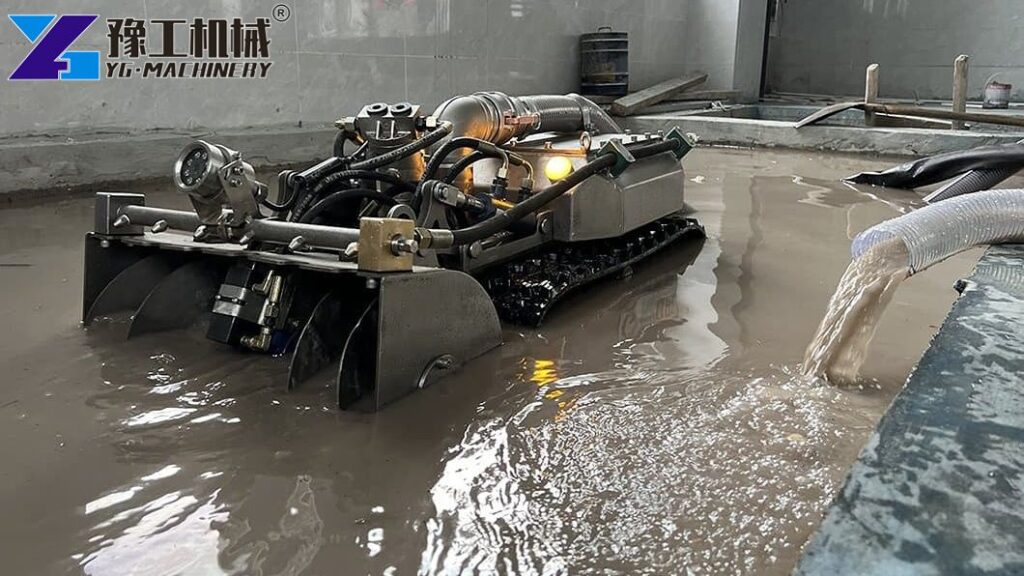
A dredging robot is a remote-controlled machine that removes silt, sludge, and debris from underwater surfaces. It uses a hydraulic pump system and wireless control. The operator stays above ground while the machine works below. The unit travels at 3-15 m/s and pumps up to 200 m³ per hour. It handles particles from 15mm to 60mm. Dredging width ranges from 500mm to 1200mm. Underwater LED lights illuminate the work area. We, YG Machinery, build these robots at our Zhengzhou factory. Each unit includes a hydraulic station and 50m of hose. Buyers receive a detailed inspection report before shipping.
Start Your Project with the Right Equipment
What Is a Dredging Robot and How Does It Work?
A dredging robot is a motorized crawler with a hydraulic pump. It operates on a closed-loop hydraulic system. The main motor drives the pump. The pump creates suction that pulls sludge and debris into the intake. The material moves through a 3-inch or 4-inch outlet. System pressure ranges from 0 to 16 MPa. The track system moves the machine at 3-15 m/s. A winch reels the crawler back when needed. The wireless remote controls travel, pump speed, and winch functions. LED lights provide visibility in dark conditions.
The machine handles particles up to 60mm. It works in pipes, tanks, rivers, and culverts. The hydraulic station delivers consistent power. The crawler design navigates bends and uneven surfaces. The 50m hose reaches deep blockages. One operator controls everything from a safe distance.
Sewer Cleaning Robot for Sale: 6 Models Compared
The table below shows specifications for all six models.
| Parameter | YG-500 | YG-600 | YG-700 | YG-800 | YG-900 | YG-1200 |
|---|---|---|---|---|---|---|
| Robot Dimensions (mm) | 1500×500×650 | 1500×600×650 | 1600×700×650 | 1600×850×700 | 1650×960×750 | 1900×1200×750 |
| Dredging Width (mm) | 500 | 600 | 700 | 800 | 900 | 1200 |
| Track Travel Speed (m/s) | 3-15 | 3-15 | 3-15 | 3-15 | 3-15 | 3-15 |
| Robot Weight (kg) | 320 | 350 | 380 | 400 | 420 | 500 |
| Pump Output Diameter | 3 inch | 3 inch | 4 inch | 4 inch | 4 inch | 4 inch |
| Pump Flow Rate (m³/h) | 100 | 100 | 200 | 200 | 200 | 200 |
| Hydraulic Station (mm) | 2200×1200×1700 | 2200×1200×1700 | 2200×1200×1700 | 2200×1200×1700 | 2200×1200×1700 | 2120×1240×1200 |
| Main Motor Power (kW) | 22 | 22 | 30 | 30 | 30 | 45 |
| Hydraulic System Pressure | 0-16 MPa | 0-16 MPa | 0-16 MPa | 0-16 MPa | 0-16 MPa | 0-16 MPa |
| Particle Size (mm) | 15 | 15 | 38 | 38 | 38 | 60 |
| Reeling System Speed | 0-10 r/min | 0-10 r/min | 0-10 r/min | 0-10 r/min | 0-10 r/min | 0-10 r/min |
| Hydraulic Hoses | 50m | 50m | 50m | 50m | 50m | 50m |
| Control System | Wireless | Wireless | Wireless | Wireless | Wireless | Wireless |
| Lighting System | LED ×2 | LED ×2 | LED ×2 | LED ×2 | LED ×2 | LED ×2 |
Compare Models and Get a Quote
We provide free pipe assessment and model recommendation based on your pipeline diameter, debris type, and pumping distance.
River Silt Cleaning Machine: 5 Applications That Save Time
A River Silt Cleaning Machine from YG handles tough cleaning tasks across multiple industries.
- Municipal sewers. The machine clears sediment from 500-1200mm mains. It removes 15-60mm gravel and sand. One Midwest city cleaned 2km of pipe in 2 days. The crew reduced from six workers to three. Street closures were eliminated.
- Power plant intakes. Cooling water structures collect silt and debris. The machine removes 38mm particles that block screens. The 200 m³/h pump clears intake pits without plant shutdown. A Texas plant saved $50,000 in dredging costs per year.
- Industrial wastewater. Factories have settling ponds and equalization tanks. The 45kW motor pumps thick sludge at 200 m³/h. The 3-15 m/s travel speed covers large basins. One chemical plant cut downtime from 3 days to 4 hours per clean.
- Septic tanks and holding ponds. The compact 500mm width fits standard tank access points. The 100 m³/h pump clears a 10,000L tank in 10 minutes. The machine works in residential and commercial tanks.
- Mining operations. Tailings ponds and settling dams require regular cleaning. The 60mm particle capacity handles thick sludge. Horizontal pumping reaches 150m. One mine in Australia cleared 500m³ of tailings in a single shift.
The wireless remote lets operators work from a safe distance. No confined space entry. No gas exposure.


How Does the Dredging Robot Improve Safety and Efficiency?
The sewer cleaning robot removes workers from dangerous environments. Manual dredging exposes crews to toxic gases and confined spaces. The robot works underwater without human entry. It operates continuously without breaks. The 0-16 MPa hydraulic system provides consistent power. The 3-15 m/s speed covers long distances quickly. The 50m hose reaches deep blockages. The underwater LED lights allow night work. The wireless remote keeps the operator safe. One worker controls the entire operation. Labor costs drop by 50% or more. The machine pays for itself through reduced safety incidents and faster cleaning times. A single unit can replace an entire vacuum truck crew.
Boost Productivity—Get a Free Quote
Real-World Case: 50% Faster Cleaning in Texas
A municipal water department in Texas purchased a YG-800 dredging robot in 2024. Their 800mm main sewer line was 70% blocked by hardened sediment and gravel. Traditional cleaning required a crew of six with vacuum trucks. Workers had to enter the pipe with gas monitors and ventilation equipment. The process took 14 days. Streets were closed. Vacuum truck rental cost $2,500 per day. The department also paid overtime wages for the crew.
The machine arrived with the hydraulic station, wireless remote, and 50m of hose. The crew trained for one day on operation and safety. The 200 m³/h pump and 30kW motor were features their old equipment lacked. The crawler navigated the pipe with the wireless remote. The operator stayed above ground. The pump moved sludge through the 4-inch hose to a collection tank. The crew worked two shifts per day instead of three.
The sewer was cleaned in 7 days. The crew was reduced from six to three. Street closures were eliminated. The city saved $35,000 in rental costs and overtime wages. CCTV inspection after cleaning showed the pipe restored to 95% flow capacity. The department purchased a second unit for other districts. The public works supervisor said, “This machine keeps our team out of dangerous confined spaces. It pays for itself every time we use it.”

Pipeline Cleaning Robot Manufacturer: Why Choose YG Machinery?
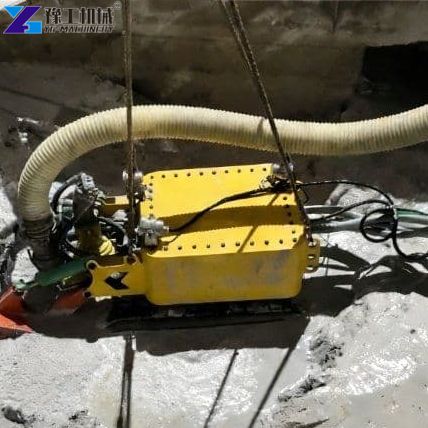
As a pipeline cleaning robot manufacturer, YG Machinery has built these machines for over eight years. Our factory in Zhengzhou produces every component in-house. We machine the hydraulic stations, assemble the crawler frames, and integrate the wireless control systems. Every unit undergoes a full pressure test before shipping. Buyers receive a test report and video with their machine. We stock spare parts in Houston and Rotterdam. Common items ship within 2-4 days. Every machine includes a 12-month warranty and lifetime remote support. We also manufacture road marking machines, floor shot blasters, and electric tank trolleys.
Find the Right Model for Your Project
Ready to Choose Your Dredging Robot?
We offer free consultation and site assessment. Tell us your pipe diameter, debris type, and pumping distance. We will recommend the right model.
Three ways to move forward:
- Request a quote – Get pricing within 8 hours.
- Watch a test run – See the robot cleaning your pipe type.
- Visit our factory – Meet our engineering team in Zhengzhou.
Contact us today via WhatsApp, email, or the website form. Every machine includes a 2-year warranty and lifetime remote support.

FAQ About YG River Silt Cleaning Machine
A1: Dredging width ranges from 500mm to 1200mm depending on the model. The YG-1200 handles large culverts.
A2: Yes. The crawler design and wireless control allow navigation through bends. The 50m hose follows the pipe path.
A3: The YG-500 to YG-900 run on 380V, 50Hz three-phase power. The YG-1200 uses a 45kW motor or a 76kW diesel engine.
A4: The machine uses a hydraulic station, not a battery. The station runs continuously from main power or a generator.
A5: Check hydraulic hoses for wear. Inspect the pump for debris. Clean the tracks. Lubricate moving parts. Total time: 30 minutes.
A6: Yes. The underwater components resist corrosion. The LED lights and hydraulic system work in saltwater conditions.