The inquiry arrived on a Wednesday morning in early August. Subject line: “EV charging solution needed – Accra, Ghana.” The sender was Mr. Kwame Adjei, operations director for a logistics company in Ghana’s capital. His company operated a fleet of 30 electric delivery vans. They were expanding to 80 vehicles by year-end. The existing charging setup could not keep up. He needed commercial EV charging stations that could charge multiple vehicles quickly and reliably. That email started a four-month journey. YG commercial EV charging stations would travel from our factory to a busy logistics hub in Accra.
Ghana’s electric vehicle market is growing fast. The government has set a target of 10% electric vehicle adoption by 2030. The country has over 500 public charging points, but most are slow AC chargers. Demand for fast DC charging is rising rapidly. The African EV market is projected to grow at a CAGR of 16.5% through 2030. Fleet operators are leading the adoption. They need commercial EV charging stations that are durable, efficient, and easy to maintain. Mr. Adjei was at the forefront of this transition. He needed a solution that would keep his fleet moving. The power grid in Ghana can be unstable. Voltage fluctuations are common. A charger with wide input voltage tolerance was essential. Mr. Adjei had to choose carefully.
Product Parameter Table: YG Commercial EV Charging Stations
Compare Models and Get a Quote
| Parameter | YG-60KW | YG-80KW | YG-120KW |
|---|---|---|---|
| Rated Power | 60KW | 80KW | 120KW |
| Input Voltage | AC380V ±20% | AC380V ±20% | AC380V ±20% |
| Input Frequency | 45–65Hz | 45–65Hz | 45–65Hz |
| Output Voltage | 200–750V DC | 200–750V DC | 200–750V DC |
| Output Current Range | 0–90A | 0–120A | 0–160A |
| Max Single Gun Current | 0–112A | 0–150A | 0–180A |
| Interface | 7-inch Touch Screen | 7-inch Touch Screen | 7-inch Touch Screen |
| Installation Method | Floor-standing | Floor-standing | Floor-standing |
| Cable Length | 5m | 5m | 5m |
| Efficiency | ≥94.5% | ≥94.5% | ≥94.5% |
| Power Factor | ≥0.99 | ≥0.99 | ≥0.99 |
| THD | ≤5% | ≤5% | ≤5% |
| Protection Level | IP54 | IP54 | IP54 |
| Cooling Method | Forced Air Cooling | Forced Air Cooling | Forced Air Cooling |
| Noise Level | <60 dB | <60 dB | ≤60dB |
| Operating Temperature | -25°C to +50°C | -25°C to +50°C | -25°C to +50°C |
| Humidity Range | 5%–95% | 5%–95% | 5%–95% |
| MTBF | 100,000 hours | 100,000 hours | 100,000 hours |
Inquiry: The First Step to Buying an Electric Car Charging Station
Mr. Adjei found YG Machinery through an online search to buy an electric car charging station. He had evaluated several suppliers. European brands offered premium quality but came with high prices and long lead times. Chinese suppliers offered competitive pricing but varied widely in quality and support. He sent his first inquiry with specific requirements. The chargers needed to deliver at least 80KW of power. They had to be floor-standing and weatherproof. They needed to operate in temperatures up to 45°C. Reliability was critical. His vehicles could not afford downtime.
Our reply went out within four hours. We asked for more details about his fleet vehicles, battery specifications, and daily charging patterns. Mr. Adjei responded the next day with photos of his depot, vehicle specifications, and a breakdown of his daily charging needs. His vans had battery capacities ranging from 60 to 100 kWh. Each van needed to charge from 20% to 80% in under an hour. That required DC fast charging. He needed commercial EV charging stations that could deliver consistent power output even during grid fluctuations. We scheduled a video conference for the following week.
Video Conference: Choosing New EV Charging Stations for a Growing Fleet
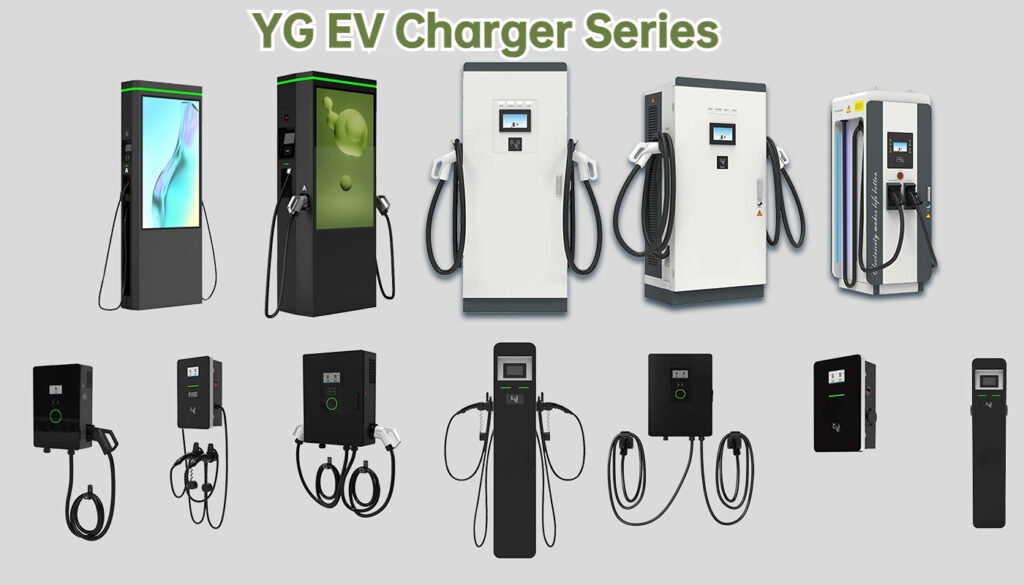
Mr. Adjei joined the video call from his depot office. His technical manager, Mr. Osei, sat beside him. They panned the camera across the depot to show the current charging setup—a row of 22KW AC chargers that could not keep up with the growing fleet. We walked them through the three YG models: the YG-60KW, YG-80KW, and YG-120KW.
The YG-60KW delivers 60KW of power. Output current ranges from 0 to 90A. Maximum single-gun current is 112A. It suits smaller fleets with moderate charging needs. The YG-80KW delivers 80KW. Output current ranges from 0 to 120A. Maximum single-gun current is 150A. It offers faster charging for medium-sized fleets. The YG-120KW delivers 120KW. Output current ranges from 0 to 160A. Maximum single-gun current is 180A. It provides the fastest charging for large fleets with tight schedules.
All three models operate on AC380V ±20% input voltage. This wide tolerance is critical for the Ghanaian grid. They also accept input frequencies from 45 to 65Hz. Output voltage ranges from 200 to 750V DC. Efficiency reaches ≥94.5%. Power factor is ≥0.99. Total harmonic distortion stays ≤5%. Protection level is IP54, suitable for outdoor installation. Operating temperature range is -25°C to +50°C. Humidity tolerance is 5% to 95%. MTBF is rated at 100,000 hours. Mr. Adjei needed speed and reliability. He chose the YG-120KW new EV charging stations for his fleet.

Quotation and Order: Tailoring Commercial EV Charging Stations to Ghanaian Needs
Three days after the initial consultation, our team delivered a comprehensive formal quotation. This all-inclusive package featured three YG-120KW commercial EV charging stations alongside dedicated mounting kits and an essential tool set for seamless on-site installation and maintenance. Upon reviewing the details, Mr. Adjei requested two specific customizations: extending the charging cables to 7 meters for greater operational flexibility and adding an extended warranty on the core power modules. Once we agreed to both enhancements, the transaction proceeded under a structured two-installment agreement, starting with a 50% deposit via wire transfer ten days later.
To ensure smooth entry into West Africa, Mr. Adjei partnered with an experienced customs broker at Tema Port—Ghana’s primary maritime gateway. Meanwhile, all three YG-120KW units underwent rigorous quality control tests at our manufacturing facility. Engineers ran each system at full load, thoroughly verifying the 200–750V DC output range, inspecting the responsiveness of the 7-inch touch screens, and confirming full OCPP protocol compatibility. Furthermore, the forced air cooling system operated continuously for two hours without any overheating issues. Having passed every benchmark, the chargers were carefully secured inside reinforced wooden crates and loaded into a 40-foot container for ocean transport.
Start Your Project with the Right Equipment
Shipping and Delivery: Crossing Oceans to Deliver Commercial EV Charger for Sale
Shipping took 28 days from the Port of Ningbo to Tema Port. The vessel crossed the Indian Ocean and rounded the Cape of Good Hope. It then traveled north along the West African coast to Ghana. We tracked the container daily and updated Mr. Adjei on its position. The chargers arrived at Tema Port on a Thursday morning. Customs clearance took five days. Ghana applies import duties on electrical equipment based on the tariff classification. Mr. Adjei’s customs broker handled all the paperwork: the commercial invoice, packing list, and bill of lading. The container cleared customs on a Tuesday.
Mr. Adjei hired a local transport company to move the chargers from Tema to his depot in Accra. The journey was 30 kilometers. The truck arrived at the depot on a Wednesday afternoon. Mr. Adjei sent photos of the crates being unloaded. His team gathered around. They had never seen such compact and well-built chargers. The 7-inch touch screens looked modern. The build quality was impressive. Everyone was eager to install them.


Installation and Training: Bringing Commercial EV Charging Stations to Life
Installation commenced early the next morning under the supervision of Mr. Adjei’s electrical team. After selecting three accessible locations within the depot, workers poured sturdy concrete foundations and ran high-capacity conduits directly from the main distribution panel to handle the 380V three-phase grid connection. Proper circuit breakers and protective devices were seamlessly integrated to safeguard the system.
Given that each floor-standing, self-contained YG-120KW unit weighs roughly 250 kg, a small crane was deployed to carefully maneuver the chargers onto their bases. Once anchored, the team wired the power feeds, set up network communication cables, and rigorously tested ground fault protection alongside cooling fan functionality. Within two days, all three chargers were securely installed and operational.
To ensure smooth adoption, a virtual training session was hosted by our technical team in China. Over the course of a day, Mr. Adjei’s crew gained hands-on experience navigating the 7-inch touch interface, monitoring live charging metrics, and exporting system data logs. The session also covered essential routine maintenance—such as clearing air filters and inspecting cooling vents—before each technician completed a trial run on a real fleet vehicle. By evening, the team felt fully equipped to manage daily operations independently.
Operational Results: Commercial EV Charging Stations Power a Fleet
Over the first 90 days of continuous operation, the performance of the three YG-120KW units far exceeded the logistics team’s expectations. Deploying these high-efficiency stations enabled the company to run over 5,000 charging sessions, delivering an impressive total of 300,000+ kWh of power to the electric fleet. Thanks to an outstanding 94.5% conversion efficiency, energy losses remained minimal throughout peak operations. More importantly, the hardware experienced zero technical breakdowns or system fault shutdowns, keeping maintenance costs virtually nonexistent.
This flawless reliability directly transformed the daily productivity of Mr. Adjei’s commercial fleet. Fleet availability soared from an initial 85% straight to 98%, virtually eliminating the long charging delays that previously plagued scheduled delivery routes. With total vehicle turnaround time cut by nearly 40%, drivers frequently referred to the rapid YG-120KW systems as “the quick ones.” Fueled by these game-changing results, the management team has already decided to order five additional units to power two upcoming depot expansions across Ghana.
Find the Right Model for Your Project

Technical Standards: Built to Global Benchmarks
The YG-120KW commercial EV charging stations meet international standards for EV charging equipment. The chargers comply with IEC 61851-1, the international standard for conductive charging systems. They also meet IEC 61851-23 for DC charging. The communication protocols follow ISO 15118, the standard for vehicle-to-grid communication. The OCPP 1.6J protocol enables seamless integration with charging station management systems.
The output voltage range of 200–750V DC covers most modern electric vehicles. The charging profile follows the GB/T 27930 standard for communication between the charger and vehicle. The efficiency of ≥94.5% reduces energy waste and operating costs. The power factor of ≥0.99 minimizes reactive power losses. The total harmonic distortion of ≤5% ensures clean power output without harming the grid. The IP54 protection rating provides dust ingress protection and water spray resistance. The forced air cooling system maintains stable operation even in high temperatures.
The chargers also meet safety requirements for electrical equipment. Each unit includes overvoltage protection, overcurrent protection, and short-circuit protection. The ground fault detection system protects users from electric shock. The emergency stop button provides immediate shutdown in case of issues. The operating temperature range of -25°C to +50°C makes the units suitable for a wide variety of climates. The humidity tolerance of 5% to 95% ensures reliable operation even in tropical conditions like Ghana.
Conclusion: Commercial EV Charging Stations That Keep Ghana Moving
Mr. Adjei’s success story clearly illustrates the transformative impact of high-performance commercial EV charging stations. Following a long ocean voyage, three robust YG-120KW units seamlessly cleared customs within five days and were fully operational just two days later. Over the subsequent 90-day period, these systems delivered more than 300,000 kWh of energy across 5,000 flawless charging sessions while maintaining an impressive 94.5% efficiency rate. By operating without a single technical breakdown, the equipment successfully propelled fleet availability from 85% straight to 98%, enabling the Ghanaian logistics company to expand its business footprint rapidly.
Driven by these outstanding operational results, Mr. Adjei is already planning to procure five additional units to power two new depot locations. Furthermore, he frequently recommends YG solutions to other regional fleet managers, noting that his drivers now affectionately call the high-power chargers “the quick ones” due to minimal downtime. Ultimately, this seamless transition has allowed the entire logistics operation to run more smoothly and reliably than ever before.
For fleet operators, depot managers, or energy companies looking to buy an electric car charging station that delivers real-world performance, the YG-120KW stands out as a battle-tested choice. Supplying 120KW of power with a maximum current output of 0–160A, this unit is engineered to handle input voltages of AC380V ±20% while fully complying with international IEC 61851 and ISO 15118 standards. Even in harsh ambient temperatures up to 50°C, it offers up to 100,000 hours of continuous, dependable service—ensuring commercial electric fleets remain active and profitable around the clock.
Ready to power your fleet with commercial EV charging stations? Contact YG Machinery today for a customized quote. Email us at admin@ygequip.com. Visit our website to explore our full range of new EV charging stations for sale. Our team responds within 4 hours.