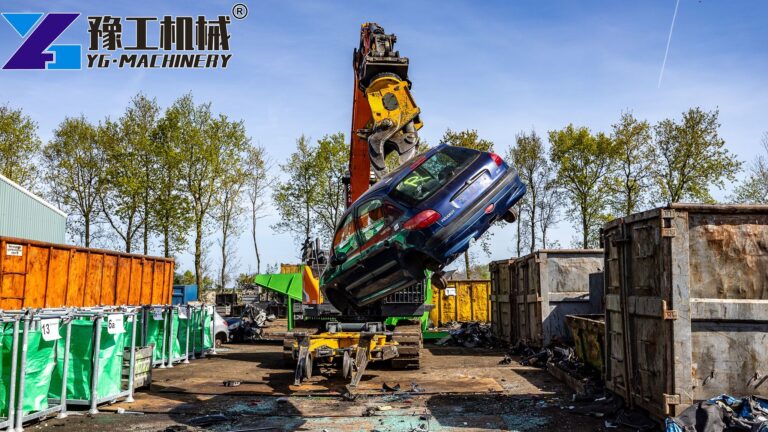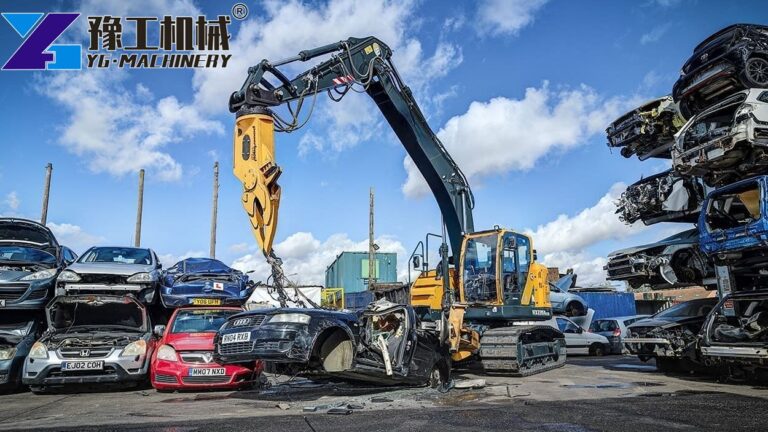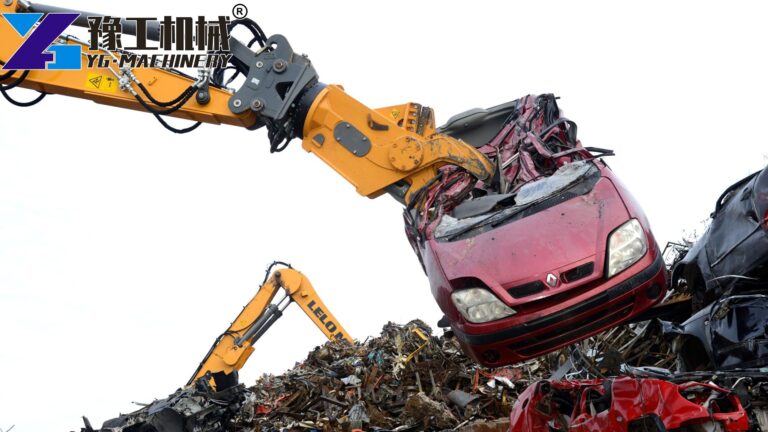
A scrap car dismantling machine is hydraulic equipment used to dismantle, cut, and process end-of-life vehicles (ELVs) before recycling. It helps auto recycling plants recover valuable metals, reduce manual labor, and improve operational safety. Compared with traditional torch cutting, hydraulic dismantling equipment delivers faster processing, cleaner cuts, and more consistent performance.
The global demand for vehicle recycling continues to grow. According to the European Union’s End-of-Life Vehicles (ELV) Directive, member states are required to achieve high reuse and recovery rates for scrapped vehicles. Similar recycling regulations are expanding across North America, Asia, and many emerging markets. As a result, recycling companies are investing in modern scrap car dismantling equipment to increase productivity while meeting environmental standards.
Whether you operate a scrapyard, a metal recycling center, or a vehicle dismantling facility, choosing the right scrap car dismantling machine can significantly improve metal recovery, reduce operating costs, and shorten processing time. This guide explains how these machines work, compares different equipment types, outlines buying considerations, and answers the most common questions from professional buyers.
Start Your Project with the Right Equipment
What Is a Scrap Car Dismantling Machine?
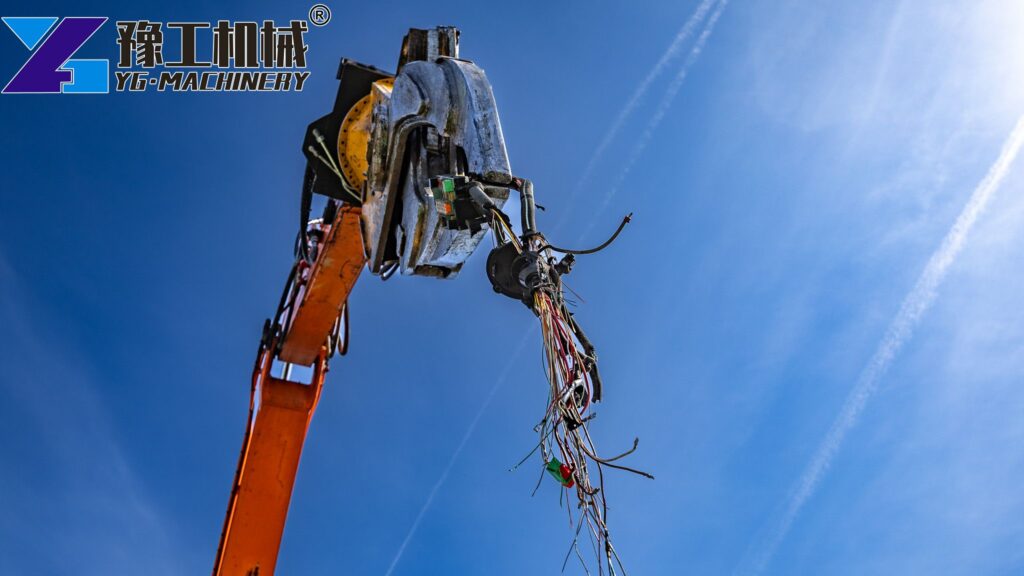
A scrap car dismantling machine is a hydraulic machine designed to separate vehicle bodies into recyclable materials. It uses high hydraulic pressure and hardened alloy blades to cut steel structures, remove vehicle components, and prepare scrap metal for further processing.
Unlike manual dismantling, modern machines complete heavy cutting tasks in minutes while reducing physical labor. Depending on production requirements, a dismantling system may include hydraulic shears, car crushers, shredders, grabs, balers, and material handling equipment.
Most machines are designed for processing:
- Passenger cars
- SUVs
- Pickup trucks
- Vans
- Buses
- Light trucks
- Commercial vehicles
Recovered materials usually include:
- Carbon steel
- Stainless steel
- Aluminum
- Copper
- Cast iron
- Plastic
- Rubber
Key Takeaways
| Item | Description |
|---|---|
| Primary Function | Dismantle end-of-life vehicles |
| Power Source | Hydraulic system |
| Main Industries | Auto recycling and scrap processing |
| Processed Materials | Steel, aluminum, copper, plastic |
| Typical Users | Scrap yards, recycling plants, demolition contractors |
Boost Productivity—Get a Free Quote
Quick Facts About Scrap Car Dismantling Machines
Before comparing different models, it helps to understand several key characteristics shared by most hydraulic dismantling equipment.
| Feature | Typical Specification |
|---|---|
| Power System | Hydraulic |
| Working Method | Cutting and dismantling |
| Installation | Excavator-mounted or stationary |
| Rotation | Up to 360° on many models |
| Blade Material | Heat-treated alloy steel |
| Main Application | Vehicle dismantling and metal recycling |
| Compatible Industries | Auto recycling, demolition, scrap processing |
Key Benefits
- Faster dismantling than manual cutting
- Lower labor requirements
- Improved operator safety
- Higher metal recovery efficiency
- Reduced maintenance costs
- Better material separation
- Cleaner cutting surfaces
These advantages make hydraulic dismantling equipment the preferred solution for modern recycling facilities.
Why Auto Recycling Plants Need a Scrap Car Dismantling Machine
Processing end-of-life vehicles involves more than simply cutting steel. Recycling companies must maximize material recovery while controlling labor costs, ensuring worker safety, and meeting environmental regulations.
Traditional dismantling methods often rely on gas torches, grinders, or manual cutting tools. Although these methods require lower initial investment, they create several operational challenges.
Common problems include:
- Slow production speed
- High labor costs
- Increased workplace risks
- Uneven cutting quality
- Higher fuel consumption
- Greater equipment wear
A hydraulic vehicle dismantling machine addresses these issues by combining cutting power with operational efficiency.
For example, one operator can complete tasks that previously required several workers. The hydraulic system delivers consistent cutting force, allowing the machine to process reinforced vehicle frames with minimal effort. Faster cycle times also reduce waiting periods between operations, improving the overall productivity of the recycling line.
As labor shortages continue to affect manufacturing and recycling industries worldwide, automated dismantling equipment has become an increasingly attractive investment.
Key Takeaways
Modern scrap car dismantling machines help recycling businesses:
- Reduce manual labor
- Improve worker safety
- Increase metal recovery
- Shorten dismantling cycles
- Lower long-term operating costs
Find the Right Model for Your Project
How Does a Scrap Car Dismantling Machine Work?
Although machine configurations vary, most hydraulic scrap car dismantling machines follow a similar workflow.
Step 1: Vehicle Inspection
Operators inspect each vehicle before dismantling. Hazardous components such as batteries, fuel tanks, airbags, and fluids are removed to ensure safe operation.
Step 2: Vehicle Positioning
The vehicle is placed in the dismantling area using a forklift, crane, or excavator. Proper positioning improves cutting accuracy and reduces unnecessary movement.
Step 3: Hydraulic Cutting
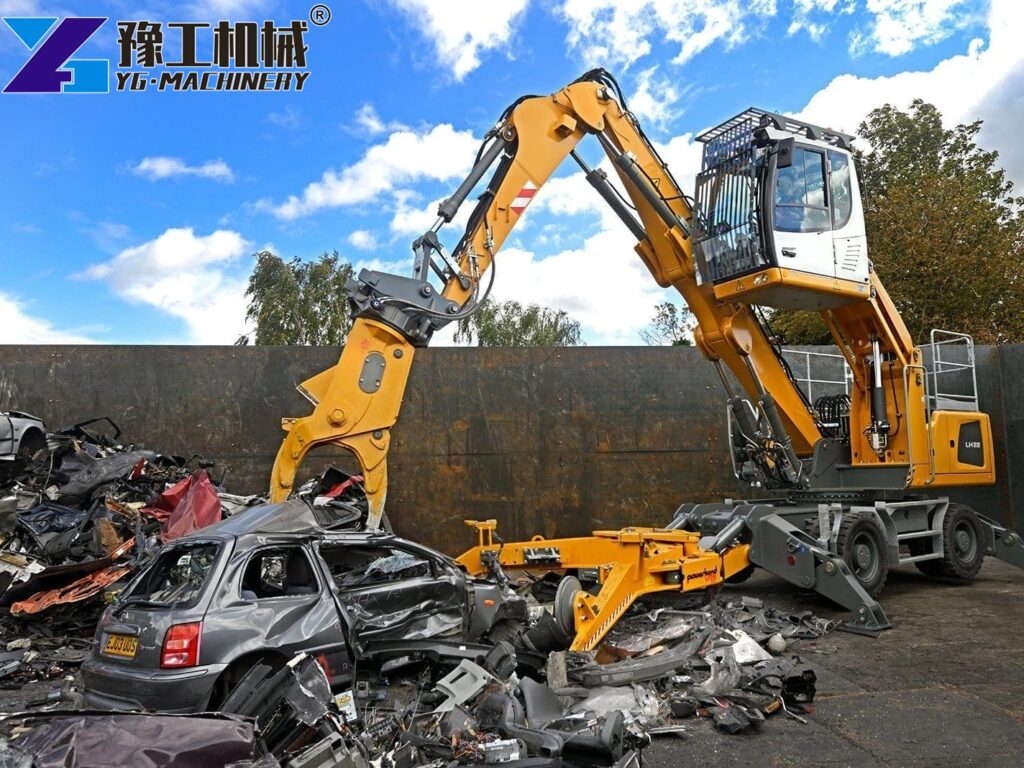
The hydraulic cylinder drives hardened blades with high force. The machine cuts through vehicle roofs, doors, pillars, frames, and chassis components.
Because hydraulic pressure remains stable throughout the cutting cycle, operators achieve clean cuts with less material deformation.
Step 4: Material Separation
After dismantling, valuable materials are sorted into different recycling streams.
Typical materials include:
- Steel
- Aluminum
- Copper
- Plastic
- Rubber
- Electronic components
Proper sorting improves recycling efficiency and increases the resale value of recovered materials.
Step 5: Compression or Shredding
Depending on the recycling process, the remaining vehicle body is either compressed into dense blocks or shredded into smaller pieces for transportation and steel production.
Typical Workflow
| Step | Process |
|---|---|
| 1 | Vehicle inspection |
| 2 | Hazardous material removal |
| 3 | Hydraulic cutting |
| 4 | Material separation |
| 5 | Compression or shredding |
| 6 | Transportation to steel mills |
This standardized workflow allows recycling facilities to process vehicles efficiently while minimizing waste and maximizing resource recovery.
What Equipment Is Used in an Auto Recycling Plant?
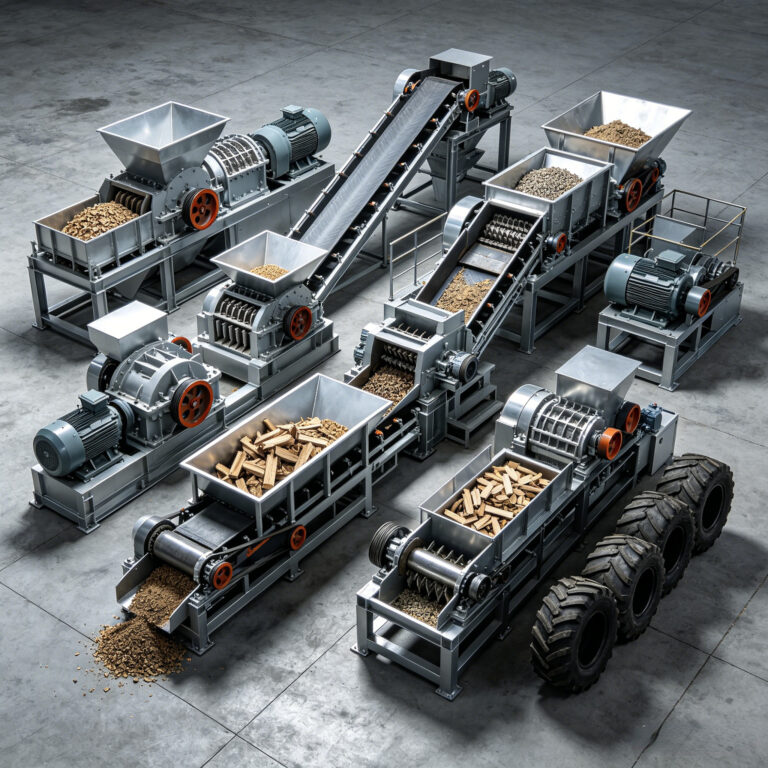
A modern vehicle recycling facility uses more than one machine. Instead, several types of auto recycling equipment work together to improve efficiency, recover more valuable materials, and reduce labor costs.
The exact equipment depends on the plant’s processing capacity and the types of vehicles being dismantled. Small recycling yards may only require an excavator with a hydraulic car shear, while larger facilities often operate complete scrap car dismantling lines that include crushers, shredders, and material handling systems.
The following table summarizes the most common equipment used in professional auto recycling plants.
| Equipment | Primary Function | Typical Application |
|---|---|---|
| Hydraulic Car Shear | Cuts vehicle bodies and frames | Vehicle dismantling |
| Car Crusher | Compresses vehicle shells | Transportation and storage |
| Scrap Metal Shredder | Reduces metal into smaller pieces | Steel recycling |
| Hydraulic Grapple | Handles scrap materials | Loading and sorting |
| Excavator Magnet | Separates ferrous metals | Material recovery |
| Metal Baler | Compresses loose scrap | Storage and shipping |
| Dust Suppression System | Controls airborne dust | Environmental protection |
Each machine performs a different task. Together, they create an efficient recycling workflow from vehicle dismantling to finished scrap preparation.
Key Takeaways
A complete scrap car dismantling system usually includes:
- Hydraulic car shear
- Car crusher
- Scrap metal shredder
- Hydraulic grapple
- Magnet attachment
- Metal baler
- Dust control equipment
Types of Scrap Car Dismantling Machines
Different recycling facilities require different dismantling solutions. Selecting the right machine depends on vehicle size, production capacity, available equipment, and investment budget.
Hydraulic Car Shear
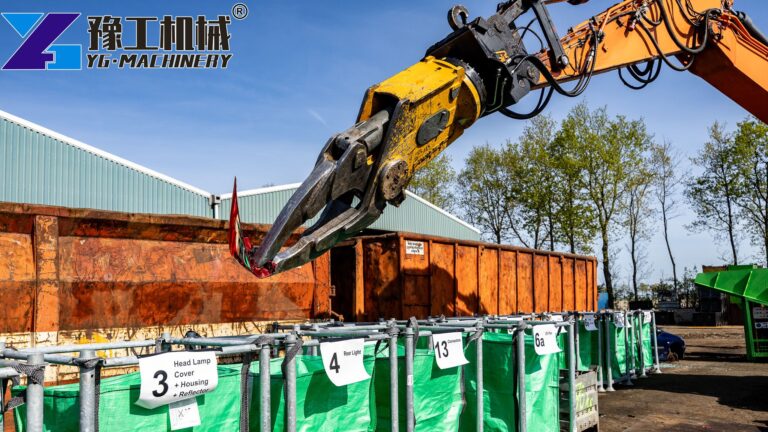
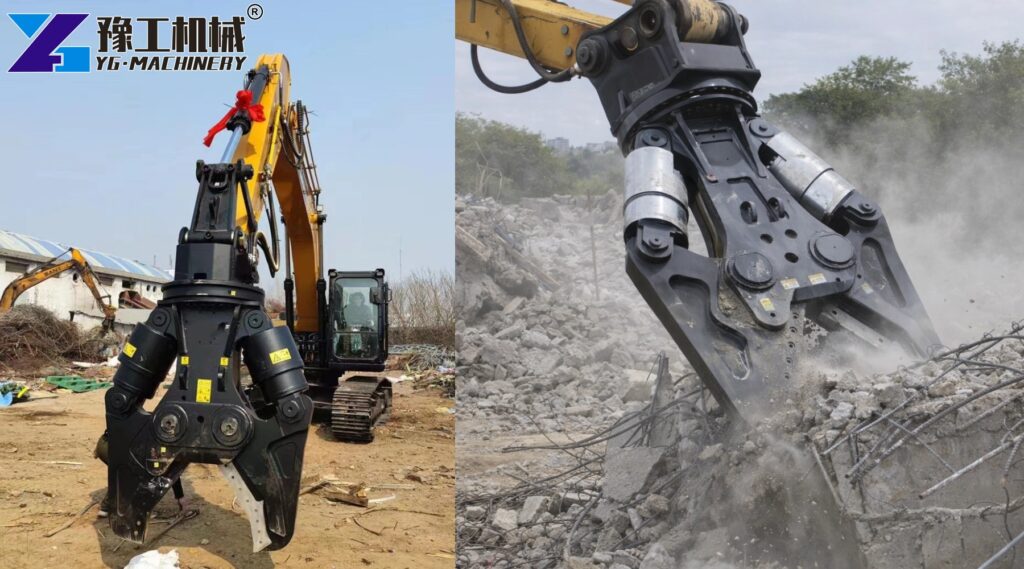
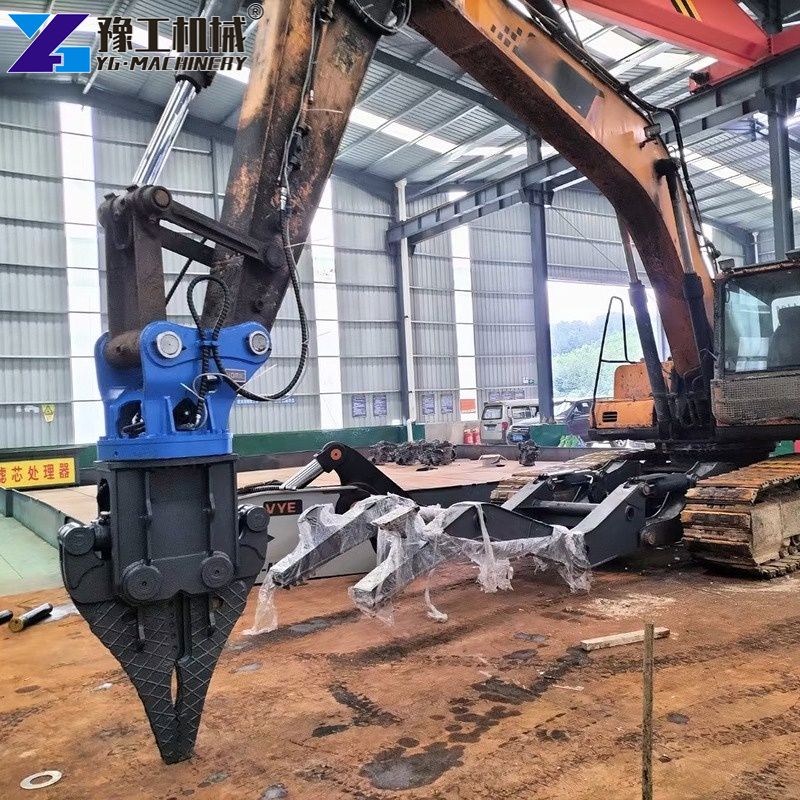
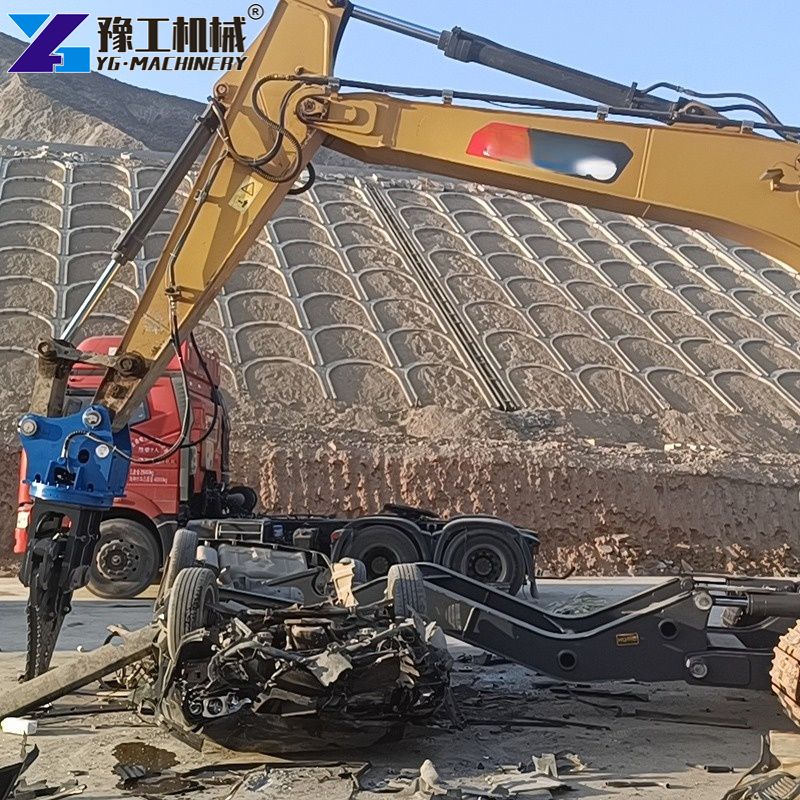
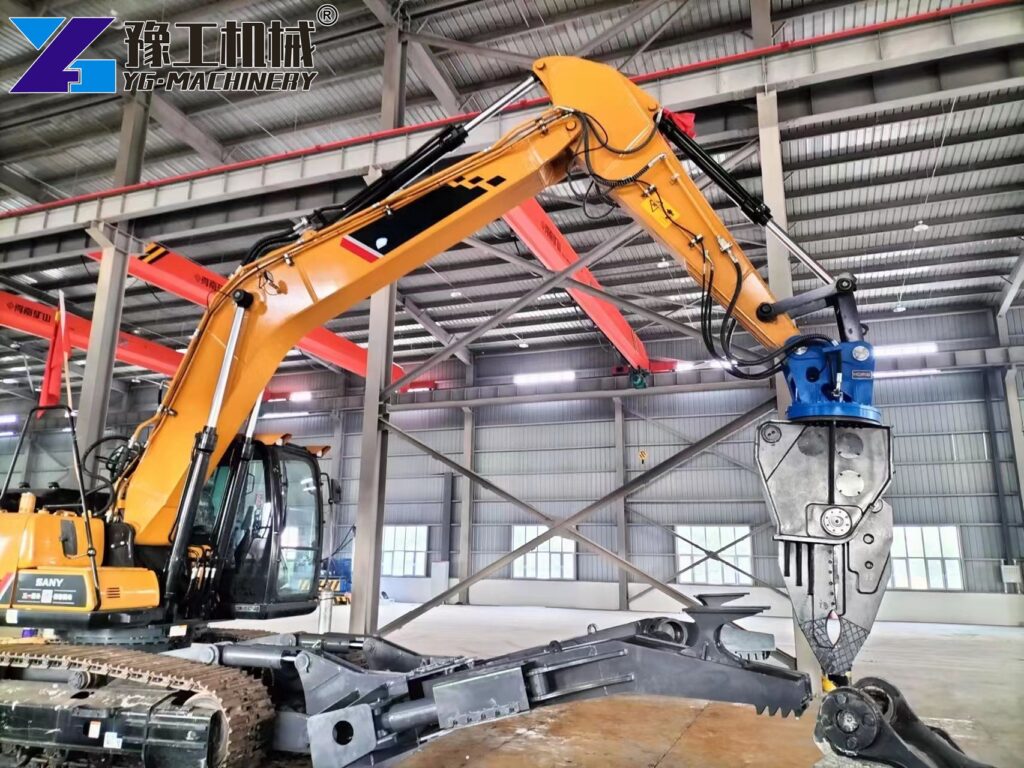
A hydraulic car shear is the most widely used scrap car dismantling machine. It uses hydraulic cylinders to generate high cutting force for dismantling vehicle bodies, chassis, and structural components.
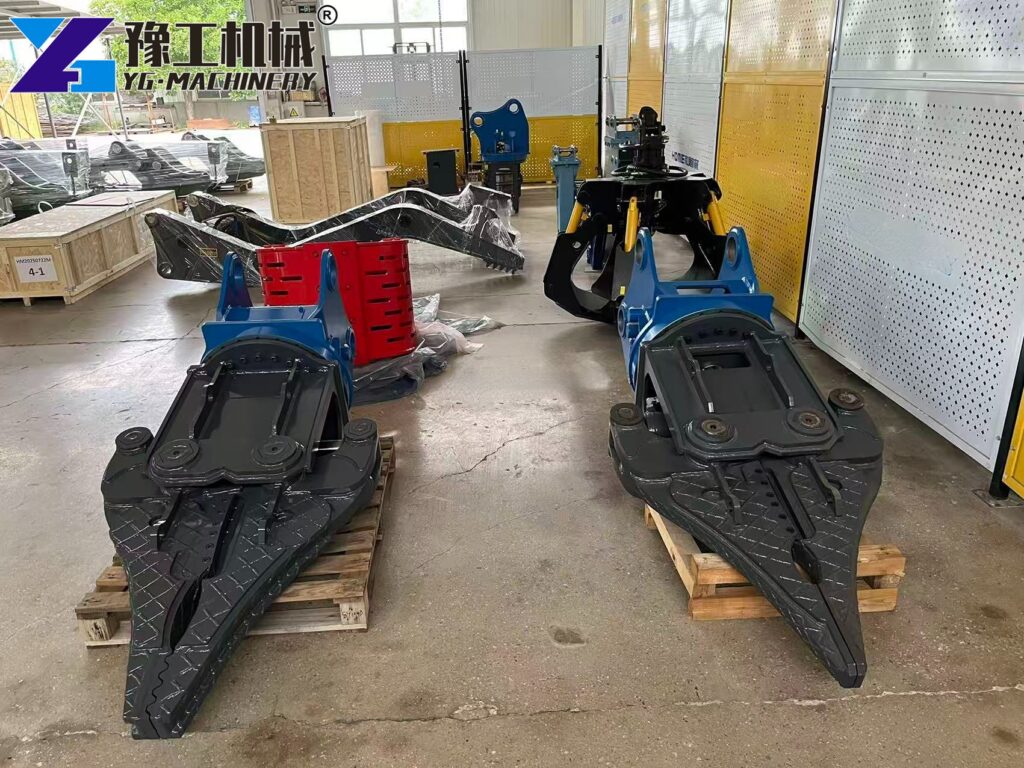
Modern hydraulic shears often feature:
- 360° hydraulic rotation
- Heat-treated alloy blades
- Replaceable cutting edges
- High-pressure hydraulic cylinders
- Low maintenance requirements
They are suitable for passenger cars, buses, trucks, containers, and heavy steel structures.
Excavator Car Shear Attachment
An excavator car shear attachment is mounted directly onto an excavator. It uses the carrier’s hydraulic system, eliminating the need for an independent power unit.
Advantages include:
- Excellent mobility
- Fast installation
- Flexible operation
- Lower investment costs
- Multi-purpose use with different excavator attachments
This solution is popular among demolition contractors and medium-sized scrapyards.
Car Crusher
A car crusher compresses dismantled vehicle bodies into compact blocks. Crushing reduces storage space and transportation costs while preparing scrap for steel mills.
Car crushers are particularly useful when processing high volumes of vehicles every day.
Scrap Metal Shredder
After dismantling and crushing, a scrap metal shredder breaks vehicle bodies into smaller fragments.
Shredding improves:
- Metal purity
- Sorting efficiency
- Furnace melting performance
- Transportation efficiency
Large recycling companies often combine shredders with automated magnetic separation systems.
Stationary Dismantling Systems
Some high-capacity recycling facilities install fixed dismantling stations equipped with multiple hydraulic tools.
These systems provide:
- Continuous production
- Stable hydraulic pressure
- Higher automation
- Reduced operator fatigue
- Consistent dismantling quality
Although the initial investment is higher, stationary systems deliver excellent productivity for large-scale operations.
Compare Models and Get a Quote
Hydraulic Car Shear vs Car Crusher
Many buyers confuse these two machines. Although both are used in vehicle recycling, they perform different functions.
| Feature | Hydraulic Car Shear | Car Crusher |
|---|---|---|
| Primary Function | Cutting | Compression |
| Processing Stage | Before crushing | Final preparation |
| Material Recovery | High | Medium |
| Precision | Excellent | Limited |
| Mobility | High | Usually stationary |
| Typical Users | Recycling plants | Scrap yards |
| Suitable Vehicle Parts | Doors, frames, roofs, chassis | Entire vehicle shell |
Which Machine Should You Choose?
Choose a hydraulic car shear if your priority is recovering valuable metals and reusable components with precision.
Choose a car crusher if your goal is reducing transportation volume after dismantling.
Many professional recycling plants use both machines together to maximize operational efficiency.
Key Features to Look For
Not every scrap car dismantling machine offers the same performance. Buyers should compare technical specifications rather than focusing only on purchase price.
High Hydraulic Pressure
Hydraulic pressure directly affects cutting capacity.
Higher pressure allows the machine to process thicker automotive steel while maintaining stable performance.
High-Strength Alloy Blades
Blade quality determines cutting efficiency and operating costs.
Look for blades that offer:
- Heat treatment
- Wear resistance
- Replaceable cutting edges
- Long service life
High-quality blades reduce downtime and replacement expenses.
360° Rotation
Machines with hydraulic rotation allow operators to position the shear without constantly moving the excavator.
Benefits include:
- Faster operation
- Better accessibility
- Improved precision
- Reduced fuel consumption
Reliable Hydraulic System
A stable hydraulic system ensures consistent cutting force under continuous operation.
Important components include:
- Hydraulic cylinders
- Main valves
- Hydraulic hoses
- Rotary motors
- Sealing systems
Reliable components reduce maintenance costs over the machine’s lifetime.
Easy Maintenance
Routine servicing should be simple and efficient.
Look for machines with:
- Easy blade replacement
- Accessible grease points
- Standard hydraulic fittings
- Widely available spare parts
Simple maintenance reduces downtime and improves long-term productivity.
Buyer’s Checklist
Before purchasing a scrap car dismantling machine, confirm the following:
✅ Vehicle types to be processed
✅ Daily processing capacity
✅ Excavator operating weight
✅ Required cutting force
✅ Blade material and hardness
✅ Hydraulic oil flow requirements
✅ Spare parts availability
✅ Warranty period
✅ Technical support
✅ Operator training
Completing this checklist helps reduce purchasing risks and ensures the selected machine matches your production requirements.
Scrap Car Dismantling Machine Price Guide
Many buyers search for scrap car dismantling machine price, but there is no universal price because machine specifications vary significantly.
Several factors influence the final cost.
| Factor | Impact on Price |
|---|---|
| Cutting force | Higher force increases cost |
| Excavator compatibility | Larger carriers require heavier shears |
| Blade quality | Premium alloys cost more but last longer |
| Hydraulic components | Better systems improve reliability |
| Rotation system | Adds flexibility and value |
| Automation level | Higher automation increases investment |
| Manufacturer | Factory experience affects pricing |
| Shipping destination | Freight costs vary by region |
Rather than choosing the lowest-priced machine, buyers should evaluate the total cost of ownership, including maintenance, spare parts, energy consumption, and expected service life.
A durable hydraulic shear with lower maintenance costs often provides a better return on investment than a cheaper machine requiring frequent repairs.
How Many Cars Can a Scrap Car Dismantling Machine Process Per Day?
The daily output of a scrap car dismantling machine depends on several factors, including machine type, operator experience, vehicle condition, and workflow efficiency. There is no single processing capacity that applies to every recycling plant.
The following table provides a general reference.
| Facility Size | Typical Equipment | Estimated Vehicles per Day* |
|---|---|---|
| Small scrapyard | Excavator with hydraulic car shear | 10–20 |
| Medium recycling plant | Hydraulic shear + crusher | 20–50 |
| Large recycling center | Automated dismantling line | 50–100+ |
*Actual capacity varies according to vehicle size, labor organization, and equipment configuration.
Improving workflow often has a greater impact than simply increasing machine size. Efficient material handling, proper operator training, and preventive maintenance can significantly increase daily output.
Key Takeaways
Processing capacity is influenced by:
- Machine configuration
- Vehicle size
- Hydraulic performance
- Operator experience
- Material handling efficiency
- Maintenance schedule
Industries That Use Scrap Car Dismantling Machines
Although designed for end-of-life vehicles, scrap car dismantling machines are also used in other industries that require heavy-duty steel cutting.
Common applications include:
- Auto recycling plants
- Scrap metal recycling companies
- Vehicle dismantling facilities
- Demolition contractors
- Steel mills
- Waste management companies
- Industrial equipment recycling
- Heavy machinery dismantling
- Government recycling projects
- Port and shipyard scrap processing
Their versatility makes them a valuable investment for businesses handling large volumes of ferrous and non-ferrous metals.
Common Mistakes Buyers Should Avoid
Choosing the wrong machine can increase operating costs and reduce productivity. Before making a purchase, avoid these common mistakes.
Buying Only by Price
A lower purchase price does not always mean lower ownership costs. Machines with poor hydraulic components or low-quality blades may require more repairs and replacement parts over time.
Ignoring Excavator Compatibility
An excavator-mounted hydraulic car shear must match the carrier’s operating weight, hydraulic flow, and pressure. A mismatch can reduce performance and shorten equipment life.
Overlooking Spare Parts Availability
Reliable after-sales support is essential. Confirm that cutting blades, seals, and hydraulic components are readily available before purchasing.
Choosing More Capacity Than You Need
Oversized equipment increases fuel consumption and investment costs. Select a machine that matches your current production while allowing room for future growth.
Neglecting Operator Training
Even high-quality equipment performs poorly without proper operation. Basic training improves productivity, safety, and component life.
Buyer Checklist
Before placing an order, confirm:
- Your excavator model
- Hydraulic flow and pressure
- Vehicle types to be processed
- Daily production target
- Preferred blade material
- Spare parts availability
- Warranty terms
- Technical support
- Delivery time
- Installation assistance
How to Choose the Right Scrap Car Dismantling Machine
The best scrap car dismantling machine depends on your business rather than the largest specification.
Ask the following questions before requesting a quotation.
What Types of Vehicles Will You Process?
Passenger cars, buses, trucks, and commercial vehicles require different cutting capacities.
What Is Your Daily Production Target?
Estimate your current and expected processing volume over the next three to five years. This helps avoid under-sizing or over-investing.
Will the Machine Be Mobile or Stationary?
Excavator-mounted machines offer flexibility for changing job sites, while stationary systems are better suited to high-volume recycling plants.
How Important Is After-Sales Support?
Choose a manufacturer that provides technical guidance, spare parts, and long-term service. Reliable support reduces downtime and protects your investment.
Is Future Expansion Planned?
If your business is growing, select equipment that can integrate with additional recycling machinery such as crushers, shredders, or balers.
Why Choose YG Machinery?
YG Machinery supplies scrap car dismantling machines and other metal recycling equipment to customers in more than 100 countries. Our engineering team understands the operational needs of scrapyards, recycling centers, and demolition contractors.
We focus on delivering equipment that combines durability, productivity, and long-term value.
Our advantages include:
- Heavy-duty hydraulic systems
- High-strength alloy cutting blades
- Stable cutting performance
- Compatibility with multiple excavator brands
- Professional technical support
- Spare parts supply
- Factory-direct pricing
- Export experience across global markets
Whether you need a single hydraulic car shear or a complete vehicle recycling solution, our team can recommend equipment based on your processing capacity and project requirements.
Request a Professional Recommendation
Selecting the right scrap car dismantling machine is about more than choosing a model. The right equipment should match your production goals, operating conditions, and future expansion plans.
If you are planning to upgrade an existing scrapyard or build a new auto recycling facility, our engineers can help you compare different solutions and recommend the most suitable configuration.
Simply tell us:
- Your excavator model
- Vehicle types to process
- Estimated daily capacity
We will provide a tailored equipment recommendation, detailed specifications, videos, and a competitive quotation to support your purchasing decision.
Boost Productivity—Get a Free Quote
Frequently Asked Questions
A scrap car dismantling machine is hydraulic equipment used to cut and dismantle end-of-life vehicles before recycling. It improves efficiency, safety, and metal recovery.
Most machines can process passenger cars, SUVs, vans, buses, light trucks, and many commercial vehicles.
No. The excavator must meet the required operating weight, hydraulic flow, and pressure specified by the manufacturer.
A hydraulic car shear cuts and separates vehicle structures, while a car crusher compresses the remaining vehicle shell for storage and transportation.
Blade life depends on material quality, operating conditions, and maintenance. Heat-treated alloy blades generally provide longer service life.
Routine inspections, lubrication, and hydraulic system checks should follow the manufacturer’s maintenance schedule to ensure reliable performance.
Price depends on cutting force, excavator compatibility, blade material, hydraulic components, automation level, and shipping destination.
Yes. Larger models are designed to cut heavy-duty truck frames, buses, and other commercial vehicles.
Yes. Proper training improves safety, extends equipment life, and increases productivity.
Consider your vehicle types, daily production target, excavator specifications, and future expansion plans. A professional supplier can recommend the most suitable solution.