What is an Automated Guided Vehicle (AGV)?
An Automated Guided Vehicle (AGV) is a driverless, software-controlled mobile robot that uses onboard navigation systems—such as LiDAR, laser reflectors, or magnetic tracks—to transport materials, heavy components, and finished goods autonomously within warehouses and manufacturing plants.
When exploring warehouse automation and smart manufacturing solutions, one acronym consistently takes center stage: Automated guided vehicles (AGVs).
Whether you are looking to eliminate bottlenecks on the production floor or scale your supply chain operations, understanding how these driverless robotic systems function is essential. In this comprehensive guide, we will break down what Automated Guided Vehicles (AGVs) are, how they work across different applications, the various types available on the market, advanced safety compliance standards, and how choosing the right heavy-duty AGV can maximize operational ROI.
Start Your Project with the Right Equipment
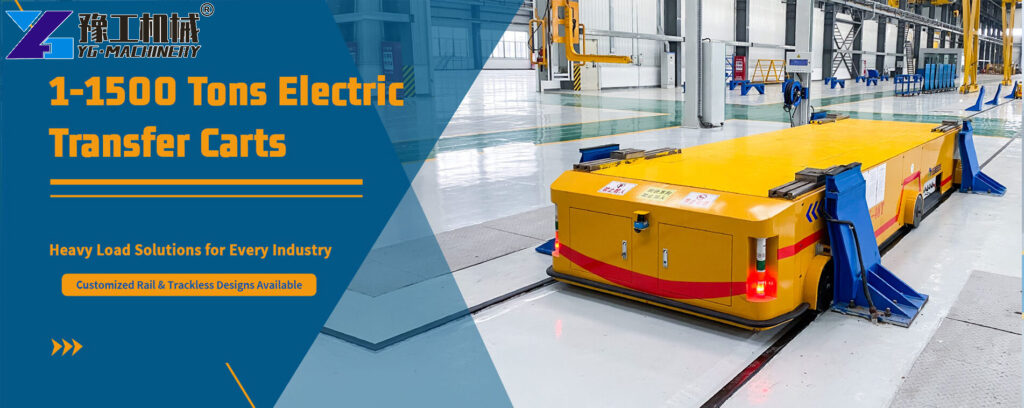
What is an Automated Guided Vehicle (AGV)?
An Automated guided vehicle (AGV) system utilizes a driverless mobile robot to transport goods or materials within a controlled environment without the need for a human operator. These material handling systems—also referred to as autonomous guided vehicles, self-guided vehicles, or mobile robots—are frequently employed in manufacturing facilities, warehouses, or distribution centers to streamline operations.
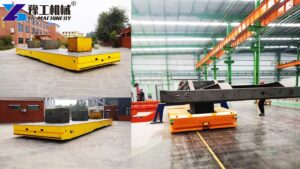
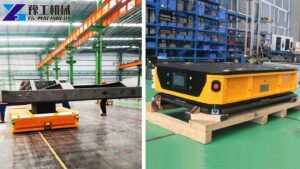
While traditional material handling systems like manual forklifts, conveyor lines, and fixed carts rely heavily on human labor or lack layout flexibility, automated guided vehicles (AGVs) provide a seamless, autonomous bridge from point A to point B. Depending on operational requirements, these vehicles range from compact automated guided carts (AGCs) to massive heavy-duty AGVs engineered to carry extreme industrial payloads weighing anywhere from 3 tons to over 100 tons.
Primary Use Cases for AGVs
Automated guided vehicles (AGVs) are deployed across diverse vertical sectors to streamline repetitive transport workflows. The primary deployment areas include:
- Transportation of Raw Materials: Moving raw components (such as metal coils, chemicals, plastics, and paper) safely from receiving docks directly to storage locations or production lines.
- Work-in-Process (WIP) Applications: Transporting partially completed products between different manufacturing workstations, ensuring a smooth, uninterrupted production cadence.
- Handling Finished Goods: Safely moving finished products from the end of the assembly line to storage zones or outbound shipping docks, minimizing the risk of product damage.
- Inbound and Outbound Handling: Managing warehouse operations, including stock replenishment and picking processes, acting similarly to an automated storage and retrieval system (AS/RS).
Boost Productivity—Get a Free Quote
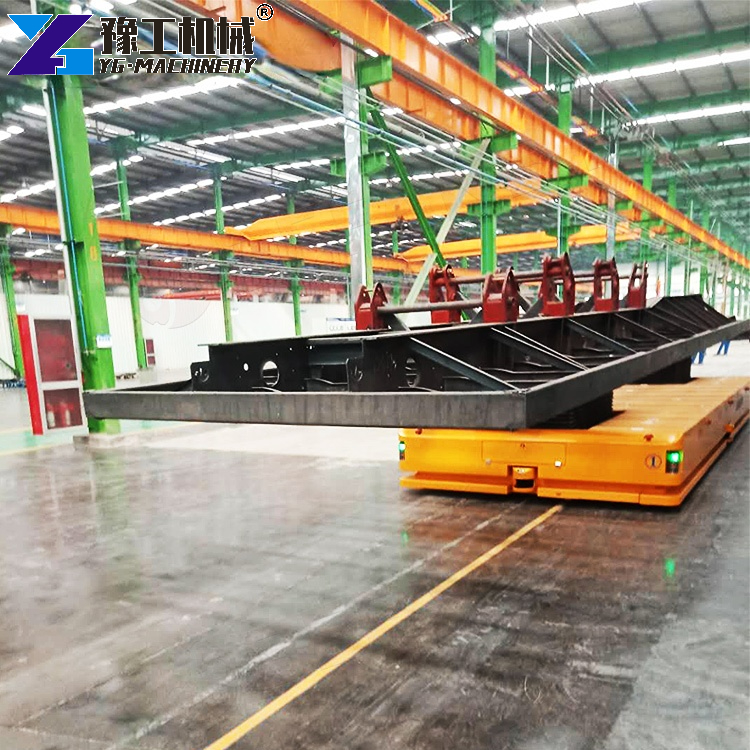
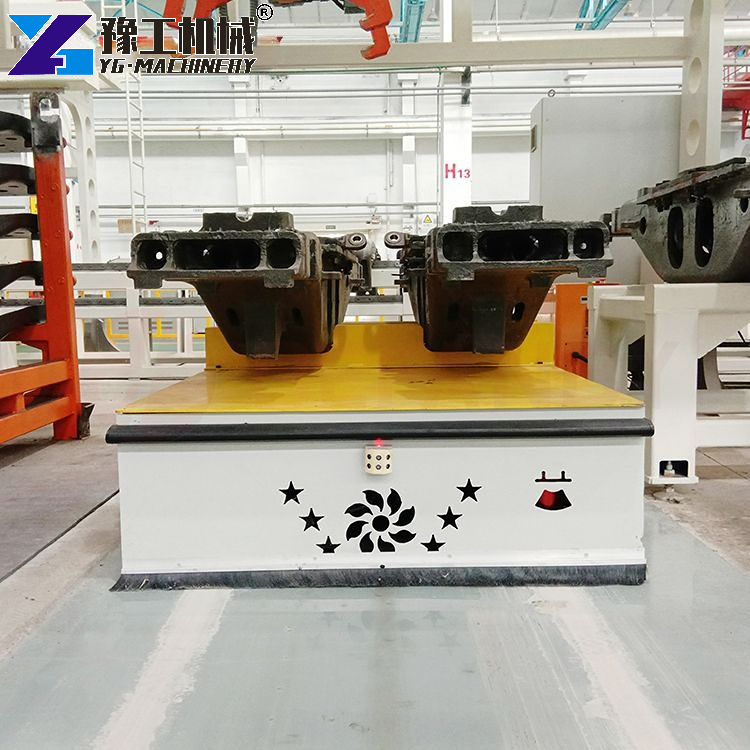
Common Applications for an AGV Robot
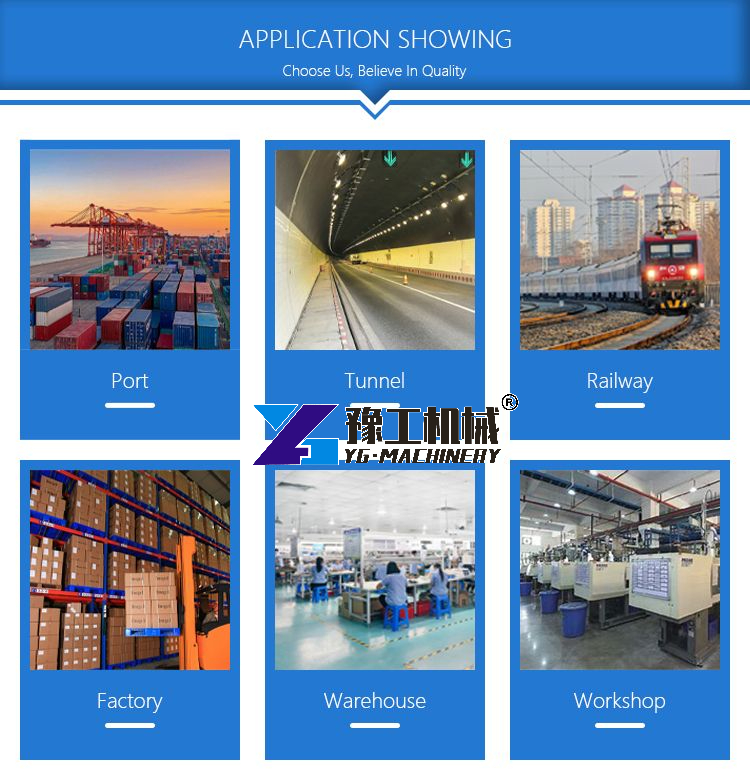
To summarize how these use cases translate across different sectors, an Automated guided vehicle (AGV) system is most commonly deployed within these key industries:
- Manufacturing: Essential for maintaining a lean workflow, handling assembly line support, cell-to-cell transfer, and raw material delivery.
- Warehousing and Distribution: Optimizing the movement of large pallets from long-term storage to active picking zones, cross-docking, and inbound/outbound logistics.
- Healthcare: Providing reliable, 24/7 transport for sensitive hospital logistics, including supply delivery, medication transport, and waste management.
- Food and Beverage: Operating in deep-freeze cold storage environments and hygiene-sensitive zones to prevent cross-contamination and ensure strict traceability.
- E-commerce and Retail Fulfillment: Handling high-speed parcel sorting and reverse logistics (processing returned goods) to meet next-day delivery demands.
- Paper and Heavy Industry: Utilizing specialized AGV Transfer Platform for multi-ton paper roll handling, heavy steel coil processing, and large structural transport.
Find the Right Model for Your Project
Different Types of AGVs
AGVs come in various structural configurations to match specific payload capacities and facility layouts:
- Automated Guided Carts (AGCs): The simplest form of Automated guided vehicles (AGVs), typically following magnetic tracks or floor wires to move smaller components, tools, or hospital supplies.
- Forklift AGVs: Replicating the functions of traditional manual forklifts, these autonomous trucks lift, stack, and retrieve pallets on racking systems or load/unload trailers.
- Unit Load AGVs: Equipped with flat platforms, decks, or roller conveyors designed to transport specific unit loads like single pallets, containers, or custom racks.
- Towing AGVs (Tuggers): Functioning like autonomous trains, tuggers pull multiple carts or trailers simultaneously, making them ideal for high-volume milk-run deliveries.
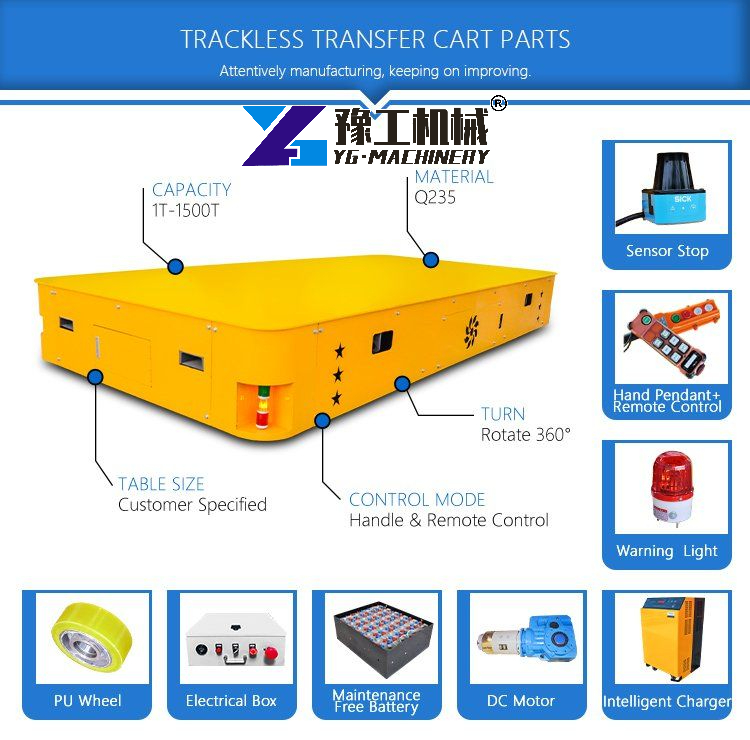
- Heavy Burden Carriers: Purpose-built heavy-duty automated guided vehicles (AGVs) designed for extreme industrial applications, featuring reinforced steel frames, multi-wheel steering, and omnidirectional mobility.
- Hybrid AGVs: Combining autonomous path-following capabilities with manual override controls, allowing human operators to take manual control when flexibility requires it.
AGV vs. AMR: Comprehensive Evaluation Matrix
Choosing between an automated guided vehicle (AGV) system and an AMR (Autonomous Mobile Robot) requires assessing cost, environment stability, and payload scope:
| Feature & Decision Criteria | AGV (Automated Guided Vehicle) | AMR (Autonomous Mobile Robot) |
| Primary Navigation Mode | Predefined Path (Magnetic tape, wires, laser reflectors, or fixed SLAM contours) | Free Navigation (Onboard maps, real-time LiDAR SLAM, and AI obstacle bypass) |
| Obstacle Protocol | Stops and waits until the path is cleared | Dynamically plans a new route around obstacles |
| Payload Capacity Range | Standard (500 kg – 1 ton) to Heavy-Duty (1 ton – 1500+ tons) | Typically lighter payloads (50 kg – 1.5 tons); limited heavy-payload capabilities |
| Infrastructure & Setup | Requires floor markers, laser reflectors, or fixed-path programming | Minimal infrastructure; builds digital maps during initial walk-through |
| Total Cost of Ownership (TCO) | Lower vehicle cost; highly cost-effective for fixed, high-volume long-haul runs | Higher initial unit cost; cost-effective for dynamic layouts with frequent route changes |
Safety Standards, Diagnostics & Maintenance Secrets (Exclusive Insights)
Beyond standard specs, evaluating international compliance standards and system maintenance is vital for zero-downtime operations:
1. International Industrial Safety Standards
Industrial deployment of heavy-duty automated guided vehicles (AGVs) must strictly conform to global safety frameworks to ensure human-robot coexistence:
- ISO 3691-4:2023: Specifies safety requirements and verification for driverless industrial trucks and their system integration.
- ANSI/ITSDF B56.5-2024: Defines safety requirements for design, operation, and maintenance of automatic guided industrial vehicles in North America.
2. Autonomous Energy & Fleet Management
Modern Automated guided vehicles (AGVs) use automated opportunity charging (opp-charging) via floor contact pads or wireless inductive charging. This removes manual battery-swapping rooms and ensures your fleet maintains nearly 100% duty cycles without human intervention.
3. Predictive Diagnostics via IoT Sensors
Integrating vibration, thermal, and current sensors directly into drive motors, gearboxes, and wheel bearings allows fleet software to trigger preventative maintenance alerts before unexpected breakdowns occur.
Advantages and Disadvantages of an AGV Robot System
- Advantages:
- Maximized Safety: Eliminates manual driving errors and collision hazards using multi-layer safety scanner fields.
- Continuous 24/7 Productivity: Operates reliably around the clock without fatigue or shift delays.
- Reduced Labor Overhead: Reallocates human labor from repetitive transport to higher-value technical roles.
- High Positioning Accuracy: Achieves millimeter-level docking precision when interfacing with automated production machinery.
- Disadvantages:
- Upfront Infrastructure Setup: Fixed-path setups require upfront installation of magnetic markers or optical reflectors.
- Fixed Path Constraints: Path modifications for traditional AGVs may require software remapping or marker repositioning.
Frequently Asked Questions (FAQ): Heavy-duty AGVs
AGV stands for Automated Guided Vehicle. It refers to a mobile, driverless robot used in manufacturing, warehousing, and distribution environments to move materials automatically without direct human control.
AGVs navigate using several technologies depending on operational needs:
Magnetic Guidance: Following magnetic tape or embedded floor wires.
Laser Triangulation: Using laser sensors that bounce signals off wall-mounted reflective targets.
Natural Navigation (LiDAR SLAM): Mapping the surrounding environment using LiDAR to navigate without physical floor modifications.
Optical & Vision Guidance: Utilizing cameras and visual markers placed along travel paths.
While standard warehouse AGVs handle payloads between 500 kg and 1,000 kg, heavy-duty automated guided vehicles (AGVs) are engineered for heavy industry and can carry payloads ranging from 1 ton to well over 1,500 tons (1,500,000 kg).
Modern AGVs typically utilize lithium-ion batteries that provide 8 to 14 hours of continuous operation per charge. Most industrial systems employ automated opportunity charging (charging at docking stations during idle periods or loading/unloading) or automated battery-swapping systems to maintain 24/7 continuous operation.
AGVs are built with multi-layered safety systems compliant with ISO 3691-4 and ANSI/ITSDF B56.5 standards. These include 360-degree LiDAR safety scanners, ultrasonic obstacle sensors, mechanical emergency stop bumpers, acoustic warning chimes, and automatic slowdown/stop zones when obstacles are detected.
Yes. Modern AGV fleets rely on Fleet Management Software (FMS) that integrates directly with Enterprise Resource Planning (ERP), Warehouse Management Systems (WMS), and Manufacturing Execution Systems (MES) via standard APIs for real-time task assignment, traffic control, and inventory tracking.