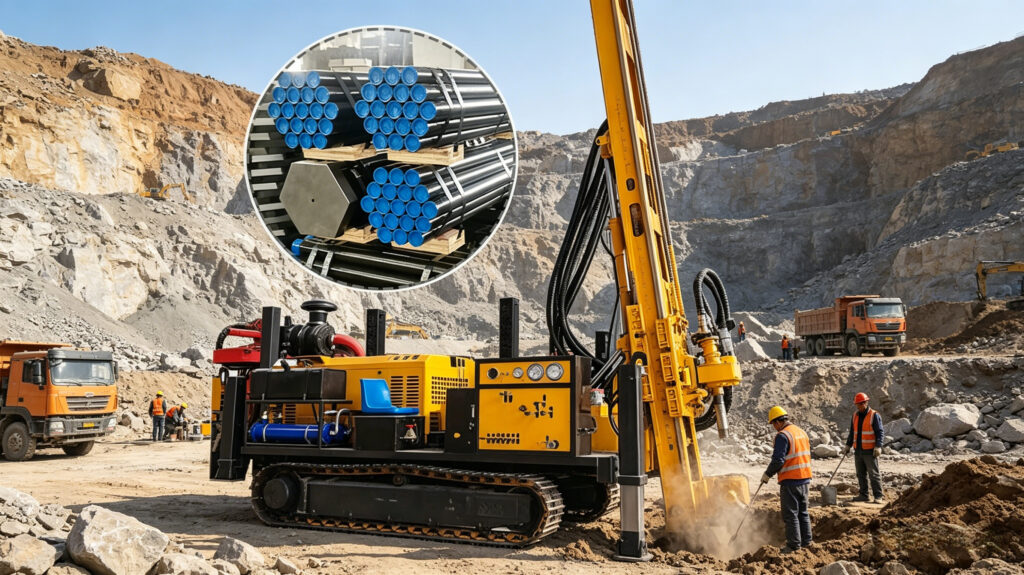
Accurate geological data and fast penetration rates are critical to reducing risks and costs in modern mining and exploration projects. A high-performance Reverse Circulation (RC) drilling rig delivers pristine, uncontaminated core samples at significantly higher speeds than conventional methods—even in challenging fractured rock and remote terrains.
Designed for heavy-duty exploration and deep-water well projects, YG Machinery’s RC rigs combine robust crawler mobility with precise hydraulic control to maximize operational efficiency and ROI.
💡 Looking for field-proven equipment for your next project? Explore our customer case studies or request a direct factory quote today.
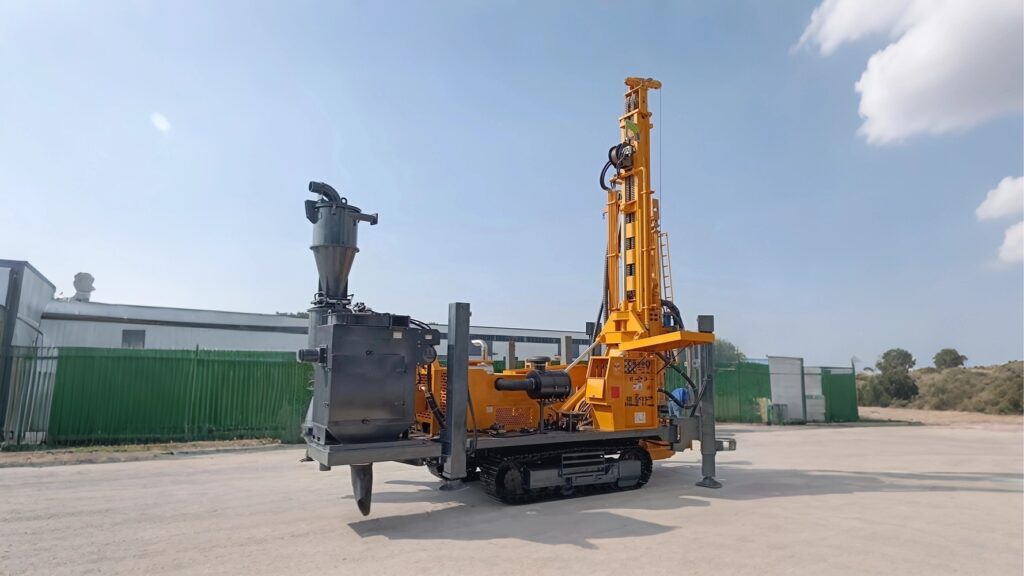
RC Rig High-Performance Overview
An RC rig is designed for reverse circulation drilling operations where sample accuracy and speed are critical. The system uses a dual-wall drill pipe structure that separates cuttings from the surrounding formation, reducing contamination and improving geological reliability.
In real working conditions, the system performs well in fractured rock, gravel layers, and mixed soil formations. Operators benefit from stable drilling progress, reduced sample loss, and improved depth control.
Key advantages include:
- Stable sampling quality in deep formations
- Reduced contamination risk during drilling
- Improved penetration efficiency in hard ground
- Lower downtime in continuous operation
RC Drilling Rig Structural Performance Features
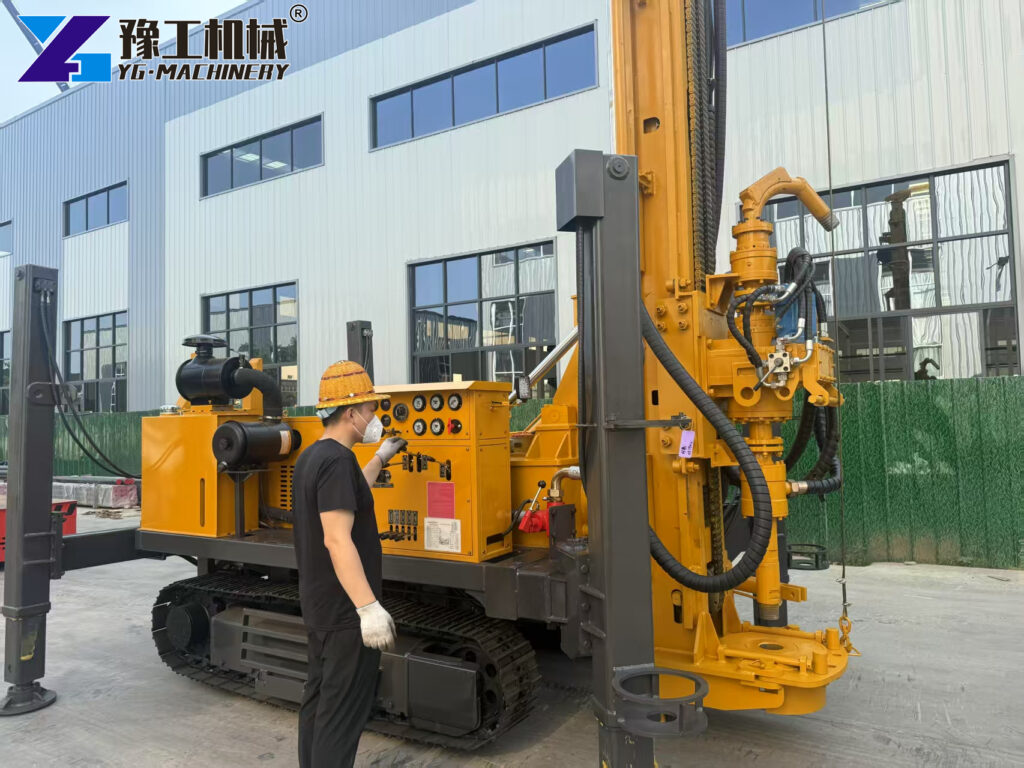
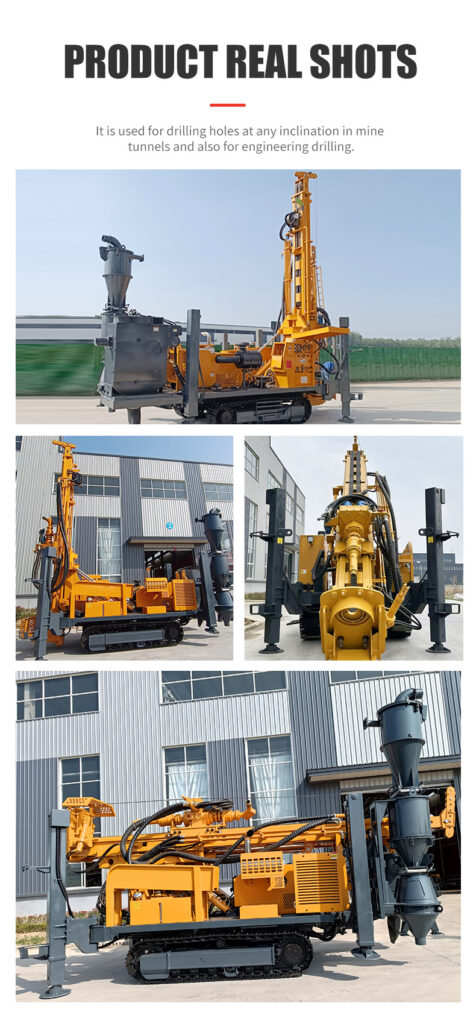
The machine adopts a reinforced crawler chassis designed for rough terrain mobility and long-term stability. Hydraulic transmission ensures smooth torque delivery and precise control during drilling operations.
Its structure improves balance during high-load drilling, reducing vibration and extending component lifespan. Operators can maintain consistent performance even in uneven ground conditions.
Additional advantages:
- Strong chassis stability for deep drilling
- Hydraulic system optimized for torque control
- Reduced mechanical wear under heavy load
- Easy operation in remote job sites
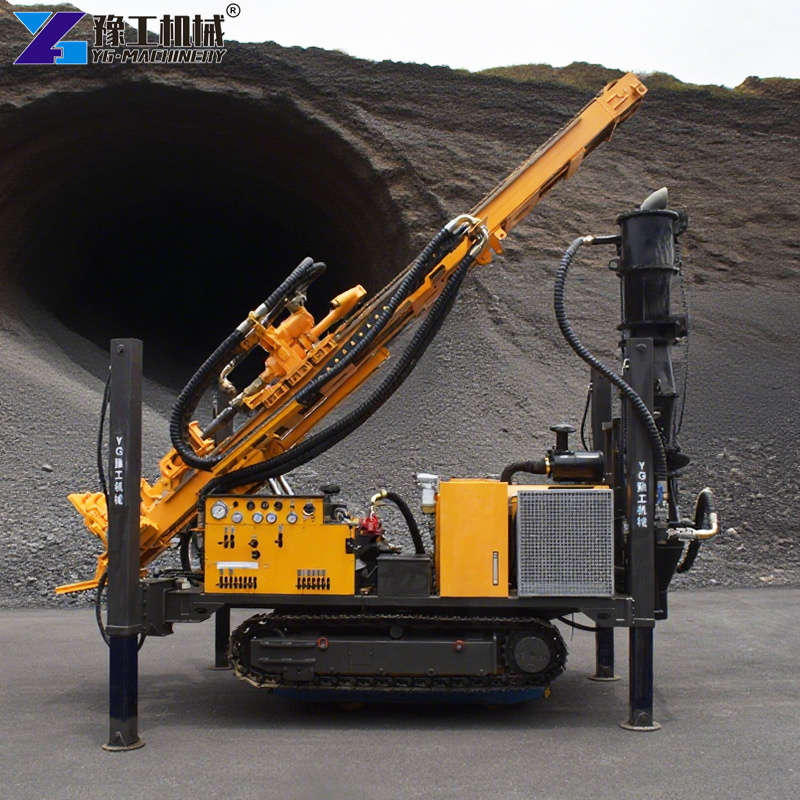
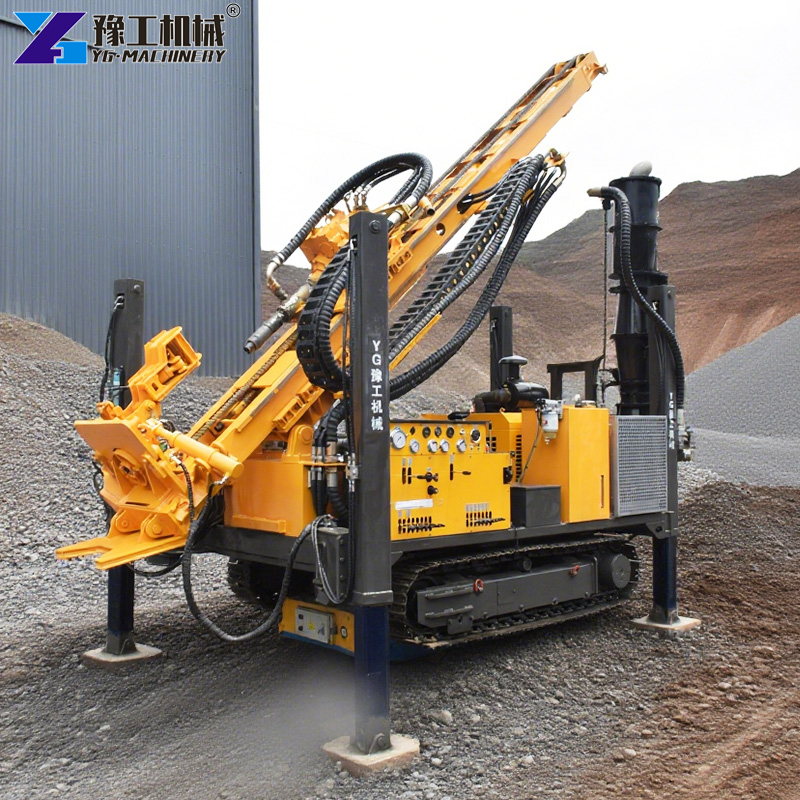
RC Drill Rig for Sale Technical Specifications
Model YG150RC is engineered for medium-depth drilling projects with strong adaptability and stable field performance.
| Item | Specification |
|---|---|
| Model | YG150RC |
| Weight (crawler mounted) | 9000 kg |
| Engine Power | 125 kW |
| Dimensions | 6750 × 2200 × 2950 mm |
| Temperature Range | -10~38 °C |
| Max Drilling Depth | 150 m |
| Hole Diameter | 110–250 mm |
| Drilling Angle | -10° to 90° |
| Output Torque | 8000 N.m |
| Rotation Speed | 30 / 60 rpm, 54 / 108 rpm |
| Feeding Stroke | 3500 mm |
| Thrust Force | 45 kN |
| Lifting Capacity | 65 kN |
| Pipe Puller Torque | 30000 N.m |
| Winch Pull Force | 11 kN |
| Rope Capacity | 60 m |
| Engine Model | Cummins 6BTA5.9-C125 |
| Travel Speed | 1.2 km/h |
| Climbing Ability | ≥20° |
Technical Notes:
- The hydraulic system ensures stable power output during continuous drilling cycles, reducing energy fluctuation under load.
- The Cummins engine provides strong torque support while maintaining fuel efficiency for long working hours.
- The crawler chassis is designed for low ground pressure, improving stability in soft soil or uneven terrain.
- Feeding and lifting systems are synchronized to improve drilling precision and reduce rod stress.
- Overall structure supports easier maintenance, helping reduce long-term operational downtime.
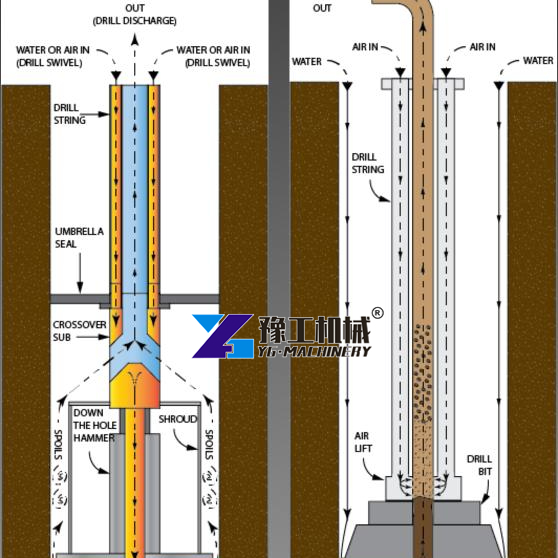
Reverse Circulation Drilling Rig Working Principle and Efficiency
A reverse circulation drilling rig operates by using compressed air to lift cuttings through an internal tube system. This design prevents mixing with surrounding materials and ensures high-quality sample recovery.
Compared with conventional drilling methods, it significantly improves drilling speed and sample clarity. The air circulation system maintains stable pressure, supporting continuous drilling in deep boreholes.
It is especially effective in:
- Mineral exploration drilling
- Geotechnical investigation projects
- Deep sampling in hard rock formations
RC Drilling vs. Conventional Drilling
| Feature / Comparison | Reverse Circulation (RC) Drilling | Conventional Mud/Air Drilling |
| Sample Transport Method | Inner tube via compressed air (no contact with borehole wall) | Outer borehole annulus (direct contact with wall) |
| Sample Contamination | Extremely Low (Pristine & reliable geological samples) | High (Cross-contamination from upper formations) |
| Penetration Speed (ROP) | Very Fast (Instant removal of heavy cuttings) | Moderate to Slow (Limited by fluid return rate) |
| Water Consumption | Minimal to None (Dry drilling using compressed air) | High (Requires large volume of drilling fluids/mud) |
| Cost Per Meter | Lower overall cost for exploration & deep sampling | Higher operational & mud fluid costs |
| Geological Suitability | Excellent in fractured rock, gravel & hard formations | Prone to loss of circulation in porous/fractured rock |
Compare Models and Get a Quote
RC Rig Operational Safety and Control System
The RC rig adopts a fully integrated hydraulic and electronic control system to ensure stable operation in complex geological environments. Safety is not treated as an auxiliary function but as a core design principle across the entire drilling process.
To improve field safety and operational stability, the system includes multiple protection layers:
- Overload protection that automatically adjusts or stops drilling when resistance exceeds safe limits
- A hydraulic pressure balancing system to reduce sudden impact loads during deep drilling
- Emergency stop function positioned for quick operator access in critical situations
- Real-time monitoring panel displaying torque, pressure, and rotation status
The control interface is designed to reduce operator workload. Even in long continuous drilling cycles, operators can maintain precise control over feed pressure, rotation speed, and torque without excessive manual adjustment. This reduces human error and improves drilling consistency.
In addition, vibration reduction design protects key components such as the rotary head and mast structure. This is particularly important in fractured rock or uneven formations where sudden resistance changes are common. The result is safer operation, longer equipment lifespan, and more stable borehole quality.
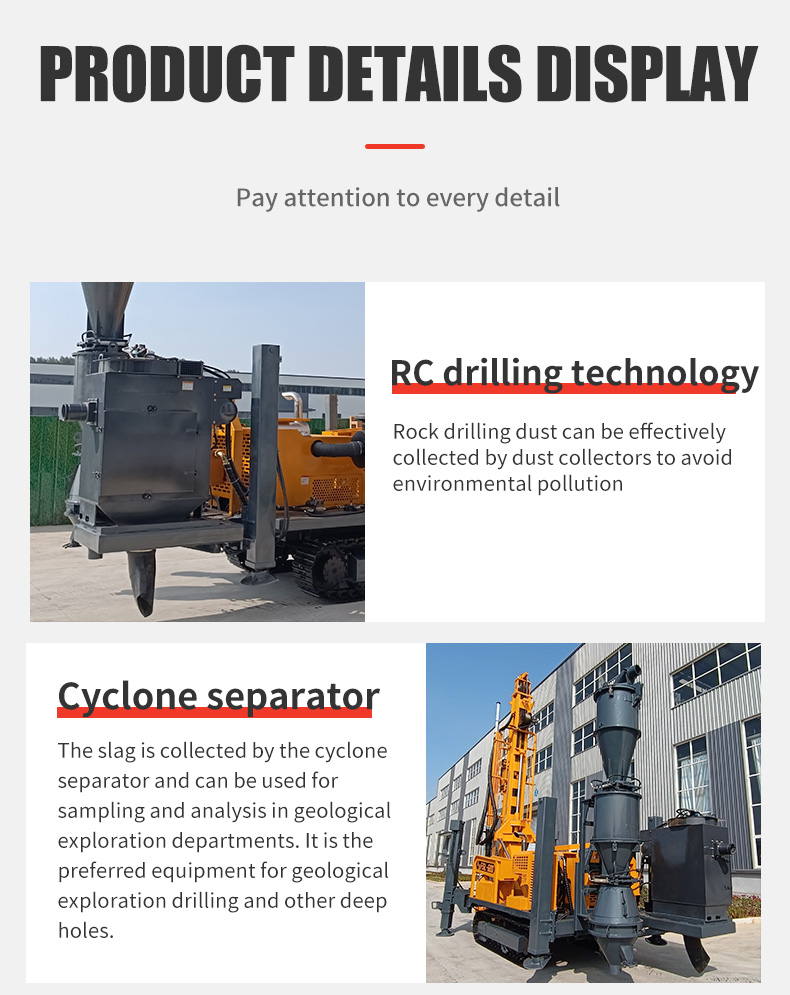
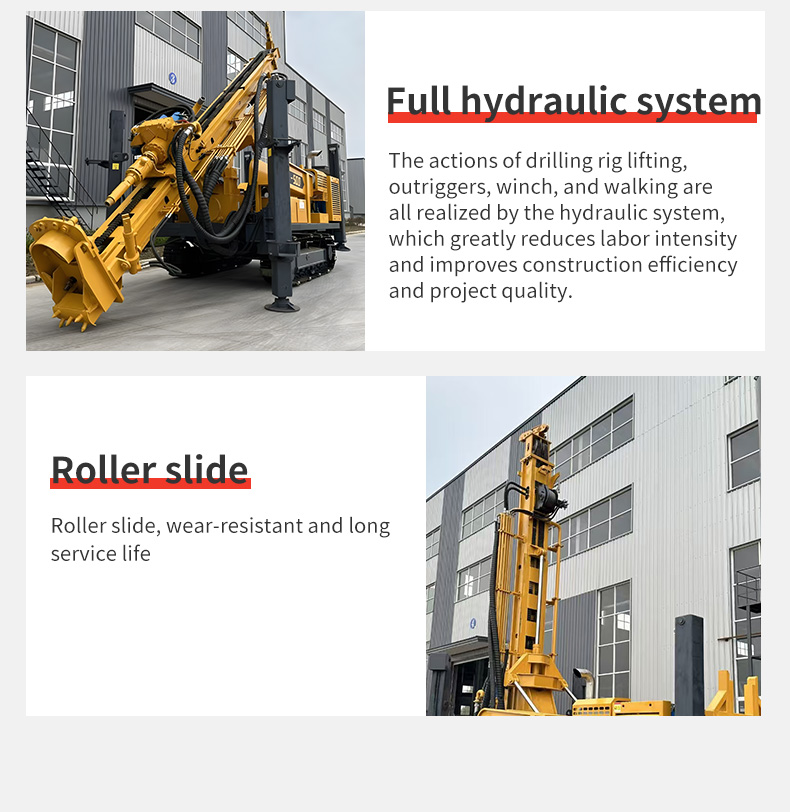
RC Drilling Rig Energy Efficiency and Field Productivity
The RC rig is engineered to balance strong drilling power with optimized fuel consumption. In modern drilling projects, fuel efficiency directly affects project profitability, especially in long-term exploration operations.
Key energy optimization features include:
- Cummins high-efficiency engine with stable power output
- A load-sensing hydraulic system that adjusts energy use based on demand
- Reduced idle energy consumption during non-drilling cycles
- Optimized torque transmission to minimize mechanical energy loss
These systems work together to ensure that energy is used only when required, rather than maintaining constant high consumption levels. This significantly reduces operating costs in large-scale drilling projects.
From a productivity perspective, the machine maintains stable penetration rates even in hard rock formations. Operators benefit from:
- Continuous drilling with fewer interruptions
- Faster hole completion in medium-depth projects
- Reduced downtime caused by overheating or hydraulic instability
- Improved efficiency per meter drilled
In real field conditions, this combination of energy efficiency and stable performance helps contractors complete more drilling work within the same operational budget, improving overall project ROI.
Reverse Circulation Drilling Rig Manufacturer: YG Machinery
YG Machinery has become a trusted supplier in international drilling markets by focusing on reliability, engineering precision, and long-term service capability. Buyers choose the company not only for equipment performance but also for full-cycle project support.
Before shipment, each RC rig undergoes strict quality testing:
- Full hydraulic system pressure testing
- Continuous load simulation under working conditions
- Engine performance verification under field-equivalent stress
- Structural stability inspection for the crawler and mast system
This ensures every unit is ready for direct deployment after arrival.
Beyond manufacturing quality, YG Machinery provides complete global support:
- Pre-sales technical consultation based on project requirements
- Installation and commissioning guidance for overseas customers
- Remote troubleshooting support during field operation
- Long-term spare parts supply chain availability
Customization is another key advantage. Machines can be adapted based on:
- Required drilling depth and diameter
- Geological conditions of target regions
- Mobility and terrain requirements
- Project-specific power and torque needs
This flexibility ensures customers do not receive a generic machine, but a solution tailored to real working conditions. For many global contractors, this reduces risk and improves long-term operational stability.
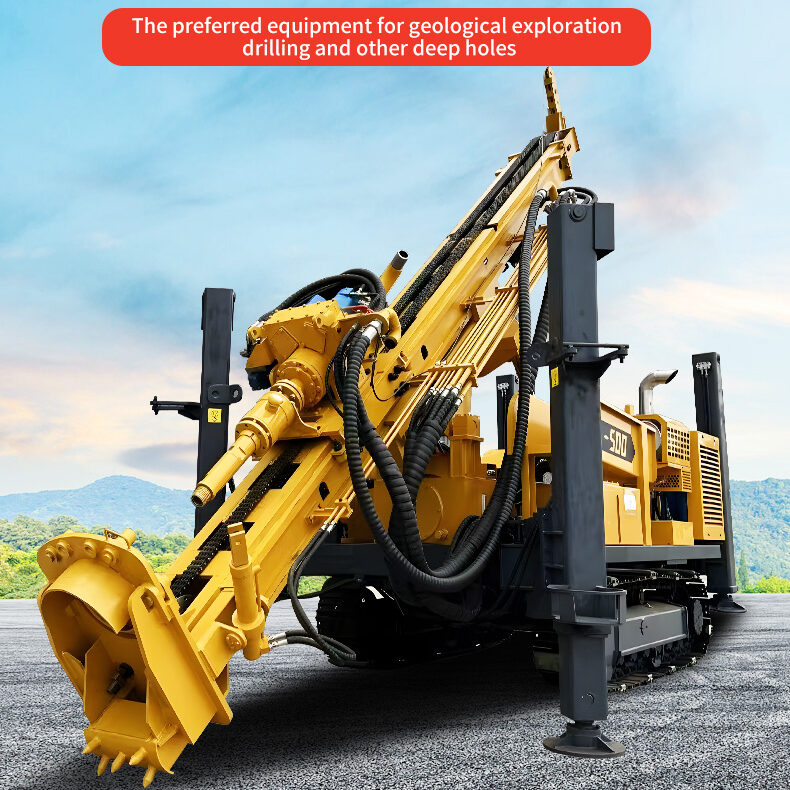
RC Drill Rig for Sale: Application Scenarios
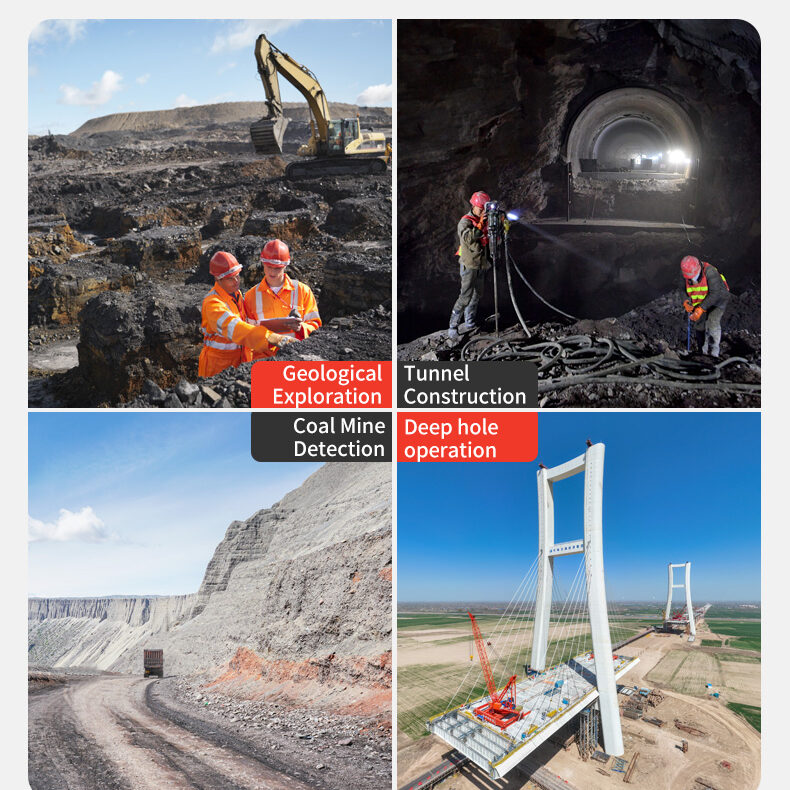
It is widely applied across industries that require accurate subsurface sampling and stable drilling performance in complex environments.
Main application fields include:
- Mineral exploration
Used for ore body detection and sampling in mining development projects, ensuring high-quality geological data with minimal contamination. - Geotechnical investigation
Supports foundation design for infrastructure such as highways, bridges, and industrial buildings by analyzing soil and rock conditions. - Water well drilling
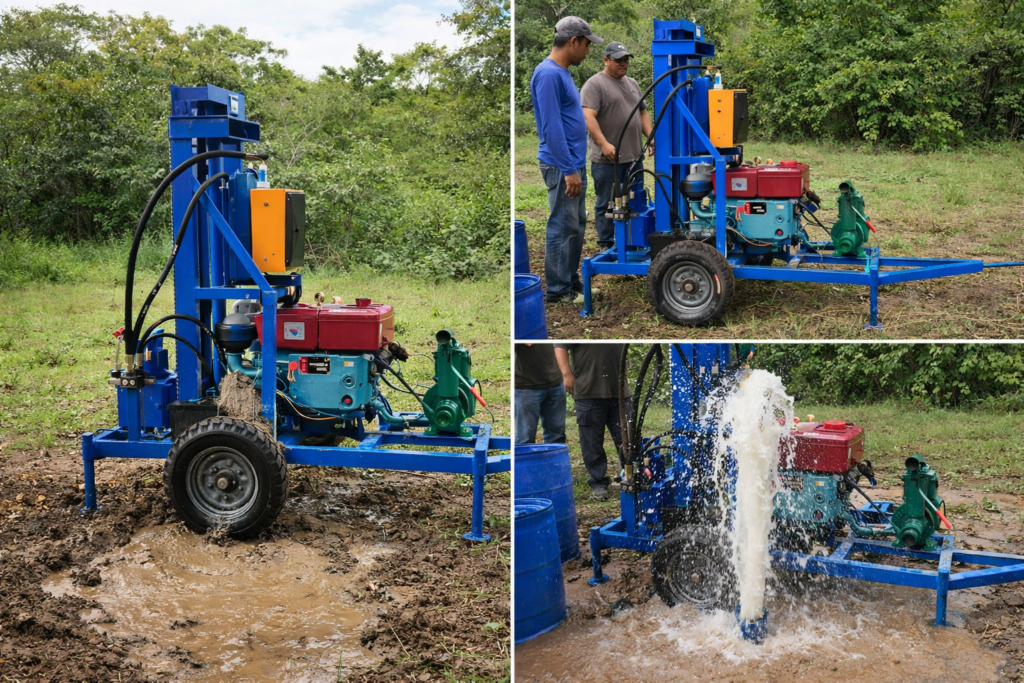
Suitable for groundwater extraction projects in rural and remote areas, maintaining stable borehole integrity in variable formations. - Coal and energy exploration
Helps identify underground resource layers with reliable sampling accuracy in deep drilling environments. - Environmental and geological surveys
Used for soil analysis, contamination studies, and subsurface research projects.
The system performs particularly well in:
- Rocky and fractured formations
- Mixed soil and gravel layers
- Remote or uneven terrain sites
- Medium-depth drilling environments
Its adaptability allows contractors to use a single machine across multiple project types, reducing equipment investment costs while improving operational flexibility.
RC Rig Decision Guide For Buyers
Choosing the right RC rig requires evaluating both technical requirements and long-term operational goals. A structured decision process helps ensure better investment outcomes.
Key selection factors include:
- Drilling depth requirements
Medium-depth projects can be efficiently handled by models like YG150RC, while deeper exploration requires higher-spec systems. - Geological conditions
Hard rock formations require higher torque and stronger penetration force, while loose formations prioritize stability and pressure control. - Project mobility needs
Crawler-mounted systems are ideal for remote or uneven terrain where transportation and setup flexibility are critical. - Operational efficiency targets
Buyers should evaluate penetration speed, fuel consumption, and downtime risk rather than focusing only on purchase price. - Maintenance and service access
Equipment with a modular design and accessible components reduces downtime and simplifies field servicing.
A practical evaluation approach includes:
- Estimating total drilling depth per project cycle
- Identifying dominant soil or rock conditions
- Calculating expected cost per meter drilled
- Assessing spare parts availability and support response time
By focusing on total lifecycle performance rather than initial cost, buyers can achieve higher return on investment and more stable long-term operation results.
FAQs About Reverse Circulation Drilling Rig
It separates cuttings internally, improving sampling accuracy and drilling speed.
Yes, it is designed for complex geological conditions, including hard rock.
It supports medium-depth drilling up to 500 meters, depending on configuration.
Yes, crawler mobility allows stable operation in rough terrain.
The modular structure simplifies maintenance and reduces downtime.