Project Summary
| Item | Details |
|---|---|
| Project Location | Monterrey, Mexico |
| Customer Type | Rubber products manufacturer |
| Equipment | ⭐ 300-Ton Rubber Curing Press |
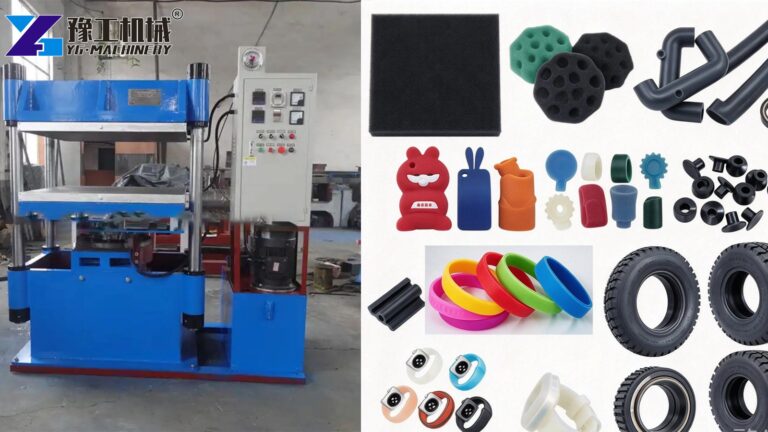
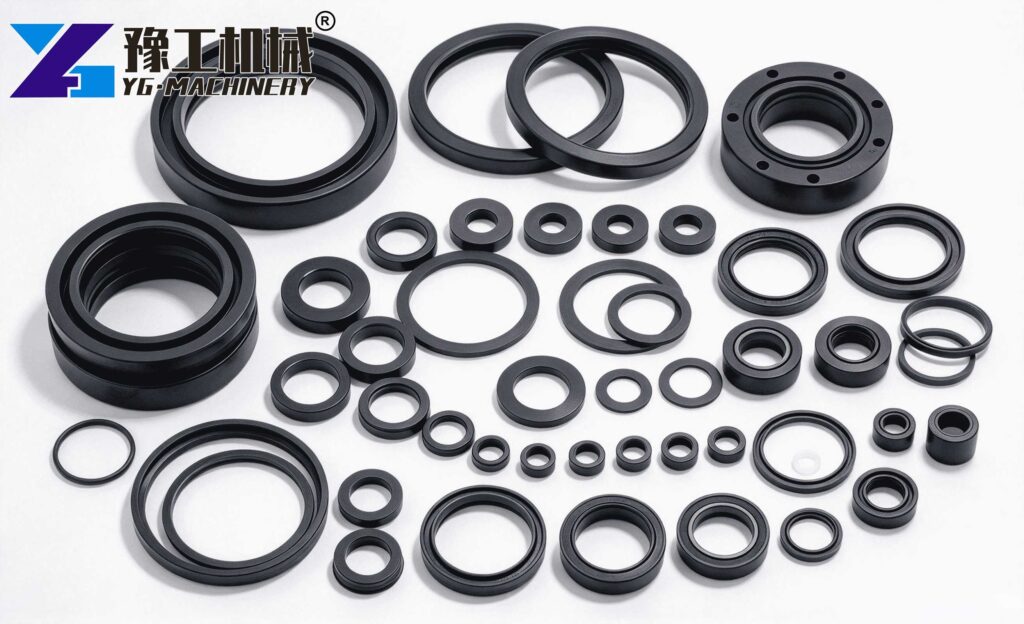
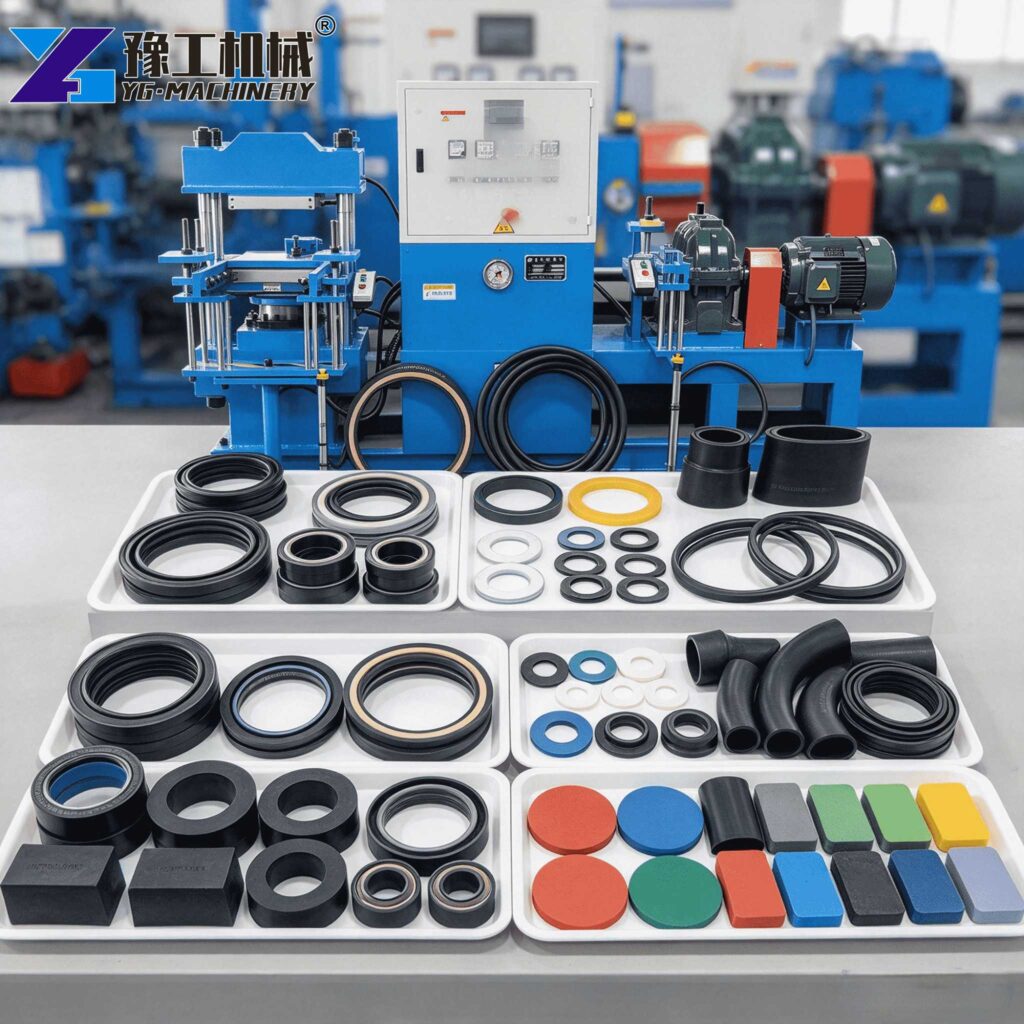
| Main Application | Rubber mats, industrial seals, molded rubber components |
| Total Pressure | 300 Ton |
| Plate Size | 600×600 / 650×650 mm |
| Gap | 300–350 mm |
| Motor Power | 7.5 × 2 kW |
| Machine Weight | 13,500 kg |
| Customer Goal | Increase production capacity and improve product consistency |
| Installation Support | Remote commissioning and operator training |
| Project Result | Stable production with improved molding efficiency |
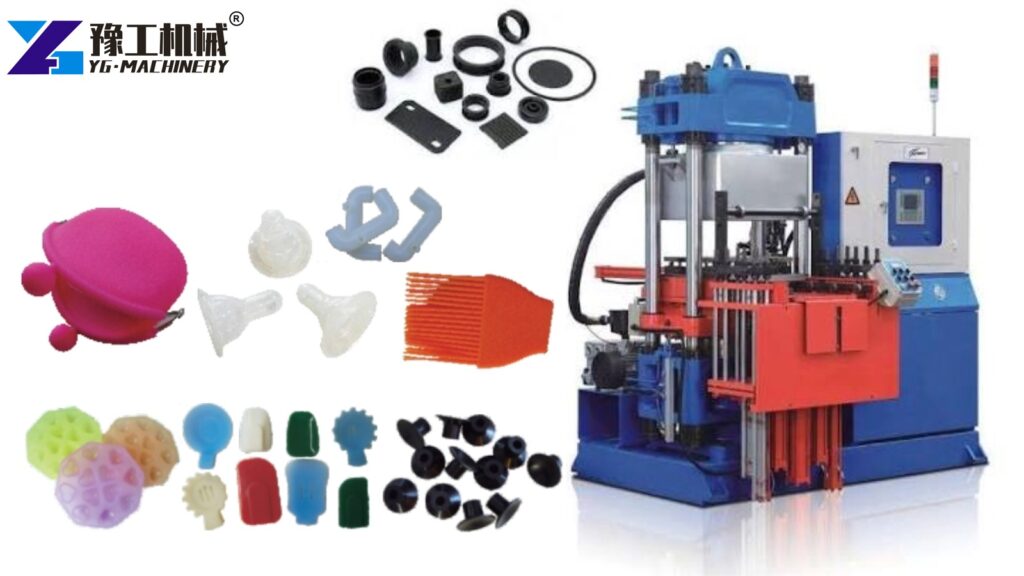
In early 2026, a rubber products manufacturer from Monterrey, Mexico, purchased a rubber curing press from YG Machinery to expand its production capacity for industrial rubber components. After comparing several equipment options, the customer selected the 300 Ton model, featuring dual 7.5 kW hydraulic motors, 600×600 mm / 650×650 mm heating plates, and a 300–350 mm working gap.
The company specialized in manufacturing rubber mats, sealing products, vibration pads, and molded industrial components supplied to construction equipment distributors and automotive parts manufacturers. As customer orders continued to increase, the existing production line could no longer meet delivery schedules during peak production periods.
Instead of simply purchasing a larger machine, the customer wanted equipment that could improve production efficiency while maintaining stable molding quality. Plate size, hydraulic pressure, heating uniformity, and production cycle time became the primary considerations during equipment selection.
After several rounds of technical discussions and an online engineering meeting, YG Machinery recommended the 300 Ton rubber curing press based on product dimensions, mold quantity, workshop layout, and future production plans. The equipment entered production successfully after installation and became one of the factory’s primary vulcanization machines.
Mexico remains one of North America’s important manufacturing centers for automotive, industrial, and rubber products. Continuous investment in vehicle production and industrial manufacturing has increased demand for reliable Rubber Processing Machinery, making efficient vulcanization equipment an important part of modern rubber manufacturing facilities.
Start Your Project with the Right Equipment
Understanding The Customer’s Requirements
The technical discussion focused on production consistency instead of pressing force alone. Every rubber manufacturer produces different products with unique dimensions, material formulations, and molding cycles. Selecting the proper equipment required understanding the customer’s complete production process rather than recommending the highest-tonnage machine.
The Mexican manufacturer mainly produced industrial rubber mats, sealing components, anti-vibration pads, and molded rubber parts for construction equipment suppliers and automotive component distributors. Product sizes varied throughout the year according to customer orders, requiring flexible production while maintaining consistent product quality.
Several operating requirements became clear during the engineering meeting.
- Stable hydraulic pressure
- Uniform heating performance
- Short production cycles
- Easy mold replacement
- Reliable continuous operation
- Simple daily maintenance
- Low energy consumption
- Future production expansion
The customer also emphasized product consistency. Uneven pressure or temperature distribution could cause incomplete vulcanization, dimensional variation, or surface defects. Improving production stability was therefore more important than simply increasing output.
Another important consideration involved mold compatibility. The factory already owned several mold sets that needed to fit the new press without major modifications. Plate dimensions, daylight opening, and stroke length all required careful verification before finalizing the equipment specification.
After evaluating every production requirement, YG Machinery recommended the 300 Ton rubber curing press, which provided the best balance between hydraulic performance, production flexibility, and operating efficiency.
Why The Customer Selected The Equipment
Following the engineering evaluation, YG Machinery prepared a complete comparison covering hydraulic pressure, plate dimensions, motor power, operating costs, and future production capacity. Rather than recommending the largest press, both engineering teams focused on selecting equipment that matched the customer’s existing production line.
The customer initially considered the 400 Ton model because of its larger heating plates. However, production records showed that most rubber products could be manufactured efficiently using 600 × 600 mm and 650 × 650 mm molds. Purchasing a larger press would increase investment costs and electricity consumption without providing significant production advantages.
The selected 300 Ton model offered several practical advantages.
- 300 Ton total pressure
- 600 × 600 mm heating plate
- Optional 650 × 650 mm plate
- 300–350 mm daylight opening
- 450 mm piston diameter
- 300 mm piston stroke
- Dual 7.5 kW hydraulic motors
- 13,500 kg machine weight
The customer also appreciated the hydraulic control system. Stable pressure throughout the curing cycle helped improve product consistency while reducing defective products caused by pressure fluctuations.
Another important advantage involved mold flexibility. Existing molds could be installed immediately after delivery, allowing production to begin without additional tooling investment.
After reviewing the engineering proposal, projected operating costs, and production capacity, the customer approved the final configuration and confirmed the manufacturing schedule.
Boost Productivity—Get a Free Quote
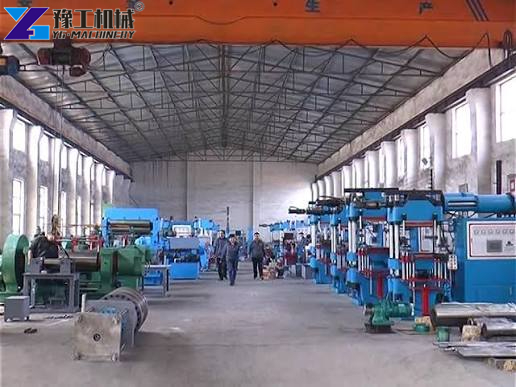
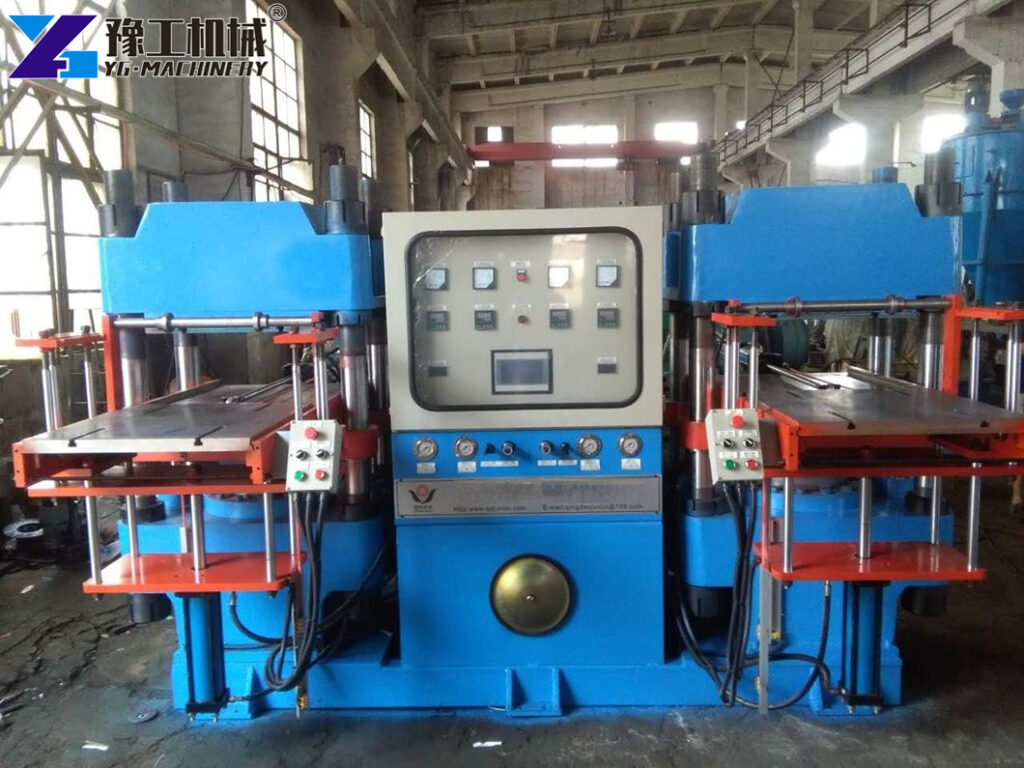
Hydraulic Rubber Curing Press Machine Solution
Before production began, YG Machinery organized another online engineering meeting to finalize every technical detail. Since the equipment would operate continuously in a multi-shift manufacturing environment, several practical modifications were incorporated into the final design.
The customer requested bilingual operating labels, additional hydraulic sealing kits, spare heating elements, and a complete maintenance toolkit. These spare components would help minimize production interruptions during routine maintenance.
The final delivery package included:
- 300 Ton rubber curing press
- Hydraulic power unit
- Electrical control cabinet
- Heating plate system
- Spare hydraulic seals
- Maintenance toolkit
- English operation manual
- Factory testing report
YG Machinery also supplied complete technical documentation covering hydraulic system maintenance, heating temperature adjustment, mold installation, electrical connection, lubrication schedules, daily inspection, and troubleshooting procedures. These documents allowed the customer’s maintenance team to prepare the production workshop before equipment arrival.
Although the project centered on a Hydraulic Rubber Curing Press Machine, the engineering discussion also covered future expansion. The customer planned to add another production line within two years, making equipment compatibility an important consideration during machine selection.
After receiving customer approval for every technical detail, production officially entered the manufacturing schedule. The machining, welding, hydraulic assembly, electrical installation, quality inspection, and testing departments worked together to complete the equipment according to the agreed delivery timeline.
Rubber Curing Press Technical Specifications
After evaluating production volume, mold dimensions, and investment costs, the Mexican customer selected the ⭐300 Ton Rubber Curing Press. This model provided sufficient pressing force for medium-sized rubber products while maintaining stable hydraulic performance and efficient production cycles.
The following table compares the complete YG Machinery rubber curing press series.
| Parameter | 150 Ton | 200 Ton | 250 Ton | ⭐300 Ton (Mexico Project) | 350 Ton | 400 Ton | 500 Ton |
|---|---|---|---|---|---|---|---|
| Total Pressure (T) | 150 | 200 | 250 | 300 | 350 | 400 | 500 |
| Plate Size (mm) | 380×380 / 400×400 | 503×508 / 560×560 | 600×600 / 600×650 | 600×600 / 650×650 | 700×700 / 700×750 | 800×800 / 850×850 | 1000×1000 / 1200×1000 |
| Gap (mm) | 250–300 | 250–350 | 300–350 | 300–350 | 300–350 | 300–400 | 300–400 |
| Piston Diameter (mm) | 300 | 360 | 400 | 450 | 475 | 500 | 560 |
| Piston Stroke (mm) | 250 | 250 | 300 | 300 | 300 | 300 | 300 |
| Cover Stroke (mm) | 200 | 250 | 250 | 250 | 250 | 300 | 300 |
| Motor Power (kW) | 4 × 2 | 7.5 × 2 | 7.5 × 2 | 7.5 × 2 | 11 × 2 | 11 × 2 | 11 × 2 |
| Weight (kg) | 6,500 | 9,000 | 11,500 | 13,500 | 17,000 | 22,500 | 30,000 |
Compare Models and Get a Quote
Why The Mexican Customer Chose The 300 Ton Model
Before placing the order, the customer compared the 250 Ton, 300 Ton, and 400 Ton models. Although the 400 Ton machine offered a larger working area, most existing molds were designed for 600 × 600 mm heating plates. Purchasing a larger press would increase investment while providing little additional production value.
The 300 Ton model provided the best balance between production flexibility and operating cost.
Its 300 Ton hydraulic pressure ensured stable compression during every curing cycle. The 600 × 600 mm and 650 × 650 mm plate options matched the customer’s existing molds, eliminating additional tooling expenses.
Another important advantage involved hydraulic stability. The 450 mm piston diameter and 300 mm piston stroke maintained consistent pressure throughout vulcanization, helping reduce dimensional variation and improving finished product quality.
The customer also appreciated the dual 7.5 kW hydraulic motors. This configuration provided sufficient power for continuous multi-shift production while maintaining reasonable electricity consumption.
Rubber Processing Machinery Production Solution
Before manufacturing officially began, YG Machinery worked closely with the customer’s engineering team to verify every production detail. Besides confirming machine specifications, both sides reviewed mold dimensions, production cycle times, workshop layout, hydraulic connections, and electrical requirements.
Because the equipment would become part of an existing production line, compatibility received special attention throughout the engineering process.
The final delivery package included:
- 300 Ton rubber curing press
- Hydraulic power station
- Electrical control cabinet
- Heating plate assembly
- Hydraulic sealing kit
- Spare electrical components
- Maintenance toolkit
- English operation manual
YG Machinery also prepared detailed technical documents covering hydraulic system inspection, heating temperature adjustment, pressure calibration, lubrication schedules, preventive maintenance, and troubleshooting procedures. These documents enabled the customer’s maintenance department to prepare before installation.
As part of the complete Rubber Processing Machinery solution, engineers also reviewed future production expansion plans. The equipment layout reserved sufficient operating space, allowing additional curing presses to be installed without major factory reconstruction.
After confirming every configuration item, production officially entered manufacturing. Machining, welding, hydraulic assembly, electrical installation, painting, quality inspection, and performance testing were completed according to the agreed delivery schedule.
Manufacturing, Inspection, And Export Preparation
After confirming the final design, YG Machinery arranged production according to the customer’s delivery timeline. Since the rubber curing press integrates hydraulic, electrical, mechanical, and heating systems, every manufacturing stage followed strict quality control procedures.
Before assembly, technicians inspected every major component individually. Hydraulic cylinders, pistons, heating plates, hydraulic pumps, motors, electrical cabinets, control systems, and steel frames all completed dimensional and functional inspections before entering final assembly.
The inspection process included:
- Hydraulic pressure testing
- Heating plate inspection
- Cylinder sealing verification
- Electrical system testing
- Hydraulic pipeline inspection
- Temperature control verification
- Safety protection testing
- Frame dimensional inspection
Only qualified components entered the assembly line.
After assembly, engineers performed comprehensive factory testing. The machine completed pressure testing, heating uniformity inspection, hydraulic leakage testing, temperature stability verification, electrical safety testing, continuous operation testing, and emergency stop verification.
Before shipment, the Mexican customer attended an online Factory Acceptance Test (FAT). During the live inspection, YG Machinery demonstrated pressure buildup, mold opening and closing, heating performance, hydraulic stability, control panel operation, and routine maintenance procedures. The customer also verified machine dimensions, spare parts, export documents, and serial numbers before approving shipment.
Find the Right Model for Your Project
Shipping And Delivery To Mexico
After the Factory Acceptance Test, YG Machinery transferred the equipment to the export department for shipment preparation. Since the rubber curing press weighed 13,500 kg, careful packaging and loading were essential to ensure safe transportation during the ocean voyage to Mexico.
Before loading, technicians secured the hydraulic cylinder, moving platen, and electrical cabinet with transport supports. Hydraulic pipelines were protected with sealing caps to prevent contamination, while exposed metal surfaces received anti-rust treatment suitable for long-distance marine transportation.
Export preparation included:
- Anti-rust protection
- Hydraulic system sealing
- Reinforced steel frame fixation
- Electrical cabinet protection
- Spare parts packaging
- Export-standard documentation
The complete equipment was loaded together with spare hydraulic seals, maintenance tools, electrical drawings, hydraulic schematics, and the English operation manual. Every accessory was packed separately for convenient installation after arrival.
After container loading, YG Machinery shared packing photographs, loading records, shipping documents, and vessel schedules with the customer. Throughout transportation, both companies maintained regular communication regarding customs clearance and estimated arrival dates. The shipment arrived at the Port of Veracruz according to schedule, allowing the factory to prepare for installation before production resumed.
Installation, Training, And Commissioning
After customs clearance, the rubber curing press was transported directly to the customer’s manufacturing facility in Monterrey. Before arrival, the customer had already completed the concrete foundation, electrical wiring, and hydraulic oil preparation according to the installation drawings provided by YG Machinery.
Because of the machine’s weight, the customer used an overhead crane to position the equipment accurately on the prepared foundation. YG Machinery engineers provided remote technical support throughout installation, ensuring every step followed the recommended procedures.
Training emphasized practical production rather than theoretical explanations. Most operators already had experience working with conventional vulcanizing presses, allowing them to become familiar with the new hydraulic control system quickly.
Training covered the following topics:
- Machine startup procedures
- Hydraulic pressure adjustment
- Temperature setting
- Mold installation
- Daily inspection
- Lubrication schedule
- Routine maintenance
- Emergency shutdown
After installation, engineers supervised several trial production cycles using the customer’s existing molds. Operators adjusted curing pressure, heating temperature, holding time, and mold opening speed according to different rubber compounds.
The equipment completed continuous trial production successfully before entering normal manufacturing.
First Rubber Vulcanization Machine Production Project
The first production order involved manufacturing industrial rubber pads supplied to local construction equipment distributors. The products required stable dimensions, smooth surfaces, and consistent hardness throughout every production batch.
Before installing the new equipment, the factory operated several aging presses with inconsistent hydraulic pressure and uneven heating performance. Production interruptions became increasingly common, affecting delivery schedules during busy periods.
The new Rubber vulcanization machine immediately improved the production process.
During the first month of operation, supervisors reported several practical improvements.
- More stable molding pressure
- Better product consistency
- Shorter production cycles
- Lower rejection rates
- Easier mold replacement
- Improved production planning
The hydraulic system maintained stable pressure throughout the curing cycle, while the heating plates distributed temperature more evenly across the mold surface. These improvements helped reduce dimensional variation between production batches.
The customer also appreciated the machine’s control system. Operators could adjust curing parameters quickly when changing between different rubber products, reducing setup time between production orders.
Long-Term Operating Results And Customer Feedback
Approximately six months after commissioning, YG Machinery conducted a routine follow-up with the customer. During that period, the 300 Ton rubber curing press had supported continuous production of industrial rubber mats, sealing products, anti-vibration components, and molded rubber parts.
Routine maintenance proved straightforward. Operators mainly inspected the hydraulic oil, seals, cylinders, heating plates, electrical cabinet, and lubrication points according to the recommended maintenance schedule. Preventive servicing required minimal production downtime.
According to the factory’s production records, several measurable improvements became evident after months of operation.
- Higher production efficiency
- Improved product consistency
- Lower rejection rates
- Stable hydraulic performance
- Reduced maintenance interruptions
- Better delivery performance
The production manager summarized the machine’s performance after several months of operation.
“Hydraulic pressure remains stable throughout every production cycle.”
The maintenance supervisor also highlighted another practical advantage.
“Routine maintenance requires very little production downtime.”
The factory owner shared another observation.
“The new press helped us increase capacity without expanding the workshop.”
These comments reflected actual production experience instead of promotional language. For the customer, the greatest benefits came from stable hydraulic performance, reliable product quality, lower operating costs, and the flexibility to support future production expansion.
Why Choose YG Machinery?
Every rubber manufacturing project has different production requirements. Product size, mold dimensions, production capacity, and curing processes all influence equipment selection. YG Machinery helps customers choose the right rubber curing press based on their actual production needs rather than simply recommending a larger model.
From equipment selection and factory testing to installation and technical support, our engineering team provides practical assistance throughout the project.
Tell us your product type, mold size, production capacity, and destination country. We will recommend a suitable model and provide technical specifications, a factory quotation, and a delivery schedule for your project.
Frequently Asked Questions About Hydraulic Vulcanizing Machines
The machine is suitable for producing various molded rubber products, including:
Rubber mats
Rubber seals
Gaskets
Anti-vibration pads
Industrial rubber components
Automotive rubber parts
The final configuration depends on product size, mold design, and production capacity.
The 300 Ton rubber curing press matched the customer’s existing molds and production volume. It provided stable hydraulic pressure, uniform heating, and sufficient capacity without increasing unnecessary investment or operating costs.
The hydraulic system maintains stable pressure throughout the curing cycle. Combined with uniform heating plates, it helps reduce dimensional variation, improves surface finish, and increases consistency between production batches.
Yes. YG Machinery can customize the equipment according to production requirements, including:
Pressing force
Heating plate size
Daylight opening
Hydraulic system
Voltage and frequency
PLC control options
Yes. We provide remote installation guidance, commissioning assistance, operator training, maintenance manuals, spare parts support, and long-term technical service after equipment delivery.
These machines are widely used in:
Automotive manufacturing
Industrial rubber production
Construction materials
Mining equipment
Electrical insulation products
Rubber component manufacturing